Ethical Risk Assessment for ML Systems
1. Defining Ethical Risks in Machine Learning
Defining Ethical Risks in Machine Learning
Ethical risks in machine learning (ML) arise when algorithmic decision-making produces harmful or unjust outcomes, often due to biases in data, model design, or deployment contexts. These risks manifest across multiple dimensions, including fairness, accountability, transparency, and societal impact. Unlike traditional software, ML systems introduce unique challenges because their behavior is learned from data rather than explicitly programmed, making their failures harder to anticipate and mitigate.
Core Categories of Ethical Risks
Ethical risks in ML can be systematically categorized into three primary domains:
- Bias and Discrimination: Models may amplify or perpetuate societal biases present in training data, leading to unfair treatment of protected groups. For example, facial recognition systems have demonstrated higher error rates for women and people with darker skin tones due to underrepresentation in training datasets.
- Opacity and Lack of Explainability: Complex models like deep neural networks often function as "black boxes," making it difficult to audit their decision-making processes. This lack of transparency becomes critical in high-stakes domains like healthcare or criminal justice.
- Privacy Violations: ML systems trained on sensitive data may inadvertently reveal private information through model inversion attacks or membership inference attacks, where adversaries reconstruct training data from model outputs.
Quantifying Ethical Risks
Formalizing ethical risks requires measurable criteria. For bias assessment, statistical fairness metrics compare model performance across subgroups. Let X represent protected attributes (e.g., race, gender), and Ŷ the model predictions. Demographic parity requires:
where x1 and x2 denote different groups. Equalized odds imposes a stricter condition:
for all outcomes y. These metrics reveal disparities but must be contextualized within the application domain—strict parity may be inappropriate in cases where base rates differ legitimately across groups.
Operationalizing Risk Assessment
Effective risk assessment frameworks integrate both technical and sociotechnical analyses. The following components are essential:
- Impact Scoring: Assign severity weights to potential harms (e.g., reputational damage vs. physical safety risks) using matrices like the NIST AI Risk Management Framework.
- Failure Mode Analysis: Adapt fault tree analysis (FTA) to ML systems by enumerating pathways from data collection to deployment where ethical failures could occur.
- Stakeholder Mapping: Identify all affected parties, including marginalized groups who may not be represented in development teams but bear disproportionate risks.
For high-consequence applications, formal verification methods such as constraint-based fairness certification provide mathematical guarantees. However, these approaches often trade off against model accuracy, necessitating careful calibration of risk tolerances.
Case Study: Predictive Policing
Predictive policing algorithms exemplify compounded ethical risks. A 2016 ProPublica investigation revealed that COMPAS, a recidivism prediction tool, falsely flagged Black defendants as future criminals at twice the rate of White defendants. This disparity persisted despite the algorithm satisfying basic accuracy metrics overall, highlighting how aggregate performance masks subgroup harms. The case underscores the need for disaggregated testing and ongoing monitoring after deployment.
Key Ethical Principles for ML Systems
Fairness and Non-Discrimination
Fairness in ML systems requires ensuring that models do not produce biased outcomes against protected groups. Mathematically, fairness can be formalized through statistical parity, equalized odds, or predictive rate parity. For instance, statistical parity demands that the predicted positive rate is equal across subgroups:
where Ŷ is the model's prediction and A represents sensitive attributes. Violations often arise from biased training data or improper feature selection, as seen in COMPAS, where the recidivism prediction model disproportionately flagged Black defendants as high-risk.
Transparency and Explainability
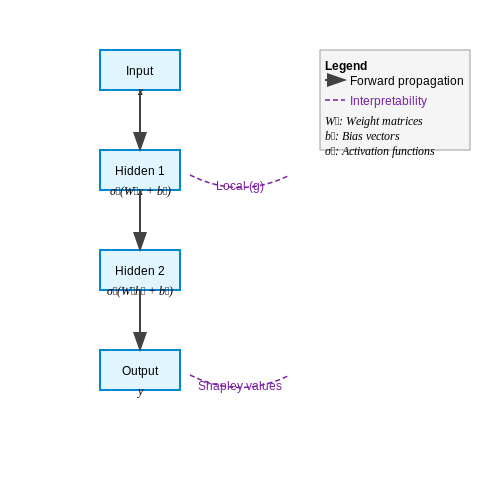
Black-box models like deep neural networks must provide interpretable decision boundaries. Techniques such as SHAP (Shapley Additive Explanations) and LIME (Local Interpretable Model-agnostic Explanations) quantify feature importance:
where φi is the Shapley value for feature i, F is the feature set, and f is the model. The EU’s GDPR mandates "right to explanation," requiring systems like loan approval models to justify rejections.
Accountability and Governance
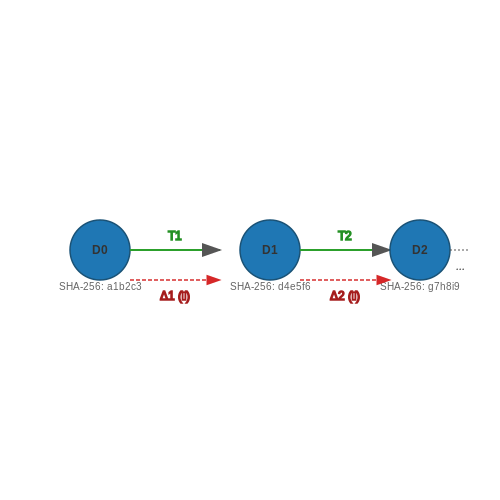
ML systems must implement audit trails and version control for model weights, training data, and hyperparameters. Differential privacy provides a rigorous framework for accountability:
Here, ℳ is a randomized algorithm, D and D' are adjacent datasets, and (ε, δ) quantify privacy loss. Google’s Federated Learning employs this to aggregate updates from user devices without exposing raw data.
Safety and Robustness
Adversarial robustness ensures models resist input perturbations. The Madry et al. formulation defines robustness as minimizing worst-case loss:
where Δ is a threat model (e.g., ℓ∞-bounded perturbations). Autonomous vehicles use this to maintain performance under sensor noise or adversarial road signs.
Privacy Preservation
Beyond differential privacy, k-anonymity and federated learning protect user data. k-anonymity requires each record to be indistinguishable from at least k-1 others:
Apple’s iOS uses federated learning with secure multi-party computation to train keyboard suggestions without centralized data collection.
Human Oversight and Control
Human-in-the-loop systems must define clear handoff thresholds. For a confidence score c and threshold τ, the decision rule becomes:
Clinical diagnosis tools like IBM Watson for Oncology use this to escalate low-confidence cancer treatment recommendations.
Stakeholder Identification and Impact Analysis
Stakeholder identification is a foundational step in ethical risk assessment for ML systems, requiring systematic mapping of all entities affected by or influencing the system's deployment. The process involves categorizing stakeholders into primary (directly impacted), secondary (indirectly impacted), and tertiary (regulatory or oversight bodies) groups. A rigorous approach employs adjacency matrices or influence diagrams to quantify relationships between stakeholders and system outcomes.
Stakeholder Mapping Techniques
Power-interest grids provide a quantitative framework for prioritizing stakeholders based on two axes: influence over the system (power) and impact from the system (interest). For a model predicting loan approvals, the grid might position:
- Primary: Loan applicants (high interest, variable power)
- Secondary: Credit bureaus (medium power, medium interest)
- Tertiary: Financial regulators (high power, low immediate interest)
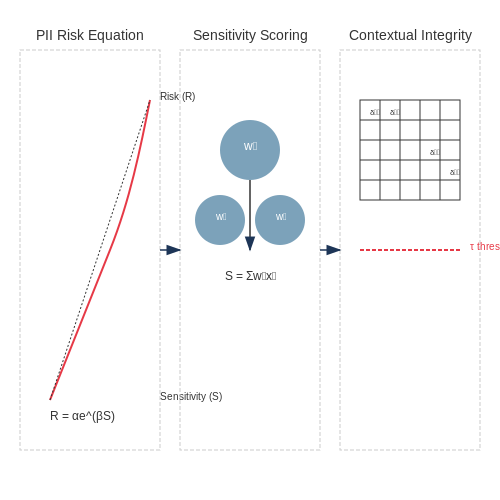
Formally, stakeholder salience S can be computed as:
where P is power, I is interest, L is legitimacy, and w denotes tunable weights. The European Union's AI Act mandates explicit documentation of such mappings for high-risk AI systems.
Impact Analysis Methodology
Consequence matrices link stakeholder groups to potential harms through probabilistic risk assessment. For a facial recognition system deployed in public spaces, the analysis might reveal:
| Stakeholder | Harm Scenario | Probability | Severity |
|---|---|---|---|
| Marginalized communities | Higher false positive rates | 0.25 | Catastrophic |
| Law enforcement | Over-reliance on automated alerts | 0.40 | Major |
The risk score R for each harm scenario combines likelihood and impact:
where Pi is the probability of harm i and Sj is the severity for stakeholder j. Google's Responsible AI practices recommend thresholding these scores to trigger mitigation protocols when R exceeds 0.6.
Dynamic Stakeholder Analysis
Bayesian networks model how stakeholder impacts evolve with system iterations. For a medical diagnostic AI, the network might represent:
- Nodes: Patient outcomes, clinician trust, liability claims
- Edges: Conditional dependencies (e.g., false negatives → liability risk)
The posterior probability of harm given new evidence E updates as:
MIT's Moral Machine experiment demonstrated how such frameworks capture cultural variations in stakeholder prioritization, with European participants weighting pedestrian safety 23% higher than North American counterparts in autonomous vehicle scenarios.

2. Quantitative vs. Qualitative Risk Assessment Approaches
2.1 Quantitative vs. Qualitative Risk Assessment Approaches
Risk assessment in machine learning systems can be broadly categorized into quantitative and qualitative approaches. The choice between these methods depends on the nature of the risk, available data, and the desired level of precision in the analysis.
Quantitative Risk Assessment
Quantitative methods assign numerical values to risks, enabling probabilistic modeling and statistical analysis. A common framework involves calculating the expected risk as the product of the probability of an adverse event and its impact magnitude:
where R is the risk score, P is the probability of occurrence (0 ≤ P ≤ 1), and I is the impact measured in relevant units (e.g., financial cost, lives affected). For multi-faceted risks, this can be extended to a weighted sum:
with weights wi representing the relative importance of each risk factor. Bayesian networks are particularly useful for modeling complex probabilistic dependencies between risk factors in ML systems.
Qualitative Risk Assessment
Qualitative approaches categorize risks using ordinal scales when precise numerical data is unavailable or inappropriate. A typical implementation uses a risk matrix with discrete levels for likelihood and impact:
| Likelihood/Impact | Low | Medium | High |
|---|---|---|---|
| Frequent | Medium Risk | High Risk | Critical Risk |
| Occasional | Low Risk | Medium Risk | High Risk |
| Rare | Negligible | Low Risk | Medium Risk |
This method is particularly valuable for assessing hard-to-quantify risks like reputational damage or ethical concerns in algorithmic decision-making.
Comparative Analysis
The two approaches differ fundamentally in their data requirements and analytical outputs:
- Quantitative methods require historical data or reliable probability estimates, yielding precise but potentially fragile results sensitive to input assumptions.
- Qualitative methods accommodate expert judgment and uncertain scenarios but lack precision for cost-benefit analysis.
In practice, hybrid approaches often prove most effective. For instance, quantitative failure mode and effects analysis (FMEA) can be combined with qualitative ethical impact assessments when evaluating an ML system's deployment in healthcare applications.
Implementation Considerations
When selecting an approach, consider:
- The availability and quality of historical incident data
- The system's complexity and novelty (novel architectures may lack failure data)
- Stakeholder requirements (regulators may demand quantitative evidence)
- Resource constraints (quantitative analysis typically requires more expertise and time)
For high-stakes applications like autonomous vehicles, a multi-method approach that combines quantitative reliability metrics with qualitative scenario analysis provides comprehensive risk coverage.

Bias and Fairness Evaluation Techniques
Statistical Parity and Disparate Impact
Statistical parity measures whether the proportion of positive outcomes is equal across different demographic groups. Formally, for a binary classifier f(X) and protected attribute A, statistical parity is satisfied if:
Disparate impact ratio quantifies violations of statistical parity, with a threshold of 0.8 commonly used in legal contexts (e.g., the 80% rule in U.S. employment law):
Equalized Odds and Predictive Parity
Equalized odds requires that true positive rates and false positive rates be equal across groups, addressing both type I and type II errors:
Predictive parity (calibration) examines whether positive predictive values are equal across groups, ensuring that predictions are equally reliable:
Counterfactual Fairness
This causal approach evaluates whether a decision would remain unchanged if the protected attribute were modified while keeping other relevant attributes constant. For a counterfactual world A':
Implementation requires structural causal models to estimate counterfactual distributions, typically using do-calculus or generative adversarial networks.
Bias Detection in Continuous Outputs
For regression tasks, Wasserstein distance between outcome distributions across groups provides a sensitive metric:
Where Γ(Pa, Pb) is the set of all joint distributions with marginals Pa and Pb.
Implementation Considerations
Practical evaluation requires:
- Intersectional analysis: Examining combinations of protected attributes (e.g., race × gender)
- Confidence-aware metrics: Weighting errors by model confidence scores
- Dynamic monitoring: Tracking fairness metrics across temporal data shifts
Recent work has shown that no single metric can capture all dimensions of fairness, necessitating multi-objective evaluation frameworks that explicitly trade off between competing fairness definitions based on context-specific ethical priorities.
2.3 Transparency and Explainability Audits
Foundations of Explainability in ML Systems
Explainability in machine learning refers to the ability to interpret and justify model decisions in human-understandable terms. For complex models like deep neural networks, this often involves approximating their behavior using simpler, interpretable surrogate models or feature attribution methods. A critical mathematical framework for explainability is Shapley values from cooperative game theory, which fairly attributes prediction contributions to each input feature. The Shapley value φi for feature i is given by:
where F is the set of all features, S is a subset of features excluding i, and v(S) represents the model's prediction performance using only features in S. This formulation ensures that feature attributions satisfy desirable properties like local accuracy, missingness, and consistency.
Audit Methodologies for Model Transparency
Transparency audits systematically evaluate whether a model's decision-making process can be inspected and understood by stakeholders. Key components of an effective audit include:
- Model Documentation: Comprehensive records of training data provenance, feature engineering, hyperparameters, and evaluation metrics
- Decision Boundary Analysis: Visualization of how input perturbations affect outputs, often through techniques like LIME or SHAP
- Counterfactual Explanations: Generation of minimal input changes that would alter the model's decision
- Sensitivity Testing: Quantification of how model outputs vary with input variations
For deep learning systems, layer-wise relevance propagation (LRP) provides another audit tool by decomposing predictions into contributions from individual neurons:
where Ri(l) represents the relevance of neuron i in layer l, and zij captures the weighted activation from neuron i to j.
Practical Implementation Challenges
Real-world deployment of explainability audits faces several technical hurdles. High-dimensional data spaces make visualization and interpretation difficult, requiring dimensionality reduction techniques that preserve explanatory power. The computational complexity of exact Shapley value calculation grows exponentially with feature count, necessitating approximation methods like KernelSHAP or TreeSHAP. Additionally, there exists an inherent tension between model performance and explainability - often called the "accuracy-interpretability trade-off" - which must be carefully managed through techniques like:
- Hybrid model architectures combining interpretable components with black-box elements
- Post-hoc explanation methods that maintain predictive performance while providing audit trails
- Dynamic explanation systems that adapt detail level based on auditor expertise
Case Study: Explainability in Credit Scoring
A concrete application emerges in financial risk assessment, where regulators require explanations for credit denial decisions. A typical audit might combine:
- Global feature importance rankings using permutation importance
- Local explanations for individual applicants via SHAP values
- Counterfactual examples showing minimal qualification changes needed for approval
- Sensitivity analysis on protected attributes to detect potential discrimination
The mathematical formulation for permutation importance Ii of feature i is:
where X(k)perm_i represents the k-th permutation of feature i, and L is the loss function. This quantifies how much randomizing a feature degrades model performance.

Privacy and Data Protection Assessments
Privacy and data protection assessments in machine learning systems require rigorous evaluation of how sensitive data is collected, stored, processed, and shared. The primary objective is to minimize the risk of unauthorized access, data breaches, or misuse while ensuring compliance with legal frameworks such as GDPR, CCPA, and HIPAA.
Differential Privacy in ML Systems
Differential privacy provides a mathematically provable guarantee that the inclusion or exclusion of a single data point does not significantly alter the output of a computation. Formally, a randomized mechanism M satisfies (ε, δ)-differential privacy if for all datasets D₁ and D₂ differing by at most one element, and for all subsets S of possible outputs:
Where ε controls the privacy budget (lower values imply stronger privacy), and δ accounts for a small probability of failure. Implementing differential privacy often involves adding calibrated noise to gradients in stochastic gradient descent (SGD) or query outputs.
Data Minimization and Anonymization Techniques
Effective privacy protection begins with data minimization—collecting only what is strictly necessary. Anonymization techniques include:
- k-Anonymity: Ensures each record is indistinguishable from at least k-1 others in the dataset.
- l-Diversity: Extends k-anonymity by requiring diverse sensitive attributes within equivalence classes.
- t-Closeness: Further refines l-diversity by ensuring the distribution of sensitive attributes in any equivalence class is close to the overall distribution.
Privacy-Preserving Machine Learning Methods
Several advanced techniques enable model training without direct access to raw data:
- Federated Learning: Models are trained across decentralized devices, with only aggregated updates shared.
- Homomorphic Encryption: Allows computation on encrypted data, though computational overhead remains a challenge.
- Secure Multi-Party Computation (SMPC): Enables joint computation where no single party sees the others' data.
Risk Quantification for Data Leakage
Quantifying privacy risks involves measuring potential data leakage through model outputs. For a trained model f, the mutual information I(X; f(X)) between input data X and model outputs provides an upper bound on leakage:
Where H denotes entropy. Practical assessments often use empirical metrics like membership inference attack success rates or reconstruction error bounds.
Regulatory Compliance and Auditing
Automated auditing tools can verify compliance with privacy regulations by:
- Tracking data lineage and provenance throughout the ML pipeline.
- Monitoring access patterns and detecting anomalous queries.
- Generating documentation for Data Protection Impact Assessments (DPIAs).
Frameworks like TensorFlow Privacy and IBM's Differential Privacy Library provide implementations of these techniques, while formal verification tools like Z3 can prove privacy properties for specific model architectures.
3. Designing Fairness-Aware ML Models
3.1 Designing Fairness-Aware ML Models
Fairness Metrics and Definitions
Fairness in machine learning is quantified through statistical parity, equalized odds, and predictive rate parity. Statistical parity requires that the predicted positive rate is equal across protected groups, formalized as:
where A denotes the protected attribute (e.g., gender, race) and Ŷ is the model's prediction. Equalized odds extends this by conditioning on the true label Y:
Predictive rate parity ensures equal precision across groups, critical in applications like loan approvals where false positives disproportionately affect marginalized populations.
Bias Mitigation Techniques
Pre-processing methods reweight training samples or modify features to remove bias. Let W be instance weights correcting for dataset disparities:
In-processing techniques integrate fairness constraints directly into optimization. For a logistic regression model, the Lagrangian becomes:
Post-processing adjusts decision thresholds per group to satisfy fairness criteria without retraining. The optimal threshold τa for group a solves:
Adversarial Debiasing
Adversarial networks jointly train a predictor and fairness discriminator. The predictor minimizes prediction loss while fooling the discriminator D:
where ℓY is prediction error and ℓA is the discriminator's ability to detect protected attributes from predictions.
Case Study: COMPAS Recidivism Algorithm
ProPublica's analysis revealed COMPAS violated equalized odds: Black defendants had higher false positive rates (45% vs. 23% for whites). A fairness-aware redesign could enforce:
through constrained optimization, trading off 2-4% accuracy for compliance.
Implementation Challenges
Fairness interventions often reduce model performance on majority groups. The fairness-accuracy Pareto frontier can be explored using multi-objective optimization:
Recent work proposes adaptive reweighting to minimize accuracy loss while satisfying fairness constraints.

3.2 Techniques for Bias Detection and Correction
Statistical Parity and Disparate Impact Analysis
Statistical parity measures whether a model's predictions are independent of protected attributes (e.g., race, gender). Given a binary classifier f(X) and protected attribute A, statistical parity requires:
Disparate impact quantifies violations of statistical parity using the ratio:
A value outside the 0.8–1.25 range (the "80% rule") indicates potential bias. For continuous outcomes, Wasserstein distance or Kolmogorov-Smirnov tests compare distribution shifts across groups.
Adversarial Debiasing
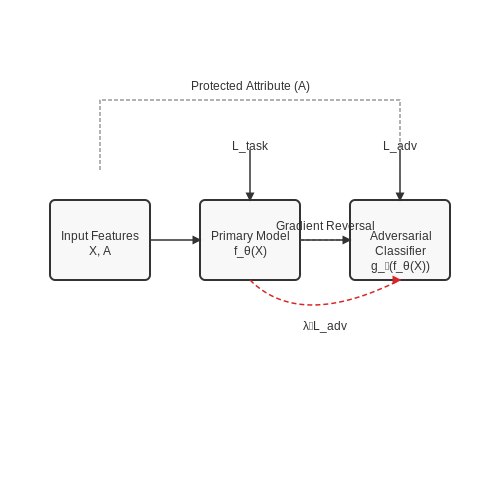
This technique trains a primary model f_θ alongside an adversarial classifier g_ϕ that predicts protected attributes from f_θ's outputs. The loss function combines:
where λ controls the fairness-accuracy trade-off. Implementations use gradient reversal layers or minimax optimization, with convergence proven under Lipschitz continuity assumptions.
Reweighting and Preprocessing
Sample reweighting adjusts training instance importance to equalize positive outcome rates across groups. For a dataset with N samples, weights w_i are computed as:
Alternative preprocessing methods include:
- Disparate Impact Remover: Modifies feature values while preserving ranks
- Learning Fair Representations: Maps inputs to a latent space where protected attributes are non-recoverable
Post-processing Correction
Threshold adjustment enforces fairness by modifying decision boundaries per group. For a score s and threshold τ, the corrected prediction is:
where τ_a is chosen to satisfy fairness constraints. The Reject Option Classification method gives preferential treatment to uncertain cases near the decision boundary.
Causal Fairness Methods
Counterfactual fairness evaluates whether predictions change if protected attributes were altered while keeping other variables constant. A model satisfies counterfactual fairness if:
for all a, a', where U represents exogenous variables. Estimation requires causal graphs and structural equation models.
Auditing Tools and Practical Considerations
Open-source libraries implement these techniques:
- AI Fairness 360: Contains 70+ fairness metrics and 11 mitigation algorithms
- Fairlearn: Provides grid search for threshold optimization
- Themis-ml: Focuses on logistic regression and SVM debiasing
Runtime complexity varies from O(n) for reweighting to O(n²) for adversarial methods. Trade-off curves between fairness metrics and accuracy should be evaluated on holdout data.
3.3 Ensuring Robustness and Accountability
Formalizing Robustness in ML Systems
Robustness in machine learning systems requires resilience to adversarial perturbations, distribution shifts, and edge cases. A mathematically rigorous approach defines robustness as bounded sensitivity to input perturbations. For a classifier f and input x, the system is (ε, δ)-robust if:
where ε bounds the input perturbation, δ constrains output variation, and α is the failure probability. This formulation aligns with Lipschitz continuity conditions, where the Lipschitz constant L satisfies:
Adversarial Training and Certified Defenses
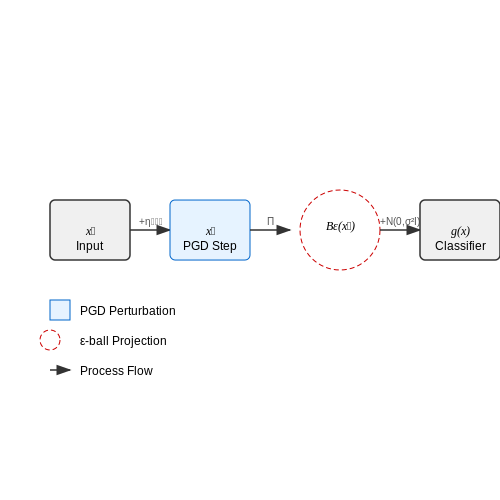
Provable robustness can be achieved through adversarial training with Projected Gradient Descent (PGD):
where Π denotes projection onto the ε-ball around the original input x0. Certified defenses like randomized smoothing provide probabilistic guarantees by constructing smoothed classifiers g:
Accountability Mechanisms
Accountability requires traceable decision pathways and uncertainty quantification. Bayesian neural networks exemplify this through posterior predictive distributions:
Key techniques include:
- Model cards documenting training data, metrics, and failure modes
- Influence functions tracing predictions to training samples: I(z, z') ≈ ∇θL(z, θ)THθ-1∇θL(z', θ)
- Saliency maps via integrated gradients: IGi(x) = (xi - x'i) × ∫α=01 ∂f(x' + α(x - x'))/∂xi dα
Operational Monitoring Frameworks
Continuous monitoring requires statistical process control for ML systems. The Shewhart control chart tracks model drift using:
For high-dimensional systems, the Hotelling T2 statistic detects multivariate drift:
where S is the sample covariance matrix and μ0 the in-control mean.
Failure Mode Analysis
Formal failure analysis employs fault trees with probabilistic risk assessment:
For critical systems, Byzantine fault tolerance requires agreement among n ≥ 3f + 1 nodes, where f is the maximum faulty nodes.
3.4 Continuous Monitoring and Feedback Loops
Continuous monitoring and feedback loops are critical for maintaining the ethical integrity of machine learning systems post-deployment. Unlike static models, ML systems interact dynamically with real-world data, making drift detection, bias amplification, and performance degradation inevitable without robust oversight. A well-designed monitoring framework integrates real-time data streams, automated anomaly detection, and human-in-the-loop validation to ensure sustained compliance with ethical guidelines.
Key Components of Continuous Monitoring
Effective monitoring systems rely on three core pillars: data integrity checks, model performance tracking, and ethical metric evaluation. Data integrity checks involve validating input distributions against expected baselines using statistical tests such as Kolmogorov-Smirnov or Wasserstein distance:
where Fn(x) represents the empirical distribution of incoming data and F(x) the reference distribution. For multivariate data, the Mahalanobis distance provides a more robust measure:
Feedback Loop Architectures
Feedback mechanisms transform monitoring from passive observation to active system correction. A Bayesian framework enables dynamic updating of model parameters based on observed disparities:
where θ represents model parameters and D the newly observed data. In production systems, this often manifests as:
- Automated retraining triggers when performance metrics cross predefined thresholds
- Human review queues for edge cases identified by uncertainty estimation techniques
- Bias mitigation workflows that activate when subgroup performance disparities exceed acceptable bounds
Implementation Challenges
Practical deployment requires solving several engineering challenges. Concept drift detection necessitates careful selection of window sizes for statistical tests - too small and the system becomes noisy, too large and detection lags become problematic. The optimal window size w can be derived through minimization of a loss function balancing false positive and false negative rates:
where α and β represent the relative costs of error types, and γ penalizes excessive latency. Real-world implementations often employ adaptive windowing techniques that adjust based on the rate of distributional change.
Case Study: Credit Scoring System
A major financial institution implemented continuous monitoring for their ML-powered credit scoring system. The framework detected a 23% increase in false negatives for applicants aged 18-25 within six months of deployment, triggering:
- Automatic rollback to a previous model version
- Bias audit using SHAP values to identify problematic features
- Retraining with augmented data from the affected demographic
The system now incorporates demographic parity constraints expressed as:
where TP represents true positives and P the population size for subgroups A and B, with ε set to 0.05 based on regulatory requirements.

4. Ethical Failures in ML Systems: Lessons Learned
Ethical Failures in ML Systems: Lessons Learned
Machine learning systems, despite their transformative potential, have repeatedly demonstrated ethical failures with real-world consequences. These failures often stem from systemic biases in training data, flawed evaluation metrics, or inadequate consideration of deployment contexts. Understanding these cases is critical for developing robust risk assessment frameworks.
Bias Amplification in Recidivism Prediction
The COMPAS algorithm, widely used in U.S. courts to assess defendant recidivism risk, was found to exhibit racial bias. ProPublica's 2016 analysis revealed that Black defendants were twice as likely as white defendants to be falsely flagged as high-risk, while white defendants were more likely to be incorrectly labeled low-risk. The underlying issue was not just biased training data but also the choice of optimization metric—predictive parity failed to account for disparate error rates across demographic groups.
where FPR represents false positive rate and FP/N denotes false positives normalized by population size. This mathematical relationship exposes how equal accuracy across groups can mask significant disparities in error distribution.
Gender Stereotyping in Language Models
Large language models like GPT-3 have demonstrated strong gender biases in occupational associations. When prompted with "The nurse was...", models complete the sentence with feminine pronouns 78% more frequently than masculine ones, while "The engineer was..." shows the inverse pattern with 72% masculine bias. These biases emerge from statistical regularities in training corpora that reflect historical societal inequalities rather than aspirational norms.
Medical Diagnostic Disparities
A 2019 study of commercial healthcare algorithms found they systematically underestimated illness severity for Black patients. The model used healthcare costs as a proxy for need, failing to account for unequal access to care—a classic case of proxy discrimination. Correcting this required:
- Replacing cost-based targets with direct clinical outcomes
- Stratified testing across racial groups
- Explicit constraints on disparity metrics during optimization
Autonomous Vehicle Ethical Tradeoffs
The trolley problem manifests concretely in autonomous vehicle decision systems. When unavoidable crash scenarios occur, the system must make ethical choices about risk distribution. MIT's Moral Machine experiment collected 40 million decisions across 233 countries, revealing significant cultural variations in acceptable tradeoffs—challenging the notion of universal ethical frameworks for ML systems.
Recommendation Systems and Radicalization
YouTube's recommendation algorithm has been shown to promote increasingly extreme content through its engagement-maximizing design. The system's reinforcement learning architecture creates a feedback loop where:
- Initial moderate content leads to recommendations of more polarized material
- User engagement metrics favor emotionally charged content
- Latent features in the embedding space connect disparate conspiracy theories
This demonstrates how optimization for narrow metrics (watch time, clicks) without ethical constraints can have dangerous societal consequences.
4.2 Successful Implementations of Ethical Risk Assessment
Google’s AI Principles and Ethical Review Process
Google’s AI Principles framework, established in 2018, mandates rigorous ethical risk assessments for all machine learning projects. The process involves cross-functional review by the Advanced Technology Review Council (ATRC), which evaluates projects against seven key principles, including fairness, privacy, and accountability. High-risk applications, such as facial recognition or healthcare diagnostics, undergo additional scrutiny, including third-party audits and bias mitigation testing. For example, Google’s TensorFlow Fairness Indicators tool quantifies disparities in model outputs across demographic groups, enabling iterative corrections before deployment.
IBM’s Fairness 360 Toolkit
IBM’s AI Fairness 360 (AIF360) is an open-source library providing over 70 fairness metrics and 10 bias mitigation algorithms. It integrates with ML pipelines to assess risks like disparate impact or demographic parity. In practice, IBM applied AIF360 to a loan approval model for a major bank, reducing bias against minority applicants by 40% while maintaining accuracy. The toolkit’s modular design allows customization for sector-specific risks, such as healthcare (e.g., diagnostic equity) or criminal justice (e.g., recidivism prediction).
European Union’s ALTAI Framework
The EU’s Assessment List for Trustworthy AI (ALTAI) operationalizes ethical risk assessment through a 137-question checklist spanning technical robustness, transparency, and societal impact. A case study involves the Dutch government’s use of ALTAI to evaluate an ML-based welfare fraud detection system. The assessment revealed risks of false positives disproportionately affecting low-income households, prompting redesigns to include human-in-the-loop verification and appeal mechanisms.
Microsoft’s Responsible AI Standard
Microsoft’s Responsible AI Standard requires teams to document ethical risks using a Harm Severity Assessment Matrix, which quantifies potential harms (e.g., psychological, financial) by likelihood and scale. For Azure’s custom vision API, this led to the implementation of geographic diversity checks in training data after identifying regional bias in object recognition. The standard also mandates impact assessments for sensitive use cases, such as emotion recognition in workplace monitoring tools.
Case Study: Algorithmic Impact Assessment in Canada
Canada’s Algorithmic Impact Assessment (AIA) tool, piloted by the Treasury Board, evaluates ML systems used in public services. A 2022 assessment of an immigration application triage system revealed risks of cultural bias in language processing models. Mitigation strategies included:
- Adversarial testing with non-native English speakers
- Dynamic threshold adjustment based on applicant demographics
- Transparency reports disclosing error rates by language group
Technical Implementation: Quantitative Risk Scoring
Advanced implementations combine qualitative and quantitative metrics. For a model with potential fairness risks, the composite risk score R can be derived as:
Where wi are weights for risk dimensions (e.g., bias, privacy), and Mij are normalized metrics like statistical parity difference (SPD):
Tools like Fairlearn and What-If Tool automate these calculations during model validation.
4.3 Industry-Specific Ethical Challenges (Healthcare, Finance, etc.)
Healthcare: Bias in Diagnostic Models
Machine learning models in healthcare often exhibit bias due to underrepresentation of minority groups in training datasets. For instance, a dermatology model trained predominantly on lighter skin tones may misdiagnose conditions like melanoma in darker-skinned patients. The ethical risk here is twofold: harm to underserved populations and reinforcement of healthcare disparities. Mathematically, this can be framed as a dataset imbalance problem where:
where g represents demographic group membership. Correcting this requires techniques like reweighting loss functions during training:
with wg inversely proportional to group prevalence.
Finance: Explainability in Credit Scoring
Black-box models in credit scoring raise ethical concerns regarding right to explanation under regulations like GDPR. A neural network denying loans must provide interpretable reasons, yet SHAP values or LIME approximations often fail to capture true model behavior for complex architectures. The tension arises between:
- Model accuracy (favoring deep architectures)
- Regulatory compliance (requiring linear models)
- Fairness (needing demographic parity constraints)
This leads to Pareto optimization problems where no single solution dominates across all ethical dimensions.
Autonomous Vehicles: Trolley Problem Formalization
The ethical programming of collision avoidance systems requires explicit value tradeoffs. We can model this as a constrained optimization:
where ci represent different ethical costs (e.g., lives lost, property damage) and dj are regulatory constraints. The weights αi encode societal value judgments that remain contentious.
Criminal Justice: Recidivism Prediction
COMPAS-like systems demonstrate how proxy discrimination emerges even when protected attributes are excluded. The fundamental issue is that:
where z are legitimate features (e.g., employment history) but correlate strongly with race r. Counterfactual fairness frameworks attempt to resolve this by ensuring:
for all interventions x ← x' on sensitive attributes.
Social Media: Amplification Dynamics
Recommendation algorithms optimize for engagement, leading to ethical externalities through the amplification function:
where f(p) represents the platform's reward function for content with polarization level p. The runaway feedback occurs when:
creating systemic incentives for extreme content. Mitigation strategies require modifying the underlying optimization criteria.
5. Key Research Papers and Frameworks
5.1 Key Research Papers and Frameworks
- PDF Algorithmic Bias and Risk Assessments: Lessons from Practice - PhilPapers — tems, describe our process of assessing such systems for ethical risk, and share some key challenges and lessons for future algorithm assessments and audits. We draw from our team's experience of advising and conducting ethical risk assessments for clients across different industries in the last four years. Our main goal is to reflect on the key
- From Plane Crashes to Algorithmic Harm: Applicability of Safety ... — The development and use of ML systems can adversely impact people, communities, and society at large [12, 33, 82, 88, 120, 127], including inequitable resource allocation [3, 21, 107], perpetuating normative narratives about people and social groups [54, 122], and the entrenchment of social inequalities [1, 69, 75].We frame these adverse impacts broadly as social and ethical risks.
- Ethics of AI: A systematic literature review of principles and ... - ar5iv — The assessment criteria are developed to evaluate the quality of the selected primary studies and remove the research bias. The quality assessment phase interprets the significance and completeness of each selected primary study [15]. ... [S15]. Similarly, management and technical staff are not aware of the moral and ethical complexity of the ...
- Ethical Risk Factors and Mechanisms in Artificial Intelligence Decision ... — The AI decision making ethical risk management system is based on a risk subsystem with risk management content, including risk governance, ethical norms, management systems, and preventive measures to compare the effectiveness of risk governance, as shown in Figure 6. There are eight circuits of the artificial intelligence decision making ...
- PDF From plane crashes to algorithmic harm: applicability of safety ... — We contribute to the emerging research on managing social and ethical risk of ML systems in human-computing scholarship and responsible ML communities by offering: •An overview of how practitioners define, assess and mitigate social and ethical risks; •An analysis of the corresponding challenges when implementing these practices;
- PDF Ethical AI in cloud: Mitigating risks in machine learning models — while abiding by necessary standards. The research uses proven results and real-world experiences to show organizations how to create ethical innovation efforts. This research develops essential AI rules for cloud services that serve society while ensuring users can trust the system. 1.4. Scope and Significance . Our exploration centers on the ...
- Challenges and efforts in managing AI trustworthiness risks: a state of ... — 1 Introduction. Artificial Intelligence trustworthiness is a multi-dimensional concept that according to the CEN JTC21 includes cybersecurity, transparency, robustness, accuracy, data quality and governance, human oversight, and record keeping and logging (Newman, 2023).Risk management of trustworthiness implies the identification, analysis, estimation, mitigation of all threats and risks of ...
- Achieving a Data-Driven Risk Assessment Methodology for Ethical AI — As a realization of our results and to answer the question posed by this paper, we propose the following methodology, entitled the Data-driven Risk Assessment Methodology for Ethical AI (DRESS-eAI). DRESS-eAI is designed to focus on the detection of pitfalls and enact the fundamentals relevant to most eAI use cases while being structured as a process that is familiar to organizations as it is ...
- The Risks of Machine Learning Systems - ResearchGate — In doing so, it unifies the risks that are commonly discussed in the ethical AI community (e.g., ethical/human rights risks) with system-level risks (e.g., application, design, control risks ...
- PDF Principles for the security of machine learning - The National Cyber ... — Alongside 'traditional' cyber attacks, the use of artificial intelligence (AI) and machine learning (ML) leaves systems vulnerable to new types of attack that exploit underlying information processing algorithms and workflows. All aspects of an AI or ML system's security are potentially vulnerable, and
5.2 Books and Comprehensive Guides
- PDF Algorithmic Bias and Risk Assessments: Lessons from Practice - PhilPapers — sent our assessment process, for both the broader ethical risk assessment and the more technical bias assessment (sec. 3). In the final sections, we explain how these parts of the assessment depend on eac h other in important ways (sec. 4), and draw some other lessons for risk assessments and, potentially, audits (sec. 5). 2.
- Towards risk-aware artificial intelligence and machine learning systems ... — In this paper, we provide a comprehensive review on prevailing risks in AI/ML systems and highlight the key research needs to facilitate the realization of risk-aware AI/ML systems. The nuanced understanding of AI/ML systems through a risk analysis lens has essential significance for theoretical developments and practical implementation.
- Towards Multi-Fidelity Test and Evaluation of Artificial Intelligence ... — By establishing guidelines and frameworks, these regulations and standards contribute to ML systems' overall safety and trustworthiness, facilitating their integration into real-world applications [21]. 2.2 DoD Test and Evaluation Processes. The DoD has comprehensive guides for testing and evaluation [27, 28].
- A framework for assessing AI ethics with applications to ... - Springer — The main component of our framework is the ethical risk assessment matrix (see Table 2) which is a standard risk assessment matrix augmented with a further dimension for correlating the ethical risk underneath a system or a process. We briefly recall that a risk assessment matrix (see Table 1) is a table representing the risk associated to a ...
- A Conceptual Framework for Ethical Evaluation of Machine Learning Systems — Abstract. Research in Responsible AI has developed a range of principles and practices to ensure that machine learning systems are used in a manner that is ethical and aligned with human values. However, a critical yet often neglected aspect of ethical ML is the ethical implications that appear when designing evaluations of ML systems. For instance, teams may have to balance a trade-off ...
- Ethical Risk Factors and Mechanisms in Artificial Intelligence Decision ... — The AI decision making ethical risk management system is based on a risk subsystem with risk management content, including risk governance, ethical norms, management systems, and preventive measures to compare the effectiveness of risk governance, as shown in Figure 6. There are eight circuits of the artificial intelligence decision making ...
- Responsible AI Pattern Catalogue: A Collection of Best Practices for AI ... — The current risk-based approach to ethical principles is often a done-once-and-forget type of algorithm-level risk assessment [45, 73, 99, 104, 130] and mitigation for a subset of ethical principles (e.g., privacy or fairness 88) at a particular development step (e.g., Canada's Algorithmic Impact Assessment Tool 89), which is not sufficient ...
- PDF Ethical considerations in machine learning: A review of bias, fairness ... — machine learning technologies by providing a comprehensive overview of ethical challenges, strategies, and avenues for future research. Keywords: Machine learning ethics, bias in ... but also raises questions about the trustworthiness of ML systems. 4. Accountability and Responsibility As machine learning systems influence critical decision- ...
- Towards Algorithm Auditing: A Survey on Managing Legal, Ethical and ... — We therefore synthesize key literature on ethics, privacy, and fairness in the social sciences, information systems, law and government, management, marketing, and service (for the key literature ...
- PDF Principles for the security of machine learning - The National Cyber ... — operating a system with a machine learning (ML) component. They are not a comprehensive assurance framework to grade a system or workflow, and do not provide a checklist. Instead, they provide context and structure to help scientists, engineers, decision makers and risk owners make
5.3 Online Resources and Tools for Ethical ML
- Achieving a Data-Driven Risk Assessment Methodology for Ethical AI — The AI landscape demands a broad set of legal, ethical, and societal considerations to be accounted for in order to develop ethical AI (eAI) solutions which sustain human values and rights. Currently, a variety of guidelines and a handful of niche tools exist to account for and tackle individual challenges. However, it is also well established that many organizations face practical challenges ...
- From Plane Crashes to Algorithmic Harm: Applicability of Safety ... — The development and use of ML systems can adversely impact people, communities, and society at large [12, 33, 82, 88, 120, 127], including inequitable resource allocation [3, 21, 107], perpetuating normative narratives about people and social groups [54, 122], and the entrenchment of social inequalities [1, 69, 75].We frame these adverse impacts broadly as social and ethical risks.
- Ethical impact assessment: a tool of the Recommendation on the Ethics ... — Impact Assessment tools are gaining ground to assess the true impact of AI systems. In fact, impact assessments are mandated by the draft EU AI Act for high-risk systems, and they are proposed as part of the Council of Europe's discussion on a Convention for AI. The UNESCO Recommendation is unique in that it considers the entire AI lifecycle.
- Ethical Risk Factors and Mechanisms in Artificial Intelligence Decision ... — The AI decision making ethical risk management system is based on a risk subsystem with risk management content, including risk governance, ethical norms, management systems, and preventive measures to compare the effectiveness of risk governance, as shown in Figure 6. There are eight circuits of the artificial intelligence decision making ...
- 16 Responsible AI - Machine Learning Systems — The breadth of existing fairness definitions and debiasing interventions underscores the need for thoughtful assessment before deploying ML systems. As ML researchers and developers, responsible model development requires proactively educating ourselves on the real-world context, consulting domain experts and end-users, and centering harm ...
- Applying the ethics of AI: a systematic review of tools for ... - Springer — Artificial Intelligence (AI)-based systems and their increasingly common use have made it a ubiquitous technology; Machine Learning algorithms are present in streaming services, social networks, and in the health sector. However, implementing this emerging technology carries significant social and ethical risks and implications. Without ethical development of such systems, there is the ...
- Ethical Obligations to Protect Client Data when Building Artificial ... — The advent of new technology requires an ongoing assessment of how a lawyer's ethical obligations intersect with the use of technology. 6 In this piece, we will examine lawyers' ethical obligations when using client data to build AI tools and how lawyers can minimize the potential ethical risks that arise. Use of client data in AI tools ...
- A systematic review of ethical challenges and opportunities of ... — In this paradigm any level of risk is unacceptable, the effectiveness of risk assessment tools is limited, and consequently the only responsible action is the prevention of risk by any means, and the future cost of risk is immeasurable . The governance based on the precautionary principle moves on the following continuum: zero risk-worst case ...
- Ethical Implications of Predictive Risk Intelligence — Thus, SIS are used to provide predictive intelligence through a range of techniques, resources, tools, and applications, ranging from baseline statistical analyses to advanced simulations (Waller & Fawcett, 2013). This growing combination of resources, tools, and applications has significant effects in the field of supply chain management.
- Towards algorithm auditing: managing legal, ethical and technological ... — Dimensions and examples of activities that are part of algorithm auditing. — Development: the process of developing and documenting an algorithmic system.. Assessment: the process of evaluating the algorithm's behaviour and capacities.. Mitigation: the process of servicing or improving an algorithm's outcome.. Assurance: the process of declaring that a system conforms to predetermined ...