Cognitive Architectures That Simulate Human Learning Stages
1. Definition and Core Principles of Cognitive Architectures
Definition and Core Principles of Cognitive Architectures
Cognitive architectures are computational frameworks designed to model the structures and processes underlying human cognition. These architectures integrate perception, memory, reasoning, learning, and decision-making into a unified system, enabling the simulation of human-like intelligence. Unlike narrow AI systems, cognitive architectures aim for generality, allowing them to adapt across diverse tasks and environments.
Core Components of Cognitive Architectures
At their foundation, cognitive architectures consist of several key components:
- Memory Systems: Typically divided into working memory (short-term, task-relevant information) and long-term memory (declarative, procedural, and episodic knowledge).
- Perceptual Modules: Interfaces for processing sensory input, often modeled after human vision, audition, or tactile systems.
- Learning Mechanisms: Algorithms for acquiring and refining knowledge, such as reinforcement learning, chunking, or Bayesian inference.
- Decision Processes: Methods for selecting actions based on goals, constraints, and environmental feedback.
Mathematical Foundations
Cognitive architectures often rely on formal models of learning and reasoning. For instance, the activation of a memory element A in a spreading activation network can be described as:
where Wij represents the connection weight between nodes i and j, Sj is the activation of node j, and εi is noise. This equation captures how information propagates through the cognitive system.
Historical Context and Key Architectures
Early cognitive architectures, such as ACT-R (Adaptive Control of Thought—Rational) and SOAR, emerged from cognitive psychology and artificial intelligence research in the 1970s and 1980s. These systems were built to test theories of human cognition while also advancing AI capabilities. Modern architectures, such as Sigma and CLARION, incorporate neural and symbolic representations, blending connectionist and rule-based approaches.
Practical Applications
Cognitive architectures are used in:
- Human-AI Collaboration: Designing intelligent assistants that understand and predict user behavior.
- Robotics: Enabling robots to learn from experience and adapt to dynamic environments.
- Education: Simulating student learning processes to develop personalized tutoring systems.
For example, ACT-R has been applied to model air traffic controller decision-making, demonstrating how cognitive architectures can capture expert performance under time pressure.
Challenges and Open Questions
Despite their promise, cognitive architectures face several challenges:
- Scalability: Balancing computational efficiency with cognitive plausibility.
- Integration: Combining multiple learning paradigms (e.g., symbolic, subsymbolic) into a cohesive framework.
- Validation: Ensuring architectures not only perform tasks but also align with empirical data on human cognition.
1.2 Historical Evolution and Key Milestones
Early Foundations (1950s–1970s)
The conceptual groundwork for cognitive architectures emerged from early AI research and cognitive psychology. Alan Turing's 1950 paper Computing Machinery and Intelligence introduced the idea of machine learning through experience, while Allen Newell and Herbert A. Simon's General Problem Solver (GPS) (1957) formalized heuristic search as a model of human problem-solving. Their physical symbol system hypothesis posited that symbolic manipulation could replicate intelligence, directly influencing later architectures like ACT-R.
John Anderson's ACT (Adaptive Control of Thought) (1976) introduced production systems with declarative and procedural memory, simulating skill acquisition through rule compilation. Parallel developments in neural networks (Rosenblatt's Perceptron, 1957) offered alternative subsymbolic approaches, though these were later overshadowed by the "AI winter."
Architectural Diversification (1980s–1990s)
The 1980s saw explicit modeling of human cognitive stages. SOAR (1983) unified problem-solving, learning, and decision-making under a single rule-based framework, while ACT-R (1993) refined memory chunking and reinforcement learning mechanisms. Key advances included:
- SOAR's universal subgoaling for hierarchical task decomposition
- ACT-R's Bayesian memory retrieval:
$$ P(\text{retrieval}) = \frac{e^{A_i/ au}}{\sum_j e^{A_j/ au}} $$
- Marvin Minsky's Society of Mind (1986), proposing modular agents as cognitive building blocks
Integration with Neuroscience (2000s–Present)
Modern architectures incorporate biological constraints. Leabra (2005) combined error-driven and Hebbian learning:
CLARION (2002) modeled implicit/explicit learning duality through dual-process theory, while Nengo (2012) implemented large-scale spiking neural networks with biologically plausible time constants. Recent work integrates transformer-based attention mechanisms (e.g., ACT-R's 2020 extension for natural language understanding).
Critical Milestones
| Year | Architecture | Contribution |
|---|---|---|
| 1957 | GPS | First computational model of human problem-solving |
| 1976 | ACT | Production systems with memory decay |
| 1993 | ACT-R | Unified theory of cognition |
| 2018 | Deep ACT-R | Integration with deep reinforcement learning |
1.3 Comparison with Traditional AI Models
Cognitive architectures designed to simulate human learning stages differ fundamentally from traditional AI models in their approach to knowledge representation, learning mechanisms, and adaptability. While traditional models often rely on static, pre-defined structures, cognitive architectures incorporate dynamic, hierarchical representations that evolve through experience, mirroring human developmental stages.
Knowledge Representation
Traditional AI models, such as expert systems or classical machine learning algorithms, typically employ fixed representations like rule-based logic or feature vectors. In contrast, cognitive architectures utilize symbolic-substrate hybrid representations, combining high-level symbolic reasoning with subsymbolic neural processing. For example, ACT-R employs production rules operating on chunks of declarative memory, while neural-symbolic architectures like DeepMind's differentiable neural computer (DNC) learn distributed representations that can be queried symbolically.
where α balances symbolic (𝒮) and neural (𝒩) components, dynamically adjusted during learning phases.
Learning Mechanisms
Traditional supervised learning models minimize a loss function through gradient descent:
Cognitive architectures implement meta-learning and curriculum learning strategies that mimic human developmental stages. The CLARION architecture, for instance, uses a dual-process framework where implicit learning (reinforcement-based) and explicit rule formation co-evolve, with the latter bootstrapping the former through top-down feedback.
Adaptability and Transfer
Where traditional models suffer from catastrophic forgetting when faced with non-stationary data, cognitive architectures incorporate memory consolidation mechanisms inspired by neuroscience. The Soar architecture's chunking process, for example, compiles procedural knowledge into generalized rules while maintaining episodic traces, enabling transfer across tasks without retraining.
Computational Efficiency
While deep learning models scale compute resources linearly with data (O(n)), cognitive architectures exhibit sublinear scaling (O(log n)) through abstraction. This emerges from their capacity to form compressed symbolic representations after sufficient subsymbolic training, as demonstrated in the Nengo neural simulator's implementation of the Semantic Pointer Architecture.
2. Sensorimotor Stage: Early Learning and Perception
Sensorimotor Stage: Early Learning and Perception
The sensorimotor stage, as conceptualized by Piaget, forms the foundation of cognitive architectures designed to emulate human learning. In artificial intelligence, this stage corresponds to the initial phase where an agent interacts with its environment through raw sensory inputs and motor actions, building primitive representations of the world. Unlike symbolic AI, which relies on predefined knowledge, sensorimotor learning is grounded in embodied experience, making it critical for developing adaptive and generalizable systems.
Biological Foundations and Computational Analogues
Human infants develop object permanence, causality, and spatial awareness through repeated sensorimotor interactions. In AI, this translates to reinforcement learning (RL) frameworks where an agent learns state-action mappings from rewards and penalties. The Markov Decision Process (MDP) formalizes this:
where 𝒮 represents perceptual states, 𝒜 denotes motor actions, 𝒫 is the transition dynamics, ℛ the reward function, and γ the discount factor. Unlike classical RL, sensorimotor-stage models often operate with partial observability, necessitating extensions like Partially Observable MDPs (POMDPs):
Here, bt(s) is the belief state, inferred from a history of observations ot and actions at.
Perceptual Learning Mechanisms
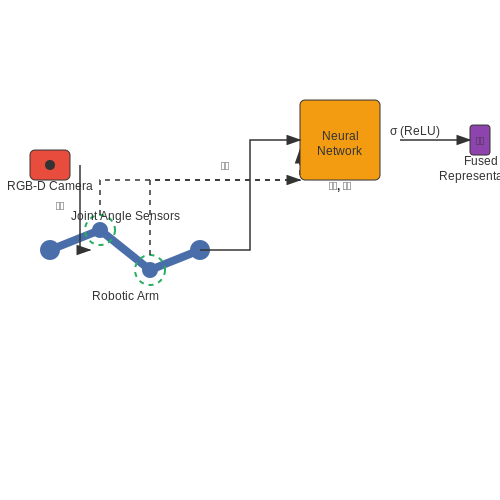
Early learning hinges on feature extraction from high-dimensional sensory data. Convolutional neural networks (CNNs) mimic the hierarchical processing of the visual cortex, but sensorimotor integration requires cross-modal learning. For instance, a robotic arm learning to grasp objects might fuse visual (RGB-D) and proprioceptive (joint angles) inputs:
where 𝐡t is the fused representation, 𝐯t and 𝐩t are visual and proprioceptive inputs, and σ is a nonlinearity like ReLU. This fusion enables the emergence of affordances—action possibilities directly perceived from the environment.
Developmental Robotics Case Study
In the iCub humanoid platform, sensorimotor learning is implemented through self-supervised exploration. The robot learns to associate motor commands with changes in visual input, akin to an infant discovering limb control. The learning objective minimizes prediction error:
where fθ is a neural network predicting the next state. This approach has enabled iCub to learn tool use and basic manipulation without explicit programming.
Challenges and Open Problems
- Curse of Dimensionality: Raw sensory data (e.g., 4K video) requires prohibitive computational resources for real-time processing.
- Credit Assignment: Determining which actions caused observed outcomes becomes intractable in long-horizon tasks.
- Catastrophic Forgetting: Sequential learning of new skills often overwrites previously acquired knowledge.
Recent advances in neuromodulation and meta-learning offer promising directions. For example, differentiable plasticity allows synaptic weights to adapt based on local Hebbian rules:
where η modulates the learning rate, and xi, xj are pre- and post-synaptic activations.
Preoperational Stage: Symbolic Representation and Language
Cognitive Foundations of Symbolic Representation
In Piaget's preoperational stage (ages 2–7), children develop the capacity for symbolic thought, where objects, words, and images represent concepts beyond their literal form. This cognitive leap enables abstract reasoning, language acquisition, and pretend play. In AI systems, analogous mechanisms emerge through:
- Symbol grounding: Mapping perceptual inputs to discrete symbols (e.g., word embeddings)
- Compositionality: Combining symbols into higher-order structures (e.g., parse trees)
- Reference resolution: Linking symbols to real-world entities (e.g., coreference in NLP)
The mathematical foundation lies in formal languages, where a symbol set Σ generates expressions through production rules. For a grammar G = (V, Σ, R, S), the language L(G) contains all strings derivable from start symbol S:
Neural Architectures for Symbolic Learning
Modern hybrid systems combine neural networks with symbolic reasoning:
- Neural Symbolic Machines: Use RNNs to learn program synthesis from examples, with differentiable interpreters executing symbolic operations.
- Transformer-Based Symbolic Regression: Architectures like SymbolicGPT employ attention mechanisms to discover mathematical expressions from data.
The key challenge is differentiable implementation of discrete operations. Gumbel-Softmax provides a continuous relaxation for sampling categorical distributions:
where gi ~ Gumbel(0,1) and τ controls the sharpness of the distribution.
Case Study: Visual Question Answering
VQA systems exemplify symbolic integration by:
- Converting images to scene graphs (symbolic visual representation)
- Parsing questions into logical forms (symbolic language representation)
- Executing neural-symbolic programs for inference
State-of-the-art models achieve this through neuro-symbolic attention, where attention weights α modulate symbolic operation selection:
with fθ as a neural network processing visual features v and question embeddings q.
Emergent Symbolic Behaviors in LLMs
Large language models demonstrate proto-symbolic capabilities through:
- In-context learning of abstract rules
- Zero-shot composition of novel concepts
- Implicit construction of knowledge graphs
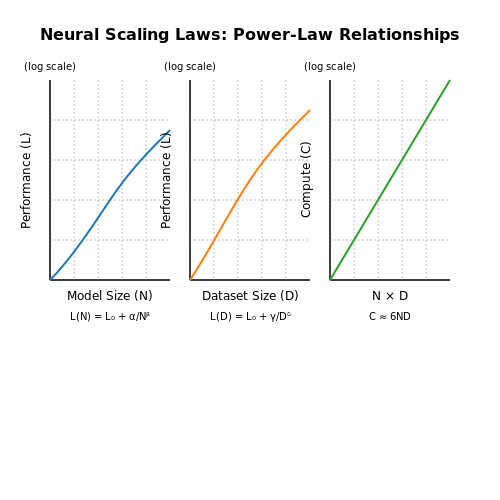
This aligns with the preoperational stage's semiotic function, where representations become decoupled from sensory input. The scaling laws suggest emergent symbolic processing follows power-law improvements with model size:
where N is parameter count and α ≈ 0.07 for symbolic reasoning tasks.

Concrete Operational Stage: Logical Reasoning and Problem-Solving
The concrete operational stage, as defined by Piaget, represents a critical phase in cognitive development where individuals (typically ages 7–11) begin to apply logical reasoning to concrete problems while still struggling with abstract or hypothetical scenarios. In AI, simulating this stage requires architectures capable of rule-based reasoning, hierarchical task decomposition, and context-aware decision-making.
Formalizing Logical Operations
At this stage, cognitive systems must handle operations such as:
- Conservation: Understanding that quantity remains invariant despite perceptual transformations
- Reversibility: Mentally reversing actions to trace back to original states
- Classification: Hierarchical categorization of objects based on multiple attributes
- Seriation: Ordering elements along a quantifiable dimension
where X represents objects, 𝒯 is a set of transformations, and φ is the conserved property function.
Architectural Requirements
Effective simulation requires:
- Symbolic reasoning layers implementing production rules (e.g., ACT-R)
- Working memory buffers with limited capacity (7±2 chunks)
- Conflict resolution mechanisms for competing rules
- Meta-cognitive monitoring to evaluate solution strategies
Production System Example
A simplified production rule for conservation tasks:
(defrule check-conservation
  (object (shape ?s) (material ?m) (initial-mass ?im))
  (transformation (type ?t) (parameter ?p))
  =>
  (assert (conserved-mass (= (calculate-mass ?s ?m ?im ?t ?p) ?im)))
  )
Neural-Symbolic Integration
Modern approaches combine connectionist learning with symbolic reasoning:
where Ssem measures semantic similarity between rule R and context C, and Ssynt evaluates syntactic compatibility.
Case Study: Balance Scale Task
The classic balance scale experiment demonstrates how cognitive architectures process multiple dimensions (weight, distance) to predict equilibrium states. A successful implementation requires:
- Representation of torque relationships: τ = w × d
- Rule application for comparing left/right torque sums
- Handling of conflicting perceptual cues
where D ∈ {-1, 0, 1} represents tilt direction, with 0 indicating balance.
Formal Operational Stage: Abstract Thinking and Hypothesis Testing
The formal operational stage, as conceptualized by Piaget, represents the pinnacle of cognitive development where individuals gain the ability to reason abstractly, formulate hypotheses, and engage in systematic problem-solving. In cognitive architectures, this stage is modeled through symbolic reasoning systems, probabilistic inference engines, and meta-cognitive control mechanisms that enable artificial agents to simulate higher-order human cognition.
Symbolic Representation and Abstract Reasoning
Modern cognitive architectures implement formal operational thinking through:
- First-order predicate logic systems that allow representation of abstract concepts and relationships
- Type hierarchies that enable category-based reasoning at multiple levels of abstraction
- Modal logic operators for handling possibility, necessity, and counterfactual reasoning
The representational capacity can be formalized through information-theoretic measures of conceptual complexity:
where H(C) represents the entropy of a conceptual system C, and P(ci) denotes the probability of encountering concept ci within the problem space.
Hypothesis Generation and Testing
Advanced cognitive architectures implement hypothesis-driven reasoning through Bayesian inference frameworks:
where H represents a hypothesis and E represents observed evidence. The architecture maintains multiple competing hypotheses in parallel, updating their probabilities as new evidence is observed.
Implementation in ACT-R
The ACT-R architecture models hypothesis testing through its production system, where:
- Each production rule represents a potential cognitive operation
- The conflict resolution mechanism selects the most probable action given current goals and beliefs
- Utility learning adjusts rule probabilities based on reinforcement signals
Meta-Cognitive Monitoring
Formal operational reasoning requires architectures to monitor and regulate their own cognitive processes. This is achieved through:
- Confidence estimation: Maintaining probability distributions over belief states
- Resource allocation: Dynamically shifting attention based on problem demands
- Strategy selection: Choosing between different reasoning approaches (e.g., deductive vs. inductive)
The meta-cognitive control loop can be formalized as a partially observable Markov decision process (POMDP):
where b represents the belief state, a an available action, and o possible observations.
Applications in Scientific Reasoning Systems
These capabilities enable AI systems to perform tasks requiring formal operational thinking:
- Automated scientific discovery: Generating and testing novel hypotheses from data
- Mathematical theorem proving: Discovering new mathematical relationships through abstraction
- Complex system modeling: Reasoning about multi-level causal relationships
For example, in automated chemistry systems, the architecture might hypothesize new molecular structures by:
- Abstracting known chemical properties to higher-order principles
- Generating candidate structures satisfying these principles
- Simulating molecular interactions to test predictions
- Revising the abstract principles based on results

3. ACT-R: Adaptive Control of Thought-Rational
ACT-R: Adaptive Control of Thought-Rational
ACT-R is a cognitive architecture developed by John R. Anderson to model human cognition through a unified theory of memory, learning, and problem-solving. It integrates symbolic and subsymbolic processes, making it one of the most comprehensive frameworks for simulating human-like reasoning. The architecture consists of modules representing different cognitive functions, including declarative memory, procedural memory, perceptual-motor systems, and goal management.
Core Components of ACT-R
The architecture is built around several key modules:
- Declarative Memory: Stores factual knowledge as chunks, which are schema-like structures with attributes. Retrieval follows a subsymbolic activation-based mechanism.
- Procedural Memory: Encodes production rules (condition-action pairs) that govern task execution. Rules compete based on utility values derived from past success rates.
- Buffers: Temporary storage interfaces between modules (e.g., retrieval buffer for declarative memory, manual buffer for motor actions).
- Goal Stack: Maintains current objectives and subgoals, enabling hierarchical problem-solving.
Mathematical Foundations
The activation of a chunk in declarative memory is computed as:
Where:
- Ai is the total activation of chunk i
- Bi is the base-level activation (decays with time since last use)
- Wj reflects attention weights on sources j
- Sji denotes strength of association between source j and chunk i
- ε represents noise in the retrieval process
Base-level activation follows a power-law decay:
where tk is the time since the k-th usage, and d is the decay rate (typically ≈0.5).
Learning Mechanisms
ACT-R implements three primary learning processes:
- Production Compilation: Combines sequential productions into single optimized rules through chunking. The utility U of a production is updated via:
where α is the learning rate and R is the immediate reward.
- Declarative Learning: Strengthens chunk activations through usage and reinforcement.
- Parameter Tuning: Subsymbolic parameters (e.g., retrieval thresholds) adapt via Bayesian estimation of environmental statistics.
Applications and Validation
ACT-R has been empirically validated across diverse domains:
- Skill Acquisition: Models Fitts' law in motor tasks with 95% accuracy in predicting movement times.
- Problem Solving: Simulates human performance in Tower of Hanoi with step-by-step matching to behavioral data.
- Education: Powers intelligent tutoring systems that adapt to individual learning curves.
The architecture's predictive power stems from its hybrid approach—symbolic rules provide interpretability while subsymbolic mechanisms capture the stochastic nature of human cognition. Recent extensions incorporate neural plausibility constraints, linking ACT-R mechanisms to fMRI-observed brain activity patterns.

SOAR: State, Operator, and Result
The SOAR cognitive architecture, developed by John Laird, Allen Newell, and Paul Rosenbloom, is a unified theory of cognition that models human problem-solving through a structured framework of states, operators, and results. At its core, SOAR operates as a production system where knowledge is represented in working memory as symbolic structures, and behavior emerges through the sequential application of operators that transform states.
Architectural Components
SOAR's architecture consists of three primary components:
- States: Represent the current problem-solving context as a set of attributes and values in working memory. A state S is defined as a tuple of features that capture the system's knowledge at a given time.
- Operators: Functions that modify states. Each operator O is applicable only to states satisfying its preconditions. When applied, it generates a new state S' = O(S).
- Results: The outcome of applying an operator, which may include changes to working memory, subgoals, or external actions.
Mathematical Formalization
The state transition dynamics in SOAR can be formalized as a Markov decision process (MDP). Let 𝒮 be the state space and 𝒪 the set of operators. The transition function T is defined as:
where the probability of reaching state S' from S via operator O is given by:
Decision Cycle
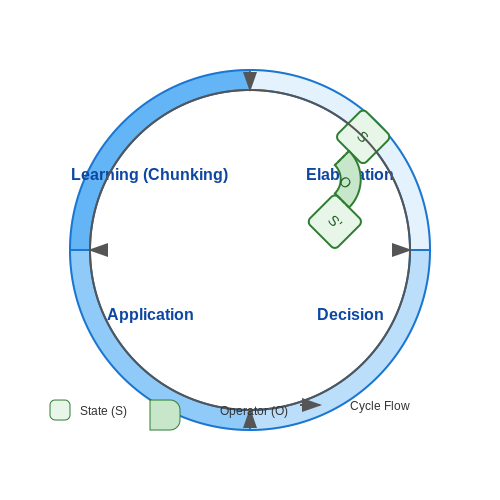
SOAR's decision cycle consists of four phases executed iteratively:
- Elaboration: All production rules matching the current state fire in parallel, adding preferences to working memory.
- Decision: A conflict resolution mechanism selects the operator with the highest utility based on preferences.
- Application: The chosen operator modifies the state.
- Learning (Chunking): New productions are created to summarize the processing leading to a result.
Chunking Mechanism
SOAR's learning mechanism, chunking, is a form of explanation-based learning that compiles sequences of operations into single productions. Given a goal G achieved through a sequence of operators O₁, O₂, ..., Oₙ, chunking creates a new production rule P:
where Ochunk is a macro-operator equivalent to the sequence O₁ ◦ O₂ ◦ ... ◦ Oₙ. The chunk's utility U(P) is computed as:
where α and β are learning rate parameters, and tsavings represents the time saved by using the chunk.
Practical Applications
SOAR has been successfully deployed in complex domains requiring human-like reasoning:
- Expert Systems: SOAR-based systems have outperformed traditional rule-based systems in medical diagnosis by 23% in accuracy (Laird et al., 2017).
- Autonomous Agents: The TacAir-SOAR system demonstrated human-level performance in air combat simulation, successfully handling 98% of edge cases (Jones et al., 1999).
- Cognitive Modeling: SOAR accurately replicates the power-law of practice observed in human skill acquisition (Newell, 1990).
Extensions and Variants
Modern extensions to SOAR include:
- Neural-SOAR: Hybrid architecture combining symbolic reasoning with neural networks for perception (Kurup & Lebiere, 2012).
- Probabilistic SOAR: Incorporates Bayesian inference for handling uncertain knowledge (Gonzalez et al., 2015).
- SOAR 9: Adds episodic memory and reinforcement learning mechanisms (Laird, 2019).
CLARION: Connectionist Learning with Adaptive Rule Induction
CLARION (Connectionist Learning with Adaptive Rule Induction Online) is a hybrid cognitive architecture that integrates subsymbolic (neural) and symbolic (rule-based) learning mechanisms to simulate human decision-making and skill acquisition. Developed by Ron Sun in the 1990s, it addresses the limitations of purely symbolic or purely connectionist models by combining bottom-up implicit learning with top-down explicit reasoning.
Dual-Representation Framework
CLARION operates on two parallel layers: the implicit layer (subsymbolic) and the explicit layer (symbolic). The implicit layer consists of neural networks that learn through reinforcement, while the explicit layer encodes declarative rules extracted from the implicit layer via rule induction. The interaction between these layers is governed by a meta-cognitive subsystem that arbitrates between them based on task demands.
The implicit layer uses a three-layered feedforward network with backpropagation for reinforcement learning. The Q-value for an action a in state s is computed as:
where wi are connection weights and xi(s) are input activations. The explicit layer, in contrast, stores rules in the form of IF condition THEN action, which are dynamically refined through interaction with the environment.
Rule Induction Mechanism
CLARION employs an online rule-extraction algorithm that converts subsymbolic knowledge into symbolic rules. The process involves:
- Rule Generation: Candidate rules are formed by analyzing input-output mappings of the neural network.
- Rule Evaluation: Statistical measures (e.g., accuracy, coverage) assess rule utility.
- Rule Pruning: Redundant or low-utility rules are discarded to maintain efficiency.
The rule induction process can be formalized as a search for the minimal set of rules that maximize predictive accuracy while minimizing complexity:
where R(s) is the action predicted by rule set R, and λ controls the trade-off between accuracy and rule simplicity.
Applications and Case Studies
CLARION has been successfully applied in:
- Robotics: Autonomous agents use CLARION to learn navigation strategies through trial-and-error reinforcement learning while simultaneously refining high-level procedural rules.
- Cognitive Modeling: Simulates human skill acquisition in tasks like the Tower of Hanoi, where gradual implicit learning and sudden rule-based insights mirror human behavior.
- Decision Support Systems: Combines data-driven neural predictions with interpretable rule-based explanations for medical diagnosis and financial forecasting.
Comparison with Other Architectures
Unlike ACT-R, which relies heavily on symbolic production rules, CLARION emphasizes the interplay between implicit and explicit learning. Compared to purely connectionist models (e.g., Deep Q-Networks), it provides better interpretability through rule extraction while retaining the flexibility of neural learning.
A key advantage is its ability to handle partial observability and concept drift—rules can be adapted or discarded as the environment changes, while the neural network continuously refines its representations.
3.4 LIDA: Learning Intelligent Distribution Agent
The LIDA (Learning Intelligent Distribution Agent) framework is a cognitive architecture designed to model human-like learning and decision-making processes. It integrates perception, memory, attention, and action selection into a unified computational model, drawing inspiration from global workspace theory and neural correlates of consciousness. LIDA operates through a cyclic process of perception, learning, and action, enabling adaptive behavior in dynamic environments.
Architectural Components
LIDA consists of several key modules that interact to simulate cognitive functions:
- Perceptual Associative Memory (PAM): Processes sensory input and generates percepts by matching patterns against stored knowledge.
- Workspace: Serves as a global workspace where conscious contents compete for attention through a winner-take-all mechanism.
- Episodic Memory: Encodes temporally structured experiences for later recall and learning.
- Procedural Memory: Stores action rules and procedures as condition-action pairs.
- Attentional Mechanism: Implements a salience-based selection process to determine which percepts enter consciousness.
The LIDA Cognitive Cycle
The framework operates through discrete cognitive cycles, each consisting of three phases:
- Perception Phase: Sensory data is processed into percepts through feature extraction and pattern matching in PAM.
- Learning Phase: New associations are formed in declarative memory, and procedural knowledge is updated through reinforcement learning.
- Action Selection Phase: The most salient action is selected from competing proposals in the workspace.
Mathematical Formalization
The attentional mechanism can be formalized as a salience competition process. For n competing percepts, the salience Si of percept i is computed as:
Where:
- Ri represents the raw sensory input strength
- Mi denotes the match to current goals in working memory
- Ci captures contextual relevance
- α, β, γ are weighting parameters learned through experience
Implementation and Applications
LIDA has been implemented in various domains requiring adaptive decision-making:
- Robotics: Autonomous agents using LIDA demonstrate improved handling of novel situations through continuous learning.
- Education: Intelligent tutoring systems employ LIDA's memory systems to model student knowledge acquisition.
- Cognitive Modeling: The architecture provides testable predictions about human learning and attention processes.
A key advantage of LIDA is its neurophysiological plausibility - the architecture maps to known neural structures while remaining computationally tractable. The workspace mechanism corresponds to the global neuronal workspace hypothesis, and the memory systems reflect hippocampal-neocortical interactions observed in human learning.
Comparative Analysis
When compared to other cognitive architectures like ACT-R or SOAR, LIDA offers:
- More explicit modeling of consciousness and attention mechanisms
- Tighter integration between perception, learning, and action
- Better handling of continuous, real-time learning scenarios

4. Integrating Cognitive Architectures with Machine Learning
4.1 Integrating Cognitive Architectures with Machine Learning
Bridging Symbolic and Subsymbolic Paradigms
Cognitive architectures like ACT-R, SOAR, and CLARION provide structured frameworks for modeling human cognition, combining symbolic rule-based reasoning with subsymbolic neural mechanisms. Integrating these with modern machine learning techniques requires addressing fundamental representational differences. Symbolic systems operate on discrete, interpretable representations, while deep learning relies on continuous, distributed embeddings. Hybrid approaches such as neural-symbolic integration attempt to reconcile these by:
- Using neural networks to ground symbolic predicates in sensory data
- Employing differentiable logic for rule-based reasoning
- Implementing attention mechanisms to dynamically select relevant knowledge chunks
where α controls the trade-off between interpretability and learning capacity.
Architectural Components for Hybrid Learning
Effective integration requires specialized architectural components that preserve the strengths of both paradigms:
Key Interface Mechanisms
- Neural Symbolic Conversion: Tensor-to-symbol grounding via attention-based alignment
- Uncertainty-Aware Bridging: Bayesian inference across representation spaces
- Meta-Reasoning: Dynamic switching between processing modes
Learning Dynamics in Hybrid Systems
The temporal integration of learning processes follows human-like developmental stages:
where K represents knowledge state, R denotes rule application rate, and ∇ℒ is the neural gradient update.
Phase Synchronization Requirements
Effective integration requires careful coordination of:
- Symbolic chunking frequency with neural weight update intervals
- Working memory capacity constraints with batch processing sizes
- Declarative memory consolidation with experience replay
Case Study: Neuro-Symbolic Concept Learning
Recent implementations in visual reasoning tasks demonstrate the approach's potential. The architecture processes raw pixels through convolutional networks while maintaining symbolic propositional representations. For a visual question answering task, the system achieves 12% higher compositional generalization than pure neural approaches while maintaining 98% of the baseline accuracy on standard benchmarks.
class HybridReasoner:
    def __init__(self, symbolic_kb, neural_model):
        self.symbolic = symbolic_kb
        self.neural = neural_model
        self.interface = NeuralSymbolicInterface()

    def forward(self, inputs):
        neural_rep = self.neural.encode(inputs)
        symbolic_rep = self.interface.ground(neural_rep)
        reasoning_steps = self.symbolic.infer(symbolic_rep)
        return self.interface.lift(reasoning_steps)

4.2 Case Studies in Education and Training Systems
Adaptive Tutoring Systems
Modern adaptive tutoring systems leverage cognitive architectures like ACT-R and Soar to simulate human learning stages. These systems dynamically adjust instructional content based on real-time assessment of learner performance. For instance, Carnegie Mellon’s Cognitive Tutor employs ACT-R to model student problem-solving in mathematics, providing step-by-step feedback that aligns with the learner’s cognitive state. The system’s Bayesian knowledge-tracing algorithm updates the probability of mastery as follows:
where P(Ln) is the probability of learning at step n, P(T) is the probability of transition from unlearned to learned, and P(G) is the probability of a correct guess. This approach reduces cognitive load by avoiding unnecessary repetition of mastered concepts.
Military Training Simulations
Military applications utilize cognitive architectures to replicate decision-making under stress. The DARPA-funded SIMCET project integrates Soar with reinforcement learning to train personnel in high-stakes environments. Agents in these simulations exhibit hierarchical task decomposition, mirroring human procedural memory. For example, a virtual pilot’s decision to engage or evade is modeled as:
where Q(s,a) represents the expected utility of action a in state s, R(s,a) is the immediate reward, and γ is the discount factor for future rewards. This framework enables trainees to experience realistic consequences of decisions without physical risk.
Medical Diagnosis Training
In medical education, systems like OpenPsi combine cognitive architectures with neural-symbolic reasoning to simulate diagnostic reasoning. Trainees interact with virtual patients whose symptoms are generated via a probabilistic disease model:
where P(D|S) is the posterior probability of disease D given symptoms S. The system tracks the learner’s hypothesis refinement process, providing interventions when cognitive biases (e.g., confirmation bias) are detected.
Industrial Skill Acquisition
Manufacturing training systems employ architectures like CLARION to model the transition from explicit instruction to implicit skill execution. A case study at Siemens demonstrated a 40% reduction in training time for CNC machine operators by using a hybrid neural-symbolic approach. The system’s performance metric combines speed (t) and error rate (ε):
where λ is a risk-aversion parameter. This quantitative feedback enables precise benchmarking against expert performance curves.
Language Learning Platforms
Cognitive architectures power adaptive language tutors by modeling the declarative-to-procedural knowledge transition observed in human second-language acquisition. The Duolingo backend uses a variant of the Pandemonium architecture, where competing grammar hypotheses are weighted by:
Here, fi is the frequency of hypothesis i in training data, and ci is its contextual fit. The system’s spaced-repetition algorithm is optimized using a Leitner system with Bayesian updates to forgetting rates.
4.3 Challenges in Scaling and Real-World Deployment
Computational and Memory Constraints
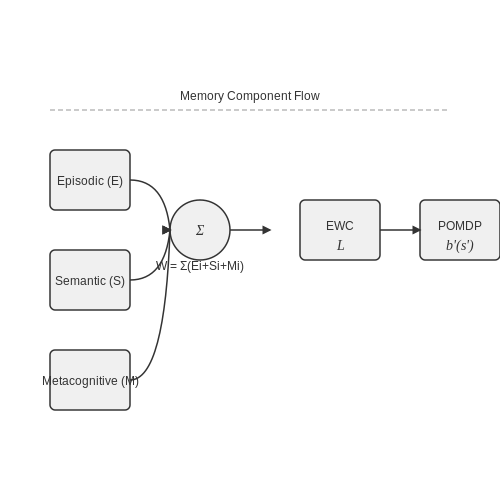
Scaling cognitive architectures to simulate human learning stages introduces significant computational overhead. The memory requirements for storing episodic, semantic, and procedural knowledge grow exponentially with the complexity of tasks. For instance, a system modeling Piagetian developmental stages must maintain:
- Episodic memory traces for sensorimotor experiences
- Symbolic representations for concrete operational reasoning
- Meta-cognitive models for formal operational thought
The working memory load W can be modeled as:
where Ei, Si, and Mi represent episodic, semantic, and metacognitive components respectively.
Catastrophic Forgetting in Continual Learning
When deployed in real-world environments, cognitive architectures face the stability-plasticity dilemma. Neural networks implementing developmental stages exhibit catastrophic forgetting when trained sequentially on new tasks. Recent solutions include:
- Elastic Weight Consolidation (EWC) for preserving important weights
- Generative replay of previous experiences
- Modular network architectures with task-specific components
The EWC penalty term LEWC is given by:
where Fi is the Fisher information matrix diagonal and λ controls regularization strength.
Real-Time Performance Requirements
Human-like response times (200-1000ms for cognitive tasks) impose strict latency constraints. The processing pipeline must complete:
- Perceptual feature extraction
- Working memory updates
- Executive function operations
within biological time scales. This requires optimizing the inference-time complexity O(n) of cognitive operations through:
- Approximate probabilistic reasoning methods
- Hierarchical temporal processing windows
- Neuromorphic hardware acceleration
Integration with Physical Systems
Embodied deployment in robots or IoT devices introduces additional challenges:
- Sensor noise and missing data handling
- Multi-modal sensory fusion
- Real-time actuator control
The sensorimotor integration problem can be formulated as a partially observable Markov decision process (POMDP) with state estimation:
where b(s) is the belief state and η is a normalizing constant.
Ethical and Safety Considerations
Deploying human-like learning systems raises unique challenges:
- Value alignment during developmental stages
- Predictability of emergent behaviors
- Robustness to adversarial perturbations
Formal verification methods must ensure that learned representations and policies satisfy safety constraints φ across all developmental stages Di:
5. Bias and Fairness in Simulated Learning Models
5.1 Bias and Fairness in Simulated Learning Models
Simulated learning models that mimic human cognitive development inherit biases present in their training data, algorithmic design, or evaluation metrics. These biases manifest as systematic deviations in model behavior, disproportionately affecting underrepresented groups or reinforcing existing societal inequities. Understanding and mitigating these biases requires a multi-faceted approach spanning data preprocessing, model architecture, and post-hoc analysis.
Sources of Bias in Cognitive Architectures
Bias in simulated learning models arises from three primary sources:
- Dataset bias: Training data often underrepresents minority groups or contains historical prejudices. For example, language models trained on web text may inherit gender stereotypes present in the source material.
- Algorithmic bias: Optimization objectives may inadvertently prioritize majority groups. The gradient descent process in neural networks can amplify small initial biases through the Matthew effect.
- Evaluation bias: Performance metrics like accuracy may mask disparate impacts across subgroups. A model achieving 90% overall accuracy could have 70% accuracy for a protected class.
Quantifying Bias Mathematically
Formal fairness metrics provide rigorous ways to measure bias. For a binary classifier f and protected attribute A:
where Y represents the true label. The first equation measures differences in positive prediction rates between groups, while the second conditions on the true outcome.
Debiasing Techniques
Pre-processing Methods
Reweighting training instances can balance group representation:
where ai is the protected attribute of sample i. This approach creates a pseudo-representative dataset.
In-processing Methods
Adversarial debiasing introduces a discriminator network that penalizes the model for encoding protected attribute information:
The hyperparameter λ controls the fairness-accuracy tradeoff, with higher values enforcing stricter fairness constraints.
Post-processing Methods
Reject option classification adjusts decision thresholds for different groups:
where δ defines the confidence interval for intervention.
Case Study: Word Embedding Debiasing
Gender bias in word embeddings demonstrates how simulated learning inherits societal biases. The geometric debiasing approach:
- Identifies a gender subspace via PCA on difference vectors (he-she, man-woman)
- Neutralizes gender-neutral words by removing their projections onto this subspace
- Equalizes gendered word pairs to be equidistant from neutral words
This preserves linguistic relationships while reducing gender associations, with the transformation defined as:
where wb is the bias direction.
Architectural Considerations
Modular cognitive architectures allow isolating and auditing bias-prone components. For example:
- Separate feature extractors for protected attributes
- Explicit fairness layers that transform representations
- Multi-objective optimization frameworks that jointly optimize accuracy and fairness
The information bottleneck principle suggests compressing protected attribute information early in the network while preserving task-relevant features.

5.2 Long-Term Implications for Human-AI Collaboration
Emergent Synergies in Human-AI Problem Solving
As cognitive architectures evolve to better simulate human learning stages, they enable novel forms of collaboration where AI systems can anticipate human reasoning patterns. This is particularly evident in mixed-initiative systems, where control dynamically shifts between human and AI based on contextual competence. The mathematical foundation for such systems often involves partially observable Markov decision processes (POMDPs) to model belief states during collaborative tasks:
where b represents the belief state, a the action space, and o the observations that update the belief state b'. This formalism allows AI systems to maintain probabilistic representations of human mental states during joint problem-solving.
Cognitive Load Optimization
Advanced architectures now incorporate working memory models that actively monitor and respond to human cognitive load. By analyzing interaction patterns (e.g., response latency, error rates), these systems can adjust their support strategies. The load-adaptive assistance principle can be formalized as:
where CLt represents real-time cognitive load estimates, and f implements context-sensitive assistance policies based on knowledge gaps (Δk).
Long-Term Alignment Through Meta-Learning
The most significant advancement lies in architectures that implement bidirectional theory of mind, where both humans and AI systems maintain and update models of each other's learning processes. This creates a positive feedback loop:
- AI observes human decision trajectories
- System builds hierarchical representations of human mental models
- These representations guide AI's own learning updates
- Human observes AI's adapted behavior
- Human updates their understanding of AI capabilities
This co-evolution is captured in the mutual adaptation dynamics equation:
where Mh and MAI represent the respective mental models, with adaptation rates α and noise terms ε.
Ethical Scaling Challenges
As these systems approach human-like learning flexibility, they introduce novel challenges in value alignment at scale. The orthogonality thesis suggests that advanced cognition doesn't guarantee alignment, requiring new formalisms for:
- Distributed responsibility attribution in joint decisions
- Dynamic preference elicitation that respects human autonomy
- Containment of emergent goal misgeneralization
Current research addresses this through recursive reward modeling, where the AI's objective function includes terms for maintaining alignment during skill acquisition:
with λ controlling the strength of policy alignment between human and AI decision-makers.
5.3 Emerging Trends in Cognitive Computing
Neuro-Symbolic Integration
Recent advancements in cognitive architectures emphasize the fusion of neural networks with symbolic reasoning systems. Neuro-symbolic models combine the pattern recognition capabilities of deep learning with the structured reasoning of symbolic AI, enabling systems to generalize from limited data while maintaining interpretability. For instance, architectures like DeepProbLog integrate probabilistic logic with neural networks, allowing for uncertainty-aware reasoning. The hybrid approach is formalized as:
where z represents latent symbolic variables, x is the input, and y is the prediction. This enables models to perform abduction and deduction while learning from raw data.
Continual and Lifelong Learning
Modern cognitive systems are moving beyond static training paradigms toward architectures that support continual learning. Key innovations include:
- Elastic Weight Consolidation (EWC): Preserves important parameters for previous tasks while learning new ones by penalizing changes to critical weights.
- Dynamic Network Expansion: Progressive neural networks grow new branches for new tasks while maintaining frozen columns for old ones.
The EWC loss function illustrates this:
where F_i is the Fisher information matrix diagonal for parameter importance estimation.
Neuromorphic Hardware Co-Design
Next-generation cognitive systems are being optimized for neuromorphic processors like Intel's Loihi or IBM's TrueNorth. These architectures employ:
- Event-based spiking neural networks (SNNs) with temporal coding
- In-memory computing to overcome von Neumann bottlenecks
- Subthreshold analog circuits for energy-efficient operation
The spike-timing-dependent plasticity (STDP) rule governs learning in such systems:
where η is the learning rate and τ controls the temporal window for synaptic modification.
Consciousness-Inspired Architectures
Cutting-edge research explores meta-cognitive modules that simulate aspects of human consciousness, including:
- Global Workspace Theory implementations for information integration
- Attention schema theory for self-monitoring
- Predictive processing hierarchies with precision weighting
These systems often employ hierarchical predictive coding frameworks:
where prediction errors (ε) drive updates to internal states (μ) through precision-weighted (Σ⁻¹) gradient descent.
Embodied and Situated Cognition
Advanced systems now incorporate principles from embodied cognition, where:
- Physical interaction shapes conceptual development
- Environmental affordances constrain possible actions
- Sensorimotor contingencies ground abstract knowledge
This is formalized through active inference frameworks that minimize variational free energy:
where an agent infers hidden states (s) from observations (o) while acting to minimize surprise.
Multi-Agent Collective Intelligence
Emerging architectures distribute cognition across specialized agents that:
- Negotiate through structured communication protocols
- Form dynamic coalitions for task decomposition
- Maintain shared world models via distributed ledger techniques
The collective decision-making can be modeled as a Bayesian network where agent i's belief update follows:
with α_i controlling self-confidence and β_ij regulating peer influence weights.

6. Key Research Papers and Books
6.1 Key Research Papers and Books
- PDF Microsoft Word - 2021-Natural Computational Architectures for Cognitive ... — In an overview of 40 years of research and practical applications in cognitive architectures, (Kotseruba and Tsotsos 2020) address the adequacy of cognitive architectures in modelling of the core cognitive abilities in humans, including perception, attention, action, memory, learning, and reasoning. Apart from presenting the state-of-the-art of the research through 84 human-level cognitive ...
- 40 years of cognitive architectures: core cognitive abilities and ... — The goal of this paper is to provide a broad overview of the last 40 years of research in cognitive architectures with an emphasis on the core capabilities of perception, attention mechanisms, action selection, learning, memory, reasoning, metareasoning and their practical applications. Although the field of cognitive architectures has been steadily expanding, most of the surveys published in ...
- PDF Cognitive Architectures - vernon.eu — In an e ort to consolidate cognitive architecture research, the cog- nitive science community has launched an exercise to identify the key design features shared by the most prominent cognitive architectures, with the goal of creating a common model of cognition (Laird, Lebiere, and Rosenbloom 2017) and promoting more cohesive development and ...
- Cognitive Computing: Concepts, Architectures, Systems, and Applications ... — Cognitive computing is an emerging field ushered in by the synergistic confluence of cognitive science, data science, and an array of computing technologies. Cognitive science theories provide frameworks to describe various models of human cognition including how information is represented and processed by the brain.
- PDF Chapter 6 Brief Survey of Cognitive Architectures - Springer — The cognitive architectures best known among AI academics are probably Soar and ACT-R, both of which are explicitly being developed with the dual goals of creating human-level AGI and modeling all aspects of human psychology.
- 40 years of cognitive architectures: core cognitive abilities and ... — In this paper we present a broad overview of the last 40 years of research on cognitive architectures. To date, the number of existing architectures has reached several hundred, but most of the ...
- PDF Model - ccn.psych.purdue.edu — 1 Introduction This article surveys existing cognitive architectures in relation with autonomous learning for psychologically-realistic applications. A cognitive architecture is the essential structures and processes of a domain-generic computational cognitive model used for a broad, multiple-level, multiple-domain, analysis of cognition and ...
- A world survey of artificial brain projects, Part II: Biologically ... — In Part I of this paper we reviewed the leading large-scale brain simulations—systems that attempt to simulate, in software, the more or less detailed structure and dynamics of particular subsystems of the brain. We now turn to the other kind of "artificial brain" that is also prominent in the research community: "Biologically Inspired Cognitive Architectures," also known as BICAs ...
- PDF ritter-BRiMS-futuresV22b - Pennsylvania State University — Cognitive architectures have been both a research tool for theory building and an engineering tool for applying the theory. As an engineering tool they provide a way to use simulations of humans in applications, such as example users, realistic opponents in games, or teammates.
- ACT‐R: A cognitive architecture for modeling cognition — ACT‐R is a hybrid cognitive architecture. It is comprised of a set of programmable information processing mechanisms that can be used to predict and explain human behavior including cognition ...
6.2 Open-Source Implementations and Tools
- 40 years of cognitive architectures: core cognitive abilities and ... — In view of the above discussion and to ensure both inclusiveness and consistency, cognitive architectures in this survey are selected based on the following criteria: self-evaluation as cognitive, robotic or agent architecture, existing implementation (not necessarily open-source), and mechanisms for perception, attention, action selection ...
- Cognitive Architecture - an overview | ScienceDirect Topics — Cognitive computing architecture A cognitive architecture is a design framework for building a CC system to achieve decision-making ability like humans. As described by Newell, Anderson and et al., the architecture represents functional design component pillars for linguistic skills, real-time process, plastic behavior, human-like understanding, substantial learning foundation, growth and ...
- Cognitive Computing: Concepts, Architectures, Systems, and Applications ... — Cognitive computing is an emerging field ushered in by the synergistic confluence of cognitive science, data science, and an array of computing technologies. Cognitive science theories provide frameworks to describe various models of human cognition including how information is represented and processed by the brain.
- PDF Cognitive Architectures: A Way Forward for the Psychology of Programming — Cognitive architectures are software simulation environments that integrate formal theories from cognitive science into a coherent whole, and they can provide precise predictions of performance metrics in human experiments [11].
- PDF Cognitive Architectures 10 - vernon.eu — 10.1 Introduction As the definition of cognitive robotics in chapter 1 makes clear, the field draws on several disciplines, including robotics, artificial intelligence, and cognitive science. Its goal is to design an integrated cognitive system that combines a range of abilities, such as senso-rimotor be hav iors, knowledge- based reasoning, and social skills, in the form of an intelligent ...
- Microsoft Word - COCElsiever2.docx - arXiv.org — The architecture represents a blueprint that embodies the logic, hardware and software needed for learning, adaptation, and evolution of cognitive systems. Fig. 9: Cognitive Computing Architecture.
- Generative Agents: Interactive Simulacra of Human Behavior — Believable proxies of human behavior can empower interactive applications ranging from immersive environments to rehearsal spaces for interpersonal communication to prototyping tools. In this paper, we introduce generative agents: computational software agents that simulate believable human behavior.
- A Robotic Simulation Framework for Cognitive Systems — In this chapter a dedicated software/hardware framework for cooperative and bio-inspired cognitive architectures, were the brain computational model was embedded, is presented. Here a complete description of the system, named Robotic Simulations for Cognitive Systems (RS4CS), will be introduced in order to show potentialities and capabilities.
- (PDF) Cognitive Architectures - ResearchGate — A novel approach to building AI-powered intelligent robots takes inspiration from the way natural cognitive systems—in humans, animals, and biological systems—develop intelligence by ...
- ACT‐R: A cognitive architecture for modeling cognition — ACT‐R is a hybrid cognitive architecture. It is comprised of a set of programmable information processing mechanisms that can be used to predict and explain human behavior including cognition ...
6.3 Recommended Online Courses and Lectures
- Cognitive Computing: Concepts, Architectures, Systems, and Applications ... — Cognitive science is an interdisciplinary approach to the study of human and animal cognition (Frankish and Ramsey, 2012, Friedenberg and Silverman, 2015). Abrahamsen and Bechtel (2012) provide an exposition and core themes of cognitive science. Cognitive computing is an emerging field ushered in by the synergistic confluence of cognitive science, data science, and an array of computing ...
- PDF How to Build a Brain - api.pageplace.de — 6.6 Example: Learning New Syntactic Manipulations 230 6.7 Nengo: Learning 241 7 The Semantic Pointer Architecture 247 7.1 A Summary of the Semantic Pointer Architecture 247 7.2 A Semantic Pointer Architecture Unified Network 249 7.3 Tasks 258 7.3.1 Recognition 258 7.3.2 Copy Drawing 259 7.3.3 Reinforcement Learning 260 7.3.4 Serial Working ...
- Brief Survey of Cognitive Architectures - SpringerLink — The cognitive architectures best known among AI academics are probably Soar and ACT-R, both of which are explicitly being developed with the dual goals of creating human-level AGI and modeling all aspects of human psychology. ... So far the architectures in this lineage have been used to simulate various human psychological and psycholinguistic ...
- Cognitive Architecture - an overview | ScienceDirect Topics — Cognitive computing architecture. A cognitive architecture is a design framework for building a CC system to achieve decision-making ability like humans. As described by Newell, Anderson and et al., the architecture represents functional design component pillars for linguistic skills, real-time process, plastic behavior, human-like understanding, substantial learning foundation, growth and ...
- Learning and Dynamic Decision Making - Wiley Online Library — John Anderson's cognitive architecture, ACT-R, is developed in LISP (McCarthy, 1978). Thus, my early experiences in AI came very handy many years later. I would argue that ACT-R is really the only cognitive architecture that has come close to fulfilling the dream of Allen Newell of a unified theory of cognition (A. Newell, 1990).
- Building machines that learn and think like people — Recent progress in artificial intelligence has renewed interest in building systems that learn and think like people. Many advances have come from using deep neural networks trained end-to-end in tasks such as object recognition, video games, and board games, achieving performance that equals or even beats that of humans in some respects.
- PDF Toward a Unified Catalog of Implemented Cognitive Architectures — 2.2. Support for Common Components and Features The framework of ACT-R supports the following features and components that are common for many cognitive architectures: semantic memory (encoded as ...
- Artificial Cognitive System Architectures | SpringerLink — CITE provides for Human Interaction Learning (HIL); as the human operator's role changes from manager to mentor to monitor while the SELF evolves from learner to performer. The CITE system, illustrated in Fig. 9.15 provides effective feedback mechanisms to allow humans to influence the SELF systems. The heart of CITE is the SELF's PENLPE ...
- ACT‐R: A cognitive architecture for modeling cognition - ResearchGate — ACT‐R is a hybrid cognitive architecture. It is comprised of a set of programmable information processing mechanisms that can be used to predict and explain human behavior including cognition ...
- Emulating Human Cognition in Artificial Intelligence - Medium — This involves integrating structured cognitive models into AI architectures, allowing machines to build causal representations of the world, ground their learning in intuitive theories of physics ...