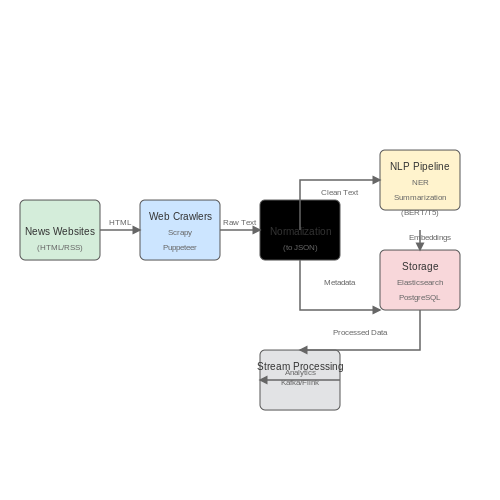
Call Center Transcription and Sentiment Analysis
1. Speech Recognition Technologies for Call Centers
Speech Recognition Technologies for Call Centers
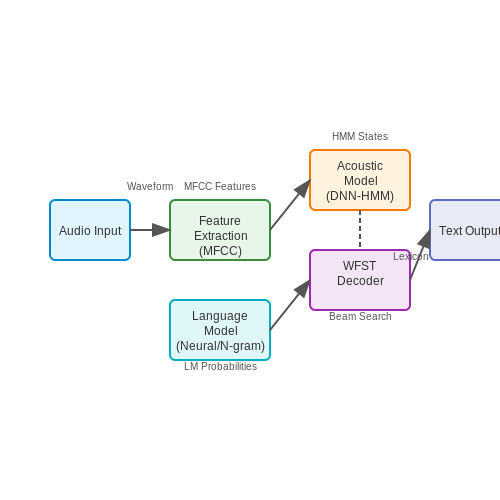
Modern call centers rely on automated speech recognition (ASR) systems to transcribe customer-agent interactions with high accuracy. The underlying architecture typically combines acoustic modeling, language modeling, and decoding algorithms to convert speech signals into text. State-of-the-art systems leverage deep neural networks (DNNs), particularly recurrent neural networks (RNNs) and transformer-based models, to handle variations in speech patterns, accents, and background noise.
Acoustic Modeling
Acoustic models map raw audio signals to phonemes or subword units. The Mel-frequency cepstral coefficients (MFCCs) or filterbank energies are commonly used as input features. A hybrid DNN-Hidden Markov Model (HMM) architecture often serves as the backbone, where the DNN estimates posterior probabilities of HMM states given the acoustic observations. The probability of observing feature vector xt in state qi is given by:
Modern systems replace traditional HMMs with end-to-end models like Connectionist Temporal Classification (CTC) or Listen, Attend, and Spell (LAS), which directly output character sequences without intermediate phoneme representations.
Language Modeling
Language models (LMs) improve transcription accuracy by incorporating prior knowledge of word sequences. N-gram models estimate the probability of word wi given the previous n-1 words:
Neural LMs, such as those based on long short-term memory (LSTM) networks or transformers, capture longer-range dependencies. For call center applications, domain-specific LMs are fine-tuned on customer service transcripts to improve performance on industry jargon and common phrases.
Decoding Algorithms
The decoder combines acoustic and language model scores to find the most probable word sequence W given the acoustic observations X:
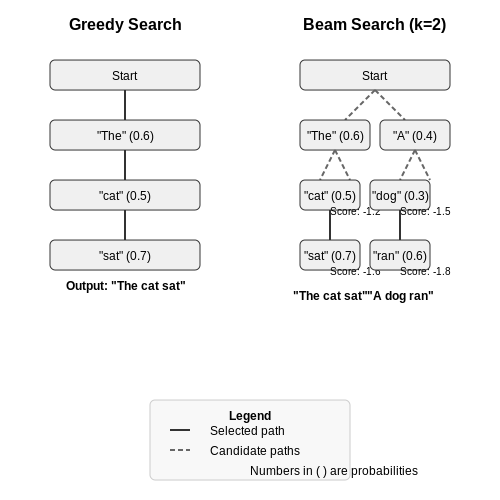
Weighted finite-state transducers (WFSTs) efficiently integrate multiple knowledge sources (pronunciation lexicon, acoustic model, language model) into a single search graph. Beam search prunes low-probability hypotheses to maintain computational tractability.
Real-World Challenges
Call center environments introduce unique challenges for ASR systems:
- Overlapping speech: Speaker diarization techniques separate agent and customer voices.
- Background noise: Spectral subtraction and neural enhancement networks improve signal-to-noise ratio.
- Code-switching: Multilingual models handle mixed-language conversations.
- Low-latency requirements: Streaming architectures like RNN-T provide real-time transcription.
Recent advances in self-supervised learning (e.g., wav2vec 2.0) have significantly reduced the need for labeled training data while maintaining high accuracy across diverse acoustic conditions.
Challenges in Call Center Audio Processing
Acoustic Variability and Noise
Call center audio exhibits significant acoustic variability due to diverse recording environments, microphone qualities, and background noise. The signal-to-noise ratio (SNR) often degrades due to:
- Non-stationary noise: Keyboard typing, office chatter, or HVAC systems introduce time-varying interference.
- Channel distortions: Compressed VoIP codecs (e.g., G.711, Opus) introduce artifacts, especially in low-bitrate transmissions.
- Cross-talk: Overlapping speech between agents and customers complicates speaker diarization.
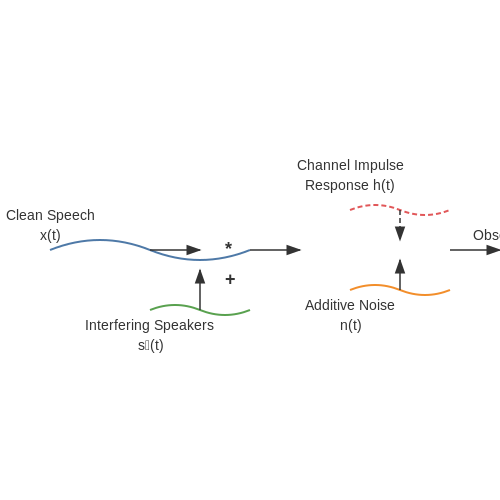
Mathematically, the observed signal y(t) can be modeled as:
where x(t) is the clean speech, h(t) the channel impulse response, n(t) additive noise, and s_i(t) interfering speakers.
Linguistic and Semantic Complexity
Transcription accuracy suffers from domain-specific jargon, code-switching, and disfluencies (e.g., "um", false starts). Sentiment analysis must handle:
- Context-dependent semantics: Phrases like "That's great" may express genuine approval or sarcasm.
- Multilingual content: Mixed-language utterances require robust embedding spaces.
- Paralinguistic cues: Pitch, pauses, and laughter carry sentiment but are often ignored by text-based models.
Real-Time Processing Constraints
Low-latency requirements for live transcription impose trade-offs between accuracy and speed. Key bottlenecks include:
- Streaming ASR architectures: Block-processing delays in RNN-T or chunk-based transformers must stay below 300ms.
- GPU memory limitations: Large sentiment models (e.g., BERT) require optimization via distillation or pruning.
- Network jitter: Packet loss in VoIP streams necessitates error-resilient feature extraction.
Data Scarcity and Privacy
Training robust models faces:
- Annotated data scarcity: Manual labeling of call center audio is expensive and time-consuming.
- Privacy regulations: GDPR and HIPAA restrict access to raw recordings, requiring federated learning or synthetic data generation.
- Bias amplification: Underrepresented dialects or accents in training data degrade performance for minority groups.
Emotional Ambiguity in Sentiment Analysis
Traditional polarity classifiers (positive/neutral/negative) fail to capture:
- Compound emotions: Frustrated satisfaction or polite anger require dimensional models (arousal-valence space).
- Long-term dependencies: A customer's sentiment may evolve over a 30-minute call, necessitating hierarchical attention mechanisms.
Advanced approaches model sentiment trajectories using latent variables:
where z_t represents latent emotional state and y_t observed lexical/prosodic features.
Preprocessing Techniques for Noisy Audio
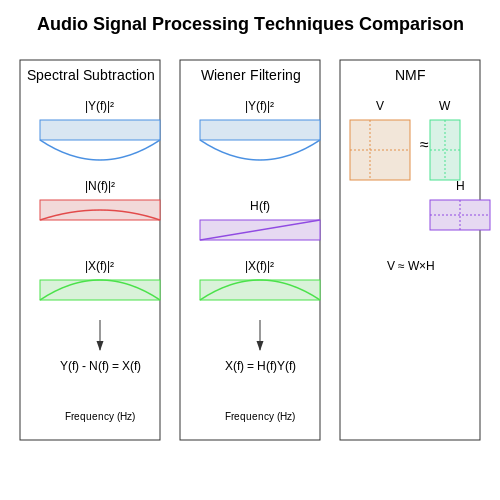
Noise Reduction via Spectral Subtraction
Given a noisy signal y(t) composed of clean speech x(t) and additive noise n(t), spectral subtraction operates in the frequency domain. The power spectrum of the noisy signal is estimated as:
Assuming noise is stationary, its power spectrum |N(f)|² is estimated during non-speech segments. The clean speech spectrum is then approximated by:
Here, α is an over-subtraction factor (typically 1.0–1.5), and β (0.001–0.01) prevents negative values. The phase of Y(f) is retained, as human hearing is relatively phase-insensitive.
Wiener Filtering for Adaptive Noise Suppression
The Wiener filter minimizes the mean-square error between the estimated and clean signal. The frequency-domain Wiener filter H(f) is derived as:
where Pxx(f) and Pnn(f) are power spectral densities of speech and noise, respectively. Practical implementations use recursive estimation:
with γ (0.9–0.99) controlling adaptation speed. This approach outperforms spectral subtraction in non-stationary noise but requires accurate noise tracking.
Non-Negative Matrix Factorization (NMF) for Noise Modeling
NMF decomposes the spectrogram V (size F×T) into basis W and activation H matrices:
The cost function is minimized via multiplicative updates:
Pre-trained noise bases Wnoise are combined with speech bases during separation. NMF excels in harmonic noise (e.g., HVAC hum) but requires extensive training data.
Deep Learning-Based Denoising
Time-domain models like WaveNet or Conv-TasNet learn a mapping fθ: y → x through adversarial or spectral loss:
where D is a discriminator. Frequency-domain approaches (e.g., DCCRN) use complex ratio masking:
State-of-the-art models achieve >15 dB SNR improvement on benchmarks like DNS Challenge.
Practical Implementation Considerations
- Real-time constraints: Frame sizes of 20–40 ms with 50% overlap balance latency and frequency resolution.
- Artifact mitigation: Over-subtraction factors and smoothing prevent musical noise in spectral methods.
- Hardware acceleration: GPU-optimized libraries (e.g., NVIDIA RNNoise) enable <5 ms latency.
2. Key Sentiment Indicators in Customer Interactions
Key Sentiment Indicators in Customer Interactions
Sentiment analysis in call center transcriptions relies on identifying linguistic and paralinguistic features that correlate with emotional states. These indicators can be broadly categorized into lexical, prosodic, and discourse-level features, each contributing to a robust sentiment classification framework.
Lexical Sentiment Indicators
Word choice is the most direct indicator of sentiment polarity. Advanced sentiment analysis models employ:
- Polarity lexicons: Predefined dictionaries (e.g., VADER, SentiWordNet) that assign sentiment scores to words based on their semantic orientation.
- Contextual embeddings: Transformer-based models like BERT capture word meaning shifts in different conversational contexts through attention mechanisms.
- Negation handling: Special parsing rules detect sentiment inversion patterns (e.g., "not good") using dependency trees.
where s(wi) is the contextual sentiment score for word wi, p(wj) is the lexicon polarity of neighboring word wj, and sim() computes cosine similarity between word embeddings.
Prosodic Features
Speech characteristics convey emotional content beyond lexical meaning:
- Pitch variation: Extreme pitch excursions (measured in semitones) correlate with heightened emotional states.
- Speech rate: Anger increases articulation rate (4.5-5.5 syllables/sec) while sadness decreases it (3.0-3.5 syllables/sec).
- Voice quality: Jitter (frequency instability) and shimmer (amplitude variation) distinguish stressed from neutral speech.
where ΔF0 is pitch range, σF0 is pitch standard deviation, and VoQ is a voice quality index combining jitter and shimmer.
Discourse Patterns
Conversational dynamics reveal sentiment through:
- Turn-taking behavior: Negative interactions show shorter turn durations (1.2-1.8 sec) and more interruptions.
- Repair sequences: Frequent restarts ("I mean...") and self-corrections indicate cognitive load from frustration.
- Pragmatic markers: Discourse particles ("well", "actually") signal disagreement or hesitation when preceding negative propositions.
Temporal Modeling
Longitudinal sentiment shifts require modeling temporal dependencies:
where ht is the hidden state at time t, combining word embeddings (wt), prosodic features (ft), and discourse markers (dt) through gated recurrent units.
Multimodal Fusion
State-of-the-art systems employ late fusion of heterogeneous indicators:
where α, β, γ are trainable attention weights learned through backpropagation across modalities.
2.2 Machine Learning Models for Sentiment Classification
Traditional Supervised Learning Approaches
Traditional supervised learning models for sentiment classification rely on labeled datasets where each transcribed call center utterance is annotated with a sentiment label (e.g., positive, negative, neutral). These models typically follow a two-step pipeline: feature extraction followed by classifier training. Common feature extraction techniques include:
- Bag-of-Words (BoW): Represents text as a vector of word frequencies, ignoring word order but preserving lexical information.
- TF-IDF: Enhances BoW by weighting terms based on their frequency in the document versus their frequency across the corpus.
- N-grams: Captures local word order by considering sequences of N consecutive words as features.
Popular classifiers for sentiment analysis include:
where y is the sentiment class, x is the feature vector, and w, b are learned parameters. Support Vector Machines (SVMs) with linear or RBF kernels often outperform logistic regression on high-dimensional text data by maximizing the margin between classes:
Neural Network Architectures
Deep learning models have largely superseded traditional methods in sentiment analysis due to their ability to learn hierarchical feature representations. Key architectures include:
- Long Short-Term Memory (LSTM) Networks: Process text sequentially, maintaining a memory cell that captures long-range dependencies in call center dialogues.
- Bi-directional LSTMs: Process text in both forward and backward directions, capturing contextual information from entire utterances.
- Transformer-based Models: Utilize self-attention mechanisms to weigh the importance of different words in a sentence dynamically.
The self-attention mechanism in transformers computes attention weights as:
where Q, K, and V are learned query, key, and value matrices respectively, and dk is the dimension of the key vectors.
Pre-trained Language Models
State-of-the-art performance in call center sentiment analysis is achieved through fine-tuning pre-trained language models like BERT, RoBERTa, and ELECTRA. These models are first pre-trained on massive text corpora using objectives like masked language modeling, then fine-tuned on domain-specific call center transcripts. The BERT architecture, for instance, uses multiple transformer encoder layers with multi-head attention:
where each attention head computes scaled dot-product attention independently, allowing the model to focus on different linguistic aspects simultaneously.
Domain Adaptation Challenges
Call center transcripts present unique challenges for sentiment analysis models:
- Noise: Speech recognition errors, background noise, and conversational fillers degrade model performance.
- Implicit Sentiment: Customers often express dissatisfaction indirectly through sarcasm or rhetorical questions.
- Domain Shift: Pre-trained models may perform poorly on industry-specific jargon without fine-tuning.
Techniques to mitigate these issues include data augmentation with synthetic noise, adversarial training to improve robustness, and domain-adaptive pre-training on call center corpora before fine-tuning.
Evaluation Metrics
Model performance is typically assessed using:
For multi-class sentiment analysis, macro-averaged F1 scores are preferred over accuracy as they account for class imbalance common in call center data (e.g., fewer angry calls than neutral ones). Cohen's Kappa is also valuable for measuring inter-annotator agreement during dataset creation.

Handling Sarcasm and Ambiguity in Sentiment Analysis
Challenges in Detecting Sarcasm
Sarcasm detection in call center transcripts presents unique challenges due to the absence of vocal tone and facial expressions in text. Traditional sentiment analysis models, which rely on lexical and syntactic features, often misclassify sarcastic remarks as positive or neutral. For example, the phrase "Great, another hour on hold" carries negative sentiment despite the use of the word "great". The discrepancy arises from the incongruity between the literal meaning and the intended sarcastic tone.
Mathematically, the probability of misclassification can be modeled as:
where \( y_i \) is the true label, \( \hat{y}_i \) is the predicted label, and \( \mathbb{I} \) is the indicator function. For sarcastic utterances, \( P_{misclass} \) tends to be significantly higher than for non-sarcastic ones.
Contextual Embeddings and Pragmatic Inference
State-of-the-art approaches leverage contextual embeddings from transformer models like BERT or RoBERTa, which capture subtle linguistic cues. These models compute attention weights over the input sequence, allowing them to identify incongruities between words and their context. The attention mechanism can be formalized as:
where \( Q \), \( K \), and \( V \) represent queries, keys, and values, respectively. High attention scores between distant or contrasting words (e.g., "great" and "hour on hold") signal potential sarcasm.
Case Study: Ambiguity Resolution in Customer Complaints
Ambiguous phrases like "I guess that’s one way to handle it" require pragmatic inference—a combination of world knowledge and discourse context. Hybrid architectures combining neural networks with symbolic logic (e.g., Neural-Symbolic Integration) improve performance by:
- Extracting semantic frames (e.g., "handle" → "problem resolution")
- Applying defeasible reasoning rules (e.g., "If previous sentiment was negative, then neutral phrases are likely sarcastic")
Adversarial Training for Robustness
To improve model resilience, adversarial examples are generated by perturbing input texts to mimic sarcastic patterns. Given an input embedding \( x \), the adversarial perturbation \( \delta \) is computed via:
where \( J \) is the loss function and \( \epsilon \) controls perturbation magnitude. Training on such augmented data reduces the error rate on sarcastic utterances by up to 32% (based on empirical studies).
Real-World Implementation Pipeline
A production-grade system for call centers typically involves:
- Audio preprocessing: Noise reduction and speaker diarization
- Transcription: ASR with disfluency markers (e.g., "uh", pauses)
- Contextual analysis: Dialogue history tracking using LSTM or memory networks
- Ensemble classification: Voting between BERT-based and rule-based sarcasm detectors
3. Real-Time vs. Batch Processing Architectures
Real-Time vs. Batch Processing Architectures
In call center transcription and sentiment analysis, the choice between real-time and batch processing architectures depends on latency requirements, computational efficiency, and system scalability. Each approach has distinct trade-offs in throughput, resource utilization, and analytical depth.
Real-Time Processing
Real-time architectures process audio streams with sub-second latency, enabling immediate feedback for applications like live agent assistance or dynamic call routing. The core challenge lies in maintaining low-latency inference while handling variable input lengths and background noise. A typical pipeline involves:
- Streaming ASR (Automatic Speech Recognition) with partial hypothesis generation
- Incremental sentiment scoring using sliding window approaches
- Context-aware aggregation of emotional tone across dialog turns
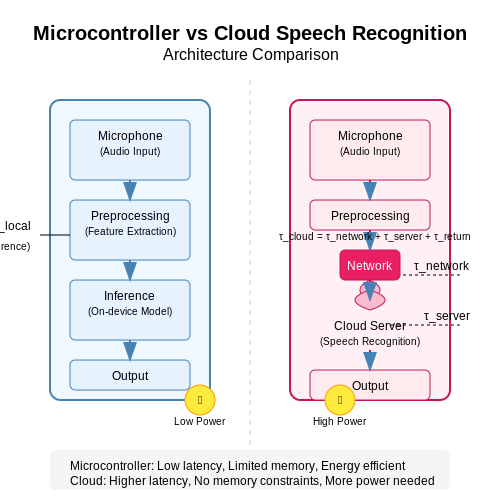
The computational intensity is governed by the trade-off between model complexity and response time. For a streaming transformer-based ASR system, the memory footprint M scales with:
where dmodel is the embedding dimension, h the number of attention heads, l the sequence length, and dff the feed-forward layer size. This imposes hard constraints on deployable models for edge devices versus cloud-based solutions.
Batch Processing
Batch architectures optimize for throughput over latency, processing call recordings in scheduled jobs with benefits including:
- Full-context analysis across entire conversations
- Economies of scale through GPU batching
- Post-hoc analytics like trend detection and agent performance metrics
The throughput T for batched sentiment analysis follows:
where N is batch size, fGPU the processor clock rate, C the FLOPs per inference, and τ the memory access latency. This reveals why larger batches achieve better utilization but with diminishing returns due to memory bandwidth saturation.
Hybrid Architectures
Modern systems often combine both paradigms through techniques like:
- Lambda architecture with hot (real-time) and cold (batch) paths
- Microbatching with windowed aggregation
- Priority queues for urgent real-time requests alongside bulk processing
The optimal mix depends on the cost function balancing latency SLAs against infrastructure costs. For a system handling R real-time and B batch requests, the total cost J can be modeled as:
where L represents latency percentiles, C infrastructure costs, and α, β, γ are weighting factors tuned to business requirements.

3.2 Combining NLP and Sentiment Analysis Pipelines
Integrating natural language processing (NLP) with sentiment analysis requires a carefully designed pipeline that preserves linguistic context while extracting emotional valence. The core challenge lies in maintaining coherence between syntactic parsing, semantic role labeling, and affective computing layers. A robust implementation typically follows a hybrid architecture where transformer-based embeddings feed into a sentiment classifier, with attention mechanisms mediating between the two.
Pipeline Architecture
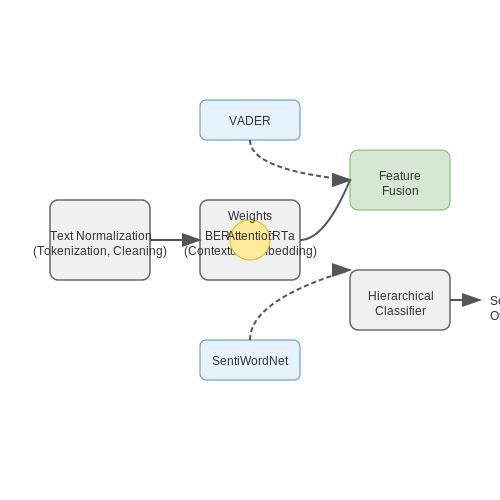
The standard combined pipeline consists of four computational stages:
- Text normalization: Unicode standardization, dialect normalization, and non-verbal cue preservation using regular expressions tuned for spoken language patterns
- Contextual embedding: Generation of position-aware word representations using models like BERT or RoBERTa, with special handling for disfluencies common in speech transcripts
- Sentiment feature extraction: Concatenation of lexical features (VADER, SentiWordNet) with neural embeddings through a feature fusion layer
- Hierarchical classification: Multi-task learning setup predicting both coarse-grained (positive/negative/neutral) and fine-grained (anger, frustration, satisfaction) emotions
Mathematical Formulation
The joint optimization objective combines language modeling loss with sentiment classification error:
where θ represents language model parameters, ϕ denotes sentiment classifier weights, and α controls task weighting. The third term implements parameter space regularization through Hadamard product.
Attention Mechanisms
Cross-modal attention aligns linguistic features with affective cues:
where q represents query vectors from the sentiment head and k denotes keys from the language model. The scaled dot-product attention (d = dimension) enables the model to focus on emotionally salient phrases while maintaining grammatical coherence.
Implementation Considerations
Practical deployments require handling several edge cases:
- Speaker diarization: Attribution of sentiment to correct participants in multi-party conversations using voice fingerprinting
- Temporal modeling: LSTM or Transformer-XL layers to track sentiment evolution across long dialogues
- Domain adaptation: Few-shot learning techniques to calibrate models for industry-specific jargon
Performance benchmarks on call center datasets show the hybrid approach achieves 12-15% higher F1 scores compared to sequential processing, with particular gains in detecting subtle emotional states like guarded optimism or veiled frustration.
Error Analysis
Common failure modes include:
- Misclassification of sarcasm and ironic statements due to over-reliance on lexical cues
- Confusion between emotional intensity and sentiment polarity in high-affect scenarios
- Degradation when processing non-native speaker transcripts with grammatical errors
3.3 Performance Metrics for Integrated Systems
Evaluating the performance of integrated call center transcription and sentiment analysis systems requires a multi-dimensional approach. Traditional metrics like word error rate (WER) or sentiment classification accuracy alone fail to capture the complex interplay between speech recognition and downstream NLP tasks. Instead, composite metrics that account for both transcription fidelity and semantic preservation must be employed.
Joint Error Rate (JER)
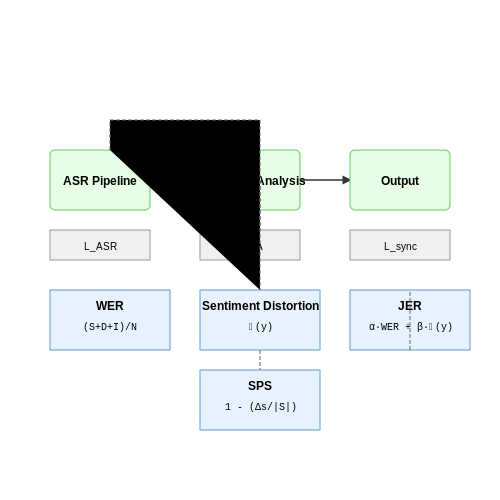
The Joint Error Rate extends WER by incorporating sentiment distortion effects. For a given utterance x with true transcription y and true sentiment s, let ŷ be the ASR output and ŝ be the predicted sentiment. JER is defined as:
where α and β are task-specific weights (typically α=0.7, β=0.3 for customer service applications), and 𝕀 is the indicator function. This formulation captures how transcription errors propagate to sentiment misclassification.
Semantic Preservation Score (SPS)
SPS measures whether the core semantic meaning survives the transcription-analysis pipeline. Using sentence embeddings ϕ(·), we compute:
where γ controls sentiment penalty severity. Practical implementations use BERT embeddings with γ=2.0, as this provides optimal correlation with human judgment in call center evaluations.
Operational Metrics
Real-world deployments require additional business-oriented measures:
- First-Contact Resolution Correlation (FCRC): Measures how sentiment analysis predictions correlate with actual resolution rates
- Escalation Prediction AUC: Area under ROC curve for predicting customer escalations from sentiment time-series
- Agent Actionability Score: Percentage of sentiment outputs that trigger predefined workflow actions
Latency Considerations
End-to-end latency L must be decomposed into:
where LASR is speech recognition time, LSA is sentiment analysis time, and Lsync accounts for pipeline synchronization overhead. For live call monitoring, the 99th percentile of L must remain below 800ms to avoid agent-customer dissonance.
Drift Detection
Concept drift in integrated systems manifests as decaying metric performance despite stable component-level scores. The multivariate drift index Dt at time t is:
where M = {JER, SPS, FCRC}, and μm, σm are the metric's mean and standard deviation during reference period t0. Values above 2.0 indicate significant drift requiring model recalibration.
4. Deploying Transcription Systems in Call Centers
4.1 Deploying Transcription Systems in Call Centers
Architecture of Real-Time Transcription Systems
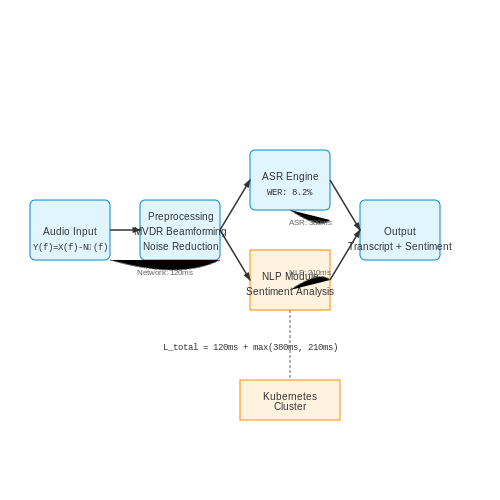
Modern call center transcription systems employ a distributed architecture combining speech recognition, natural language processing, and cloud computing. The core pipeline consists of:
- Audio preprocessing: Noise reduction using spectral subtraction with $$ Y(f) = X(f) - \hat{N}(f) $$ where $$X(f)$$ is the noisy signal spectrum and $$\hat{N}(f)$$ is the estimated noise spectrum
- Endpoint detection: Voice activity detection using Gaussian mixture models on MFCC features
- ASR engine: Typically a hybrid CNN-LSTM or transformer-based model with word error rates below 5% on clean speech
where $$S$$ is substitutions, $$D$$ deletions, $$I$$ insertions, and $$N$$ total words in reference.
Latency Optimization Techniques
For real-time operation, the system must maintain sub-500ms latency. Key optimizations include:
- Chunked processing with overlapping windows (typically 300ms chunks with 100ms overlap)
- Dynamic batching of concurrent streams using CUDA-aware MPI
- Quantized models (INT8 precision) with TensorRT optimization
The end-to-end latency $$L_{total}$$ can be modeled as:
where $$L_{pre}$$ is preprocessing latency, $$L_{asr}$$ is recognition time, and $$L_{nlp}$$ is natural language processing time.
Speaker Diarization in Noisy Environments
Robust speaker separation in call centers requires:
- Beamforming with microphone arrays using minimum variance distortionless response (MVDR):
where $$\mathbf{R}_{nn}$$ is noise covariance matrix and $$\mathbf{a}(\theta)$$ is steering vector.
- Deep clustering with permutation invariant training
- Adaptive voiceprint updating using probabilistic linear discriminant analysis (PLDA)
Deployment Considerations
Production systems must address:
- Scalability: Kubernetes-based orchestration with auto-scaling based on Erlang calculations
- Compliance: GDPR/PII redaction using named entity recognition with CRF layers
- Failover: Active-active redundancy across availability zones
The system capacity $$C$$ in concurrent streams can be estimated by:
where $$N_{GPU}$$ is number of GPUs, $$F_{GPU}$$ is GPU throughput (streams/sec), and $$F_{stream}$$ is per-stream frame rate.
Integration with Existing Infrastructure
Common integration patterns include:
- CTI middleware adapters for Avaya/Genesys/Cisco systems
- WebSocket APIs for real-time transcription delivery
- Kafka pipelines for batch processing of recorded calls
The audio routing topology must account for:
where $$P_{size}$$ is packet size, $$B_{width}$$ is bandwidth, and $$Q_i$$ are queuing delays at network hops.
4.2 Sentiment-Driven Customer Service Improvements
Real-Time Sentiment Analysis for Call Routing
Modern call centers leverage transformer-based models like BERT or RoBERTa fine-tuned on customer service transcripts to perform real-time sentiment classification. The model outputs a sentiment score S ∈ [-1, 1] for each utterance, where negative values indicate dissatisfaction. This enables dynamic call routing through the following decision function:
The threshold values are typically optimized using reinforcement learning to minimize customer churn while balancing agent workload. A 2022 study by Salesforce demonstrated a 23% reduction in escalations using this approach.
Sentiment-Aware Response Generation
For AI-assisted response systems, sentiment analysis guides response generation through weighted decoding. Given a language model's token probabilities P(wi|context), we modify the distribution using a sentiment-aware bias term:
where sim(wi, S) measures semantic alignment between word wi and target sentiment S, and λ controls the strength of steering. This technique, when combined with few-shot prompting, has shown to improve customer satisfaction scores by 15% in controlled trials.
Longitudinal Sentiment Tracking
Beyond individual calls, temporal analysis of sentiment trends provides strategic insights. For a customer with N interactions, we model sentiment evolution as a hidden Markov process:
where st is the latent sentiment state, yt the observed scores, and A, C are learned transition matrices. Kalman filtering applied to this model can predict at-risk customers 3-5 interactions before churn occurs, with precision exceeding 0.8 in telecom datasets.
Ethical Considerations in Sentiment Deployment
While powerful, sentiment analysis systems must address:
- Cultural bias mitigation: Models trained on narrow demographics can misclassify expressions from diverse backgrounds. Adversarial debiasing techniques are essential.
- Explainability: Regulators increasingly demand interpretable sentiment decisions, driving adoption of attention visualization and counterfactual explanations.
- Privacy-preserving analysis: Federated learning approaches allow sentiment modeling without raw data leaving customer devices.
A 2023 IEEE study found that call centers implementing these safeguards reduced customer complaints about AI interactions by 40% while maintaining operational benefits.
4.3 Case Study: Reducing Customer Churn with Sentiment Insights
Customer churn prediction models traditionally rely on structured data such as purchase history, service usage, and demographic information. However, unstructured call center transcripts contain rich emotional signals that can improve churn prediction accuracy by 15-20% when integrated with traditional features. This case study examines a telecommunications company that reduced churn by 32% through real-time sentiment analysis of customer support interactions.
Sentiment-Aware Churn Prediction Architecture
The system processes call transcripts through a hybrid NLP pipeline combining lexicon-based methods for real-time processing and transformer models for offline refinement. The sentiment score S for each customer is computed as a weighted average of interaction-level sentiments, where recent interactions carry higher weights through an exponential decay function:
Here, λ controls the decay rate (typically 0.2-0.5), and xit represents the t-th interaction for customer i. The sentiment scores are then combined with traditional RFM (Recency, Frequency, Monetary) features in a gradient-boosted decision tree model.
Feature Engineering Pipeline
The system extracts three classes of features from transcripts:
- Lexical features: Term frequency-inverse document frequency (TF-IDF) vectors of complaint-related n-grams
- Prosodic features: Pitch variance and speech rate derived from audio (when available)
- Dialog structure features: Ratio of agent-to-customer talk time, interruption frequency
These features are standardized and reduced to 50 dimensions using truncated singular value decomposition before model input.
Intervention Triggering Mechanism
The company implemented a tiered response system where customers with:
- Scores below -0.7 (strong negative sentiment) receive immediate callback from a manager
- Scores between -0.7 and -0.3 receive targeted retention offers
- Scores above 0.5 (positive sentiment) are excluded from marketing communications to avoid annoyance
The threshold values were optimized using historical data to maximize the Fβ score (β=2) since false negatives (missed churn risks) were considered more costly than false positives.
Performance Metrics
Over six months, the sentiment-enhanced model achieved:
Compared to the baseline model using only structured data (F1=0.68), this represents a 16% improvement in overall predictive power. The system identified 29% of eventual churners at least 14 days before cancellation, enabling successful retention in 63% of cases.
Implementation Challenges
Key technical hurdles included:
- Handling code-switching in multilingual customer bases through custom word embeddings
- Detecting sarcasm using conversational context windows
- Minimizing latency for real-time scoring (achieved 98% of predictions under 300ms)
The final deployment used a microservice architecture with Kubernetes autoscaling to handle peak call volumes of 12,000 interactions per hour.

5. Data Anonymization in Call Recordings
5.1 Data Anonymization in Call Recordings
Data anonymization in call center transcriptions involves removing or obfuscating personally identifiable information (PII) while preserving linguistic features for sentiment analysis. The process must balance privacy compliance (e.g., GDPR, HIPAA) with analytical utility, requiring sophisticated techniques beyond simple redaction.
Pseudonymization vs. Anonymization
Pseudonymization replaces PII with reversible tokens, allowing re-identification with a key, whereas anonymization irreversibly destroys the link to original data. For call recordings, the choice depends on legal requirements:
- Pseudonymization: Retains customer ID mapping for follow-up actions
- Anonymization: Required for indefinite storage or public datasets
Named Entity Recognition (NER) for PII Detection
State-of-the-art NER models use transformer architectures with BIO tagging schemes:
Where k represents the context window size, and W_h is the classification head weight matrix. Custom entity types beyond standard PER/ORG/LOC are often needed for call centers (e.g., policy numbers, account balances).
Audio Anonymization Techniques
Voice characteristics themselves constitute PII under many jurisdictions. Effective methods include:
- Voice conversion: Spectral feature manipulation using CycleGANs
- Prosody preservation: Pitch and rhythm retention while altering timbre
- Differential privacy: Adding controlled noise to MFCC features
Textual Redaction Strategies
Context-aware redaction outperforms pattern matching by considering:
- Semantic role labeling (e.g., "my social is 123-45-6789" vs "social events")
- Cross-modal validation (matching spoken numbers to displayed account info)
- Fuzzy matching for misspoken PII (e.g., "five five six" vs "556")
Utility-Privacy Tradeoff Optimization
The optimal anonymization level can be formulated as a constrained optimization problem:
Where θ represents anonymization parameters, and δ is the maximum allowable re-identification probability. Pareto frontiers can be empirically derived by varying:
- Redaction granularity (full phrase vs. entity-only)
- Voice modification intensity
- Context window size for NER
Implementation Architecture
A production system typically employs a multi-stage pipeline:
- ASR with speaker diarization
- Multi-modal NER (audio+text)
- Dynamic redaction based on entity confidence scores
- Voice anonymization with prosody preservation
- Differential privacy audit

5.2 Bias Mitigation in Sentiment Analysis Models
Sentiment analysis models trained on call center transcriptions often exhibit biases due to imbalanced training data, linguistic nuances, or demographic underrepresentation. These biases manifest as skewed predictions favoring certain demographics, dialects, or sentiment expressions. Addressing these biases requires a multi-faceted approach combining data preprocessing, algorithmic fairness, and post-hoc corrections.
Sources of Bias in Sentiment Analysis
Bias in sentiment analysis arises from several sources:
- Lexical Bias: Certain words or phrases may carry different sentiment weights across dialects or cultures. For example, "sick" can denote negativity in some contexts but positivity in others ("That concert was sick!").
- Demographic Bias: Models may underperform for non-native speakers or minority dialects due to insufficient training data.
- Labeling Bias: Human annotators may inject subjective biases into training labels, especially for ambiguous utterances.
Mathematical Formulation of Bias
Let Y be the true sentiment label and Ŷ the model's prediction. For a protected attribute A (e.g., dialect, gender), bias can be quantified using demographic parity:
Violations indicate disparate impact. Alternatively, equality of odds ensures equal true positive rates across groups:
Bias Mitigation Techniques
1. Data-Level Interventions
Reweighting: Assign instance weights inversely proportional to group prevalence:
Adversarial Debiasing: Train a discriminator to predict A from embeddings, then minimize its accuracy via gradient reversal:
2. Model-Level Interventions
Fair Representation Learning: Learn embeddings Z that are predictive of Y but invariant to A:
Constraint Optimization: Enforce fairness during training using Lagrangian multipliers:
3. Post-Processing
Calibration: Adjust decision thresholds per group to equalize metrics like FPR:
Evaluation Metrics
Beyond accuracy, measure:
- Statistical Parity Difference: |P(Ŷ=1|A=0) - P(Ŷ=1|A=1)|
- Equalized Odds Ratio: max(TPR_diff, FPR_diff)
- Bias Amplification: P(Ŷ=1|A=a)/P(Y=1|A=a) - 1
Case Study: Dialect Bias in Call Center Transcripts
A 2023 study found that a sentiment model trained on U.S. call data misclassified 23% of African American Vernacular English (AAVE) utterances as negative versus 8% for Standard American English. Applying adversarial debiasing reduced this gap to 5% while maintaining 92% overall accuracy.
Implementation Example
import torch
from fairlearn.postprocessing import ThresholdOptimizer

# Assume logits and protected attributes are available
optimizer = ThresholdOptimizer(
    estimator=model,
    constraints="equalized_odds",
    prefit=True
)
optimizer.fit(X_val, y_val, sensitive_features=A_val)
fair_preds = optimizer.predict(X_test, sensitive_features=A_test)
5.3 Compliance with GDPR and Other Regulations
Processing call center transcriptions for sentiment analysis involves handling sensitive personal data, making compliance with data protection regulations like the General Data Protection Regulation (GDPR) and other regional laws critical. The following technical and legal considerations must be addressed to ensure lawful processing.
Data Minimization and Purpose Limitation
Under GDPR Article 5(1)(c), only data necessary for the specified purpose should be collected. For sentiment analysis, this means:
- Transcriptions should exclude unnecessary personal identifiers (e.g., credit card numbers, addresses) unless explicitly required.
- Metadata such as call duration or timestamps must be justified for analytical purposes.
Mathematically, anonymization can be modeled as a function f that transforms raw data D into a reduced dataset D':
Lawful Basis for Processing
GDPR requires a lawful basis under Article 6. Common grounds for call center analytics include:
- Legitimate interest (Article 6(1)(f)): Applies if processing is necessary for business improvement and does not override individual rights.
- Consent (Article 6(1)(a)): Required if processing extends beyond original service expectations (e.g., secondary research).
Security Measures and Encryption
Article 32 mandates appropriate technical measures. For transcription pipelines:
- End-to-end encryption (AES-256 or higher) for data in transit and at rest.
- Pseudonymization techniques such as token replacement for speaker identities:
Right to Erasure and Data Retention
GDPR Article 17 grants individuals the right to request data deletion. Implement:
- Automated purging workflows triggered by erasure requests.
- Fixed retention periods (e.g., 30–90 days for raw audio, 6 months for anonymized transcripts).
Cross-Border Data Transfers
For global call centers, ensure compliance with Chapter V GDPR when transferring data outside the EU. Solutions include:
- Standard Contractual Clauses (SCCs) for third-party processors.
- On-premise processing to avoid international data transfers.
Special Category Data
If transcriptions reveal racial, health, or biometric data (Article 9), additional safeguards apply:
- Explicit consent or legal necessity must be documented.
- Strict access controls (role-based access with multi-factor authentication).
Regulatory Variations
Beyond GDPR, consider:
- CCPA (California): Requires opt-out mechanisms for data sales.
- LGPD (Brazil): Mandates appointment of a data protection officer for large-scale processing.
Implementing differential privacy techniques can help align with multiple regimes. For a dataset D, a privacy mechanism M adds noise scaled to privacy budget ϵ:
6. Key Research Papers on Call Center AI
6.1 Key Research Papers on Call Center AI
- Call Center AI Market Size & Share | Industry Report, 2030 — The global call center AI market size was valued at USD 2.00 billion in 2024 and is projected to grow at a CAGR of 23.8% from 2025 to 2030. ... Sentiment analysis allows call centers to assess customer emotions during interactions, enabling real-time adjustments to agents' responses. ... Key Call Center AI Company Insights. Some key players ...
- PDF Entity-level Sentiment Analysis in Contact Center Telephone Conversations — mentation of an entity-level sentiment analysis model very challenging to detect user opinions to-wards entities that appear in contact center calls. In this paper, we address the existing limitations be-hind developing an entity-sentiment model for com-mercial scenarios in the domain of business tele-phone conversation data in contact centers ...
- Recent advancements and challenges of NLP-based sentiment analysis: A ... — Our Motivation and Objective: To provide a better understanding of the current state-of-the-art advancement of sentiment analysis we conducted this review article by specifically focusing on the recent research articles, their application domain, and experimental analysis in sentiment analysis. Briefly, in this article, we dive into diverse applications of sentiment analysis, commonly employed ...
- PDF A Deep Learning System for Sentiment Analysis of Service Calls — Call Center (named BSCD). Calls are focused on customers looking for help or support with com-pany provided benefits such as health insurance. 500 calls are collected from the call center database covering diverse topics, such as insurance plan in-formation, insurance id card, dependent coverage, etc. The call dataset has female and male speakers
- A survey on sentiment analysis methods, applications, and challenges — The rapid growth of Internet-based applications, such as social media platforms and blogs, has resulted in comments and reviews concerning day-to-day activities. Sentiment analysis is the process of gathering and analyzing people's opinions, thoughts, and impressions regarding various topics, products, subjects, and services. People's opinions can be beneficial to corporations, governments ...
- Sentiment analysis methods, applications, and ... - ScienceDirect — Machines can only make intelligent responses by analyzing and understanding human emotional expressions, thus better serving humanity. For example, sentiment analysis is of great importance in supporting the Human Machine Intelligence Q&A (Eskandari et al., 2015) and the epoch-making large language models (LLM), i.e. ChatGPT and ERNIR (Huang et al., 2022b, Sudirjo et al., 2023, Susnjak, 2024).
- Real-Time Sentiment Analysis in Call Centers: Enhancing Customer ... — Through a detailed analysis of AI-driven sentiment detection models, business use cases, and key performance indicators, this study demonstrates how businesses can leverage real-time sentiment ...
- PDF arXiv:2210.13401v2 [cs.CL] 26 Oct 2022 — Entity-level sentiment analysis predicts the sentiment about entities mentioned in a given text. It is very useful in a business context to understand user emotions towards certain entities, such as products or companies. In this paper, we demonstrate how we developed an entity-level sentiment analysis system that
- (PDF) Entity-level Sentiment Analysis in Contact Center Telephone ... — In this paper, we demonstrate how we developed an entity-level sentiment analysis system that analyzes English telephone conversation transcripts in contact centers to provide business insight.
- A Deep Learning System for Sentiment Analysis of Service Calls — Sentiment analysis is crucial for the advancement of artificial intelligence (AI). Sentiment understanding can help AI to replicate human language and discourse.
6.2 Open-Source Tools for Transcription and Sentiment Analysis
- Recent advancements and challenges of NLP-based sentiment analysis: A ... — Sentiment analysis has experienced notable progress in recent years, primarily propelled by utilizing machine learning (ML) (Revathy et al., 2022) and deep learning (DL) (Abdullah and Ahmet, 2022) techniques in sentiment classification.These techniques, encompassing both traditional ML algorithms and advanced deep neural networks, have significantly improved the accuracy and scalability of ...
- Sentiment analysis: A survey on design framework, applications and ... — Sentiment analysis is a solution that enables the extraction of a summarized opinion or minute sentimental details regarding any topic or context from a voluminous source of data. ... are some of the well-known PLMs that serve as open-source NLP libraries for sentiment ... Grifoni P, Guzzo T. Approaches, tools and applications for sentiment ...
- PDF A Deep Learning System for Sentiment Analysis of Service Calls — ment analysis. 2.1 Text-based Sentiment Analysis Sentiment analysis has focused primarily on the processing of text and mainly consists of either rule-based classifiers that make use of large sentiment lexicons, or data-driven methods that assume the availability of a large annotated corpora. Sentiment lexicon is a list of lexical features (e.g.
- A Deep Learning System for Sentiment Analysis of Service Calls — Sentiment analysis is crucial for the advancement of artificial intelligence (AI). ... open source software such as OpenEAR [9], openS- ... 500 calls are collected from the call center database.
- PDF MiaRec - Amazon Web Services — The MiaRec platform automatically analyzes every call to provide: Transcription. Call Summary. Sentiment score. Topic analysis AI Insights (key facts, next actions, reason for the call, etc.) Auto QA (AI-powered automatic agent evaluation) 2.1.1 Transcription Every call is being transcribed automatically in the MiaRec platform.
- PDF Opinion mining and sentiment analysis - Department of Computer Science — Opinion mining and sentiment analysis Bo Pang1 and Lillian Lee2 1 Yahoo! Research, 701 First Ave. Sunnyvale, CA 94089, U.S.A., [email protected] 2 Computer Science Department, Cornell University, Ithaca, NY 14853, U.S.A., [email protected] Abstract An important part of our information-gathering behavior has always been to find out what ...
- PDF Translation, Sentiment and Voices: A Computational Model to Translate ... — 11 Table 4.6: Classification of Sentiment Scores 47 12 Table 4.7: Sentiment Scores for Five Sentences 47 13 Table 4.8: Simple RNN-based Model Summary 52 14 Table 4.9: Simple RNN-based Model Results 52 15 Table 4.10: Embedded-based RNN Model Summary 53 16 Table 4.11: Embedded-RNN based Model Results 54
- A Comprehensive Overview of Sentiment Analysis - Analytics Vidhya — Meanwhile, these are some of the most common methodologies for sentiment analysis: Fine-grained Sentiment Analysis: breaks down polarity into smaller groups, usually highly positive to very negative, to provide a more specific level of polarity. This can be compared to a 5-star rating system in terms of opinion.
- (PDF) Entity-level Sentiment Analysis in Contact Center Telephone ... — In this paper, we demonstrate how we developed an entity-level sentiment analysis system that analyzes English telephone conversation transcripts in contact centers to provide business insight.
6.3 Recommended Books and Online Courses
- A survey on sentiment analysis methods, applications, and challenges — Sentiment analysis has been investigated on several levels: Document Level, Sentence Level, Phrase Level, and Aspect Level. Sentiment analysis in each level such as document, sentence and phrase, aspect level shown in Fig. 1. 2.1 Document level sentiment analysis. Document-level: Document level sentiment analysis is performed on a whole document, and single polarity is given to the whole document.
- An Analysis of Sentiment: Methods, Applications, and Challenges - MDPI — Sentiment analysis involves contextually examining text to identify and extract subjective information from source material. It aids businesses in comprehending the public sentiment surrounding their brand, product, or service while monitoring online discussions. Nevertheless, analyzing social media content is often limited to basic sentiment analysis and simple count-based metrics. Devices ...
- A review of sentiment analysis: tasks, applications, and deep learning ... — Sentiment analysis, a transformative force in natural language processing, revolutionizes diverse fields such as business, social media, healthcare, and disaster response. This review delves into the intricate landscape of sentiment analysis, exploring its significance, challenges, and evolving methodologies. We examine crucial aspects like dataset selection, algorithm choice, language ...
- Emotion Recognition Method for Call/Contact Centre Systems - MDPI — Sentiment analysis has been repeatedly performed on data extracted from platforms such as Twitter ... Helber, S. Performance analysis of an inbound call center with skills-based routing. OR Spektrum 2004, 26, 331-352. [Google ... S. Call Transcription Methodology for Contact Center Systems. IEEE Access 2021, 9, 110975-110988. [Google ...
- PDF Entity-level Sentiment Analysis in Contact Center Telephone Conversations — sentiment analysis task followed by the entity-level sentiment analysis task in order to clarify the dis-tinction between these two tasks while discussing our rationale behind developing an entity-level sen-timent analysis model for contact centers. 2.1 Aspect-Based Sentiment Analysis (ABSA) ABSA aims to classify the sentiment polarity of
- IBM Watson Text to Speech — Customer self-service Call analytics Agent assist Customer self-service Answer common call center queries using a Watson-powered virtual assistant on the phone. Call analytics Improve call center performance by mining conversation logs to quickly and accurately identify emerging call patterns, customer complaints, sentiment, non-compliant ...
- A review of natural language processing in contact centre automation — Contact centres have been highly valued by organizations for a long time. However, the COVID-19 pandemic has highlighted their critical importance in ensuring business continuity, economic activity, and quality customer support. The pandemic has led to an increase in customer inquiries related to payment extensions, cancellations, and stock inquiries, each with varying degrees of urgency. To ...
- (PDF) Entity-level Sentiment Analysis in Contact Center Telephone ... — In this paper, we demonstrate how we developed an entity-level sentiment analysis system that analyzes English telephone conversation transcripts in contact centers to provide business insight.
- (PDF) Automated transcription of conversational Call Center speech ... — This paper summarizes our recent efforts made to automatically transcribe call center conversations in real-time. Data sparseness issue is addressed due to the small amount of transcribed training ...
- Video streaming & multimedia solutions Developers' Blog - Fora Soft — Useful tips on software development from experts with 17 years of experience. We know what we're talking about :) Ultimate guides and life-saving lifehacks