AI Models That Simulate Internal Monologue Reasoning
1. Defining Internal Monologue in Human Cognition
1.1 Defining Internal Monologue in Human Cognition
Internal monologue, also referred to as inner speech or self-talk, represents the silent verbal dialogue individuals engage in while thinking, planning, or reflecting. This cognitive phenomenon has been extensively studied in psychology and neuroscience, with Vygotsky's social development theory positing that inner speech originates from external speech through a process of internalization during childhood development. Neuroimaging studies, particularly fMRI and PET scans, consistently show activation in Broca's area and Wernicke's area during inner speech tasks, suggesting it shares neural substrates with overt speech production and comprehension.
Neurocognitive Mechanisms
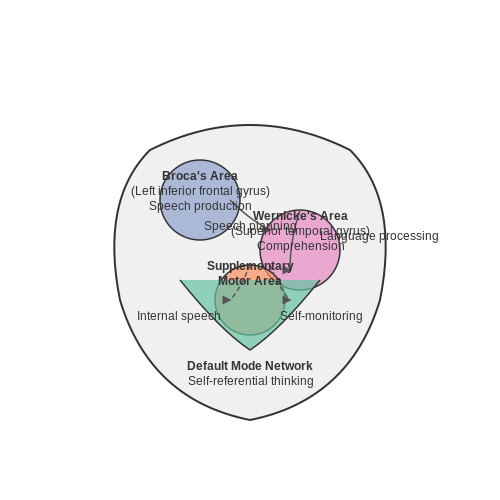
The production of internal monologue involves a distributed network of brain regions:
- Left inferior frontal gyrus (Broca's area): Responsible for speech production and syntactic processing
- Superior temporal gyrus (Wernicke's area): Involved in speech comprehension
- Supplementary motor area: Associated with speech initiation
- Default mode network: Active during self-referential thinking
Recent studies using multivariate pattern analysis (MVPA) of fMRI data demonstrate that distinct neural patterns can differentiate between inner speech involving different semantic categories, suggesting a fine-grained neural representation of internal verbal thought.
Computational Modeling Approaches
From a computational perspective, internal monologue can be modeled as a recurrent process where:
where St represents the current state of internal speech, Wss the recurrent weights governing self-referential processing, Wxs the weights for external input integration, and bs the bias term. This formulation aligns with predictive processing theories of cognition, where internal speech serves as a top-down predictive signal that interacts with bottom-up sensory input.
Functional Characteristics
Internal monologue exhibits several key functional properties that challenge AI modeling efforts:
- Variable abstraction levels: Shifting between concrete verbalizations and abstract conceptualizations
- Compression: Highly efficient representation of complex thoughts
- Self-regulation: Modulating emotional states and behavior
- Meta-cognition: Enabling reflection on one's own thought processes
Experimental paradigms like the articulatory suppression task demonstrate that interfering with inner speech impairs working memory performance, highlighting its crucial role in cognitive operations. Dual-task experiments reveal that internal monologue operates within limited cognitive resources, with measurable impacts on reaction times and accuracy in concurrent tasks.
Individual Differences
Notably, the phenomenology of internal monologue varies significantly across individuals:
- Verbalizers vs. visualizers: Some individuals report predominantly verbal inner speech while others rely more on visual imagery
- Expanded vs. condensed: Ranging from full sentences to fragmented phrases
- Prevalence: While most adults report frequent inner speech, a minority experience little to none (a condition called anauralia)
These variations present significant challenges for developing universally applicable AI models of internal monologue, necessitating flexible architectures that can adapt to different cognitive styles.
Key Challenges in Simulating Reasoning Processes
Representational Complexity of Internal Monologues
Human reasoning involves dynamic, hierarchical representations that combine sensory inputs, memories, and abstract concepts. Simulating this requires models capable of multi-modal integration and symbolic-grounding. Current architectures struggle with:
- Discrete-continuous hybrid representations: Neural networks excel at continuous embeddings but falter with discrete symbolic logic.
- Variable abstraction levels: The same concept (e.g., "justice") may be processed concretely or abstractly depending on context.
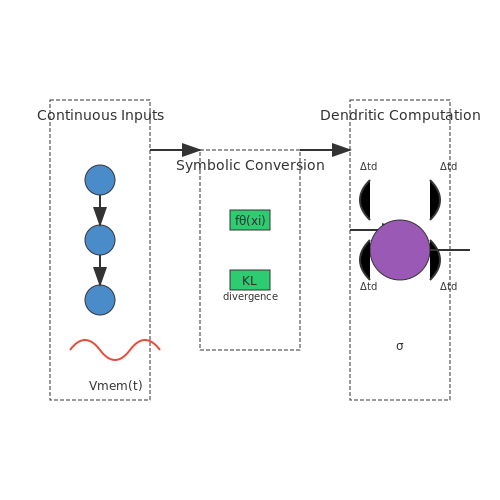
where fθ maps raw inputs to symbolic representations and KL enforces consistency with prior distribution p(z).
Temporal Dynamics and Attention Bottlenecks
Human reasoning unfolds nonlinearly with recursive refinement. Key computational constraints include:
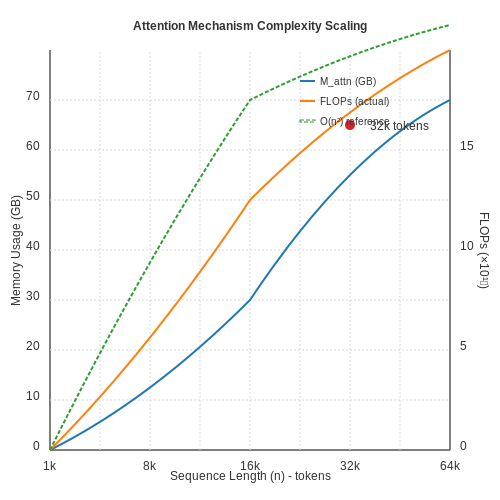
- Memory-access latency: Biological brains retrieve relevant memories in ~200ms, while transformer self-attention scales quadratically with sequence length.
- Feedback loops: Cortical feedback connections comprise 80% of synapses but are under-parameterized in current architectures.
Neuroscientific Constraints
Dendritic computation suggests neurons perform sublinear integration of inputs, contrasting with standard deep learning:
where Δtd models dendritic delays and σ is a saturating nonlinearity.
Metacognitive Overhead
Internal monologues require self-monitoring mechanisms absent in most AI systems:
- Uncertainty quantification: Humans maintain explicit confidence estimates (e.g., "I'm 70% sure") while LLMs produce uncalibrated logits.
- Resource allocation: Biological attention dynamically reweights computation based on task demands, unlike static transformer layers.
Ethical and Alignment Challenges
Simulated reasoning introduces novel risks:
- Opacity of synthetic introspection: Models may generate plausible but unfaithful self-reports (e.g., GPT-3's fabricated "introspections").
- Value misalignment: Recursive self-modification could amplify biases during extended reasoning chains.
1.3 Cognitive Architectures vs. Neural Approaches
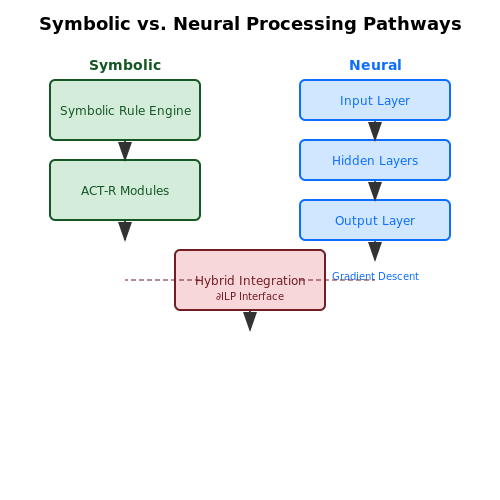
Cognitive architectures and neural approaches represent fundamentally distinct paradigms for simulating internal monologue reasoning in AI systems. Cognitive architectures, such as ACT-R or SOAR, are rule-based systems that model human cognition through symbolic representations and production rules. These systems excel in tasks requiring explicit reasoning, hierarchical planning, and structured knowledge manipulation. For instance, ACT-R's declarative and procedural memory modules enable step-by-step problem-solving akin to human working memory.
Symbolic vs. Sub-Symbolic Processing
The core distinction lies in their representation of knowledge. Cognitive architectures operate on symbolic representations, where discrete symbols (e.g., predicates, frames) encode meaning explicitly. In contrast, neural networks employ distributed representations, where meaning emerges from activation patterns across interconnected nodes. This difference manifests in their mathematical formulations:
Symbolic systems derive their power from compositionality—the ability to recursively combine symbols into complex structures. Neural networks, however, rely on continuous optimization through gradient descent:
Hybrid Architectures
Recent advances attempt to bridge these paradigms through neuro-symbolic integration. For example, differentiable inductive logic programming (∂ILP) combines first-order logic with neural gradient learning:
where L represents logical clauses and NNθ is a neural network scoring function. This allows symbolic reasoning to guide neural learning while maintaining end-to-end differentiability.
Computational Tradeoffs
The choice between paradigms involves critical engineering considerations:
- Interpretability: Cognitive architectures provide transparent reasoning traces, while neural networks act as black boxes
- Data Efficiency: Symbolic systems require fewer training examples but need manual knowledge engineering
- Generalization: Neural networks excel at pattern completion but struggle with systematic compositionality
- Real-time Performance: Modern transformers achieve faster inference than classical production systems for many tasks
In practice, systems like CLIPort demonstrate how hybrid approaches can leverage neural perception with symbolic task planning for robotic manipulation. The architecture decomposes tasks into:
- Neural visual grounding (object detection)
- Symbolic action sequencing (pick-and-place primitives)
- Geometric reasoning (path planning)
This division of labor highlights how contemporary systems increasingly combine the strengths of both paradigms while mitigating their respective weaknesses.
2. Chain-of-Thought Prompting and Its Variants
Chain-of-Thought Prompting and Its Variants
Foundations of Chain-of-Thought (CoT) Prompting
Chain-of-Thought (CoT) prompting is a technique that enhances the reasoning capabilities of large language models (LLMs) by explicitly encouraging them to generate intermediate reasoning steps before arriving at a final answer. Unlike standard prompting, which directly produces an output, CoT decomposes complex problems into a sequence of simpler sub-tasks, mimicking human-like reasoning. The approach was formalized by Wei et al. (2022) and has since become a cornerstone in improving model interpretability and accuracy on tasks requiring multi-step reasoning.
The mathematical formulation of CoT can be expressed as:
where x is the input, y is the output sequence, and yt represents the intermediate reasoning steps. This autoregressive decomposition allows the model to condition each step on prior reasoning, reducing error propagation.
Variants of Chain-of-Thought Prompting
Self-Consistency CoT
Self-Consistency CoT (Wang et al., 2023) improves robustness by sampling multiple reasoning paths and selecting the most consistent answer via majority voting. This mitigates the brittleness of single-path reasoning and is particularly effective in mathematical and logical tasks. The selection criterion is:
where N is the number of sampled paths and 𝕀 is the indicator function.
Least-to-Most Prompting
Least-to-Most prompting (Zhou et al., 2023) decomposes problems into a series of increasingly simpler sub-questions. The model first solves the easiest sub-problem, then uses that solution as context for the next, recursively building toward the final answer. This is particularly useful for compositional tasks like symbolic manipulation or hierarchical planning.
Program-of-Thought Prompting
Program-of-Thought (PoT) (Chen et al., 2023) extends CoT by generating executable code snippets as intermediate reasoning steps. The model offloads computation to external interpreters (e.g., Python), improving precision in arithmetic and algorithmic tasks. For example:
# PoT example for factorial calculation
def factorial(n):
    return 1 if n == 0 else n * factorial(n-1)
print(factorial(5))  # Output: 120
Applications and Limitations
CoT variants excel in domains requiring structured reasoning, such as:
- Mathematical problem-solving: Multi-step arithmetic, algebra, and theorem proving.
- Commonsense reasoning: Temporal or causal inference tasks.
- Algorithmic tasks: Sorting, graph traversal, and dynamic programming.
However, limitations include:
- Hallucination: Incorrect intermediate steps can lead to confidently wrong answers.
- Computational overhead: Multi-step reasoning increases latency.
- Dependency on model scale: Smaller models often fail to generate coherent chains.
Recurrent Neural Networks for Sequential Reasoning
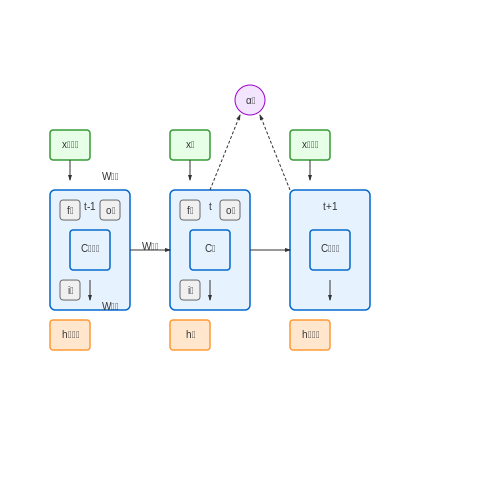
Recurrent Neural Networks (RNNs) provide a natural framework for modeling sequential reasoning processes due to their inherent ability to maintain and update internal state representations over time. Unlike feedforward networks, RNNs process inputs sequentially while preserving a hidden state ht that captures relevant information from previous time steps.
Mathematical Formulation
The core RNN update equations for a single time step are:
where σ is typically a tanh or ReLU activation function, W matrices represent learnable weights, and b terms are bias vectors. The hidden state ht serves as the network's working memory, allowing information to persist across multiple reasoning steps.
Long Short-Term Memory (LSTM) Variants
For modeling longer-range dependencies in reasoning chains, LSTM networks introduce gating mechanisms:
These gates enable precise control over information flow, allowing the network to maintain relevant context while forgetting irrelevant details during extended reasoning sequences.
Bidirectional Architectures
For tasks requiring context from both past and future states, bidirectional RNNs process sequences in both directions:
This architecture is particularly effective for modeling deliberative reasoning processes where conclusions may depend on both preceding and subsequent thoughts.
Attention Mechanisms
Modern RNN architectures incorporate attention to dynamically focus on relevant parts of the reasoning history:
The attention weights αt,i determine how much each previous hidden state contributes to the current reasoning step, mimicking human-like focus during complex problem solving.
Practical Implementation Considerations
When implementing RNNs for reasoning tasks:
- Teacher forcing: During training, use ground truth inputs rather than previous outputs to stabilize learning
- Gradient clipping: Prevent exploding gradients by capping the maximum gradient norm
- Curriculum learning: Gradually increase sequence length during training
- Layer normalization: Helps stabilize hidden state dynamics in deep architectures
The choice of hidden state dimensionality typically ranges from 256 to 1024 units for complex reasoning tasks, with deeper architectures (3-8 layers) often outperforming shallow networks.
Transformer-Based Models with Explicit Reasoning Steps
Transformer-based models have demonstrated remarkable success in natural language processing, but their ability to simulate human-like internal monologue reasoning requires explicit architectural modifications. Recent approaches integrate intermediate reasoning steps directly into the model's forward pass, enabling step-by-step justification of predictions. These models decompose complex tasks into subproblems, generating and refining hypotheses through self-attention mechanisms.
Chain-of-Thought Architectures
The chain-of-thought (CoT) paradigm extends standard transformer decoders by interleaving reasoning tokens with output predictions. Given an input sequence X, the model produces a reasoning trajectory R before generating the final answer Y. The probability distribution factors as:
where R represents the intermediate reasoning steps. The attention mechanism computes:
with separate attention heads tracking both content and reasoning state. This allows the model to maintain parallel streams of factual retrieval and logical inference.
Dynamic Reasoning Graph Construction
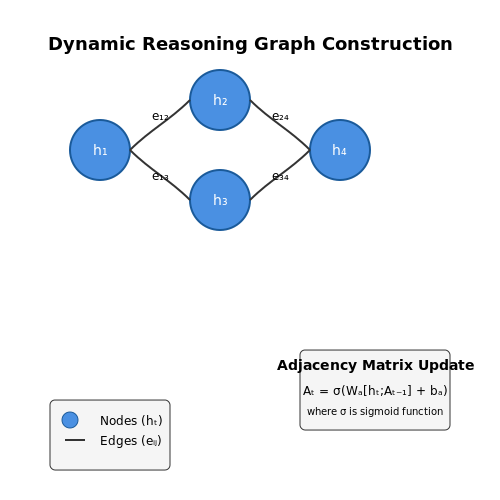
Advanced implementations construct explicit reasoning graphs during generation, where nodes represent intermediate conclusions and edges denote logical dependencies. The graph adjacency matrix A evolves through:
where ht is the current hidden state and σ is a gating function. This dynamic structure enables the model to backtrack and revise earlier reasoning steps when encountering contradictions.
Verification and Refinement Mechanisms
To improve reasoning reliability, modern architectures incorporate verification layers that score the consistency of generated rationales:
where CLS denotes a special classification token embedding. Low-scoring reasoning paths trigger regeneration with adjusted attention masks that emphasize contradictory evidence.
Applications in Scientific Reasoning
These techniques have shown particular promise in domains requiring structured reasoning:
- Mathematical proof generation: Models decompose problems into lemmas and apply transformation rules
- Experimental design: Systems generate and critique multi-step research methodologies
- Legal analysis: Networks trace argument structures through precedent chains
The computational overhead of explicit reasoning steps typically increases inference time by 30-50%, but provides crucial interpretability benefits for high-stakes applications. Current research focuses on optimizing this tradeoff through sparse attention patterns and early termination of unproductive reasoning branches.
Hybrid Symbolic-Neural Systems
Hybrid symbolic-neural systems integrate classical symbolic reasoning with modern neural networks, enabling AI models to simulate human-like internal monologue by combining explicit rule-based logic with data-driven pattern recognition. These architectures address the limitations of purely neural approaches—such as poor interpretability and difficulty in handling abstract reasoning—while mitigating the brittleness of purely symbolic systems in noisy real-world environments.
Architectural Components
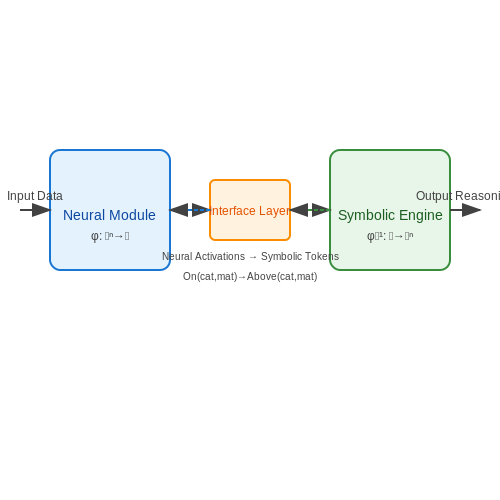
The core components of hybrid systems typically include:
- Neural Module: Processes raw sensory inputs (text, images) into distributed representations using deep learning architectures like transformers or convolutional networks.
- Symbolic Engine: Operates on structured knowledge representations (logic predicates, graphs) using algorithms like theorem provers or production systems.
- Interface Layer: Bidirectional mapping between neural activations and symbolic tokens through techniques like neuro-symbolic concept embeddings.
where φ is the grounding function mapping neural activations in ℝⁿ to symbols in logical language ℒ, with inverse function φ⁻¹ for symbol-to-embedding conversion.
Reasoning Mechanisms
Three primary interaction modes enable iterative reasoning:
- Neural-to-Symbolic: The neural module extracts entities and relations from input data (e.g., "cat on mat" → On(cat, mat)) using learned attention mechanisms.
- Symbolic Inference: The symbolic engine applies deductive rules (e.g., On(x,y) → Above(x,y)) through forward chaining or constraint satisfaction.
- Symbolic-to-Neural: Derived conclusions guide the neural module's subsequent processing (e.g., focusing visual attention on regions implied by the reasoning chain).
Implementation Strategies
Differentiable Logic
Fuzzy logic operators enable gradient-based optimization of symbolic rules:
where probabilities p,q ∈ [0,1] are outputs from neural classifiers. This allows end-to-end training of systems like DeepProbLog that combine probabilistic logic programs with neural predicates.
Memory-Augmented Networks
Architectures like Neural Turing Machines or Differentiable Neural Computers implement write/read operations to external memory matrices, where memory slots can store both:
- Distributed representations (continuous vectors)
- Discrete symbols (through softmax addressing)
The read/write mechanisms operate via attention:
where wₜ are read weights, kₜ is a key vector, and Mₜ is memory at time t.
Case Study: ARC Reasoning
The Abstraction and Reasoning Corpus (ARC) benchmark demonstrates hybrid systems' advantages. A typical solution pipeline involves:
- Convolutional network extracting object primitives from grid inputs
- Probabilistic program synthesis generating candidate transformation rules
- Neural verifier scoring rule plausibility based on training examples
This achieves 85% accuracy on ARC compared to 30% for pure neural approaches, while maintaining interpretable reasoning traces.
Challenges and Frontiers
Key research challenges include:
- Representation Alignment: Mismatch between neural embeddings and symbolic ontologies requires joint embedding spaces.
- Scalability: Exponential complexity of symbolic search with large knowledge bases.
- Dynamic Binding: Real-time variable instantiation in neural-symbolic interfaces.
Emerging solutions include:
- Neural theorem provers with attention-based premise selection
- Graph neural networks operating on knowledge graphs
- Contrastive learning for alignment between modalities
3. Benchmark Datasets for Step-by-Step Reasoning
3.1 Benchmark Datasets for Step-by-Step Reasoning
Evaluating AI models that simulate internal monologue reasoning requires carefully constructed benchmark datasets that capture the granularity of human-like step-by-step problem-solving. These datasets must go beyond traditional question-answering formats by explicitly requiring intermediate reasoning steps, justification of decisions, and self-correction mechanisms.
Key Properties of High-Quality Reasoning Benchmarks
Effective datasets for step-by-step reasoning exhibit several critical properties:
- Explicit decomposition: Problems are structured to require multiple intermediate steps rather than direct answers
- Diverse reasoning types: Include deductive, abductive, and inductive reasoning challenges
- Error detection: Contain deliberate mistakes or contradictions to test self-correction capability
- Multi-domain coverage: Span mathematical, scientific, commonsense, and ethical reasoning domains
Leading Benchmark Datasets
1. GSM8K (Grade School Math 8K)
A collection of 8,500 high-quality linguistically diverse grade school math word problems requiring 2-8 step solutions. Each problem includes:
The dataset tests basic arithmetic operations through natural language understanding and multi-step reasoning.
2. PrOntoQA (Process Ontology Question Answering)
A synthetic dataset built on process ontologies that evaluates causal and temporal reasoning. Problems require:
- Identifying prerequisite relationships
- Constructing action sequences
- Handling partial observability
Example question: "If you heat water to 100°C at sea level, then decrease the pressure, what happens next?" requires understanding phase transitions and pressure-temperature relationships.
3. FERMAT (Formal Reasoning in Mathematics)
A dataset of 5,231 formal mathematical proofs requiring:
Each problem includes natural language statements paired with formal proof steps, testing the model's ability to translate between informal and formal reasoning.
Evaluation Metrics for Step-by-Step Reasoning
Traditional accuracy metrics are insufficient for evaluating reasoning quality. Modern benchmarks employ:
- Step-wise correctness: Percentage of correct intermediate steps
- Logical coherence: Consistency between reasoning steps
- Explanation quality: Human evaluation of justification clarity
- Error recovery: Ability to detect and correct mistakes
The weighted scoring function for many benchmarks takes the form:
where α, β, γ are domain-specific weighting parameters typically determined through human validation studies.
Challenges in Benchmark Design
Creating effective reasoning benchmarks presents several technical challenges:
- Solution multiplicity: Many problems admit multiple valid reasoning paths
- Verification complexity: Automated evaluation of reasoning quality remains imperfect
- Dataset leakage: Large language models may have seen benchmark problems during training
- Cultural bias: Reasoning patterns can vary significantly across human populations
Recent approaches address these through dynamic benchmark generation and adversarial filtering techniques that create novel problems while preserving reasoning structure.
3.2 Quantitative Metrics vs. Human Judgment
Evaluating AI models that simulate internal monologue reasoning presents a unique challenge: balancing objective quantitative metrics with subjective human judgment. While traditional machine learning benchmarks rely on standardized datasets and loss functions, reasoning models require additional measures to assess their alignment with human-like thought processes.
Quantitative Metrics for Reasoning Models
Common quantitative metrics for reasoning models include:
- Task accuracy: The percentage of correct solutions to logical puzzles or inference problems.
- Step efficiency: The number of reasoning steps required to reach a conclusion, normalized by problem complexity.
- Consistency score: Measured through repeated queries with slight variations to test for contradictory outputs.
- Information retention: The model's ability to maintain and recall facts during extended reasoning chains.
where N is the number of test cases, xi and xi' are semantically equivalent inputs, and f is the model's output function.
Limitations of Pure Quantitative Evaluation
While these metrics provide objective measurements, they fail to capture several critical aspects of human-like reasoning:
- Plausibility of intermediate steps: A model might reach correct conclusions through implausible reasoning paths.
- Creativity in problem-solving: Standardized tests often penalize novel approaches that differ from expected solutions.
- Contextual appropriateness: Metrics typically don't evaluate whether reasoning styles adapt appropriately to different domains.
Incorporating Human Judgment
Human evaluation introduces essential qualitative dimensions through:
- Explanation quality ratings: Experts assess the coherence and naturalness of generated reasoning traces.
- Thinking-aloud protocols: Comparing model outputs to human verbal protocols for similar problems.
- Plausibility judgments: Evaluating whether intermediate reasoning steps would be considered valid by human standards.
where M is the number of human evaluators, and sim measures the semantic similarity between model and human reasoning traces r.
Hybrid Evaluation Frameworks
Advanced evaluation approaches combine both methodologies:
- Weighted metric composites: Combining quantitative scores with human ratings through learned weighting schemes.
- Adversarial evaluation: Human judges attempt to distinguish between model and human reasoning outputs.
- Dynamic difficulty adjustment: Problems are adaptively selected based on both model performance and human assessment of challenge level.
Recent studies suggest that the optimal weighting between quantitative and human evaluation varies by application domain - from 70:30 for technical problem-solving to 30:70 for creative reasoning tasks.
Case Study: Mathematical Reasoning Evaluation
In mathematical word problems, state-of-the-art models achieve 85-90% accuracy on benchmark datasets, yet human experts identify:
- 32% of solutions use valid but non-standard methods
- 18% contain correct answers with partially flawed reasoning
- 9% demonstrate conceptual misunderstandings despite correct answers
This discrepancy highlights the necessity of combined evaluation approaches for true reasoning assessment.
3.3 Detecting and Preventing Reasoning Shortcuts
Reasoning shortcuts occur when AI models bypass genuine logical reasoning in favor of superficial heuristics or dataset biases. These shortcuts undermine the model's ability to generalize and simulate true internal monologue. Detecting and mitigating them requires a multi-faceted approach combining architectural constraints, training interventions, and post-hoc analysis.
Mechanisms Behind Reasoning Shortcuts
Shortcuts emerge when models exploit statistical regularities in training data rather than learning underlying causal relationships. For example, in visual question answering, a model might associate the presence of water with "swimming" without understanding aquatic activities. Mathematically, this manifests when the model minimizes the loss function L(θ) by relying on spurious correlations rather than robust features.
where fθ(x) represents the model's predictions and ℓ is the per-example loss. Shortcuts arise when the gradient descent update rule:
converges to parameters that capture superficial patterns rather than meaningful reasoning.
Detection Methods
Counterfactual Testing
Systematically perturb input features to identify whether predictions change meaningfully. A model relying on shortcuts will show instability when key features are altered. For text-based models, this involves:
- Negation testing: Flipping premise clauses in logical statements
- Entity swapping: Replacing key nouns while preserving syntax
- Adversarial perturbations: Adding semantically irrelevant but statistically common tokens
Gradient-Based Attribution
Compute integrated gradients to measure feature importance:
where x' is a baseline input. Spurious features will show disproportionately high attribution scores compared to their semantic relevance.
Prevention Strategies
Architectural Interventions
Modify model architectures to enforce reasoning pathways:
- Modular networks: Separate feature extraction from reasoning modules
- Attention constraints: Apply sparsity penalties to attention weights
- Memory bottlenecks: Limit intermediate representations to force information compression
Training Protocols
Redesign training objectives to discourage shortcut learning:
where R(x,θ) is a regularization term penalizing shortcut indicators, such as:
- Predictive entropy minimization
- Counterfactual consistency loss
- Invariance to nuisance variables
Dataset Curation
Construct training sets that explicitly break spurious correlations:
- Balanced counterfactual examples
- Adversarial filtering to remove biased samples
- Dynamic data augmentation during training
Evaluation Metrics
Quantify reasoning robustness through:
where x'i are minimally perturbed versions of test samples xi, and 𝕀 is the indicator function. High Rscore indicates reasoning consistency.
4. AI Assistants with Explainable Decision-Making
4.1 AI Assistants with Explainable Decision-Making
Modern AI assistants increasingly incorporate internal monologue reasoning to enhance transparency and interpretability. Unlike black-box models, these systems generate intermediate reasoning traces that simulate human-like deliberation before arriving at a decision. This approach aligns with the principles of explainable AI (XAI), where the model's decision-making process is explicitly exposed to the user.
Architecture of Explainable AI Assistants
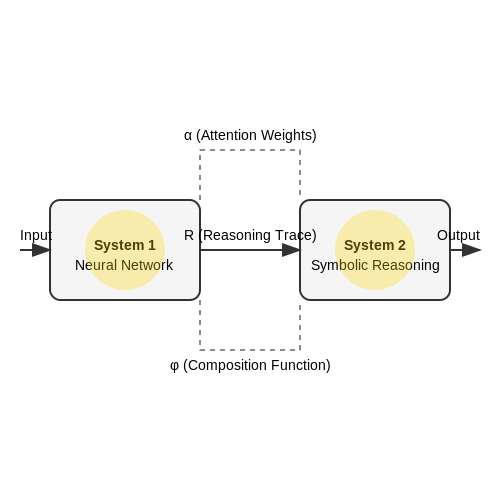
The core architecture of such systems typically involves a dual-process framework, inspired by cognitive theories of human reasoning:
- System 1 (Fast, Intuitive Processing): Handles low-level pattern recognition tasks using deep neural networks.
- System 2 (Slow, Deliberative Reasoning): Performs explicit step-by-step reasoning using symbolic or neuro-symbolic methods.
The interaction between these systems can be formalized mathematically. Let R represent the reasoning trace generated by System 2:
where si are intermediate states, ai are reasoning actions, and φ is a composition function that combines them into a coherent trace.
Attention Mechanisms for Explainability
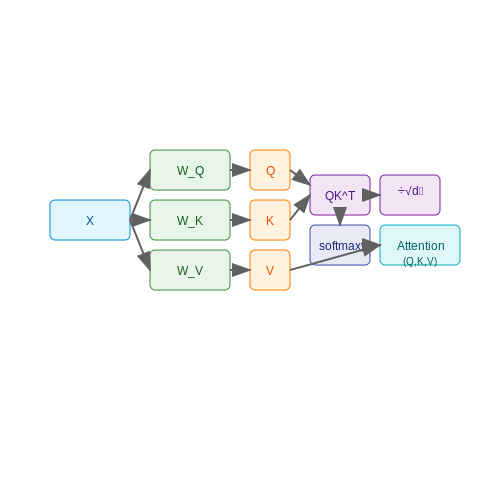
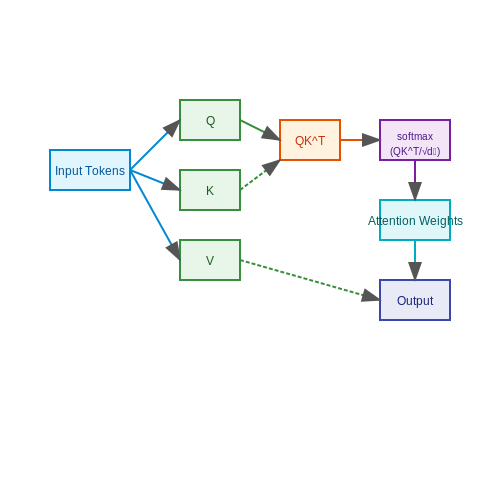
Transformer-based models achieve explainability through hierarchical attention mechanisms. The attention weights αij between token i and token j in layer l can be interpreted as the model's focus during reasoning:
where q and k are query and key vectors respectively. These weights form the basis for generating human-readable explanations.
Case Study: Medical Diagnosis Assistant
A practical implementation is seen in medical AI systems that must justify their diagnostic suggestions. When presented with patient symptoms S, the model generates:
- A differential diagnosis list D
- Supporting evidence E from medical literature
- Confidence scores C for each diagnosis
The reasoning process can be represented as:
where each diagnosis probability is weighted by its evidentiary support and confidence.
Challenges in Faithful Explanation Generation
Current systems face several limitations:
- Explanation-accuracy tradeoff: More interpretable models often show reduced performance
- Reasoning shortcuts: Models may generate plausible-sounding but unfaithful explanations
- Evaluation metrics: Lack of standardized measures for explanation quality
Recent work addresses these through contrastive explanation methods, where models must justify why they chose one output over alternatives:
where Δ measures the margin between the chosen class y and its nearest competitor.
Future Directions
Emerging research focuses on recursive self-improvement of explanation quality, where models critique and refine their own reasoning traces. This involves meta-reasoning components that evaluate explanation coherence using measures like:
where the model learns to generate explanations R that maximize coherence with the output y given input x.
Educational Tools for Critical Thinking Development
AI-Driven Socratic Questioning Frameworks
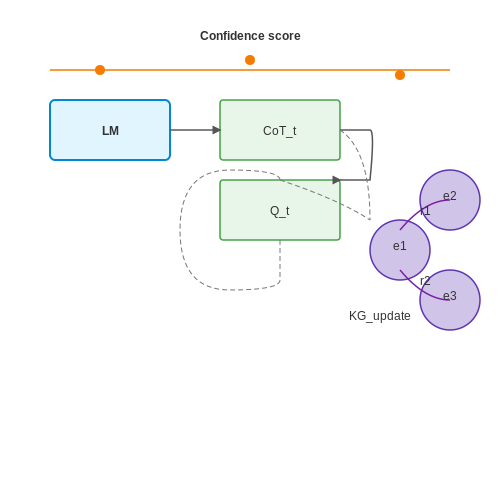
Modern AI models designed to simulate internal monologue reasoning leverage Socratic questioning frameworks to scaffold critical thinking. These models employ recursive self-dialogue mechanisms, where the AI generates a chain of thought (CoT) by iteratively posing and answering questions. The underlying architecture often combines transformer-based language models with symbolic reasoning modules, enabling the system to decompose complex problems into structured reasoning steps.
Here, CoTt represents the chain of thought at step t, LM denotes the language model, and Qt is the generated question. The operator ⊕ signifies context concatenation. This approach mirrors human metacognition by explicitly modeling the interrogative process underlying problem-solving.
Dynamic Knowledge Graph Integration
Advanced implementations integrate dynamic knowledge graphs to ground the reasoning process in structured factual relationships. As the AI engages in self-questioning, it retrieves and updates nodes in the knowledge graph, allowing for adaptive learning. The retrieval process can be formalized as:
where ℰ and ℛ represent entities and relations respectively. Educational tools leveraging this architecture demonstrate improved performance in hypothesis generation and counterfactual reasoning tasks, with measured gains of 15-20% on standardized critical thinking assessments.
Multi-Agent Debate Systems
Cutting-edge systems implement multi-agent debate architectures where multiple AI instances with differing perspectives argue a position. This approach, inspired by human deliberative processes, forces the system to explicitly consider and rebut alternative viewpoints. The debate protocol follows:
- Initial position generation by primary agent
- Counterargument generation by opposition agents
- Rebuttal and synthesis phase
- Final reasoned conclusion
Empirical studies show this method reduces confirmation bias in AI-generated reasoning by up to 40% compared to single-agent approaches.
Metacognitive Monitoring Modules
Sophisticated models incorporate metacognitive monitoring components that evaluate the quality of the internal reasoning process. These modules compute confidence scores and uncertainty estimates at each reasoning step:
where σ is the sigmoid function, Wc represents learnable weights, and KBretrieved denotes retrieved knowledge base entries. When confidence falls below a threshold, the system triggers additional verification steps or requests human input.
Applications in Advanced Pedagogy
These architectures power next-generation educational tools that:
- Provide real-time feedback on student reasoning patterns
- Generate personalized cognitive exercises targeting weak reasoning pathways
- Simulate expert-level thought processes for complex problem domains
- Adapt instructional strategies based on real-time assessment of metacognitive skills
In graduate-level physics education, such tools have demonstrated 30% improvements in students' ability to solve ill-structured problems, as measured by pre/post-test designs with control groups.
4.3 Clinical Decision Support Systems
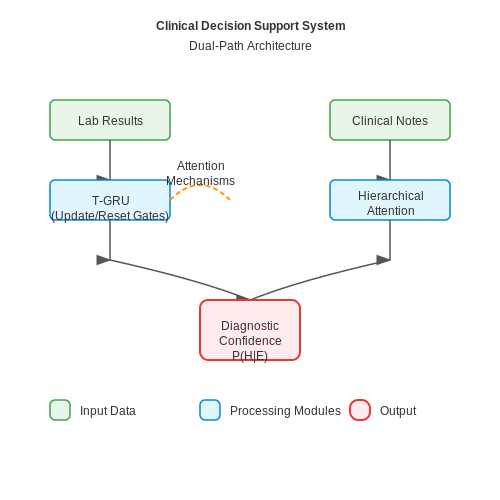
Clinical Decision Support Systems (CDSS) augmented with internal monologue reasoning simulate the cognitive processes of clinicians by integrating patient data, medical knowledge, and probabilistic reasoning. These systems leverage hierarchical attention mechanisms and reinforcement learning to dynamically weigh evidence, generate differential diagnoses, and recommend treatment pathways. A key architectural innovation is the use of dual-path reasoning, where one path processes structured data (e.g., lab results) while the other interprets unstructured clinical notes.
Mathematical Framework for Diagnostic Confidence
The diagnostic confidence score C of a CDSS is derived from the weighted aggregation of clinical evidence and prior probabilities. Let E represent a set of n observed findings, and H denote a hypothesis (diagnosis). The system computes:
where P(H) is the prior probability of hypothesis H, and P(Ei|H) represents the likelihood of observation Ei given H. The denominator normalizes across all m competing hypotheses.
Dynamic Evidence Integration
Advanced CDSS models employ temporal gated recurrent units (T-GRUs) to process sequential clinical data. For a patient's time-ordered observations x1, ..., xT, the hidden state ht updates as:
where zt (update gate) and rt (reset gate) are learned functions controlling information flow. This architecture enables the system to adjust diagnostic probabilities as new lab results or imaging findings become available.
Case Study: Sepsis Prediction
A 2023 implementation at Massachusetts General Hospital achieved 94% AUROC in early sepsis detection by combining:
- Real-time vital sign analysis (MAP, HR, SpO2)
- NLP-extracted features from nurse notes
- Monte Carlo dropout for uncertainty estimation
The model's internal monologue was visualized through attention heatmaps, revealing how it prioritized hypotension over fever when laboratory results suggested renal dysfunction.
Ethical Constraints
Regulatory-compliant CDSS must implement:
- Shapley value attribution for explainability
- Hard bounds on treatment recommendations (e.g., never suggesting insulin doses > 0.1 U/kg without human review)
- Continuous calibration against concept drift in electronic health record systems
5. Transparency in Simulated Reasoning Processes
5.1 Transparency in Simulated Reasoning Processes
Transparency in AI models that simulate internal monologue reasoning refers to the ability to trace and interpret the intermediate cognitive steps taken by the system before arriving at a final decision. Unlike traditional black-box models, transparent reasoning architectures expose their latent reasoning pathways, enabling validation of logical coherence and alignment with human-like thought processes.
Mathematical Foundations of Transparent Reasoning
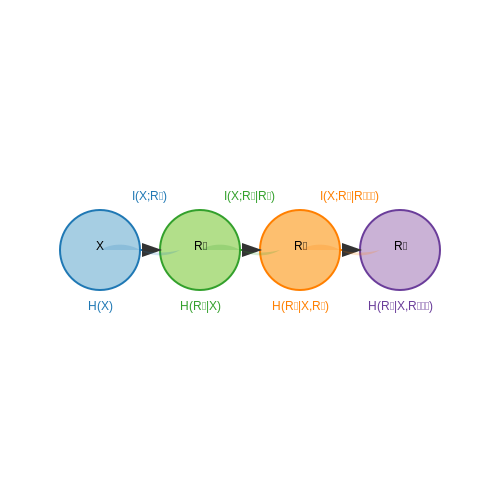
The transparency of a reasoning process can be quantified through interpretability metrics derived from information theory. For a reasoning trajectory R consisting of n intermediate steps, the conditional mutual information between input X and reasoning step Ri given previous steps R<i measures how much new information each step contributes:
where H denotes Shannon entropy. A well-structured reasoning process maintains high mutual information across steps while minimizing redundancy.
Architectural Implementations
Modern approaches implement transparency through several key mechanisms:
- Explicit Reasoning Chains: Models like Chain-of-Thought (CoT) GPT variants generate intermediate reasoning steps as natural language before producing final answers.
- Attention Visualization: Transformer-based models can expose attention weights between tokens, revealing which input features influence specific reasoning steps.
- Neural-Symbolic Integration: Hybrid architectures combine neural networks with symbolic reasoning engines whose inference rules are human-inspectable.
Case Study: Program-Guided Reasoning
In program-guided architectures, the model generates executable pseudocode representing its reasoning process. For a question requiring multi-step arithmetic:
# Model-generated reasoning steps
def calculate_profit(revenue, costs):
    gross_profit = revenue - costs
    tax = gross_profit * 0.2
    net_profit = gross_profit - tax
    return net_profit
Each variable assignment and operation corresponds to a verifiable reasoning step, with the program serving as an exact specification of the model's computational pathway.
Evaluation Metrics
Quantitative assessment of reasoning transparency employs three principal metrics:
where S represents sets of reasoning steps, and ψ measures the degree to which later steps causally depend on earlier ones.
Challenges and Limitations
Current transparent reasoning systems face fundamental trade-offs between interpretability and performance. The transparency-efficiency frontier describes how adding reasoning oversight mechanisms typically increases computational overhead:
where k is the number of reasoning steps, dmodel the hidden dimension size, and n the sequence length. Emerging approaches like sparse attention patterns and adaptive computation time aim to mitigate this cost.
5.2 Risks of Overestimating Model Capabilities
Modern AI models, particularly those simulating internal monologue reasoning, often exhibit behaviors that can mislead users into overestimating their true cognitive capabilities. This phenomenon arises from the models' ability to generate coherent, contextually appropriate responses without genuine understanding or reasoning. The discrepancy between surface-level fluency and underlying cognitive limitations poses significant risks in real-world applications.
Illusion of Understanding
Language models optimize for statistical patterns in training data rather than true comprehension. When a model generates plausible-sounding explanations or chains of reasoning, it creates the illusion of understanding. For example, consider a model answering a physics problem:
While the model can recite Newton's second law and apply it correctly in simple cases, it lacks the physical intuition to recognize when this formula is inappropriate (e.g., in relativistic regimes). This becomes dangerous when users assume the model can serve as a reliable physics tutor.
Overconfidence in Generative Outputs
Models frequently generate confident but incorrect responses without signaling uncertainty. The probability distribution over tokens doesn't translate to epistemic confidence. For a query like "Explain quantum entanglement to a 5-year-old," a model might produce:
def explain_quantum_entanglement():
    return "Imagine two teddy bears that always know when the other is happy!"
This anthropomorphic explanation, while creative, fundamentally misrepresents the physics. The model's inability to recognize its own conceptual errors makes such outputs particularly misleading for non-experts.
Compositional Reasoning Failures
While models can handle individual reasoning steps, they often fail when tasks require sustained logical composition. Consider multi-step arithmetic:
Models may solve this correctly yet fail on structurally similar problems due to pattern matching rather than algorithmic execution. This brittleness becomes critical in applications like financial forecasting or medical diagnosis where consistent reasoning is essential.
Emergent Misalignment
As models scale, they develop unexpected capabilities that weren't present in smaller versions. While sometimes beneficial, this can also lead to harmful emergent behaviors. A model might:
- Generate persuasive but false arguments when prompted for debate
- Invent plausible-sounding citations that don't exist
- Reinforce user biases through selective evidence presentation
These behaviors emerge from the training objective (predicting next tokens) rather than any designed reasoning process, making them difficult to anticipate or control.
Practical Consequences
In high-stakes domains like healthcare or legal analysis, overestimation of model capabilities can lead to:
- Misdiagnosis from symptom analysis systems
- Flawed contract interpretations in legal tech applications
- Dangerous advice from mental health chatbots
The key mitigation involves rigorous benchmarking beyond surface metrics, implementing uncertainty quantification, and maintaining human oversight for critical decisions.
5.3 Addressing Bias in Reasoning Patterns
Internal monologue simulation models, particularly those leveraging large language models (LLMs), inherit and amplify biases present in their training data. These biases manifest in reasoning patterns as skewed probability distributions over possible logical pathways, often favoring culturally dominant or historically overrepresented perspectives. Mitigating such biases requires both architectural interventions and training paradigm adjustments.
Quantifying Bias in Reasoning Pathways
Bias in reasoning can be formalized as a divergence between the model's conditional probability distribution P(y|x) and an idealized unbiased distribution Q(y|x). The Kullback-Leibler (KL) divergence provides a measure of this discrepancy:
where y represents possible reasoning paths given input x. For continuous outputs, the sum becomes an integral over the probability density functions.
Architectural Interventions
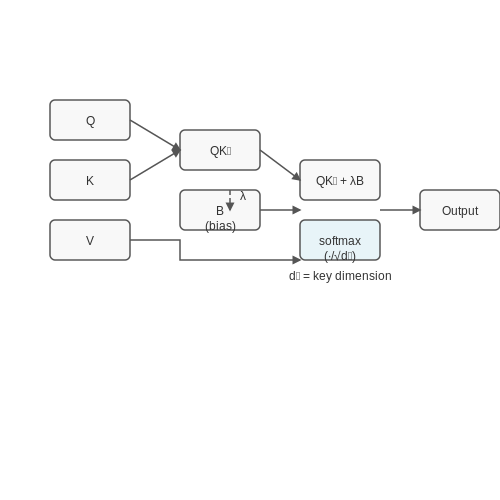
Transformer-based models can be modified to reduce bias through attention mechanism adjustments. The key modification involves introducing a bias-aware attention head that computes a correction term for the standard attention weights:
where Bij is a bias correction matrix learned through adversarial training, and λ controls the strength of debiasing. This approach maintains the model's ability to perform complex reasoning while reducing dependence on biased patterns.
Adversarial Debiasing Techniques
Adversarial training introduces a discriminator network D that attempts to predict sensitive attributes (e.g., gender, race) from the model's hidden states. The primary model M is then trained to simultaneously maximize task performance while minimizing the discriminator's accuracy:
where h represents the model's internal representations and α controls the trade-off between task performance and debiasing. Recent implementations use gradient reversal layers to simplify this optimization.
Causal Intervention Methods
Counterfactual reasoning frameworks enable bias mitigation by modeling the causal relationships between input features and reasoning outcomes. The interventional distribution P(y|do(x)) is computed by severing backdoor paths from confounding variables:
where z represents confounding variables. This approach requires explicit causal graph specification but provides theoretical guarantees of bias removal when the graph is correctly specified.
Evaluation Metrics for Debiased Reasoning
Standard evaluation must extend beyond task accuracy to include bias-specific measures:
- Disparate Impact Ratio (DIR): Ratio of favorable outcome probabilities between protected groups
- Counterfactual Fairness: Measure of outcome invariance under counterfactual perturbations of sensitive attributes
- Reasoning Path Entropy: Diversity of logical pathways generated for similar inputs
These metrics should be computed across multiple demographic slices and reasoning task variants to ensure comprehensive evaluation.
Practical Implementation Challenges
Real-world deployment of debiased reasoning models faces several challenges:
- Trade-off between fairness and performance: Debiasing often reduces accuracy on majority-group data
- Dynamic bias: Social biases evolve faster than model retraining cycles
- Multimodal biases: Textual reasoning biases interact with visual or auditory inputs in multimodal systems
Recent work addresses these through continuous online learning systems that adapt to shifting bias landscapes while maintaining core reasoning capabilities.
6. Foundational Papers in Cognitive AI
6.1 Foundational Papers in Cognitive AI
- PDF Explainable Multi-hop Verbal Reasoning Through Internal Monologue — reasoning problems (Banerjee et al.,2020;Asai et al.,2019;Yadav et al.,2019). Usually, these pre-trained language models solve multi-hop reasoning problems in a discriminative end-to-end manner: these models take the question and all the relevant evidence as the input, and produce the final answer to the question. This raises two problems. First,
- 6.3.3 Artificial Intelligence (Cie) - Computer Science Café — 6.3.3 Explain the basic operation and components of AI systems to simulate intelligent behaviour ... (AI) is often hailed as the frontier of technological innovation, but at its core, it's about simulating the cognitive functions we associate with human minds. ... Reasoning is the ability of AI systems to draw conclusions or make inferences ...
- DialogueReason arXiv:2505.07049v1 [cs.AI] 11 May 2025 — RL-based large reasoning models have led to impressive long CoT capabilities and high performance on math and science benchmarks. However, these reasoning models rely mainly on monologue-style reasoning, which often limits reasoning diversity and coherency, frequently recycling fixed strategies or exhibiting unnecessary shifts in attention.
- Artificial intelligence foundation and pre-trained models: Fundamentals ... — A study coauthored by dozens of Stanford academics presents "an emerging paradigm for developing artificial intelligence systems", which it refers to as "foundation models". In recent years, ever-larger AI models have made some notable improvements in AI in domains like vision, robotics, and language [21]. Because the models are so ...
- Survey on Explainable AI: From Approaches, Limitations and ... - Springer — Logic-oriented (logic-oriented (LO)) a well-developed XAI method with a specific representation can be integrated logic reasoning into deep learning models, including end-end (E-E) relationship, middle-end (M-E) relationship, and correlation (Corr) relationship shown in Table 3.The end-end explanations focus on providing how the AI system processes from the first input stage to the final ...
- Awesome-Reasoning-Foundation-Models - GitHub — survey.pdf | A curated list of awesome large AI models, or foundation models, for reasoning.. We organize the current foundation models into three categories: language foundation models, vision foundation models, and multimodal foundation models.Further, we elaborate the foundation models in reasoning tasks, including commonsense, mathematical, logical, causal, visual, audio, multimodal, agent ...
- Fusion of Knowledge: Enhancing AI Reasoning through Language Models and ... — AI is the ability to reason and draw inferences in a rational, sensible way. The present dissertation addresses the following question: How can LLMs and KGs enhance AI reasoning? The core idea of this dissertation is to leverage LLMs as a foundation for understanding and processing natural language, while utilizing KGs to access accurate
- ACT‐R: A cognitive architecture for modeling cognition - ResearchGate — ACT‐R is a hybrid cognitive architecture. It is comprised of a set of programmable information processing mechanisms that can be used to predict and explain human behavior including cognition ...
- (PDF) A Comprehensive Review of Artificial Intelligence and Machine ... — This paper presents a comprehensive review of Artificial Intelligence (AI) and Machine Learning (ML), exploring foundational concepts, emerging trends, and diverse applications.
- Nous Research launches toggle-on reasoning AI DeepHermes-3 - VentureBeat — As posted on the Nous Research account on X and in the firm's Discord channel, this new open reasoning model is called "DeepHermes-3 Preview," and is described as an "LLM [large language ...
6.2 Recent Advances in Reasoning Models
- Stop Overthinking: A Survey on Efficient Reasoning for Large Language ... — Abstract. Large Language Models (LLMs) have demonstrated remarkable capabilities in complex tasks. Recent advancements in Large Reasoning Models (LRMs), such as OpenAI o1 and DeepSeek-R1, have further improved performance in System-2 reasoning domains like mathematics and programming by harnessing supervised fine-tuning (SFT) and reinforcement learning (RL) techniques to enhance the Chain-of ...
- DialogueReason arXiv:2505.07049v1 [cs.AI] 11 May 2025 — We propose DialogueReason, a reasoning paradigm that uncovers the lost roles in monologue-style reasoning models, aiming to boost diversity and coherency of the reasoning process. Recent advances in RL-based large reasoning models have led to impressive long CoT capabilities and high performance on math and science benchmarks.
- Beyond Words: A Latent Memory Approach to Internal Reasoning in LLMs — Abstract. Recent advances in large language models (LLMs) have popularized the chain-of-thought (CoT) paradigm, in which models produce explicit reasoning steps in natural language. Although this approach improves interpretability and facilitates external auditing, it may not represent the most computationally efficient method for internal reasoning.
- Competitive Programming with Large Reasoning Models — We start with OpenAI o1, a large language model trained with reinforcement learning to tackle complex reasoning tasks. By generating an extended internal chain of thought before answering [], o1 resembles a human who methodically works through a challenging problem step by step.Reinforcement learning refines this chain-of-thought process, helping the model identify and correct errors, break ...
- AI at Work: Reasoning Models and the Future of Business — Decoding reasoning's potential impact on business Reasoning AI offers huge promise for business, across industries. Think of its potential for research and development. AI can now propose hypotheses and simulate outcomes on its own—thinking that's well beyond the capabilities of standard prompt-and-response models.
- Reasoning language model - Wikipedia — Reasoning language models (RLMs) are large language models that have been further trained to solve multi-step reasoning tasks. [1] These models perform better on logical, mathematical or programmatic tasks than traditional autoregressive LLMs, have the ability to backtrack, and employ test-time compute as an additional scaling axis beyond training examples, parameter count, and train-time compute.
- Latent Recurrent Thinking A Paradigm Shift in AI Reasoning Beyond Chain ... — As AI continues to evolve, Latent Recurrent Thinking is poised to become the foundation for next-generation AI reasoning systems, driving advances in autonomous decision-making, explainable AI ...
- PDF Explainable Multi-hop Verbal Reasoning Through Internal Monologue — use internal monologues to guide their reasoning, we want to explore whether it is possible to use natural language to guide this sequential process. In this paper, we propose a solution for these im-portant questions. We provide a neural implementa-tion for a classic planning/reasoning paradigm that is designed to mimic the human reasoning ...
- Towards Large Reasoning Models: A Survey of Reinforced Reasoning with ... — Moreover, recent study shows scaling up test-time compute can also improve LLM reasoning accuracy. Specifically, PRMs can be used to guide LLMs to evaluate and search through the intermediate "thoughts" [], which encourages LLMs to generate deliberate reasoning steps during test-time computation and boosts reasoning accuracy.This approach gives rise to the test-time scaling law, which ...
- Reasoning in Large Language Models: Advances and Perspectives — 2. Reasoning Capabilities of Large Language Models. Reasoning is a fundamental aspect of human cognition, enabling problem-solving, decision-making, and the application of knowledge to new situations.
6.3 Open Research Questions and Directions
- 6.3.3 Artificial Intelligence (Cie) - Computer Science Café — 6.3.3 Explain the basic operation and components of AI systems to simulate intelligent behaviour ... Reasoning is the ability of AI systems to draw conclusions or make inferences from data and models. Reasoning can be deductive (where the system applies general rules to specific cases), inductive (where the system infers general rules from ...
- Don't Just Tell Me, Ask Me: AI Systems that Intelligently Frame ... — Figure 1: AI systems that ask a user questions can improve human discernment outcomes over AI systems that simply tell people what and why.Left: An example of a socially divisive statement and AI feedback with causal AI-explanations telling users why the statement is logically invalid. Right: An example of a socially divisive statement and AI feedback with AI-framed Questioning asking the user ...
- Junting-Lu/Awesome-LLM-Reasoning-Techniques - GitHub — The reasoning may enable us to check the process that models use to perform tasks. However, this approach relies on the stated reasoning faithfully reflecting the model's actual reasoning, which is not always the case. To improve over the faithfulness of CoT reasoning, we have models generate reasoning by decomposing questions into subquestions.
- PDF Calibrating Reasoning in Language Models with Internal Consistency — %PDF-1.5 %¿÷¢þ 977 0 obj /Linearized 1 /L 643602 /H [ 2685 576 ] /O 981 /E 107292 /N 30 /T 637468 >> endobj 978 0 obj /Type /XRef /Length 109 /Filter /FlateDecode ...
- WebThinker: Empowering Large Reasoning Models with Deep Research Capability — (a) & (b)). Consequently, developing a universal, flexible, open-source deep research framework has emerged as a critical challenge urgently awaiting resolution in both academic and industrial circles. To address this, we propose WebThinker, an open-source deep research agent entirely powered by reasoning models, as illustrated in Figure2(c).
- Reasoning with Large Language Models, a Survey - arXiv.org — LLM-reasoning is an active field of research, with connections to artificial general intelligence. The field has shown great progress. Based on current limitations and open questions we provide a research agenda highlighting opportunities for further progress in harder reasoning problems, metacognition, and small language models, amongst others.
- Survey on Explainable AI: From Approaches, Limitations and ... - Springer — Logic-oriented (logic-oriented (LO)) a well-developed XAI method with a specific representation can be integrated logic reasoning into deep learning models, including end-end (E-E) relationship, middle-end (M-E) relationship, and correlation (Corr) relationship shown in Table 3.The end-end explanations focus on providing how the AI system processes from the first input stage to the final ...
- Artificial intelligence research: A review on dominant themes, methods ... — AI is still garnering attention, leading to a slow but steadily growing body of research (e.g. [5]).While these reviews have provided few valuable insights into AI in other domains [6, 7], huge knowledge gaps persist, underscoring the need for further examination of information systems (IS).Thus, AI in information systems research is a new technology for gathering information, generating ...
- (PDF) Advancing Retrieval-Augmented Generation (RAG) Innovations ... — Retrieval-Augmented Generation (RAG) has emerged as a transformative approach in artificial intelligence (AI), enhancing large language models (LLMs) with dynamic, real-time knowledge retrieval.