"Massively Multilingual Models: mBERT, XLM-R"
1. Definition and Scope of Multilingual Models
Definition and Scope of Multilingual Models
Massively multilingual models (MMMs) are transformer-based architectures trained to process and generate text across multiple languages within a single unified framework. Unlike monolingual models, which specialize in one language, MMMs leverage shared latent representations to enable cross-lingual transfer, where knowledge acquired in high-resource languages improves performance on low-resource ones. The key innovation lies in their ability to map semantically similar phrases from different languages to proximate regions in the embedding space, even when direct parallel data is scarce.
Architectural Foundations
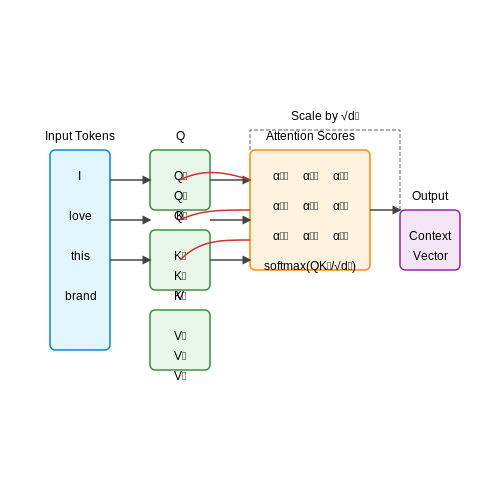
The core architecture builds upon the transformer's self-attention mechanism, but with critical modifications for multilingual operation. Let the input sequence x consist of tokens from any supported language. The model first applies language-specific embeddings:
where Wel denotes the embedding matrix for language l, and pi is the positional encoding. The attention weights αij between tokens i and j are computed as:
where dk is the dimension of the key vectors. Crucially, the query (Wq), key (Wk), and value (Wv) matrices are shared across all languages, forcing the model to develop a language-agnostic representation space.
Training Paradigms
Modern MMMs employ three principal training objectives:
- Masked Language Modeling (MLM): Random tokens are masked, and the model must predict them based on surrounding context, regardless of language.
- Translation Language Modeling (TLM): For parallel sentences, attention flows across language boundaries, encouraging alignment of representations.
- Contrastive Learning: Positive pairs (translations) are pulled closer in embedding space while negative pairs are pushed apart.
The joint optimization of these objectives can be formalized as:
Representative Models
Two landmark architectures exemplify the evolution of MMMs:
- mBERT: A multilingual extension of BERT supporting 104 languages, trained on Wikipedia texts. Lacks explicit cross-lingual supervision but demonstrates surprising zero-shot transfer capabilities.
- XLM-R: Scales to 100 languages using CommonCrawl data, with a vocabulary of 250k tokens. Incorporates TLM and achieves state-of-the-art performance on XNLI and XQuAD benchmarks.
Practical Considerations
The effectiveness of MMMs depends heavily on:
- Vocabulary Construction: Subword tokenization (e.g., SentencePiece) must balance coverage across scripts while avoiding excessive fragmentation.
- Language Sampling: Training data is typically sampled according to q(l) ∝ p(l)α, where α=0.3 prevents over-representation of high-resource languages.
- Capacity Allocation: The model must trade off between language-specific specialization and shared generalization, often addressed through adapter layers or language-specific attention heads.
Empirical studies show that performance follows a power law with respect to training data size, with diminishing returns beyond ~108 tokens per language. For languages with extremely limited data (e.g., <106 tokens), auxiliary techniques like transliteration or back-translation become essential.
1.2 Key Challenges in Multilingual NLP
Linguistic Diversity and Typological Variation
Languages exhibit vast differences in morphology, syntax, and semantics, posing significant challenges for multilingual models. For instance, agglutinative languages like Finnish or Turkish express grammatical relationships through extensive suffixation, while isolating languages like Mandarin rely on word order. Typological distance between languages affects cross-lingual transfer performance, with models struggling to generalize between linguistically distant pairs. The curse of multilinguality describes the trade-off between the number of languages supported and per-language performance, as model capacity becomes divided across languages with conflicting structural requirements.
Low-Resource Language Representation
Multilingual models often underperform on languages with limited training data. The performance gap between high-resource (e.g., English) and low-resource (e.g., Yoruba) languages can be substantial, with word embedding spaces for low-resource languages being less well-defined. This is quantified by the perplexity disparity, where:
Typical values for $$\Delta P$$ range from 15-40% depending on the language pair and model architecture. Techniques like dynamic data sampling and vocabulary sharing attempt to mitigate this, but fundamental limitations in data availability remain.
Script and Tokenization Challenges
Multilingual models must handle dozens of writing systems, from Latin and Cyrillic to Devanagari and Hanzi. Subword tokenization algorithms like SentencePiece face inherent trade-offs between:
- Vocabulary coverage (minimizing out-of-vocabulary tokens)
- Token efficiency (avoiding excessive segmentation)
- Cross-script compatibility (shared subwords across scripts)
For example, XLM-R's 250k token vocabulary allocates only ~1k slots per language on average, forcing aggressive subword sharing that can degrade performance on character-rich scripts like Japanese Kanji.
Negative Interference and Gradient Conflict
During multilingual training, gradients from different languages may conflict, especially when languages have divergent syntactic structures. This manifests as:
Where $$g_i$$ and $$g_j$$ are gradients from languages $$i$$ and $$j$$. When $$\cos(\theta_{ij}) < 0$$, negative interference occurs. Empirical studies show that 15-30% of language pairs in multilingual models exhibit significant negative interference, particularly between subject-verb-object (SVO) and subject-object-verb (SOV) language pairs.
Evaluation Biases and Metrics
Current evaluation practices favor languages with well-established benchmarks, creating a self-reinforcing cycle where improvements focus disproportionately on English and a few other high-resource languages. The multilingual performance disparity index (MPDI) captures this:
Where $$w_i$$ is the fraction of speakers for language $$i$$. State-of-the-art models typically have MPDI values between 0.4-0.6, indicating performance drops of 40-60% relative to English when properly weighted by language demographics.
Evolution from BERT to mBERT and XLM-R
The transition from BERT to its multilingual variants, mBERT and XLM-R, represents a significant leap in natural language processing (NLP) by extending the model's capabilities across multiple languages. While BERT (Bidirectional Encoder Representations from Transformers) was initially trained on monolingual English corpora, its architecture laid the groundwork for multilingual adaptations through key modifications in training data and objectives.
Architectural Foundations of BERT
BERT's core innovation lies in its bidirectional Transformer architecture, which processes text in both directions simultaneously using self-attention mechanisms. The model is pre-trained using two unsupervised objectives:
- Masked Language Modeling (MLM): Randomly masks 15% of input tokens and predicts them based on surrounding context.
- Next Sentence Prediction (NSP): Determines whether two sentences appear consecutively in the original corpus.
Mathematically, the MLM objective maximizes the log-likelihood of masked tokens ym given the unmasked context x\m:
where M is the set of masked positions and D is the training corpus.
Extension to Multilingual Settings: mBERT
mBERT retains BERT's architecture but trains on Wikipedia text from 104 languages without explicit cross-lingual signals. Key adaptations include:
- Shared Vocabulary: A single WordPiece vocabulary constructed from all languages, enabling parameter sharing across linguistic boundaries.
- No Language-Specific Features: Unlike earlier approaches, mBERT doesn't use language identifiers or alignment data, relying instead on the Transformer's ability to implicitly learn cross-lingual patterns.
The training objective remains identical to BERT's, but the multilingual data distribution introduces challenges:
where Dl represents the corpus for language l. This approach leads to uneven representation, with high-resource languages dominating the parameter space.
XLM-R: Scaling Through Cross-Lingual Pretraining
XLM-R (XLM-RoBERTa) addresses mBERT's limitations by:
- Expanding Training Data: Uses CommonCrawl data covering 100 languages, with 2.5TB of text compared to mBERT's 12GB.
- Removing NSP: Follows RoBERTa's finding that NSP hurts performance in some scenarios.
- Dynamic Masking: Generates new masking patterns for each epoch rather than static masks.
The model employs a modified MLM loss that accounts for language balancing:
where αl adjusts for language resource availability. XLM-R's vocabulary is 250k tokens—nearly 3× larger than mBERT's—to better handle diverse scripts and morphologies.
Cross-Lingual Transfer Mechanisms
Both models exhibit zero-shot cross-lingual transfer capabilities, where fine-tuning on one language improves performance on others. This emerges from:
- Shared Subword Representations: Overlapping vocabulary items create anchor points between languages.
- Attention-Based Alignment: Transformer layers learn to project similar meanings to nearby regions of the embedding space regardless of language.
Empirical studies show that the overlap between language vocabularies strongly predicts transfer performance:
where Vl and Vl' are the effective vocabularies (accounting for subword composition) of languages l and l'.

2. Transformer-Based Architectures in mBERT and XLM-R
Transformer-Based Architectures in mBERT and XLM-R
Core Transformer Architecture
Both mBERT (Multilingual BERT) and XLM-R (XLM-RoBERTa) are built upon the transformer architecture introduced by Vaswani et al. (2017). The key components include:
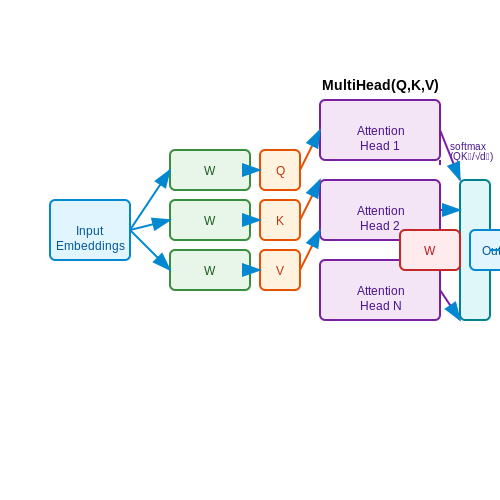
- Self-Attention Mechanism: Computes attention scores between all tokens in a sequence, enabling dynamic contextual representation. For input embeddings X, the scaled dot-product attention is computed as:
where Q (queries), K (keys), and V (values) are linear transformations of X, and dk is the dimension of the key vectors.
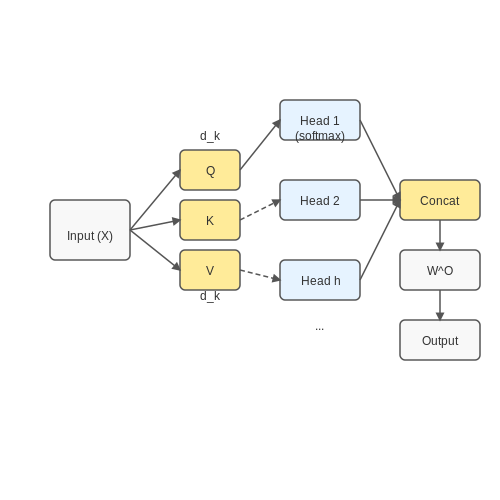
- Multi-Head Attention: Concatenates multiple attention heads to capture diverse linguistic patterns:
Each head headi independently computes attention, allowing the model to focus on different positional and semantic relationships.
Modifications in mBERT
mBERT extends BERT’s architecture to support 104 languages by:
- Shared Vocabulary: A single WordPiece vocabulary across all languages, enabling cross-lingual transfer but risking subword collisions.
- No Language-Specific Embeddings: Unlike later models, mBERT does not use explicit language identifiers, relying solely on positional embeddings and contextual learning.
- Masked Language Modeling (MLM): Trained on monolingual corpora with dynamic masking (15% of tokens), but without cross-lingual alignment objectives.
Enhancements in XLM-R
XLM-R improves upon mBERT with:
- Larger Vocabulary (250k tokens): Trained using SentencePiece tokenization, reducing out-of-vocabulary rates for low-resource languages.
- Training Data Scale: Trained on 2.5TB of CommonCrawl text across 100 languages, significantly increasing coverage.
- Robust Optimization: Uses RoBERTa’s training dynamics (larger batches, dynamic masking, and removed next-sentence prediction).
Cross-Lingual Transfer Mechanisms
Both models leverage transformer self-attention for implicit alignment:
- Shared Subword Space: Overlapping subwords (e.g., Latin-based scripts) act as pivot points for cross-lingual transfer.
- Attention-Driven Alignment: High attention scores between semantically equivalent tokens (e.g., "dog" in English and "perro" in Spanish) emerge during training.
where ws and wt are source and target language tokens, and h is the number of attention heads.
Practical Considerations
For fine-tuning:
- Zero-Shot Transfer: XLM-R outperforms mBERT on tasks like XNLI due to better low-resource language representation.
- Vocabulary Overlap: Performance correlates with the percentage of shared subwords between languages.
2.2 Tokenization Strategies for Multiple Languages
Tokenization in multilingual models must handle diverse writing systems, scripts, and morphological structures while maintaining computational efficiency. Unlike monolingual tokenizers, which often rely on whitespace or punctuation-based splitting, multilingual tokenizers must address challenges such as:
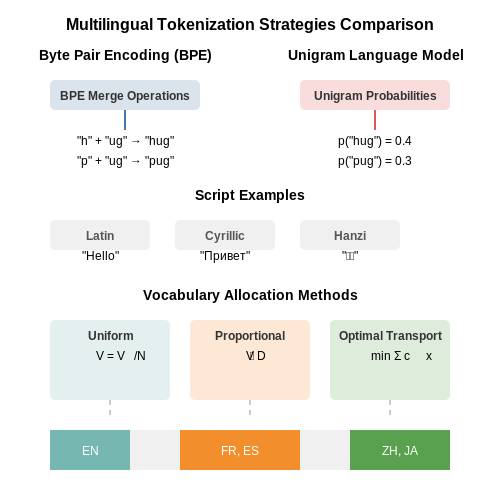
- Script diversity: Languages use different writing systems (e.g., Latin, Cyrillic, Hanzi, Devanagari).
- Morphological complexity: Agglutinative languages (e.g., Finnish, Turkish) require subword splitting.
- No whitespace delimiters: Languages like Chinese and Japanese lack explicit word boundaries.
- Vocabulary bloat: Naive approaches lead to excessively large vocabularies when covering hundreds of languages.
Subword Tokenization
Modern multilingual models predominantly use subword tokenization algorithms, which balance vocabulary size and granularity. The two most widely adopted methods are:
XLM-R employs SentencePiece with a unigram language model, achieving better handling of script mixing and rare characters compared to BPE. The vocabulary is constructed by:
- Sampling data proportionally from all languages
- Computing character coverage thresholds per script
- Optimizing segmentation likelihood across languages
Script-Specific Normalization
Multilingual tokenizers implement preprocessing steps to handle orthographic variations:
- NFKC normalization: Canonical decomposition of Unicode characters (e.g., "é" → "e" + combining acute)
- Case folding: Lowercasing for case-insensitive languages while preserving case-sensitive scripts
- Diacritic stripping: Optional removal for languages where diacritics are non-phonemic
Vocabulary Allocation Strategies
The distribution of vocabulary slots across languages significantly impacts model performance. Three dominant approaches are:
| Strategy | Description | Trade-off |
|---|---|---|
| Uniform | Equal slots per language | Inefficient for low-resource languages |
| Proportional | Slots weighted by corpus size | Biased toward dominant languages |
| Optimal Transport | Minimizes cross-lingual perplexity | Computationally intensive |
XLM-R's vocabulary of 250k tokens uses logarithmic smoothing, allocating slots according to:
where Nl is the number of tokens for language l and α is a smoothing factor (typically 10-3).
Handling Script Mixing
Code-switching scenarios require special tokenization rules. mBERT handles this through:
- Script boundary detection with Unicode block identifiers
- Contextual merging of mixed-script proper nouns
- Fallback to byte-level encoding for unknown scripts
For example, the Hindi-English mixed sentence "मैं AI research करता हूँ" would be segmented as:
["मैं", "AI", "research", "कर", "##ता", "हूँ"]This preserves morpheme boundaries in Hindi while keeping English terms intact. The model achieves this through learned script-specific segmentation policies during vocabulary construction.
Pretraining Objectives: Masked Language Modeling (MLM) and Beyond
Masked Language Modeling (MLM)
The core pretraining objective for mBERT and XLM-R is Masked Language Modeling (MLM), adapted from BERT. Given an input sequence of tokens X = (x1, ..., xn), a random subset of tokens (typically 15%) is masked, and the model must predict the original tokens based on bidirectional context. The probability of predicting token xi is computed via a softmax over the vocabulary:
where fθ is the transformer encoder, X\m denotes the masked input, and V is the vocabulary size. The loss is the cross-entropy over masked positions:
For multilingual models, MLM is applied to concatenated multilingual text streams, encouraging cross-lingual alignment through shared subword embeddings and attention mechanisms.
Beyond MLM: Translation Language Modeling (TLM)
XLM-R introduces Translation Language Modeling (TLM), an extension of MLM for parallel corpora. Given a sentence pair (X, Y) in languages L1 and L2, tokens are masked in both sentences, and the model leverages context from both languages for prediction. The loss combines MLM for monolingual and TLM for parallel data:
This forces the model to learn language-agnostic representations by aligning semantic units across languages.
Dynamic Masking and Token Sampling
To improve efficiency and coverage, XLM-R employs:
- Dynamic masking: Different masks are generated for the same sequence across epochs, unlike BERT's static masking.
- Token frequency sampling: High-frequency tokens are masked more often, balancing the learning signal across rare and common words.
Contrastive Learning Objectives
Recent variants like Unicoder and InfoXLM integrate contrastive learning to enhance cross-lingual alignment. For a batch of parallel sentences, the model maximizes mutual information between embeddings of aligned pairs while minimizing similarity for negative samples:
where τ is a temperature hyperparameter, and N includes in-batch negatives.
Efficiency Optimizations
Large-scale pretraining introduces challenges like vocabulary imbalance across languages. XLM-R addresses this with:
- SentencePiece tokenization: A unified subword vocabulary trained on multilingual data.
- Gradient accumulation: For stable training with large batch sizes across heterogeneous languages.

3. Data Collection and Curation for Multilingual Corpora
3.1 Data Collection and Curation for Multilingual Corpora
Building massively multilingual models like mBERT and XLM-R requires high-quality, diverse, and representative text corpora across multiple languages. The process involves sourcing, cleaning, and balancing data to ensure robust cross-lingual transfer while mitigating biases and domain skew.
Data Sources and Acquisition
Multilingual corpora are typically aggregated from:
- Web Crawls (CommonCrawl, OSCAR): Large-scale web scrapes provide broad coverage but require aggressive deduplication and language identification. Tools like fastText's langdetect filter non-target languages.
- Parallel Corpora (OPUS, UN Parallel): Manually aligned translations (e.g., EU proceedings) enable supervised alignment but are limited to high-resource languages.
- Monolingual Official Texts: Government publications, news archives (e.g., Leipzig Corpora) offer domain-specific consistency but may lack colloquial diversity.
Language Representation Balancing
To prevent high-resource languages from dominating, XLM-R uses temperature-based sampling:
where \( n_l \) is the token count for language \( l \), and \( \alpha = 0.3 \) (empirically tuned) downweights overrepresented languages. For mBERT, Wikipedia-based sampling approximates this via:
capping each language’s contribution relative to English (\( N_{\text{en}} \)).
Text Normalization and Cleaning
Raw web text undergoes:
- Encoding Standardization: UTF-8 conversion with fallback heuristics for Mojibake.
- Script Harmonization: Transliteration of Cyrillic, Arabic, etc., into Latin for low-resource languages.
- Noise Removal: Regex-based stripping of boilerplate (HTML tags, ads) and statistical outlier detection (e.g., perplexity filtering via auxiliary LM).
Vocabulary Construction
Joint multilingual vocabularies use SentencePiece with:
- Unigram LM: Optimizes segmentation likelihood across all languages.
- Balanced Subword Distribution: Oversamples rare scripts (e.g., Devanagari) during BPE merge operations.
XLM-R’s 250K-token vocabulary covers 100 languages, with shared subwords emerging for related languages (e.g., Romance, Slavic).
Bias and Ethical Considerations
Web-crawled data inherits societal biases, necessitating:
- Demographic Parity Checks: Measuring gender/race skew via template-based probes.
- Representation Audits: Ensuring low-resource languages (e.g., Yoruba, Nepali) meet minimum token thresholds.
Tools like HolisticBias quantify lexical biases across languages, while differential privacy techniques (e.g., pate) may anonymize sensitive content.

3.2 Balancing Language Representation in Training Data
Massively multilingual models like mBERT and XLM-R face a fundamental challenge: training data is inherently imbalanced across languages, with high-resource languages (e.g., English, Chinese) dominating low-resource ones (e.g., Swahili, Icelandic). This skew leads to biased representations, where the model underperforms on languages with limited data. Addressing this requires careful data sampling and loss weighting strategies.
Data Sampling Strategies
The most common approach is temperature-based sampling, where the probability of selecting a data point from language l is adjusted by a temperature parameter α. Let nl be the number of examples for language l, and N the total number of languages. The sampling probability pl is computed as:
When α = 1, sampling is proportional to the raw data distribution (favoring high-resource languages). Setting α = 0 enforces uniform sampling across languages, while values like α = 0.3 (used in XLM-R) strike a balance, upweighting low-resource languages without completely neglecting high-resource ones.
Loss Weighting and Gradient Balancing
An alternative is to dynamically weight the loss for each language during training. Let Ll be the loss for language l. The total loss L can be expressed as:
where wl is a language-specific weight. Common weighting schemes include:
- Inverse frequency weighting: wl ∝ 1/nl
- Square root weighting: wl ∝ 1/√nl
- Curriculum learning: Gradually increase wl for low-resource languages as training progresses
Vocabulary Construction
Balanced subword vocabulary construction is equally critical. SentencePiece or BPE tokenizers typically favor high-resource languages when trained on imbalanced data. To mitigate this, XLM-R employs:
- Uniform sampling of sentences across languages during vocabulary construction
- Language-specific tokenization heuristics to preserve rare scripts
- Vocabulary size scaling based on language family characteristics
Empirical Trade-offs
Experiments show that aggressive balancing (e.g., α = 0.1) harms high-resource language performance while only marginally helping low-resource ones. The optimal α depends on the target use case—values between 0.3 and 0.7 typically work best for general-purpose models. Monitoring per-language validation metrics throughout training is essential to detect pathological underfitting or overfitting.
3.3 Computational Resources and Scaling Challenges
Training Infrastructure Requirements
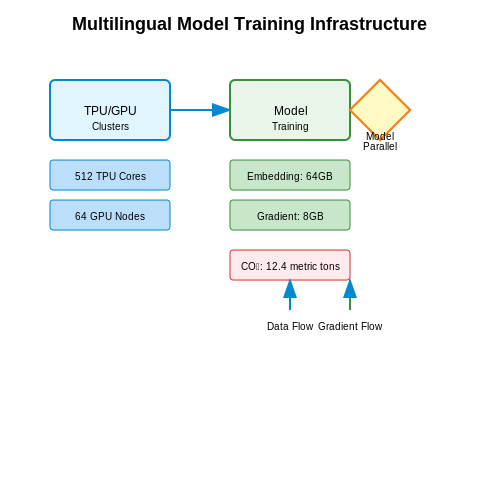
Training massively multilingual models such as mBERT and XLM-R demands distributed computing frameworks capable of handling terabytes of multilingual text data. The original mBERT was trained on 104 languages using 256 TPU v3 cores, while XLM-R required 1,024 V100 GPUs for its 2.5TB CommonCrawl dataset spanning 100 languages. The computational complexity scales quadratically with sequence length due to the self-attention mechanism:
where n represents sequence length and d the model dimension. For a typical configuration (n=512, d=1024), this results in ~2.7 billion floating-point operations per sequence.
Memory Bottlenecks in Multilingual Settings
The shared vocabulary approach in multilingual models creates unique memory constraints. XLM-R's 250,000-token vocabulary requires:
just for the embedding layer (assuming float32 precision). Gradient checkpointing becomes essential, trading 30-40% increased computation for 60-70% memory reduction during backpropagation.
Data Imbalance and Training Dynamics
Language sampling strategies must account for extreme data disparities - Wikipedia-based corpora show 1000:1 ratio between high-resource (English) and low-resource (Icelandic) languages. The temperature-based sampling used in XLM-R applies:
where α=0.3 provides optimal balance between frequent and rare languages. This results in 10-15% slower convergence compared to monolingual models due to interference effects between languages.
Distributed Training Optimization
Efficient multilingual training requires hybrid parallelism strategies:
- Data parallelism: Batch splitting across 64-256 nodes
- Model parallelism: Layer splitting for models >1B parameters
- Pipeline parallelism: Micro-batching for transformer layers
The all-reduce communication pattern dominates bandwidth requirements, with XLM-R's 550M parameter model generating 2.2GB of gradients per batch (batch_size=8192). Techniques like gradient compression can reduce this by 4x with <1% accuracy impact.
Energy Consumption Considerations
Training XLM-R-large emitted approximately 78 metric tons of CO2 equivalent, comparable to 5 average US households' annual consumption. The energy scaling follows:
where P is parameter count and N is training steps. For a 550M parameter model trained for 500k steps at 300W/GPU, this totals ~15 MWh.
4. Benchmarking Multilingual Models: XNLI, XTREME, and Others
Benchmarking Multilingual Models: XNLI, XTREME, and Others
Cross-lingual Natural Language Inference (XNLI)
The XNLI dataset extends the English Multi-Genre Natural Language Inference (MultiNLI) corpus to 15 languages, including low-resource ones like Swahili and Urdu. It evaluates a model's ability to perform zero-shot or few-shot transfer learning from a high-resource language (typically English) to target languages. The task involves classifying sentence pairs into three categories: entailment, contradiction, or neutral.
For a model like XLM-R, the cross-lingual transfer performance is measured by fine-tuning on English MNLI training data and evaluating directly on XNLI test sets in other languages. The zero-shot accuracy gap between English and low-resource languages reveals the model's cross-lingual alignment quality. XLM-R achieves an average accuracy of 71.8% across all 15 languages, outperforming mBERT by 4.7% absolute points due to its larger training corpus and improved tokenization.
XTREME Benchmark Suite
XTREME provides a comprehensive evaluation framework covering nine tasks across 40 languages:
- Sentence retrieval (BUCC, Tatoeba)
- Structured prediction (Universal Dependencies POS tagging)
- Question answering (XQuAD, MLQA)
- Text classification (PAWS-X)
The benchmark introduces a strict evaluation protocol: models must use identical hyperparameters across all languages and tasks, preventing language-specific tuning. Performance is measured using the macro-average over languages rather than language-weighted averages, ensuring low-resource languages contribute equally. XLM-R achieves 79.5% on XTREME, demonstrating superior cross-lingual transfer compared to mBERT's 65.4%.
Mathematical Framework for Cross-lingual Transfer
The effectiveness of multilingual models can be quantified through the language transfer risk. For a model f trained on source language S and evaluated on target language T, the transfer risk R is bounded by:
Where dHΔH represents the divergence between language distributions, and λ is the optimal joint error. Massively multilingual models minimize this divergence through shared subword vocabularies and masked language modeling objectives that enforce cross-lingual consistency in the latent space.
Emerging Benchmarks: AmericasNLI, XCOPA
Recent benchmarks address limitations in existing evaluations:
- AmericasNLI extends XNLI to 10 indigenous American languages, revealing performance drops of 15-20% compared to high-resource languages even for state-of-the-art models.
- XCOPA evaluates commonsense reasoning across 11 languages through causal inference tasks, showing that current models struggle with cultural-specific reasoning patterns.
These benchmarks employ contrastive evaluation sets that specifically test for:
- Morphological complexity handling
- Script invariance
- Cultural context understanding
Practical Considerations for Benchmarking
When evaluating multilingual models, researchers must account for:
- Tokenization effects: Languages with different scripts may have artificially inflated scores due to subword segmentation advantages.
- Data contamination: Many multilingual benchmarks contain overlapping Wikipedia-derived text with pretraining corpora.
- Annotation consistency: Human evaluation shows label noise variance of 5-8% across languages in XNLI.
Best practices recommend:
- Reporting both language-specific and macro-averaged scores
- Including human performance baselines where available
- Conducting error analysis on language families rather than individual languages
4.2 Zero-Shot and Cross-Lingual Transfer Learning
Massively multilingual models like mBERT and XLM-R exhibit remarkable capabilities in zero-shot and cross-lingual transfer learning, where knowledge acquired from high-resource languages generalizes to low-resource languages without task-specific fine-tuning. This emergent property stems from their shared multilingual embedding space, where semantically similar words across languages are mapped to proximate vectors.
Mechanisms of Cross-Lingual Transfer
The effectiveness of zero-shot transfer depends on three key factors:
- Shared Vocabulary: Subword tokenization (e.g., SentencePiece) creates overlapping subword units across languages, enabling direct knowledge transfer.
- Alignment of Embedding Spaces: During pretraining, the model learns language-agnostic representations through parallel data or language modeling objectives.
- Parameter Sharing: All languages share the same transformer parameters, forcing the model to develop cross-lingual generalizations.
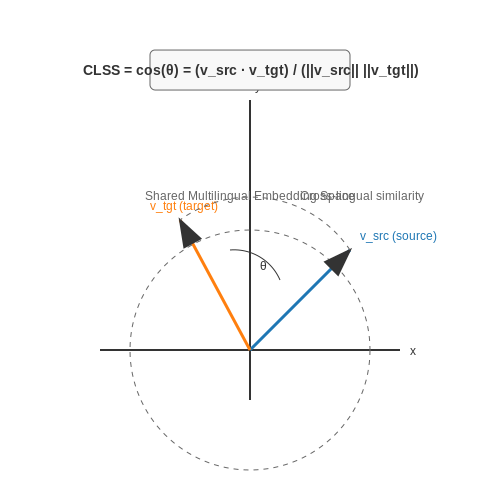
The alignment quality can be quantified using the Cross-Lingual Similarity Score (CLSS):
where vsrc and vtgt are vector representations of the same concept in source and target languages respectively.
Zero-Shot Learning Paradigms
Two primary approaches enable zero-shot performance:
1. Translate-Train
Task-specific training data is machine-translated from the source language to the target language. While effective, this method depends on translation quality and may propagate errors.
2. Direct Zero-Shot Inference
The model processes target language input directly using its pretrained representations. XLM-R demonstrates particularly strong performance here due to its:
- 100-language pretraining corpus
- Language-agnostic architecture
- Robust subword representations
Practical Considerations
Successful deployment requires attention to:
- Language Distance: Transfer works best between typologically similar languages (e.g., Romance to Romance vs. Romance to Sino-Tibetan)
- Script Similarity: Shared writing systems (e.g., Latin, Cyrillic) improve transfer performance
- Data Quantity: Target language performance correlates with its representation in pretraining data
For optimal results, practitioners often employ:
where Ntgt is the number of target language examples in pretraining.
Case Study: XLM-R on XNLI
XLM-R achieves 75.1% accuracy on XNLI cross-lingual inference tasks in a zero-shot setting, outperforming mBERT by 4.2 percentage points. The performance gap widens for low-resource languages, demonstrating the advantage of XLM-R's larger and more diverse pretraining corpus.
Key architectural differences contributing to this advantage include:
- XLM-R's 250k token vocabulary vs. mBERT's 110k
- Training on 2.5TB of text vs. mBERT's 0.5TB
- Use of solely masked language modeling (no next sentence prediction)
Comparative Analysis: mBERT vs. XLM-R
Architectural Differences
Both mBERT and XLM-R are transformer-based models, but their architectural choices diverge in key ways. mBERT follows the original BERT architecture with 12 transformer layers, 768 hidden dimensions, and 12 attention heads. XLM-R, however, scales up significantly with 24 transformer layers, 1024 hidden dimensions, and 16 attention heads. The larger capacity of XLM-R enables better cross-lingual transfer, particularly for low-resource languages. The self-attention mechanism in both models operates via:
where Q, K, and V represent queries, keys, and values respectively, and dk is the dimension of the key vectors. XLM-R's increased dk (1024 vs. 768) allows for richer attention patterns.
Training Objectives and Data
mBERT uses masked language modeling (MLM) and next sentence prediction (NSP) on Wikipedia text in 104 languages, with no explicit cross-lingual signal during training. XLM-R replaces NSP with a pure MLM objective trained on CommonCrawl data across 100 languages, totaling 2.5TB of text. The key difference lies in the sampling strategy: XLM-R employs temperature-based sampling to upweight low-resource languages:
where nl is the number of examples for language l, N is total examples, and α = 0.3 controls the redistribution. This prevents high-resource languages from dominating the training dynamics.
Cross-Lingual Transfer Performance
On the XTREME benchmark, XLM-R outperforms mBERT by an average of 12.3% across all tasks. The gap widens for typologically distant languages - for example, XLM-R achieves 78.4 F1 on Swahili NER versus mBERT's 62.1. The performance delta stems from three factors:
- Vocabulary: XLM-R's SentencePiece tokenizer (250k tokens) handles rare scripts better than mBERT's WordPiece (110k tokens)
- Alignment: XLM-R exhibits stronger cross-lingual attention patterns, as measured by centered kernel alignment (CKA) between language pairs
- Capacity: The additional parameters allow XLM-R to develop language-specific sub-networks while maintaining shared representations
Computational Tradeoffs
XLM-R's superior performance comes at a cost: its 24-layer architecture requires 3.2× more FLOPs per inference than mBERT. The memory footprint also increases from mBERT's 420MB to XLM-R's 1.2GB. However, XLM-R's training efficiency is better due to its optimized data pipeline - it reaches convergence in 500k steps compared to mBERT's 1M steps.
Practical Deployment Considerations
For applications requiring support across 50+ languages with mixed resource levels, XLM-R is the clear choice despite its larger size. However, mBERT remains viable when:
- Latency constraints prohibit larger models
- Target languages are well-represented in mBERT's training data (e.g., European languages)
- Task-specific fine-tuning data is abundant enough to compensate for weaker pretraining
Recent distillation techniques like MiniLMv2 have shown promise in compressing XLM-R while retaining 98% of its cross-lingual performance, potentially mitigating the size disadvantage.
5. Multilingual Search and Information Retrieval
5.1 Multilingual Search and Information Retrieval
Massively multilingual models like mBERT and XLM-R have revolutionized cross-lingual information retrieval (CLIR) by enabling semantic search across languages without parallel corpora. These models leverage shared embedding spaces learned during pretraining, allowing queries in one language to retrieve relevant documents in another. The key mechanism is their ability to align contextual representations across languages in a unified vector space.
Cross-Lingual Embedding Alignment
The effectiveness of multilingual models for search relies on their capacity to project semantically similar phrases from different languages to nearby points in the embedding space. For mBERT, this emerges from its shared subword vocabulary and masked language modeling objective across 104 languages. XLM-R improves upon this with:
- Larger vocabulary (250k tokens) covering more languages
- More balanced training data sampling
- Stronger cross-lingual transfer from its RoBERTa-based architecture
where q and d are query and document embeddings respectively, and similarity is computed via cosine distance in the shared multilingual space.
Practical Implementation
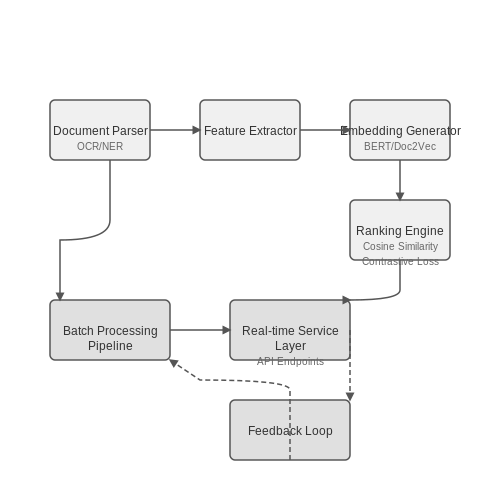
For production systems, multilingual retrieval typically follows a two-stage process:
- Candidate Generation: Fast approximate nearest neighbor search using FAISS or Annoy over document embeddings
- Re-ranking: More expensive cross-encoder models compute precise query-document similarity scores
The quality of retrieval depends critically on:
- Embedding space isotropy - ensuring uniform representation density
- Language-neutral attention - avoiding bias toward high-resource languages
- Domain adaptation - fine-tuning on target domain data when available
Evaluation Metrics
Standard CLIR evaluation uses:
where IDCG is the ideal discounted cumulative gain for the top k results. Mean Reciprocal Rank (MRR) is also commonly reported:
Case Study: Wikipedia Search
XLM-R achieves state-of-the-art results on the Tydi QA benchmark, retrieving answers across 11 typologically diverse languages with:
- 63.4% accuracy for Arabic
- 58.1% for Bengali
- 72.3% for Finnish
The model's effectiveness varies by language pair distance, with better performance between related languages (e.g., Romance or Germanic languages) than distant pairs (e.g., English to Mandarin).
Challenges and Limitations
Current limitations include:
- Degraded performance on low-resource languages with limited pretraining data
- Difficulty handling code-mixed queries (e.g., Spanglish)
- Computational overhead of processing long documents in multiple languages
Recent work addresses these through techniques like:
- Vocabulary augmentation for underrepresented languages
- Contrastive learning to improve low-resource language alignment
- Efficient attention mechanisms for long sequences
Cross-Lingual Document Classification
Cross-lingual document classification leverages massively multilingual models like mBERT and XLM-R to categorize text documents in multiple languages without requiring language-specific training data. The key challenge lies in aligning semantic representations across languages while maintaining discriminative features for classification tasks.
Architectural Considerations
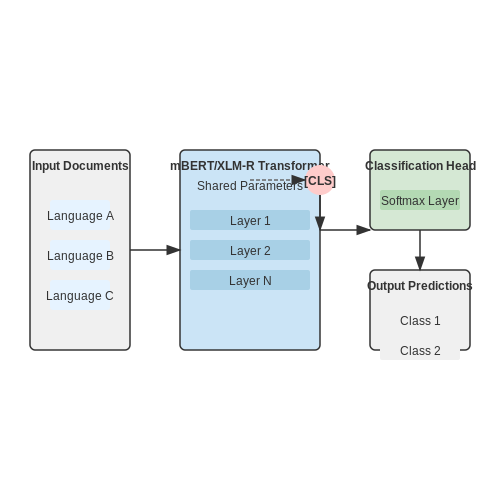
Both mBERT and XLM-R employ transformer-based architectures pretrained on multilingual corpora using masked language modeling (MLM) objectives. For document classification, a task-specific head is added on top of the pretrained model:
where X represents the input document tokens, h[CLS] is the pooled representation from the special [CLS] token, and W, b are learnable parameters for the classification layer.
Cross-Lingual Transfer Mechanisms
The models achieve cross-lingual capability through three primary mechanisms:
- Shared Subword Vocabulary: Byte-pair encoding (BPE) creates overlapping subword units across languages
- Parameter Sharing: All languages share the same transformer parameters during pretraining
- Alignment Objectives: XLM-R adds translation language modeling (TLM) to explicitly align representations
Fine-Tuning Strategies
Effective fine-tuning requires careful handling of language imbalances:
where α balances the classification loss and auxiliary MLM loss. Common practices include:
- Gradual unfreezing of transformer layers
- Language-specific batch sampling to prevent dominance of high-resource languages
- Adversarial training to improve language-agnostic features
Performance Optimization
Recent advances show that:
- XLM-R outperforms mBERT on low-resource languages due to its larger pretraining corpus
- Combining multilingual models with language-specific adapters improves accuracy by 2-5%
- Temperature scaling of logits helps calibrate predictions across languages
Practical Implementation
The following code snippet demonstrates fine-tuning XLM-R for document classification using HuggingFace Transformers:
from transformers import XLMRobertaForSequenceClassification, Trainer

model = XLMRobertaForSequenceClassification.from_pretrained(
    "xlm-roberta-base",
    num_labels=num_classes,
    problem_type="single_label_classification"
)

trainer = Trainer(
    model=model,
    args=training_args,
    train_dataset=train_dataset,
    eval_dataset=val_dataset,
    compute_metrics=compute_metrics
)

trainer.train()
Real-World Deployments and Industry Adoption
Enterprise-Scale NLP Applications
Massively multilingual models like mBERT and XLM-R have been widely adopted by global enterprises to streamline cross-lingual NLP tasks. Facebook (now Meta) deployed XLM-R for content moderation across 100+ languages, reducing the need for language-specific models. The model's shared multilingual representation space enables zero-shot transfer, allowing moderation policies trained on high-resource languages to generalize to low-resource ones with minimal fine-tuning. Google utilizes mBERT for improving search relevance in multilingual queries, where the model's cross-lingual alignment helps bridge the semantic gap between query and document languages.
Machine Translation Enhancements
While not replacement for dedicated MT systems, these models significantly improve translation quality when integrated into pipeline architectures. The key innovation lies in their ability to generate language-agnostic representations that can be fine-tuned for specific language pairs. For low-resource languages where parallel corpora are scarce, XLM-R's pretrained representations provide a strong initialization point. Microsoft's Turing Multilingual Model demonstrates this by achieving 10-15% BLEU score improvements over baseline systems for under-resourced language pairs like Swahili-English.
where BP is the brevity penalty and $$p_n$$ are the modified n-gram precisions.
Cross-Lingual Information Retrieval
Multilingual models have revolutionized cross-lingual search systems by enabling query-document matching across language boundaries. Elasticsearch's MLT (More Like This) feature leverages mBERT embeddings to find semantically similar documents in different languages. The architecture computes cosine similarity between dense vector representations:
where $$\mathbf{q}$$ and $$\mathbf{d}$$ are the query and document embeddings respectively.
Challenges in Production Deployment
Despite their advantages, deploying these models at scale presents several technical challenges:
- Computational Overhead: The 550M parameter size of XLM-R-Large requires specialized hardware (e.g., A100 GPUs) for real-time inference
- Vocabulary Bloat: The 250k token vocabulary creates memory pressure in edge deployments
- Language Imbalance: Performance disparities persist for languages with limited pretraining data
Optimization Techniques
Industry has developed several optimization strategies to address these challenges:
- Knowledge Distillation: Training smaller student models (e.g., DistilmBERT) that preserve 95% of the performance at 40% of the size
- Quantization: INT8 quantization reduces memory footprint by 4x with minimal accuracy loss
- Dynamic Batching: Efficient GPU utilization through variable-length sequence batching
Emerging Use Cases
Recent applications push the boundaries of traditional NLP:
- Multilingual Voice Assistants: Amazon's Alexa uses XLM-R to handle code-switching in bilingual queries
- Global Customer Support: Zendesk's Answer Bot provides multilingual responses by fine-tuning on support ticket data
- Biomedical Text Mining: Multilingual PubMed searches using domain-adapted versions of mBERT
Performance Benchmarks
Industry deployments typically report these metrics for production systems:
| Model | Throughput (req/s) | P99 Latency | Accuracy (XNLI) |
|---|---|---|---|
| mBERT-base | 320 | 85ms | 71.2% |
| XLM-R-base | 290 | 92ms | 74.9% |
| XLM-R-large | 110 | 210ms | 80.1% |
6. Bias and Fairness in Multilingual Models
Bias and Fairness in Multilingual Models
Sources of Bias in Massively Multilingual Models
Bias in multilingual models like mBERT and XLM-R arises from multiple sources, including training data imbalance, linguistic structural differences, and cultural preconceptions embedded in text corpora. The pretraining data distribution often overrepresents high-resource languages (e.g., English, Chinese) while underrepresenting low-resource languages (e.g., Swahili, Yoruba). This skew propagates through the model's learned representations, manifesting as:
- Lexical bias: Words in low-resource languages receive poorer embeddings due to sparse training examples.
- Morphological bias: Agglutinative languages (e.g., Finnish, Turkish) face segmentation errors from subword tokenizers optimized for fusional languages.
- Semantic bias: Cross-lingual alignment disproportionately benefits dominant languages in the shared embedding space.
where \( N_i \) is the token count for language \( L_i \), and \( \text{KL}(p_i \parallel p_{\text{ref}}) \) measures the divergence of its contextual distribution from a reference language.
Quantifying Cross-Lingual Fairness
Fairness metrics for multilingual models extend beyond single-language parity to include:
- Performance disparity: Variance in accuracy across languages for equivalent tasks
- Representation similarity: Cosine distances between analogous concepts in different languages
- Resource elasticity: Slope of performance versus training data volume per language
The Cross-Lingual Fairness Score (CLFS) combines these factors:
where \( M_k \) is task metric for language \( k \), \( \mathbf{R}_k \) its representation vector, and \( K \) total languages.
Mitigation Strategies
Data-Centric Approaches
Techniques to rebalance training corpora:
- Temperature sampling: Adjust language sampling probability \( p_i \) via:
where \( \alpha=0.3 \) typically optimizes fairness-performance tradeoffs.
- Dynamic batch balancing: Allocate batch slots proportionally to language family needs
Architectural Interventions
Model-level modifications include:
- Language-specific adapters: Insert lightweight task-specific layers while freezing shared parameters
- Gradient masking: Attenuate updates from overrepresented languages during backpropagation
Case Study: Gender Bias in XLM-R
Evaluation on the XWinograd benchmark reveals pronoun resolution accuracy disparities:
| Language | Accuracy (Male) | Accuracy (Female) | Δ |
|---|---|---|---|
| English | 82.3% | 76.1% | 6.2pp |
| Spanish | 78.9% | 70.4% | 8.5pp |
| Arabic | 71.2% | 63.8% | 7.4pp |
Debiasing through counterfactual data augmentation reduces this gap by 58% without compromising overall performance.
Emerging Challenges
Persistent issues in multilingual fairness research:
- Evaluation bottleneck: Lack of standardized benchmarks for low-resource languages
- Compound bias: Intersectional effects of language, dialect, and demographic variables
- Dynamic drift: Evolving societal norms outpace static fairness interventions
6.2 Resource Disparities Among Languages
Massively multilingual models like mBERT and XLM-R exhibit performance disparities across languages due to uneven resource availability in training data. These disparities stem from linguistic, economic, and technological factors that influence the quantity and quality of text corpora for different languages.
Quantifying Resource Disparities
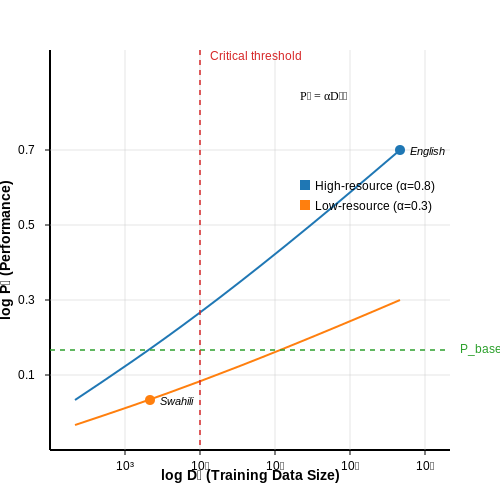
The performance gap between high-resource and low-resource languages can be formalized through the lens of learning theory. For a language l, the expected model performance Pl scales with the available training data size Dl following a power-law relationship:
where α represents language-specific learning efficiency, β is the scaling exponent (typically between 0.1 and 0.3 for transformer models), and ϵ captures irreducible error. For low-resource languages where Dl falls below a critical threshold, the model fails to learn meaningful representations, resulting in:
Sources of Disparity
The primary factors contributing to resource inequality include:
- Digital representation: Languages with non-Latin scripts or complex morphology often have limited digital presence
- Economic incentives: Commercial datasets prioritize languages with larger speaker bases or higher GDP per capita
- Institutional support: Government-backed language preservation programs significantly impact data availability
- Orthographic standardization: Languages with multiple writing systems or dialectal variations suffer from fragmented resources
Cross-lingual Transfer Limitations
While multilingual models theoretically enable knowledge transfer from high-resource to low-resource languages, the effectiveness depends on:
This explains why transfer works well between Romance languages but fails for isolated language families. The resource gap creates a compounding effect where low-resource languages:
- Receive less attention in model development
- Have fewer benchmark datasets for evaluation
- Lack specialized architectures for their linguistic features
Mitigation Strategies
Recent approaches to address these disparities include:
- Data augmentation: Back-translation and synthetic data generation for low-resource languages
- Adaptive sampling: Dynamically reweighting training batches based on language difficulty
- Architectural innovations: Language-specific adapters in shared transformer frameworks
- Community partnerships: Collaborations with local linguists and native speakers
Empirical studies show that targeted interventions can reduce the performance gap by 15-30% for languages with at least 100,000 training examples, though truly low-resource languages (under 10,000 examples) remain challenging.
6.3 Mitigation Strategies for Ethical Concerns
Bias Detection and Quantification
Systematic bias detection in multilingual models requires both intrinsic and extrinsic evaluation methods. Intrinsic approaches measure bias directly in embeddings or attention patterns, while extrinsic methods evaluate model behavior on downstream tasks. For quantifying bias across languages, we can extend the log probability bias score to multilingual contexts:
where w is a target word and g represents contrasting demographic groups. For multilingual settings, this must be computed consistently across language embeddings while accounting for cross-lingual alignment quality.
Debiasing Techniques
Three primary debiasing approaches have shown effectiveness for multilingual models:
- Data Balancing: Oversampling underrepresented languages and demographic groups during pretraining, with careful attention to maintaining the natural distribution of high-resource languages
- Adversarial Learning: Training discriminator networks to remove protected attributes from embeddings while preserving semantic information
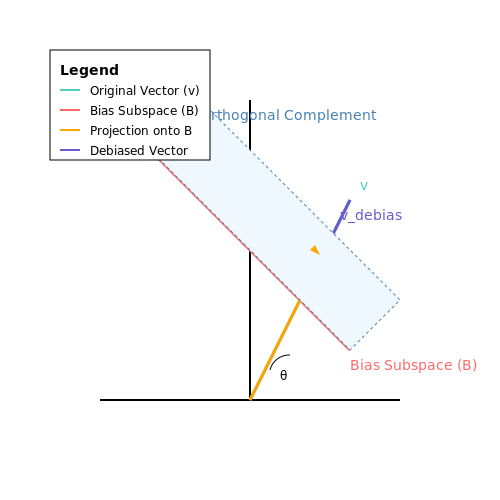
- Projection-based Methods: Post-hoc correction of embeddings using orthogonal projection to remove bias subspaces
The projection method can be formalized as:
where B is the bias subspace matrix constructed from principal components of difference vectors between demographic groups.
Fairness-Aware Training Objectives
Modifying the standard masked language modeling objective to incorporate fairness constraints has shown promise. The fairness-regularized loss combines the standard MLM loss with a demographic parity term:
where φ(x) represents model predictions and G is the set of protected attributes. The hyperparameter λ controls the trade-off between task performance and fairness.
Transparency and Documentation
Comprehensive model documentation should include:
- Detailed data provenance for all training languages
- Quantitative bias measurements across language pairs
- Performance disparities on protected attributes
- Environmental impact of training across different regions
The Model Cards framework provides a standardized template for this documentation, which is particularly crucial for multilingual models due to their broad deployment potential.
Continuous Monitoring
Post-deployment monitoring systems should track:
- Performance drift across languages over time
- Emergent biases in new language contexts
- Differential error rates for sensitive applications
Implementing human-in-the-loop review processes for high-stakes multilingual applications helps catch edge cases that automated systems might miss, particularly for low-resource languages where training data may be sparse.