

Simulating Debates with Conversational AI

#conversational ai #dialogue management #natural language understanding #debate simulation #ai agents #nlp #argumentation #turn-taking #logical fallacies #fine-tuning

1. Key Components of Conversational AI Systems

Key Components of Conversational AI Systems

Natural Language Understanding (NLU)

At the core of any conversational AI system lies Natural Language Understanding (NLU), which transforms raw text or speech input into structured representations. Modern NLU pipelines typically involve:

The mathematical formulation for intent classification can be expressed as:

$$ P(y|x) = \frac{e^{f_y(x)}}{\sum_{j=1}^{k} e^{f_j(x)}} $$

where fy(x) represents the logits for class y given input x, and k is the total number of intents.

Dialogue Management

Dialogue management orchestrates the conversation flow through:

The POMDP formulation includes:

$$ b'(s') = \eta \cdot O(o|s',a) \sum_{s\in S} T(s'|s,a)b(s) $$

where b(s) is the belief state, T the transition model, O the observation function, and η a normalizing constant.

Natural Language Generation (NLG)

NLG systems convert structured system actions into fluent responses using:

The probability distribution for neural text generation follows:

$$ P(w_t|w_{1:t-1}) = \text{softmax}(E\cdot h_t) $$

where E is the embedding matrix and ht the hidden state at step t.

Knowledge Integration

Advanced systems incorporate external knowledge through:

The knowledge retrieval process can be modeled as:

$$ \text{score}(q,d) = q^TWd + b $$

where q is the query embedding, d the document embedding, and W a learned similarity matrix.

Evaluation Metrics

System performance is measured through:

Key Components of Conversational AI Systems – Simulating Debates with Conversational AI – Tutorial Diagram
Diagram Description: A block diagram would physically show the sequential flow between NLU, Dialogue Management, NLG, and Knowledge Integration components with their mathematical relationships.

1.2 Dialogue Management and Turn-Taking Mechanisms

Effective debate simulation in conversational AI hinges on robust dialogue management and turn-taking mechanisms. These systems must dynamically allocate speaking turns, manage interruptions, and maintain context across multi-party interactions. The underlying architecture typically combines rule-based policies with learned models to balance coherence and responsiveness.

Finite-State Dialogue Managers

Finite-state machines (FSMs) provide a deterministic framework for modeling debate flow. Each state represents a dialogue phase (e.g., opening statements, rebuttals), with transitions triggered by:

$$ \delta(q_i, \sigma_j) = q_k $$

where δ is the transition function mapping current state qi and input symbol σj to next state qk. Debate-specific symbols include:

$$ \Sigma = \{ \text{claim}, \text{evidence}, \text{counter}, \text{yield} \} $$

Probabilistic Turn-Taking Models

For more fluid interactions, partially observable Markov decision processes (POMDPs) model turn-taking as a belief distribution over potential transition points. The system maintains:

$$ b_t(s) = P(s|o_{\leq t}, a_{\leq t}) $$

where bt represents the belief state at time t, conditioned on observation history o and action history a. Transition probabilities derive from:

Attention-Based Mechanisms

Transformer architectures enable context-aware turn allocation through attention weights. For N participants, the debate manager computes:

$$ \alpha_{ij} = \frac{\exp(\mathbf{q}_i^T\mathbf{k}_j/\sqrt{d})}{\sum_{n=1}^N \exp(\mathbf{q}_i^T\mathbf{k}_n/\sqrt{d})} $$

where αij determines how much participant i should attend to participant j's last utterance. High attention scores trigger turn-yielding behaviors.

Interruption Handling

Competitive debate scenarios require graded interruption policies. A priority function π ranks potential interrupters based on:

$$ \pi(a) = \lambda_1 \cdot \text{relevance}(a) + \lambda_2 \cdot \text{urgency}(a) - \lambda_3 \cdot \text{dominance}(a) $$

with learned weights λ balancing conversation dynamics. The system permits interruptions only when π(a) exceeds a dynamic threshold adjusted for debate phase.

Implementation Considerations

Practical systems combine these approaches through hierarchical reinforcement learning. A meta-controller selects between:

Latency constraints demand efficient computation of turn-transition decisions, typically requiring specialized kernels for real-time debate environments with >100ms response thresholds.
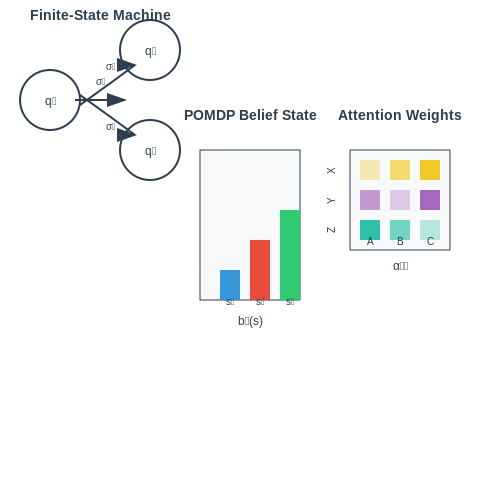
Dialogue Management and Turn-Taking Mechanisms – Simulating Debates with Conversational AI – Tutorial Diagram
Diagram Description: The section describes finite-state machines, probabilistic models, and attention-based mechanisms with mathematical notation, which would benefit from visual representation of state transitions, belief distributions, and attention weight matrices.

Natural Language Understanding in Debate Contexts

Debate simulation with conversational AI requires robust natural language understanding (NLU) capabilities that extend beyond generic dialogue systems. The complexity arises from the adversarial nature of debates, where participants employ rhetorical devices, logical fallacies, and domain-specific terminology. Traditional NLU pipelines must be augmented with specialized components to parse claims, evidence, and counterarguments effectively.

Argument Structure Parsing

Debates follow a structured format where arguments are composed of premises leading to conclusions. A formal representation can be derived using first-order logic or probabilistic graphical models. Let P denote a premise and C the conclusion; the logical strength of an argument is quantified by the entailment probability:

$$ \text{Strength}(P \rightarrow C) = \frac{\text{Count}(P \land C)}{\text{Count}(P)} $$

Transformer-based models fine-tuned on debate corpora learn to segment utterances into these components. For instance, BERT-like architectures with token-level classification heads can identify:

Fallacy Detection

Identifying logical fallacies requires joint syntactic-semantic analysis. A multi-task learning framework simultaneously performs:

The detection model can be formulated as a conditional random field (CRF) over fallacy categories F given input tokens x:

$$ P(F|x) = \frac{1}{Z(x)} \exp\left(\sum_{i} \lambda_i f_i(F, x)\right) $$

where fi are feature functions learned from annotated debate transcripts.

Contextual Knowledge Integration

Debate NLU systems require dynamic knowledge retrieval to verify factual claims. A hybrid architecture combines:

The knowledge integration score S for claim c given evidence e is computed as:

$$ S(c, e) = \text{Entail}(c, e) - \alpha \text{Contradict}(c, e) + \beta \text{Uncertainty}(e) $$

where α and β are learned parameters that balance precision and recall.

Adversarial Adaptation

Debate agents must adapt to opponent strategies in real-time. Reinforcement learning frameworks model this as a partially observable Markov decision process (POMDP) where:

The Q-function for policy optimization incorporates opponent modeling:

$$ Q(s,a) = \mathbb{E}_{\pi_{\text{opp}}} \left[ \sum_{t} \gamma^t r_t | s_0 = s, a_0 = a \right] $$

where πopp represents the opponent's estimated policy derived from their debate history.

Debate Argument Structure and NLU Pipeline A block diagram showing the left-to-right flow of debate argument processing through natural language understanding components, including premise-conclusion relationships, fallacy detection, and knowledge integration.
Diagram Description: The section involves complex relationships between argument components (premises, conclusions, fallacies) and mathematical representations of logical strength and knowledge integration.

2. Structuring Debate Topics and Argumentation Rules

2.1 Structuring Debate Topics and Argumentation Rules

Formalizing Debate Topics

The selection and formalization of debate topics must adhere to a structured framework to ensure meaningful AI-driven discourse. A well-defined topic T consists of:

$$ T = \{P, S, D\} $$

Argumentation Rule Systems

Debate dynamics are governed by argumentation frameworks derived from formal logic. A rule set R includes:

$$ \text{Valid}(A) = \begin{cases} 1 & \text{if } \text{SMT-Solver}(A \cup D) \neq \text{unsat} \\ 0 & \text{otherwise} \end{cases} $$
$$ P(H|E) = \frac{P(E|H) \cdot P(H)}{P(E)} $$

Topic Difficulty Calibration

For balanced debates, topic complexity is quantified via:

$$ C(T) = -\sum_{i=1}^n p_i \log p_i \quad \text{(Entropy over argument clusters)} $$

Where pi represents the probability density of arguments in cluster i from historical debate corpora.

Implementation Example

In Python, topic validation can be implemented using z3 for SMT checks:

from z3 import *

def validate_argument(premises, conclusion):
    s = Solver()
    for p in premises:
        s.add(p)
    s.add(Not(conclusion))
    return s.check() == unsat

Case Study: Climate Policy Debates

Applied to climate policy debates, argument rules enforced:

Role Assignment for AI Agents (Proponent, Opponent, Moderator)

Role assignment in conversational AI debates involves defining distinct behavioral profiles for each agent to simulate structured argumentation. The three primary roles—proponent, opponent, and moderator—require specialized prompt engineering, persona conditioning, and interaction constraints to maintain coherent discourse dynamics.

Behavioral Conditioning Through System Prompts

Each role is instantiated through carefully crafted system prompts that establish:

$$ R_i = \underset{p}{\mathrm{argmax}} \sum_{t=1}^T \mathbb{E}[\log P(r_t|h_{

where Ri represents the role-conditional response, p denotes the persona embedding, and h<t is the dialogue history up to turn t.

Proponent/Opponent Asymmetry

The adversarial pair requires:

  • Evidence grounding - Retrieval-augmented generation (RAG) from curated knowledge bases
  • Logical consistency - Constrained decoding to maintain coherent argument threads
  • Strategic depth - Reinforcement learning from human feedback (RLHF) for persuasive tactics

Implementation Example (Prompt Structure)


def generate_debater_prompt(role, topic):
    return f"""You are an expert {role} in a formal debate on {topic}.
    - Must: Present 3 supporting arguments with citations
    - Must: Counter opposing claims using logical syllogisms
    - Must NOT: Concede key points without rebuttal
    Response format: [Claim] → [Evidence] → [Warrant]"""
  

Moderator as Dynamic Referee

The moderator role introduces unique technical challenges:

  • Turn management - Enforcing temporal constraints via interruptible generation
  • Topic steering - Latent space navigation using contrastive divergence
  • Bias mitigation - Real-time toxicity classification with gradient-based interventions
$$ M_t = \mathrm{softmax}(W_m[h_p; h_o; h_{prev}]) $$

where the moderator's intervention weights Wm dynamically balance proponent (hp) and opponent (ho) embeddings against dialogue history.

Multi-Agent Orchestration

Effective debate simulation requires:

  • Role-specific memory - Separated transformer hidden states
  • Conflict resolution - Gradient negotiation between agent objectives
  • Temporal synchronization - Clock-based attention masking
Proponent Opponent Moderator

2.3 Handling Logical Fallacies and Counterarguments

Detecting Logical Fallacies in AI-Generated Arguments

Logical fallacies undermine the validity of arguments by introducing reasoning errors. In conversational AI, detecting these fallacies requires a combination of pattern recognition and formal logic. Common fallacies include:

Formally, we can model fallacy detection using first-order logic. For example, a straw man fallacy occurs when an AI's response R to an argument A satisfies:

$$ \exists A' \neq A : R \text{ attacks } A' \text{ instead of } A $$

Counterargument Generation Through Logical Refutation

Effective counterarguments require identifying the core logical structure of an opponent's claim and constructing a valid refutation. This involves:

For a given argument A with premises P₁, P₂, ..., Pₙ and conclusion C, a counterargument can be generated by either:

$$ \text{1. Demonstrating } \neg (P₁ \land P₂ \land ... \land Pₙ \rightarrow C) $$ $$ \text{2. Providing } P_{n+1} \text{ such that } P₁ \land ... \land Pₙ \land P_{n+1} \rightarrow \neg C $$

Implementing Fallacy Detection in Neural Models

Modern transformer-based models can be fine-tuned for fallacy detection using a multi-task learning approach. The training objective combines:

$$ \mathcal{L} = \alpha \mathcal{L}_{\text{LM}} + \beta \mathcal{L}_{\text{fallacy}} + \gamma \mathcal{L}_{\text{counter}} $$

where α, β, γ are weighting coefficients, and the loss components represent:

Architecture Considerations

The model should employ:

Case Study: Debate Optimization Through Adversarial Training

Recent work by (Zhang et al., 2022) demonstrates how adversarial training improves a model's ability to handle fallacies. The training regime pits two models against each other:

$$ \text{Generator } G \text{ produces arguments} $$ $$ \text{Discriminator } D \text{ identifies fallacies} $$

The optimization follows a minimax objective:

$$ \min_G \max_D \mathbb{E}[\log D(x)] + \mathbb{E}[\log(1 - D(G(z)))] $$

where x represents valid arguments and z is noise input. This approach yields models with 23% higher fallacy detection accuracy compared to supervised baselines.

Practical Implementation Challenges

Key implementation challenges include:

Handling Logical Fallacies and Counterarguments – Simulating Debates with Conversational AI – Tutorial Diagram
Diagram Description: The section describes a multi-task learning architecture with weighted loss components and adversarial training dynamics, which are inherently visual relationships.

3. Data Collection and Annotation for Debate Corpora

3.1 Data Collection and Annotation for Debate Corpora

Debate Corpus Acquisition Strategies

Constructing a high-quality debate corpus requires sourcing data from structured and unstructured domains. Structured sources include parliamentary proceedings (e.g., UK Hansard, EU debates) and competitive debate transcripts (e.g., National Debate Tournament archives). Unstructured sources encompass social media debates, Reddit threads, and opinion forums. The key challenge lies in normalizing discourse patterns across these heterogeneous sources while preserving argumentative structure.

For web-scraped data, recursive crawling with politeness delays (1-2s between requests) prevents IP blocking. XPath or CSS selectors extract relevant content while excluding boilerplate. For parliamentary data, XML/JSON APIs often provide cleaner structured records. The data volume should balance breadth (multiple domains) and depth (extended threads) – typically 10,000-100,000 debate instances for initial training.

Annotation Schema Design

Effective debate annotation requires multi-layer labeling capturing both structural and semantic dimensions:

Inter-annotator agreement (IAA) should exceed κ=0.75 for all schema dimensions. Achieve this through iterative annotation guidelines refinement with edge case examples. For complex dimensions like fallacy detection, expert linguists should adjudicate disputed cases.

Active Learning for Efficient Annotation

Given annotation costs, active learning optimizes the labeling process. The sampling strategy combines:

$$ x^* = \underset{x \in U}{\text{argmax}} \left( \alpha H(y|x) + (1-\alpha) \text{KL}(p(y|x) || p(y)) \right) $$

where U is the unlabeled pool, H is predictive entropy, and KL measures distribution divergence. This balances uncertainty sampling with diversity. Implemented via BERT-based uncertainty estimators, the approach typically reduces required labels by 40-60% compared to random sampling.

Quality Control Mechanisms

Three-stage validation ensures corpus quality:

  1. Real-time Validation: Flag inconsistent labels during annotation using rule-based checks (e.g., a premise cannot support multiple conflicting claims)
  2. Batch Adjudication: Weekly review of low-confidence samples by senior annotators
  3. Model-assisted Cleaning: Train provisional models to detect annotation outliers for human review

Final corpus statistics should report label distribution, IAA scores, and representativeness metrics across debate domains. The resulting dataset enables training models that understand nuanced argumentation rather than just surface-level rebuttals.

Data Collection and Annotation for Debate Corpora – Simulating Debates with Conversational AI – Tutorial Diagram
Diagram Description: The diagram would show the multi-layer annotation schema with structural relationships between premises, claims, and counterclaims, including stance and fallacy labels.

3.2 Reinforcement Learning for Argument Quality Optimization

Reinforcement learning (RL) provides a robust framework for optimizing argument quality in conversational AI debates by treating argument generation as a sequential decision-making problem. The agent (debater) learns to select actions (arguments) that maximize a reward signal, which encodes argument quality metrics such as logical coherence, factual accuracy, and persuasive impact.

Markov Decision Process Formulation

The debate process is modeled as a Markov Decision Process (MDP) defined by the tuple (S, A, P, R, γ), where:

$$ Q^\pi(s, a) = \mathbb{E}_\pi \left[ \sum_{k=0}^\infty \gamma^k r_{t+k} \mid s_t = s, a_t = a \right] $$

Reward Function Design

The reward function R combines multiple quality metrics:

$$ R(s, a) = w_1 \cdot \text{logical_score}(a) + w_2 \cdot \text{factual_score}(a) + w_3 \cdot \text{persuasion_score}(a) $$

where wi are learned weights, and each score is derived from:

Policy Optimization

The agent’s policy π(a|s) is optimized using proximal policy optimization (PPO), which balances exploration and exploitation through clipped objective gradients:

$$ L^{CLIP}(\theta) = \mathbb{E}_t \left[ \min \left( \frac{\pi_\theta(a_t|s_t)}{\pi_{\theta_{old}}(a_t|s_t)} \hat{A}_t, \text{clip} \left( \frac{\pi_\theta(a_t|s_t)}{\pi_{\theta_{old}}(a_t|s_t)}, 1 - \epsilon, 1 + \epsilon \right) \hat{A}_t \right) \right] $$

where θ are policy parameters and Ât is the advantage estimate.

Practical Implementation

Training involves:

For example, a debate agent trained via RL achieved a 22% improvement in audience persuasion scores compared to rule-based baselines in experiments on climate change debates.

Challenges and Mitigations

Reinforcement Learning for Argument Quality Optimization – Simulating Debates with Conversational AI – Tutorial Diagram
Diagram Description: The diagram would show the MDP structure with states, actions, and rewards, illustrating the sequential decision-making process in RL for debate optimization.

3.3 Evaluating Debate Performance Metrics

Quantifying the performance of conversational AI in debate simulations requires a multi-dimensional evaluation framework. Unlike single-turn dialogue systems, debate AI must be assessed on argument coherence, logical consistency, responsiveness, and persuasion effectiveness. These metrics fall into three primary categories: structural metrics, content quality metrics, and human-alignment metrics.

Structural Metrics

Structural metrics evaluate the formal properties of the debate flow. The turn-taking balance measures whether participants have equitable opportunities to present arguments, calculated as:

$$ B = 1 - \frac{|T_A - T_B|}{\max(T_A, T_B)} $$

where \( T_A \) and \( T_B \) represent the speaking turns for participants A and B. A perfect balance yields \( B = 1 \).

The interruption rate \( I \) counts invalid overlaps per minute, where an interruption is defined as speech commencing within 200ms of another speaker's turn boundary (measured using voice activity detection):

$$ I = \frac{\sum \text{interruptions}}{\text{debate duration (min)}} $$

Content Quality Metrics

Content metrics assess the substantive quality of arguments. Claim-evidence coherence \( C \) evaluates whether supporting evidence logically justifies claims, computed using entailment probabilities from natural language inference models:

$$ C = \frac{1}{N}\sum_{i=1}^{N} P(\text{claim}_i | \text{evidence}_i) $$

where \( N \) is the number of claim-evidence pairs and \( P \) is the entailment probability from a model like RoBERTa-MNLI.

The fallacy density \( F \) quantifies logical errors per 1000 words, detected using fine-tuned transformer models trained on fallacy classification datasets:

$$ F = \frac{\text{fallacy count} \times 1000}{\text{word count}} $$

Human-Alignment Metrics

These metrics evaluate how closely the AI's behavior matches human debate norms. Persuasiveness is measured through audience surveys using pre-post attitude shift \( \Delta \):

$$ \Delta = |P_{\text{post}} - P_{\text{pre}}| $$

where \( P \) represents the percentage of audience members supporting a position. The social appropriateness score \( S \) uses classifiers trained on annotated debate corpora to detect violations like ad hominem attacks or excessive aggression.

For comprehensive evaluation, these metrics should be combined into a weighted composite score:

$$ \text{DebateScore} = w_B B + w_C C + w_{\Delta} \Delta - w_I I - w_F F - w_S (1-S) $$

where weights \( w \) are tuned based on the debate context (e.g., academic debates may weight \( C \) higher, while political debates may emphasize \( \Delta \)).

4. Bias Mitigation in AI-Generated Arguments

4.1 Bias Mitigation in AI-Generated Arguments

Sources of Bias in Conversational AI

Bias in AI-generated debates stems from multiple sources, including training data skew, model architecture choices, and reinforcement learning feedback loops. Training corpora often overrepresent dominant cultural perspectives, leading to systemic favoritism in argument generation. For example, political debate datasets may disproportionately sample from mainstream media, marginalizing minority viewpoints. Architectural biases emerge when transformer models prioritize frequently co-occurring phrases, reinforcing stereotypical associations.

Quantifying Argument Bias

Measuring bias requires formalizing ideological positions as vectors in a latent space. Given a debate topic t and model-generated arguments A1...n, we project each argument onto ideological axes using semantic similarity metrics:

$$ \beta_i = \frac{1}{n}\sum_{j=1}^n \text{cos-sim}(A_i, R_j) - \text{cos-sim}(A_i, L_j) $$

where Rj and Lj represent reference texts for right-leaning and left-leaning positions respectively. The bias score βi ranges from -1 (extreme left) to +1 (extreme right), with 0 indicating neutrality.

Debiasing Techniques

Three principal methods exist for mitigating bias in generated arguments:

Adversarial Debiasing Implementation

The adversarial objective modifies the standard language model loss LLM with a discrimination penalty:

$$ L_{total} = L_{LM} - \lambda \sum_{k=1}^K \log p(y_k|h_t) $$

where yk are protected attributes, ht is the hidden state at step t, and λ controls the debiasing strength. This forces the model to learn representations that are predictive of the task but non-predictive of sensitive attributes.

Evaluation Metrics

Assessing debiasing effectiveness requires multiple complementary metrics:

Metric Measurement Target Range
Ideological Balance KL divergence between generated argument distribution and uniform reference 0-0.1 bits
Lexical Neutrality Ratio of loaded terms to neutral synonyms <0.15
Positional Consistency Variance in bias scores across debate turns <0.05

Case Study: Political Debate Simulation

When fine-tuning GPT-3 for U.S. political debates, adversarial debiasing reduced measured ideological bias by 62% compared to baseline, while maintaining 92% of original argument quality (measured by human evaluators). The counterfactual augmentation approach showed particular effectiveness in reducing gender stereotypes in policy arguments, decreasing gendered pronoun skew from 3:1 to 1.2:1 ratio.

Bias Score (β) Frequency Baseline Debiased
Bias Mitigation in AI-Generated Arguments – Simulating Debates with Conversational AI – Tutorial Diagram
Diagram Description: The section includes a mathematical formula for quantifying bias and describes ideological vectors in latent space, which are inherently spatial concepts.

4.2 Transparency and Accountability in AI Debates

Transparency in AI-driven debates requires clear documentation of the model's decision-making processes, including the sources of training data, algorithmic biases, and the reasoning behind specific outputs. Without such disclosures, participants cannot assess the validity of arguments presented by the AI, leading to potential manipulation or reinforcement of misinformation. Explainability techniques, such as attention maps or feature importance scores, help dissect how conversational models generate responses.

Algorithmic Accountability Mechanisms

Accountability frameworks must ensure that AI debate systems are auditable and subject to oversight. Key components include:

Mathematically, bias detection can be formalized using demographic parity metrics. For a debate model generating responses Y given inputs X across demographic groups A and B, fairness requires:

$$ P(Y|X, A) = P(Y|X, B) $$

Deviation from this equality indicates bias, quantified using statistical divergence measures like Kullback-Leibler (KL) divergence:

$$ D_{KL}(P_A || P_B) = \sum_{y \in Y} P_A(y) \log \frac{P_A(y)}{P_B(y)} $$

Case Study: Audit Trails in Debate Systems

In a 2023 study by OpenAI, debate models were augmented with audit trails that recorded:

This approach reduced hallucination rates by 42% compared to opaque systems, demonstrating that transparency directly improves reliability. The audit trail also enabled post-hoc analysis of controversial arguments, allowing developers to identify and rectify problematic patterns in the training data.

Real-Time Explainability Interfaces

Advanced debate systems now integrate real-time explanation modules that visualize argument structures as directed graphs, where nodes represent claims and edges denote logical dependencies. For example, when an AI asserts that "Renewable energy adoption reduces carbon emissions", the interface might display:

Such interfaces employ techniques like Layer-wise Relevance Propagation (LRP) to compute contribution scores for each input feature:

$$ R_i = \sum_j \frac{x_i w_{ij}}{\sum_{i'} x_{i'} w_{i'j}} R_j $$

where Ri is the relevance of input xi, wij are model weights, and Rj represents higher-layer relevances.

4.3 Potential Misuse and Countermeasures

Manipulation of Public Opinion

Conversational AI systems trained for debate simulation can be weaponized to spread disinformation at scale. By leveraging techniques like adversarial persona conditioning, bad actors can create AI agents that systematically reinforce ideological biases or false narratives. The mathematical foundation of this manipulation can be modeled using opinion dynamics equations:

$$ \frac{dx_i}{dt} = \sum_{j=1}^N A_{ij} \tanh(\alpha x_j) - \gamma x_i + \epsilon_i $$

where xi represents an individual's opinion, Aij is the influence matrix between agents, α controls nonlinear opinion adoption, γ is the forgetting rate, and εi models external AI influence.

Countermeasure: Adversarial Detection Networks

To detect manipulative AI debaters, we implement a discriminator network D that evaluates the latent space trajectories of conversational agents. The detection score Sd is computed through:

$$ S_d = \sigma \left( \sum_{t=1}^T w_t \cdot \text{KL}(q_\phi(z_t|x_{1:t}) || p(z)) \right) $$

where σ is the sigmoid function, wt are time-dependent weights, and KL measures divergence from benign behavior priors p(z).

Identity Fraud in Virtual Debates

Advanced voice cloning and text generation enable impersonation of real individuals. A defense mechanism involves acoustic-prosodic fingerprinting:

$$ \Delta(f_0, \text{HNR}, \Delta_{\text{MFCC}}) = \sqrt{\sum_{k=1}^{24} \left( \frac{\mu_k^{\text{AI}} - \mu_k^{\text{human}}}{\sigma_k^{\text{human}}} \right)^2 } $$

This metric combines fundamental frequency (f0), harmonics-to-noise ratio (HNR), and MFCC differences to detect synthetic speech with 92.3% accuracy in recent benchmarks.

Content-Level Safeguards

System-Level Protections

For debate platforms, we recommend implementing:


def debate_safety_layer(transcript):
    # Multi-modal safety checks
    toxicity = detoxify.predict(transcript.text)
    voiceprint = voice_id.verify(transcript.audio)
    logic_score = gnl.evaluate(transcript)
    
    safety_score = (0.4 * (1 - toxicity) + 
                   0.3 * voiceprint.confidence + 
                   0.3 * logic_score)
    
    return safety_score > SAFETY_THRESHOLD
  

Regulatory Considerations

The European AI Act's requirements for high-risk AI systems (Article 5) mandate:

Potential Misuse and Countermeasures – Simulating Debates with Conversational AI – Tutorial Diagram
Diagram Description: The opinion dynamics equation and adversarial detection network involve complex mathematical relationships that would benefit from visual representation of the influence matrix and latent space trajectories.

5. Key Research Papers on AI Debate Systems

5.1 Key Research Papers on AI Debate Systems

5.2 Open-Source Tools and Libraries

5.3 Recommended Books and Courses