AI-Based Music Genre Transformation
1. Defining Music Genre and Its Characteristics
1.1 Defining Music Genre and Its Characteristics
Music genre classification is a multidimensional problem rooted in both acoustic features and cultural context. A genre is defined by a set of shared musical characteristics, including rhythmic patterns, harmonic structures, instrumentation, and production techniques. These features form a high-dimensional feature space where machine learning models can operate to distinguish or transform genres.
Acoustic and Temporal Features
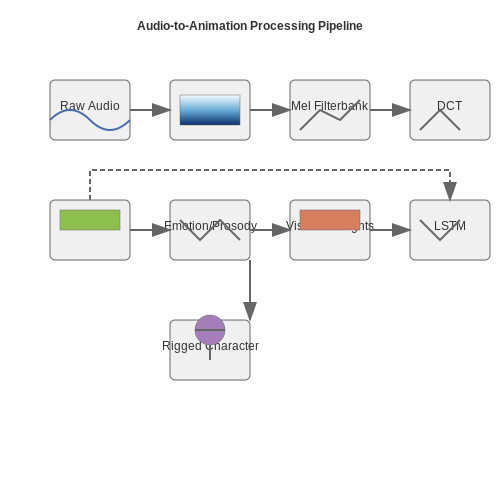
The foundation of genre classification lies in the extraction of low-level acoustic features. Mel-frequency cepstral coefficients (MFCCs) capture timbral qualities, while chroma features represent harmonic content. Temporal features such as beat histograms and onset strength provide rhythmic information. Mathematically, MFCCs are derived from the discrete cosine transform (DCT) of the log-power spectrum on a nonlinear Mel scale:
where E(m) represents the energy in the m-th Mel band, and M is the number of filter banks. Chroma features, on the other hand, project the frequency spectrum onto 12 pitch classes, providing a compact harmonic representation:
Higher-Level Semantic Features
Beyond low-level descriptors, genre is influenced by higher-level semantic features such as song structure (verse-chorus-bridge patterns), dynamics (loudness variations), and instrumentation density. These are often modeled using recurrent neural networks (RNNs) or attention mechanisms to capture long-term dependencies. For instance, a bidirectional LSTM can model temporal evolution of spectral features:
Cultural and Production Context
Genre boundaries are fluid and influenced by production techniques (e.g., reverb in shoegaze, side-chain compression in EDM) and cultural associations (lyrical themes in hip-hop, danceability in disco). This necessitates multimodal approaches combining audio analysis with metadata (artist, era) and even visual album art features in advanced systems.
Feature Space Topology
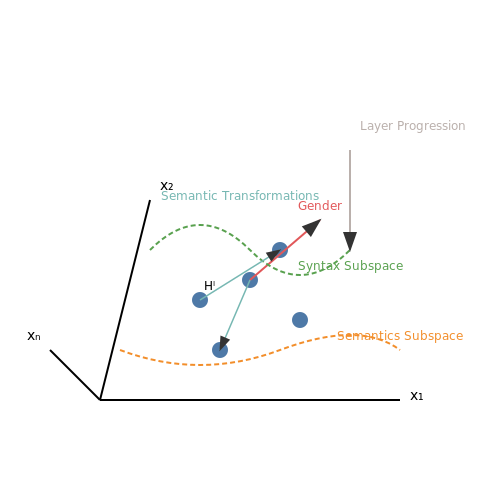
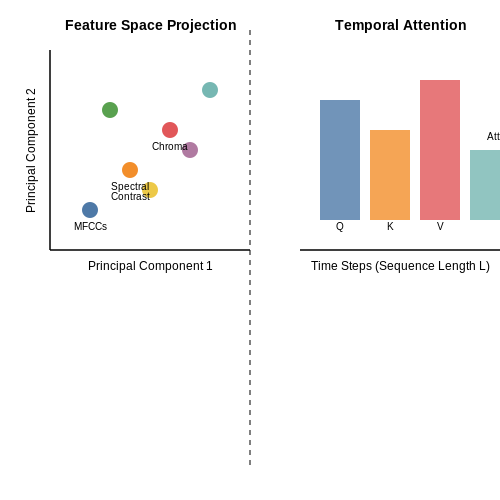
In the latent space learned by deep networks, genres form clusters with complex decision boundaries. t-SNE visualizations of embeddings from models like VGGish often reveal overlapping distributions between related genres (e.g., metal and hard rock), highlighting the need for hierarchical classification approaches or fuzzy logic in genre transformation systems.
1.2 Challenges in Automated Genre Transformation
High-Dimensional Feature Space Complexity
Music signals are inherently high-dimensional, with features spanning time-frequency representations, harmonic content, rhythmic patterns, and timbral characteristics. The feature space F for a musical piece can be formalized as:
where each fi corresponds to a distinct audio descriptor (e.g., MFCCs, spectral contrast, chroma features). The curse of dimensionality manifests when attempting to learn mappings between genre-specific feature distributions, requiring either:
- Dimensionality reduction techniques (e.g., t-SNE, UMAP) that risk losing perceptually relevant information
- Exponentially larger training datasets to maintain model generalization
Nonlinear Temporal Dependencies
Genre characteristics often emerge from long-term structural patterns (e.g., verse-chorus arrangements in pop vs. through-composed forms in classical). Standard sequence models struggle with:
where k is the fixed context window of architectures like CNNs/RNNs. Transformers theoretically address this with self-attention:
but require O(L2) computations for sequence length L, making full-song processing computationally prohibitive.
Perceptual-Cognitive Discrepancies
Human genre perception relies on cognitive schemata not captured by low-level audio features. The semantic gap between signal processing outputs and perceptual categories creates:
- Misalignment between quantitative metrics (e.g., classification accuracy) and subjective quality
- Ambiguity in ground truth labeling (e.g., genre hybrids like folktronica)
This is quantified by the perceptual divergence Dp between model outputs and human judgments:
where M(x) is the model's genre assignment and H(x) human consensus.
Data Scarcity for Niche Genres
The power-law distribution of available training data means:
- Major genres (pop, rock) have >100k labeled examples
- Specialized genres (zeuhl, lowercase) may have <100 clean samples
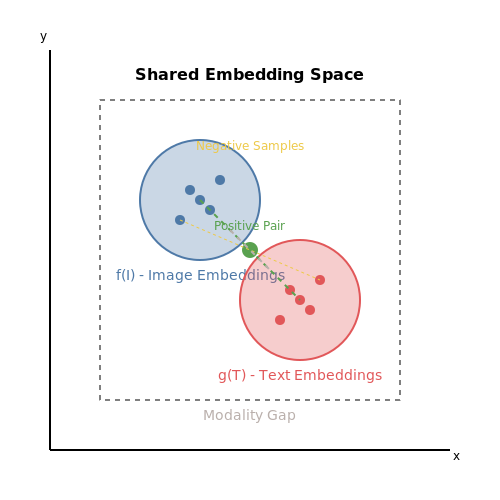
This creates a genre embedding collapse problem in latent spaces, where minority genres cluster indistinctly. Contrastive learning approaches attempt mitigation:
but remain fundamentally limited by data paucity.
Real-Time Processing Constraints
Streaming applications require:
- Latency <50ms to avoid perceptual discontinuities
- Throughput >20x real-time for cloud deployment
Current state-of-the-art diffusion models for audio generation operate at:
making them impractical for interactive use without significant architectural compromises.
Role of AI in Music Analysis and Synthesis
Music Feature Extraction and Representation Learning
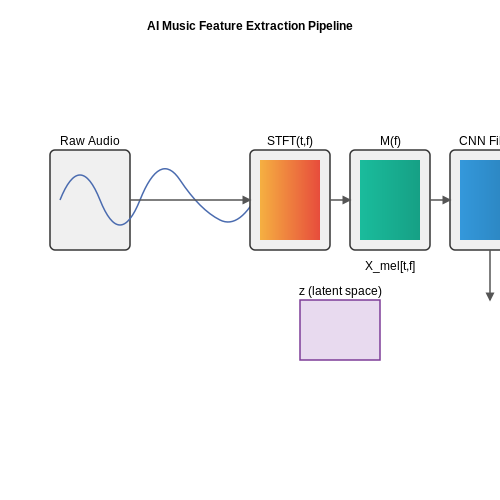
AI-driven music analysis begins with feature extraction, where raw audio signals are transformed into structured representations. Modern approaches leverage deep learning to automatically learn hierarchical features from spectrograms or raw waveforms. Convolutional Neural Networks (CNNs) process time-frequency representations, capturing local patterns such as harmonic structures and rhythmic elements. For instance, a 2D CNN applied to Mel-spectrograms can decompose a track into timbral, rhythmic, and pitch-related components:
where M(f) is the Mel filter bank, and STFT(t, f) is the Short-Time Fourier Transform. Self-supervised models like Wav2Vec2 further eliminate manual feature engineering by learning latent representations directly from waveforms using contrastive learning objectives.
Generative Models for Music Synthesis
AI-based synthesis relies on generative models such as Variational Autoencoders (VAEs), Generative Adversarial Networks (GANs), and autoregressive architectures like Transformers. VAEs encode music into a latent space z, enabling interpolation and style transfer:
Diffusion models have recently surpassed GANs in generating high-fidelity audio by iteratively denoising signals. For example, DiffWave synthesizes music by reversing a Markov chain of Gaussian noise over hundreds of steps, conditioned on spectral features.
Cross-Domain Music Transformation
Genre transformation requires disentangling content (e.g., melody) from style (e.g., instrumentation). CycleGANs and StarGANs map between domains without paired data by enforcing cycle-consistency losses:
Practical applications include converting classical piano pieces to jazz by modifying harmonic progressions and swing ratios while preserving the original note sequence. Real-time systems use lightweight architectures like MobileNet for on-device inference.
Challenges and Limitations
Current models struggle with long-term structure preservation in multi-instrument compositions. The exposure bias problem in autoregressive models leads to compounding errors during generation. Adversarial training mitigates this but introduces mode collapse risks. Hybrid architectures combining Transformers for structure and CNNs for local detail show promise, as seen in OpenAI’s Jukebox, though computational costs remain prohibitive for real-time use.
2. Signal Processing and Feature Extraction
2.1 Signal Processing and Feature Extraction
Time-Domain Signal Representation
Raw audio signals are represented as time-domain waveforms, typically sampled at standard rates (44.1 kHz, 48 kHz) with 16-bit or 24-bit resolution. The discrete-time signal x[n] is modeled as:
where A is amplitude, f is frequency, Ts is sampling period, and ϕ is phase. For music signals, this represents the superposition of multiple frequency components:
Short-Time Fourier Transform (STFT)
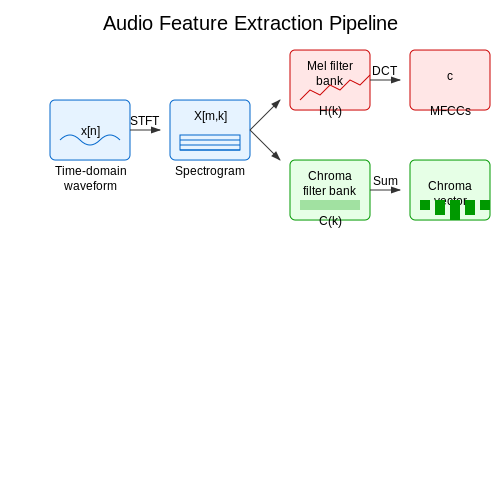
Time-frequency analysis is performed using STFT, which applies the Fourier transform to windowed segments of the signal. The transform is given by:
where w[n] is the analysis window (typically Hann or Hamming), H is hop size, and N is FFT size. The magnitude spectrogram S[m,k] = |X[m,k]| provides a time-varying representation of spectral energy.
Mel-Frequency Cepstral Coefficients (MFCCs)
MFCCs are derived by:
- Computing the power spectrum from STFT
- Applying a mel-scale filter bank (triangular filters spaced according to perceptual pitch)
- Taking the logarithm of filter bank energies
- Computing the discrete cosine transform (DCT) of log energies
The mel-scale warping is defined by:
Chroma Features
Chroma vectors represent pitch class profiles by mapping spectral frequencies to 12 semitone bins (C, C#, ..., B). The chroma feature c for pitch class p is computed as:
where the summation includes all STFT bins whose frequencies map to pitch class p.
Temporal Feature Aggregation
Frame-level features (MFCCs, chroma) are aggregated over time using statistical measures:
- Mean/variance across time frames
- Delta features: First and second derivatives of feature trajectories
- Autocorrelation of feature sequences
For beat-synchronous analysis, features are computed per beat segment rather than fixed-length frames.
Nonlinear Signal Representations
Recent approaches employ learnable filter banks through 1D convolutional neural networks. The convolution operation for filter h at layer l is:
where filter weights are optimized end-to-end for genre classification tasks. This outperforms fixed filter banks in complex acoustic environments.
2.2 Deep Learning Models for Audio Transformation
Spectrogram-Based Transformation Models
Deep learning models for audio transformation typically operate on spectrogram representations, leveraging the time-frequency decomposition of audio signals. The Short-Time Fourier Transform (STFT) converts a raw audio signal x(t) into a complex spectrogram X(f, t):
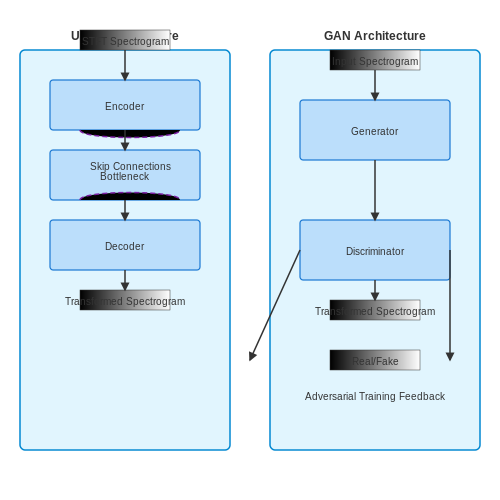
where w[n] is the window function. Convolutional Neural Networks (CNNs) process these spectrograms as 2D images, learning hierarchical features through successive convolutional layers. The U-Net architecture, with its encoder-decoder structure and skip connections, has proven particularly effective for preserving temporal coherence while transforming spectral content.
Adversarial Training for Realistic Transformations
Generative Adversarial Networks (GANs) introduce a discriminator network that learns to distinguish between real and transformed spectrograms, forcing the generator to produce more realistic outputs. The minimax objective function for a GAN is:
In music transformation tasks, conditional GANs (cGANs) extend this framework by incorporating genre labels or other conditioning information y:
Diffusion Models for High-Fidelity Audio
Diffusion models have emerged as a powerful alternative, gradually denoising spectrograms through a Markov chain. The forward process gradually adds Gaussian noise:
while the reverse process learns to iteratively denoise:
Recent architectures like DiffWave and WaveGrad have demonstrated superior performance in maintaining phase coherence and harmonic structure during genre transformation.
Attention Mechanisms for Long-Range Dependencies
Transformer-based models employ self-attention to capture global dependencies in musical structure:
where Q, K, and V are learned query, key, and value matrices. Architectures like Music Transformer use relative positional encoding to maintain temporal relationships while transforming musical features across extended time spans.
Latent Space Manipulation
Variational Autoencoders (VAEs) learn a compressed latent representation z of musical features:
where β controls the trade-off between reconstruction quality and latent space regularization. By interpolating or modifying points in this latent space, we can achieve smooth transitions between genres while preserving musical integrity.
Generative Adversarial Networks (GANs) in Music
Architecture and Training Dynamics
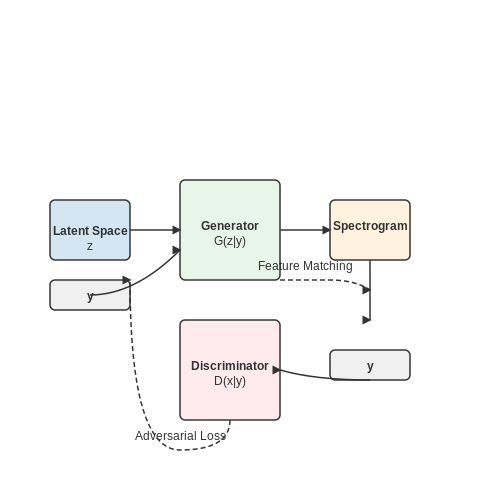
Generative Adversarial Networks for music operate on a min-max game between two neural networks: the generator G and discriminator D. The generator maps latent vectors z to synthetic spectrograms or waveforms, while the discriminator classifies inputs as real or synthetic. The adversarial objective is formalized as:
For music generation, x represents Mel-spectrograms or raw audio segments, and z is typically sampled from a Gaussian latent space. The Wasserstein GAN (WGAN) variant with gradient penalty often outperforms vanilla GANs in music applications due to stabilized training:
Challenges in Audio Generation
Music GANs must address:
- Temporal coherence: Maintaining structural consistency over multi-second sequences
- Phase reconstruction: When operating on spectrograms, the inverse STFT requires phase estimation
- Multi-scale features: Simultaneously modeling local timbre and global musical form
The NSynth architecture (Engel et al., 2017) solves this via a WaveNet-based generator with dilated convolutions, while GAN-TTS employs a multi-resolution discriminator that evaluates audio at 2kHz, 8kHz, and 16kHz simultaneously.
Conditional Music Transformation
For genre conversion, conditional GANs (cGANs) modify the objective to include genre labels y:
In practice, this enables style transfer between domains (e.g., classical → jazz) by:
- Encoding genre through auxiliary classifier embeddings
- Using domain-specific instance normalization in generator layers
- Adversarial feature matching to preserve musical content
Evaluation Metrics
Quantitative assessment of music GANs requires specialized metrics:
Where μ and Σ are means and covariances of VGGish embeddings for real and generated audio. Human evaluation remains critical through ABX testing for perceptual quality.
2.4 Transformer-Based Approaches for Sequential Audio Data
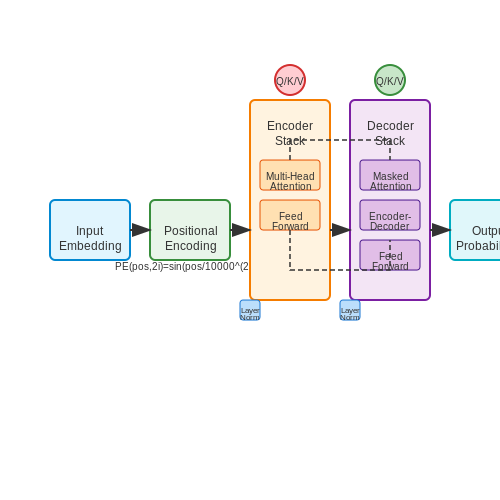
Transformers, originally developed for natural language processing, have demonstrated remarkable success in modeling sequential audio data due to their ability to capture long-range dependencies through self-attention mechanisms. Unlike recurrent architectures, transformers process sequences in parallel, making them computationally efficient for high-dimensional audio signals when properly optimized.
Self-Attention in Audio Sequences
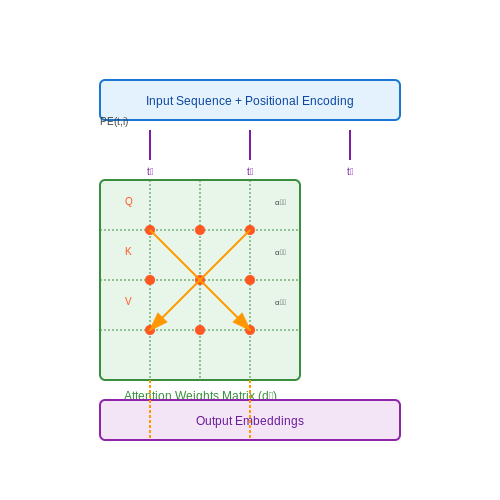
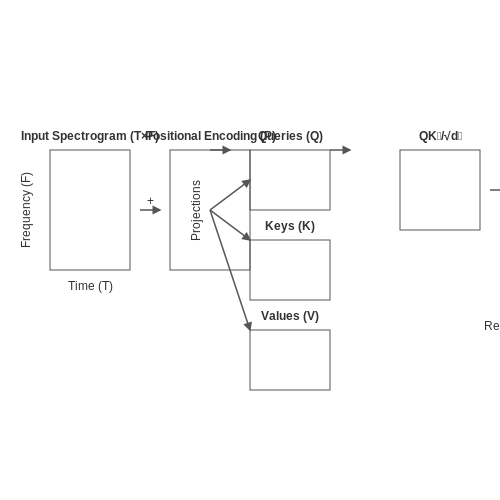
The core operation in transformer architectures is scaled dot-product attention, which computes relationships between all positions in a sequence. For an input audio spectrogram X ∈ ℝT×F (time steps × frequency bins), the attention mechanism projects the input into query (Q), key (K), and value (V) matrices:
where dk is the dimension of the key vectors. The scaling factor 1/√dk prevents vanishing gradients in the softmax operation for high-dimensional keys.
Positional Encoding for Audio
Since transformers lack inherent sequential processing, positional encodings must be added to convey temporal information. For audio applications, learned positional embeddings often outperform the sinusoidal variants used in NLP, as they can better adapt to the non-uniform temporal structure of music. The modified input representation becomes:
where P ∈ ℝT×F is the learned positional embedding matrix. Recent work has shown that 2D positional encodings (separate for time and frequency axes) further improve performance for spectrogram inputs.
Architectural Adaptations for Audio
Several modifications to the standard transformer architecture have proven effective for audio processing:
- Local self-attention windows constrain attention to nearby time frames, reducing computational complexity from O(T²) to O(T×w) where w is the window size
- Factorized attention separates time and frequency dimensions, applying attention independently along each axis
- Memory-compressed attention downsamples the key-value pairs while maintaining full resolution for queries
Case Study: Music Transformer
The Music Transformer architecture introduced relative positional attention for symbolic music generation, where the attention weights between two positions depend on their distance Δt:
Here, Srel is a learnable matrix where each entry Srel[i,j] encodes the relative position j-i. This approach has been successfully adapted to raw audio by treating spectrogram frames as discrete tokens.
Efficient Training Strategies
Training transformers on raw audio requires specialized techniques to handle the long sequences:
- Gradient checkpointing reduces memory usage by recomputing intermediate activations during the backward pass
- Mixed-precision training using FP16 for activations and FP32 for master weights maintains numerical stability
- Block-sparse attention patterns combine local and global attention windows to balance efficiency and modeling capacity
Recent architectures like Perceiver IO demonstrate how to process raw audio at CD-quality (44.1kHz) by first projecting the waveform into a latent space before applying transformer layers, achieving 16× reduction in sequence length while preserving perceptual quality.
3. Data Collection and Preprocessing for Genre Datasets
3.1 Data Collection and Preprocessing for Genre Datasets
High-quality datasets are foundational for training robust AI models capable of transforming music genres. The process involves meticulous data collection, rigorous preprocessing, and domain-specific feature engineering to ensure the model captures the nuanced differences between genres.
Dataset Acquisition Strategies
Music genre datasets must be diverse, balanced, and representative of the target genres. Common sources include:
- GTZAN – A benchmark dataset containing 1,000 audio tracks (30s each) across 10 genres, though criticized for labeling inconsistencies.
- FMA (Free Music Archive) – A large-scale dataset with 917 GiB of audio across 161 genres, including metadata and precomputed features.
- MagnaTagATune – 25,000 clips annotated with tags and genres, useful for multi-label classification tasks.
- Custom datasets – Curated collections from platforms like Spotify or YouTube, requiring careful copyright considerations.
For genre transformation tasks, paired datasets (where the same musical piece is available in multiple genres) are ideal but rare. Most workarounds involve:
where content similarity is measured via tempo-normalized chroma features or lyric alignment.
Audio Preprocessing Pipeline
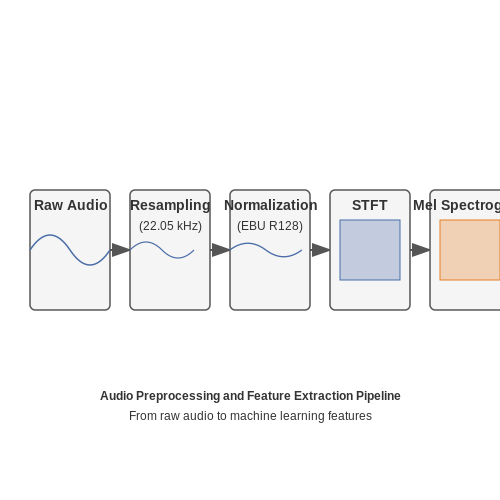
Raw audio undergoes several transformations before feature extraction:
- Resampling – Standardize all audio to a target sample rate (e.g., 22.05 kHz) using anti-aliasing filters:
- Normalization – Apply peak or loudness normalization (EBU R128) to prevent amplitude biases.
- Trimming – Remove silent segments using threshold-based voice activity detection.
- Augmentation – For data-hungry models, apply pitch shifting (±2 semitones), time stretching (±10%), or dynamic range compression.
Feature Extraction
Time-frequency representations are critical for capturing genre characteristics:
- Mel-spectrograms – Computed via Short-Time Fourier Transform (STFT) followed by mel-scale filter banks:
- MFCCs – DCT of log mel-spectra, retaining the first 13-20 coefficients.
- Chroma features – Pitch-class profiles that emphasize harmonic content.
- Temporal features – Onset detection, beat histograms, and RMS energy contours.
For deep learning approaches, raw spectrograms (e.g., 128-bin log-mel with 25ms windows) are often fed directly into convolutional networks.
Labeling and Quality Control
Genre labels require verification due to subjective boundaries between styles. Techniques include:
- Multi-annotator consensus – Aggregating labels from multiple experts (e.g., via Fleiss' κ).
- Embedding-based validation – Projecting audio features with t-SNE/UMAP to detect labeling outliers.
- Active learning – Iteratively querying uncertain samples for human review.
Dataset bias must be quantified using metrics like:
where G is the set of all genres.
3.2 Training AI Models for Genre-Specific Features
Training AI models to recognize and transform music genres requires a deep understanding of both the acoustic properties that define genres and the machine learning techniques capable of capturing these properties. The process involves feature extraction, model architecture selection, and optimization strategies tailored to the nuances of musical data.
Feature Extraction for Genre Classification
Music genres are characterized by distinct acoustic features such as rhythm, timbre, harmony, and structure. To train an AI model, these features must be extracted and represented in a format suitable for machine learning. Common approaches include:
- Mel-Frequency Cepstral Coefficients (MFCCs): Capture timbral texture by representing the short-term power spectrum of sound.
- Chroma Features: Encode harmonic content by mapping frequencies to the 12-tone scale.
- Spectral Contrast: Highlights the relative energy in different frequency bands.
- Tempo and Beat Tracking: Extracts rhythmic patterns critical for genre differentiation.
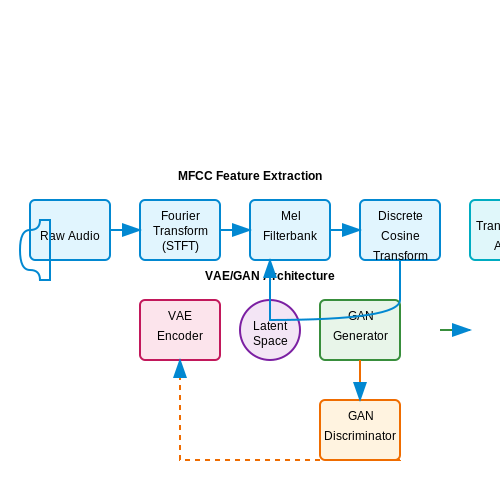
Mathematically, MFCCs are derived through a series of transformations. First, the audio signal is divided into short frames, and the Fourier transform is applied to each frame:
Next, the power spectrum is mapped to the Mel scale, which approximates human auditory perception:
Finally, the discrete cosine transform (DCT) is applied to decorrelate the Mel filterbank energies, yielding the MFCCs:
Model Architectures for Genre Transformation
Once features are extracted, deep learning models can be trained to map input audio to a target genre. Two primary architectures are commonly employed:
- Convolutional Neural Networks (CNNs): Effective for capturing local patterns in spectrograms or other time-frequency representations.
- Recurrent Neural Networks (RNNs) or Transformers: Suitable for modeling temporal dependencies in sequential audio data.
For genre transformation, a generative approach such as a Variational Autoencoder (VAE) or Generative Adversarial Network (GAN) is often used. The VAE learns a latent space representation of genre-specific features, enabling interpolation or transformation between genres. The loss function for a VAE includes both reconstruction loss and KL divergence:
GANs, on the other hand, employ a discriminator network to distinguish between real and generated samples, while the generator learns to produce genre-transformed audio that fools the discriminator. The minimax objective is:
Training Strategies and Challenges
Training AI models for genre transformation presents several challenges, including data scarcity, mode collapse in GANs, and maintaining audio quality. Strategies to mitigate these issues include:
- Data Augmentation: Applying pitch shifting, time stretching, or noise injection to increase dataset diversity.
- Feature Conditioning: Using auxiliary classifiers or feature embeddings to guide the transformation process.
- Perceptual Loss: Incorporating human perception metrics, such as STFT-based losses, to preserve audio fidelity.
Recent advancements in diffusion models have also shown promise for high-quality audio generation. These models gradually denoise a signal conditioned on genre-specific features, producing realistic transformations. The denoising process is governed by:
where \(x_T\) is pure noise and \(x_0\) is the generated sample.
3.3 Evaluating Model Performance and Output Quality
Objective Metrics for Audio Transformation
Quantitative evaluation of AI-based music genre transformation relies on signal processing metrics that measure perceptual and structural fidelity. The Short-Time Objective Intelligibility (STOI) metric evaluates speech intelligibility but is adapted for music by analyzing spectral coherence between original and transformed signals:
where x and y are time-domain signals, Xj and Yj are their respective TF representations, and α controls spectral compression (typically 0.33). For music, we modify the 400ms analysis window to 1-2s to capture musical phrasing.
The Perceptual Evaluation of Audio Quality (PEAQ) standard (ITU-R BS.1387) combines 11 psychoacoustic parameters including:
- Modulation difference ratios
- Noise-to-mask ratios
- Harmonic structure distortions
Genre-Specific Evaluation Protocols
Different genres require specialized metrics due to their acoustic signatures. For jazz transformations, we track:
where τi represents the microtiming deviations of swung eighth notes. Classical music evaluation employs:
measuring Dynamic Time Warping (DTW) distance between original and transformed vibrato contours vk, normalized by the population standard deviation.
Adversarial Evaluation Methods
We employ a dual-discriminator setup where:
- Style Discriminator Ds: A CNN trained to classify music genres with 95%+ accuracy on the GTZAN dataset
- Artifact Discriminator Da: Detects synthetic artifacts using a spectrogram-based ResNet-18
The Fooling Rate is computed as:
where G is the transformation model and ttarget is the destination genre.
Human Evaluation Protocols
We implement a triple-stimulus hidden reference test (TS-HRT) following ITU-R BS.1534 (MUSHRA) with modifications:
- Professional musicians (n≥20) evaluate samples in controlled acoustic environments
- Each trial presents: Original (hidden reference), anchor (low-pass filtered at 7kHz), and transformed versions
- Evaluation dimensions include:
- Timbral preservation (0-100 scale)
- Genre authenticity (0-100 scale)
- Musical coherence (0-100 scale)
The Effective Rating combines these dimensions with weights learned via logistic regression on expert validation data:
Latent Space Analysis
For VAEs and diffusion models, we compute the Genre Separation Index (GSI) in latent space:
where SB is between-genre scatter matrix and SW is within-genre scatter matrix. Values >3 indicate effective genre disentanglement.
The Transformation Consistency metric tracks how source genre characteristics propagate through latent trajectories:
where fl are intermediate layer activations and z represents latent vectors.
3.4 Post-Processing and Refinement of Transformed Audio
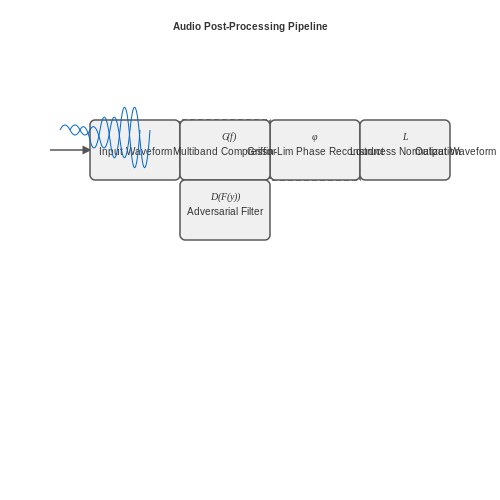
After the initial transformation of audio signals into a target genre using deep learning models, post-processing is critical to ensure perceptual quality and adherence to genre-specific characteristics. This stage involves spectral enhancement, temporal smoothing, and artifact suppression to refine the output.
Spectral Enhancement
AI-transformed audio often exhibits spectral discontinuities due to imperfect feature mapping. A multiband dynamic range compressor can be applied to balance frequency components. The compressor's transfer function for each band i is given by:
where Ti is the threshold, Ri the ratio, and Xi(f) the frequency-domain signal. This preserves transients while reducing spectral imbalance.
Temporal Smoothing with Phase Reconstruction
Phase inconsistencies in transformed audio lead to perceptual artifacts. The Griffin-Lim algorithm iteratively refines phase estimates by enforcing spectral consistency:
where |Y| is the target magnitude spectrum and φk the phase estimate at iteration k. This minimizes phase discontinuities while preserving the transformed spectral envelope.
Artifact Suppression via Adversarial Filtering
A pretrained discriminator network D from the transformation model can identify residual artifacts. The artifact suppression filter F is optimized via:
where y is the transformed audio and λ controls fidelity versus artifact removal. This selectively attenuates regions flagged as unnatural by the discriminator.
Loudness Normalization
Genre-specific loudness profiles are enforced using EBU R128 normalization. The integrated loudness LI is computed via:
where Ln are momentary loudness measurements. The signal is gain-adjusted to match target genre profiles (e.g., -16 LUFS for classical, -9 LUFS for rock).
Application-Specific Refinement
For real-time applications, causal versions of these algorithms are implemented using sliding-window processing with 50-100ms latency budgets. In offline scenarios, non-causal processing with look-ahead improves quality at the cost of latency.
4. Copyright and Intellectual Property Issues
4.1 Copyright and Intellectual Property Issues
AI-based music genre transformation operates at the intersection of machine learning and copyright law, raising complex legal questions regarding derivative works, fair use, and ownership of AI-generated content. The primary legal framework governing these issues is the Berne Convention, which establishes that copyright protection applies automatically to original works fixed in a tangible medium. However, AI-generated music complicates this framework because the output is not directly authored by a human.
Derivative Works and Transformative Use
Under U.S. copyright law (17 U.S.C. § 101), a derivative work is defined as a transformation or adaptation of a pre-existing copyrighted work. AI models trained on copyrighted music may produce outputs that qualify as derivative works, requiring permission from the original copyright holder unless the use falls under fair use (17 U.S.C. § 107). Courts evaluate fair use using four factors:
- The purpose and character of the use (commercial vs. transformative)
- The nature of the copyrighted work
- The amount and substantiality of the portion used
- The effect on the market for the original work
Recent case law (Andy Warhol Foundation v. Goldsmith, 2023) has narrowed the scope of transformative use, emphasizing that commercial applications of AI-generated music are less likely to qualify as fair use.
Ownership of AI-Generated Music
The U.S. Copyright Office has ruled that works lacking human authorship (Zarya of the Dawn, 2023) cannot be copyrighted. This creates ambiguity for AI-assisted compositions where:
where Hhuman represents human creative input (e.g., prompt engineering, post-processing) and HAI the model's stochastic generation. Current jurisprudence suggests copyright protection requires α > 0.5 (substantial human contribution).
Training Data Liability
Using copyrighted music for training AI models may violate reproduction rights (17 U.S.C. § 106). The Authors Guild v. Google (2015) case established that large-scale digitization for search indexing qualifies as fair use, but this precedent doesn't automatically extend to generative AI. The EU's Artificial Intelligence Act (Article 28b) now requires disclosure of all copyrighted training data.
Technical Mitigation Strategies
Several methods can reduce legal risk in music transformation systems:
- Differential privacy: Adding noise to training data to prevent memorization of individual works
- Latent space filtering: Removing copyrighted melodic patterns using Fourier-domain analysis
- Licensed datasets: Using CC-BY or specially-licensed music corpora (e.g., Free Music Archive)
The technical efficacy of these methods remains an active research area, with recent studies showing that even differentially private models can reproduce training data under adversarial attacks (Carlini et al., 2023).
4.2 Bias in Genre Representation and Dataset Selection
Bias in music genre classification and transformation systems arises primarily from imbalanced or unrepresentative training datasets. The probability of misclassification increases when certain genres are underrepresented, leading to a skewed posterior distribution during inference. Let G be the set of genres in the dataset, and Ng the number of samples for genre g ∈ G. The empirical prior probability of genre g is:
This prior directly influences the model's predictions through Bayes' theorem. When P(g) is artificially low for certain genres due to dataset imbalance, the model's ability to learn discriminative features for those genres is compromised, even if the likelihood P(x|g) could theoretically be well-estimated.
Sources of Dataset Bias
Three primary sources of bias affect music genre datasets:
- Commercial availability bias: Popular genres dominate streaming platforms and digital archives, while niche or regional genres are systematically underrepresented.
- Cultural annotation bias: Human annotators apply inconsistent genre labels based on their own cultural background and musical exposure.
- Temporal recency bias: Contemporary genres are overrepresented compared to historical recordings due to digitization efforts focusing on newer material.
Quantifying Representation Disparity
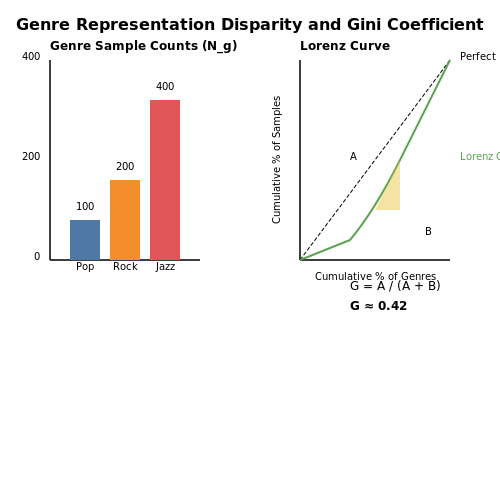
The Gini coefficient G provides a measure of inequality in genre representation:
Values approaching 1 indicate extreme concentration in few genres, while values near 0 suggest balanced representation. For reference, the GTZAN dataset has G ≈ 0.12 (balanced), while many user-generated collections exceed G > 0.6.
Mitigation Strategies
Advanced techniques for addressing representation bias include:
- Importance weighting: Weight samples during training by the inverse of their genre frequency:
$$ w_g = \frac{1}{P(g)^\alpha} $$where α ∈ [0,1] controls the rebalancing intensity.
- Adversarial debiasing: Train a discriminator network to predict genre membership from latent representations, then minimize this predictability while maintaining classification accuracy.
- Synthetic data augmentation: Use generative models conditioned on underrepresented genres to create artificial training samples that preserve distinctive acoustic features.
Feature Space Analysis
The Mahalanobis distance between genre clusters in the model's latent space reveals whether bias stems from representation or feature learning:
where μ and Σ are the mean and covariance of each genre's embeddings. Disproportionately large distances between minority genres indicate the model fails to learn their distinctive characteristics rather than simply suffering from low P(g).
Recent work in contrastive learning has shown promise for reducing these distances without sacrificing discriminative power. The contrastive loss:
where τ is a temperature parameter, pulls together samples from the same genre while pushing apart inter-genre pairs, regardless of their original representation frequency.
4.3 Human-AI Collaboration in Music Creation
Interactive Music Generation Systems
Modern AI-driven music generation systems leverage bidirectional interaction between human composers and generative models. The most effective frameworks employ latent space manipulation, where human input steers the model's output through real-time parameter adjustments. A common approach involves variational autoencoders (VAEs) with a disentangled latent space, allowing independent control over musical attributes like rhythm, harmony, and timbre. The interaction dynamics can be formalized as:
where z represents the latent vector, α is the step size, S is a similarity metric between human input xhuman and generated output G(z). This gradient-based steering enables precise stylistic control while maintaining the model's generative capabilities.
Co-Creation Architectures
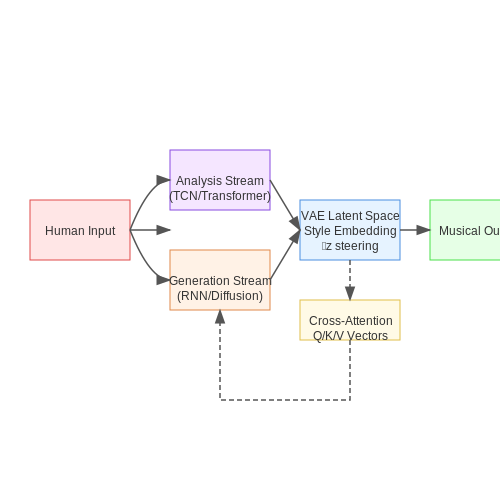
Advanced co-creation systems typically implement a dual-stream architecture:
- Analysis stream: Processes human input (MIDI, audio, or symbolic notation) using temporal convolutional networks or transformer encoders
- Generation stream: Conditioned on the analysis output, employing hierarchical recurrent networks or diffusion models
The interface between streams often uses cross-attention mechanisms, mathematically expressed as:
where queries Q come from the generation stream, keys K and values V from the analysis stream, and dk is the dimension of the key vectors.
Adaptive Learning in Collaborative Systems
Effective human-AI collaboration requires models that adapt to individual creators' styles. This is achieved through:
- Online fine-tuning: Continual learning with human feedback signals (e.g., preference rankings, edits)
- Style embedding: Learning creator-specific representations via metric learning
- Reinforcement learning: Optimizing for human-evaluated quality using reward models
The adaptation process typically minimizes a composite loss function:
where the terms represent reconstruction error, style consistency, and preference alignment respectively.
Case Study: AI-Assisted Orchestration
In professional music production, AI systems now assist in orchestration tasks by:
- Predicting instrument combinations from piano sketches using graph neural networks
- Generating alternative voicings through constrained sampling
- Optimizing acoustic balance via physical modeling
The orchestration process can be formulated as a structured prediction problem:
where x is the input sketch, y the orchestration output, and c represents musical constraints.
Real-Time Performance Systems
Cutting-edge collaborative systems for live performance integrate:
- Low-latency neural audio synthesis (<5ms processing)
- Multimodal input processing (gesture, biofeedback)
- Adversarial training for timbre matching
The temporal constraints require specialized architectures like causal WaveNets or parallel autoregressive models with lookahead mechanisms.
5. Key Research Papers in AI-Based Music Transformation
5.1 Key Research Papers in AI-Based Music Transformation
- AI-Enabled Text-to-Music Generation: A Comprehensive Review of ... - MDPI — Text-to-music generation integrates natural language processing and music generation, enabling artificial intelligence (AI) to compose music from textual descriptions. While AI-enabled music generation has advanced, challenges in aligning text with musical structures remain underexplored. This paper systematically reviews text-to-music generation across symbolic and audio domains, covering ...
- PDF &uture of Artificial Intelligence in Music Industry: The onnection ... — - To evaluate the contribution of AI to the music production process - To examine the role of generative AI in the music industry. Based on the research objectives, following research questions were developed: RQ1. What are advantages and disadvantages of using generative AI for music production pro-cess?
- An analysis of artificial intelligence automation in digital music ... — 1 Introduction. The digital music streaming industry has transformed how consumers access and engage with music (Chung et al., 2022).Platforms such as Spotify, Apple Music, and Amazon Music have become dominant forces in the market, offering users access to vast music libraries at their fingertips ().As the competition among these platforms intensifies, Artificial Intelligence (AI) has emerged ...
- A Survey of AI Music Generation Tools and Models - arXiv.org — which are also applied in AI-generated music. Then, we will explore the current state of AI music generation tools and models, evaluating their functionality and discussing their limitations. Finally, by analyzing the latest tools and techniques, we aim to provide a comprehensive understanding of the potential of AI-based music composition and the
- Artificial intelligence methods for music generation: a review and ... — On the other hand, there is strong research interest about if or to what extent AI methods are creative. According to Boden (2004), there are three types of creativity: (i) explorational, (ii) transformational, and (iii) combinational.Certain AI methods potentially allow the exploration of musical styles, the transformation of rules for achieving novel musical results, and the combination of ...
- On the Development and Practice of AI Technology for Contemporary ... — Although the use of AI technology for music production is still in its infancy, it has the potential to make a lasting impact on the way we produce music. In this paper we focus on the design and use of AI music tools for the production of contemporary Popular Music, in particular genres involving studio technology as part of the creative process.
- AI-Based Affective Music Generation Systems: A Review of Methods and ... — Due to the rapidly growing interest in automatic AMG, it is prudent to take stock of existing systems and review the literature both to summarize the state-of-the-art and to help researchers working in the field gain a more thorough understanding of the most helpful techniques/methods in the area (e.g., what architectures seem most effective and what features lead to the greatest emotion ...
- (PDF) A Survey of AI Music Generation Tools and Models - ResearchGate — a comprehensive understanding of the potential of AI-based music composition and the challenges that must be addressed to improv e their performance. This survey aims to provide an o verview of AI ...
- Applications and Advances of Artificial Intelligence in Music ... — Research Objectives: This paper aims to systematically review the latest research progress in symbolic and audio music generation, explore their potential and challenges in various application scenarios, and forecast future development directions. Through a comprehensive analysis of existing technologies and methods, this paper seeks to provide valuable references for researchers and ...
- A review of intelligent music generation systems — With the introduction of ChatGPT, the public's perception of AI-generated content has begun to reshape. Artificial intelligence has significantly reduced the barrier to entry for non-professionals in creative endeavors, enhancing the efficiency of content creation. Recent advancements have seen significant improvements in the quality of symbolic music generation, which is enabled by the use ...
5.2 Open-Source Tools and Libraries for Audio AI
- A Survey of AI Music Generation Tools and Models - arXiv.org — without neural networks and generating music. Next, we will examine the common AI-based music generation tools available today. These tools are open-source and have been used by several researchers and developers to create AI-generated music. However, only some of the models we reviewed were open-source, and in such cases, we relied on official
- PDF Tools for AI Music Creatives - DiVA — DL algorithm, and why they should consider studying existing open-source tools, due to the knowledge and resources developers stand to gain from such a platform. Closed-source tools are more suitable for users who only want to create music with AI music creation tools, considering the uncomplicated usage, and access of such a tool.
- The Role of AI in Music Composition and Production - EMB Blogs — Incorporating AI into music creation is not limited to one skill level or genre; it spans the entire spectrum of musical exploration. From user-friendly software for beginners to advanced tools for professionals, AI music tools continue to shape the music industry, democratizing creativity and offering new possibilities for artists. Whether you ...
- Amper Music: AI Music Generation - Top AI Tools — Its user-friendly interface, combined with a rich library of sounds and genres, positions Amper Music as an essential tool for anyone looking to enhance their audio content. Features of Amper Music Rapid Music Composition: Amper Music employs sophisticated AI models to swiftly create a wide array of music types.
- On the Development and Practice of AI Technology for Contemporary ... — Although the use of AI technology for music production is still in its infancy, it has the potential to make a lasting impact on the way we produce music. In this paper we focus on the design and use of AI music tools for the production of contemporary Popular Music, in particular genres involving studio technology as part of the creative process.
- Music Genre Classification With Machine Learning Techniques — GenreRecognition.py file is for predicting the genres of test music files. CreateThenTrain.py file runs CreateDataset.py and ModelTrain.py sequentially. Jupyter Notebook files give useful information and tutorials about signal analysis and music genre classification.
- Artificial intelligence methods for music generation: a review and ... — Many diverse artificial intelligence (AI) methods have been proposed for music generation over many decades. From the rule-based and Markov approaches of the Illiac Suite (Hiller and Isaacson, 1979) to more recent deep learning approaches that allow interactive piano performance tools (Donahue et al., 2018) and score filling (Huang et al., 2019b, Huang et al., 2019a), researchers find it ...
- (PDF) A Survey of AI Music Generation Tools and Models - ResearchGate — Music Generation A lgorithms, Music AI, Music Te chnology, Computer-gener ated Music, Deep L earning Music. The prompt we hav e used on our LLM platform is as follows: I am sear ching for music
- Applications and Advances of Artificial Intelligence in Music ... — Research Objectives: This paper aims to systematically review the latest research progress in symbolic and audio music generation, explore their potential and challenges in various application scenarios, and forecast future development directions. Through a comprehensive analysis of existing technologies and methods, this paper seeks to provide valuable references for researchers and ...
- Unleash Your Creativity with Free AI Music Tools — Magenta offers a range of neural-based audio software tools that enable musicians to explore and experiment with machine learning in music creation. IVA, a cutting-edge software company, allows users to condition their model with specific influences to generate compositions reminiscent of renowned composers like Bach and Vivaldi.
5.3 Recommended Books and Tutorials on Music and AI
- Handbook of Artificial Intelligence for Music : Foundations, Advanced ... — 30 AI-Lectronica: Music AI in Clubs and Studio Production 30.1 The Artificial Intelligence Sonic Boom 30.2 Music Production Tools and AI 30.3 AIlgorAIve 30.4 A PersonAl PerspectAve: Shelly Knotts 30.4.1 CYOF 30.4.2 AlgoRIOTmic Grrrl! 30.4.3 Future Work 30.5 I PersonIl PerspectIve: Nick Collins 30.6 Conclusions References
- A Survey of AI Music Generation Tools and Models - arXiv.org — which are also applied in AI-generated music. Then, we will explore the current state of AI music generation tools and models, evaluating their functionality and discussing their limitations. Finally, by analyzing the latest tools and techniques, we aim to provide a comprehensive understanding of the potential of AI-based music composition and the
- AI-Enabled Text-to-Music Generation: A Comprehensive Review of ... - MDPI — Text-to-music generation integrates natural language processing and music generation, enabling artificial intelligence (AI) to compose music from textual descriptions. While AI-enabled music generation has advanced, challenges in aligning text with musical structures remain underexplored. This paper systematically reviews text-to-music generation across symbolic and audio domains, covering ...
- Applications and Advances of Artificial Intelligence in Music ... — Research Motivation: Despite significant advances in AI music generation, numerous challenges remain. Enhancing the originality and diversity of generated music, capturing long-term dependencies and complex structures in music, and developing more standardized evaluation methods are core issues that the field urgently needs to address.
- The Role of AI in Music Composition and Production - EMB Blogs — 2.2 Popularity of AI-Generated Music in Various Genres. AI-generated music is not limited to a single genre; it has infiltrated diverse musical styles. Whether it's crafting classical symphonies reminiscent of Mozart or producing electronic dance tracks that set dance floors on fire, AI is proving its versatility.
- Sociocultural and Design Perspectives on AI-Based Music ... - Springer — The recent advance \(\alpha \) of artificial intelligence (AI) technologies that can generate musical material (e.g. [1,2,3,4]) has driven a wave of interest in applications, creative works and commercial enterprises that employ AI in music creation.Most fundamental to these endeavours is research focused on the question of how to create better algorithms that are capable of generating music ...
- Instruments Music Composition in Different Genres and ... - Springer — Generating music through open AI is done to achieve development in the creative industry to facilitate new music ideas. 5.1 Magenta. According to (DuBreuil, 2020), Magenta is an open AI which was created by Google to generate music based on their special techniques. Their creation is based on machine learning and deep learning.
- (PDF) A Survey of AI Music Generation Tools and Models - ResearchGate — a comprehensive understanding of the potential of AI-based music composition and the challenges that must be addressed to improv e their performance. This survey aims to provide an o verview of AI ...
- Musical Artificial Intelligence - 6 Applications of AI for Audio — The U.S. music industry is an economic staple generating an estimated $7.7 billion in retail revenue in 2016, according to the Recording Industry Association of America.The year 2016 also marked the first time that music industry revenue was generated primarily from "streaming music p latfor ms.". To gauge the emerging role of AI in the music industry, we researched this sector in depth to ...
- A Comprehensive Survey for Evaluation Methodologies of AI-Generated Music — AI music generation is a promising field with significant potential for both creative and technological advancements. The evaluation of AI-generated music, howe ver, is still a