GANs: Basics and Use Cases
1. Core Architecture: Generator and Discriminator
Core Architecture: Generator and Discriminator
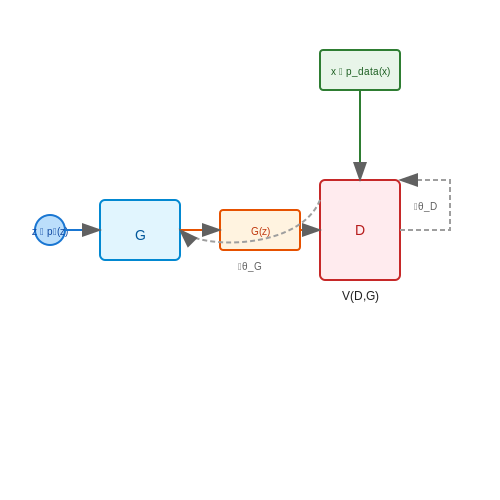
The foundational architecture of a Generative Adversarial Network (GAN) consists of two neural networks—the generator and the discriminator—engaged in a minimax game. The generator G learns to map random noise z from a prior distribution pz(z) to synthetic data samples, while the discriminator D distinguishes between real data samples from pdata(x) and fake samples produced by G.
Mathematical Formulation
The adversarial training process is formalized as a two-player minimax game with the value function V(G, D):
Here, D(x) represents the discriminator's probability estimate that input x is real. The generator aims to minimize log(1 - D(G(z))), while the discriminator maximizes log D(x) + log(1 - D(G(z))).
Generator Network
The generator typically employs a deep neural network with transposed convolutional layers (for image generation) or dense layers (for structured data). It transforms a low-dimensional latent vector z into a high-dimensional output resembling the training data distribution. Common architectures include:
- DCGAN (Deep Convolutional GAN): Uses strided convolutions and batch normalization.
- ProGAN: Progressively grows generator and discriminator layers for high-resolution synthesis.
Discriminator Network
The discriminator acts as a binary classifier, often structured as a CNN for image data or an MLP for tabular data. Key design considerations include:
- LeakyReLU activations to prevent gradient saturation.
- Spectral normalization for training stability.
- Feature matching to avoid mode collapse.
Training Dynamics
The Nash equilibrium occurs when the generator produces samples indistinguishable from real data (pg = pdata), and the discriminator outputs D(x) = 0.5 everywhere. However, practical training involves challenges:
- Mode collapse: Generator produces limited varieties of samples.
- Vanishing gradients: Poor discriminator feedback stalls generator learning.
Modern variants like WGAN-GP and LSGAN address these issues through Wasserstein distance and least squares loss respectively.
Practical Implementation
In PyTorch, the generator and discriminator forward passes are implemented as:
# Generator forward pass
def forward(self, z):
    x = self.fc(z)
    x = x.view(-1, 512, 4, 4)  # Reshape for conv layers
    x = F.relu(self.bn1(self.conv1(x)))
    return torch.tanh(self.conv_out(x))

# Discriminator forward pass
def forward(self, x):
    x = F.leaky_relu(self.conv1(x), 0.2)
    x = F.dropout2d(x, 0.3)
    return torch.sigmoid(self.fc(x.flatten()))
The adversarial loss is computed using binary cross-entropy (BCE) with label smoothing to prevent overconfident discriminator predictions.

Training Dynamics: Adversarial Process
The adversarial training process in GANs is formulated as a two-player minimax game between the generator G and the discriminator D. The objective function V(G, D) is given by:
Here, pdata(x) represents the real data distribution, while pz(z) is the prior noise distribution (typically Gaussian or uniform). The discriminator outputs a probability D(x) ∈ [0,1] indicating the likelihood that input x came from the real data rather than the generator.
Optimization Dynamics
The training alternates between updating D to maximize its classification accuracy and updating G to fool D. In practice, this involves:
- Discriminator update: Gradient ascent on log D(x) for real samples and log(1 - D(G(z))) for generated samples
- Generator update: Gradient descent on log(1 - D(G(z))) or gradient ascent on log D(G(z)) (the latter provides stronger gradients early in training)
The Nash equilibrium occurs when pg = pdata and D(x) = 1/2 everywhere, indicating the discriminator cannot distinguish real from generated samples.
Practical Challenges
Several instability issues arise during training:
- Mode collapse: G produces limited varieties of samples, ignoring some modes of pdata
- Vanishing gradients: When D becomes too confident, ∇θg log(1 - D(G(z))) approaches 0
- Oscillations: The adversarial dynamics can lead to non-convergent cycling between parameters
Improved Training Techniques
Modern GAN variants employ several stabilization methods:
Wasserstein GANs (WGAN) use this critic loss with weight clipping or gradient penalty to enforce Lipschitz continuity. Other approaches include:
- Feature matching: Matching statistics of intermediate layers in D
- Minibatch discrimination: Allowing D to compare multiple samples simultaneously
- Two-timescale update rule (TTUR): Using separate learning rates for G and D
Monitoring Convergence
Common metrics for evaluating GAN training include:
- Inception Score (IS): Measures both quality and diversity of generated images
- Fréchet Inception Distance (FID): Compares statistics of real and generated samples in feature space
- Precision and Recall metrics: Quantifies mode coverage and sample quality separately
The training dynamics can be visualized through loss curves, sample quality progression, and latent space interpolations. However, these metrics should be interpreted carefully as they don't always correlate perfectly with perceptual quality.

1.3 Loss Functions in GANs
Minimax Loss
The foundational GAN framework introduced by Goodfellow et al. (2014) employs a minimax two-player game between the generator G and discriminator D. The objective function is given by:Non-Saturating Loss
In practice, the minimax loss can lead to vanishing gradients early in training when D(G(z)) is close to zero. The non-saturating heuristic modifies the generator's objective to instead maximize log(D(G(z))):Wasserstein Loss
The Wasserstein GAN (WGAN) replaces the Jensen-Shannon divergence with the Earth-Mover distance, yielding a more stable training objective:Least Squares GAN (LSGAN)
LSGAN replaces the cross-entropy loss with a least squares objective to mitigate vanishing gradients and improve stability:Hinge Loss
Used in GANs like BigGAN and SAGAN, the hinge loss provides a margin-based optimization surface:Practical Considerations
- Gradient Balancing: The choice of loss function affects the equilibrium between generator and discriminator updates. WGAN and LSGAN tend to provide more stable gradients than minimax.
- Mode Coverage: Loss functions like Wasserstein distance better preserve diversity by correlating with sample quality across the entire distribution.
- Convergence Metrics: Inception Score (IS) and Fréchet Inception Distance (FID) are commonly used to evaluate loss function efficacy beyond visual inspection.
Common Challenges: Mode Collapse and Training Instability
Mode Collapse
Mode collapse occurs when the generator produces a limited variety of outputs, often converging to a small subset of possible modes in the data distribution. This phenomenon arises due to the generator exploiting weaknesses in the discriminator, leading to repetitive or nearly identical samples. Mathematically, mode collapse can be understood by analyzing the generator's output distribution pg(x) relative to the true data distribution pdata(x).
When mode collapse occurs, the generator optimizes for a few high-likelihood outputs, ignoring other modes. For instance, in image generation, the GAN might produce only a handful of distinct faces despite being trained on a diverse dataset. This undermines the GAN's ability to capture the full richness of the data.
Training Instability
Training instability in GANs manifests as oscillatory behavior, non-convergence, or vanishing gradients. The adversarial nature of the training process creates a delicate balance between the generator and discriminator. If one network becomes too strong, it can dominate the other, leading to poor convergence.
The gradient updates for the generator G and discriminator D can be expressed as:
If the discriminator becomes too accurate early in training, the generator's gradients vanish, stalling learning. Conversely, if the generator outpaces the discriminator, the discriminator fails to provide meaningful feedback, leading to erratic updates.
Mitigation Strategies
Several approaches address mode collapse and training instability:
- Mini-batch Discrimination: Encourages diversity by allowing the discriminator to evaluate multiple samples simultaneously, penalizing generators that produce similar outputs.
- Feature Matching: Modifies the generator's objective to match intermediate layer statistics of real and generated data, reducing mode collapse.
- Unrolled GANs: Computes multiple discriminator updates before updating the generator, stabilizing training dynamics.
- Wasserstein GAN (WGAN): Replaces the Jensen-Shannon divergence with the Wasserstein distance, providing smoother gradients and improved stability.
Empirical studies show that WGANs, combined with gradient penalty (WGAN-GP), significantly reduce mode collapse by enforcing Lipschitz continuity on the discriminator:
Here, λ controls the strength of the gradient penalty, and p̂ represents samples interpolated between real and generated data.
Practical Implications
In applications like medical imaging or synthetic data generation, mode collapse can lead to biased or incomplete representations. Training instability further complicates deployment, as GANs may require extensive hyperparameter tuning. Recent advances, such as spectral normalization and self-attention mechanisms, have improved reliability, but challenges persist in high-dimensional spaces.

2. Conditional GANs (cGANs)
Conditional GANs (cGANs)
Conditional GANs extend the standard GAN framework by introducing auxiliary information y to condition both the generator G and discriminator D. This allows controlled generation of samples based on specific attributes, such as class labels, text descriptions, or structured data. The conditioning is achieved by concatenating y with the input noise vector z for G and with the real/fake samples for D.
Mathematical Formulation
The objective function of a cGAN modifies the original GAN minimax game to incorporate the conditional variable y:
Here, G(z|y) generates samples conditioned on y, while D(x|y) evaluates the authenticity of x given y. The discriminator must now discern not only whether the sample is real but also whether it matches the conditioning signal.
Architectural Modifications
Conditioning is typically implemented via:
- Concatenation: The conditioning vector y is concatenated with the noise z (for G) or the input x (for D) at an early layer.
- Embedding Layers: For discrete labels, an embedding layer projects y into a continuous space before concatenation.
- Attention Mechanisms: In advanced variants, attention gates modulate feature maps based on y to preserve spatial relationships.
Training Dynamics
cGANs exhibit sharper convergence than unconditional GANs when the conditioning signal is informative, as D receives stronger gradients for mode discrimination. However, they remain susceptible to:
- Mode Collapse: G may ignore z and rely solely on y, producing deterministic outputs for each class.
- Conditional Mismatch: Poorly designed conditioning can lead to D focusing on trivial features (e.g., artifacts in y rather than semantic alignment).
Applications
cGANs enable precise control over generated content, with notable use cases including:
- Image-to-Image Translation: Models like Pix2Pix map input images to outputs (e.g., sketches to photos) using paired data and an L1 reconstruction loss.
- Text-to-Image Synthesis: StackGAN and AttnGAN generate high-resolution images from textual descriptions by conditioning on word embeddings.
- Medical Imaging: cGANs synthesize MRI scans conditioned on tumor masks for data augmentation.
Advanced Variants
Recent improvements address cGAN limitations:
- Projection Discriminator: Replaces concatenation with an inner product between y and intermediate features, improving gradient flow.
- Auxiliary Classifier GAN (AC-GAN): Adds a classifier to D to explicitly enforce label consistency.
- InfoGAN: Decomposes z into unstructured noise and interpretable latent codes, learned via mutual information maximization.
where Q(c|x) approximates the posterior over latent codes c, and H(c) is their entropy.

2.2 Deep Convolutional GANs (DCGANs)
Deep Convolutional GANs (DCGANs) introduced architectural constraints to stabilize GAN training by leveraging convolutional neural networks (CNNs) in both the generator (G) and discriminator (D). The key innovation lies in replacing fully connected layers with strided convolutions (generator) and convolutional strides (discriminator), enabling hierarchical feature learning. The generator maps a latent vector z to high-dimensional space through transposed convolutions, while the discriminator uses downsampling convolutions for classification.
Architectural Guidelines
DCGANs adhere to four core design principles:
- Replace pooling layers with strided convolutions (discriminator) and fractional-strided convolutions (generator).
- Use batch normalization in both networks to mitigate internal covariate shift, except in the generator's output layer and discriminator's input layer.
- Remove fully connected hidden layers, opting for deep convolutional architectures.
- Employ ReLU activation in the generator (except output: tanh) and LeakyReLU (α=0.2) in the discriminator.
Loss Function and Training Dynamics
The minimax objective remains consistent with vanilla GANs, but DCGANs exhibit improved convergence due to architectural stability:
Batch normalization enables higher learning rates by normalizing activations to zero mean and unit variance. The discriminator's LeakyReLU prevents gradient sparsity, addressing the "dying ReLU" problem common in early GANs.
Latent Space Interpolation
DCGANs demonstrate meaningful vector arithmetic in latent space. For example, z_3 = z_1 + (z_2 - z_1) generates interpolated images with smooth semantic transitions, proving the model learns disentangled representations. This property is exploited in style transfer and image morphing applications.
Applications and Limitations
DCGANs excel in:
- Image super-resolution: 4x upscaling with perceptual loss.
- Data augmentation: Generating synthetic training samples for imbalanced datasets.
- Art generation: Style fusion via latent space manipulation.
Limitations include mode collapse in high-resolution generations (≥128×128 pixels) and sensitivity to hyperparameters like learning rate schedules. Subsequent architectures like ProGAN and StyleGAN address these through progressive growing and style-based generation.

Wasserstein GANs (WGANs)
Traditional GANs suffer from training instability due to the Jensen-Shannon (JS) divergence, which can lead to vanishing gradients when the discriminator becomes too confident. Wasserstein GANs (WGANs) address this by replacing the JS divergence with the Wasserstein-1 distance (Earth Mover's distance), providing smoother gradients and more stable training dynamics.
Wasserstein Distance
The Wasserstein distance between two probability distributions Pr and Pg is defined as:
where Π(Pr, Pg) is the set of all joint distributions whose marginals are Pr and Pg. Intuitively, it measures the minimum "cost" of transporting mass from Pr to Pg.
Critic vs. Discriminator
Unlike standard GANs, WGANs replace the discriminator with a critic that outputs a scalar score instead of a probability. The critic is trained to approximate the Wasserstein distance by maximizing:
where fw is the critic function parameterized by weights w, and gθ is the generator. To enforce the Lipschitz constraint (required for the Wasserstein distance), weight clipping or gradient penalty (WGAN-GP) is applied.
WGAN-GP: Gradient Penalty
Weight clipping in the original WGAN can lead to optimization difficulties. WGAN-GP replaces it with a gradient penalty term:
where Px̂ is sampled uniformly along straight lines between Pr and Pg. This ensures the critic's gradients have unit norm, satisfying the Lipschitz constraint more reliably.
Practical Advantages
- Stable Training: The Wasserstein loss correlates better with generation quality, reducing mode collapse.
- Meaningful Loss Metric: Unlike JS divergence, the Wasserstein distance provides a meaningful training signal even when distributions are disjoint.
- Robust Hyperparameters: WGANs are less sensitive to architecture choices and learning rates.
Applications
WGANs excel in scenarios requiring high-fidelity generation, such as:
- Image Super-Resolution: Generating high-resolution images from low-resolution inputs with fine details preserved.
- Medical Imaging: Synthesizing realistic medical scans for data augmentation.
- Art Generation: Creating diverse and high-quality artistic styles without mode collapse.
Implementation Notes
When implementing WGANs:
- Use the WGAN-GP variant for better stability.
- Train the critic more frequently than the generator (e.g., 5 critic steps per generator step).
- Monitor the gradient penalty term to ensure the Lipschitz constraint is satisfied.

2.4 Progressive Growing of GANs (ProGANs)
Progressive Growing of GANs (ProGANs), introduced by Karras et al. in 2017, addresses the instability and resolution limitations of traditional GANs by incrementally increasing the complexity of generated images. The key innovation lies in training the generator and discriminator on lower-resolution images first and progressively adding layers to handle higher resolutions. This approach stabilizes training and enables the generation of high-fidelity images, such as 1024×1024 faces, which were previously infeasible with standard GAN architectures.
Architecture and Training Dynamics
The ProGAN framework begins with a generator G and discriminator D operating on a low-resolution image (e.g., 4×4 pixels). Both networks grow symmetrically: new layers are added to G to produce higher-resolution outputs, while corresponding layers are added to D to process them. The training process consists of two phases for each resolution:
- Stabilization phase: The new layers are trained with a weighted sum of the previous and current resolutions to ensure smooth transitions.
- Fine-tuning phase: The network is trained exclusively at the target resolution before progressing further.
The transition between resolutions is governed by a blending factor α ∈ [0,1], which linearly interpolates between the upsampled lower-resolution output and the new higher-resolution output:
Key Contributions and Advantages
ProGANs introduce several critical improvements over standard GAN training:
- Layer-wise progression: Reduces the risk of mode collapse by simplifying the learning task at each stage.
- Minibatch standard deviation: Added to the discriminator to penalize low-diversity outputs, improving variation in generated samples.
- Equalized learning rate: Normalizes weights to maintain consistent gradient magnitudes across layers, stabilizing training.
- Pixel-wise normalization: Applied in the generator to prevent signal magnitudes from escalating uncontrollably.
Mathematical Underpinnings
The loss function remains similar to the standard GAN formulation, but the progressive structure modifies the optimization dynamics. The discriminator loss LD and generator loss LG are computed as:
However, the progressive training schedule ensures that gradients flow more effectively through the network, avoiding vanishing or exploding gradients common in deep GAN architectures.
Practical Applications and Limitations
ProGANs excel in generating high-resolution images for domains like:
- Facial synthesis: Producing photorealistic human faces (e.g., NVIDIA's StyleGAN builds on ProGAN principles).
- Medical imaging: Generating synthetic MRI or CT scans for data augmentation.
- Art and design: Creating high-resolution textures or conceptual artwork.
Despite their advantages, ProGANs require significant computational resources and careful tuning of hyperparameters, such as the duration of each resolution phase and the blending factor α. Training times can be extensive, particularly for resolutions beyond 512×512.
Case Study: CelebA HQ Dataset
Karras et al. demonstrated ProGANs on the CelebA HQ dataset, achieving unprecedented 1024×1024 resolution. The progressive training reduced artifacts like checkerboard patterns and improved fine details such as hair strands and skin textures. The minibatch standard deviation metric increased output diversity by 18% compared to baseline DCGAN architectures.

3. Image Synthesis and Super-Resolution
Image Synthesis and Super-Resolution
Generative Adversarial Networks (GANs) have revolutionized image synthesis and super-resolution by learning to generate high-fidelity images from low-dimensional noise or low-resolution inputs. The core mechanism involves a generator (G) and a discriminator (D) engaged in a minimax game, where G aims to produce realistic images while D tries to distinguish real from synthetic samples. The objective function is given by:
Here, x represents real data samples, z is the latent noise vector, and pdata and pz denote the data and noise distributions, respectively.
Image Synthesis with GANs
In image synthesis, the generator maps a random noise vector z to a high-dimensional image space. Architectures like DCGAN (Deep Convolutional GAN) and StyleGAN have demonstrated exceptional results by leveraging:
- Transposed convolutions for upsampling noise into image space.
- Batch normalization to stabilize training.
- Leaky ReLU activations to avoid vanishing gradients.
For instance, StyleGAN introduces a style-based generator that disentangles latent space representations, enabling fine-grained control over synthesized images. The generator’s output is conditioned on adaptive instance normalization (AdaIN) layers, modulating feature statistics at different resolutions.
Super-Resolution GANs (SRGAN)
Super-resolution GANs enhance low-resolution images by predicting high-resolution counterparts. SRGAN employs a perceptual loss function combining:
where ℒcontent is typically the VGG-based feature reconstruction loss, and ℒadversarial is the GAN loss. The generator architecture often uses residual blocks to preserve spatial details:
Key Advances in Super-Resolution
- ESRGAN (Enhanced SRGAN): Introduces RRDB (Residual-in-Residual Dense Block) without batch normalization, improving texture details.
- Progressive Growing GANs: Gradually increase resolution during training to stabilize high-resolution synthesis.
- Meta-SR: A single model trained to handle arbitrary scale factors dynamically.
Practical Applications
GAN-based super-resolution is widely adopted in:
- Medical Imaging: Enhancing MRI or CT scan resolutions for better diagnostics.
- Satellite Imagery: Reconstructing high-resolution earth observation data.
- Digital Restoration: Upscaling historical or degraded photographs.
For example, NVIDIA’s GauGAN demonstrates interactive synthesis of photorealistic landscapes from semantic maps, showcasing the interplay between conditional GANs and super-resolution techniques.
This gradient update for the generator highlights the adversarial training dynamics, where θG are the generator’s parameters and m is the batch size.
3.2 Style Transfer and Artistic Generation
Generative Adversarial Networks (GANs) have revolutionized artistic style transfer by enabling high-fidelity synthesis of images that combine content from one source with the stylistic elements of another. Unlike traditional optimization-based approaches like Gatys et al.'s neural style transfer, GAN-based methods learn a disentangled representation of style and content, allowing real-time transformation and greater control over artistic attributes.
Architectural Foundations
The core innovation enabling GAN-based style transfer is the style-content decomposition achieved through specialized architectures:
- Conditional GANs (cGANs) modulate generator outputs via style embeddings
- AdaIN (Adaptive Instance Normalization) aligns feature statistics between content and style images
- StyleGAN's mapping network learns a nonlinear transformation from latent space to style space
where x represents content features, y style features, and μ, σ denote channel-wise mean and standard deviation.
Key Methodologies
1. Cycle-Consistent Style Transfer
CycleGAN introduces cycle-consistency loss to enable unpaired image-to-image translation:
where G and F are generators for forward and backward transformations.
2. Arbitrary Style Transfer Networks
Recent advances like StyleGAN and StyleGAN2 employ:
- Style mixing regularization
- Path length regularization for smoother latent space interpolation
- Noise inputs for stochastic detail generation
Practical Applications
State-of-the-art implementations demonstrate remarkable capabilities:
- Artistic filters: Transforming photographs into specific painterly styles (Van Gogh, Picasso)
- Domain adaptation: Converting satellite images to maps or sketches to photorealistic images
- Creative tools: NVIDIA Canvas and Adobe Photoshop's Neural Filters leverage these techniques
Technical Challenges
Current research addresses several limitations:
- Style leakage: Incomplete separation of content and style attributes
- High-frequency artifacts: Characteristic "GAN fingerprints" in generated outputs
- Computational cost: StyleGAN3 requires ~50 GFLOPS per 1024×1024 image generation
Modern systems carefully balance these loss components through extensive ablation studies.

3.3 Data Augmentation for Machine Learning
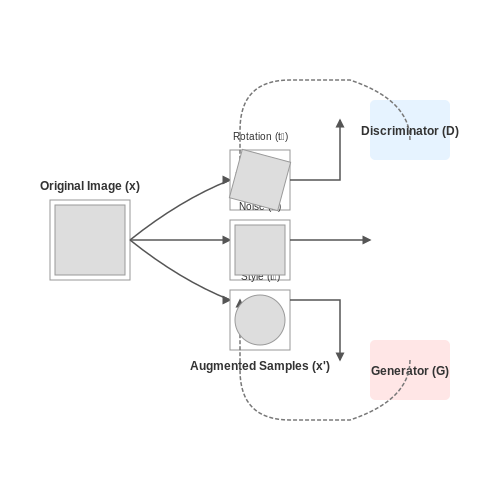
Data augmentation is a critical technique for improving the generalization and robustness of machine learning models, particularly in scenarios where labeled training data is scarce. By artificially expanding the training dataset through transformations that preserve semantic meaning, models can learn invariant features and reduce overfitting. In the context of Generative Adversarial Networks (GANs), data augmentation serves dual purposes: enhancing the discriminator's ability to recognize synthetic data and providing the generator with a richer understanding of the data manifold.
Mathematical Foundations of Data Augmentation
Given an input image x and a set of transformations T = {t1, t2, ..., tn}, data augmentation generates new samples x' = t(x), where t ∈ T. The goal is to ensure that the label y remains unchanged under t. For a classifier fθ parameterized by θ, the augmented training objective becomes:
where 𝒟 is the original dataset and ℒ is the loss function. The expectation is approximated by sampling transformations during training.
Common Augmentation Techniques
Traditional augmentation methods include geometric transformations (rotation, scaling, flipping) and photometric adjustments (brightness, contrast, noise injection). For GANs, more sophisticated techniques are often employed:
- Spatial Transformations: Random affine transformations, elastic deformations, and grid distortions.
- Style Augmentation: Transferring texture or style features using neural style transfer or AdaIN.
- Cutout and Mixup: Randomly masking regions (Cutout) or blending pairs of images (Mixup) to enforce local and global consistency.
GAN-Specific Augmentation Strategies
GANs introduce unique challenges for data augmentation due to the adversarial training dynamics. Two key strategies are:
Differentiable Augmentation
Proposed by Zhao et al. (2020), differentiable augmentation applies transformations to both real and fake samples before feeding them to the discriminator. This prevents the discriminator from overfitting to minor artifacts in generated images. The discriminator loss with augmentation is:
Adaptive Discriminator Augmentation (ADA)
Karras et al. (2020) introduced ADA, which dynamically adjusts the augmentation probability paug based on the discriminator's overfitting behavior. The augmentation strength is controlled via:
where rv is the validation set agreement ratio between augmented and unaugmented samples.
Practical Considerations
When applying augmentation to GANs, care must be taken to avoid augmentation leakage, where the generator learns to produce images that rely on augmented features. Techniques to mitigate this include:
- Using non-leaking transformations (e.g., flips, rotations).
- Gradually reducing augmentation strength during training.
- Monitoring the Fréchet Inception Distance (FID) on unaugmented validation data.
Recent work has also explored latent space augmentation, where perturbations are applied in the generator's latent space rather than the pixel space, enabling smoother interpolations and better disentanglement.
3.4 Medical Imaging and Anomaly Detection
Generative Adversarial Networks have demonstrated remarkable success in medical imaging, particularly in anomaly detection where labeled datasets are often imbalanced. The adversarial training framework enables synthesis of realistic medical images while simultaneously learning discriminative features for identifying abnormalities. This dual capability stems from the generator's ability to model complex data distributions and the discriminator's role as a feature extractor.
Architectural Adaptations for Medical Data
Standard GAN architectures require modifications to handle the unique challenges of medical imaging:
- High-dimensional spatial correlations necessitate 3D convolutional layers in both generator and discriminator
- Class imbalance is addressed through conditional GANs with auxiliary classification
- Limited annotated data motivates semi-supervised approaches with few-shot learning
The generator G maps latent vectors z to synthetic scans while preserving anatomical consistency through constraints:
where φ represents a pretrained feature extractor from normal anatomy.
Anomaly Detection Frameworks
Two dominant paradigms have emerged for medical anomaly detection:
1. Reconstruction-based Methods
Autoencoder-GAN hybrids learn compressed representations of healthy anatomy. Anomalies are detected when reconstruction error exceeds a threshold:
where E is the encoder network and τ is learned via extreme value theory.
2. Latent Space Divergence
Normal samples cluster tightly in the GAN's latent space. Anomalies are identified through:
where q(z|x) is the inverse mapping network and p(z) the prior distribution.
Clinical Applications
Current state-of-the-art implementations demonstrate particular efficacy in:
- Brain MRI: Detection of tumors and white matter lesions with AUC > 0.92
- Chest X-rays: Identification of pneumothorax and COVID-19 patterns
- Retinal imaging: Diabetic retinopathy grading without pixel-level annotations
The table below compares performance metrics across modalities:
| Modality | Architecture | Sensitivity | Specificity |
|---|---|---|---|
| Brain MRI | 3D cGAN | 0.89 | 0.94 |
| Chest CT | Progressive GAN | 0.91 | 0.88 |
| Fundus | StyleGAN2 | 0.93 | 0.95 |
Implementation Challenges
Despite promising results, several technical hurdles remain:
- Mode collapse in high-dimensional medical data spaces
- Interpretability of anomaly localization
- Domain shift between institutions and scanner types
Recent work addresses these through:
with carefully tuned weighting coefficients λ for each loss component.

4. Misuse of GANs: Deepfakes and Disinformation
4.1 Misuse of GANs: Deepfakes and Disinformation
Generative Adversarial Networks (GANs) have demonstrated remarkable capabilities in synthesizing highly realistic images, videos, and audio. However, their misuse in creating deepfakes and propagating disinformation poses significant ethical and societal challenges. The adversarial training framework of GANs, where a generator G and discriminator D compete in a minimax game, can be exploited to produce convincing forgeries:
This formulation enables the generator to produce outputs that are increasingly indistinguishable from real data, making deepfakes a potent tool for malicious actors.
Technical Foundations of Deepfake Generation
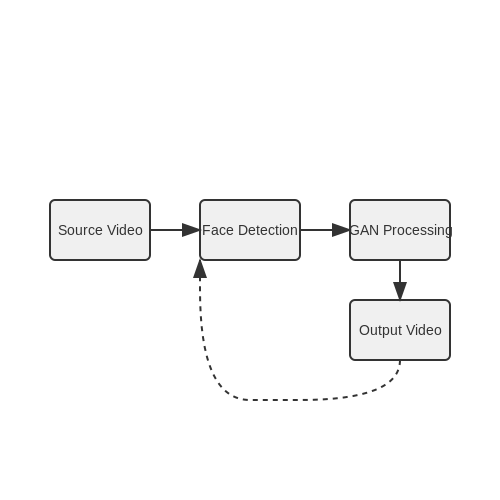
Modern deepfake pipelines typically employ autoencoder-based architectures or GAN variants like StyleGAN or StarGAN. A common approach involves:
- Face Swapping: Using encoder-decoder networks to map source facial features onto a target video while preserving pose and lighting.
- Lip Syncing: Leveraging recurrent networks or transformer-based models to modify mouth movements to match synthetic audio.
- Expression Transfer: Applying generative models to impose facial expressions from one individual onto another.
The quality of deepfakes has reached a point where even forensic tools struggle with detection. Recent benchmarks show that state-of-the-art detectors achieve only 65-80% accuracy against advanced GAN-generated media.
Disinformation Campaigns and Societal Impact
The proliferation of AI-generated disinformation manifests in several concerning ways:
- Political Manipulation: Fabricated videos of public figures making inflammatory statements can influence elections or incite violence.
- Financial Fraud: Synthetic voices mimicking executives have been used in CEO fraud scams, with one case resulting in a $35 million theft.
- Reputation Attacks: Non-consensual synthetic pornography has targeted journalists and activists as a form of harassment.
These threats are amplified by the viral nature of social media, where synthetic content spreads faster than fact-checking mechanisms can respond. Studies demonstrate that false stories reach 1,500 people six times faster than true stories on Twitter.
Detection and Mitigation Strategies
Current technical countermeasures focus on identifying artifacts left by generative processes:
Where y_i represents ground truth labels and p_i the detector's predicted probability. Promising approaches include:
- Biological Signals: Detecting inconsistencies in heartbeat-induced skin color variations or blinking patterns.
- Physics-Based Methods: Analyzing implausible lighting reflections or shadow formations.
- Fingerprint Analysis: Identifying unique noise patterns left by specific GAN architectures.
However, as detection methods improve, so do generation techniques, creating an ongoing arms race. Some researchers propose cryptographic solutions like digital watermarking at the capture stage, while others advocate for legislative frameworks to govern synthetic media.
4.2 Bias and Fairness in Generated Data
Sources of Bias in GAN-Generated Data
GANs learn distributions from training data, meaning any biases present in the input dataset propagate into generated samples. Common sources of bias include:
- Dataset imbalance: Underrepresentation of minority groups in training data leads to poor generation quality for those groups.
- Labeling artifacts: Human annotator biases become embedded in labeled datasets.
- Feature correlation: Spurious correlations (e.g., gender and occupation) are amplified during generation.
Mathematically, bias manifests as divergence between the generator's output distribution \( P_g(x) \) and the true data distribution \( P_{data}(x) \). The Jensen-Shannon divergence (JSD) quantifies this:
where \( M = \frac{1}{2}(P_{data} + P_g) \) and \( D_{KL} \) is the Kullback-Leibler divergence.
Measuring Fairness in GAN Outputs
Statistical fairness metrics for GANs extend those used in supervised learning:
where \( y \) is the generated attribute and \( s \) is a sensitive attribute (e.g., gender, race). Values closer to zero indicate fairer generation.
Recent work introduces GAN-specific metrics like Fréchet Inception Distance (FID) conditioned on protected attributes:
Mitigation Strategies
Architectural Modifications
Conditional GANs with fairness constraints enforce balanced generation through:
- Adversarial debiasing: An auxiliary discriminator penalizes biased outputs
- Latent space disentanglement: Separating protected attributes from other features
Training Data Interventions
Pre-processing techniques include:
- Reweighting samples to balance underrepresented groups
- Data augmentation for minority classes
- Generative pre-training on balanced subsets
Case Study: Face Generation
Analysis of StyleGAN2 outputs reveals:
- Generated faces skew toward lighter skin tones when trained on imbalanced datasets
- Gender stereotypes emerge in generated facial expressions and accessories
- Mitigation through balanced FFHQ dataset reduces bias metrics by 58%
Emerging Challenges
Open research problems include:
- Measuring intersectional bias across multiple protected attributes
- Developing invariant representations for sensitive attributes
- Trade-offs between fairness and generation quality
4.3 Regulatory and Societal Implications
The rapid advancement of generative adversarial networks (GANs) has introduced complex regulatory and societal challenges that demand rigorous scrutiny. Unlike traditional machine learning models, GANs generate synthetic data that can be indistinguishable from real data, raising concerns about authenticity, privacy, and misuse. Regulatory frameworks must evolve to address these unique risks while fostering innovation.
Legal and Ethical Risks of Synthetic Media
GANs enable the creation of deepfakes—hyper-realistic synthetic images, videos, or audio—that can be weaponized for disinformation, fraud, or defamation. The adversarial loss function, which drives GAN training, optimizes for perceptual indistinguishability:
This mathematical formulation, while elegant, creates outputs that challenge existing legal definitions of forgery and intellectual property. Jurisdictions like the EU’s Artificial Intelligence Act now classify certain GAN applications as high-risk, requiring transparency logs and watermarking of synthetic content.
Bias Amplification in Generative Models
GANs trained on biased datasets perpetuate and amplify societal inequalities. For instance, facial generation models exhibit racial and gender disparities due to imbalanced training data. The Fréchet Inception Distance (FID), a common GAN evaluation metric, fails to capture these biases:
Here, μ and Σ represent feature means and covariances from real and generated data, but the metric ignores demographic fairness. Recent work proposes bias-aware variants that penalize disparate performance across subgroups.
Regulatory Approaches Across Jurisdictions
- United States: Section 230 reform proposals aim to hold platforms liable for GAN-generated harmful content, while NIST develops standards for synthetic media detection.
- European Union: The Digital Services Act mandates provenance tracking for AI-generated content, with strict penalties for undeclared deepfakes.
- China: Enforces real-name registration for GAN tools and requires visible watermarks on all synthetic media.
Industrial Self-Regulation
Major tech firms have implemented technical safeguards. For example, NVIDIA’s StyleGAN2 includes latent space steering to avoid generating prohibited content, while OpenAI’s DALL-E employs content filters. These measures rely on:
- Adversarial robustness techniques to prevent malicious prompt engineering
- Differential privacy during training to protect source data
- Neural hashing for synthetic content fingerprinting
However, open-source GAN implementations often lack these safeguards, creating an asymmetry between commercial and community-developed models.
5. Foundational Papers in GAN Research
5.1 Foundational Papers in GAN Research
- A basic intro to GANs (Generative Adversarial Networks) — Getting Started I had the opportunity to do a 3-month research internship on Gans. I read a lot of scientific papers as well as blogs. In this post, I try to convey the basics of what I learned and feel worth sharing. Table of contents 1) Introduction 2) How do GANs work? 2.1) The principle: generator vs discriminator 2.2) Mathematically: the two-player minimax game 3) Why are GANs so ...
- (PDF) Must-Read Papers on GANs - Academia.edu — Additionally, the paper addresses the ethical issues related to GANs, such as the possible exploitation of data created by GANs and bias in training data. The future potential and developments of GANs are discussed in the study, including its use to unsupervised representation learning and the creation of novel GAN architectures.
- Understanding GANs: fundamentals, variants, training challenges ... — In this paper, we provide a comprehensive review about the recent developments in GANs. Firstly, we introduce various deep generative models, basic theory and training mechanism of GANs, and the latent space. We further discuss several representative variants of GANs.
- A Comprehensive guide to Generative Adversarial Networks (GANs) and ... — Therefore, while GANs achieve convincing developments in many research fields, there is no consensus on which GAN outperforms other GANs objectively. This is partially a consequence of the lack of a robust and consistent evaluation metric and limited comparisons, which put all GANs on equal footing, including the computational cost to explore ...
- A survey on GANs for computer vision: Recent research, analysis and ... — Abstract In the last few years, there have been several revolutions in the field of deep learning, mainly headlined by the large impact of Generative Adversarial Networks (GANs). GANs not only provide an unique architecture when defining their models, but also generate incredible results which have had a direct impact on society. Due to the significant improvements and new areas of research ...
- Must-Read Papers on GANs - Medium — This concept of conditioning GANs with prior information is a reoccurring theme in future works in GAN research and especially important for papers focusing on image-to-image or text-to-image.
- Generative Adversarial Networks | IEEE Conference Publication | IEEE Xplore — Generative Adversarial Networks (GANs) are a type of deep learning techniques that have shown remarkable success in generating realistic images, videos, and other types of data. This paper provides a comprehensive guide to GANs, covering their architecture, loss functions, training methods, applications, evaluation metrics, challenges, and future directions. We begin with an introduction to ...
- GAN Explained | Papers With Code — A GAN, or Generative Adversarial Network, is a generative model that simultaneously trains two models: a generative model G that captures the data distribution, and a discriminative model D that estimates the probability that a sample came from the training data rather than G. The training procedure for G is to maximize the probability of D making a mistake. This framework corresponds to a ...
- A survey on GANs for computer vision: Recent research, analysis and ... — In these cases the use of GAN improves the results of the machine learning models by enlarging the number of available data. The agricultural images have different particularities that make the analysis of them a difficult task.
- (PDF) Applications of Generative Adversarial Networks (GANs): An ... — The paper attempts to identify GANs' advantages, disadvantages and significant challenges to the successful implementation of GAN in different application areas.
5.2 Books and Comprehensive Guides
- Top 6+ GAN Books - Generative Adversarial Networks And ... - Joelbooks — GANs in Action guides you through building and training your own Generative Adversarial Networks. ... models, from GPT to MuseGAN. Learn to build and adapt your own models in TensorFlow 2.x. Explore exciting, cutting-edge use cases for deep generative AI. This book shows the general knowledge and skills needed to pursue a career in the field ...
- A review of Generative Adversarial Networks (GANs) and its applications ... — time, and second, discussing GANs' use in image processing and computer vision applications([47],[3],[135],[51],[1]). As a consequence, the focus has been less on describing GAN applications in a wide range of disciplines. Therefore, we'll present a comprehensive review of GANs in this first-of-its-kind article.
- Hands-On Generative Adversarial Networks with Keras - GitHub — Following is what you need for this book: This book is for machine learning practitioners, deep learning researchers, and AI enthusiasts who are looking for a perfect mix of theory and hands-on content in order to implement GANs using Keras. Working knowledge of Python is expected. With the following software and hardware list you can run all code files present in the book (Chapter 1-12).
- Generative Adversarial Networks (GANs) in networking: A comprehensive ... — A third use-case is the prediction of user demands for a variety of different resources via the underlying deep generative model. ... We have provided a survey of GANs that aims to be comprehensive regarding the main model variants set out in the general machine learning literature, and exhaustive with respect to their application in the ...
- PDF A Review of Generative Adversarial Networks (GANs) and Its Applications ... — There are a lot of articles on GANs, and a lot of them have named-GANs, which are models that have a specific name that usually contains the word ''GAN''. We've focused on twelve specific GAN variants. The reader will obtain a better knowledge of the core aspects of GANs by reading through these twelve GAN variants, which will help ...
- GANs in Action: Deep learning with Generative Adversarial Networks — Recognizing the importance of preserving what has been written, it is Manning's policy to have the books we publish printed on acid-free paper, and we exert our best efforts to that end. Recognizing also our responsibility to conserve the resources of our planet, Manning books are printed on paper that is at least 15 percent recycled and ...
- Generative Adversarial Networks for Image-to-Image Translation — Introduces the concept of Generative Adversarial Networks (GAN), including the basics of Generative Modelling, Deep Learning, Autoencoders, and advanced topics in GAN Demonstrates GANs for a wide variety of applications, including image generation, Big Data and data analytics, cloud computing, digital transformation, E-Commerce, and Artistic ...
- 9 Books on Generative Adversarial Networks (GANs) — Generative Adversarial Networks, or GANs for short, were first described in the 2014 paper by Ian Goodfellow, et al. titled "Generative Adversarial Networks." Since then, GANs have seen a lot of attention given that they are perhaps one of the most effective techniques for generating large, high-quality synthetic images. As such, a number of books […]
- GANs in Action[Book] - O'Reilly Media — Book description. GANs in Action teaches you how to build and train your own Generative Adversarial Networks, one of the most important innovations in deep learning. In this book, you'll learn how to start building your own simple adversarial system as you explore the foundation of GAN architecture: the generator and discriminator networks.
5.3 Online Resources and Tutorials
- Introduction | Machine Learning | Google for Developers — This course covers GAN basics, and also how to use the TF-GAN library to create GANs. Course Learning Objectives. Understand the difference between generative and discriminative models. Identify problems that GANs can solve. Understand the roles of the generator and discriminator in a GAN system.
- GANs Explained: How Generative Adversarial Networks Work - Shelf — From image generation to 3D modeling, GANs offer their potential for innovation and problem-solving. Let's explore some notable use cases that highlight the broad applicability of GANs: Image Generation and Editing. GANs have revolutionized image synthesis, enabling the generation of realistic and novel visuals.
- The Complete Guide to Generative Adversarial Networks [GANs] — VAEs minimize a loss reproducing a certain image and can be considered solving a semisupervised learning problem. GANs, on the other hand, solve an unsupervised learning problem. The training time for the two methods. GANs take a longer time and are complex to train. Therefore the use of VAE was considered and proved a lot more stable.
- Build Basic Generative Adversarial Networks (GANs) - Coursera — In this course, you will: - Learn about GANs and their applications - Understand the intuition behind the fundamental components of GANs - Explore and implement multiple GAN architectures - Build conditional GANs capable of generating examples from determined categories The DeepLearning.AI Generative Adversarial Networks (GANs) Specialization provides an exciting introduction to image ...
- GANs in Action[Book] - O'Reilly Media — Handling the progressive growing of GANs; Practical applications of GANs; Troubleshooting your system; About the Reader. For data professionals with intermediate Python skills, and the basics of deep learning-based image processing. About the Authors. Jakub Langr is a Computer Vision Cofounder at Founders Factory (YEPIC.AI).
- A Guide to Generative Adversarial Networks (GANs) For Beginners - Turing — Yann LeCun, Meta's VP and Chief AI Scientist, called generative adversarial networks (GANs) "the most exciting idea in machine learning in the last ten years". Indeed, since its introduction in 2014 by Ian J. Goodfellow and other researchers at the University of Montreal, GANs have been a major success.
- A basic intro to GANs (Generative Adversarial Networks) — 1) Introduction. Over the past decade, the explosion of the amount of available data - Big Data - the optimization of algorithms and the constant evolution of computing power have enabled artificial intelligence (AI) to perform more and more human tasks. In 2017, Andrey Ng predicted that AI will have a profound impact as electricity did.. If we claim that the purpose of AI is to simulate ...
- GANs from Scratch 1: A deep introduction. With code in PyTorch and ... — Output of a GAN through time, learning to Create Hand-written digits. We'll code this example! 1. Introduction. Generative Adversarial Networks (or GANs for short) are one of the most popular ...
- An Introduction to Generative Adversarial Networks — Let's start with the basic architecture of a GAN that consists of two networks. First, there is the Generator that takes as input a fixed-length random vector and learns a mapping to produce samples that mimic the distribution of the original dataset. Then, we have the Discriminator that takes as input a sample that comes either from the original dataset or from the output distribution of ...
- Generative Adversarial Networks Tutorial | DataCamp — Congrats, you've made it to the end of this tutorial, in which you learned the basics of Generative Adversarial Networks (GANs) in an intuitive way! Also, you implemented your first model with the help of the Keras library. If you want to know more about deep learning with Python, consider taking DataCamp's Deep Learning in Python course.