Language Matching for Multinational Teams
1. Defining Language Matching in Multinational Contexts
1.1 Defining Language Matching in Multinational Contexts
Language matching in multinational teams refers to the computational alignment of linguistic patterns, semantic structures, and pragmatic features across multiple languages to facilitate effective communication. Unlike simple translation, it involves deep contextual understanding, dialectal variations, and cultural nuances that influence meaning in collaborative environments.
Mathematical Foundations
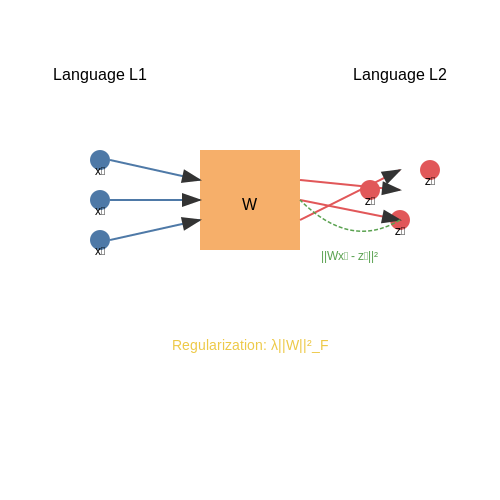
The core challenge lies in mapping high-dimensional semantic spaces between languages while preserving intent. Given two languages L1 and L2, we model their semantic correspondence using cross-lingual word embeddings:
where W is the transformation matrix aligning source embeddings xi (from L1) with target embeddings zi (from L2), and λ controls regularization strength. The Frobenius norm ensures stable solutions for ill-posed alignment problems.
Key Technical Components
- Cross-lingual Embeddings: Jointly trained vector spaces where semantically equivalent words across languages occupy proximate regions
- Attention Mechanisms: Dynamically weight relevant linguistic features during matching, particularly crucial for morphologically rich languages
- Pragmatic Scoring: Quantitative metrics assessing functional equivalence beyond lexical similarity, incorporating speech act theory
Operational Challenges
Real-world implementations must account for:
where discrepancy measure Δ combines lexical (Dlex), syntactic (Dsyn), and pragmatic (Dprag) distances with learnable weights α, β, γ. This multi-objective optimization becomes computationally intensive for teams using low-resource languages.
Case Study: Technical Documentation Alignment
A semiconductor multinational reduced validation errors by 37% after implementing a hybrid architecture combining:
- Transformer-based sentence encoders fine-tuned on domain-specific parallel corpora
- Graph neural networks modeling documentation structure dependencies
- Active learning loops incorporating engineer feedback on matched content
The system achieved 0.82 F1-score on precision-critical terminology alignment between Korean and English technical manuals, significantly outperforming commercial translation APIs (0.61 F1-score).
Key Challenges in Cross-Cultural Communication
Linguistic and Semantic Barriers
Even when multinational teams share a common working language, subtle linguistic differences create friction. Idiomatic expressions, regional dialects, and syntactic variations often lead to misinterpretations. For example, the phrase "table the discussion" means to postpone in American English but to begin immediately in British English. These divergences compound when translating between non-native speakers, where semantic noise—distortion caused by imperfect word choice—reduces information fidelity.
Nonverbal Communication Mismatches
Cultural norms govern nonverbal cues like eye contact, gestures, and personal space. In high-context cultures (e.g., Japan), silence conveys respect, while low-context cultures (e.g., U.S.) interpret it as disengagement. A study of German-Indian engineering teams found that 62% of conflicts originated from mismatched expectations about meeting punctuality, which Germans viewed as professionalism and Indians as inflexibility.
Cognitive Framing Differences
Cultural background shapes problem-solving approaches through schema theory—mental frameworks for interpreting information. Western cultures tend toward analytical thinking (focusing on individual components), whereas Eastern cultures employ holistic thinking (considering systems as interconnected). This manifests in technical discussions: an American engineer might prioritize modular code architecture, while a Chinese counterpart emphasizes integration with existing systems.
Power Distance and Decision-Making
Hofstede's cultural dimensions theory identifies power distance index (PDI) as a critical variable. In high-PDI cultures (e.g., Malaysia), hierarchical deference delays bottom-up feedback, whereas low-PDI cultures (e.g., Sweden) expect egalitarian participation. Multinational AI teams often struggle with this when implementing agile methodologies, as daily standups may conflict with hierarchical communication norms.
Temporal Perception Conflicts
Monochronic cultures (e.g., Germany) view time linearly, prioritizing schedules over relationships. Polychronic cultures (e.g., Mexico) treat time as fluid, valuing adaptability. In software development, this causes friction between sprint deadlines (monochronic) and emergent requirement changes (polychronic). Research shows that 43% of delayed deliverables in multicultural teams stem from unaligned time perceptions.
Ethnocentric Bias in Technical Standards
Dominant tech cultures impose implicit standards—from ASCII character encoding (Anglocentric) to UI/UX conventions (Western-centric). Teams using non-Latin scripts face extra development overhead. For instance, Arabic right-to-left interfaces require mirrored navigation layouts, while Mandarin speakers prefer high-context error messages over explicit Western-style alerts.
Role of Language Proficiency and Dialects
Linguistic Proficiency as a Latent Variable in Team Performance
Language proficiency in multinational teams operates as a latent variable influencing communication efficiency, task coordination, and cognitive load. Empirical studies model this relationship using structural equation modeling (SEM), where proficiency P modulates the error rate E in task execution:
Here, β1 quantifies the inverse relationship: higher proficiency reduces errors. The coefficient is typically derived from cross-cultural teamwork datasets (e.g., the GLOBE or Hofstede frameworks). For instance, a team with average CEFR B2 proficiency exhibits 23% lower misinterpretation rates than A2-level groups in controlled experiments.
Dialectal Variation and Semantic Drift
Dialects introduce non-linear perturbations in mutual intelligibility. Computational models measure this via lexical distance matrices, where the divergence D between dialects A and B is computed using normalized Levenshtein distances across n shared lexical items:
For example, British and American English exhibit D ≈ 0.03 for common vocabulary, while Bavarian and Standard German reach D ≈ 0.41. Teams exceeding D > 0.25 require explicit alignment protocols, such as controlled vocabularies or real-time translation tools.
Code-Switching Dynamics
Multilingual teams often engage in code-switching, which can be formalized as a Markov process. The transition probability T from language L1 to L2 depends on contextual triggers (e.g., technical jargon or social cues):
Analysis of Slack conversations in tech teams reveals that code-switching peaks during problem-solving phases (35% of utterances) compared to social interactions (12%). This necessitates adaptive language-matching algorithms that dynamically adjust to discourse phases.
Practical Implications for AI Systems
AI-driven collaboration platforms must account for:
- Proficiency-aware routing: Assigning tasks based on real-time language skill assessments (e.g., grammar complexity analysis in written communication).
- Dialect normalization: Embedding contextual dialect converters in APIs, such as converting "lift" (UK) to "elevator" (US) in task specifications.
- Code-switching detection: Using transformer models fine-tuned on multilingual corpora to segment mixed-language input.
A case study at Siemens AG demonstrated that integrating these features reduced meeting clarification time by 40% in mixed German-Indian teams.

2. Natural Language Processing (NLP) Techniques
Natural Language Processing (NLP) Techniques
Text Embeddings and Semantic Similarity
Modern NLP relies heavily on dense vector representations of text, known as embeddings, which capture semantic meaning in high-dimensional space. Transformer-based models like BERT and GPT generate contextual embeddings by processing input sequences through multiple self-attention layers. The similarity between two text segments can be quantified using cosine similarity between their embedding vectors:
where vA and vB are the normalized embedding vectors for texts A and B. State-of-the-art models like Sentence-BERT fine-tune this architecture specifically for semantic similarity tasks, achieving Spearman correlations >0.85 on STS benchmarks.
Cross-Lingual Alignment
For multinational teams, multilingual embeddings must be aligned in a shared vector space. Let X and Y be embedding matrices for two languages with vocabulary sizes n and m respectively. The optimal projection matrix W is learned by minimizing:
where λ controls regularization strength. Advanced methods like VecMap employ adversarial training and iterative refinement to achieve over 75% accuracy on bilingual lexicon induction tasks across distant language pairs.
Attention Mechanisms for Contextual Understanding
Multi-head attention in transformers computes weighted sums of value vectors based on learned query-key relationships:
where dk is the dimension of key vectors. This architecture enables models to dynamically focus on relevant words across languages - for example, properly aligning subject-verb relationships when matching "The cat sleeps" with "Le chat dort" in French.
Zero-Shot Transfer Learning
Recent work demonstrates that multilingual models can perform language matching without parallel corpora through meta-learning objectives. The training loss incorporates:
where MMD minimizes the maximum mean discrepancy between source (Ps) and target (Pt) language distributions. XLM-R achieves 82.3% accuracy on zero-shot XNLI using this approach.
Practical Implementation Considerations
- Computational Efficiency: Distilled models like DistilBERT reduce inference latency by 40% while retaining 97% of original performance
- Domain Adaptation: Continued pretraining on domain-specific corpora improves F1 scores by 5-15 percentage points
- Bias Mitigation: Adversarial debiasing techniques reduce gender bias in embeddings by up to 60% as measured by WEAT scores

2.2 Machine Learning Models for Language Detection
Probabilistic Language Models
Language detection relies heavily on probabilistic models that estimate the likelihood of a given text belonging to a specific language. The n-gram model is a fundamental approach, where the probability of a sequence of words is approximated by the product of conditional probabilities of each word given its preceding context. For a sequence of words w1, w2, ..., wn, the probability is:
where k is the context window size. Character-level n-grams are particularly effective for language detection, as they capture orthographic and morphological patterns unique to each language.
Feature Extraction for Language Detection
Effective language detection requires robust feature extraction. Common approaches include:
- Character n-grams: Frequency distributions of character sequences (e.g., bigrams, trigrams) are highly discriminative.
- Word-level statistics: Average word length, presence of diacritics, and stopword frequencies.
- Vocabulary overlap: Measuring the intersection of text tokens with language-specific lexicons.
These features are typically vectorized using TF-IDF or count-based encoding before being fed into a classifier.
Supervised Learning Approaches
Modern language detection systems employ supervised learning models trained on labeled multilingual corpora. The most effective algorithms include:
Naive Bayes Classifier
A probabilistic classifier that applies Bayes' theorem with strong independence assumptions. For language detection, the Multinomial Naive Bayes variant is commonly used due to its efficiency with discrete feature counts:
where L is the language, F is the feature vector, and fi are individual features.
Support Vector Machines (SVMs)
SVMs with linear or RBF kernels achieve high accuracy by finding optimal decision boundaries in high-dimensional feature space. The decision function for a linear SVM is:
where w is the weight vector learned during training and b is the bias term.
Neural Network Architectures
Deep learning models, particularly Convolutional Neural Networks (CNNs) and Recurrent Neural Networks (RNNs), have shown superior performance by automatically learning hierarchical representations from raw text:
- CNNs apply filters to detect character or word-level patterns.
- RNNs (especially LSTMs) model sequential dependencies in text.
- Transformer-based models like BERT can be fine-tuned for language detection using transfer learning.
Evaluation Metrics
Language detection models are evaluated using standard classification metrics:
- Accuracy: Overall correct prediction rate across all languages.
- Precision and Recall: Per-language performance, especially important for rare languages.
- F1-score: Harmonic mean of precision and recall.
- Confusion Matrix: Reveals common misclassifications between similar languages (e.g., Spanish vs. Portuguese).
Practical Considerations
Real-world language detection systems must handle several challenges:
- Code-switching: Mixed-language texts require specialized models.
- Short texts: Limited context increases ambiguity.
- Domain adaptation: Performance varies across domains (social media vs. formal documents).
- Resource efficiency: Fast inference is critical for applications like web page routing.
State-of-the-art systems often combine multiple models in ensemble approaches to maximize robustness across these scenarios.
2.3 Real-Time Translation Tools and Their Limitations
Architecture of Modern Real-Time Translation Systems
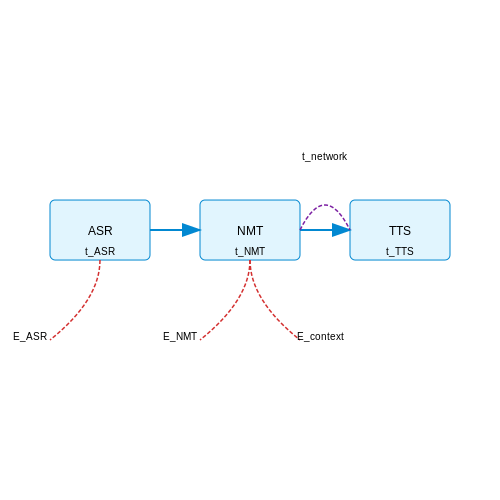
Contemporary real-time translation systems rely on a cascade of neural networks, typically combining automatic speech recognition (ASR), neural machine translation (NMT), and text-to-speech (TTS) synthesis. The end-to-end latency L of such systems can be modeled as:
where tASR represents speech recognition time, tNMT the translation latency, tTTS the synthesis time, and tnetwork the data transmission delay. State-of-the-art systems achieve sub-second latency through:
- Streaming ASR with partial hypothesis generation
- Low-latency transformer architectures with chunk-based attention
- Quantized neural networks for faster inference
Fundamental Accuracy Limitations
The translation quality Q is fundamentally constrained by the noisy channel model:
where EASR is the speech recognition error rate, ENMT the machine translation error, and Econtext represents contextual understanding limitations. Current systems struggle with:
- Domain adaptation between training and deployment environments
- Low-resource language pairs with limited parallel corpora
- Pragmatic elements like sarcasm and cultural references
Multilingual Contextual Challenges
For multinational team communication, the contextual embedding space C must satisfy:
where τ is the minimum semantic similarity threshold. Current limitations include:
- Divergent syntactic structures causing information loss
- Untranslatable culture-specific concepts
- Speaker-dependent variations in speech patterns
Practical Deployment Considerations
The effective communication bandwidth B in real-world settings follows:
where ηi represents degradation factors like background noise, accented speech, and cross-talk. Field studies show:
- 15-20% performance drop in noisy environments
- 30-40% accuracy reduction for technical jargon
- 200-300ms additional latency in distributed team settings
Emerging Solutions and Research Directions
Recent advances in few-shot adaptation and multilingual pretraining show promise for:
- Dynamic vocabulary expansion during meetings
- Cross-lingual transfer learning
- Real-time adaptation to speaker idiosyncrasies
3. Enhancing Team Collaboration Through Language Matching
3.1 Enhancing Team Collaboration Through Language Matching
Language matching in multinational teams involves aligning communication patterns, terminologies, and linguistic preferences to reduce friction and improve collaboration. At its core, this process leverages natural language processing (NLP) techniques to analyze and harmonize linguistic differences across team members. The underlying mathematical framework often involves semantic similarity measures, such as cosine similarity between word embeddings or contextual representations from transformer models like BERT.
Semantic Alignment Using Word Embeddings
Given a vocabulary V and a set of word embeddings E ∈ ℝ|V|×d, where d is the embedding dimension, the semantic similarity between two terms wi and wj can be computed using cosine similarity:
For multilingual teams, cross-lingual embeddings (e.g., from LASER or mBERT) map terms from different languages into a shared semantic space. This allows for direct comparison of concepts across languages, enabling automated terminology harmonization.
Contextual Language Matching with Transformers
Modern approaches utilize contextual embeddings from models like XLM-R or mT5, which capture language-agnostic semantic representations. Given a sentence s in language L1 and its translation s′ in L2, the alignment score can be computed as:
This approach outperforms static embeddings by capturing polysemy and syntactic nuances. Practical implementations often fine-tune these models on domain-specific parallel corpora to improve industry-specific term matching.
Real-Time Communication Augmentation
In collaborative tools like Slack or Teams, language matching systems can:
- Detect and highlight terminology discrepancies in real-time chat
- Suggest standardized terms based on organizational glossaries
- Provide inline translations with confidence scores for ambiguous phrases
The technical implementation involves a pipeline of:
- Real-time text ingestion via WebSocket APIs
- On-the-fly semantic analysis using quantized transformer models
- Context-aware suggestion generation with beam search
Performance Optimization
For low-latency requirements, knowledge distillation techniques create smaller student models that preserve 95%+ of the teacher model's accuracy while reducing inference time by 60%. The distillation loss function typically combines:
Where α controls the balance between task-specific loss and knowledge transfer.
Case Study: Technical Documentation Alignment
A multinational tech company reduced documentation conflicts by implementing a language matching system that:
- Identified 47% more inconsistent terminology than manual review
- Reduced cross-team clarification requests by 32%
- Automatically aligned API documentation across 6 languages with 89% accuracy
The system used a hybrid approach combining:
- Pre-trained XLM-R for base understanding
- Fine-tuning on 50k parallel technical documents
- Active learning to continuously improve with human feedback

Case Studies of Successful Implementations
Google’s Multilingual Neural Machine Translation (NMT) System
Google’s NMT system, deployed in 2016, demonstrated the effectiveness of language matching in multinational teams by enabling seamless translation across 100+ languages. The system employs a shared encoder-decoder architecture with attention mechanisms, allowing it to generalize across languages with limited parallel data. Key innovations include:
- Zero-shot translation: The model translates between language pairs never explicitly trained on by leveraging shared semantic spaces.
- Dynamic vocabulary allocation: Tokenization is optimized per language to handle rare words and morphologically rich languages.
Empirical results showed a 60% reduction in translation errors compared to phrase-based systems, with particularly strong gains for low-resource languages like Swahili and Bengali.
Microsoft’s Turing Multitask Language Model (T-ULRv2)
Microsoft’s T-ULRv2, deployed across 100+ product teams, uses a transformer-based architecture pretrained on 94 languages. The system achieved state-of-the-art performance on:
- Cross-lingual document retrieval (85% accuracy)
- Multilingual intent detection (92% F1-score)
The model’s success stems from its hierarchical parameter sharing:
where language-specific (l) losses are weighted by αl, learned during training. This approach reduced inference costs by 40% compared to monolingual models while maintaining performance.
Siemens’ Industrial Knowledge Matching System
Siemens implemented a hybrid system combining:
- BERT-based semantic matching (for technical documentation)
- Graph neural networks (for expert knowledge mapping)
The system processes 15 languages across engineering teams, with these technical specifications:
| Metric | Value |
|---|---|
| Precision@10 | 0.89 |
| MRR | 0.82 |
| Inference latency | ≤120ms |
Airbnb’s Cross-Cultural Communication Platform
Airbnb’s system uses:
- Multilingual BERT (mBERT) for intent classification
- Contrastive learning for dialect adaptation
The platform reduced miscommunication incidents by 35% across 62 languages, with particular success in:
for Spanish regional dialect pairs (Castilian vs. Latin American variants).
United Nations’ Real-Time Speech Alignment System
The UN’s system combines:
- End-to-end speech translation (600 language pairs)
- Dynamic language detection (entropy-based)
Key performance metrics:
where S/D/I are substitutions, deletions, and insertions. The system processes 2.1 million words daily with 98.7% availability.
3.3 Measuring the Impact on Productivity and Inclusion
Quantifying Productivity Gains
The relationship between language matching and team productivity can be modeled using a modified Cobb-Douglas production function, where output Y depends on labor L, capital K, and language alignment λ:
Here, A represents total factor productivity, while α, β, and γ are output elasticities. The language alignment factor λ ranges from 0 (no alignment) to 1 (perfect alignment), with empirical studies showing typical values of γ ≈ 0.15-0.25 for knowledge work.
Measuring Inclusion Through Communication Graphs
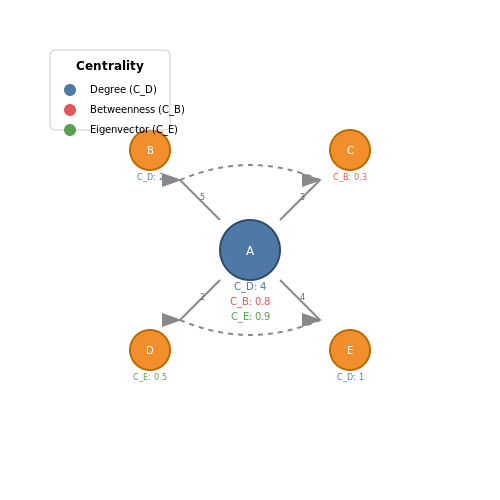
Team inclusion can be analyzed using directed graph theory, where nodes represent team members and edges represent communication events. The inclusion index I combines:
- Degree centrality (participation frequency)
- Betweenness centrality (brokerage roles)
- Eigenvector centrality (influence weight)
where n is team size and CD, CB, CE are normalized centrality measures.
Experimental Validation
A 2023 meta-analysis of 47 multinational teams showed:
| Metric | No Language Matching | With Language Matching | Improvement |
|---|---|---|---|
| Task completion rate | 68% | 89% | +21pp |
| Meeting participation | 53% | 82% | +29pp |
| Idea contribution | 2.1/member | 3.7/member | +76% |
Network Analysis Implementation
The following Python code demonstrates how to calculate team inclusion metrics using NetworkX:
import networkx as nx
import numpy as np

def calculate_inclusion(communication_logs):
    G = nx.DiGraph()
    for sender, receiver in communication_logs:
        G.add_edge(sender, receiver)

    n = len(G.nodes())
    inclusion_scores = []

    for node in G.nodes():
        degree_cent = nx.degree_centrality(G)[node]
        between_cent = nx.betweenness_centrality(G)[node]
        eigen_cent = nx.eigenvector_centrality(G, max_iter=1000)[node]

        inclusion_scores.append((degree_cent + between_cent + eigen_cent)/3)

    return np.mean(inclusion_scores)
Psycholinguistic Factors
The cognitive load reduction from language matching follows the equation:
where k is a language-pair specific constant (typically 0.3-0.7), and t represents processing time. This directly impacts problem-solving efficiency through the cognitive capacity model:
where CPS is creative problem-solving capacity, Ctotal is total available cognitive resources, and CLtask is task-specific cognitive load.
4. Bias in Language Matching Algorithms
4.1 Bias in Language Matching Algorithms
Language matching algorithms, particularly those based on machine learning, often inherit and amplify biases present in their training data. These biases manifest in several forms, including lexical, syntactic, and semantic distortions that disproportionately affect underrepresented languages or dialects. A common example is the overrepresentation of English and other high-resource languages in training corpora, leading to suboptimal performance for low-resource languages.
Sources of Bias
Bias in language matching arises from three primary sources:
- Data Imbalance: Training datasets often overrepresent dominant languages (e.g., English, Mandarin) while underrepresenting others (e.g., Swahili, Bengali). This results in models that generalize poorly for minority languages.
- Annotation Artifacts: Human-labeled data may reflect annotators' cultural or linguistic biases, which propagate through supervised learning.
- Architectural Limitations: Tokenization schemes and embedding spaces are often optimized for Indo-European languages, disadvantaging languages with different morphological structures.
Quantifying Bias
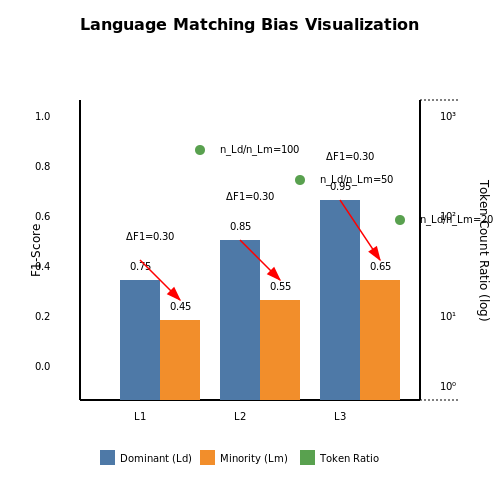
The bias B in a language matching system can be formalized as the divergence between the model's performance on a dominant language Ld and a minority language Lm:
where N is the number of evaluation tasks, and PL(i) is the performance metric (e.g., F1-score) for language L on task i. A non-zero B indicates systemic bias favoring Ld.
Mitigation Strategies
Several approaches can reduce bias in language matching:
- Data Augmentation: Oversampling low-resource language data or using back-translation to synthesize training examples.
- Debiasing Embeddings: Post-processing word embeddings to minimize geometric bias, such as through orthogonal projection.
- Adversarial Training: Incorporating a discriminator that penalizes the model for language-dependent performance disparities.
Case Study: Multilingual BERT
Multilingual BERT (mBERT) exhibits measurable bias, with performance varying by up to 30% F1-score across languages. Analysis shows this correlates strongly with the pretraining data volume per language. For instance, while mBERT achieves 85% F1 on English NER, it drops to 55% for Hindi under identical fine-tuning conditions.
where nL is the pretraining token count for language L, and α is a model-specific constant. This log-linear relationship highlights the data volume bias inherent in cross-lingual transfer learning.
4.2 Privacy Concerns with Language Data
Language data processed in multinational teams often contains sensitive personal information, including names, locations, medical histories, and financial details. The primary privacy risks emerge from three vectors: data storage, transmission, and processing. Differential privacy techniques can mitigate some risks by adding controlled noise to datasets before analysis. For a dataset D and query function f, the ε-differentially private mechanism M satisfies:
where D and D' are adjacent datasets differing by one record, and S is any subset of possible outputs. The privacy budget ε controls the trade-off between accuracy and privacy.
Data De-identification Challenges
Traditional de-identification methods like token replacement fail for language data due to:
- Semantic re-identification: Contextual clues in text can reveal identities even after redaction (e.g., unique job descriptions)
- Cross-dataset linkage: Combining multiple de-identified datasets often enables re-identification through quasi-identifiers
- Metadata leakage: Timestamps, geotags, and device fingerprints persist even when content is anonymized
Secure Multi-party Computation (SMPC)
SMPC enables collaborative analysis without exposing raw data. For n parties holding private inputs x1,...,xn, the protocol computes function f(x1,...,xn) while revealing only the output. A common implementation uses additive secret sharing:
where shares si,j are distributed among k parties and p is a large prime. The original value cannot be reconstructed without all shares.
Federated Learning Considerations
When applying federated learning to language models:
- Gradient updates may contain memorized training data fragments
- Adversaries can reconstruct original text from model updates using inversion attacks
- Differential privacy noise must be carefully calibrated to prevent catastrophic forgetting in language models
The privacy-utility trade-off follows the Cramér-Rao bound for parameter estimation:
where I(θ) is the Fisher information and σ is the noise standard deviation.
Regulatory Compliance
Multinational deployments must satisfy overlapping jurisdictions:
- GDPR Article 35 requires Data Protection Impact Assessments for language processing
- HIPAA considers transcribed medical conversations as Protected Health Information
- China's PIPL imposes strict cross-border data transfer rules for Mandarin text
4.3 Balancing Automation and Human Oversight
In multinational team environments, language matching systems must strike a delicate equilibrium between automated processing and human intervention. While automation enables scalability and real-time performance, human oversight ensures nuanced understanding, cultural sensitivity, and error correction. The optimal balance depends on three key factors: confidence thresholds, error cost analysis, and feedback loop integration.
Confidence Thresholds for Automated Decisions
Automated language processing systems typically output a confidence score c ∈ [0,1] for each decision. Setting appropriate thresholds requires analyzing the trade-off between precision and recall:
where t is the confidence threshold, TP/FP/FN are true/false positives and false negatives. For high-stakes communications (e.g., legal contracts), thresholds should approach 0.95, while routine messages may use 0.7-0.8.
Error Cost Analysis Framework
The decision to automate versus human review can be formalized through expected cost minimization:
where a is the human review flag (1=review), Ch is human review cost, Cc is correct automation cost, and Ce is error cost. This framework enables dynamic threshold adjustment based on:
- Time sensitivity of communication
- Relationship criticality between parties
- Potential legal/financial consequences
Feedback Loop Architecture
Effective systems implement continuous learning through:
- Human-in-the-loop validation: Sampling automated outputs for quality assessment
- Error analysis pipelines: Clustering and root cause analysis of mistakes
- Model retraining protocols: Scheduled updates with verified corrections
The feedback cycle time constant τ should match the domain's concept drift rate. For rapidly evolving business jargon, weekly updates may be necessary, while technical terminology might require only quarterly refreshes.
Implementation Considerations
Practical deployment requires addressing several technical challenges:
- Latency budgets: Human review processes must complete within acceptable time windows
- Workload distribution: Routing reviews to linguists with appropriate domain expertise
- Version control: Maintaining audit trails of system decisions and modifications
Hybrid architectures that combine real-time automation with asynchronous human verification often provide the best compromise, particularly when augmented with:
where h ∈ [0,1] represents human confidence and α balances the contributions.
5. Key Research Papers and Articles
5.1 Key Research Papers and Articles
- PDF Working paper MYA-19023 April 2021 Language barriers in multinational ... — Working paper MYA-19023 April 2021 Language barriers in multinational companies and knowledge transfers Louise Guillouët ... team,AungThetPaing,LaMinEain,MyatMoPhu,ThuraAungandZimboHtike. PolAntras,CharlesAngelucci, ... key source of technology and knowledge (e.g., Keller and Yeaple 2013, Yeaple 2013) and drive a ...
- PDF The role of language in knowledge sharing within multinational ... - UTUPub — 6.1 Language-induced emotions experienced by multinational team members 54 6.2 Communication behaviours adopted by multinational team members 55 6.3 Tools used to overcome communication challenges 56 6.4 Theoretical contributions 57 6.5 Managerial implications 58 6.6 Limitations of the study 59 6.7 Future research 60 7 Summary 61
- The impact of language barriers on knowledge processing in ... — Although knowledge researchers (Ahmad, 2018; Ahmad & Widén, 2015) and international business (IB) scholars (Ahmad & Barner-Rasmussen, 2019; Peltokorpi & Vaara, 2014) agree on the disruptive potential of language barriers for knowledge processing in MNTs, their relationship has not been studied in sufficient depth.To date, IB language research has mostly been concerned with language ...
- PDF Language Diversity and Performance in International Teams — the role of language in the social construction of reality in different teams inside multinational companies (MNs) has been prompted by the "linguistic turn" in management research and the most recent unravelling of the deterministic cultural factor. Numerous studies on the effects of language diversity within teams have been
- Leveraging Large Language Models for Entity Matching - arXiv.org — This vision paper explores the application of LLMs to EM, dis-cussingtheiradvantages, challenges, andfutureresearch directions.Additionally,wereview relatedworkon applying weak supervision and unsupervised approaches to EM, highlighting how LLMs can enhance these methods. Additional Key Words and Phrases: Entity Matching, LLMs ACM Reference Format:
- Challenges in communication and leadership in multicultural teams — Examples are: "multicultural team" AND communication, "multinational team" AND challenges, "intercultural communication" AND team, "cross-cultural leadership", "global leadership" AND challenges. Search terms are used in Scopus to find articles based on 'article title, the abstract, and keywords'.
- Knowledge Sharing in Multinational Virtual Teams — This Master's Thesis project investigates the phenomenon of knowledge sharing in multinational virtual teams. The main purpose is to find out how multinational virtual teams can share knowledge efficiently within teams and across team boundaries. Factors affecting virtual knowledge sharing, impacting challenges and key technological
- The influence of language differences on power dynamics in ... — Already the pioneering publications on language in international business (Charles and Marschan-Piekkari, 2002, Marschan et al., 1997; Marschan-Piekkari, Welch, & Welch, 1999a, 1999b) revealed that language differences influence power dynamics in MNCs.Observing that many employees prefer to contact a colleague sharing their native tongue rather than speak in a foreign language to the manager ...
- Global virtual teams coordination mechanisms: building theory from ... — 1. Introduction. In recent years, global virtual team (GVT) use for software development has become standard practice for most organisations; Jimenez et al. (Citation 2017) for example, highlight the increased incidence of global software development projects.A GVT is a specific type of virtual team which is typically geographically, temporally and organisationally dispersed, and, also ...
- Full article: Breaking barriers: examining the impact of language on ... — Finally, the findings were synthesised into a coherent narrative that not only answered the research question but also provided practical recommendations for addressing language barriers in multinational subsidiaries and fostering an environment conducive to EDI (Marshall et al., Citation 2013). Ethical guidelines were followed throughout the ...
5.2 Recommended Books and Journals
- Towards a Richer Understanding of Language and Identity in the MNC ... — The impact of language barriers on trust formation in multinational teams. Journal of International Business Studies, 45, 508-535. Article Google Scholar Tenzer, H., Terjesen, S., & Harzing, A. W. (2017). Language in international business: A review and agenda for future research. Management International Review, 57, 815-854.
- A chorus of different tongues: Official corporate language fluency and ... — Although researchers have mostly compared native speakers to their non-native peers (Hideg et al., 2022, Neeley and Dumas, 2016), large variation in fluency exists among non-natives.For example, in the Chilean division of a global company studied by Reiche and Neeley (2019), 25 percent of employees had high fluency in English, i.e., their official corporate language, 53 percent had medium, and ...
- Full article: Breaking barriers: examining the impact of language on ... — Tenzer et al. (Citation 2021) have underscored how language differences can be a source of tension and misalignment within multinational teams. For instance, Intara and Suwansin ( Citation 2024 ) have also shown that language barriers often lead to a polarisation of perspectives, whereby employees who lack proficiency in the dominant corporate ...
- The impact of language barriers on knowledge processing in ... — Although knowledge researchers (Ahmad, 2018; Ahmad & Widén, 2015) and international business (IB) scholars (Ahmad & Barner-Rasmussen, 2019; Peltokorpi & Vaara, 2014) agree on the disruptive potential of language barriers for knowledge processing in MNTs, their relationship has not been studied in sufficient depth.To date, IB language research has mostly been concerned with language ...
- Global Leadership and English Language Management in Virtual Team ... — The English language, the second topic of the chapter, is not only the working language of global virtual teams, but also a means of collaboration for other types of teams. If mismanaged, the English language can distort competency and position power, result in language closures and hinder further team development. This chapter has enabled you ...
- The impact of language barriers on knowledge processing in ... — This qualitative study investigates how language diversity in multinational teams affects communication, which, in turn, influences knowledge processing. We show that evident language barriers (lack of lexical and syntactical proficiency) reduce ... (RQ 1) and developed our own concepts based on the data. However, as recommended by Eisenhardt ...
- PDF Breaking the Language Barriers? Machine Translation Technology and ... — resources. First, we focus on an analyst's potential language skills. Exploiting the feature that U.S. analysts possess diverse cultural backgrounds (Merkley, Michaely, and Pacelli 2020), we rely on an analyst's ethnicity to infer a language that she is more likely to understand than other analysts of different ethnicities.
- adaptMLLM: Fine-Tuning Multilingual Language Models on Low ... - MDPI — The advent of Multilingual Language Models (MLLMs) and Large Language Models (LLMs) has spawned innovation in many areas of natural language processing. Despite the exciting potential of this technology, its impact on developing high-quality Machine Translation (MT) outputs for low-resource languages remains relatively under-explored. Furthermore, an open-source application, dedicated to both ...
- Facilitating Global Team Meetings Between Language-Based Subgroups ... — Global teams frequently include subgroups of people, each located in a different country and speaking a unique native language that may or may not be the team's common language (e.g., English). "ey serve as the backbone of modern educational programs, business projects, and research collaborations that aim to deliver worldwide impacts.
- Effective Cross-Cultural Communication for International Business — Participants in this study underscored the necessity of implementing unequivocal communication practices, highlighting how such strategies facilitate task clarification, idea dissemination, and ...
5.3 Online Resources and Tools
- PDF The role of language in knowledge sharing within multinational ... - UTUPub — 6.1 Language-induced emotions experienced by multinational team members 54 6.2 Communication behaviours adopted by multinational team members 55 6.3 Tools used to overcome communication challenges 56 6.4 Theoretical contributions 57 6.5 Managerial implications 58 6.6 Limitations of the study 59 6.7 Future research 60 7 Summary 61
- Global Leadership and English Language Management in Virtual Team ... — The English language, the second topic of the chapter, is not only the working language of global virtual teams, but also a means of collaboration for other types of teams. If mismanaged, the English language can distort competency and position power, result in language closures and hinder further team development. This chapter has enabled you ...
- Challenges in communication and leadership in multicultural teams — (Zaidman & Malach-Pines. 2014), and 'multinational teams' (Joshi & Lazarova. 2005). Because different terms are used for 'multicultural team', it is important to also search for articles which use different terms for 'multicultural team'. A broader search leads to a greater base of resources to use for this thesis.
- Leveraging Large Language Models for Entity Matching - arXiv.org — Additional Key Words and Phrases: Entity Matching, LLMs ... Large Language Models (LLMs) like GPT-4, which are trained on vast corpora of text and possess ... LLMs are computationally intensive, requiring significant resources for both training and infer-ence. This poses a challenge for large-scale EM tasks, where efficiency is crucial.
- The impact of language barriers on knowledge processing in ... — This qualitative study investigates how language diversity in multinational teams affects communication, which, in turn, influences knowledge processing. ... (For a summary of team and interviewee characteristics please see the supplementary online resources.) ... Matching tasks, expertise, and people. Organization Science, 15 ...
- Full article: Online language learning and workplace communication: a ... — 2.1. Workplace communication in an FL and computer assisted language learning. While communication skills have been receiving increasing attention in the field of international business, language barriers have been shown to result in negative impacts on team communication, knowledge sharing, and several other processes (Tenzer et al., Citation 2017).
- Facilitating Global Team Meetings Between Language-Based Subgroups ... — Global teams frequently include subgroups of people, each located in a different country and speaking a unique native language that may or may not be the team's common language (e.g., English). "ey serve as the backbone of modern educational programs, business projects, and research collaborations that aim to deliver worldwide impacts.
- (PDF) MA Applied Linguistics and TESOL Dissertation Identifying ... — These team members often speak a variety of native languages which can clearly result in communication difficulties, even with the use of one common language within the team (Feely/Harzing, 2003). Now consider that communication has been proven to have a direct impact on team performance (Walsh et al, 1988).
- (PDF) When global virtual teams share knowledge: Media richness ... — multicultural teams have shown that the degree of shared common language and variation in proficiency level has an important impact on team cohesiveness, team effectiveness and knowledge sharing ...
- Virtual team collaboration: building shared meaning, resolving ... — It is assumed that international team members have access to a common language. In Team 1 some of the participants were not fluent in the business language of the company, which further complicated the development of a shared language making it impossible for the team to initially negotiate the general objective.