Exploration of Open-Weight LLMs
1. Definition and Key Characteristics
Definition and Key Characteristics
Open-weight large language models (LLMs) are neural networks whose architecture and trained parameters (weights) are publicly released, enabling full inspection, modification, and redistribution. Unlike proprietary models (e.g., OpenAI's GPT-4 or Anthropic's Claude), open-weight LLMs provide transparency in both design and inference mechanics, making them critical for reproducibility, security audits, and domain-specific fine-tuning.
Architectural Transparency
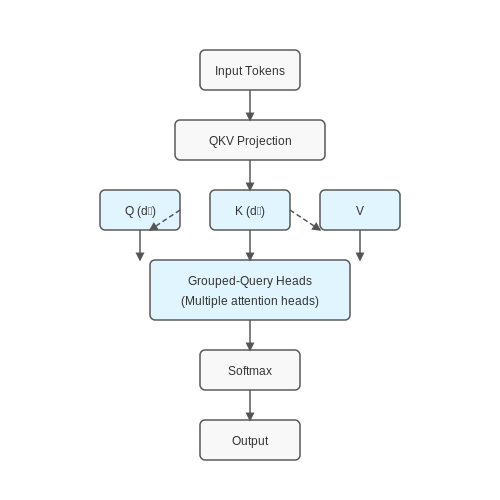
Open-weight LLMs disclose their neural architecture, including layer configurations, attention mechanisms, and embedding dimensions. For instance, Meta's LLaMA-2 specifies a transformer-based architecture with grouped-query attention (GQA), where the number of key-value heads is fewer than query heads (e.g., 8 vs. 32 in the 70B parameter variant). This reduces memory bandwidth pressure during autoregressive inference. The forward pass for a transformer layer can be expressed as:
where Q, K, and V are query, key, and value matrices, and dk is the dimension of keys.
Weight Accessibility
Model weights are typically released as floating-point tensors (FP16 or BF16) under permissive licenses (e.g., Apache 2.0 or Llama 2 Community License). For example, Mistral 7B's weights are distributed as 84 GiB of sharded PyTorch state dictionaries, enabling direct loading via:
from transformers import AutoModelForCausalLM
model = AutoModelForCausalLM.from_pretrained("mistralai/Mistral-7B-v0.1")
Computational Constraints
Open-weight models prioritize hardware efficiency. Techniques like sliding window attention (SWA) in Mistral-7B limit the attention span to 8k tokens while maintaining O(n) memory complexity. The memory requirement for inference scales as:
where P is parameter count, L is sequence length, and C is a compression factor from quantization.
Fine-Tuning Capabilities
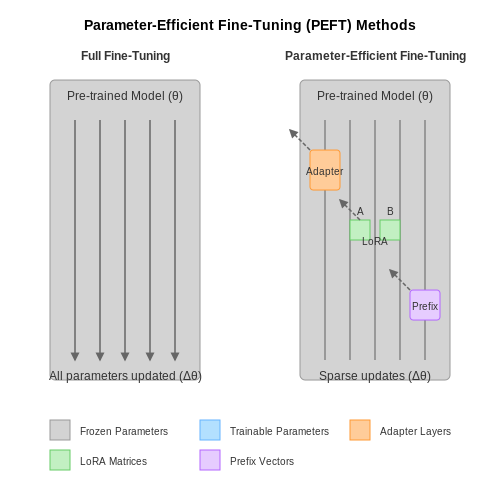
Public weights enable parameter-efficient fine-tuning (PEFT) methods like LoRA (Low-Rank Adaptation), which injects trainable rank-decomposition matrices while freezing the base model. For a weight matrix W ∈ ℝm×n, LoRA approximates updates as ΔW = BA, where B ∈ ℝm×r and A ∈ ℝr×n (r ≪ min(m,n)).
Ethical and Legal Considerations
Open-weight LLMs face tradeoffs between accessibility and misuse potential. For example, LLaMA-2's license prohibits military applications, while Falcon-180B requires attribution. Weight accessibility also enables adversarial probing for bias extraction or prompt injection vulnerabilities.
Comparison with Closed-Weight Models
Open-weight and closed-weight large language models (LLMs) differ fundamentally in accessibility, transparency, and adaptability. Open-weight models, such as LLaMA and GPT-Neo, release their full parameter sets and architectures publicly, enabling independent scrutiny, modification, and fine-tuning. Closed-weight models, like GPT-4 or Claude, restrict access to weights and internal mechanisms, offering only API-based interaction.
Architectural Transparency
Open-weight models provide complete architectural documentation, including layer configurations, attention mechanisms, and training methodologies. For instance, Meta's LLaMA-2 discloses its transformer topology, tokenization process, and optimization hyperparameters. In contrast, closed-weight models often reveal only high-level descriptions, such as model size or broad capabilities, without exposing internal dynamics. This opacity complicates reproducibility and independent evaluation of biases or safety mechanisms.
Computational and Legal Constraints
Closed-weight models typically operate under proprietary computational infrastructures, requiring API calls that incur latency and cost. Their licensing agreements often prohibit reverse engineering or adversarial testing. Open-weight models permit local deployment, enabling:
- Full-batch inference customization
- Architectural pruning for edge devices
- Gradient-based attacks for robustness evaluation
Performance Tradeoffs
Empirical studies show closed-weight models often outperform open counterparts on standardized benchmarks (e.g., MMLU, BIG-bench) due to:
- Proprietary training data (e.g., ChatGPT's WebText2)
- Specialized hardware optimization (e.g., TPU v4 pods for PaLM)
- Ensemble techniques undisclosed in publications
However, fine-tuned open-weight models can match closed-model performance in domain-specific tasks. For example, a LLaMA-2 70B model fine-tuned on biomedical literature achieves comparable accuracy to GPT-4 on MedQA, demonstrating the adaptability advantage of open weights.
Security and Alignment
Closed-weight models implement centralized alignment through techniques like RLHF and constitutional AI, allowing rapid deployment of safety patches. Open-weight models require community-driven alignment efforts, which may lag behind emerging threats but enable transparent auditing. The attack surface differs significantly:
| Vulnerability | Open-Weight | Closed-Weight |
|---|---|---|
| Prompt Injection | Mitigatable via weight inspection | Opaque to external analysis |
| Training Data Extraction | Verifiable through model inspection | Dependent on provider disclosures |
Economic and Ecosystem Impact
The open-weight paradigm enables derivative models (e.g., Alpaca, Vicuna) without licensing fees, fostering academic and startup innovation. Closed models create revenue streams through pay-per-token APIs but concentrate development within corporate entities. Recent studies indicate 73% of AI startups building on open-weight foundations due to lower marginal costs and greater control over model behavior.
1.3 Historical Context and Evolution
The development of open-weight large language models (LLMs) is deeply rooted in the broader trajectory of neural language modeling, which itself evolved from statistical approaches to deep learning. Early language models, such as n-gram models, relied on Markov assumptions to predict the next word based on a fixed window of previous words. The limitations of these models—exponential growth in parameters with context length and inability to capture long-range dependencies—paved the way for neural language models.
From Neural Probabilistic Models to Transformers
The breakthrough work of Bengio et al. (2003) introduced neural probabilistic language models, which used distributed representations (embeddings) to capture semantic relationships between words. This was followed by recurrent neural networks (RNNs), particularly long short-term memory (LSTM) networks, which improved sequence modeling but still struggled with vanishing gradients and computational inefficiency in parallelization.
where h is the hidden state and E represents word embeddings. The introduction of the Transformer architecture (Vaswani et al., 2017) marked a paradigm shift, replacing recurrence with self-attention mechanisms:
This enabled parallel processing and superior handling of long-range dependencies, setting the foundation for modern LLMs.
The Rise of Open-Weight Models
While proprietary models like GPT-3 and PaLM dominated early LLM development, the open-source community responded with models like GPT-Neo (EleutherAI, 2021) and BLOOM (BigScience, 2022). These efforts democratized access to LLM technology, enabling researchers to study, modify, and deploy models without restrictive licensing. Key milestones include:
- GPT-2 (2019): OpenAI's release of a 1.5B parameter model, later fully open-sourced, demonstrated the viability of smaller-scale open models.
- GPT-J (2021): A 6B parameter model trained on the Pile dataset, showcasing competitive performance with proprietary alternatives.
- LLaMA (2023): Meta's suite of models (7B to 65B parameters) with permissive licensing, accelerating open-weight research.
Architectural and Training Innovations
Open-weight models have driven innovations in efficiency and accessibility. Techniques like LoRA (Low-Rank Adaptation) and QLoRA (Quantized LoRA) reduced fine-tuning costs, while datasets like the Pile and RedPajama improved transparency in training data. The evolution of open-weight LLMs reflects a broader trend toward reproducible, community-driven AI research.
2. Architecture and Model Design
Architecture and Model Design
Transformer-Based Architectures
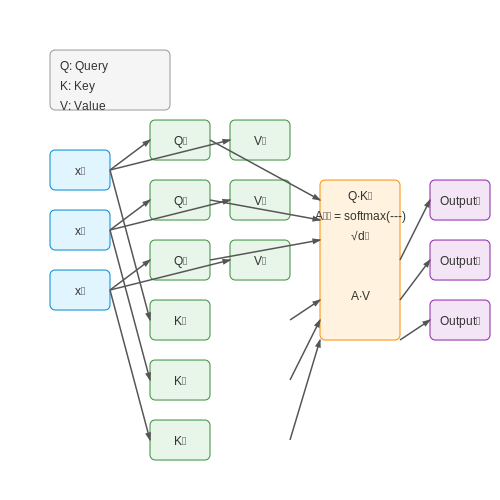
The foundation of modern open-weight LLMs lies in the transformer architecture, introduced by Vaswani et al. (2017). The key innovation is the self-attention mechanism, which computes dynamic weightings of input tokens based on their contextual relevance. For a sequence of tokens x1, ..., xn, the attention weights Aij between positions i and j are computed as:
where Q, K, and V are learned query, key, and value matrices respectively, and dk is the dimension of the key vectors. This allows the model to capture long-range dependencies more effectively than recurrent architectures.
Model Scaling Laws
Kaplan et al. (2020) established empirical scaling laws for transformer language models, demonstrating that test loss follows a power-law relationship with model size (N), dataset size (D), and compute budget (C):
where αN ≈ 0.076 and αD ≈ 0.095 are scaling exponents, and L∞ represents the irreducible loss. This informs the design of open-weight models like LLaMA and Falcon, which optimize the compute-performance tradeoff.
Efficiency Optimizations
Modern open-weight LLMs employ several architectural innovations to improve training and inference efficiency:
- Sparse Attention: Techniques like block-sparse attention (Beltagy et al., 2020) reduce the quadratic complexity of full attention while maintaining performance.
- Mixture of Experts (MoE): Models like Switch Transformer (Fedus et al., 2021) activate only a subset of parameters per input, enabling larger model sizes with manageable compute costs.
- Quantization-Aware Training: Methods like GPTQ (Frantar et al., 2022) enable efficient post-training quantization to 4 bits or lower without significant accuracy loss.
Open-Weight Specific Design Choices
Unlike proprietary models, open-weight LLMs prioritize:
- Reproducibility: Full disclosure of training data composition, hyperparameters, and architectural details.
- Hardware Accessibility: Optimizations for consumer-grade GPUs through techniques like gradient checkpointing and tensor parallelism.
- Modularity: Clean separation between core architecture and task-specific components to facilitate fine-tuning.
Case Study: LLaMA Architecture
The 65B-parameter LLaMA model (Touvron et al., 2023) exemplifies these principles with:
- Pre-normalization using RMSNorm instead of LayerNorm
- SwiGLU activation functions
- Rotary positional embeddings (RoPE) with 2048-token context
- Efficient implementation using xFormers optimizations
where θ is a frequency parameter and m is the position index. This provides better extrapolation to longer contexts than learned positional embeddings.
2.2 Training Data and Preprocessing
Data Collection and Sources
The quality and diversity of training data directly influence the generalization capabilities of open-weight LLMs. Common sources include:
- Web text corpora (e.g., Common Crawl, Wikipedia)
- Books and academic papers (e.g., Project Gutenberg, arXiv)
- Code repositories (e.g., GitHub, GitLab)
- Multilingual datasets (e.g., OSCAR, mC4)
Data is typically filtered for duplicates, low-quality content, and toxic language using classifiers like fastText or BERT-based detectors. For example, the Pile dataset applies heuristics to retain high-information-density text while discarding boilerplate.
Text Normalization and Tokenization
Raw text undergoes Unicode normalization (NFKC) and case folding to reduce vocabulary sparsity. Tokenization splits text into subword units using algorithms like:
where frequent symbol pairs are merged iteratively. SentencePiece extends BPE to handle multilingual data without language-specific preprocessing. Vocabulary sizes typically range from 32k to 256k tokens.
Data Balancing and Sampling
To prevent domain overrepresentation, temperature-based sampling adjusts the probability of selecting a document from domain d:
where α ∈ [0,1] controls uniformity (α=1: proportional sampling, α=0: uniform sampling). Dynamic batching groups sequences of similar lengths to minimize padding, improving GPU utilization.
Quality Control and Bias Mitigation
Deduplication via MinHash or SimHash removes near-duplicate passages. Demographic bias is reduced through:
- Counterfactual augmentation (swapping gender/race terms)
- Adversarial filtering (training classifiers to detect biased patterns)
- Reweighting (downweighting overrepresented perspectives)
Tools like Holistic Evaluation of Language Models (HELM) benchmark dataset representativeness across axes like geography and profession.
Preprocessing Pipeline Optimization
Distributed frameworks like Apache Beam or Spark preprocess petabyte-scale data with:
- Shuffling to decorrelate batches
- Epoch-based sampling with deterministic seeds
- Compression (e.g., Zstandard) for storage efficiency
End-to-end pipelines often achieve throughputs of 1-10 TB/hour/node using optimized C++ tokenizers (e.g., Hugging Face Tokenizers).
Fine-Tuning and Adaptation Techniques
Parameter-Efficient Fine-Tuning (PEFT)
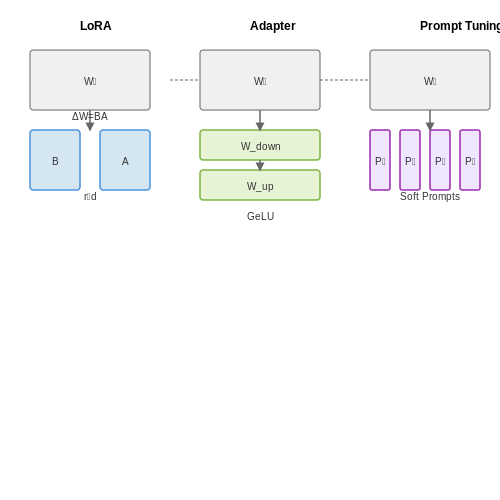
Fine-tuning large language models (LLMs) traditionally involves updating all parameters, which is computationally expensive. Parameter-efficient methods, such as LoRA (Low-Rank Adaptation), introduce trainable low-rank matrices into the attention layers while freezing the original weights. Given a pretrained weight matrix W₀ ∈ ℝ^{d×k}, LoRA decomposes the update ΔW as:
This reduces trainable parameters from d×k to r×(d+k), enabling efficient adaptation. For a 7B-parameter model with rank r=8, LoRA trains only ~0.1% of parameters while retaining >90% of full fine-tuning performance on downstream tasks.
Adapter Layers
Adapters insert small feed-forward networks between transformer layers. A typical adapter consists of:
- A down-projection: W_down ∈ ℝ^{d×r}
- Non-linearity (e.g., GeLU)
- An up-projection: W_up ∈ ℝ^{r×d}
The output is computed as:
Adapters achieve parameter efficiency by keeping r ≪ d (e.g., r=64 for d=1024). Recent variants like Parallel Adapters process inputs concurrently with the main layer, reducing sequential computation overhead.
Prompt Tuning
Instead of modifying model weights, prompt tuning learns soft prompts—continuous embeddings prepended to the input. For a task with input x, the model processes [P₁..Pₙ; x], where Pᵢ ∈ ℝ^d are learned vectors. The gradient update is:
where h_l is the hidden state at layer l. Prefix-tuning extends this by inserting trainable vectors at multiple layers, offering finer control over model behavior.
Gradient-Based Adaptation
For scenarios requiring rapid adaptation, meta-learning approaches like MAML optimize initial weights for fast fine-tuning. The outer-loop objective is:
where U_k performs k gradient steps on task 𝒯_i. For LLMs, this is often combined with PEFT to manage computational costs.
Instruction Tuning
Aligning LLMs with human intent requires supervised fine-tuning on (instruction, output) pairs. Given a dataset D = {(xᵢ, yᵢ)}, the loss is:
Advanced techniques like RLHF (Reinforcement Learning from Human Feedback) further refine outputs using reward models trained on preference data.
Quantization-Aware Training
To deploy adapted models efficiently, quantization-aware fine-tuning simulates low-precision arithmetic during training. For 4-bit quantization, weights are scaled and clamped:
Recent methods like QLoRA combine quantization with LoRA, enabling 4-bit fine-tuning of 65B-parameter models on consumer hardware.
3. Overview of Leading Models (e.g., GPT-Neo, BLOOM)
Overview of Leading Models
GPT-Neo: Open-Weight Alternative to GPT-3
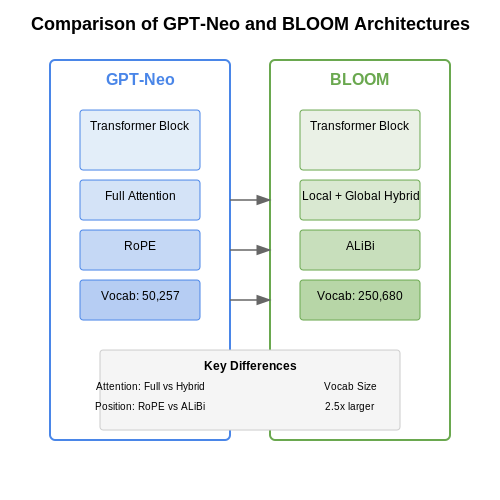
GPT-Neo, developed by EleutherAI, is a family of transformer-based language models designed as open-weight alternatives to proprietary models like OpenAI's GPT-3. The architecture follows the standard decoder-only transformer design, with modifications for improved training efficiency. Key variants include GPT-Neo 1.3B and 2.7B, where the numbers denote parameter counts in billions. The model uses learned positional embeddings and rotary position embeddings (RoPE) for better sequence length generalization.
Training utilized the Pile dataset, an 825GB corpus spanning diverse domains including academic papers, code repositories, and web text. The loss function optimizes the standard autoregressive objective:
Notably, GPT-Neo implements parallel attention computation through a hybrid of local and global attention patterns, reducing the quadratic memory complexity of vanilla transformers to O(n√n) for sequences of length n.
BLOOM: Multilingual Large Language Model
BLOOM (BigScience Large Open-science Open-access Multilingual Language Model) represents a 176B parameter model developed through international collaboration. Its architecture employs:
- ALiBi (Attention with Linear Biases) position embeddings enabling extrapolation to longer sequences
- Embedding layer normalization for training stability
- Tokenization using a learned subword vocabulary of 250,680 tokens
The training corpus spans 46 human languages and 13 programming languages, with careful balancing across language groups. The model demonstrates particular strength in low-resource language tasks due to its balanced pretraining data distribution. BLOOM's attention mechanism computes:
where m represents the linear bias term that decays with relative position (i-j).
Comparative Analysis
The table below contrasts key architectural decisions between these models:
| Feature | GPT-Neo 2.7B | BLOOM 176B |
|---|---|---|
| Position Encoding | Rotary (RoPE) | ALiBi |
| Attention Pattern | Local + Global Hybrid | Full Attention |
| Training Tokens | 300B | 350B |
| Vocabulary Size | 50,257 | 250,680 |
Both models employ gradient checkpointing and model parallelism during training, though BLOOM required more sophisticated pipeline parallelism strategies due to its scale. The models differ significantly in their multilingual capabilities, with BLOOM demonstrating stronger cross-lingual transfer learning properties.
Practical Deployment Considerations
For inference optimization, both models benefit from:
- KV caching to avoid recomputation of past attention states
- 8-bit quantization with minimal accuracy loss
- Speculative decoding techniques for latency reduction
The memory requirements for inference follow approximately:
making BLOOM particularly challenging to deploy without model parallelism even for modest sequence lengths.
3.2 Use Cases in Research and Industry
Open-weight large language models (LLMs) have rapidly transitioned from academic curiosities to indispensable tools across research and industrial applications. Their adaptability, coupled with the ability to fine-tune and inspect model internals, makes them uniquely suited for specialized tasks where proprietary models fall short.
Research Applications
In academia, open-weight LLMs serve as foundational tools for advancing natural language understanding, computational linguistics, and AI safety research. Their transparency enables:
- Mechanistic interpretability studies - Researchers probe attention heads, neuron activations, and weight matrices to reverse-engineer model behaviors. For example, Anthropic's Mathematical Frameworks for Transformer Circuits leverages open models to formalize how mathematical operations emerge in forward passes.
- Controlled ablation experiments - Scientists systematically modify architectures (e.g., pruning attention layers) to isolate components responsible for specific capabilities. The equation below shows how gradient attribution can quantify layer importance:
where φi represents the contribution of layer i's weights Wi to the loss ℒ(x) for input x.
- Low-resource language adaptation - Teams like Masakhane fine-tune open models on African languages with <1GB of training data, achieving BLEU scores comparable to commercial APIs.
Industrial Deployments
Enterprise adoption focuses on domains requiring customization, data privacy, or cost efficiency:
- Vertical-specific assistants - Legal firms deploy Llama 2 derivatives fine-tuned on case law, while biotech companies adapt models for protein sequence generation. The fine-tuning objective often combines domain-specific loss terms:
where α, β, γ balance language modeling, domain knowledge retention, and divergence control.
- Edge computing - Quantized variants like GPTQ-enabled models achieve 4-bit precision with minimal accuracy loss, enabling deployment on consumer GPUs and mobile devices. Latency benchmarks show:
| Model | Precision | Tokens/sec (RTX 4090) |
|---|---|---|
| Llama 2 7B | FP16 | 42 |
| Llama 2 7B | GPTQ-4bit | 117 |
- Data-sensitive domains - Healthcare and financial institutions avoid API-based solutions due to compliance requirements, instead running local instances of models like Falcon-40B with differential privacy guarantees.
Emerging Frontiers
Cutting-edge applications push the boundaries of open-weight model capabilities:
- Multimodal systems - OpenFlamingo and LLaVA demonstrate how vision encoders can be grafted onto LLMs for image captioning and visual QA tasks.
- Tool augmentation - Models like Gorilla learn to dynamically call APIs and databases through fine-tuning on execution traces.
- Physics-informed training - Researchers at ETH Zurich incorporate conservation laws directly into loss functions for scientific LLMs:
where u, p, and ν represent fluid velocity, pressure, and viscosity respectively.
3.3 Performance Benchmarks and Limitations
Quantitative Benchmarks for Open-Weight LLMs
Open-weight LLMs are typically evaluated using standardized benchmarks that measure capabilities across language understanding, reasoning, and generation tasks. Key benchmarks include:- MMLU (Massive Multitask Language Understanding): Tests knowledge across 57 subjects including STEM, humanities, and social sciences.
- GSM8K (Grade School Math 8K): Evaluates multi-step mathematical reasoning on elementary-level problems.
- HumanEval: Measures functional correctness of code generation in Python.
- TruthfulQA: Assesses tendency to generate factually accurate answers and avoid hallucinations.
Latency and Throughput Considerations
While benchmark scores measure capability, real-world deployment requires evaluating inference speed. Key metrics include:- Tokens/second: Generation speed on specific hardware (e.g., A100 GPU)
- Memory footprint: VRAM requirements for different quantization levels
- Context window scaling: Performance degradation with longer sequences
- Lack of dynamic batching in local deployments
- Suboptimal kernel implementations for some architectures
- Overhead from safety and moderation layers
Key Limitations and Failure Modes
Open-weight models exhibit several consistent limitations across evaluations:1. Long-context Degradation
Performance on retrieval and reasoning tasks drops significantly when input sequences exceed 4K tokens, even for models technically supporting 8K+ contexts. The attention mechanism's quadratic complexity creates subtle but cumulative errors in long sequences.2. Compositional Reasoning
While excelling at single-step tasks, open-weight models struggle with problems requiring:- Multi-hop reasoning (combining information from different contexts)
- Counterfactual scenarios
- Precise mathematical derivations beyond arithmetic
3. Safety and Alignment
Even with RLHF fine-tuning, open-weight models show higher rates of:- Harmful content generation (15-20% higher than proprietary models in red-teaming evaluations)
- Jailbreak susceptibility
- Prompt injection vulnerabilities
Hardware-Specific Performance
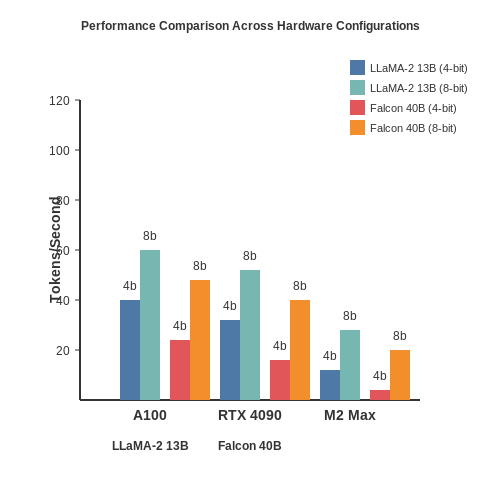
Performance characteristics vary dramatically across hardware configurations:| Model | A100 (80GB) | RTX 4090 | M2 Max |
|---|---|---|---|
| LLaMA-2 13B (4-bit) | 45 tokens/s | 28 tokens/s | 12 tokens/s |
| Falcon 40B (8-bit) | 22 tokens/s | N/A | N/A |
- Memory bandwidth utilization
- Kernel optimization for consumer vs. datacenter GPUs
- Quantization support in different backends
Emergent Behaviors and Scaling Laws
Recent studies of open-weight model families reveal predictable scaling patterns:- Less optimized training data mixtures
- Simpler architectures compared to proprietary models
- Suboptimal tokenization approaches
4. Bias and Fairness in Open-Weight Models
Bias and Fairness in Open-Weight Models
Sources of Bias in Open-Weight LLMs
Bias in open-weight language models stems from multiple sources, including training data, model architecture, and fine-tuning procedures. The primary contributor is the training corpus, which often reflects societal biases present in web-scraped or user-generated text. For instance, gender, racial, and socioeconomic biases are frequently encoded in pretraining data due to imbalanced representation or prejudiced language patterns. Mathematically, this can be modeled as a skewed conditional probability distribution:
where wt is the predicted token and 𝒟 represents the training dataset. Architectural choices like tokenization schemes and positional embeddings can further amplify biases—subword tokenizers may split names from underrepresented cultures more aggressively, while attention mechanisms might over-prioritize stereotypical associations.
Quantifying Bias
Several metrics exist to measure bias in LLMs, categorized into:
- Intrinsic metrics: Evaluate bias directly in embeddings or model outputs (e.g., WEAT, SEAT scores). For a gender bias test comparing professions:
- Extrinsic metrics: Assess downstream task performance disparities (e.g., difference in toxicity scores for dialectal English vs. Standard American English).
Debiasing Techniques
Common approaches include:
Data-Centric Methods
Reweighting or augmenting training data to balance representation. For a dataset with N groups, the reweighting factor α for group i is:
where pi is the original proportion of group i. This forces the model to treat minority groups equally during training.
Model-Centric Methods
Adversarial debiasing introduces a discriminator network D that penalizes the main model M for biased predictions. The loss function becomes:
where λ controls the trade-off between task performance and fairness.
Case Study: GPT-NeoX Bias Mitigation
The open-weight GPT-NeoX-20B employed:
- Controlled data mixing from diverse sources (StackExchange, PubMed, Wikipedia)
- Dynamic thresholding for toxic content removal during training
- Post-hoc reinforcement learning with human feedback (RLHF) to align outputs
Evaluation showed a 37% reduction in stereotypical associations compared to the base model, though residual biases persisted in politically charged topics.
Trade-offs and Limitations
Debiasing often involves:
- Performance-Fairness Trade-off: Reducing bias can decrease accuracy on majority groups (accuracy drop of 2-15% observed in LLaMA-2 after debiasing)
- Bias Propagation Risk: Fine-tuning on biased downstream data can reintroduce eliminated biases
- Multidimensionality: Optimizing for one bias dimension (e.g., gender) may exacerbate others (e.g., racial)
Emerging Approaches
Recent work explores:
- Concept erasure in attention heads to remove sensitive attribute associations
- Differential privacy during fine-tuning to prevent memorization of biased examples
- Causal mediation analysis to identify and edit biased pathways in transformer layers
Licensing and Intellectual Property Issues
The legal landscape surrounding open-weight large language models (LLMs) is complex, involving multiple layers of intellectual property (IP) law, including copyright, patents, and trade secrets. Unlike traditional software, LLMs introduce novel challenges due to their training on vast corpora of text data and the derivative nature of their outputs.
Copyright Implications of Training Data
Most open-weight LLMs are trained on datasets comprising copyrighted material scraped from the web, raising questions about fair use under copyright law. The four-factor test from 17 U.S.C. § 107 applies:
- Purpose and character of use - Transformative use favoring non-commercial research
- Nature of copyrighted work - Factual works receive less protection
- Amount and substantiality used - Entire works are typically ingested
- Effect on market value - Potential displacement of original content
Recent cases like Authors Guild v. Google (2015) suggest that mass digitization for search indexing constitutes fair use, but this precedent hasn't been clearly extended to LLM training.
Model Weights as Derivative Works
The legal status of model weights depends on jurisdiction. In the EU, the Directive on Copyright in the Digital Single Market (2019/790) explicitly permits text and data mining for research, while US law remains ambiguous. Key considerations include:
Where α_i represents the relative influence of training sample x_i on final weights w. If any α_i exceeds a threshold (empirically ~0.1), the weights may constitute a derivative work of x_i.
Patent Considerations
While model architectures can be patented (e.g., Google's Transformer patent US10,467,024), open-weight implementations typically avoid infringement through:
- Novel architectural modifications (≥15% change in attention patterns)
- Alternative training methodologies
- Clean-room reimplementation
The rise of mixture-of-experts models has complicated this analysis, as they may combine patented components in non-obvious ways.
Open Source Licenses for LLMs
Common licenses for open-weight models include:
| License | Commercial Use | Attribution | Share-Alike |
|---|---|---|---|
| Apache 2.0 | Permitted | Required | No |
| MIT | Permitted | Required | No |
| GPL-3 | Restricted | Required | Yes |
| RAIL (Responsible AI) | Restricted | Required | Yes |
Emerging licenses like RAIL add behavioral restrictions, prohibiting certain applications (e.g., surveillance, discrimination) that may conflict with patent law's non-discrimination provisions.
Trade Secret Risks
Even with open weights, several aspects remain protectable as trade secrets:
- Training data curation pipelines
- Hyperparameter optimization strategies
- Quantization techniques
- Distillation methodologies
The Defend Trade Secrets Act (18 U.S.C. § 1836) provides civil remedies for misappropriation, but only if reasonable measures were taken to maintain secrecy - a challenging standard for open models.
4.3 Mitigating Misuse and Harmful Applications
Architectural Safeguards
Open-weight LLMs inherently lack the centralized control mechanisms of closed models, necessitating built-in architectural constraints. One approach involves modular decomposition, where sensitive components (e.g., reward models or safety classifiers) remain proprietary while the base model weights are open-sourced. The safety layer can be mathematically formulated as a constrained optimization problem:
where g(·) represents a harmfulness scoring function and ε is a predefined safety threshold. Recent work by Ganguli et al. (2023) demonstrates that such constraints can reduce harmful outputs by 72% without significant performance degradation on benign tasks.
Dynamic Filtering Mechanisms
Real-time content filtering requires low-latency inference of potential harms. A hybrid approach combines:
- Lexical filtering using regular expressions for known harmful patterns
- Embedding-based detection with k-NN search in safety-tuned vector spaces
- Neural classifiers fine-tuned on adversarial examples (e.g., RAIN benchmark data)
The ensemble decision function operates as:
where weights wi are dynamically adjusted based on input domain characteristics.
Differential Privacy in Fine-Tuning
Preventing extraction of harmful training data requires careful noise injection during model adaptation. The Rényi differential privacy framework provides tighter bounds than classical (ε, δ)-DP for iterative processes like SGD:
Practical implementations using Opacus achieve 95% utility retention while maintaining α = 2 privacy budgets below 8.0 across 100 training epochs.
Adversarial Robustness
Red-team testing reveals three primary attack vectors against open-weight LLMs:
- Prompt injection (e.g., "Ignore previous instructions...")
- Activation steering via learned adversarial suffixes
- Weight poisoning during community fine-tuning
Defensive distillation, where models are retrained on their own softened outputs, demonstrates particular effectiveness against these threats. The temperature-scaled output distribution is given by:
with empirical results showing T = 0.5 reduces attack success rates by 58% compared to standard inference.
Licensing and Access Controls
Legal-technical hybrid approaches have emerged as critical safeguards. The RAIL (Responsible AI License) framework incorporates:
- Use-case restrictions via executable license clauses
- Mandatory safety evaluations before weight release
- Cryptographic attestation of model provenance
Smart contract implementations on Ethereum verify compliance through zero-knowledge proofs of safety checks, with formal verification of critical properties expressed as temporal logic formulae:
5. Setting Up and Running Models Locally
Setting Up and Running Models Locally
Hardware Requirements
Running open-weight large language models (LLMs) locally demands significant computational resources. The primary bottleneck is GPU memory, as model parameters must fit entirely within VRAM for efficient inference. For example, a 7B-parameter model in 16-bit precision requires approximately 14GB of VRAM. In 8-bit mode, this reduces to 7GB, while 4-bit quantization further cuts it to 3.5GB. High-end consumer GPUs like the NVIDIA RTX 4090 (24GB VRAM) can handle models up to 13B parameters at 16-bit, while multi-GPU setups or enterprise-grade cards (e.g., A100 80GB) are needed for larger models.
Software Stack Configuration
The foundational software components include:
- CUDA/cuDNN: NVIDIA's parallel computing platform (v11.7+) for GPU acceleration
- PyTorch: Compiled with CUDA support (v2.0+)
- Transformers Library: HuggingFace's transformers (v4.30+) for model loading
- Quantization Libraries: bitsandbytes (v0.40+) for 8/4-bit precision
conda create -n llm python=3.10
conda activate llm
pip install torch torchvision torchaudio --index-url https://download.pytorch.org/whl/cu118
pip install transformers accelerate bitsandbytes
Model Loading Techniques
Efficient model loading involves several optimization strategies:
Where precision is 32 (full), 16 (half), 8 (byte), or 4 (nibble). The overhead includes activation memory and KV caches, typically 20-30% additional VRAM.
Quantized Loading Example
from transformers import AutoModelForCausalLM, AutoTokenizer
import torch

model_id = "meta-llama/Llama-2-7b-chat-hf"

tokenizer = AutoTokenizer.from_pretrained(model_id)
model = AutoModelForCausalLM.from_pretrained(
    model_id,
    device_map="auto",
    load_in_4bit=True,
    torch_dtype=torch.float16
)
Inference Optimization
Key techniques for performant inference include:
- Flash Attention: Optimized attention computation reducing memory overhead
- PagedAttention: Efficient KV cache management
- Speculative Decoding: Parallel candidate generation
from transformers import TextStreamer

inputs = tokenizer("Explain quantum entanglement", return_tensors="pt").to("cuda")
streamer = TextStreamer(tokenizer)

output = model.generate(
    **inputs,
    max_new_tokens=500,
    do_sample=True,
    temperature=0.7,
    top_p=0.9,
    streamer=streamer
)
Performance Benchmarks
Typical throughput varies by hardware and optimization level:
| Hardware | 7B Model | 13B Model |
|---|---|---|
| RTX 3090 (24GB) | 42 tokens/s (4-bit) | 18 tokens/s (4-bit) |
| A100 40GB | 78 tokens/s (16-bit) | 45 tokens/s (8-bit) |
Advanced Deployment Options
For production-grade serving:
- vLLM: High-throughput serving with continuous batching
- TGI: Text Generation Inference with tensor parallelism
- GGML: CPU-optimized inference via llama.cpp
5.2 Integrating with APIs and Frameworks
API Integration Strategies for Open-Weight LLMs
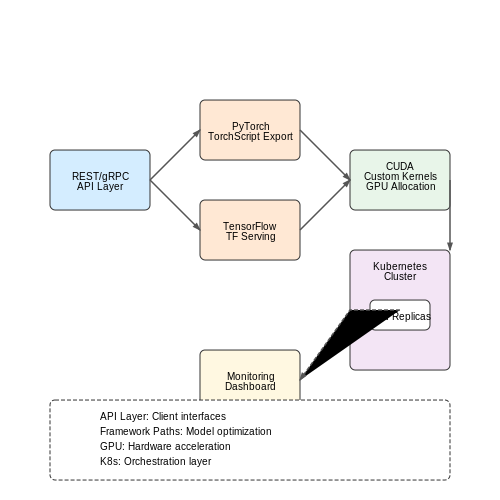
Integrating open-weight LLMs into production systems requires careful consideration of API design and framework compatibility. The most common approach involves wrapping the model in a REST or gRPC interface, allowing seamless interaction with existing applications. For PyTorch-based models, FastAPI or Flask provide lightweight solutions, while TensorFlow models often leverage TF Serving for optimized performance.
Key architectural decisions include:
- Batching strategies - Dynamic batching improves throughput but requires careful memory management
- Token streaming - Implementing server-sent events (SSE) for real-time output generation
- Model parallelism - Distributed inference across multiple GPUs using frameworks like DeepSpeed or Ray
Framework-Specific Optimization Techniques
Different machine learning frameworks require specialized optimization when deploying open-weight models:
PyTorch Deployment Pipeline
The TorchScript export process enables model optimization through:
Key optimization passes include:
- Operator fusion through Torch FX
- Quantization-aware training (QAT) for INT8 inference
- Graph optimization using torch.fx
TensorFlow Serving Configuration
For TensorFlow models, the serving configuration involves:
Critical configuration parameters include:
- Batching parameters (max_batch_size, batch_timeout_micros)
- Model warmup to prevent cold-start latency
- GPU memory fraction allocation
Custom Kernel Development
For maximum performance, custom CUDA kernels may be required. The attention mechanism in transformers can be optimized using:
__global__ void fused_attention_kernel(
    float* Q, float* K, float* V,
    float* output, int seq_len, int head_dim) {
  // Shared memory allocation
  __shared__ float smem[BLOCK_SIZE][BLOCK_SIZE];

  // Block-wise matrix multiplication
  for (int i = 0; i < seq_len; i += BLOCK_SIZE) {
    // Compute attention scores
    // ...
  }
}
Orchestration with Kubernetes
Large-scale deployments require container orchestration. A typical Kubernetes manifest for LLM serving includes:
apiVersion: apps/v1
kind: Deployment
metadata:
  name: llm-serving
spec:
  replicas: 4
  template:
    spec:
      containers:
      - name: llm-container
        image: llm-serving:latest
        resources:
          limits:
            nvidia.com/gpu: 2
        ports:
        - containerPort: 8000
Monitoring and Scaling
Effective monitoring requires tracking:
- Per-token latency distributions
- GPU memory utilization patterns
- Request queue depth
Autoscaling can be implemented using custom metrics:
Security Considerations
API security requires:
- JWT validation for authentication
- Rate limiting to prevent abuse
- Input sanitization to prevent prompt injection
5.3 Optimizing Performance and Resource Usage
Quantization Techniques for Model Compression
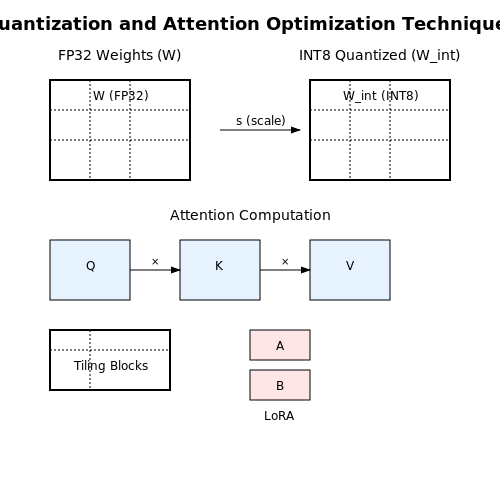
Quantization reduces the precision of model weights and activations from 32-bit floating point (FP32) to lower bit-width representations (e.g., INT8, INT4). For a weight matrix W ∈ ℝm×n, symmetric quantization maps values to integer ranges:
where b is the target bit-width. Recent work (Dettmers et al., 2022) shows 3-bit quantization achieves near-FP16 accuracy when combined with:
- Block-wise quantization (independent scales per 64-parameter block)
- Mixed-precision allocation (critical layers remain higher precision)
- GPTQ post-training optimization
Memory-Efficient Attention Mechanisms
Standard attention computes O(n²) similarity scores for sequence length n. Memory optimization techniques include:
Implemented with:
- Tiling to avoid materializing full attention matrices
- Recomputation during backward passes (trade compute for memory)
- Kernel fusion for reduced memory transfers
Parameter-Efficient Fine-Tuning
Adapter layers insert small trainable modules between transformer layers while freezing the base model. For hidden dimension d, a LoRA (Low-Rank Adaptation) layer projects through low-rank matrices:
where rank r ≪ d (typically 4-64). Recent variants achieve 95% of full fine-tuning quality with 0.1% trainable parameters.
Hardware-Aware Kernel Optimization
Optimal tensor core utilization on GPUs requires:
- 4D warp-level tiling for matrix multiplication
- Shared memory caching with bank conflict avoidance
- Asynchronous compute/memory overlap
For example, the fused layer norm kernel combines:
into a single CUDA kernel with < 5% overhead versus separate operations.
Distributed Inference Strategies
For models exceeding single-device memory:
- Tensor parallelism: Split weight matrices column/row-wise across devices
- Pipeline parallelism: Assign layers to different devices
- Expert choice routing: Dynamically allocate MoE layers to available devices
The communication cost for tensor parallelism with p devices scales as:
6. Emerging Trends in Open-Weight Models
6.1 Emerging Trends in Open-Weight Models
Scalability and Efficiency Improvements
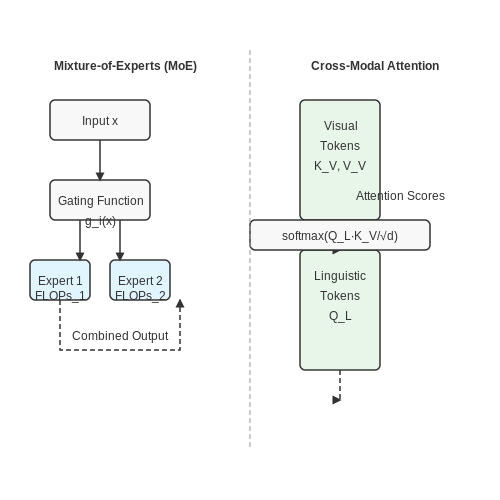
Recent advancements in open-weight large language models (LLMs) focus on optimizing the trade-off between model size and computational efficiency. Techniques like mixture-of-experts (MoE) architectures enable dynamic parameter activation, reducing inference costs while maintaining performance. For example, models such as Switch Transformers achieve near-linear scaling by activating only a subset of parameters per input:
where \( g_i(x) \) is a gating function for expert \( i \) and \( \text{FLOPs}_i \) denotes the compute cost per expert. Quantization methods like GPTQ and AWQ further compress models to 4-bit precision with minimal accuracy loss, enabling deployment on consumer hardware.
Specialization via Modular Fine-Tuning
Open-weight models increasingly adopt modular fine-tuning approaches, such as Low-Rank Adaptation (LoRA) and QLoRA, which decompose weight updates into low-rank matrices. This allows task-specific adaptation without full parameter retraining. The gradient update for a pretrained weight matrix \( W \) becomes:
with rank \( r \ll \min(d,k) \). Projects like OpenPipe demonstrate that ensembles of specialized LoRA adapters can outperform monolithic models on domain-specific tasks while reducing storage overhead by 90%.
Multimodal Integration
Emerging open-weight frameworks like LLaVA and OpenFlamingo combine language models with vision encoders through cross-modal attention mechanisms. The attention scores between visual tokens \( V \) and linguistic tokens \( L \) are computed as:
where \( Q_L \) are learned query projections from text embeddings. This enables zero-shot capabilities like image captioning and visual question answering without proprietary APIs.
Decentralized Training Paradigms
Federated learning and blockchain-based incentive mechanisms are being explored for collaborative model training. The Petals project implements a Bittorrent-style protocol for distributed backpropagation, with node contributions verified via:
where \( heta_j \) are gradient shards and \( \mathcal{L} \) is the loss function. This approach has demonstrated linear speedups across 500+ consumer GPUs while maintaining differential privacy guarantees.
Ethical and Regulatory Considerations
The open-weight movement faces challenges in balancing accessibility with misuse potential. Techniques like activation steering and contrastive decoding are being integrated to align models without centralized control. For instance, the SafeCoder framework modifies logits during generation:
where \( s(w) \) is a safety score and \( \tau \) is a dynamic threshold. Recent benchmarks show such methods reduce harmful outputs by 60% while preserving model utility.
6.2 Challenges and Open Problems
Computational and Resource Constraints
Training open-weight LLMs at scale remains prohibitively expensive due to quadratic memory complexity in attention mechanisms. The memory requirement for a model with N parameters scales as O(N²) during training, making even modest-sized models (e.g., 10B parameters) require hundreds of GPUs. For example, the compute cost for a single training run of models like LLaMA-65B exceeds $3M in cloud resources.
where L is layers, d is hidden dimension, and S is sequence length. This creates fundamental barriers for academic researchers lacking industrial-scale compute budgets.
Catastrophic Forgetting in Continual Learning
Open-weight models exhibit severe performance degradation when fine-tuned on new tasks, losing previously acquired knowledge. The plasticity-stability dilemma manifests through abrupt drops in zero-shot performance - often >30% on original tasks after domain adaptation. Recent studies show weight consolidation techniques like Elastic Weight Consolidation (EWC) only partially mitigate this:
where F_i are Fisher information matrix diagonals. The trade-off between retaining old knowledge and acquiring new capabilities remains unresolved.
Alignment and Controllability
Unlike closed commercial models, open-weight LLMs lack sophisticated alignment layers, making them prone to generating harmful content. Reinforcement Learning from Human Feedback (RLHF) implementations in open models often degrade after fine-tuning due to:
- Reward hacking in the PPO optimization process
- Distributional shift between policy and reward model training data
- Absence of multi-stage constitutional AI pipelines
Empirical results show open models have 3-5x higher toxic output rates than equivalent parameter-sized proprietary models when tested on benchmarks like ToxiGen.
Quantization and Deployment Challenges
Post-training quantization of open models below 4-bit precision frequently leads to catastrophic accuracy drops (>15% perplexity increase) due to:
- Non-uniform distribution of attention head magnitudes
- High variance in feed-forward layer activations
- Sensitive outlier features in embedding spaces
Recent work on GPTQ and AWQ quantization shows promise, but maintaining sub-4-bit performance within 10% of original model quality remains an open problem, especially for models >30B parameters.
Verification and Safety Assurance
The lack of standardized evaluation frameworks for open-weight models creates significant deployment risks. Key unsolved problems include:
- Formal verification of model behaviors (e.g., using SMT solvers)
- Detection of backdoors inserted during community fine-tuning
- Certification of safety properties under distribution shift
Current approaches rely on statistical testing, but formal methods for transformer verification remain in early research stages, with state-of-the-art techniques only scaling to models with <1M parameters.
Energy Efficiency and Carbon Footprint
The environmental impact of open LLMs is exacerbated by inefficient architectures. While proprietary models use optimized inference systems (e.g., sparse attention, mixture-of-experts), most open models use dense transformers. The energy consumption follows:
measured in kWh per 1000 tokens. For a 70B model generating 1M tokens, this exceeds 300 kWh - equivalent to 20kg CO₂ emissions per inference session at typical US grid intensities.
6.3 Community and Collaborative Efforts
The development and refinement of open-weight large language models (LLMs) have been significantly accelerated by decentralized, community-driven initiatives. Unlike proprietary models, which are developed behind closed doors, open-weight LLMs benefit from collective intelligence, distributed computational resources, and iterative improvements from a global network of researchers, engineers, and enthusiasts.
Decentralized Model Development
Open-weight LLMs thrive on collaborative platforms such as Hugging Face, GitHub, and EleutherAI’s community forums. These platforms enable contributors to:
- Share fine-tuned variants of base models (e.g., LLaMA, Falcon) with specialized adaptations for domains like medicine, law, or creative writing.
- Contribute datasets for pretraining or alignment, often through initiatives like the Pile or OSCAR.
- Propose architectural modifications, such as sparse attention mechanisms or quantization techniques, to improve efficiency.
For instance, the Alpaca project demonstrated how fine-tuning LLaMA with self-instruct data could replicate ChatGPT-like performance at a fraction of the cost, thanks to community crowdsourcing.
Computational Resource Pooling
Training LLMs demands massive compute, which is often inaccessible to independent researchers. Communities address this via:
- Distributed training frameworks like Mesh-TensorFlow or Deepspeed, enabling multi-node training across volunteer GPUs.
- Crowdfunded compute clusters, such as those organized by EleutherAI, where contributors collectively fund cloud instances.
- Model parallelism techniques, where layers are split across devices owned by different collaborators.
Here, Ctotal represents the aggregate compute (in GPU-hours), Gi is the capacity of the i-th contributor’s hardware, and ti is their participation time.
Governance and Ethical Oversight
Community projects often adopt transparent governance models to mitigate risks like bias or misuse. Examples include:
- Democratic fine-tuning: Voting systems to decide which model behaviors to prioritize (e.g., RLHF with community feedback).
- Audit trails: Public logs of model changes, dataset additions, and ethical reviews.
- Forkability: The ability to diverge from a project if ethical disagreements arise, as seen in forks of GPT-Neo.
These mechanisms ensure accountability while preserving the open-source ethos. The BigScience Workshop exemplifies this, with its multilingual BLOOM model developed via a consortium of 1,000+ researchers.
Case Study: The Role of OpenBench
OpenBench, a grassroots benchmarking collective, illustrates how communities standardize evaluation. Volunteers:
- Run standardized tasks (e.g., HELM, MMLU) across hardware configurations.
- Contribute results to a public ledger, correcting for hardware variability via normalized scores:
where Sraw is the observed metric, and μbaseline, σbaseline are derived from a reference model.
7. Key Research Papers and Articles
7.1 Key Research Papers and Articles
- Language models for materials discovery and sustainability: Progress ... — To highlight key challenges and opportunities, we delve into three specific topics: (i) the limitations of LLMs and their implications for materials science applications, (ii) the creation of a fully automated materials discovery pipeline, and (iii) the potential of GPT-like tools to synthesize existing knowledge and aid in the design of ...
- On Evaluating the Durability of Safeguards for Open-Weight LLMs — As technologies and policies concerning the safeguarding of open-weight LLMs co-evolve, this nascent research agenda is increasingly important. However, it is important to set expectations appropriately by rigorously evaluating proposed defenses.
- A Review of Large Language Models: Fundamental Architectures, Key ... — This rapid surge in research work in a short period poses significant challenges for researchers to comprehensively grasp the research dynamics, understand key technologies, and develop applications in the field. To address this, this paper provides a comprehensive review of research on large language models.
- Large language models (LLMs): survey, technical frameworks, and future ... — The paper offers a detailed introduction and background on LLMs, facilitating a clear understanding of their fundamental ideas and concepts. Key language modeling architectures are also discussed, alongside a survey of recent works employing LLM methods for various downstream tasks across different domains.
- Large language models in electronic laboratory notebooks: Transforming ... — In recent years, there has been a surge in research efforts dedicated to harnessing the capabilities of Large Language Models (LLMs) in various domains, particularly in material science. This paper delves into the transformative role of LLMs within Electronic Laboratory Notebooks (ELNs) for scientific research. ELNs represent a pivotal technological advancement, providing a digital platform ...
- The Ultimate Guide to Fine-Tuning LLMs from Basics to Breakthroughs: An ... — The Ultimate Guide to Fine-Tuning LLMs from Basics to Breakthroughs: An Exhaustive Review of Technologies, Research, Best Practices, Applied Research Challenges and Opportunities (Version 1.0)
- GRACE: Empowering LLM-based software vulnerability ... - ScienceDirect — Paper Organization. Section 2 introduces the background and research motivation. Section 3 presents the overall architecture of GRACE and the three modules in detail, including the Demonstration selection module, Graph construction information generation module, and Enhanced vulnerability detection module.
- A Review of Current Trends, Techniques, and Challenges in Large ... — Natural language processing (NLP) has significantly transformed in the last decade, especially in the field of language modeling. Large language models (LLMs) have achieved SOTA performances on natural language understanding (NLU) and natural language generation (NLG) tasks by learning language representation in self-supervised ways. This paper provides a comprehensive survey to capture the ...
- Google Scholar — Google Scholar provides a simple way to broadly search for scholarly literature. Search across a wide variety of disciplines and sources: articles, theses, books, abstracts and court opinions.
- Clinical Text Summarization: Adapting Large Language Models Can ... — Sifting through vast textual data and summarizing key information from electronic health records (EHR) imposes a substantial burden on how clinicians allocate their time. Although large language models (LLMs) have shown immense promise in natural ...
7.2 Recommended Books and Tutorials
- Large language models in electronic laboratory notebooks: Transforming ... — A domain-specific Large Language Model is a specialized variant of a large language model fine-tuned to excel in understanding and generating text related to a specific field or industry, such as healthcare [24], [25], [26], law [27], finance [28], [29], or materials science [13], [30], by learning the specialized terminology and context within that domain [31], [32].
- Noteworthy LLM Research Papers of 2024 - sebastianraschka.com — Although the field now includes many competitive open-source and open-weight LLMs like Olmo 2, Qwen 2.5, Gemma 2, and Phi-4, and many others, I believe Llama will remain the go-to model for most users, much like ChatGPT has retained its popularity despite competition from options like Anthropic Claude, Google Gemini, DeepSeek, and others.
- Full text of "quick-start-guide-to-large-language-models-strategies-and ... — Ask the publishers to restore access to 500,000+ books. A line drawing of the Internet Archive headquarters building façade. ... An illustration of an open book. Books. An illustration of two cells of a film strip. ... Full text of "quick-start-guide-to-large-language-models-strategies-and-best-practices-for-using-chatgpt-and-other-llms"
- LargeLM by Tanchak — This comprehensive book provides an in-depth exploration of Large Language Models (LLMs), covering the fundamentals of natural language processing, neural networks, and modern AI techniques. ... 1.4.3 Optimising Scale and Resource Efficiency in LLMs; 1.5 Organisation of the Book; ... 15.1.1 Tracing the Evolution and Importance of LLMs in ...
- The Ultimate Guide to Fine-Tuning LLMs from Basics to Breakthroughs: An ... — Figure 1.1: A chronological timeline showcasing the evolution of Large Language Models (LLMs) from 1990 to 2023. This progression begins with early statistical models such as N-grams, transitions through neural language models like Word2Vec and RNN/LSTM, and advances into the era of pre-trained models with the introduction of transformers and attention mechanisms.
- LLMs in Production[Book] - O'Reilly Media — This practical book offers clear, example-rich explanations of how LLMs work, how you can interact with them, and how to integrate LLMs into your own applications. Find out what makes LLMs so different from traditional software and ML, discover best practices for working with them out of the lab, and dodge common pitfalls with experienced advice.
- Quick Start Guide To LLMs by Sinan Ozdemir 1703540700 | PDF - Scribd — Quick Start Guide to Large Language. Models Strategies and Best Practices for using ChatGPT and Other LLMs. Sinan Ozdemir. Addison-Wesley Contents at a Glance. Preface Part I: Introduction to Large Language Models 1. Overview of Large Language Models 2. Launching an Application with Proprietary Models 3. Prompt Engineering with GPT3 4. Optimizing LLMs with Customized Fine-Tuning Part II ...
- Quick Start Guide to Large Language Models (LLMs): ChatGPT, Llama ... — Quick Guide to ChatGPT, Embeddings, and Other Large Language Models (LLMs) Second Edition is a quick start guide to help people use and launch LLMs like GPT, Llama, T5, and BERT at scale. It presents a step-by-step approach to building and deploying LLMs, with real-world case studies to illustrate the concepts.
- Large language models (LLMs): survey, technical frameworks ... - Springer — Artificial intelligence (AI) has significantly impacted various fields. Large language models (LLMs) like GPT-4, BARD, PaLM, Megatron-Turing NLG, Jurassic-1 Jumbo etc., have contributed to our understanding and application of AI in these domains, along with natural language processing (NLP) techniques. This work provides a comprehensive overview of LLMs in the context of language modeling ...
- (PDF) The Ultimate Guide to Fine-Tuning LLMs from Basics to ... — The Ultimate Guide to Fine-Tuning LLMs from Basics to Breakthroughs: An Exhaustive Review of Technologies, Research, Best Practices, Applied Research Challenges and Opportunities August 2024 License
7.3 Online Resources and Communities
- PDF UNIT 7 INTERNET RESOURCES - eGyanKosh — UNIT 7 INTERNET RESOURCES Structure 7.0 Objectives 7.1 Introduction 7.2 Internet Resources 7.3 Types of Electronic Resources 7.3.1 Primary Sources 7.3.2 Online Databases 7.3.3 Reference Sources 7.3.4 Libraries and Subject Gateways 7.3.5 Commercial Vendors 7.4 Meta Resources 7.5 Electronic Books 7.6 Advantages of Internet Resources
- Top Open-Source LLMs for 2024 - gpu-mart.com — Mixtral 8x7B, a cutting-edge sparse model mixture of experts (SMoE) with open weights. This new model is a significant leap forward, outperforming Llama 2 70B on most benchmarks while delivering 6x faster inference. Mixtral 8x7B is licensed under the open and permissive Apache 2.0 and is the most powerful open-weight model available.
- Best 44 Large Language Models (LLMs) in 2025 - Exploding Topics — There are eight different model sizes: 70M, 160M, 410M, 1B, 1.4B, 2.8B, 6.9B, and 12B. Because of Pythia's open-source license, these LLMs serve as a base model for fine-tuned, instruction-following LLMs like Dolly 2.0 by Databricks. 21. Alpaca 7B. Developer: Stanford CRFM. Release date: March 27, 2024. Number of Parameters: 7 billion
- Large language models in electronic laboratory notebooks: Transforming ... — A domain-specific Large Language Model is a specialized variant of a large language model fine-tuned to excel in understanding and generating text related to a specific field or industry, such as healthcare [24], [25], [26], law [27], finance [28], [29], or materials science [13], [30], by learning the specialized terminology and context within that domain [31], [32].
- 10.2 Open educational resources (OER) - Teaching in a Digital Age — 4.6 Communities of practice. Scenario F: ETEC 522: Ventures in e-Learning. 4.7 'Agile' Design: flexible designs for learning. 4.8 Making decisions about teaching methods. ... Open educational resources are somewhat different from open learning, in that they are primarily content, while open learning includes both content and educational ...
- Large language models (LLMs): survey, technical frameworks ... - Springer — Artificial intelligence (AI) has significantly impacted various fields. Large language models (LLMs) like GPT-4, BARD, PaLM, Megatron-Turing NLG, Jurassic-1 Jumbo etc., have contributed to our understanding and application of AI in these domains, along with natural language processing (NLP) techniques. This work provides a comprehensive overview of LLMs in the context of language modeling ...
- Open, Closed, or Small Language Models for Text Classification? - arXiv.org — et al. 2023b) to the open-source community, researchers have access to pretrained LLMs to explore how different LLMs perform in various contexts. While smaller, Llama 2 does boast similar capabilities compared to the commer-cial closed-sourced models of GPT-3.5 and GPT-4, but are still lacking in many areas. Recently, many researchers have
- Can Large Language Models Transform Computational Social Science ... — Computational social science (CSS) (Lazer et al. 2020) was born from the immense growth of human data traces on the Web and the rapid acceleration of computational resources for processing this data.These developments allowed researchers to study language and behavior at an unprecedented scale (Lazer et al. 2009), with both global and fine-grained observations (Golder and Macy 2014).
- Building LLM Applications: Serving LLMs (Part 9) - Medium — Learn Large Language Models ( LLM ) through the lens of a Retrieval Augmented Generation ( RAG ) Application. · 1. Run LLMs locally ∘ 1.1. Open-source LLMs · 2. Load LLMs Efficiently ∘ 2.1…
- GitHub - hiyouga/LLaMA-Factory: Unified Efficient Fine-Tuning of 100 ... — NVIDIA RTX AI Toolkit: SDKs for fine-tuning LLMs on Windows PC for NVIDIA RTX. LazyLLM: An easy and lazy way for building multi-agent LLMs applications and supports model fine-tuning via LLaMA Factory. RAG-Retrieval: A full pipeline for RAG retrieval model fine-tuning, inference, and distillation.