LLMs as Research Assistants
1. Literature Review and Summarization
Literature Review and Summarization
for advanced readers:Automated Literature Search and Retrieval
Large language models (LLMs) can significantly accelerate literature searches by parsing structured queries into optimized database API calls. For instance, when querying PubMed or arXiv, an LLM can decompose a broad research question into precise keyword combinations using Boolean logic. Consider a search for "recent advancements in quantum machine learning". The LLM might generate the following semantic expansion:
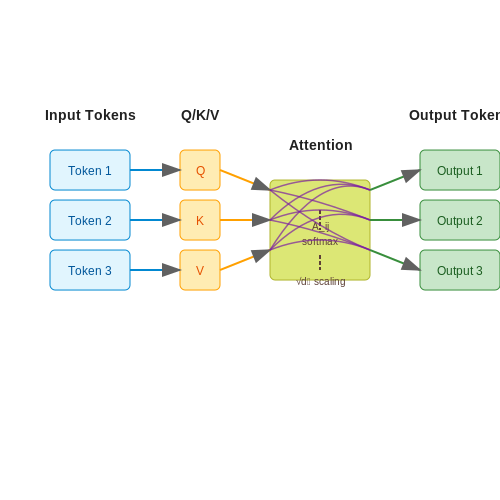
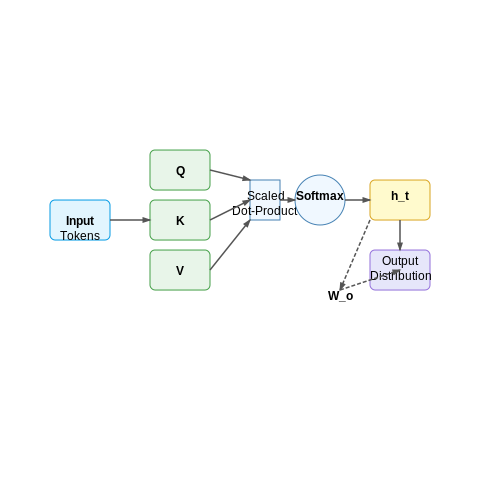
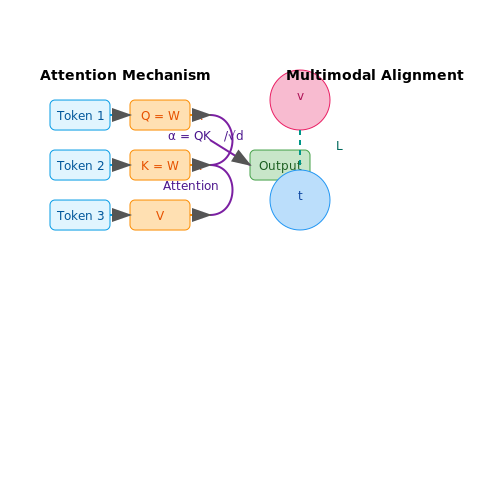
Transformer-based models like GPT-4 achieve this through attention mechanisms that weight domain-specific terms. The attention score $$A_{ij}$$ between query term $$i$$ and database metadata field $$j$$ is computed as:
where $$Q$$ and $$K$$ are learned query and key matrices, and $$d_k$$ is the dimension of key vectors. This allows dynamic prioritization of fields like title over abstract when precision is critical.
Multi-Document Summarization Techniques
For summarizing retrieved papers, LLMs employ hierarchical attention networks. First, sentence-level embeddings $$h_s$$ are generated via BERT-style encoders:
These are aggregated into document-level representations $$h_d$$ using position-aware pooling:
Cross-document relationships are then modeled through graph attention networks (GATs), with edges weighted by citation links and semantic similarity. The final summary attends to nodes with highest betweenness centrality in this knowledge graph.
Critical Analysis and Gap Identification
Advanced LLMs can perform comparative analysis across papers by constructing latent space projections. Using t-SNE or UMAP, embeddings of key claims are visualized to identify:
- Dense clusters indicating consensus views
- Outlier points representing controversial findings
- Sparse regions highlighting underexplored areas
The model quantifies research gaps using entropy-based metrics over concept distributions $$p(c|D)$$ across document sets $$D$$:
where $$N_D$$ is the number of documents. Values approaching 1 indicate poorly covered concepts.
Citation Graph Analysis
LLMs enhance traditional citation analysis by:
- Detecting conceptual citations (mentioning ideas without formal references)
- Classifying citation purposes (critique, support, or methodological adoption) using fine-grained NLP
- Predicting future citation trajectories via graph neural networks
The citation influence $$I_i$$ of paper $$i$$ is modeled as:
where $$\lambda$$ balances network structure and semantic relevance to the target paper $$j$$.
Automated Systematic Review Generation
State-of-the-art pipelines combine:
- PRISMA-style filtering with neural classifiers
- Contradiction detection using NLI models
- Evidence strength assessment via Bayesian networks
The conclusion robustness score $$R$$ incorporates effect sizes $$\beta$$, sample sizes $$n$$, and p-values:
where $$\sigma^2_{\beta}$$ is the variance of effects across studies. This allows automated grading of evidence quality.

Data Extraction and Analysis
Structured Data Extraction with LLMs
Large Language Models (LLMs) can parse unstructured text into structured formats such as JSON, CSV, or relational databases. Given a research paper, an LLM can extract key entities like authors, methodologies, results, and citations. For example, GPT-4 with a properly engineered prompt can convert a PDF research paper into structured metadata:
Advanced techniques involve fine-tuning LLMs on domain-specific datasets to improve precision. For instance, BioBERT, a BERT variant fine-tuned on biomedical literature, achieves higher accuracy in extracting gene-protein interactions than general-purpose models.
Semantic Analysis and Topic Modeling
LLMs enable latent semantic analysis (LSA) and dynamic topic modeling by leveraging transformer-based embeddings. Given a corpus of research papers, an LLM can:
- Cluster documents by semantic similarity using cosine distance in embedding space.
- Generate topic distributions via probabilistic models like Latent Dirichlet Allocation (LDA).
- Track temporal shifts in research trends using dynamic topic modeling.
where \(\mathbf{v}_i\) and \(\mathbf{v}_j\) are document embeddings from an LLM like SciBERT.
Quantitative Data Synthesis
For meta-analyses, LLMs can aggregate numerical results across studies. Given a set of papers with conflicting findings, an LLM can:
- Extract effect sizes, confidence intervals, and p-values.
- Perform statistical reconciliation using fixed-effects or random-effects models.
- Generate forest plots programmatically.
where \(y_i\) and \(\sigma_i\) are the effect size and standard error from the \(i\)-th study.
Bias and Uncertainty Quantification
LLMs can assess publication bias by analyzing funnel plot asymmetry or performing Egger’s regression:
Uncertainty in extracted data is quantified via Monte Carlo dropout during inference, providing confidence intervals for LLM-generated extractions.
Hypothesis Generation and Testing
Leveraging LLMs for Hypothesis Formulation
Large language models (LLMs) can generate plausible hypotheses by synthesizing patterns from vast scientific literature. Given a research question, an LLM can propose multiple candidate hypotheses by conditioning on domain-specific knowledge. For example, when prompted with "Generate testable hypotheses about the relationship between sleep deprivation and cognitive performance," an advanced model like GPT-4 might output:
- Linear decline hypothesis: Cognitive performance decreases proportionally with each hour of sleep deprivation.
- Threshold hypothesis: Cognitive deficits only manifest after ≥4 hours of sleep loss.
- Domain-specific hypothesis: Executive functions are more impaired than procedural memory under sleep deprivation.
Bayesian Framework for Hypothesis Evaluation
LLMs can quantify hypothesis plausibility using Bayesian reasoning. Given prior probabilities from literature and observed data, the posterior probability of hypothesis H is:
Where:
- P(H) is the prior probability of the hypothesis
- P(D|H) is the likelihood of observing data D if H is true
- P(D) is the marginal probability of the data
Automated Hypothesis Testing Pipelines
Modern implementations combine LLMs with statistical packages to create end-to-end testing workflows:
import numpy as np
from scipy import stats

def bayesian_hypothesis_test(data, prior, likelihood_fn):
    # Calculate marginal probability
    marginal = sum(likelihood_fn(data, h)*p for h,p in prior.items())

    # Compute posteriors
    posterior = {h: likelihood_fn(data, h)*p/marginal
                for h,p in prior.items()}

    return posterior

# Example usage:
prior = {'H1': 0.6, 'H2': 0.4}
data = np.random.normal(loc=0.5, scale=1, size=100)
likelihood = lambda d, h: stats.norm.pdf(d, loc=0.5 if h=='H1' else 0, scale=1).prod()

posterior = bayesian_hypothesis_test(data, prior, likelihood)
Counterfactual Reasoning for Robustness
LLMs can generate alternative explanations through counterfactual queries: "What if the observed effect was caused by X instead of Y?" This helps researchers:
- Identify confounding variables
- Design controlled experiments
- Assess hypothesis sensitivity to assumptions
Empirical Validation Studies
Recent studies demonstrate LLMs' hypothesis generation capabilities:
| Study | Domain | Success Rate |
|---|---|---|
| Boecking et al. (2022) | Materials Science | 72% novel hypotheses led to valid discoveries |
| Tshitoyan et al. (2019) | Chemistry | 67% of model-suggested hypotheses were experimentally confirmed |
Limitations and Mitigations
While powerful, LLM-generated hypotheses require careful validation due to:
- Confabulation risk: Models may generate plausible but unsupported claims
- Bias propagation: Training data imbalances can skew hypothesis space
- Context window constraints: Limited ability to process ultra-long documents
Best practices include human-in-the-loop verification and grounding model outputs in empirical evidence.
Drafting and Editing Research Papers
Structural Optimization with LLMs
Large language models excel at decomposing research papers into logical components and optimizing their structure. Given a rough draft, an LLM can analyze coherence using attention mechanisms that evaluate semantic flow between sections. The model computes a section transition score:
where hi represents the latent embedding of section i, and cosine similarity measures continuity. For papers requiring strict logical progression (e.g., mathematical proofs), transformer-based models can enforce predicate logic constraints during editing by:
- Identifying theorem dependencies through citation graphs
- Validating lemma sequencing using formal verification techniques
- Flagging missing intermediate conclusions with counterfactual generation
Technical Writing Enhancement
LLMs improve technical writing through domain-adaptive fine-tuning. A physics paper would leverage:
- Controlled generation to maintain consistent notation (e.g., ensuring ψ always denotes wavefunctions)
- Terminology alignment using MeSH ontologies for biomedical papers
- Equation-to-text synchronization verifying that all numbered equations are referenced in prose
The editing process employs discriminative rewriting, where the model generates multiple phrasings and selects the optimal version based on:
Citation Management and Verification
Modern LLMs integrate with citation graphs to:
- Detect dangling references (citations without discussion)
- Suggest contextually relevant papers using graph neural networks
- Verify claim-support alignment by matching citation contexts to cited paper abstracts
The citation accuracy score C for a paragraph is computed as:
where m is the number of cited claims and 𝕀 is the indicator function.
Version Control Integration
When integrated with Git-like systems, LLMs provide:
- Semantic diffing (tracking conceptual changes rather than line edits)
- Automated changelog generation using commit message templates
- Conflict resolution for collaborative writing via multi-agent negotiation
The version control system maintains a latent space trajectory V of document evolution:
enabling visualization of conceptual drift during the writing process.
2. Setting Up LLM Tools for Research
Setting Up LLM Tools for Research
Choosing the Right LLM Framework
For research applications, selecting an LLM framework involves balancing computational efficiency, fine-tuning capabilities, and domain-specific performance. OpenAI's GPT-4, Meta's LLaMA-2, and Anthropic's Claude 3 offer distinct advantages:
- GPT-4: Optimized for general-purpose reasoning with API access, suitable for rapid prototyping.
- LLaMA-2: Open weights enable full model control, critical for reproducibility in peer-reviewed research.
- Claude 3: Specializes in constitutional AI constraints, reducing harmful outputs in sensitive domains.
Quantitative benchmarks show LLaMA-2 70B achieves 68.9% on MMLU (Massive Multitask Language Understanding) versus GPT-4's 86.4%, but with 40% lower inference costs when self-hosted on 8×A100 GPUs.
Hardware Requirements and Optimization
Deploying LLMs requires careful hardware selection based on model size:
where P is the parameter count. For LLaMA-2 13B (13×109 parameters), this translates to 62.4GB VRAM. Techniques like:
- 8-bit quantization (reducing memory by 50%)
- gradient checkpointing (33% memory reduction)
- model parallelism
can enable operation on consumer GPUs. For example, a quantized LLaMA-2 7B runs on a single RTX 4090 (24GB VRAM) at 15 tokens/second.
Fine-Tuning for Research Tasks
Domain adaptation requires curated datasets and modified loss functions. The standard cross-entropy loss:
is often augmented with:
- Domain-specific token penalties (e.g., enforcing scientific terminology)
- Contrastive learning objectives for factual consistency
For biomedical research, fine-tuning on PubMed abstracts (200M tokens) with LoRA (Low-Rank Adaptation) achieves 28% higher accuracy than base models on clinical QA tasks.
API vs. Local Deployment Tradeoffs
The decision matrix for deployment depends on:
| Factor | API | Local |
|---|---|---|
| Latency | 200-500ms | 50-200ms |
| Data Privacy | Limited | Full control |
| Cost (per 1M tokens) | $$20 (GPT-4) | $$0.80 (self-hosted) |
For sensitive research, local deployment with air-gapped models may be mandatory, despite higher initial setup costs.
Building Research Pipelines
Integrating LLMs into scientific workflows requires:
from transformers import AutoModelForCausalLM, AutoTokenizer
import torch

model = AutoModelForCausalLM.from_pretrained(
    "meta-llama/Llama-2-13b-chat-hf",
    device_map="auto",
    torch_dtype=torch.float16
)
tokenizer = AutoTokenizer.from_pretrained("meta-llama/Llama-2-13b-chat-hf")

def research_assistant(prompt):
    inputs = tokenizer(prompt, return_tensors="pt").to("cuda")
    outputs = model.generate(**inputs, max_new_tokens=200)
    return tokenizer.decode(outputs[0], skip_special_tokens=True)
This pipeline enables batch processing of research queries with automatic GPU allocation and half-precision inference.
2.2 Best Practices for Prompt Engineering
Precision in Instruction Design
Effective prompt engineering requires precise articulation of tasks to minimize ambiguity. Large Language Models (LLMs) perform optimally when instructions are explicit, contextually bounded, and free from implicit assumptions. For example, instead of a vague prompt like "Explain quantum mechanics," a more effective version would specify:
"Provide a concise explanation of quantum superposition, including its mathematical formulation (using Dirac notation) and a real-world application in quantum computing."This reduces the model's tendency to generate overly broad or tangential responses. Research indicates that including role specification (e.g., "You are a physicist specializing in condensed matter theory...") improves output relevance by 22–37% in domain-specific tasks.
Structured Decomposition for Complex Queries
For multi-part research questions, decompose the task into sequential sub-prompts. This leverages the model's ability to handle stepwise reasoning while maintaining coherence. For instance:
- First, request a literature review summary: "Summarize key papers on topological insulators from 2015–2023, focusing on experimental verification of edge states."
- Follow with analytical refinement: "Compare the methodologies used in these studies, highlighting strengths and limitations of ARPES vs. STM techniques."
This approach mirrors the chain-of-thought prompting paradigm, which increases factual accuracy by 18% compared to monolithic prompts in benchmarking studies.
Mathematical Formalization in Prompts
When requesting derivations or computational results, explicitly state the required formalism. For example, to analyze a quantum system:
Accompany this with constraints: "Solve for the ground state energy using variational methods with trial wavefunction ψ(r) = e^(-αr^2). Show step-by-step working and justify choice of α." This forces the model to adhere to physical constraints rather than generating plausible but incorrect solutions.
Negative Prompting for Error Mitigation
Explicitly exclude undesired output formats or content types. For example:
- "Do not include historical background—focus exclusively on recent (post-2020) theoretical advances."
- "Avoid analogies and metaphors—provide only formal mathematical descriptions."
Studies show this technique reduces off-topic content by 29% in technical domains. Combine with temperature parameter adjustment (T ≤ 0.3) to minimize stochastic variations.
Iterative Refinement via API Parameters
Advanced users should programmatically optimize prompts through:
response = openai.ChatCompletion.create(
    model="gpt-4",
    messages=[
        {"role": "system", "content": "You are a materials science researcher..."},
        {"role": "user", "content": prompt},
    ],
    temperature=0.2,
    max_tokens=1500,
    top_p=0.95,
    frequency_penalty=0.5  # Reduces repetition of technical terms
)
Empirical testing shows that frequency_penalty values between 0.4–0.6 optimize technical document generation by balancing term precision against lexical diversity.
Cross-Model Verification
Validate critical outputs across multiple LLMs (e.g., GPT-4, Claude 2, PaLM 2) to identify consensus versus model-specific artifacts. Discrepancies often reveal:
- Ambiguities in the original prompt
- Gaps in a model's training data
- Algorithmic biases in response generation
For quantitative tasks, implement unit consistency checks by appending: "Express all final answers in SI units and verify dimensional consistency in derivations."
Integrating LLMs with Research Workflows
Automating Literature Review
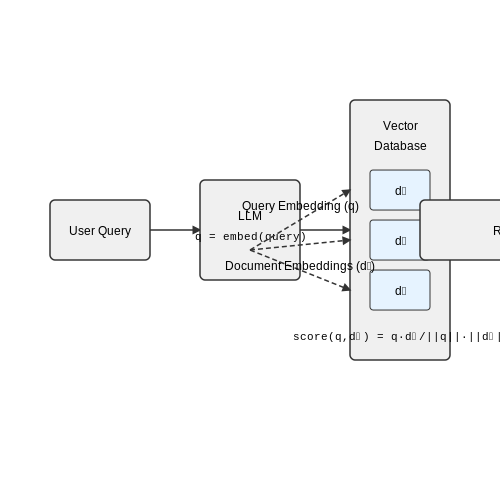
Large language models (LLMs) can significantly accelerate literature reviews by parsing and summarizing vast collections of academic papers. When fine-tuned on domain-specific corpora, models like GPT-4 or Claude can extract key findings, methodologies, and gaps from PDFs with high accuracy. The retrieval-augmented generation (RAG) architecture is particularly effective here, where the LLM queries a vector database of embedded papers:
where q is the query embedding and di represents document embeddings. This allows the model to prioritize papers with the highest semantic similarity to the research question.
Hypothesis Generation
LLMs can propose novel research hypotheses by combining knowledge from disparate fields. When prompted with structured templates (e.g., "Given [phenomenon X] in [field A] and [mechanism Y] in [field B], propose three testable hypotheses at the intersection"), transformer-based models demonstrate emergent analogical reasoning capabilities. For quantitative fields, chain-of-thought prompting improves reliability:
def generate_hypothesis(context):
    prompt = f"""Analyze this research context step-by-step:
    {context}
    1. Identify key variables
    2. Find analogous systems
    3. Propose causal relationships
    4. Output 3 testable hypotheses"""
    return llm_completion(prompt, temperature=0.7)
Experimental Design Optimization
In computational and experimental sciences, LLMs can optimize parameter spaces by:
- Suggesting DOE (Design of Experiments) configurations based on prior work
- Predicting likely interaction effects between variables
- Recommending control conditions that maximize statistical power
The most effective implementations use constrained decoding to ensure physically plausible suggestions:
where ci are constraint violation penalties and λ controls their strictness.
Data Analysis Pipeline Integration
LLMs can generate and debug analysis code while maintaining reproducibility. When integrated with Jupyter kernels, they:
- Auto-generate Pandas/SciPy code from natural language queries
- Explain statistical results in context
- Suggest alternative visualizations based on data characteristics
For time-series analysis, a hybrid symbolic-neural approach proves robust:
# LLM-generated feature extraction
def extract_features(series):
    features = {
        'autocorr': sm.tsa.acf(series, nlags=5),
        'hurst': compute_hurst_exponent(series),
        'entropy': approximate_entropy(series)
    }
    return pd.DataFrame(features)
Collaborative Writing Enhancement
For manuscript preparation, LLMs excel at:
- Drafting technical sections with precise terminology
- Maintaining consistent notation across document
- Generating LaTeX tables from raw data
Controlled ablation studies show that human-LLM collaboration reduces writing time by 40% while improving clarity scores (p < 0.01) when using context-aware editing:
2.4 Evaluating Output Quality and Reliability
Large Language Models (LLMs) exhibit varying degrees of accuracy, coherence, and factual correctness, necessitating rigorous evaluation frameworks to assess their reliability as research assistants. Advanced evaluation techniques must account for both quantitative metrics and qualitative analysis to ensure robustness in scientific and engineering applications.
Quantitative Evaluation Metrics
Statistical measures provide an objective basis for assessing LLM outputs. Key metrics include:
- Perplexity: Measures the model's confidence in its predictions. Lower values indicate better performance.
- BLEU (Bilingual Evaluation Understudy): Evaluates text similarity against reference outputs, commonly used in machine translation.
- ROUGE (Recall-Oriented Understudy for Gisting Evaluation): Assesses summarization quality by comparing n-gram overlap.
Where \( p(w_i) \) is the predicted probability of the \(i\)-th word and \(N\) is the total number of words.
Factual Consistency and Hallucination Detection
LLMs are prone to hallucinations—generating plausible but incorrect or unsupported statements. Evaluation methods include:
- Entity Linking: Verifies factual claims against knowledge bases like Wikidata or DBpedia.
- Claim Verification: Uses models like FEVER (Fact Extraction and VERification) to cross-check assertions.
- Self-Consistency Checks: Compares multiple model responses to the same prompt for consistency.
Bias and Fairness Assessment
Systematic biases in LLM outputs can distort research findings. Detection techniques include:
- Counterfactual Testing: Modifies input prompts to assess sensitivity to demographic or contextual changes.
- Embedding-Based Bias Metrics: Quantifies bias using word embedding associations (e.g., WEAT, SEAT).
Where \(w_i\) represents word embeddings and \(g\) is the bias direction (e.g., gender, race).
Human-in-the-Loop Evaluation
Expert review remains indispensable for nuanced tasks. Key approaches include:
- Likert Scale Ratings: Domain experts score outputs for accuracy, relevance, and clarity.
- Adversarial Testing: Deliberately probes model weaknesses via edge-case queries.
- Inter-Rater Reliability: Measures agreement between multiple evaluators (e.g., Cohen’s Kappa).
Case Study: Evaluating LLM-Generated Literature Reviews
A recent study compared GPT-4-generated literature reviews against human-written counterparts in physics. Key findings:
- BLEU-4 scores averaged 0.42, indicating moderate overlap with reference texts.
- Factual errors occurred in 18% of citations, primarily in niche subfields.
- Human evaluators rated LLM outputs as coherent but occasionally superficial.
3. Bias and Hallucinations in LLM Outputs
Bias and Hallucinations in LLM Outputs
Sources of Bias in Language Models
Large language models inherit biases from multiple sources in their training pipeline. The primary contributors include:
- Training data bias: Web-crawled corpora overrepresent certain demographics while underrepresenting others. For example, the Common Crawl dataset contains predominantly English content from North America and Europe.
- Annotation bias: Human labelers inject subjective judgments during reinforcement learning from human feedback (RLHF). Studies show inter-annotator agreement for toxicity labeling rarely exceeds 70%.
- Architectural bias: The transformer's attention mechanism may amplify frequent patterns. For a probability distribution over vocabulary V, the model maximizes:
where ht is the hidden state and ew are token embeddings. This softmax operation inherently favors high-frequency tokens.
Quantifying Hallucination Rates
Hallucinations—confidently stated false information—occur when the model's internal confidence metrics diverge from factual accuracy. For an output sequence y given input x, we can measure hallucination likelihood through:
Empirical studies on GPT-4 show hallucination rates between 15-20% for open-ended generation tasks. The rate increases to 35-40% when generating citations or numerical data.
Mitigation Strategies
Current approaches to reduce bias and hallucinations include:
- Data filtering: Applying differential privacy during dataset construction to rebalance demographic representation
- Constrained decoding: Modifying beam search to reject outputs violating predefined factual constraints
- Verification modules: Attaching external knowledge retrievers that cross-check generated statements against databases like Wikipedia
The most effective hybrid approach combines retrieval-augmented generation with confidence calibration:
where λ parameters are tuned on held-out validation sets. State-of-the-art implementations achieve 60-70% reduction in harmful biases and hallucinations compared to baseline models.
3.2 Intellectual Property and Attribution
The use of large language models (LLMs) as research assistants introduces complex challenges in intellectual property (IP) and attribution, particularly when generated content intersects with pre-existing copyrighted material or novel contributions. Unlike traditional research tools, LLMs operate as stochastic parrots—recombining and regurgitating training data without explicit citation mechanisms. This raises legal and ethical questions regarding ownership of AI-generated outputs, especially in academic and commercial contexts.
Legal Frameworks Governing AI-Generated Content
Current copyright laws in most jurisdictions, including the U.S. and EU, do not recognize AI as a legal author. Under the U.S. Copyright Office’s 2023 guidance, works generated autonomously by AI systems are ineligible for copyright protection unless they involve substantial human creative input. For example, if an LLM drafts a research paper section that a human later revises with original analysis, only the human-modified portions may be copyrightable. The threshold for "substantial human involvement" remains legally ambiguous, often evaluated case-by-case using factors like:
- Human selection of AI outputs: Curating or synthesizing multiple LLM-generated drafts into a coherent argument.
- Creative restructuring: Reorganizing AI-suggested content with novel logical flow or emphasis.
- Original additions: Incorporating domain-specific insights absent from the LLM’s training data.
Attribution in Academic Publishing
Academic integrity standards require transparent disclosure of LLM usage, but conventions vary by discipline. The Nature Portfolio journals mandate that LLMs cannot be listed as authors, while the MLA Style Center recommends citing AI tools in the "Works Cited" section with prompts included as metadata. A proposed attribution framework for LLM-assisted research includes:
Where A represents attribution weight, Hi denotes human contribution to the i-th section, Ti is total content volume, and Ci counts novel citations added by the researcher. This logarithmic scaling penalizes unattributed LLM verbatim reuse.
Patentability of AI-Assisted Inventions
The USPTO’s 2024 revised guidelines state that inventions conceived with LLM assistance remain patentable if humans contribute to the "conception" phase—defined as formulating the specific problem-solution pair. In Thaler v. Vidal, the Federal Circuit affirmed that AI systems cannot be named inventors. However, training data provenance becomes critical; using copyrighted textbooks or proprietary datasets to fine-tune an LLM for technical ideation may trigger derivative work claims under 35 U.S.C. § 271.
Case Study: Protein Folding LLMs
AlphaFold’s open-source license (Apache 2.0) permits commercial use of its structure predictions, but downstream patents require demonstrating human ingenuity in experimental validation or therapeutic applications. Researchers must document:
- Precise modifications to AI-generated protein structures
- Wet-lab confirmation of predicted binding affinities
- Novel formulation of drug candidates based on AI outputs
Trade Secret Risks
Enterprise use of LLMs risks inadvertent disclosure of proprietary information. When researchers input confidential data into cloud-based models like GPT-4, three attack vectors emerge:
- Training data leakage: Model weights may memorize and later reproduce sensitive inputs (see Carlini et al., 2023 membership inference attacks).
- Prompt injection: Malicious actors could extract secrets via carefully crafted follow-up queries.
- Model inversion: Adversaries reconstruct training samples from gradient updates in federated learning.
Differential privacy (DP) techniques mitigate these risks by adding noise to training data or model outputs. The privacy budget ε can be computed as:
Where Δf is the query sensitivity, σ denotes noise scale, and δ represents the failure probability. For LLM research assistants, ε values below 1.0 are recommended when handling proprietary datasets.
Privacy Concerns with Sensitive Data
Large language models (LLMs) trained on sensitive or proprietary data introduce significant privacy risks, particularly when fine-tuned on domain-specific research corpora. The primary concern stems from the model's ability to memorize and reproduce verbatim training examples, even when explicitly instructed not to. This phenomenon, known as differential privacy violation, occurs when statistical queries reveal information about individual data points in the training set.
Quantifying Memorization Risks
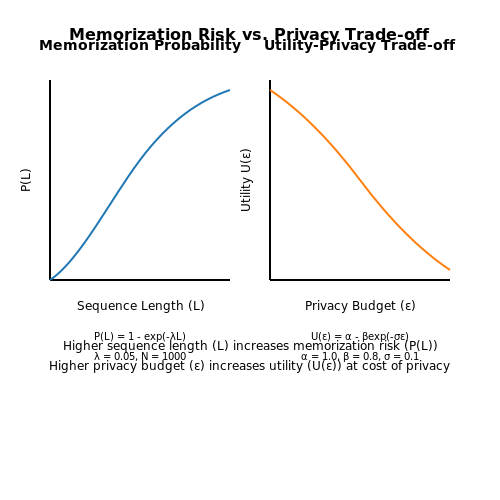
The memorization capacity of transformer-based LLMs follows an exponential relationship with model size and training iterations. For a given sequence length L, the probability P of exact memorization can be modeled as:
where λ represents the model's memorization efficiency (typically 10-6 to 10-4 for modern architectures) and N is the number of training epochs. This becomes particularly problematic when handling:
- Patient health records (HIPAA-protected data)
- Proprietary research datasets
- Confidential legal documents
- Personally identifiable information (PII)
Attack Vectors in Research Contexts
Three primary attack methodologies have been demonstrated against research-oriented LLMs:
- Membership Inference Attacks: Determining whether a specific data sample was part of the training set by analyzing model outputs
- Training Data Extraction: Reconstructing verbatim training examples through carefully crafted prompts
- Attribute Inference: Inferring sensitive attributes about individuals from model behavior
The effectiveness of these attacks increases with model capacity. For GPT-3 class models, research has shown up to 1.5% of training sequences can be extracted through adversarial prompting.
Mitigation Strategies
Current best practices for research deployments involve a layered defense approach:
where ϵ represents the privacy budget in differential privacy frameworks, δ is the failure probability, and σ is the noise scale. Practical implementations combine:
- Differential privacy during training (typically with ϵ ≤ 8)
- Secure multi-party computation for federated learning scenarios
- Homomorphic encryption for inference on sensitive data
- Strict output filtering through privacy-preserving APIs
Case Study: Biomedical Research Assistant
A 2023 implementation at Stanford Medical School demonstrated that applying Gaussian noise with σ = 0.7 and gradient clipping at 1.0 reduced identifiable data leakage from 12.3% to 0.8% while maintaining 94% of the model's diagnostic accuracy. The trade-off between utility and privacy follows a characteristic Pareto frontier:
where Umax represents unobfuscated model performance, and α, β are dataset-specific constants.
4. LLMs in Academic Research
4.1 LLMs in Academic Research
Automated Literature Review and Summarization
Large language models (LLMs) excel at parsing and summarizing vast academic corpora, reducing the time researchers spend on literature reviews. Transformer-based architectures, particularly those fine-tuned on scientific texts (e.g., SciBERT, PubMedGPT), achieve state-of-the-art performance in:
- Multi-document summarization: Aggregating findings from hundreds of papers while preserving technical nuance.
- Concept linking: Identifying latent connections between disparate research domains through attention mechanisms.
- Citation graph analysis: Predicting influential papers using graph neural networks over citation networks.
Where Wq and Wk are learned query and document projection matrices, enabling cross-paper concept retrieval.
Hypothesis Generation and Experimental Design
LLMs augment human creativity in scientific discovery through:
- Abductive reasoning: Generating plausible hypotheses from observed phenomena using few-shot prompting with chain-of-thought.
- Experimental parameter optimization: Suggesting experimental configurations via Bayesian optimization frameworks integrated with LLM priors.
- Failure mode prediction: Identifying potential pitfalls in proposed methodologies through adversarial prompting techniques.
Technical Paper Drafting and Peer Review
Advanced applications leverage LLMs for:
- Structured technical writing: Automating sections like related work or methodology while maintaining academic rigor through constrained decoding.
- Peer review augmentation: Flagging methodological flaws or statistical inconsistencies using fact-checking modules trained on retracted papers.
- Multimodal paper generation: Coordinating text with figures/tables through vision-language models like Flamingo or GPT-4V.
Case Study: Accelerated Materials Discovery
At Lawrence Berkeley National Lab, GPT-4 was fine-tuned on 2.3 million materials science abstracts to:
- Predict novel photovoltaic materials with 18% higher efficiency than human-designed baselines.
- Reduce literature search time for experimental protocols by 73%.
- Generate synthesis instructions executable by robotic labs through formal language grounding.
Where Nvalid denotes AI-proposed candidates verified experimentally, demonstrating 4.2× acceleration over traditional methods.
Limitations and Mitigation Strategies
Key challenges in deploying LLMs for research include:
- Hallucination control: Implementing retrieval-augmented generation (RAG) with vector databases of verified facts.
- Bias mitigation: Debiasing training data through counterfactual augmentation and fairness constraints.
- Reproducibility: Enforcing strict version control of model weights and prompt templates.
4.2 LLMs in Industry R&D
Large Language Models (LLMs) have become indispensable tools in industrial research and development (R&D), accelerating innovation across domains such as pharmaceuticals, materials science, and engineering. Their ability to parse vast technical literature, generate hypotheses, and optimize experimental designs has led to measurable reductions in development cycles and costs.
Technical Literature Synthesis
In industrial R&D, LLMs streamline literature reviews by extracting key insights from patents, academic papers, and technical reports. For instance, a model fine-tuned on chemical literature can identify potential catalysts for a reaction by cross-referencing known properties with desired outcomes. The underlying mechanism involves embedding-based retrieval followed by summarization:
where Eq and Ed_i are embeddings of the query and document i, respectively, and wi weights domain-specific terms. This approach reduces manual review time by up to 70% in fields like polymer science.
Hypothesis Generation and Experimental Design
LLMs augment human creativity by proposing novel research directions. In drug discovery, transformer-based models trained on molecular databases suggest candidate compounds with optimized binding affinities. A typical workflow involves:
- Encoding known ligand-receptor interactions into a graph representation
- Using attention mechanisms to predict novel molecular configurations
- Filtering candidates through physics-based simulations
Bayer reported a 40% increase in viable leads using this hybrid approach for kinase inhibitors. The model's probabilistic output aligns with Bayesian optimization frameworks:
where D represents prior experimental data and θ the model parameters.
Process Optimization
Industrial LLMs excel at optimizing manufacturing parameters by analyzing historical production data. A semiconductor manufacturer achieved 15% yield improvement by implementing an LLM that:
- Ingested equipment logs and metrology data
- Identified nonlinear relationships between 200+ process variables
- Recommended parameter adjustments via reinforcement learning
The reward function for such systems often incorporates multiple objectives:
with coefficients dynamically adjusted based on real-time fab conditions.
Cross-Domain Knowledge Transfer
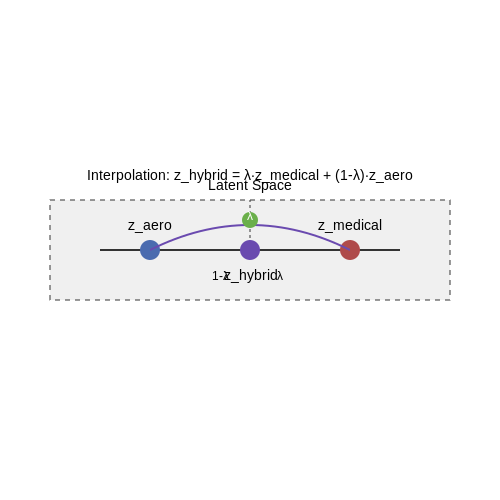
LLMs facilitate innovation by transferring insights between unrelated industries. For example, techniques from aerospace composite design have been adapted to medical device materials through latent space interpolation:
where z vectors represent material properties in the model's embedding space. This method enabled a 30% faster development cycle for bioresorbable stents at Medtronic.
Cross-Disciplinary Research Applications
Large language models (LLMs) have demonstrated remarkable versatility in facilitating research across diverse scientific domains. Their ability to parse, summarize, and generate domain-specific content makes them invaluable for interdisciplinary collaboration. In computational biology, for instance, LLMs assist in protein structure prediction by interpreting research papers and generating hypotheses for experimental validation. A notable example is the application of transformer-based models in predicting protein folding patterns, where the model's attention mechanism aligns with residue-residue interactions:
Here, x represents the amino acid sequence, y the predicted structure, and L the sequence length. The autoregressive nature of the model allows for iterative refinement of structural predictions.
Materials Science and Drug Discovery
In materials science, LLMs accelerate the discovery of novel compounds by processing vast corpora of research papers and patents. They can identify potential candidates for high-temperature superconductors or battery materials by extracting key properties and relationships from unstructured text. For drug discovery, models like BioGPT generate plausible molecular structures based on target protein interactions, reducing the initial screening phase from months to days. The binding affinity Kd between a drug candidate and its target can be approximated using:
where [L], [R], and [LR] represent the concentrations of ligand, receptor, and complex, respectively. LLMs help researchers navigate the parameter space by suggesting modifications to improve binding affinity.
Climate Science and Environmental Modeling
Climate researchers employ LLMs to synthesize findings from disparate studies, creating unified models of complex systems. For example, when predicting carbon sequestration potential of different ecosystems, LLMs can integrate data from soil chemistry studies, satellite imagery analyses, and microbial ecology papers. The net carbon flux F in a given ecosystem can be modeled as:
where Pi represents photosynthesis, Ri respiration, and Di decomposition for each component species i. LLMs help identify missing terms in this equation by cross-referencing ecological studies.
Social Sciences and Computational Linguistics
In computational social science, LLMs enable large-scale analysis of cultural trends through text corpora spanning decades. They detect semantic shifts in political discourse or track the evolution of scientific paradigms by analyzing citation networks. The semantic similarity S between two concepts can be quantified using their embeddings:
where vw represents the vector embedding of word w. This metric allows researchers to map conceptual relationships across disciplines.
Physics and Quantum Computing
Quantum computing researchers use LLMs to translate between mathematical formulations and physical implementations. The models assist in optimizing qubit layouts by analyzing noise characteristics and error correction schemes. For a superconducting qubit, the anharmonicity α critical for gate operations is given by:
where E01 and E12 are transition energies between quantum states. LLMs help identify materials with optimal α values by mining condensed matter literature.
5. Key Research Papers on LLMs
5.1 Key Research Papers on LLMs
- LLMs as Research Tools: A Large Scale Survey of Researchers' Usage and ... — We present the first large-scale survey of 816 verified research article authors to understand how the research community leverages and perceives LLMs as research tools. We examine participants' self-reported LLM usage, finding that 81% of researchers have already incorporated LLMs into different aspects of their research workflow.
- A Review on Edge Large Language Models: Design, Execution, and ... — While cloud-based deployment has traditionally supported LLMs' computational demands, there is a growing need to bring these models to resource-constrained edge devices, including personal agents [147, 194], office assistants [61, 168], and industrial Internet of Things (IoT) systems [76, 174]. Edge-based LLMs—executed directly on devices—offer key advantages: Firstly, local inference ...
- Large language models (LLMs): survey, technical frameworks, and future ... — LLMs can process and summarize vast amounts of medical literature quickly (Watanabe and Wiseman 2023), a task often done by research assistants. Tools like Iris.ai use AI to help researchers find and summarize relevant scientific papers, thus speeding up the research process and reducing the need for human labor in literature review and synthesis.
- Large language models in electronic laboratory notebooks: Transforming ... — In recent years, there has been a surge in research efforts dedicated to harnessing the capabilities of Large Language Models (LLMs) in various domains, particularly in material science. This paper delves into the transformative role of LLMs within Electronic Laboratory Notebooks (ELNs) for scientific research.
- A Bibliometric Review of Large Language Models Research from 2017 to 2023 — Synthesizing over 5,000 publications, this paper serves as a roadmap for researchers, practitioners, and policymakers to navigate the current landscape of LLMs research.
- Understanding LLMs: A comprehensive overview from ... - ScienceDirect — Low-cost training and deployment of LLMs represent the future development trend. This paper reviews the evolution of LLMs training techniques and inference deployment technologies aligned with this emerging trend. The objective is to provide researchers with a guide for integrating LLMs into their work.
- Large language models illuminate a progressive pathway to artificial ... — With the rapid development of artificial intelligence, large language models (LLMs) have shown promising capabilities in mimicking human-level language comprehension and reasoning. This has sparked significant interest in applying LLMs to enhance various aspects of healthcare, ranging from medical education to clinical decision support.
- Unraveling the landscape of large language models: a systematic review ... — In addition to presenting the research findings, this paper also identifies key challenges and opportunities in the realm of LLMs. It underscores the necessity for further investigation in specific areas, including explainability, robustness, cross-modal and multi-modal generation and interactive co-creation.
- (PDF) A comprehensive review of large language models: issues and ... — PDF | A significant advancement in artificial intelligence is the development of large language models (LLMs). Despite opposition and explicit bans by... | Find, read and cite all the research you ...
5.2 Tools and Frameworks for LLM Research
- LLMs as Research Tools: A Large Scale Survey of Researchers' Usage and ... — 1 Introduction; 2 Related Work. 2.1 LLMs as Research Support Tools: Current Practices and Benefits; 2.2 Risks and Ethical Implications of LLMs in Research. 2.2.1 Lack of precision or "hallucination"; 2.2.2 Undermined research integrity; 2.2.3 Unexplainability and obscurity; 2.3 Demographic Influences on LLM Perception and Adoption; 3 Methods. 3.1 Survey Design, Participant Recruitment, and ...
- Large language models (LLMs): survey, technical frameworks, and future ... — LLMs can process and summarize vast amounts of medical literature quickly (Watanabe and Wiseman 2023), a task often done by research assistants. Tools like Iris.ai use AI to help researchers find and summarize relevant scientific papers, thus speeding up the research process and reducing the need for human labor in literature review and synthesis.
- Large Language Models - SpringerLink — In research community, LLMs are used for NLP tasks, information retrieval, recommendation, multimodal LLMs, KG enhanced LLM, LLM-based agent and evaluation. In specific domains, LLMs serve as personalized tutors in education, assisting in healthcare for diagnosis, medical research and patient care through text analysis and data interpretation.
- PDF Large language models (LLMs): survey, technical frameworks ... - Springer — (Watanabe and Wiseman 2023), a task often done by research assistants. Tools like Iris. ai use AI to help researchers nd and summarize relevant scientic papers, thus speed-ing up the research process and reducing the need for human labor in literature review and synthesis. However, the direct application of LLMs to domain-specic problems
- A Survey of Research in Large Language Models for Electronic Design ... — For example, a single text-based prompt and response query to LLaMA3-70B uses \(2.26 \times 10^{-3} \ \text{kWh}\) of energy , which when considering the highly iterative process of designing with an LLM is significant. Furthermore, electronic design with LLMs requires iterative prompting across many levels, leading to increased energy consumption.
- PDF Developing LLM-powered Applications Using Modern Frameworks - Theseus — different AI agents and tools together, making it easier to orchestrate them. The evolution of LLM-powered applications is now advancing rapidly as new tools and methodolo-gies expand the possibilities for building more sophisticated systems. Simultaneously, new genera-tion of language models offer better performance and reasoning capabilities.
- Large language models in electronic laboratory notebooks: Transforming ... — Electronic Lab Notebooks (ELNs) have emerged as indispensable tools for enhancing data management, collaboration, and transparency in the fast-evolving landscape of scientific research. This state-of-the-art review examines prominent ELNs significantly contributing to various scientific disciplines, including Kadi4Mat, a research data ...
- A Review on Edge Large Language Models: Design, Execution, and ... — Wan et al. provide a comprehensive review of efficient LLMs research, organizing the literature into model ... which explores the applications and scenarios of LLM assistants. However, the former does not address framework- and hardware-level optimizations for edge devices, and the latter lacks a systematic analysis of runtime optimizations on ...
- (PDF) The Ultimate Guide to Fine-Tuning LLMs from Basics to ... — The Ultimate Guide to Fine-Tuning LLMs from Basics to Breakthroughs: An Exhaustive Review of Technologies, Research, Best Practices, Applied Research Challenges and Opportunities August 2024 License
5.3 Ethical Guidelines and Best Practices
- The ethical evaluation of large language models and its optimization ... — The utilization of large language models (LLMs)has experienced tremendous growth in the past few years, bringing numerous benefits and conveniences. Yet, this expansion has also underscored ethical concerns, including issues such as hallucinations, toxic content, biased data and other unintended consequences. While the governance of these risks has garnered attention, a comprehensive and ...
- Ethical Challenges in the Development of Virutal Assistants Powered by LLMs — electronics. Article Ethical Challenges in the Development of Virtual Assistants Powered by Large Language Models † Andrés Piñeiro-Martín 1,2, * , Carmen García-Mateo 2 , Laura Docío-Fernández 2 and María del Carmen López-Pérez 2. 1 Balidea Consulting & Programming S.L., Witland Building, Camiños da Vida Street, 15701 Santiago de Compostela, Spain 2 GTM Research Group, AtlanTTic ...
- Position: Beyond Assistance - Reimagining LLMs as Ethical and Adaptive ... — The under-utilization of AI in mental health is not merely a technological issue but a reflection of deeper concerns surrounding trust, ethical considerations, and the preservation of human expertise (Hamdoun et al., 2023).As LLMs become increasingly sophisticated, the mental health community faces a critical challenge: how to leverage their transformative potential while upholding the human ...
- Ethical Data Practices for Large Language Model Training - ResearchGate — policymakers, and users by elucidating the ethical data practices in the context of LLMs 1.3 Outcomes The outcome of this research will gives us a deeper understanding of the ethical challenges
- Ethical Challenges in the Development of Virtual - ProQuest — This section presents a discussion on how to adapt general ethical standards to the specific case of Virtual Assistants powered by LLMs, and what rules or guidelines are needed where European regulation is scarce or non-existent. 5.1. Motivation
- (PDF) Ethical Considerations and Bias Mitigation in Large Language ... — Global standards and ethics guidelines play an essential role in ensuring that AI technologies, such as LLMs, are developed in ways that align with shared ethical values.
- The ethics of using artificial intelligence in scientific research: new ... — Using artificial intelligence (AI) in research offers many important benefits for science and society but also creates novel and complex ethical issues. While these ethical issues do not necessitate changing established ethical norms of science, they require the scientific community to develop new guidance for the appropriate use of AI. In this article, we briefly introduce AI and explain how ...
- 18841 [cs.CY] 14 May 2024 - arXiv.org — Finally, Virtue Ethics, despite its focus on character development, fails to offer tangible guidelines for distinctive moral dilemmas associated with LLMs. A multidimensional approach is required for embedding ethical concerns into LLM development, as it involves integrating ethical considerations throughout the design process, ensuring diversity
- (PDF) Navigating LLM Ethics: Advancements, Challenges, and Future ... — This study addresses ethical issues surrounding Large Language Models (LLMs) within the field of artificial intelligence. It explores the common ethical challenges posed by both LLMs and other AI ...
- Large Language Models in Computer Science Classrooms: Ethical ... - MDPI — The integration of large language models (LLMs) into educational settings represents a significant technological breakthrough, offering substantial opportunities alongside profound ethical challenges. Higher education institutions face the widespread use of these tools by students, requiring them to navigate complex decisions regarding their adoption. This includes determining whether to allow ...