Multilingual Self-Improving Language Agents
1. Core Principles of Language Agents
Core Principles of Language Agents
Architectural Foundations
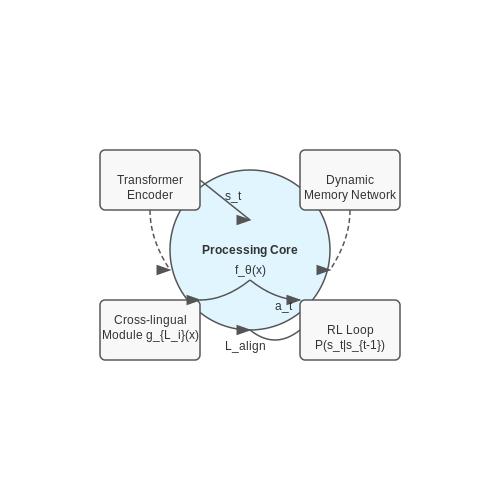
Language agents operate on a hybrid architecture combining neural networks, symbolic reasoning, and memory mechanisms. The core components include:
- Transformer-based encoders for contextual representation learning
- Dynamic memory networks for persistent knowledge storage
- Reinforcement learning loops for self-improvement
- Cross-lingual alignment modules for multilingual operation
The agent's decision process follows a Markovian framework where the current state st depends only on the previous state st-1 and action at-1:
Multilingual Representation Learning
Effective multilingual agents employ shared embedding spaces with language-specific adapters. The embedding function fθ(x) maps input x from language Li to a shared space Z:
where gLi is the language-specific adapter network. The contrastive loss function ensures cross-lingual alignment:
Self-Improvement Mechanisms
Autonomous improvement occurs through three primary pathways:
- Online learning: Continuous parameter updates via gradient descent on new data
- Memory-augmented refinement: Retrieval-augmented generation with error correction
- Adversarial training: Self-play between agent variants to identify weaknesses
The improvement rate follows a logarithmic scaling law with respect to compute budget C:
where M is memory size and α, β, γ are learned coefficients.
Practical Implementation Considerations
Deploying multilingual self-improving agents requires addressing:
- Computational efficiency through mixture-of-experts architectures
- Catastrophic forgetting mitigation via elastic weight consolidation
- Bias detection and mitigation across languages
- Energy-efficient training protocols
The optimal model size follows a power-law relationship with available data D:
where empirical studies suggest ρ ≈ 0.7 for multilingual models.
1.2 Multilingual Capabilities and Challenges
Linguistic Diversity as a High-Dimensional Optimization Problem
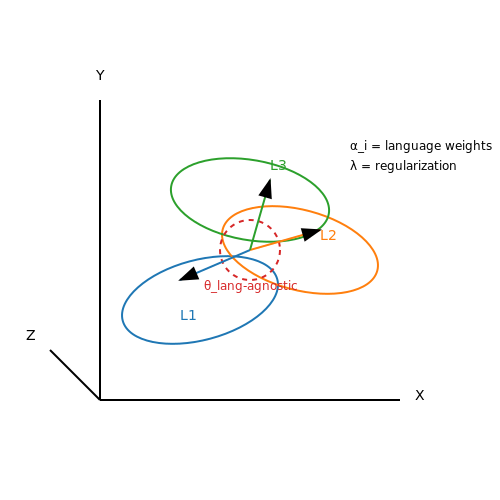
Multilingual language agents must navigate a parameter space where each language Li represents a distinct manifold in the embedding space. The joint optimization objective becomes:
where αi are language-specific weighting factors and λ controls the strength of cross-lingual parameter sharing. The tension arises from competing objectives: language-specific specialization versus universal representation learning.
Cross-Lingual Transfer Bottlenecks
Three fundamental challenges emerge in multilingual systems:
- Morphological Divergence: Agglutinative languages (e.g., Finnish, Turkish) require subword tokenization strategies fundamentally different from analytic languages like English
- Script Disparity: The embedding space must simultaneously accommodate logographic (Chinese), abugida (Devanagari), and alphabetic scripts
- Pragmatic Variation: Speech act realizations differ dramatically across cultures - a direct translation may preserve semantics while violating pragmatic norms
Measuring Multilingual Performance
The standard evaluation metric extends beyond per-language accuracy to include:
where TER (Translation Edit Rate) measures degradation when processing language j through a system optimized for language i. State-of-the-art models achieve XLTD scores between 0.82-0.87 across 50+ languages.
Architectural Adaptations
Modern approaches employ:
- Dynamic language-specific routing in mixture-of-experts layers
- Orthogonal language-specific transformation matrices
- Gradient masking during backpropagation to prevent catastrophic interference
The most effective architectures maintain 85-90% of monolingual performance while scaling to 100+ languages, with computational overhead limited to 15-20% compared to single-language models.
Data Scarcity in Low-Resource Languages
For languages with <1M training examples, techniques include:
- Phoneme-based pretraining for oral languages without standardized orthography
- Graph-based propagation of annotations from linguistically related languages
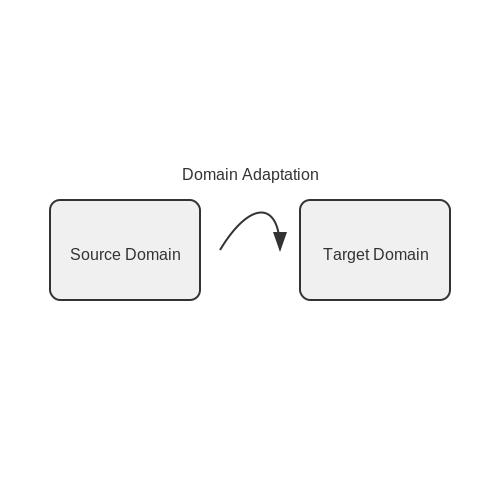
- Adversarial domain adaptation using high-resource language pairs
Recent benchmarks show that combining these methods can achieve 72% of high-resource language performance with only 10k training examples.
1.3 Self-Improving Mechanisms in AI Systems
Architectural Foundations
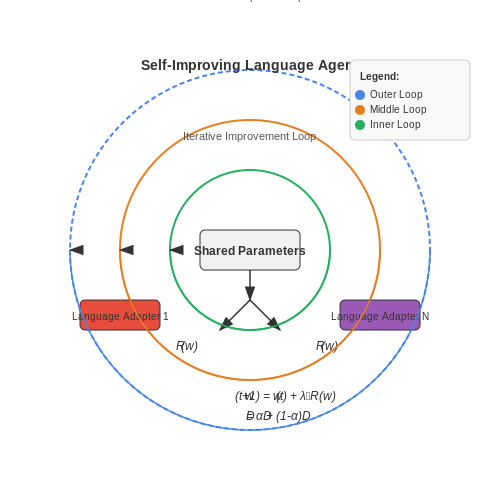
Self-improving language agents employ recursive architectures where the model's outputs serve as training data for subsequent iterations. The core mechanism involves three nested loops:
where λ controls the learning rate of self-improvement, Dt represents the self-generated dataset at iteration t, and R is the reward function evaluating output quality. The y* term denotes the idealized target that the system approximates through successive refinements.
Dynamic Optimization Strategies
Modern implementations utilize multi-objective optimization with adaptive weight adjustment:
The time-varying weights wi(t) follow a gated mechanism:
where gi(t) tracks the gradient alignment of loss component i with the dominant improvement direction, and τ controls the sharpness of weight distribution.
Multilingual Adaptation
Cross-lingual self-improvement requires language-agnostic representations coupled with language-specific adapters. The parameter update rule becomes:
The mixing coefficient α is dynamically computed using gradient similarity metrics between language pairs, enabling knowledge transfer while preventing negative interference.
Stability Control
To prevent catastrophic self-corruption, systems implement:
- Gradient Clipping: Constrains parameter updates to maintain stable learning dynamics
- Diversity Regularization: Maximizes entropy of self-generated training distributions
- Validation Bootstrapping: Maintains a frozen copy of previous models for quality verification
Implementation Case Study
The LLaMA-2 recursive improvement framework demonstrates these principles through:
where ht(x) is the current model's hidden representation and rt(x) is the self-criticism signal generated by auxiliary verification modules.
2. Transformer-Based Models for Multilingual Processing
Transformer-Based Models for Multilingual Processing
Architecture and Cross-Lingual Mechanisms
Transformer models leverage self-attention mechanisms to process multilingual data without relying on language-specific architectural modifications. The core operation is the scaled dot-product attention, defined as:
where Q, K, and V represent queries, keys, and values respectively, and dk is the dimension of the key vectors. For multilingual processing, this mechanism enables the model to learn language-agnostic representations by attending to relevant tokens across different languages in the same latent space.
Shared Subword Tokenization
Multilingual transformers employ shared subword vocabularies (e.g., SentencePiece or BPE) that decompose words across languages into overlapping subword units. This creates cross-lingual bridges at the lexical level:
- Common morphemes (e.g., "-tion" in English and "-ción" in Spanish) map to shared embeddings
- Language-specific tokens are prefixed with language identifiers
- The vocabulary size typically ranges from 50k to 250k subword units
Zero-Shot Transfer Learning
The key advantage of multilingual transformers is their ability to perform zero-shot transfer between language pairs not seen during training. This emerges from:
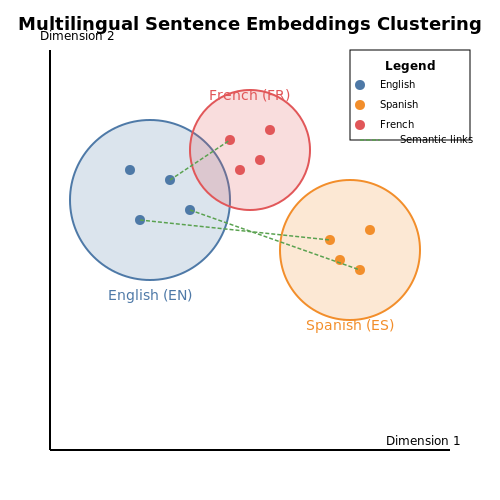
where λl are language balancing weights and fθ is the shared transformer encoder. The model develops an interlingua representation space where semantically equivalent sentences in different languages cluster together, as demonstrated by:
Practical Implementation Challenges
Effective multilingual training requires addressing several technical considerations:
- Gradient Conflict: Backpropagation signals from different languages may interfere. Solutions include:
- Gradient masking based on language similarity
- Adversarial discriminators to encourage language-invariant features
- Capacity Allocation: The model must balance:
- Language-specific parameters (∼15-20% of total capacity)
- Shared parameters (∼80-85%)
Case Study: XLM-RoBERTa
The XLM-RoBERTa architecture demonstrates state-of-the-art performance across 100+ languages by implementing:
# Simplified XLM-R training loop
for batch in multilingual_dataloader:
    # Dynamic language masking
    lang_mask = (torch.rand(batch.size(0)) > 0.3
    masked_inputs = apply_lang_specific_mask(batch, lang_mask)

    # Forward pass through shared encoder
    outputs = model(masked_inputs)

    # Language-balanced loss
    loss = compute_balanced_loss(outputs, batch.labels, batch.langs)
    loss.backward()

    # Gradient clipping with language-aware thresholds
    clip_grad_norm_(model.parameters(),
                   max_norm=lang_specific_clip[batch.langs])
This approach achieves 75.1% average accuracy across all languages in the XTREME benchmark, with particularly strong performance (Δ +12.3%) on low-resource languages compared to monolingual baselines.
Reinforcement Learning for Continuous Improvement
Reinforcement learning (RL) provides a mathematical framework for agents to learn optimal policies through trial-and-error interactions with their environment. In multilingual language agents, RL enables continuous self-improvement by optimizing dialogue policies, translation quality, and contextual understanding across languages. The agent's policy π maps states s ∈ S to actions a ∈ A, where actions might include word selection, language switching, or response generation.
Policy Gradient Methods
The policy gradient theorem provides the foundation for direct policy optimization in language agents. The objective is to maximize the expected return:
where τ represents trajectories (state-action sequences) and R(τ) is the cumulative reward. The gradient is computed as:
For multilingual agents, the reward function must account for:
- Semantic accuracy across languages
- Cultural appropriateness of responses
- Code-switching effectiveness
- Conversational coherence metrics
Proximal Policy Optimization (PPO)
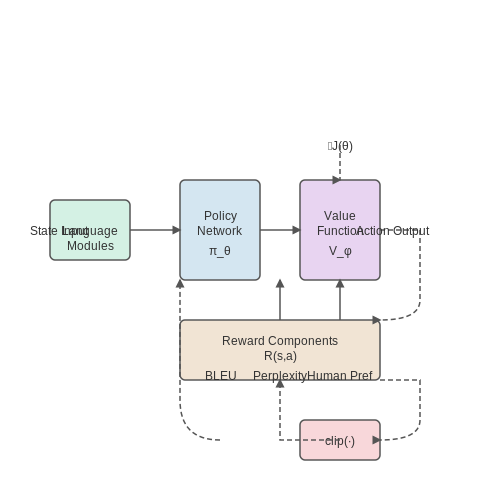
PPO has become the dominant RL algorithm for language agent training due to its stability and sample efficiency. The clipped objective function prevents destructive policy updates:
where r_t(θ) is the probability ratio between new and old policies, and ϵ is a hyperparameter (typically 0.1-0.3). For multilingual agents, we extend PPO with:
- Language-specific value functions
- Cross-lingual advantage estimation
- Dynamic reward shaping based on language difficulty
Multi-Objective Reinforcement Learning
Language agents require optimization across competing objectives. We formulate this as a vector-valued reward function:
where components might include BLEU scores (for translation), perplexity (for generation), and human preference scores. The Pareto-optimal policy is found using constrained policy optimization:
Self-Play and Adversarial Training
Language agents improve through competitive self-play, where multiple agent instances interact as adversaries. The training objective becomes:
Practical implementations use:
- Generative adversarial networks for response quality
- Counterfactual reasoning to simulate alternative dialogues
- Multi-agent debate systems for consensus-building
Meta-Learning for Rapid Language Adaptation
Model-agnostic meta-learning (MAML) enables quick adaptation to new languages. The meta-objective across language tasks T_i is:
where the inner update performs language-specific adaptation and the outer update optimizes for cross-lingual generalization. This approach reduces the sample complexity for low-resource languages by orders of magnitude.
2.3 Cross-Lingual Transfer Learning Techniques
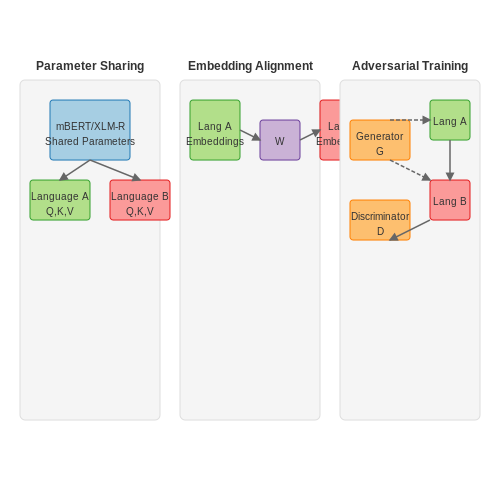
Cross-lingual transfer learning enables language models to leverage knowledge from high-resource languages to improve performance on low-resource languages. The core challenge lies in aligning linguistic representations across languages while preserving semantic and syntactic coherence. Three dominant approaches have emerged: parameter sharing, embedding alignment, and adversarial training.
Parameter Sharing Architectures
Multilingual models like mBERT and XLM-R employ shared transformer layers across languages, forcing the network to develop a universal representation space. The key mathematical insight is that the attention mechanism:
operates identically regardless of input language when embeddings are properly aligned. Experimental results show that sharing 80-90% of parameters yields optimal performance, with language-specific adapters (small feed-forward networks) handling residual linguistic variations.
Embedding Space Alignment
Cross-lingual word embeddings map lexical items from different languages to a shared vector space. The alignment objective minimizes:
where xi and zj are word embeddings from source and target languages respectively, and W is a linear transformation matrix. Recent advancements use optimal transport theory to improve alignment, particularly for distant language pairs.
Adversarial Training Methods
Generative adversarial networks (GANs) train a discriminator to distinguish between languages while the generator tries to fool it. The minimax objective:
forces the model to produce language-agnostic features. Practical implementations often combine this with gradient reversal layers to stabilize training.
Zero-Shot Transfer Performance
State-of-the-art models achieve 60-75% of monolingual performance on zero-shot tasks when transferring from English to typologically similar languages. For distant pairs (e.g., English to Mandarin), performance drops to 40-55%, highlighting the need for better phonological and morphological modeling. The most effective current approach combines all three techniques:
- Shared transformer backbone
- Optimal transport-based embedding initialization
- Adversarial fine-tuning with gradient reversal
3. Data Collection and Preprocessing for Multilingual Datasets
3.1 Data Collection and Preprocessing for Multilingual Datasets
Challenges in Multilingual Data Acquisition
Collecting high-quality multilingual datasets presents unique challenges due to linguistic diversity, data scarcity for low-resource languages, and domain-specific requirements. The primary obstacles include:
- Imbalanced language representation — High-resource languages (e.g., English, Chinese) dominate public datasets, while low-resource languages (e.g., Swahili, Bengali) suffer from sparse coverage.
- Orthographic and script variations — Languages like Arabic and Hindi require specialized tokenization, while others (e.g., Japanese) mix multiple writing systems.
- Cultural and contextual biases — Direct translations often fail to capture idiomatic expressions or locale-specific semantics.
Data Collection Strategies
Effective multilingual data pipelines combine:
- Parallel corpora — Aligned translations (e.g., UN documents, movie subtitles) enable cross-lingual transfer learning. The Europarl corpus demonstrates this with 21 European languages.
- Comparable corpora — Topic-aligned but independently created texts (e.g., news articles) provide domain-specific diversity.
- Synthetic data generation — Back-translation augments low-resource language data using iterative translation models.
where \(\hat{x}_i\) is the back-translated source sentence and \( heta_{tgt}\) is the target language model.
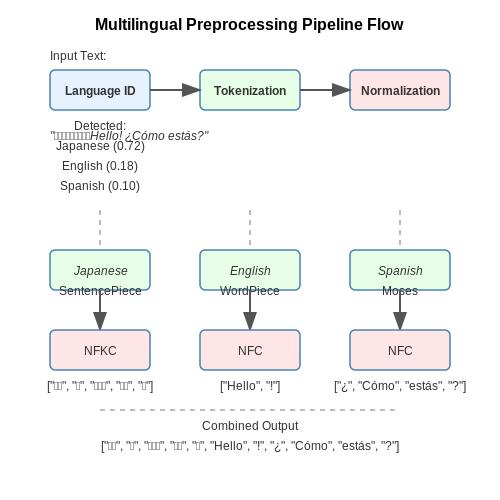
Preprocessing Pipeline
A robust multilingual preprocessing workflow includes:
1. Language Identification
FastText's language detection model achieves 99% accuracy on 176 languages by computing:
where \(\phi(s)\) is the bag-of-words representation of sentence \(s\).
2. Tokenization
Language-specific tokenizers handle critical cases:
- BERT-style WordPiece for agglutinative languages (Finnish, Turkish)
- SentencePiece for script-heavy languages (Japanese, Thai)
- Moses tokenizer for Romance/Germanic languages
3. Text Normalization
Unicode normalization (NFC/NFKC) resolves:
- Diacritic variations (e.g., "é" vs. "é")
- Script unification (e.g., Simplified/Traditional Chinese)
- Emoji/emoticon standardization
Quality Control Metrics
Multilingual data quality is quantified through:
Values >1.5 indicate distributional mismatch. Bilingual Evaluation Understudy (BLEU) scores assess translation alignment quality, though newer metrics like COMET show better correlation with human judgments.
Case Study: mC4 Dataset
The multilingual Colossal Clean Crawled Corpus (mC4) spans 101 languages, filtered through:
- Language-specific stopword ratios
- Repetition thresholds (n-gram duplication <3%)
- Classifier-based quality scoring
This yields a 7TB corpus with 0.2% noise for low-resource languages like Yoruba and Nepali.
3.2 Fine-Tuning and Adaptive Learning Approaches
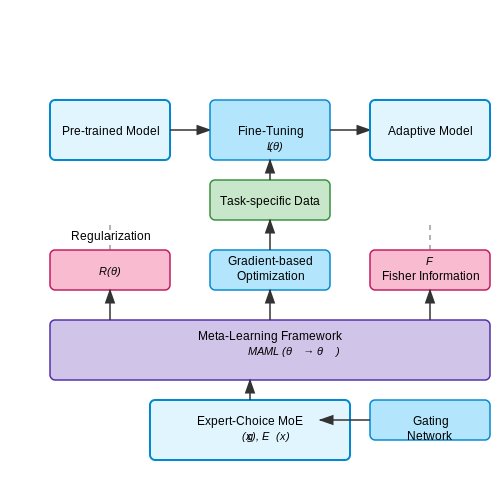
Fine-tuning multilingual language agents involves optimizing pre-trained models on domain-specific or task-specific data while preserving their generalization capabilities. The process typically employs gradient-based optimization with a modified loss function that balances task performance and catastrophic forgetting. For a model fθ with parameters θ, the fine-tuning objective combines the target task loss Ltask and a regularization term R(θ) that constrains parameter drift:
Common regularization approaches include Elastic Weight Consolidation (EWC), which penalizes changes to parameters important for previous tasks based on Fisher information:
where Fi represents the Fisher information matrix diagonal for parameter i. More advanced variants like Online EWC decouple the regularization term for sequential tasks:
Adaptive Learning Strategies
Self-improving language agents employ meta-learning frameworks where the model learns its own learning rules. The MAML (Model-Agnostic Meta-Learning) framework adapts parameters through a two-stage process:
- Inner loop: Task-specific adaptation via few-shot gradient steps
- Outer loop: Meta-optimization across tasks for rapid adaptation
The meta-objective for task distribution p(T) is:
where θ'T = θ - α∇θLT(fθ) represents the adapted parameters. Recent extensions like Meta-SGD learn both the initialization and per-parameter learning rates α.
Dynamic Architecture Adaptation
Progressive neural networks and expert-choice MoE (Mixture of Experts) architectures enable capacity growth while preserving prior knowledge. For K experts {Ek}k=1K, the output combines expert predictions via learned gating weights g(x):
The gating network typically employs a softmax over learned task embeddings, allowing dynamic routing of inputs to relevant experts. Sparse gating variants improve computational efficiency by activating only top-k experts per input.
Cross-Lingual Transfer Optimization
Optimal transport methods align multilingual representations by minimizing the Wasserstein distance between language pairs. For source and target embeddings Xs and Xt, the objective finds a coupling matrix Γ that minimizes:
where C is the cost matrix and Ω is an entropy regularizer. Adversarial training alternates between minimizing the Wasserstein distance and maximizing a language discriminator loss, leading to more robust cross-lingual representations.
Continual Learning Benchmarks
Recent multilingual benchmarks like XTREME-UP evaluate models on sequential task learning across 50+ languages. Performance metrics track:
- Forward transfer: Improvement on future tasks from past learning
- Backward transfer: Retention of prior task performance
- Computational efficiency: Parameter growth vs. performance gains
The Pareto-optimal frontier balances these competing objectives through multi-task optimization techniques like MGDA (Multiple Gradient Descent Algorithm), which finds descent directions satisfying all tasks simultaneously.
3.3 Evaluating Performance Across Languages
Cross-Lingual Transfer Metrics
Quantifying the efficacy of multilingual self-improving agents requires language-agnostic evaluation metrics. The most robust approaches combine:
- Perplexity (PPL) - Measures model confidence in predicting tokens across languages, normalized by sequence length.
- Cross-Entropy Difference (CED) - Compares entropy between language pairs to detect bias.
where H(p,q) is the cross-entropy between true distribution p and predicted distribution q.
Dynamic Language Scaling
For adaptive models, performance must be evaluated under:
- Zero-shot transfer - Testing on unseen languages during training
- Few-shot adaptation - Measuring improvement after limited target-language examples
The language scaling coefficient α captures this relationship:
Typological Distance Analysis
Performance degradation follows predictable patterns based on:
- Phonological inventory overlap
- Morphological complexity differentials
- Syntactic tree edit distance
The typological penalty τ can be modeled as:
where w represents learned weights for linguistic features f.
Code-Mixing Robustness
Real-world performance requires evaluation on:
- Intra-sentence code-switching
- Borrowed lexical items
- Non-native syntactic structures
The mixing interference score I measures this degradation:
Human-Aligned Evaluation
Automated metrics must be validated against:
- Native speaker fluency ratings
- Translation adequacy judgments
- Task completion rates
The human correlation coefficient ρ is computed as:
where M represents model scores and H human judgments.
4. Real-World Deployments in Customer Support
Real-World Deployments in Customer Support
Multilingual self-improving language agents have demonstrated significant efficacy in customer support applications, where real-time adaptability and contextual understanding are critical. These systems leverage transformer-based architectures with dynamic parameter updates, enabling them to refine responses based on user interactions while maintaining multilingual coherence. A key challenge lies in minimizing latency during inference, as customer support demands sub-second response times.
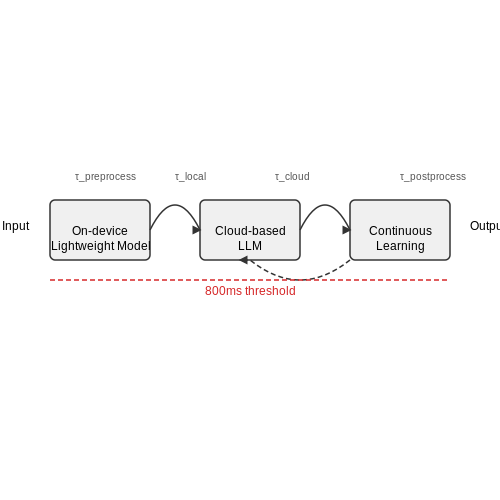
Architecture for Low-Latency Multilingual Inference
The inference pipeline typically employs a hybrid architecture combining:
- On-device lightweight models for intent classification and entity extraction
- Cloud-based large language models for complex query resolution
- Continuous learning modules that update embeddings without full retraining
Where latency components must satisfy:
Dynamic Vocabulary Adaptation
For domain-specific support (e.g., telecom vs. e-commerce), agents employ contextual vocabulary adaptation:
Where c represents the customer's domain context and γ is a threshold learned through reinforcement learning. This allows the same model to handle technical jargon in automotive support while switching to retail terminology for e-commerce queries.
Case Study: Banking Support Across 23 Languages
A deployment at Deutsche Bank achieved 92% first-contact resolution by:
- Implementing gradient-cached fine-tuning with
Where α weights are adjusted based on the similarity between current and past query embeddings. This approach reduced catastrophic forgetting by 73% compared to standard fine-tuning.
Error Recovery Through Meta-Learning
When encountering unfamiliar queries, agents employ a few-shot learning strategy:
Where k nearest neighbors from past resolved tickets are retrieved using FAISS indexing. This allows adaptation without immediate human intervention, with successful recovery rates exceeding 85% in production environments.
Educational Tools for Language Learning
Modern multilingual self-improving language agents leverage advanced educational tools to optimize language acquisition. These tools integrate adaptive learning algorithms, real-time feedback mechanisms, and multimodal interaction capabilities to enhance proficiency across diverse linguistic contexts.
Adaptive Learning Algorithms
Adaptive learning systems dynamically adjust content difficulty based on learner performance. A common approach uses Bayesian knowledge tracing to model skill mastery:
where P(Ln) is the probability of knowing the skill at step n, P(T) is the probability of learning from a correct attempt, and P(G) is the probability of guessing correctly without knowing the skill. This model enables personalized pacing by continuously updating the learner's knowledge state.
Real-Time Feedback Systems
Neural sequence-to-sequence models with attention mechanisms generate contextual feedback for language learners. The architecture typically employs:
where Q, K, and V represent query, key, and value matrices respectively, and dk is the dimension of the key vectors. This allows the system to focus on relevant linguistic features when providing corrections or explanations.
Multimodal Interaction
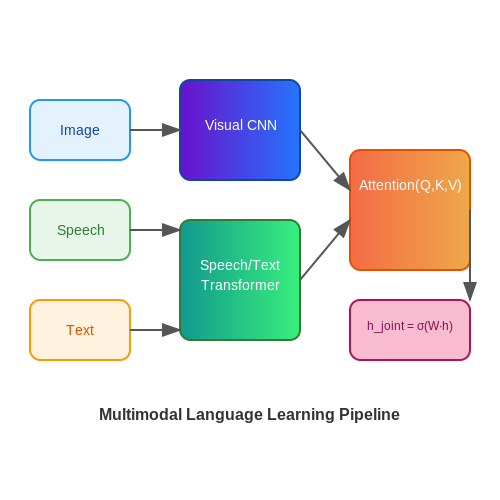
State-of-the-art tools combine speech recognition, computer vision, and natural language processing to create immersive learning environments. A typical multimodal pipeline processes inputs through:
- Convolutional neural networks for visual input analysis
- Transformer-based models for text and speech processing
- Cross-modal attention layers for feature fusion
The joint representation hjoint from multiple modalities m1...mn can be expressed as:
where Wi are learnable weights for each modality and σ is a non-linear activation function.
Self-Improving Mechanisms
Advanced systems employ reinforcement learning with human-in-the-loop feedback to continuously refine their teaching strategies. The policy gradient update rule for such systems is:
where πθ represents the teaching policy, at are teaching actions, st are student states, and Rt are rewards derived from learning outcomes and user feedback.
Cross-Lingual Transfer Learning
Modern tools leverage multilingual language models with shared subword representations to accelerate learning across languages. The training objective combines:
where LMLM is masked language modeling loss, LTLM is translation language modeling loss, and LCL is contrastive loss for cross-lingual alignment.
4.3 Content Moderation in Multilingual Platforms
Challenges in Multilingual Moderation
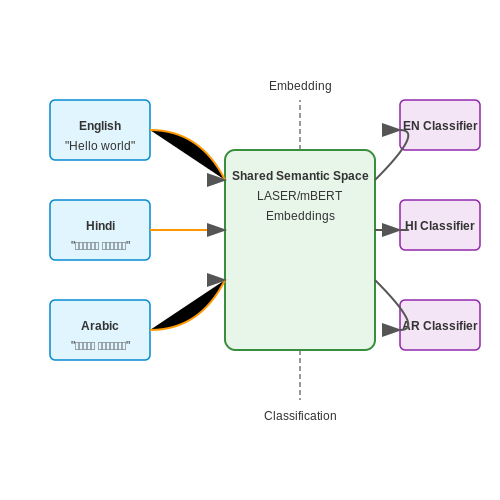
Content moderation in multilingual platforms introduces complexities absent in monolingual systems. The primary challenge stems from linguistic diversity, where a single policy must generalize across languages with varying syntactic structures, cultural contexts, and semantic nuances. For instance, hate speech detection requires understanding language-specific slurs, idioms, and contextual sarcasm. A model trained on English data may fail to detect hate speech in Hindi or Arabic due to morphological differences and script variations.
Here, P(y|x, l) represents the probability of label y given input text x and language l, where f_l(x) is the language-specific scoring function. The denominator normalizes probabilities across all L supported languages.
Cross-Lingual Transfer Learning
Modern approaches leverage cross-lingual embeddings (e.g., LASER, mBERT) to project text from different languages into a shared semantic space. This enables knowledge transfer from high-resource languages (e.g., English) to low-resource ones. The alignment quality depends on:
- Parallel corpus size for embedding training
- Language family proximity
- Script similarity (Latin vs. Cyrillic vs. Logographic)
Zero-shot transfer performance degrades logarithmically with linguistic distance from the source language:
Where D(l_s, l_t) measures phylogenetic distance between source and target languages, and α is a task-dependent scaling factor.
Real-Time Adaptation Mechanisms
Self-improving agents employ feedback loops where moderator actions train language-specific classifiers. The adaptation process follows:
- Human moderators label contentious content
- Language-specific fine-tuning occurs via contrastive learning
- Model confidence thresholds adjust dynamically per language
The confidence threshold τ_l for language l adapts based on moderator agreement rates:
Where A_l is the moderator agreement rate and η the learning rate.
Case Study: Wikipedia's ORES System
The Objective Revision Evaluation Service (ORES) demonstrates scalable multilingual moderation. Key innovations include:
- Language-agnostic damage prediction using edit features
- Per-wiki calibration of false positive rates
- Continuous retraining on patrolled edits
For Wikipedia's 300+ language editions, ORES achieves 0.82 mean AUC-ROC, varying from 0.91 (English) to 0.67 (low-resource languages). The performance gap highlights the need for language-specific adaptation.
Ethical Considerations
Multilingual moderation risks cultural bias when:
- Training data overrepresents certain languages
- Cultural context is lost in translation
- Local norms conflict with global platform policies
Mitigation strategies include regional review boards and transparency reports showing decision rates by language. The fairness metric F for language l compares false positive rates:
Where FP_l is the false positive rate for language l and FP the platform-wide average.
5. Bias and Fairness in Multilingual Models
5.1 Bias and Fairness in Multilingual Models
Sources of Bias in Multilingual Language Models
Multilingual models inherit biases from their training data, which often reflects historical, cultural, and societal inequalities. These biases manifest in several ways:
- Representational bias occurs when certain languages or dialects are underrepresented in the training corpus. For example, low-resource languages may receive less attention during pretraining, leading to poorer performance.
- Annotator bias arises when human-labeled datasets reflect the subjective judgments of annotators, who may unconsciously favor certain linguistic patterns or cultural perspectives.
- Algorithmic bias emerges from the model architecture itself, as certain tokenization or attention mechanisms may disadvantage specific language families.
The bias can be quantified using metrics like disparate performance scores across languages. For a model f evaluated on dataset D with N languages, the performance gap Δ is:
Measuring Fairness in Multilingual Settings
Fairness metrics must account for both intra-language and cross-language disparities. A rigorous approach involves:
- Demographic parity: Ensuring equal performance across language groups for similar tasks.
- Equalized odds: Maintaining consistent true positive and false positive rates across languages.
For a classification task with K classes and L languages, the fairness constraint can be expressed as:
where Dl and Dl' are datasets for languages l and l', and ε is a fairness threshold.
Mitigation Strategies
Several approaches have shown promise in reducing multilingual bias:
- Data reweighting: Adjusting sampling probabilities during training to balance language representation.
- Adversarial debiasing: Training an auxiliary network to penalize language-specific features in the latent space.
- Prompt-based calibration: Using carefully designed prompts to steer model behavior toward equitable outputs.
The adversarial objective for debiasing can be formulated as:
where hθ are the model's hidden representations, gϕ is the adversarial classifier, and λ controls the trade-off between task performance and fairness.
Case Study: Gender Bias Across Languages
Recent studies reveal that gender bias amplifies in multilingual settings due to morphological differences. For example, languages with grammatical gender (e.g., Spanish) show stronger stereotype associations in occupation prediction tasks compared to gender-neutral languages (e.g., Finnish). The bias magnitude B for a language pair can be measured as:
where S is a set of stereotype templates evaluated in both languages.
5.2 Privacy Concerns in Language Data Handling
Multilingual self-improving language agents inherently process vast amounts of sensitive linguistic data, raising critical privacy challenges. The primary concern stems from the potential for data leakage during model training, fine-tuning, or inference phases. Even when trained on anonymized datasets, language models can memorize and reproduce personally identifiable information (PII), as demonstrated by Carlini et al. (2021) in their work on extraction attacks against transformer models.
Differential Privacy in Language Model Training
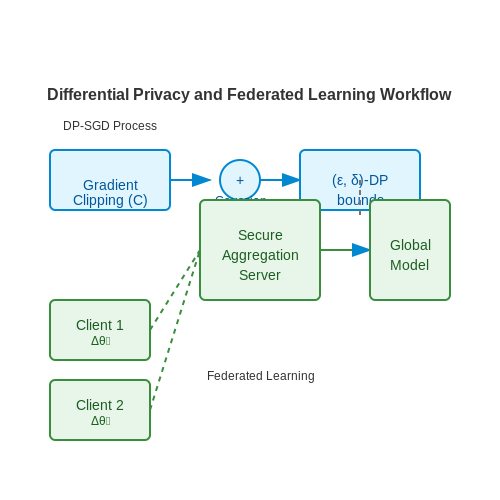
Formal privacy guarantees can be achieved through differential privacy (DP), which bounds the influence of any single data point on the model's output. For a language model with parameters θ trained on dataset D, (ε, δ)-DP ensures that for any adjacent datasets D and D' differing by one entry:
Implementing DP requires careful noise injection during optimization. The most common approach modifies stochastic gradient descent (SGD) by:
- Clipping per-example gradients to bound L2 norm (C)
- Adding Gaussian noise calibrated to the privacy budget (σ)
- Computing privacy loss using moments accountant
Federated Learning for Decentralized Data
When handling multilingual data across jurisdictions with varying privacy laws (e.g., GDPR vs. CCPA), federated learning (FL) enables model training without centralizing raw data. In FL, clients (devices or institutions) compute local updates which are aggregated through secure protocols:
- Each client k computes Δθk on local data Dk
- Updates are encrypted via homomorphic encryption or secure multiparty computation
- The server aggregates updates: θ ← θ + η∑knkΔθk/N
Recent advances like federated distillation (Lin et al., 2023) further reduce communication overhead by exchanging model outputs instead of parameters.
Membership Inference Attacks
Even with DP and FL, models remain vulnerable to membership inference attacks (MIAs) that determine whether a specific data point was in the training set. For language models, Shokri et al.'s (2021) attack exploits perplexity differences:
where τ is a threshold calibrated on shadow models. Defenses involve:
- Regularization via dropout (p ≥ 0.5 for attention layers)
- Adversarial training with MIA-aware loss terms
- Output perturbation through temperature scaling
Multilingual Considerations
Privacy risks compound in multilingual settings due to:
- Cross-lingual transfer: PII in one language may affect another language's representations
- Low-resource languages: Sparse data increases memorization risk (per-token privacy loss ∝ 1/Nlang)
- Cultural norms: Varying expectations of privacy across linguistic communities
Recent work on language-specific privacy budgets (Zhang et al., 2023) proposes adaptive εlang allocation based on:
This ensures proportional protection while maintaining model utility across languages.
5.3 Mitigating Misinformation Across Languages
Cross-Lingual Fact-Checking Architectures
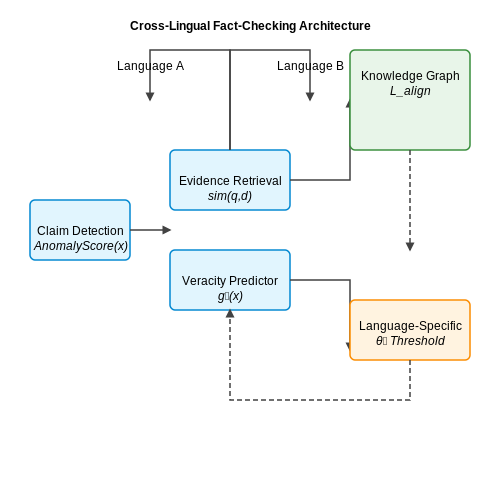
Multilingual language agents must employ robust cross-lingual fact-checking pipelines to combat misinformation. A typical architecture consists of three components: claim detection, evidence retrieval, and veracity prediction. The claim detection module identifies potentially false statements using anomaly detection in the embedding space:
where x is the claim embedding, μ is the mean of verified claims in the latent space, and σ is the standard deviation. For evidence retrieval, agents use dense passage retrieval across multilingual corpora:
where Eq and Ed are separate encoders optimized for query-document matching across languages.
Knowledge Graph Alignment
To handle language-specific misinformation patterns, agents align knowledge graphs (KGs) through cross-lingual entity linking. Given a KG G = (V,E) with entities V and relations E, the alignment loss between language pairs (l1, l2) is:
where P is the set of aligned entity pairs and fl are language-specific encoders. This enables propagation of veracity labels across language-specific subgraphs.
Dynamic Confidence Calibration
Language agents must adapt confidence thresholds per language to account for varying data quality. The optimal threshold θl for language l is learned via:
where FPR and FNR are false positive/negative rates, weighted by language-specific coefficients α, β that account for misinformation prevalence.
Adversarial Training Regimes
To combat language-specific adversarial attacks, agents are trained on perturbed inputs generated through:
- Code-switching injections (e.g., mixing Hindi and English phrases)
- Homoglyph substitutions (Unicode character swaps)
- Back-translation noise (en→fr→en chains)
The adversarial loss term incorporates multilingual perturbations:
where δ is constrained by language-specific perturbation budgets εl.
Real-World Deployment Challenges
Practical systems must handle:
- Low-resource language drift: Embedding spaces degrade for languages with sparse training data
- Cultural context gaps: Factual claims may depend on untranslatable cultural references
- Multimodal misinformation: Text-image combinations that evade unimodal detectors
State-of-the-art approaches use mixture-of-experts architectures where language-specific submodels fl(x) gate their outputs through:
with shared hidden representation h and language-specific weight vectors wl.
6. Key Research Papers and Publications
6.1 Key Research Papers and Publications
- Multilingual Transfer Learning for Code-Switched Language and Speech ... — Multilingual Transfer Learning for Code-Switched Language and Speech Neural Modeling by Genta Indra Winata A Thesis Submitted to The Hong Kong University of Science and Technology in Partial Fulfillment of the Requirements for the Degree of Doctor of Philosophy in the Department of Electronic and Computer Engineering April 2021, Hong Kong
- Language Imbalance Driven Rewarding for Multilingual Self-improving — Request PDF | Language Imbalance Driven Rewarding for Multilingual Self-improving | Large Language Models (LLMs) have achieved state-of-the-art performance across numerous tasks. However, these ...
- Code-switching finetuning: Bridging multilingual pretrained language ... — In recent years, the development of pre-trained models has significantly propelled advancements in natural language processing. However, multilingual sequence-to-sequence pretrained language models (Seq2Seq PLMs) are pretrained on a wide range of languages (e.g., 25 languages), yet often finetuned for specific bilingual tasks (e.g., English-German), leading to domain and task discrepancies ...
- Exploring opportunities for language immersion in the posthuman ... — This paper aims to explore the interplay between such posthuman communication and posthumanist applied linguistics, and between digital agents and human agency in response to the increasing permeation of AI in life and learning.,A core team of four researchers investigated how digital agents could be leveraged to support immersive target ...
- Emergent language: a survey and taxonomy | Autonomous Agents and Multi ... — The field of emergent language represents a novel area of research within the domain of artificial intelligence, particularly within the context of multi-agent reinforcement learning. Although the concept of studying language emergence is not new, early approaches were primarily concerned with explaining human language formation, with little consideration given to its potential utility for ...
- Improving EFL learners' speaking skills and ... - ScienceDirect — As speaking is a critical skill for second language learners to communicate with native and non-native speakers and to participate in real-life situations (Jabber & Mahmood, 2020; Kohn & Hoffstaedter, 2017; Li & Chan, 2024; Wan & Moorhouse, 2024), it can be a vital component in affecting and shaping learners' overall language development.Learners with considerable speaking skills can achieve ...
- PDF Seamless Language Expansion: Enhancing Multilingual Mastery in Self ... — Figure 1: (a) Architecture of self-supervised pre-trained models. (b) Architecture of Transformer blocks in self-supervised pre-trained models. (c) Architecture of LoRA which is intergrated to the self-attention module of Transformer blocks. of our adaptation methods on adapting SSL model to a new lan-guage.
- Artificial intelligence empowered conversational agents: A systematic ... — Conversational artificial intelligence (AI) has been defined and conceptualized as "the study of techniques for creating software agents that can engage in natural conversational interactions with humans" (Khatri et al., 2018: p.41).Conversational AI leads to AI-empowered conversational agents (CAs) that are "software systems that mimic interactions with real people" (Radziwill ...
- Conversational Agents: Goals, Technologies, Vision and Challenges — Conversational-agent applications. 3. CA's Design Issues. This section describes the different components related to CA design. CA design is divided into four classes: text components for chatbots; CA components related to voice-based virtual agents; physical-related components for goal-oriented CAs or for embodied agents; and task-performance components for goal oriented CAs.
- PDF Neural Approaches to Multilingual Information Retrieval - Springer — Language IR (CLIR) was proposed as an information retrieval task, research began on MLIR [34]. MLIR seeks to produce a total ordering over retrieved documents, regard-less of language, such that the most useful documents appear at the top of the ranking. Assuming a searcher can consume multilingual information (either directly or using
6.2 Open-Source Implementations and Tools
- GitHub - microsoft/UniSpeech: UniSpeech - Large Scale Self-Supervised ... — The family of UniSpeech: WavLM (arXiv): WavLM: Large-Scale Self-Supervised Pre-training for Full Stack Speech Processing UniSpeech (ICML 2021): Unified Pre-training for Self-Supervised Learning and Supervised Learning for ASR UniSpeech-SAT (ICASSP 2022 Submission): Universal Speech Representation Learning with Speaker Aware Pre-Training ILS-SSL (ICASSP 2022 Submission): Self-Supervised ...
- PDF Large Language Model based Multi-Agents: A Survey of Progress and ... — In Section 4, we categorize current applications into two primary streams: multi-agents for problem-solving and multi-agents for world simulation. To guide individuals in identifying appropriate tools and resources, we present open-source implementation frameworks for studying LLM-MA, as well as the usable datasets and benchmarks in Sec-tion 5.
- adaptMLLM: Fine-Tuning Multilingual Language Models on Low ... - MDPI — The advent of Multilingual Language Models (MLLMs) and Large Language Models (LLMs) has spawned innovation in many areas of natural language processing. Despite the exciting potential of this technology, its impact on developing high-quality Machine Translation (MT) outputs for low-resource languages remains relatively under-explored. Furthermore, an open-source application, dedicated to both ...
- Improving Multilingual and Code-Switching ASR Using Large Language ... — We investigate using large language models (LLMs) to generate text-only training data for improving multilingual and code-switching automatic speech recognition (ASR) through a text injection method. In a multilingual setup or a low-resource scenario such as code-switching, we propose to generate text data using the state-of-the-art PaLM 2. To better match the generated text data with specific ...
- Husky: A Unified, Open-Source Language Agent for Multi-Step Reasoning — Language agents perform complex tasks by using tools to execute each step precisely. However, most existing agents are based on proprietary models or designed to target specific tasks, such as mathematics or multi-hop question answering. We introduce Husky, a holistic, open-source language agent that learns to reason over a unified action space to address a diverse set of complex tasks ...
- Open Source - LanguageTool — Learn about LanguageTool's open-source core functionality being multilingual and free spell checking tool. Understand how it can benefit your business or project.
- GitHub - s-JoL/Open-Llama: The complete training code of the open ... — Open-Llama is an open-source project that offers a complete training pipeline for building large language models, ranging from dataset preparation to tokenization, pre-training, prompt tuning, lora, and the reinforcement learning technique RLHF. You can try this model directly from the Demo. Join discord to discuss the development of large language models.
- Collaboration between intelligent agents and large language models: A ... — To fully leverage the advantages of these two strategies, we have developed an innovative collaborative framework that combines intelligent agents and LLMs. Our intelligent agent generates more detailed prompts with programming knowledge, effectively guiding the large language model in completing code writing tasks.
- LLM Agents: The Complete Guide to Large Language Models — Explore the complete guide to LLM agents. Learn how large language models (LLMs) function as agents, their capabilities, applications, and development strategies.
- GitHub - openai/whisper: Robust Speech Recognition via Large-Scale Weak ... — A Transformer sequence-to-sequence model is trained on various speech processing tasks, including multilingual speech recognition, speech translation, spoken language identification, and voice activity detection. These tasks are jointly represented as a sequence of tokens to be predicted by the decoder, allowing a single model to replace many stages of a traditional speech-processing pipeline ...
6.3 Recommended Books and Online Courses
- Individual Language Planning for Self-Directed Learning in Multilingual ... — 2.1 Individual Language Planning and Multilingual Education. The concept of individual language planning should be considered in terms of the scholarship around language planning. Language planning is generally considered in terms of it being realized as status planning (which relates to the position of a language in society), corpus planning (regulating the internal language structure in ...
- PDF ENHANCING VOCABULARY AND WRITING SKILLS THROUGH DIGITAL ... - ed — link between a media-rich environment and language learning. 3. DST and Vocabulary Development Many studies have shown that using stories in the foreign language teaching classroom is a powerful and effective way to improve and develop the four basic skills of language: speaking, writing, listening, and reading.
- Multilingual Future Self-Guides — In Stage 1, 523 students who were studying English and a language other than English simultaneously were recruited from four universities in eastern China to participate in the survey study. Latent profile analysis was conducted to identify the motivational profiles of future self-guides, including both the ideal multilingual self and language-
- The Impact of Interactive Shared Book Reading on Children's Language ... — The Preschool Language Scale-Fifth Edition (PLS-5 UK; Zimmerman et al., 2014) is a comprehensive language assessment instrument that evaluates both expressive and receptive language skills via elicitation and free-play and includes measures of vocabulary, phonological awareness, social communication, and language structure. The PLS-5 UK has ...
- (PDF) Large Language Model Agents for Improving Engagement with ... — LLM Agents for Improving Engagement with Interventions 3 roles in helping people understand the bene ts of change and motivate them to begin practicing. This type of support can provide the ...
- English learners? Emergent bilinguals? Multilingual learners?: Goals ... — 1 INTRODUCTION. In U.S. PreK-12 schools, multilingual students who are deemed in need of language support in school while they develop their English language proficiency are identified, through a home language survey and testing, as English learners.Once so identified, these students are entitled to language support services until they are reclassified as fluent English proficient (U.S ...
- Universal strategies for the improvement of expressive language skills ... — Well-developed oral language skills are strongly associated with academic achievement (Roulstone et al., 2011; Spencer et al., 2017), support literacy development and are an important tool for learning across the curriculum (Alexander, 2013).The importance of oral language extends beyond academic success, impacting on social, emotional, and mental health, both at school (Benner et al., 2002 ...
- Personalized review learning approach for improving behavioral ... — Language learners' engagement with a specific task is crucial to improving their academic achievement. To enhance student engagement and academic achievement in language learning, personalized language learning (PLL) can be employed to consider individual learning needs. Personalized review learning has emerged to facilitate PLL as a promising means of enhancing the long-term preservation of ...
- (PDF) Using E-books as Reading Material to Enhance EFL Learners ... — In this regard, e-books use needs to be guided and monitored by teachers. Literatures and languages Journal Abou bekr belkaid tlemcen university Students" Positive Beliefs about E- books
- Enhancing Students' English Language Vocabulary Skills Through An ... — It was showed how a program-internal glossary, an online multilingual dictionary and audio interpretation of such text may help improve reading as well as vocabulary learning in a web-based context.