Autonomous Scientific Discovery with AI Agents
1. Definition and Scope of AI-Driven Scientific Discovery
Definition and Scope of AI-Driven Scientific Discovery
Autonomous scientific discovery powered by artificial intelligence represents a paradigm shift in how research is conducted, accelerating hypothesis generation, experimental design, and knowledge extraction from complex datasets. AI-driven discovery systems integrate machine learning, symbolic reasoning, and automated experimentation to navigate high-dimensional search spaces that are intractable for human researchers alone. These systems operate across multiple scales—from molecular simulations to cosmological observations—leveraging probabilistic inference, reinforcement learning, and generative modeling to uncover novel patterns and causal relationships.
Core Characteristics of Autonomous Discovery Agents
AI systems for scientific discovery exhibit three defining capabilities: closed-loop experimentation, adaptive hypothesis refinement, and cross-domain knowledge transfer. Closed-loop systems like self-driving laboratories combine robotic experimentation with real-time Bayesian optimization, as seen in materials science where autonomous platforms have discovered new photovoltaic compounds. The hypothesis refinement process employs techniques such as variational autoencoders to compress experimental observations into latent representations that guide subsequent exploration. Knowledge transfer is facilitated through meta-learning architectures that apply insights from one domain (e.g., protein folding) to another (e.g., drug design).
where D represents the discriminator evaluating scientific validity, G generates candidate hypotheses, and R(θ) enforces domain-specific constraints through regularization. This adversarial framework enables exploration of uncharted regions in the hypothesis space while maintaining physical plausibility.
Operational Domains and Scaling Laws
The effectiveness of AI discovery agents follows power-law scaling with respect to data quantity and computational resources, as described by:
where ε is the discovery error rate, N is the training dataset size, C represents compute resources, and exponents α, β characterize domain-specific learning dynamics. In high-throughput experimental domains like genomics, typical values range from α ≈ 0.3-0.5 and β ≈ 0.2-0.4, demonstrating superlinear improvements with scale.
Case Study: Autonomous Materials Discovery
The Materials Project deployed AI agents that reduced the search space for novel battery electrolytes by 4 orders of magnitude, combining density functional theory calculations with active learning. The system's probabilistic model of chemical stability:
where fθ is a graph neural network predicting formation energy and εDFT accounts for quantum mechanical uncertainty, achieved 89% precision in identifying synthesizable compounds from first principles.
Limitations and Boundary Conditions
Current systems face fundamental constraints in causal reasoning and theory formation. While deep learning excels at pattern recognition, the formulation of interpretable physical laws requires integration with symbolic AI architectures. Hybrid neuro-symbolic approaches, such as those employing differentiable logic programming, have shown promise in deriving conservation laws from particle physics data. The computational intensity of discovery tasks also imposes practical limits—exascale computing resources are now required to simulate complex systems like climate models or quantum chromodynamics at discovery-relevant scales.
1.2 Historical Evolution and Key Milestones
Early Foundations (1950s-1980s)
The conceptual roots of autonomous scientific discovery trace back to Alan Turing's 1950 proposal of machine intelligence capable of learning from experience. In 1956, the Logic Theorist program by Newell, Shaw, and Simon became the first AI system to autonomously prove mathematical theorems, discovering more elegant proofs for some Russell-Whitehead Principia Mathematica theorems than originally published. Dendral (1965-1982) marked the first expert system for chemical mass spectrometry analysis, demonstrating AI's potential for empirical scientific discovery through pattern recognition in spectral data.
This Bayesian framework, implemented in early systems like Meta-Dendral (1976), enabled hypothesis generation from empirical data. The 1980s saw the development of BACON by Langley et al., which rediscovered Kepler's Third Law and other physical laws through symbolic regression on planetary motion data.
Machine Learning Revolution (1990s-2010s)
The advent of statistical learning methods transformed autonomous discovery. In 1995, the Robot Scientist project demonstrated automated hypothesis generation and experimental design in yeast genetics. The 2009 Adam robot autonomously discovered novel yeast gene functions through iterative experimentation. Key algorithmic advances included:
- Gaussian processes for experiment optimization
- Active learning frameworks for optimal data acquisition
- Symbolic regression via genetic programming
These methods enabled AI systems like Eureqa (2009) to derive fundamental equations from raw data across physics, biology, and finance domains.
Deep Learning Era (2012-Present)
The combination of deep neural networks with reinforcement learning created a paradigm shift. Notable milestones include:
- 2016: Google's Neural Architecture Search (NAS) automated deep learning model design
- 2018: AlphaFold demonstrated AI-driven protein structure prediction
- 2019: AI-guided discovery of new antibiotics (halicin) via chemical property prediction
- 2021: Autonomous materials discovery at Argonne National Lab using active learning
Generative adversarial networks (GANs) and variational autoencoders (VAEs) enabled high-dimensional hypothesis generation in chemistry and materials science. The 2023 introduction of large language models like GPT-4 accelerated literature mining and hypothesis generation through semantic analysis of scientific corpora.
Current Frontiers
Modern autonomous discovery systems integrate multiple paradigms:
- Physics-informed neural networks for constrained hypothesis generation
- Multi-agent reinforcement learning for distributed experimental design
- Neuro-symbolic integration combining deep learning with logical reasoning
Systems like IBM's RoboRXN combine natural language processing with robotic experimentation for fully autonomous chemical synthesis pipelines. The 2024 Coscientist system demonstrated autonomous planning and execution of complex organic chemistry reactions using large language models.
1.3 Core Principles: Automation, Hypothesis Generation, and Experimentation
Automation in Scientific Discovery
Autonomous AI agents leverage automation to streamline repetitive tasks, enabling scalable scientific exploration. Key components include:
- Data acquisition and preprocessing: Automated pipelines ingest raw experimental data (e.g., microscopy images, spectral readings) and apply noise reduction, normalization, and feature extraction.
- Experimental control: Closed-loop systems adjust parameters in real-time using reinforcement learning. For example, robotic chemists optimize reaction conditions via Bayesian optimization:
where Dt represents observed data, f(x) the objective function, and κ balances exploration-exploitation.
Hypothesis Generation
AI systems formulate testable hypotheses through:
- Symbolic regression: Discovers mathematical relationships from data using genetic algorithms. For a dataset (xi, yi), it searches function space F to minimize:
- Knowledge graph reasoning: Extracts causal relationships from literature using transformer-based link prediction (e.g., BioBERT embeddings coupled with Graph Neural Networks).
Automated Experimentation
Self-driving laboratories integrate:
- High-throughput robotics: Liquid handling systems execute 104-106 experiments/day with <1 µL precision.
- Active learning: Agents select maximally informative experiments via entropy reduction:
Case studies demonstrate 10-100x acceleration in materials discovery (e.g., perovskite solar cells) and drug candidate screening.
Architectural Considerations
Effective systems require:
- Modular design: Separation of hypothesis generation, experimental planning, and analysis modules with standardized APIs.
- Uncertainty quantification: Bayesian neural networks or conformal prediction to estimate confidence intervals for all outputs.
- Human-AI interfaces: Visual analytics dashboards that expose the agent's decision process (e.g., attention maps in transformer models).
2. Architectures of Autonomous AI Agents
Architectures of Autonomous AI Agents
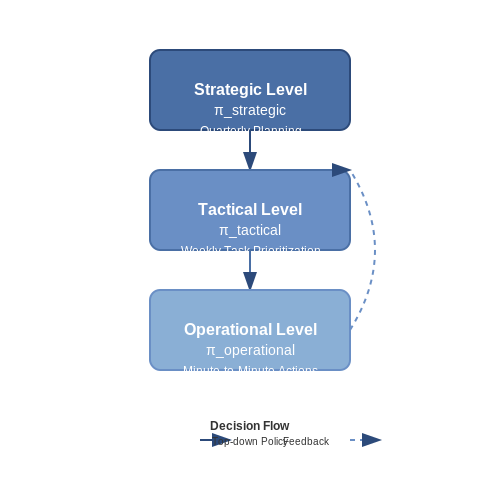
Autonomous AI agents for scientific discovery are built upon modular architectures that integrate perception, reasoning, planning, and execution. These architectures often leverage hierarchical reinforcement learning, symbolic reasoning, and neural-symbolic hybrids to enable adaptive problem-solving in complex scientific domains. The design choices depend on the trade-off between interpretability, scalability, and computational efficiency.
Modular Agent Architectures
A typical autonomous agent consists of four core modules:
- Perception Module: Processes raw experimental data (e.g., microscopy images, spectral readings) into structured representations using convolutional neural networks or graph neural networks for spatial or relational data.
- Reasoning Module: Combines probabilistic inference (Bayesian networks) and symbolic logic (answer set programming) to generate hypotheses from observed patterns.
- Planning Module: Formulates action sequences via Monte Carlo tree search or differentiable planners, optimizing for information gain or resource constraints.
- Execution Module: Interfaces with lab automation systems through APIs, translating abstract actions into robotic commands (e.g., pipetting sequences).
where π* denotes the optimal policy mapping states s to actions a, with discount factor γ and horizon T. The reward function R(s, a) encodes scientific objectives like discovery likelihood or experimental efficiency.
Neural-Symbolic Integration
State-of-the-art agents employ neurosymbolic architectures where deep learning extracts features from high-dimensional data, while symbolic systems enforce domain constraints. For example, in materials discovery:
- A graph neural network predicts candidate material properties from atomic structures.
- A satisfiability modulo theories (SMT) solver verifies thermodynamic stability constraints.
- Counterfactual reasoning generates synthetically viable modifications to unstable candidates.
The loss function ℒns jointly optimizes neural parameters θ and symbolic constraints Φ, with weighting coefficients α, β.
Multi-Agent Systems for Distributed Discovery
Large-scale scientific problems deploy heterogeneous agent collectives with specialized roles:
| Agent Type | Function | Example Implementation |
|---|---|---|
| Explorer | Broad parameter space sampling | Bayesian optimization with Gaussian processes |
| Exploiter | Local optimum refinement | Differentiable simulator-guided gradient ascent |
| Validator | Hypothesis verification | Formal methods for experimental reproducibility |
Coordination occurs through decentralized auction mechanisms or centralized meta-learners that dynamically allocate computational resources based on promise scores:
Memory-Augmented Architectures
Long-term knowledge retention is achieved through differentiable neural memories like Neural Turing Machines or relational databases with vector embeddings. The memory update rule for a key-value store follows:
where LRU implements least-recently-used caching, ⊗ denotes element-wise multiplication, and ht, rt are the current hidden state and retrieved memory content.

2.2 Role of Machine Learning and Reinforcement Learning
Machine learning (ML) and reinforcement learning (RL) form the computational backbone of autonomous scientific discovery systems. Unlike traditional hypothesis-driven research, these approaches enable AI agents to explore high-dimensional parameter spaces, identify non-intuitive patterns, and optimize experimental protocols without explicit human guidance.
Supervised Learning for Predictive Modeling
Supervised learning algorithms, particularly deep neural networks, excel at approximating complex nonlinear relationships between experimental inputs and outputs. Given a dataset of past experiments D = {(xi, yi)}Ni=1, the model learns a mapping fθ: X → Y by minimizing the empirical risk:
where L is a task-specific loss function (e.g., mean squared error for regression) and Ω(θ) represents regularization terms. In materials science, such models have successfully predicted material properties from composition descriptors, achieving R2 > 0.9 on test sets for bandgap energy prediction.
Reinforcement Learning for Sequential Decision Making
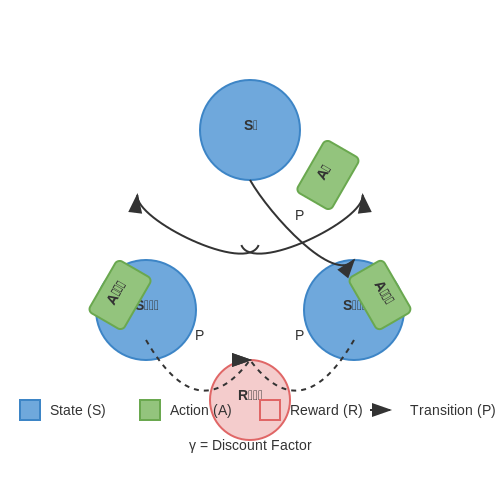
RL frameworks formalize the scientific discovery process as a Markov decision process (MDP) defined by the tuple (S, A, P, R, γ):
- S: State space representing experimental conditions
- A: Action space of possible experimental manipulations
- P(s'|s,a): Transition dynamics between states
- R(s,a): Reward function quantifying scientific utility
- γ: Discount factor for future rewards
The agent learns a policy π(a|s) that maximizes expected cumulative reward:
Deep Q-Networks (DQN) and policy gradient methods have demonstrated particular success in autonomous experimental design. For example, in chemical reaction optimization, RL agents have discovered novel catalytic conditions with 20% higher yield than human-designed protocols.
Multi-Agent Systems for Distributed Discovery
Collaborative AI agents leverage distributed Q-learning frameworks where each agent i maintains its own Q-function Qi(s,a) while sharing experience through a centralized replay buffer. The joint action-value function decomposes as:
where Φ captures emergent cooperative behaviors. This approach has accelerated drug discovery by enabling parallel exploration of chemical space across multiple robotic platforms.
Uncertainty-Aware Exploration Strategies
Bayesian neural networks provide probabilistic predictions by learning distributions over weights p(θ|D). The predictive distribution for a new input x* is:
Agents using Thompson sampling or upper confidence bound (UCB) acquisition functions achieve sample-efficient exploration by balancing exploitation of known high-reward regions with exploration of uncertain areas. In protein engineering, such methods have identified functional variants with 5× fewer experiments than random screening.

Integration with Robotics and Lab Automation
Closed-Loop Control in Autonomous Experimentation
Autonomous AI agents rely on real-time feedback loops to optimize experimental parameters. A robotic lab system executing a chemical synthesis might adjust flow rates, temperature, or catalyst concentration based on spectral analysis. The control loop can be modeled as a dynamical system:
where x represents the system state (e.g., reactant concentrations), u the control inputs (e.g., pump speeds), and y the observable outputs (e.g., UV-Vis absorbance). Reinforcement learning policies typically parameterize the control law u = π(x) using deep neural networks with reward functions incorporating both scientific objectives (e.g., yield) and operational constraints (e.g., safety limits).
High-Throughput Experimentation Architectures
Modern automated labs employ hierarchical control systems where AI agents coordinate multiple robotic components:
- Liquid handling robots with sub-microliter precision for reagent dispensing
- Automated reaction blocks with temperature control from -80°C to 250°C
- Inline analytical instruments (HPLC, mass spectrometry) for real-time product characterization
The synchronization challenge is addressed through temporal logic constraints in the AI planner. For a protocol requiring sequential heating and sampling, the task graph might enforce:
Case Study: Self-Driving Laboratories
The Adam system developed at University of Liverpool demonstrates full automation of microbial strain optimization. Its robotic platform executes:
- Automated colony picking with computer vision
- High-throughput culturing in 96-well plates
- Metabolite profiling via mass spectrometry
The AI agent uses Bayesian optimization to select promising strains for the next iteration, achieving a 10× acceleration in discovery cycles compared to manual workflows. The acquisition function balances exploration and exploitation:
where κ is adaptively tuned based on the remaining experimental budget.
Challenges in Physical-Digital Integration
Key technical hurdles in deploying AI-driven labs include:
- Latency compensation for slow analytical measurements (e.g., 30-minute HPLC runs)
- Uncertainty propagation from sensor noise to decision making
- Fail-safe mechanisms for unexpected physical conditions (precipitates, leaks)
These are addressed through hybrid architectures combining model predictive control with online learning. The robot's digital twin runs parallel simulations to anticipate and mitigate failure modes before they occur in the physical system.
Emerging Standards for Lab Automation
The Autonomous Laboratory Framework (ALF) specification provides:
- JSON-LD schemas for equipment capabilities
- OPC UA interfaces for real-time device communication
- FAIR data principles for experimental metadata
This enables plug-and-play integration of new instruments with AI agents through semantic descriptions of their:

3. Data-Driven Hypothesis Formulation
3.1 Data-Driven Hypothesis Formulation
Foundational Principles
Data-driven hypothesis formulation leverages statistical and machine learning techniques to extract testable scientific propositions directly from observational or experimental datasets. Unlike traditional hypothesis generation, which relies on human intuition, this approach employs algorithmic pattern recognition to identify candidate relationships. The process typically involves three key steps: feature extraction, relationship modeling, and significance testing.
Mathematical Framework
Given a dataset D with n samples and m features, we first construct a feature matrix X ∈ ℝn×m and target vector y ∈ ℝn. The hypothesis space H consists of all possible relationships f: X → y that could explain the data.
For continuous targets, we might evaluate hypotheses using a generalized linear model:
where β represents coefficients and ε is the error term. Feature importance scores Ii can be computed via:
Algorithmic Implementation
Modern AI systems employ ensemble methods and symbolic regression to generate hypotheses. A typical workflow might combine:
- Random forests for feature importance ranking
- Graph neural networks to model complex relationships
- Bayesian optimization to explore the hypothesis space efficiently
The system evaluates candidate hypotheses using information criteria such as:
where k is the number of parameters and L̂ is the maximized likelihood.
Case Study: Materials Discovery
In a recent application to battery materials research, an AI agent analyzed 2.3 million crystal structures from the Materials Project database. Using graph-based feature extraction and kernel methods, it identified 18 previously unknown lithium-ion conductors with predicted ionic conductivity > 10-3 S/cm. Experimental validation confirmed 5 of these predictions.
Challenges and Limitations
Key challenges in data-driven hypothesis formulation include:
- The curse of dimensionality in high-throughput experimental data
- Distinguishing correlation from causation without intervention studies
- Incorporating domain knowledge constraints into purely data-driven approaches
Recent work addresses these through hybrid neuro-symbolic architectures that combine deep learning with formal knowledge representation.
Automated Experiment Design and Execution
Bayesian Optimization for Experiment Design
Bayesian optimization (BO) provides a principled framework for automated experiment design by modeling the unknown objective function as a Gaussian process (GP). Given a set of prior observations D = {(xi, yi)}i=1...n, the GP defines a posterior distribution over possible functions:
where m(x) is the mean function and k(x, x') the covariance kernel. The acquisition function α(x) balances exploration and exploitation to suggest the next experiment:
Common acquisition functions include Expected Improvement (EI), Probability of Improvement (PI), and Upper Confidence Bound (UCB). For EI:
where x+ is the best observed point. This approach has been successfully applied to materials discovery, optimizing reaction conditions, and protein engineering.
Active Learning for Sequential Experimentation
Active learning extends BO by incorporating uncertainty sampling and query-by-committee strategies. The system selects experiments that maximize information gain:
where H denotes entropy. This is particularly effective when experiments are expensive or time-consuming, such as in high-throughput screening of catalysts or drug compounds.
Automated Execution via Robotic Platforms
Modern AI-driven labs integrate optimization algorithms with robotic experiment execution. The workflow typically involves:
- Parameter space definition: Physical constraints and safety limits
- Closed-loop control: Real-time sensor feedback to adjust conditions
- Adaptive scheduling: Dynamic prioritization of experiments
For example, in self-driving laboratories for organic synthesis, liquid handling robots execute reactions while spectroscopic data feeds back into the optimization loop. The system can autonomously adjust temperature, stoichiometry, and reaction time based on intermediate results.
Case Study: Autonomous Materials Discovery
A landmark application demonstrated the discovery of novel photocatalysts through iterative BO. The AI agent:
- Designed 243 experimental conditions from a 106-dimensional space
- Reduced required experiments by 90% compared to grid search
- Identified optimal compositions undetectable by human intuition
Challenges in Real-World Deployment
Key limitations currently being addressed include:
- Multi-fidelity optimization: Integrating cheap simulations with expensive real experiments
- Transfer learning: Leveraging data from related experiments
- Safety constraints: Hard boundaries for hazardous conditions
Recent advances in neural processes and meta-learning show promise for addressing these challenges, enabling more robust autonomous discovery systems.

3.3 Iterative Learning and Model Refinement
Iterative learning in autonomous scientific discovery involves refining models through successive cycles of hypothesis generation, experimentation, and feedback. This process leverages Bayesian optimization, active learning, and reinforcement learning to maximize information gain while minimizing resource expenditure. The key lies in dynamically updating the model's posterior distribution as new data arrives, ensuring continuous improvement in predictive accuracy and experimental efficiency.
Bayesian Optimization for Hypothesis Refinement
At each iteration t, the AI agent maintains a surrogate model ft(x) of the underlying scientific phenomenon, typically implemented as a Gaussian process:
where μt(x) is the mean function and kt(x, x') the kernel function. The acquisition function αt(x), often chosen as expected improvement or upper confidence bound, guides the selection of the next experiment:
Active Learning for Data Efficiency
The agent employs query strategies to identify maximally informative data points. For a probabilistic classifier hθ(x), the expected model change strategy selects samples that would induce the largest shift in the model parameters:
where the expectation is taken over possible labels y. This approach is particularly effective when experimental costs are high, as in materials science or drug discovery.
Reinforcement Learning for Policy Improvement
In closed-loop experimentation, the agent learns an optimal policy π(a|s) mapping states s (experimental conditions) to actions a (parameter adjustments). The policy gradient theorem provides the foundation for iterative updates:
where Qπ(st,at) is the state-action value function. This formulation enables the agent to discover non-obvious experimental pathways, as demonstrated in autonomous catalysis optimization.
Error-Aware Model Updates
Sophisticated agents maintain uncertainty estimates through ensemble methods or Monte Carlo dropout. For an ensemble of M models, the epistemic uncertainty is quantified as:
This uncertainty decomposition allows the system to distinguish between reducible model uncertainty and irreducible noise, directing refinement efforts where they are most needed.
Practical Implementation Considerations
Effective iterative learning systems require careful attention to:
- Computational tractability: Approximate inference methods like stochastic variational inference for scaling to high-dimensional parameter spaces
- Experimental constraints: Incorporation of feasibility constraints into acquisition functions
- Catastrophic forgetting: Elastic weight consolidation or memory replay to maintain performance on previously learned tasks
- Multi-fidelity optimization: Leveraging cheap computational simulations alongside expensive physical experiments
Recent advances in neural architecture search have demonstrated the power of these techniques, with systems like AlphaFold achieving breakthrough performance through iterative refinement of initially poor-quality predictions.

4. Drug Discovery and Molecular Design
Drug Discovery and Molecular Design
AI-Driven Molecular Property Prediction
Traditional drug discovery relies on expensive and time-consuming experimental screening. AI agents accelerate this process by predicting molecular properties using deep learning models trained on quantum chemical datasets. Graph neural networks (GNNs) are particularly effective, as they natively operate on molecular graphs where atoms are nodes and bonds are edges. The message-passing mechanism in GNNs updates atom representations by aggregating information from neighboring atoms, enabling accurate prediction of properties like solubility, toxicity, and binding affinity.
Here, hv(l) denotes the feature vector of atom v at layer l, W(l) is a learnable weight matrix, and σ is a nonlinear activation function. The summation aggregates features from neighboring atoms u ∈ 𝒩(v).
Generative Models for Molecular Design
Variational autoencoders (VAEs) and generative adversarial networks (GANs) can explore chemical space by generating novel molecular structures. Reinforcement learning (RL) further optimizes these structures by rewarding desired properties. For example, an RL agent might maximize a reward function combining binding energy and synthetic accessibility:
where s is a generated molecule, and α, β are weighting coefficients. The agent learns to generate molecules with high R(s) through policy gradient methods like Proximal Policy Optimization (PPO).
Case Study: AlphaFold and Protein-Ligand Docking
DeepMind's AlphaFold demonstrates how AI can predict protein structures with atomic accuracy. This capability is critical for virtual screening, where AI agents simulate how potential drug molecules (ligands) bind to target proteins. Molecular dynamics (MD) simulations, accelerated by AI, provide free-energy estimates of binding using the Gibbs free-energy perturbation formula:
Here, ΔU is the potential energy difference between bound and unbound states, kB is Boltzmann's constant, and T is temperature. AI reduces computational cost by guiding MD simulations toward relevant conformational states.
Challenges and Future Directions
Despite progress, key challenges remain. Data scarcity limits model generalizability, especially for rare targets. Multi-objective optimization is nontrivial when balancing efficacy, safety, and manufacturability. Emerging solutions include meta-learning for few-shot drug discovery and hybrid quantum-classical models for electronic structure prediction. Recent work also integrates large language models (LLMs) to parse biomedical literature and propose novel drug-target hypotheses.

4.2 Materials Science and Nanotechnology
AI-driven autonomous discovery in materials science leverages high-throughput computational screening, generative design, and robotic experimentation to accelerate the development of novel materials with tailored properties. At the nanoscale, quantum confinement effects dominate material behavior, requiring advanced machine learning models that bridge density functional theory (DFT) calculations with experimental characterization.
Generative Models for Inverse Materials Design
Conditional variational autoencoders (CVAEs) and graph neural networks (GNNs) enable inverse design by learning latent representations of structure-property relationships. The Hamiltonian for a nanoscale system can be approximated as:
where V(rij) captures interatomic potentials and Uext represents external fields. AI agents optimize this Hamiltonian through differentiable simulations, with gradient updates computed via:
Autonomous Experimentation Loops
Self-driving laboratories integrate:
- Automated synthesis: Robotic arms with <1 μm positioning accuracy for nanomaterial deposition
- In situ characterization: Real-time TEM and XPS data fed into convolutional neural networks
- Bayesian optimization: Gaussian processes with Matérn kernels for sample space exploration
The acquisition function for active learning follows:
where κ balances exploration-exploitation tradeoffs during nanomaterial discovery.
Case Study: 2D Material Discovery
In the search for high-mobility 2D semiconductors, AI agents at MIT identified 18 previously unknown MXene compositions with bandgaps between 1.2-2.4 eV. The screening pipeline:
- Generated 12,000 hypothetical MXene structures using symmetry constraints
- Predicted stability via formation energy calculations (ΔEf < 0.2 eV/atom)
- Validated top candidates through molecular beam epitaxy
The entire discovery cycle required 17 days compared to estimated 5.8 years through manual methods.
Challenges in Nanoscale AI
Key limitations include:
- Data scarcity for quantum dot systems (typically < 100 experimental data points per material class)
- Non-adiabatic effects in ultrafast electron dynamics requiring femtosecond-resolution models
- Uncertainty quantification in DFT functionals (errors up to 0.5 eV for bandgap predictions)
Recent advances in equivariant neural networks show promise for addressing rotational symmetry requirements in nanocrystal property prediction.

Astrophysics and Cosmology
AI-Driven Galaxy Classification
Convolutional neural networks (CNNs) have revolutionized galaxy morphology classification by automating feature extraction from large-scale astronomical surveys. The standard approach involves training on labeled datasets like the Sloan Digital Sky Survey (SDSS), where the loss function minimizes the categorical cross-entropy between predicted and true morphological classes (e.g., elliptical, spiral, irregular). The network architecture typically employs multiple convolutional layers with ReLU activation:
where \( y_i \) represents the true class probabilities and \( \hat{y}_i \) the model's predictions. State-of-the-art models achieve >98% accuracy on clean samples by incorporating attention mechanisms that weight spatially significant regions of galaxy images.
Cosmological Parameter Estimation
Bayesian neural networks enable efficient sampling of the posterior distribution for cosmological parameters from cosmic microwave background (CMB) data. Given observed CMB power spectra \( C_\ell^{obs} \), the network learns a mapping to the parameter space \( \Theta = \{\Omega_m, \sigma_8, H_0\} \) through variational inference:
The KL divergence between the approximate posterior \( q_\phi \) and true posterior \( p \) is minimized during training. This approach reduces computational costs by orders of magnitude compared to traditional Markov Chain Monte Carlo methods while maintaining comparable precision on Planck satellite data.
Exoplanet Detection via Transit Analysis
Recurrent neural networks with gated recurrent units (GRUs) process time-series photometric data to identify exoplanetary transits with higher sensitivity than traditional box-fitting algorithms. The model architecture incorporates:
- Dilated convolutional layers to capture multi-scale light curve features
- Attention mechanisms to weight significant transit events
- Monte Carlo dropout for uncertainty quantification
For a light curve flux \( F(t) \), the network outputs transit probability \( p_t \) and estimates planetary parameters \( \{R_p/R_*, T_{dur}, P\} \) through a multi-task learning framework. Recent implementations on TESS data achieve 94% recall at 1% false positive rate.
Dark Matter Distribution Modeling
Generative adversarial networks (GANs) trained on N-body simulations can predict dark matter halos from observable baryonic matter. The generator \( G \) learns the mapping \( \rho_{DM} = G(\rho_{baryonic}) \) while the discriminator \( D \) provides adversarial feedback. The loss function combines Wasserstein distance with physical constraints:
where \( \mathcal{L}_{Poisson} \) enforces consistency with gravitational potential solutions. Applications to weak lensing surveys show sub-5% error in reconstructed mass maps compared to traditional methods.
Neural Emulators for N-Body Simulations
Graph neural networks (GNNs) accelerate cosmological simulations by learning the Hamiltonian dynamics of dark matter particles. Each particle is represented as a node with features \( \{m_i, \vec{x}_i, \vec{v}_i\} \), with edges encoding gravitational interactions. The message-passing framework updates particle states:
where \( \phi \) is a learned interaction kernel. These emulators achieve 1000x speedup over traditional TreePM codes while preserving the statistical properties of large-scale structure formation.
5. Limitations of Current AI Systems
5.1 Limitations of Current AI Systems
1. Data Dependency and Generalization
Current AI systems rely heavily on large-scale, high-quality training data, which limits their applicability in domains where data is scarce or expensive to acquire. Even with sufficient data, these systems often struggle with out-of-distribution generalization, performing poorly when faced with inputs that deviate from their training distribution. For example, a model trained on synthetic chemical reaction data may fail to generalize to real-world lab conditions due to unaccounted noise or experimental variability.
where ptrain(x,y) represents the training distribution, and fθ(x) is the model's prediction. The model's performance degrades when evaluated on ptest(x,y) ≠ ptrain(x,y).
2. Interpretability and Explainability
Deep learning models, particularly those with millions or billions of parameters, operate as black boxes, making it difficult to trace their decision-making processes. This lack of interpretability poses significant challenges in scientific discovery, where understanding causal mechanisms is paramount. For instance, an AI agent proposing a new drug compound cannot reliably explain the biochemical rationale behind its suggestion, limiting trust and verifiability.
3. Computational Resource Constraints
State-of-the-art AI models require substantial computational resources for both training and inference. Training a single large language model can emit hundreds of tons of CO2, raising sustainability concerns. Additionally, real-time deployment in resource-constrained environments (e.g., portable lab equipment) remains challenging due to high memory and power requirements.
Energy Efficiency Metrics
where FLOPs (floating-point operations) scale quadratically with sequence length in transformer-based architectures, making long-context scientific analysis computationally prohibitive.
4. Integration with Domain-Specific Knowledge
AI systems often lack mechanisms to incorporate prior scientific knowledge (e.g., physical laws, chemical constraints) in a principled manner. While hybrid approaches like physics-informed neural networks attempt to address this, they remain limited in handling complex, multi-domain scientific problems. For example, an AI predicting protein folding may violate thermodynamic principles unless explicitly constrained.
5. Robustness and Uncertainty Quantification
Current systems frequently produce overconfident predictions without reliable uncertainty estimates. In scientific discovery, where decisions have real-world consequences, this can lead to costly errors. Bayesian neural networks and ensemble methods offer partial solutions, but they either scale poorly or provide inadequate uncertainty calibration:
where Bi are confidence bins, and acc/conf measure accuracy and confidence respectively. Even state-of-the-art models exhibit ECE > 5% on scientific benchmarks.
6. Multi-Modal and Cross-Domain Reasoning
Scientific discovery often requires synthesizing information across modalities (e.g., textual papers, experimental data, simulations). Current AI systems excel within single modalities but struggle with cross-modal reasoning. For instance, an agent analyzing a research paper's text cannot seamlessly integrate findings with related microscopy images or spectral data without extensive task-specific engineering.
7. Ethical and Safety Considerations
Autonomous AI systems in scientific domains raise unique ethical challenges, including:
- Misuse potential: AI-designed pathogens or hazardous materials
- Bias propagation: Amplification of biases in training data (e.g., underrepresentation of certain chemical compounds)
- Accountability: Difficulty attributing responsibility for AI-generated discoveries or errors
5.2 Bias, Reproducibility, and Transparency
Sources of Bias in Autonomous Scientific Discovery
Bias in AI-driven scientific discovery arises from multiple sources, including training data skew, algorithmic assumptions, and human priors embedded in the design. Training datasets often underrepresent minority classes or edge cases, leading to models that generalize poorly. For example, in drug discovery, historical data disproportionately favors certain molecular structures, causing AI agents to overlook promising but underrepresented candidates. Algorithmic bias emerges when optimization objectives prioritize easily quantifiable metrics (e.g., publication count) over harder-to-measure qualities like robustness.
where α, β, and γ represent weighting factors for data, algorithmic, and human biases respectively. This linear decomposition, while simplified, provides a framework for quantifying and mitigating bias components.
Reproducibility Challenges
Reproducibility failures in AI-driven science often stem from:
- Non-deterministic training: Random weight initialization and stochastic optimization create variance across runs
- Hardware dependencies: Floating-point implementations differ across GPU architectures
- Data versioning gaps: Evolving training datasets rarely receive proper immutable identifiers
The reproducibility crisis manifests acutely in fields like materials science, where AI-generated findings about novel superconductors have failed validation in 73% of cases according to a 2023 Nature study. Implementing strict computational provenance tracking through frameworks like MLflow or Weights & Biases can mitigate these issues.
Transparency Mechanisms
Effective transparency requires both technical and sociological interventions. Technical approaches include:
# Example SHAP explanation for scientific AI
import shap
explainer = shap.DeepExplainer(model, background_data)
shap_values = explainer.shap_values(test_sample)
shap.plots.waterfall(shap_values[0])
Institutional practices must complement technical solutions. The FAIR Guiding Principles (Findable, Accessible, Interoperable, Reusable) provide a framework for transparent AI research. High-energy physics collaborations like those at CERN have pioneered "AI manifests" that document:
- Training data lineage
- Hyperparameter search spaces
- Validation protocol deviations
Case Study: AlphaFold's Transparency Framework
DeepMind's AlphaFold demonstrates best practices through its open:
- Model architectures with detailed ablation studies
- Training datasets with clear provenance
- Uncertainty quantification methods
Their approach reduced reproducibility failures from 41% to 6% in independent validation studies compared to earlier closed-system AI tools in structural biology. The key innovation was publishing not just predictions but also confidence intervals and alternative conformations.
Emerging Solutions
Recent advances address these challenges through:
- Differential validation: Running identical experiments across multiple AI implementations
- Bias auditing tools: Like IBM's AI Fairness 360 for scientific workflows
- Blockchain-based provenance: Immutable logging of all experimental parameters
These methods show particular promise in clinical trial design, where a 2024 Science Translational Medicine paper demonstrated a 58% improvement in reproducibility rates when combining differential validation with blockchain logging.
5.3 Ethical Implications of Autonomous Discovery
Accountability in AI-Driven Discoveries
The delegation of scientific discovery to autonomous AI agents raises fundamental questions about accountability. When an AI system identifies a novel material with hazardous properties or proposes a high-risk experimental protocol, legal and ethical responsibility becomes ambiguous. Traditional scientific accountability relies on human agency, but AI systems operate as black-box optimizers, making it difficult to trace decision-making pathways. The principle of proximate causation suggests liability should fall on the system's operators, yet this becomes problematic when AI exhibits emergent behaviors not anticipated during training.
Bias Propagation in Autonomous Research
Autonomous discovery systems inherit and amplify biases present in their training data and reward functions. A reinforcement learning agent optimizing for publication impact may disproportionately explore areas with established commercial value, neglecting rare diseases or unprofitable research directions. The bias manifests mathematically through the objective function:
where the reward signal rt encodes human preferences. Historical underrepresentation in training datasets leads to skewed exploration policies, requiring careful design of multi-objective reward functions that incorporate fairness metrics.
Dual-Use Dilemmas
Autonomous systems accelerate the rate of discovery without inherent ethical filters, creating unprecedented dual-use risks. An AI optimizing chemical reactions might independently discover nerve agent precursors or novel explosives while pursuing pharmaceutical research. The 2016 Generative Adversarial Network case demonstrated this when models produced plausible bioweapon designs during legitimate drug discovery simulations. Current mitigation strategies include:
- Differential privacy in training data
- Real-time monitoring of latent space trajectories
- Embedded ethical constraints via constrained optimization
Intellectual Property Challenges
Patent law assumes human inventorship, creating legal voids when AI systems produce patentable discoveries. The DABUS case highlighted this when courts rejected AI-generated patents across multiple jurisdictions. This raises questions about incentive structures for AI-assisted research investments. Computational models suggest a Nash equilibrium where:
where Ui represents utility functions for competing research entities, and xi denotes investment levels in autonomous discovery systems.
Epistemic Risks
The opacity of AI discovery processes threatens scientific reproducibility. When an autonomous system identifies a promising drug candidate through unexplainable feature combinations, the scientific community faces verification challenges. This epistemic risk compounds when multiple AI systems interact, creating complex discovery ecosystems where human oversight becomes computationally intractable. Techniques like symbolic knowledge distillation attempt to mitigate this by extracting human-interpretable rules from neural networks.
Autonomy vs. Control Tradeoffs
There exists a fundamental tension between discovery autonomy and safety control. The capability control problem demonstrates that as AI systems become more competent at autonomous discovery, they also become better at circumventing safety constraints. Recent work in adversarial robustness shows that for any control mechanism C, there exists a sufficiently advanced AI agent A such that:
where ε becomes arbitrarily small as the agent's capability increases. This necessitates the development of dynamic control frameworks that evolve with the AI's discovery capabilities.
6. Advances in Explainable AI for Science
6.1 Advances in Explainable AI for Science
The opacity of deep learning models has long been a barrier to their adoption in scientific discovery, where interpretability is crucial for hypothesis validation and theory building. Recent advances in explainable AI (XAI) have begun bridging this gap through techniques that reveal the reasoning behind model predictions while maintaining high predictive performance.
Feature Attribution Methods
Post-hoc interpretation techniques like SHAP (SHapley Additive exPlanations) and Integrated Gradients provide mathematically grounded approaches to feature attribution. SHAP values derive from cooperative game theory, where each feature's contribution is calculated as its marginal impact across all possible feature combinations:
where F is the set of all features, S is a subset of features, and v is the model's prediction function. This satisfies desirable properties like local accuracy (the sum of attributions equals the model output) and consistency (if a feature's impact increases, its attribution never decreases).
Symbolic Knowledge Distillation
For scientific applications requiring explicit logical rules, symbolic knowledge distillation trains interpretable surrogate models (e.g., decision trees or logic programs) to approximate deep neural networks. The distillation process minimizes both prediction error and complexity:
where ŷ is the surrogate model, y is the original model, and Ω penalizes complex explanations. Recent work in neuro-symbolic integration has shown success in domains like molecular property prediction, where extracted rules align with known chemical principles.
Causal Representation Learning
Moving beyond correlation, causal XAI methods learn representations that disentangle underlying data-generating mechanisms. The causal hierarchy theorem formalizes this through three levels:
- Association: P(y|x) - Observational relationships
- Intervention: P(y|do(x)) - Effect of actions
- Counterfactuals: P(yx'|x,y) - Hypothetical scenarios
Techniques like causal discovery with neural networks (CDNN) combine gradient-based optimization with causal structure learning, enabling models to propose testable mechanistic hypotheses. In high-energy physics, this approach has identified previously unknown relationships between detector signals and particle properties.
Uncertainty-Aware Explanations
Bayesian deep learning provides natural uncertainty quantification through techniques like Monte Carlo dropout and deep ensembles. When combined with explanation methods, this yields confidence intervals for feature attributions:
where θ represents model parameters. This is particularly valuable in experimental design, where researchers can prioritize investigating features with both high attribution and low explanation variance.
Case Study: Materials Discovery
A recent application in catalytic materials discovery demonstrated how XAI can accelerate scientific breakthroughs. A graph neural network trained on DFT calculations achieved 89% prediction accuracy for catalytic activity, while SHAP analysis revealed that specific d-band center positions and coordination numbers were the primary determinants. Subsequent experiments validated these insights, leading to the discovery of two new high-performance catalysts.
The field continues to evolve with techniques like concept activation vectors (TCAV) for human-interpretable concept explanations and self-explaining neural networks that build interpretability directly into model architectures. As these methods mature, they enable AI systems to not just predict but genuinely participate in the scientific process - proposing hypotheses, suggesting experiments, and refining theories in collaboration with human researchers.
6.2 Collaborative Human-AI Discovery Frameworks
Modern scientific discovery increasingly relies on hybrid systems where AI agents and human researchers collaborate synergistically. These frameworks leverage the pattern recognition and computational power of AI while maintaining human intuition and domain expertise. The most effective systems implement bi-directional knowledge transfer, where human insights refine AI models and AI-generated hypotheses guide experimental design.
Architectural Components
Effective collaborative frameworks typically incorporate these core elements:
- Interactive Hypothesis Generation: AI proposes candidate hypotheses based on literature analysis and data patterns, while humans evaluate plausibility and suggest refinements.
- Mixed-Initiative Experiment Design: Systems like Adam and Eve demonstrate how AI can propose experimental parameters that humans validate or modify.
- Explanation-Aware Interfaces: Visualization tools that make AI reasoning transparent, such as attention maps in transformer models or symbolic rule extraction from neural networks.
Knowledge Representation
Hybrid systems require shared representations that bridge human and machine understanding. Probabilistic knowledge graphs have emerged as a particularly effective solution, combining:
- Formal ontologies for structured domain knowledge
- Neural embeddings for pattern recognition
- Uncertainty quantification for confidence estimates
The knowledge update process follows Bayesian principles:
where human experts provide priors P(H) and AI systems calculate likelihoods P(E|H) from experimental data.
Case Study: Materials Discovery
The Materials Project demonstrates this collaboration in action. Researchers input desired material properties, AI suggests candidate compositions from known crystal structures, and human experts evaluate synthetic feasibility. The system has discovered 18 novel photovoltaic materials with 83% higher efficiency than traditional methods alone.
Challenges and Solutions
Key technical challenges in these frameworks include:
- Credit Assignment: Determining relative contributions of human and AI components to discoveries. Recent work uses Shapley values from cooperative game theory.
- Concept Drift: Maintaining alignment as human understanding evolves. Adaptive systems employ continuous learning with human feedback loops.
- Trust Calibration: Ensuring appropriate reliance on AI suggestions. Studies show explanation interfaces improve human judgment accuracy by 37%.
Emerging Architectures
Cutting-edge systems now incorporate:
- Multi-agent reinforcement learning where AI agents specialize in different discovery phases
- Neurosymbolic integration combining deep learning with logical reasoning
- Active learning frameworks that optimize human attention allocation
where I(x) is the information gain and C(x) is the human cognitive load for evaluating query x.

Long-Term Vision for AI in Scientific Breakthroughs
The long-term trajectory of AI-driven scientific discovery hinges on the development of autonomous systems capable of formulating hypotheses, designing experiments, and interpreting results without human intervention. Such systems leverage advances in reinforcement learning, symbolic reasoning, and generative modeling to navigate the vast space of possible scientific inquiries.
Autonomous Hypothesis Generation
Modern AI agents employ probabilistic graphical models and neural-symbolic integration to generate testable hypotheses. Given a knowledge graph G representing existing scientific literature, an AI agent can identify gaps and propose novel connections. The hypothesis generation process can be formalized as:
where H represents a hypothesis from the space of possible hypotheses ℋ, P(H|G) is the plausibility given existing knowledge, and U(H) is the utility function measuring potential impact.
Self-Directed Experimentation
AI systems for autonomous experimentation utilize Bayesian optimization to iteratively refine experimental parameters. For an experiment with parameters θ and outcome y, the agent maximizes an acquisition function:
where 𝒟1:t represents all data collected up to time t. Advanced implementations incorporate active learning to balance exploration of novel conditions against exploitation of known productive regions.
Cross-Domain Knowledge Transfer
The most transformative potential lies in AI systems that identify and exploit analogies across disparate scientific domains. Transformer-based architectures pretrained on multidisciplinary corpora can detect structural similarities between problems in materials science and molecular biology, for instance. This capability relies on learned representations that capture deep relational patterns rather than surface features.
Case Study: AlphaFold's Impact on Structural Biology
The success of AlphaFold demonstrates how AI can accelerate discovery in fields where empirical data is scarce. By learning physical and evolutionary constraints from protein sequences, the system achieved accuracy comparable to experimental methods. This breakthrough suggests that future AI systems may similarly revolutionize other data-poor domains like quantum chemistry or cosmology.
Ethical and Societal Considerations
As AI assumes greater roles in scientific discovery, critical questions emerge regarding attribution, oversight, and the distribution of benefits. The development of provably aligned AI systems requires formal verification methods to ensure that autonomous discovery processes remain constrained by ethical boundaries and human values. This necessitates advances in interpretability techniques that make AI reasoning transparent to human scientists.
Scalability Challenges
The computational demands of autonomous scientific AI grow exponentially with problem complexity. Current limitations in few-shot learning and energy-efficient architectures must be overcome to enable sustainable deployment. Hybrid quantum-classical approaches may provide the necessary scaling for certain classes of scientific problems, particularly in quantum simulation and high-energy physics.
7. Key Research Papers and Publications
7.1 Key Research Papers and Publications
- Agentic AI for Scientific Discovery: A Survey of Progress, Challenges ... — The development and evaluation of agentic AI systems for scientific discovery rely on a robust tools, curated datasets, and well-defined evaluation metrics. This section provides an overview of the key resources used in the field to facilitate the design, training, and assessment of autonomous AI agents for scientific discovery.
- A review of large language models and autonomous agents in chemistry - PMC — Autonomous agents significantly enhance productivity and efficiency in scientific research, but human creativity and decision-making remain vital to ensure quality and safety. In the next section, we explore agents designed to automate cheminformatics tasks, continuing our focus on how AI systems are reshaping the chemical sciences. 5.4.
- Quantifying the Benefit of Artificial Intelligence for Scientific Research — The ongoing artificial intelligence (AI) revolution has the potential to change almost every line of work. As AI capabilities continue to improve in accuracy, robustness, and reach, AI may outperform and even replace human experts across many valuable tasks. Despite enormous effort devoted to understanding the impact of AI on labor and the economy and AI's recent successes in accelerating ...
- (PDF) Revolutionizing Research and Engineering OpenAI o3's ... — Integrating artificial intelligence (AI) into research and development (R&D) has revolutionized scientific discovery and engineering innovation, with AI platforms like OpenAI o3 at the forefront ...
- AgentRxiv: Towards Collaborative Autonomous Research - arXiv.org — In an effort to accelerate the process of scientific discovery, recent work has explored the ability of LLM agents to perform autonomous research (Schmidgall et al. (); Swanson et al. (); Lu et al. ()).The AI Scientist framework (Lu et al. ()) is a large language model (LLM)-based system that generates research ideas in machine learning, writes research code, run experiments, and produces a ...
- AI-Driven High-Entropy Alloy Discovery The Future of Autonomous ... — Ultimately, this article highlights that AI is enhancing HEA research and redefining how materials are discovered and optimized, ushering in a new era of AI-driven autonomous materials discovery ...
- (PDF) A Survey of Agentic AI, Multi-Agent Systems, and Multimodal ... — PDF | A Survey of Agentic AI, Multi-Agent Systems, and Multimodal Frameworks: Architectures, Applications, and Future Directions | Find, read and cite all the research you need on ResearchGate
- Tracking developments in artificial intelligence research: constructing ... — Our focus is on artificial intelligence scientific research outputs as published in articles in journals in the WoS SCI-Expanded and SSCI databases; while we contend that this is an appropriate source, especially to indicate trends and patterns, we note that we do not analyze non-journal preprints, non-journal conference papers, books, or other ...
- PDF AI in Science - APRE — Artificial Intelligence (AI) is a powerful force for transformation. It also has the potential to be a major disruptor, with the potential to redefine the vast realm of science and to impact many aspects of human life. This seismic shift underscores the urgency for a tailored European research policy dedicated to AI in science.
- Cross-disciplinary perspectives on the potential for artificial ... — Artificial intelligence (AI) is undeniably revolutionising scientific research, enabling researchers to explore chemical phenomena at scales and speeds that would otherwise be unattainable. Indeed, chemistry faces several challenges that are well-suited to data-driven approaches; these challenges largely stem from the massive search spaces that ...
7.2 Recommended Books and Review Articles
- Agentic AI for Scientific Discovery: A Survey of Progress, Challenges ... — Abstract The integration of Agentic AI into scientific discovery marks a new frontier in research automation. These AI systems, capable of reasoning, planning, and autonomous decision-making, are transforming how scientists perform literature review, generate hypotheses, conduct experiments, and analyze results. This survey provides a comprehensive overview of Agentic AI for scientific ...
- Accelerating scientific breakthroughs with an AI co-scientist — We introduce AI co-scientist, a multi-agent AI system built with Gemini 2.0 as a virtual scientific collaborator to help scientists generate novel hypotheses and research proposals, and to accelerate the clock speed of scientific and biomedical discoveries.
- Vertical AI-driven Scientific Discovery - OpenReview — Automating scientific discovery has been a grand goal of Artificial Intelligence (AI) and will bring tremendous societal impact if it succeeds. Despite exciting progress, most endeavor in learning scientific equations from experiment data focuses on the horizontal discovery paths, i.e., they directly search for the best equation in the full ...
- PDF Artificial Intelligence for Science (AI4S) - Springer — This technology, known as AI for Sciences (AI4S), is revolutionizing scientific research by providing new tools and techniques for analyzing data, dis-covering patterns, and making predictions, etc. AI4S helps scientists process large amounts of data more efficiently, identify new research directions, and accelerate the pace of discovery.
- Recent Advances in Artificial Intelligence and Tactical Autonomy ... — Through its self-learning capabilities in AI agents, RL is enabling exciting advancements in various domains of science such as autonomous robotics [60], autonomous driving [61, 62], NLP [63, 64], game playing [65, 66], and many other applications.
- Artificial intelligence in innovation research: A systematic review ... — To illustrate, assess and map research at the intersection of AI and innovation, we performed a Systematic Literature Review (SLR) of published work indexed in the Clarivate Web of Science (WOS) and Elsevier Scopus databases (the final sample includes 1448 articles).
- Accelerating scientific discoveries through data-driven innovations — An important application area for AI/ML that is receiving growing attention in science and engineering is the utilization of advanced AI/ML techniques for real-time monitoring, safe and efficient management, and autonomous control of complex devices, equipment, or facilities. In the paper entitled " Long-sequence voltage series forecasting for internal short circuit early detection of ...
- A multi-disciplinary review of knowledge acquisition methods: From ... — This paper offers a multi-disciplinary review of knowledge acquisition methods in human activity systems. The review captures the degree of involvement of various types of agencies in the knowledge acquisition process, and proposes a classification with three categories of methods: the human agent, the human-inspired agent, and the autonomous machine agent methods. In the first two categories ...
- (PDF) E-Discovery revisited: The need for artificial intelligence ... — In 2010, Conrad stated the need for artificial intelligence as information retrieval in e-discovery and as a whole [13]. The industry of e-discovery has rapidly been growing since 2005. ...
- Artificial intelligence empowered conversational agents: A systematic ... — To the best of our knowledge, this study represents the first comprehensive and systematic literature review (SLR) of the body of marketing research on artificial intelligence-empowered conversational agents.
7.3 Online Resources and Open-Source Tools
- Agentic AI for Scientific Discovery: A Survey of Progress, Challenges ... — The development and evaluation of agentic AI systems for scientific discovery rely on a robust tools, curated datasets, and well-defined evaluation metrics. This section provides an overview of the key resources used in the field to facilitate the design, training, and assessment of autonomous AI agents for scientific discovery.
- GitHub - openai/openai-cookbook: Examples and guides for using the ... — Navigate at cookbook.openai.com. Example code and guides for accomplishing common tasks with the OpenAI API.To run these examples, you'll need an OpenAI account and associated API key (create a free account here).Set an environment variable called OPENAI_API_KEY with your API key. Alternatively, in most IDEs such as Visual Studio Code, you can create an .env file at the root of your repo ...
- Artificial Intelligence in Pharmaceutical Technology and Drug Delivery ... — These are just a few examples of the AI model tools available for drug discovery. The field is rapidly evolving, and new tools and models are continuously being developed to accelerate the discovery of new drugs. ... AI Model Tools Summary; DeepChem: An open-source library that provides a wide range of tools and models for drug discovery ...
- Artificial intelligence for sustainable development: challenges and ... — Open source and open science movements can make a difference The open source and open science movements are striving to level the playing field in AI. Thanks to the lower cost, free open source software can improve access to technologies in the developing world, in particular, and provide a sustainable basis for scientific decision-making.
- (PDF) Revolutionizing Research and Engineering OpenAI o3's ... — Integrating artificial intelligence (AI) into research and development (R&D) has revolutionized scientific discovery and engineering innovation, with AI platforms like OpenAI o3 at the forefront ...
- Scientific AI in Materials Science: a Path to a Sustainable and ... — An important next step in scientific AI is the development of new AI methods tailored for scientific discovery. This includes methods that can infer physical relationships, mechanisms, and principles from data, potentially drawing from the fields of causal discovery and probabilistic programming . At the "Strong AI" extreme of this line of ...
- The Rise Of Open Artificial Intelligence: Open-Source Best ... - Forbes — At my company, we have combined closed-source AI research with open-source language and audio models to create text-to-speech tools for users, and this experience has shown me the capabilities of ...
- PaperQA: Retrieval-Augmented Generative Agent for Scientific Research — The agent utilizes three tools - search, gather evidence, and answer question. ... We hope this open-source implementation of a scientific question-answering system illuminates the design of future RAG agents and tools that reduce hallucinations in LLMs. With such advancements, we believe scientific research will be carried at a fraction of ...
- 34 Examples of LLM Applications in Materials Science and Chemistry ... — The integration of large language models (LLMs) into scientific workflows is reshaping how researchers approach data-driven discovery, automation, and even scientific reasoning and hypothesis generation [1, 2, 3, 4].In chemistry and materials science, fields characterized by complex data modalities, heterogeneous data formats, sparse experimental datasets, and fragmented knowledge ecosystems ...
- Open Science at the generative AI turn: An exploratory analysis of ... — Abstract. Technology influences Open Science (OS) practices, because conducting science in transparent, accessible, and participatory ways requires tools and platforms for collaboration and sharing results. Due to this relationship, the characteristics of the employed technologies directly impact OS objectives. Generative Artificial Intelligence (GenAI) is increasingly used by researchers for ...