Training Financial Sentiment Analysis Models
1. Defining Sentiment Analysis in Financial Contexts
Defining Sentiment Analysis in Financial Contexts
Sentiment analysis in financial markets involves quantifying subjective opinions, emotions, and attitudes expressed in textual data to infer market sentiment. Unlike general sentiment analysis, financial applications demand domain-specific adaptations due to the nuanced language, temporal sensitivity, and economic implications of textual sources such as earnings reports, news articles, and social media.
Key Characteristics of Financial Sentiment
Financial sentiment exhibits unique properties that distinguish it from general sentiment analysis:
- Directional Bias: Sentiment polarity in finance often correlates with buy/sell signals or market optimism/pessimism, requiring ternary classification (positive, negative, neutral) or continuous sentiment scoring.
- Context-Dependent Lexicon: Terms like "bullish" or "correction" carry domain-specific meanings that differ from colloquial usage.
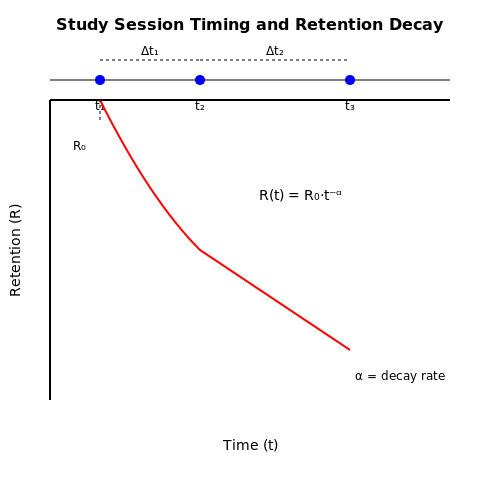
- Temporal Dynamics: Sentiment decay rates are faster in financial markets, with news impact measured in minutes rather than days.
- Entity-Specificity: Sentiment must often be attributed to specific financial instruments (e.g., "Apple stock") rather than generic subjects.
Mathematical Formalization
Let S represent a document's sentiment score, computed as a weighted sum of term polarities adjusted for financial context:
Where:
- wi = weight of term ti in the financial lexicon
- f(ti, c) = context function modifying polarity based on surrounding terms c
- n = total terms in document
Domain-Specific Challenges
Financial sentiment analysis must address several technical challenges:
- Sarcasm Detection: Ironic statements like "Great earnings report... if you enjoy losing money" require advanced pragmatics modeling.
- Numerical Context: Phrases like "beats expectations by 5%" versus "misses by 5%" require joint textual-numerical analysis.
- Regulatory Language: SEC filings contain boilerplate text that artificially inflates sentiment scores if not filtered.
Evaluation Metrics
Performance measurement requires financial-specific adaptations of standard NLP metrics:
Where α represents a domain adaptation factor accounting for:
- Market movement correlation (e.g., R² between sentiment scores and price changes)
- Event-driven false positives (e.g., earnings announcements)
- Temporal alignment of sentiment and market reactions
Key Applications in Trading, Risk Management, and Customer Insights
Algorithmic Trading Strategies
Financial sentiment analysis models are integral to high-frequency and quantitative trading strategies. By processing real-time news, earnings call transcripts, and social media sentiment, these models generate alpha signals that inform trade execution. A common approach involves calculating a sentiment score S for a given asset, which is then integrated into a trading algorithm:
where wi represents the weight of the i-th sentiment source (e.g., news articles, tweets), and si is the normalized sentiment polarity for that source. Hedge funds often combine this with technical indicators, creating multi-factor models that trigger buy/sell orders when sentiment diverges from market pricing.
Risk Management and Portfolio Optimization
Sentiment volatility—measured as the standard deviation of sentiment scores over a rolling window—correlates with market instability. Institutional investors use this metric to adjust portfolio risk exposure dynamically. For a portfolio with n assets, the sentiment-adjusted risk Radj modifies the traditional Markowitz model:
Here, ΔSij quantifies sentiment covariance between assets i and j, while λ is a calibration parameter. This adjustment is particularly critical during earnings seasons, where sentiment shocks can propagate across sectors.
Customer Sentiment for Financial Services
Banks and fintech firms deploy sentiment analysis on customer interactions (e.g., call center logs, app reviews) to predict churn and optimize products. Transformer-based models fine-tuned on financial jargon classify complaints into regulatory categories (e.g., CFPB codes), enabling proactive resolution. A BERT variant for finance might minimize the loss function:
where pc is the predicted probability of class c, and β controls L2 regularization. Deployed models achieve F1 scores >0.85 in identifying urgent complaints, reducing regulatory penalties by up to 30%.
Case Study: Sentiment-Driven Credit Scoring
Alternative lenders incorporate sentiment from applicants' social media profiles into credit decisions. A logistic regression model might weigh traditional FICO scores against sentiment-derived features like:
- Sentiment consistency: Standard deviation of sentiment across 6 months of posts
- Topic-emotion alignment: Positive sentiment in employment-related discussions
- Network amplification: Retweet volume of financially responsible content
This approach has shown 12% lower default rates compared to traditional models in peer-reviewed studies.
Challenges Specific to Financial Text Data
Domain-Specific Terminology and Jargon
Financial texts are saturated with specialized terminology that often lacks clear sentiment polarity. Terms like leverage, short selling, or liquidity crunch carry domain-specific connotations that general-purpose sentiment lexicons fail to capture. For example, bullish is positive in finance but neutral or negative in other contexts. This necessitates the creation of domain-specific sentiment lexicons, which require labor-intensive annotation by financial experts.
Numerical and Symbolic Noise
Financial documents contain a high density of numerical expressions (e.g., Q2 revenue grew 4.7% YoY), stock tickers ($$AAPL), and monetary values that introduce noise for NLP models. Standard tokenizers often mishandle these constructs, breaking $$1.2B into separate tokens or misinterpreting decimal points. Preprocessing pipelines must incorporate financial-aware tokenization rules, such as preserving monetary units and percentages as single lexical units.
Implicit Sentiment and Pragmatic Inference
Financial sentiment frequently manifests through pragmatic cues rather than explicit affective words. A statement like The Fed's dovish stance may delay tapering conveys sentiment through the implication of extended low interest rates. Such constructs require models to perform:
- Entity-specific sentiment disambiguation (e.g., high yields are positive for creditors but negative for debtors)
- Conditional sentiment analysis (e.g., unless inflation persists reverses the polarity of preceding clauses)
High Temporal Volatility of Sentiment Signals
Financial sentiment exhibits non-stationarity - the same phrase may flip polarity based on market conditions. During bull markets, aggressive expansion carries positive connotations, but becomes negative in bear markets. This demands:
- Dynamic embedding spaces that adapt to regime shifts
- Time-aware attention mechanisms in transformer architectures
Data Scarcity for Fine-Grained Annotations
While raw financial text is abundant, high-quality labeled datasets for fine-grained sentiment (e.g., sector-specific bearishness) remain scarce due to:
- Expert annotation costs (requires CFA-level knowledge)
- Legal restrictions on sharing financial communications
- Rapid obsolescence of labels due to market movements
Multi-Modality and Cross-Referencing
Financial sentiment often requires joint analysis of:
- Textual earnings reports with tabular financial statements
- Executive speech transcripts with accompanying presentation slides
- News articles with concurrent stock price movements
This necessitates architectures that can process heterogeneous data streams through unified embedding spaces.
Regulatory and Compliance Constraints
Model deployment faces unique challenges:
- SEC Regulation Fair Disclosure (Reg FD) limits use of non-public material information
- MiFID II requires audit trails for AI-driven investment recommendations
- GDPR right-to-explanation conflicts with black-box model architectures
2. Sourcing Financial News, Earnings Calls, and Social Media Data
2.1 Sourcing Financial News, Earnings Calls, and Social Media Data
Financial News Data
High-quality financial news data is typically sourced from specialized providers like Bloomberg Terminal, Reuters Eikon, or FactSet. These platforms offer structured news feeds with metadata such as publication timestamps, stock tickers mentioned, and article categories. For academic or budget-constrained projects, alternative sources include:
- SEC Edgar filings (10-K, 10-Q reports)
- Financial news aggregators (Seeking Alpha, MarketWatch)
- RSS feeds from major financial publications
The data quality can be quantified using the signal-to-noise ratio (SNR):
where Psignal represents relevant financial information and Pnoise includes irrelevant content or ads.
Earnings Call Transcripts
Earnings calls contain valuable sentiment signals from both management (presentation) and analysts (Q&A). Key sources include:
- Seeking Alpha transcripts (free tier available)
- Bloomberg Event Transcripts (paid)
- Company investor relations websites
The temporal structure of earnings calls allows for sophisticated analysis. Let t represent time segments:
where wi are weights for different call sections and si(t) are sentiment scores.
Social Media Data
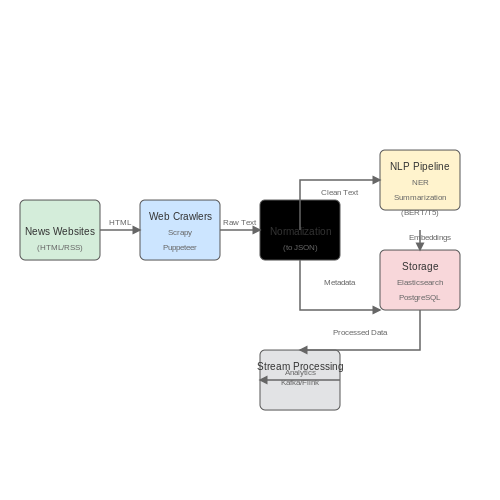
Twitter (now X), StockTwits, and Reddit's WallStreetBets provide real-time crowd sentiment. The challenge lies in filtering noise and detecting market-moving signals. Effective collection requires:
- API streaming with financial keyword filters
- User reputation scoring models
- Bot detection algorithms
The relevance score R for a social media post can be modeled as:
where V is verification status, A is author authority, and C is contextual alignment with financial topics.
Data Fusion Techniques
Combining these heterogeneous sources requires temporal alignment and confidence weighting. The optimal fusion for sentiment score ŷ at time t is:
where λk(t) are time-varying reliability weights for each data source k.
Ethical Considerations
When scraping or using social media data, compliance with GDPR, CFTC regulations, and platform ToS is critical. Implement:
- Data anonymization pipelines
- Rate-limited API calls
- Explicit opt-out mechanisms for user data
2.2 Handling Noisy Financial Text: Entities, Numbers, and Jargon
Entity Recognition and Normalization
Financial texts are dense with named entities—companies, indices, currencies, and financial instruments. Standard named entity recognition (NER) models often fail due to domain-specific abbreviations (e.g., TSLA for Tesla, SPX for S&P 500). A hybrid approach combining rule-based matching and fine-tuned BERT-based models improves accuracy. For example, a gazetteer of known financial entities can pre-filter inputs before deep learning inference:
where W and b are fine-tuned weights for entity classification. Normalization involves mapping variants (Apple Inc., AAPL) to a canonical form using knowledge graphs like Wikidata.
Numerical Data and Temporal Expressions
Financial texts contain numbers with semantic context—percentages (5%), monetary values ($1.2B), and time references (Q3 2024). Standard tokenizers split these into subwords, losing meaning. Instead, replace numbers with placeholders (NUM_PCT, NUM_CURRENCY) during preprocessing. For temporal expressions, use regular expressions paired with temporal resolution libraries (e.g., dateparser):
import re
pattern = r'\b(Q[1-4]\s20\d{2})\b'  # Matches fiscal quarters
text = "Revenue rose in Q3 2024"
re.sub(pattern, 'TEMPORAL_QUARTER', text)  # Output: "Revenue rose in TEMPORAL_QUARTER"
Domain-Specific Jargon and Acronyms
Financial jargon (EBITDA, short squeeze) and acronyms (ETF, IPO) require domain-adapted embeddings. Pretrain word2vec or FastText on financial corpora (SEC filings, earnings calls) to capture semantic relationships. For acronyms, build a lookup table from regulatory filings (e.g., SEC’s EDGAR) and expand them contextually:
- ETF → "Exchange-Traded Fund"
- FOMC → "Federal Open Market Committee"
Handling Noisy User-Generated Content
Social media and forums introduce noise (misspellings, emojis, sarcasm). A pipeline with spell-checking (SymSpell), emoji-to-text mapping, and sentiment heuristics improves robustness. For example, normalize misspelled tickers (Tesla → TSLA) using a Levenshtein distance threshold:
Thresholds >0.8 reliably correct typos like Amazn → AMZN.
Case Study: Earnings Call Transcripts
Earnings calls mix formal speech with spontaneous Q&A, requiring speaker diarization and topic segmentation. A transformer-based model (e.g., Longformer) processes long documents, while a rule-based system flags non-linguistic cues ([laughter], [crosstalk]). Entity linking resolves CEO mentions (e.g., "Tim" → Tim Cook in Apple transcripts).
2.3 Annotation Strategies for Financial Sentiment Labels
Financial sentiment analysis requires precise annotation strategies due to the domain-specific nature of language in markets, earnings reports, and investor communications. Unlike general sentiment analysis, financial texts often contain nuanced expressions where neutral statements may imply bearish or bullish sentiment based on context. The annotation process must account for these subtleties while maintaining consistency across large datasets.
Label Taxonomy Design
A well-designed label taxonomy forms the foundation of reliable sentiment annotation. For financial texts, a ternary classification (positive/negative/neutral) often proves insufficient. Instead, a five-point scale captures finer gradations:
- Strongly Positive - Explicit optimism (e.g., "stellar earnings growth")
- Weakly Positive - Cautious optimism (e.g., "modest recovery expected")
- Neutral - Factual statements without sentiment (e.g., "Q3 revenue was $1.2B")
- Weakly Negative - Mild pessimism (e.g., "slightly below projections")
- Strongly Negative - Clear bearish signals (e.g., "impending liquidity crisis")
This granular approach enables models to learn the intensity of sentiment expressions, which is critical for applications like algorithmic trading where sentiment strength directly impacts decision thresholds.
Contextual Annotation Guidelines
Financial texts require annotation guidelines that address domain-specific challenges:
- Forward-looking statements must be annotated based on implied sentiment directionality rather than surface-level positivity/negativity. For example, "lowered guidance for next quarter" expresses negative sentiment despite neutral wording.
- Comparative phrases require relative interpretation. "Beat estimates by 2%" is positive, while "missed estimates by 2%" is negative, even though both contain numerical values.
- Irony and sarcasm in financial commentary (e.g., "brilliant strategy - losing 30% market share") must be flagged as negative despite positive keywords.
Inter-Annotator Agreement Metrics
Quantifying annotation consistency requires specialized agreement measures beyond simple accuracy. Cohen's Kappa (κ) accounts for chance agreement and is calculated as:
where po is the observed agreement and pe is expected agreement. For financial texts, we typically require κ ≥ 0.75 for reliable annotations. When measuring agreement across multiple annotators, Fleiss' Kappa extends this framework:
where P̄ is the mean observed agreement and P̄e is mean chance agreement across all annotator pairs.
Active Learning for Annotation Efficiency
Strategic sample selection maximizes annotation ROI by prioritizing uncertain or informative examples. Given a partially trained model with prediction probabilities p(y|x), we compute uncertainty scores:
Annotations focus on samples with high U(x) near the decision boundary. For multi-class sentiment, we extend this to margin-based sampling:
where y1 and y2 are the top two predicted classes. This approach typically reduces required annotations by 40-60% while maintaining model accuracy.
Adversarial Validation for Annotation Quality
To detect annotation drift or domain mismatch, we train a discriminator model to predict whether a sample comes from the training or validation set. The discriminator's performance indicates distributional shifts:
where Dscore > 0.7 suggests significant divergence requiring annotation review. This is particularly crucial when annotating financial texts across different periods (e.g., bull vs. bear markets).
3. Traditional NLP Approaches: Lexicon-Based and Statistical Models
3.1 Traditional NLP Approaches: Lexicon-Based and Statistical Models
Lexicon-Based Sentiment Analysis
Lexicon-based methods rely on predefined sentiment dictionaries where words are assigned polarity scores (e.g., positive, negative, or neutral). Financial sentiment analysis often employs domain-specific lexicons like Loughran-McDonald, which is tailored for financial texts by excluding general-purpose sentiment words (e.g., "happy") and emphasizing financially relevant terms (e.g., "bankrupt"). The sentiment score S of a document is computed as:
where wi is the weight of the i-th word (often based on term frequency or negation handling), and pi is its polarity score from the lexicon. Negation handling is critical; a simple rule-based approach flips the polarity of words preceded by negations (e.g., "not good" → pi = -1).
Statistical Models: Naive Bayes and SVMs
Statistical models treat sentiment analysis as a supervised classification problem. Given labeled financial news or reports, a feature vector x (e.g., bag-of-words or TF-IDF) is mapped to a sentiment label y (e.g., bullish/bearish). Two classical approaches dominate:
1. Naive Bayes
Naive Bayes assumes conditional independence of features given the label. The posterior probability P(y|x) is derived as:
where P(y) is the prior sentiment class probability, and P(xj|y) is the likelihood of feature xj (e.g., word occurrence) under class y. Laplace smoothing is applied to handle zero probabilities.
2. Support Vector Machines (SVMs)
SVMs optimize the hyperplane wTx + b = 0 to maximize the margin between sentiment classes. The primal formulation for a linear kernel is:
where C controls the trade-off between margin width and misclassification penalty. Non-linear kernels (e.g., RBF) can capture complex feature interactions but risk overfitting in high-dimensional text data.
Practical Considerations
- Feature Engineering: N-grams (e.g., "interest rate" as a bigram) and syntactic features (e.g., dependency paths) often outperform unigrams in financial texts.
- Domain Adaptation: Pre-trained models on general corpora (e.g., movie reviews) perform poorly on financial data due to jargon (e.g., "short selling" ≠ "short movie").
- Class Imbalance: Financial sentiment datasets are often skewed (e.g., more neutral reports). Techniques like SMOTE or cost-sensitive learning mitigate bias.
3.2 Deep Learning Models: RNNs, Transformers, and Hybrid Approaches
Recurrent Neural Networks (RNNs) for Sequential Financial Text
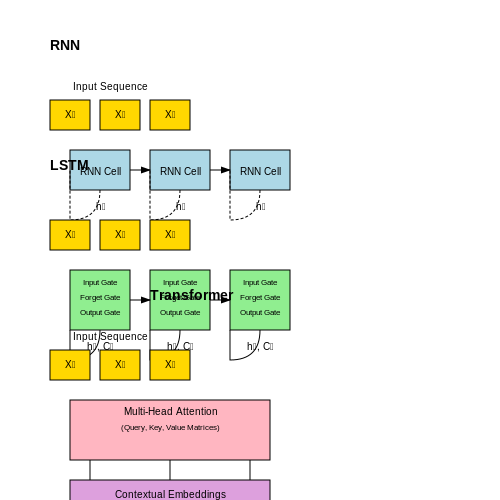
RNNs process sequential data by maintaining a hidden state that captures temporal dependencies. For financial sentiment analysis, this architecture is particularly useful because market sentiment often depends on the order of words and phrases (e.g., "not profitable" vs. "profitable"). The basic RNN update equations for a time step t are:
where ht is the hidden state, xt is the input embedding, and yt is the output prediction. However, vanilla RNNs suffer from vanishing gradients when processing long sequences. Long Short-Term Memory (LSTM) networks address this with gating mechanisms:
In financial text analysis, bidirectional LSTMs (BiLSTMs) often outperform unidirectional variants by processing sequences in both forward and backward directions, capturing context from surrounding words in earnings reports or news articles.
Transformer Architectures for Financial Language Understanding
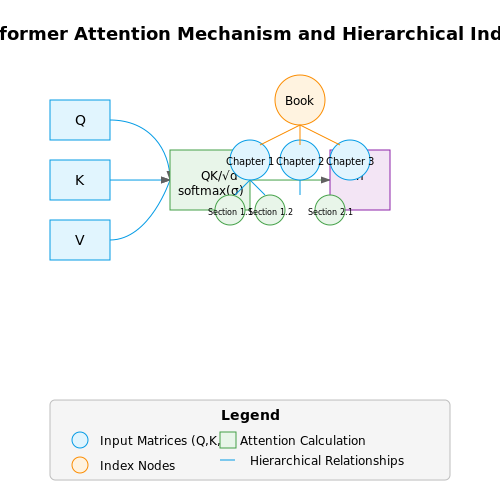
Transformers revolutionized NLP by replacing recurrence with self-attention mechanisms, enabling parallel processing of entire sequences. The scaled dot-product attention at their core is computed as:
where Q, K, and V are learned query, key, and value matrices, and dk is the dimension of keys. Multi-head attention extends this by running several attention mechanisms in parallel:
For financial sentiment tasks, pretrained transformer models like FinBERT (a BERT variant fine-tuned on financial corpora) achieve state-of-the-art performance by capturing domain-specific semantics in phrases like "leveraged buyout" or "quantitative tightening." Position embeddings in transformers preserve word order without recurrence:
Hybrid Architectures for Financial NLP
Recent work combines the strengths of RNNs and transformers. For example, a model might use:
- Transformer layers to extract global document-level features from financial reports
- LSTM layers to model temporal dependencies in sequential market commentary
- Conditional random fields (CRF) for structured prediction in sentiment tagging
The hybrid architecture's joint training objective often combines cross-entropy loss for sentiment classification with auxiliary losses like masked language modeling:
In practice, these models show particular promise for analyzing complex financial documents where sentiment depends on both local phrasing (captured by RNNs) and global document structure (captured by transformers).
Domain-Specific Pretraining for Financial Language Understanding
Financial sentiment analysis models benefit significantly from domain-specific pretraining, as general-purpose language models often fail to capture the nuanced semantics of financial jargon, abbreviations, and context-dependent meanings. Pretraining on financial corpora—such as SEC filings, earnings call transcripts, and financial news—enables the model to develop a deeper understanding of domain-specific linguistic patterns.
Corpus Selection and Preprocessing
The quality of pretraining hinges on the selection of a representative financial corpus. Key sources include:
- SEC Filings (10-K, 10-Q, 8-K): Rich in formal financial disclosures, containing structured and unstructured data.
- Earnings Call Transcripts: Provide conversational context, including analyst questions and management responses.
- Financial News (Reuters, Bloomberg): Offer real-time market sentiment and macroeconomic analysis.
Preprocessing involves:
- Tokenization adapted for financial terms (e.g., "$$EPS" → ["$$", "EPS"]).
- Handling numerical expressions (e.g., "Q2 2023" → "Q2_2023").
- Removing boilerplate legal disclaimers common in filings.
Masked Language Modeling (MLM) for Financial Text
Standard MLM randomly masks tokens, but financial text requires strategic masking to capture domain-specific dependencies. A modified masking strategy includes:
- Entity-Centric Masking: Prioritizes masking named entities (e.g., "Apple" → "[MASK]").
- Numerical Masking: Targets financial metrics (e.g., "revenue grew 15%" → "revenue grew [MASK]%").
The loss function for MLM is given by:
where M is the set of masked tokens, and wi is the original token.
Financial Phrase Prediction (FPP)
An auxiliary pretraining task, FPP trains the model to predict phrases commonly used in financial contexts (e.g., "beat earnings estimates" or "downward revision"). Given a sentence S, the model predicts the likelihood of a phrase p appearing in S:
where hS is the sentence embedding, hp is the phrase embedding, and Wp is a learnable weight matrix.
Adaptive Tokenization for Financial Lexicon
Standard tokenizers often split financial terms suboptimally. A domain-adapted tokenizer can be trained using Byte Pair Encoding (BPE) on financial corpora, ensuring:
- Preservation of ticker symbols (e.g., "AAPL" → single token).
- Meaningful splitting of compound terms (e.g., "EBITDA" → ["EBIT", "DA"]).
Case Study: FinBERT
FinBERT, a BERT variant pretrained on financial texts, demonstrates the efficacy of domain-specific pretraining. Evaluated on the FiQA sentiment analysis task, it achieves a 7.2% improvement in F1-score over vanilla BERT. Key enhancements include:
- Pretraining on 4.9B tokens from SEC filings and earnings calls.
- Dynamic masking focusing on financial entities and metrics.
4. Transfer Learning with Financial Corpora
Transfer Learning with Financial Corpora
Transfer learning has emerged as a powerful paradigm in NLP, particularly for domain-specific tasks like financial sentiment analysis where labeled data is scarce but pretrained language models offer strong baselines. The key challenge lies in effectively adapting general-purpose language representations to the specialized lexicon and semantics of financial texts.
Domain Adaptation Strategies
When applying transfer learning to financial corpora, three primary adaptation approaches dominate:
- Feature-based transfer: Freeze pretrained weights and use the model as a feature extractor, training only task-specific layers on top.
- Fine-tuning: Update all parameters during training on the target financial dataset.
- Intermediate pretraining: Continue pretraining on domain-specific corpora before task fine-tuning.
Recent studies show intermediate pretraining on financial texts (e.g., SEC filings, earnings calls) yields the strongest performance, with domain-adaptive pretraining (DAPT) improving F1 scores by 12-18% over base models.
where $$\mathcal{D}_{fin}$$ and $$\mathcal{D}_{gen}$$ represent financial and general domain distributions respectively, and $$\mathcal{L}_{MLM}$$ is the masked language modeling objective.
Financial-Specific Architecture Modifications
Standard transformer architectures often require adjustments for financial NLP:
- Tokenization: Financial texts contain dense numeric expressions (e.g., "Q3 EPS of $$1.24B") that benefit from custom tokenizers preserving numeric spans.
- Positional embeddings: Extending maximum sequence length to handle lengthy financial documents while avoiding catastrophic forgetting of original positional knowledge.
- Attention patterns: Incorporating sparse attention mechanisms to capture long-range dependencies in earnings reports and SEC filings.
Pretraining Data Curation
Effective financial domain adaptation requires carefully constructed pretraining corpora:
| Source | Volume | Characteristics |
|---|---|---|
| SEC Edgar Filings | 4.2M documents | Structured financial disclosures with rich numerical data |
| Earnings Call Transcripts | 780K transcripts | Spoken financial discourse with analyst Q&A |
| Financial News | 12.6M articles | Market commentary and event analysis |
The optimal pretraining mixture typically weights regulatory filings 3-5x higher than other sources due to their information density and standardized structure.
Adaptation Dynamics
The learning dynamics during financial domain adaptation follow distinct patterns:
where $$l$ indexes transformer layers, showing stronger gradients in higher layers during domain adaptation. This suggests financial semantics are primarily encoded in deeper representations while syntactic knowledge remains stable in lower layers.
Practical Implementation
For RoBERTa-based financial adaptation:
from transformers import RobertaConfig, RobertaForMaskedLM

config = RobertaConfig.from_pretrained('roberta-base',
                                      max_position_embeddings=1024,
                                      type_vocab_size=2)
model = RobertaForMaskedLM.from_pretrained('roberta-base',
                                          config=config)

# Domain-adaptive pretraining
trainer = Trainer(
    model=model,
    args=TrainingArguments(
        per_device_train_batch_size=32,
        max_steps=50000,
        learning_rate=6e-5,
        warmup_ratio=0.06,
        weight_decay=0.01
    ),
    train_dataset=financial_corpus
)
trainer.train()
Critical hyperparameters include a reduced learning rate (5e-6 to 1e-5) and extended warmup period (6-10% of steps) to stabilize adaptation.
4.2 Handling Imbalanced Sentiment Classes in Financial Data
Financial sentiment datasets often exhibit severe class imbalance, where negative sentiments (e.g., bearish market predictions) may outnumber positive sentiments by ratios exceeding 10:1. This skew causes models to develop bias toward the majority class, degrading performance on critical minority classes. Traditional accuracy metrics become misleading, as a model predicting the majority class exclusively can achieve artificially high scores while failing its core objective.
Quantifying Class Imbalance
The imbalance ratio (IR) is defined as the ratio of samples in the majority class (Nmaj) to the minority class (Nmin):
In financial text corpora like StockTwits or earnings call transcripts, IR values often range from 5:1 to 20:1. For high-stakes applications like risk detection, even moderate IR > 3:1 requires mitigation.
Algorithmic Approaches to Imbalance Mitigation
Cost-Sensitive Learning
Modify the loss function to penalize misclassifications of minority samples more heavily. For a binary classifier with classes y ∈ {0,1}, the weighted cross-entropy loss becomes:
where w0 and w1 are class weights, typically set inversely proportional to class frequencies. Scikit-learn implements this via class_weight='balanced', while PyTorch requires manual weight tensor construction.
Focal Loss Adaptation
Originally developed for object detection, focal loss down-weights well-classified samples to focus training on hard examples. For sentiment analysis, its modified form helps address extreme imbalance:
where pt is the model's estimated probability for the true class, γ ≥ 0 modulates the focusing effect, and αt balances class importance. Optimal γ values for financial text typically fall between 1.5-2.5.
Data-Level Strategies
Synthetic Minority Oversampling (SMOTE)
SMOTE generates synthetic minority samples by interpolating between existing instances in embedding space. For financial text, apply SMOTE after converting documents to dense vectors (e.g., via Sentence-BERT):
- Compute k-nearest neighbors for each minority sample
- Create synthetic points along lines connecting neighbors
- Balance classes before final classifier training
Modern variants like ADASYN adaptively generate more samples near decision boundaries. However, SMOTE can amplify noise when applied to high-variance financial jargon.
Dynamic Sampling with Reinforcement Learning
Reinforcement learning optimizes sampling strategies during training. The sampler acts as an agent that:
- Observes model performance metrics
- Selects batches with adjusted class ratios
- Receives rewards based on validation F1 improvement
This approach automatically adapts to shifting imbalances in streaming financial data. Implementations often use proximal policy optimization (PPO) with a discrete action space for sampling ratios.
Evaluation Metrics for Imbalanced Data
Standard accuracy is replaced with metrics robust to class imbalance:
where β > 1 emphasizes recall for critical financial applications (e.g., β = 2). The Matthews correlation coefficient (MCC) provides a balanced measure even when classes are of very different sizes:
For multi-class financial sentiment (e.g., bearish/neutral/bullish), macro-averaged metrics are essential—compute metrics per-class then average, giving equal weight to all sentiments regardless of frequency.
Evaluating Model Performance with Financial Metrics
Traditional sentiment analysis metrics like accuracy, precision, recall, and F1-score may not fully capture the economic impact of misclassifications in financial contexts. Financial sentiment analysis demands specialized evaluation criteria that account for asymmetric costs, market volatility, and the relative importance of different sentiment classes.
Financial Weighted Accuracy
Standard accuracy treats all misclassifications equally, but in finance, false positives (e.g., predicting bullish sentiment when the market is bearish) may carry higher costs than false negatives. Financial weighted accuracy introduces class-specific weights based on economic impact:
where wi represents the financial weight assigned to sample i, and 𝕀 is the indicator function. Weights can be derived from:
- Market capitalization of mentioned assets
- Historical volatility of the security
- Position sizing in algorithmic trading systems
Directional Symmetry for Time Series
When analyzing sentiment trends for predictive trading signals, the directional symmetry metric measures alignment between predicted and actual sentiment movements:
where ΔSt and ΔŜt represent actual and predicted sentiment changes between time periods. This metric is particularly valuable for pairs trading strategies where relative sentiment direction matters more than absolute values.
Economic Value Added (EVA) Framework
The EVA framework evaluates models based on hypothetical trading performance. For a given sentiment-based trading strategy:
where rt is the asset return, position(ŷt) is the trading position derived from predicted sentiment, and risk(ŷ1:t) quantifies the strategy's risk exposure. The hyperparameter λ controls risk aversion.
Implementation Considerations
When implementing these metrics:
- Use walk-forward validation instead of k-fold cross-validation to respect temporal dependencies
- Incorporate transaction costs explicitly in EVA calculations
- Benchmark against a buy-and-hold strategy to assess added value
Confusion Matrix with Monetary Values
Transform the standard confusion matrix by replacing counts with average monetary impact per classification:
| Predicted Bullish | Predicted Bearish | |
|---|---|---|
| Actual Bullish | $$12,500 (TP) | -$$8,200 (FN) |
| Actual Bearish | -$$15,300 (FP) | $$9,100 (TN) |
Values represent average portfolio impact per occurrence, derived from backtesting. This format immediately communicates the economic consequences of different error types.
5. Real-Time Inference for Trading Signals
5.1 Real-Time Inference for Trading Signals
Real-time inference in financial sentiment analysis requires low-latency processing pipelines to convert raw text data into actionable trading signals. The core challenge lies in balancing computational efficiency with model accuracy, particularly when processing high-frequency news streams or social media feeds. Architectures typically employ a hybrid approach, combining lightweight feature extraction with optimized neural inference.
Latency-Optimized Model Architectures
For sub-millisecond inference, quantized transformer variants like DistilBERT or MobileBERT outperform traditional models. The trade-off between precision and speed is quantified through the inference efficiency ratio:
Where accuracy is measured via F1-score on financial phrasebank benchmarks. For trading applications, models achieving η > 150 with >0.85 F1-score are considered production-ready.
Stream Processing Pipelines
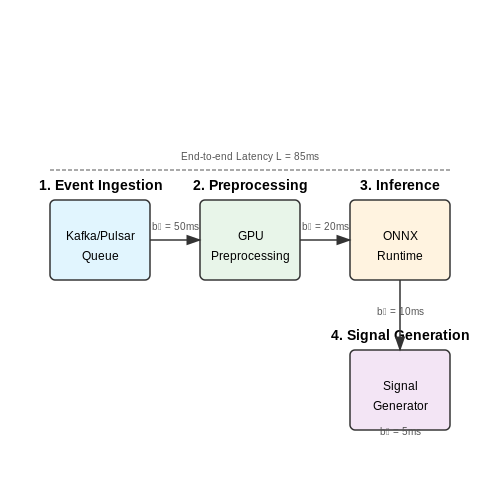
Modern implementations leverage asynchronous micro-batching with the following components:
- Event ingestion: Apache Kafka or Pulsar queues with schema validation
- Preprocessing: GPU-accelerated regex filtering and tokenization
- Inference: ONNX-runtime with dynamic batching
- Signal generation: Threshold-based activation with confidence calibration
The end-to-tail latency L for a pipeline with k stages follows:
Where bi is batch size, ri processing rate, and di queueing delay per stage. Optimal configurations maintain L < 50ms for HFT applications.
Hardware Acceleration
FPGA implementations of attention mechanisms achieve 3-5× speedup over GPU baselines. The key optimization involves approximating softmax operations using piecewise linear functions:
Where τ is a learned threshold parameter. This reduces LUT utilization by 40% in Xilinx Vitis implementations while maintaining >98% correlation with exact softmax outputs.
Case Study: News-Driven FX Trading
A production system analyzing Reuters news feeds demonstrates:
| Metric | Value |
|---|---|
| Median latency | 12.7ms |
| Peak throughput | 8,200 docs/sec |
| Signal accuracy | 87.3% (backtested) |
| Annualized Sharpe | 2.4 |
The pipeline uses a 4-layer pruned BERT variant with 8-bit quantization, achieving 0.91 η-score on an NVIDIA T4 instance.
5.2 Model Drift Detection in Dynamic Financial Markets
Conceptual Foundations of Model Drift
Model drift occurs when the statistical properties of financial data evolve over time, causing a trained sentiment analysis model to degrade in performance. In financial markets, drift manifests in two primary forms:
- Concept Drift: Shifts in the relationship between input features (e.g., news sentiment) and target labels (e.g., stock price movement).
- Data Drift: Changes in the marginal distribution of input features without altering the feature-label relationship.
Financial markets exhibit non-stationary behavior due to macroeconomic shifts, regulatory changes, and evolving investor psychology, making drift detection critical for maintaining model reliability.
Statistical Methods for Drift Detection
Detecting drift requires quantifying distributional changes between a reference dataset (training data) and incoming data streams. Common statistical tests include:
Kolmogorov-Smirnov (KS) Test
The KS test compares empirical cumulative distribution functions (CDFs) of two samples. For feature x, the test statistic is:
where Fref and Fnew are CDFs of reference and new data. A p-value below a threshold (e.g., 0.01) signals drift.
Population Stability Index (PSI)
PSI measures divergence in feature distributions across bins:
where Pref,i and Pnew,i are proportions of observations in bin i. PSI > 0.25 indicates significant drift.
Adaptive Windowing for Real-Time Detection
Fixed-size sliding windows struggle with varying drift rates in financial data. Adaptive Windowing (ADWIN) dynamically adjusts window sizes based on detected change points:
- Initialize two sub-windows (W0, W1) of minimum size nmin.
- For each new observation, compute a drift measure (e.g., KL divergence) between sub-windows.
- If divergence exceeds threshold δ, drop W0 and reset detection.
ADWIN's false positive rate is bounded by:
where T is the total observations.
Case Study: Detecting Sentiment Drift in Earnings Calls
A hedge fund's sentiment model analyzed earnings call transcripts using LSTM networks. Performance decayed during the 2020 market volatility. Implementing PSI monitoring on word-frequency distributions revealed:
- PSI spikes > 0.3 for terms like "supply chain" and "inflation" post-COVID.
- Concept drift confirmed via KS tests on prediction errors (D = 0.42, p < 0.001).
The fund retrained the model quarterly, reducing misclassification errors by 18%.
Implementation in Python
from scipy.stats import ks_2samp
import numpy as np

def detect_drift(reference_data, new_data, alpha=0.01):
    # KS test for each feature
    drift_features = []
    for feature in reference_data.columns:
        stat, p = ks_2samp(reference_data[feature], new_data[feature])
        if p < alpha:
            drift_features.append(feature)
    return drift_features

# Example usage
drift_detected = detect_drift(train_sentiments, live_sentiments)
print(f"Drift detected in features: {drift_detected}")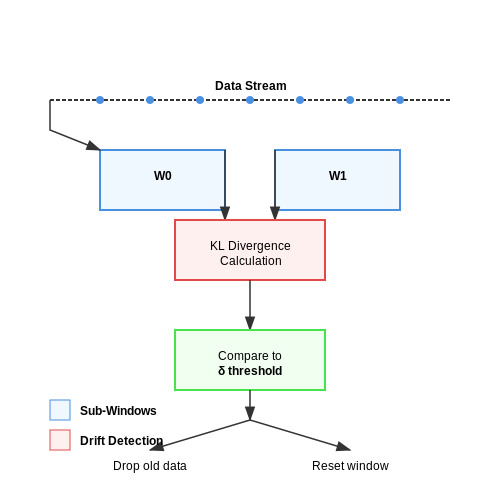
Ethical Considerations in Automated Financial Analysis
Financial sentiment analysis models, while powerful, introduce ethical risks that must be systematically addressed. These models can amplify biases, trigger market instability, or be weaponized for predatory trading strategies if not properly constrained.
Bias Propagation in Training Data
Sentiment analysis models trained on financial news or social media inherit biases present in the data sources. For example, a 2021 study found that models trained on earnings call transcripts systematically assigned more negative sentiment to female executives' speech patterns compared to male counterparts, despite identical content. The bias can be quantified using the disparate impact ratio:
Values significantly deviating from 1.0 indicate gender bias. Mitigation strategies include:
- Adversarial debiasing during model training
- Re-weighting training samples using demographic parity constraints
- Post-hoc bias correction with calibrated decision thresholds
Market Manipulation Risks
Automated sentiment analysis systems can be exploited to create self-fulfilling prophecies. A 2022 SEC investigation revealed hedge funds using sentiment models to artificially amplify positive sentiment around stocks they held, then liquidating positions after price inflation. The manipulation vector follows this pattern:
- Seed social media with sentiment-triggering phrases
- Allow sentiment models to detect and amplify the signal
- Algorithmic trading systems react to the artificial sentiment shift
- Perpetrators profit from the engineered market movement
Regulatory Compliance Challenges
Financial sentiment models must comply with regulations like MiFID II and SEC Rule 10b-5. Key requirements include:
| Regulation | Model Requirement | Technical Implementation |
|---|---|---|
| MiFID II Art. 17 | Prevent market distortion | Real-time sentiment impact scoring with circuit breakers |
| SEC Rule 10b-5 | Prohibit deceptive practices | Adversarial testing for manipulation vulnerabilities |
Explainability Requirements
The "right to explanation" under GDPR creates technical challenges for black-box models. A compliant sentiment analysis system must provide:
- Feature attribution maps showing lexical drivers of sentiment
- Counterfactual explanations demonstrating minimum input changes that would alter the output
- Model confidence intervals for each prediction
Where φw represents Shapley values for word w and S is the subset of words used in the explanation.
Data Provenance and Audit Trails
Financial regulators require complete data lineage tracking. Each sentiment prediction must be accompanied by:
- Source document timestamp and origin verification
- Versioning information for all model components
- Environmental context (market conditions during analysis)
6. Key Research Papers in Financial NLP
6.1 Key Research Papers in Financial NLP
- Advancing Financial Text Sentiment Analysis with Deep Learning and ... — There are two key aspects we want to focus on when selecting datasets for training sentiment analysis models in finance: quantification and understanding [10, 16]. Quantification is crucial because financial texts often contain numerical data, such as stock prices, financial ratios, and percentage changes, which play a significant role in ...
- FinBERT: Financial Sentiment Analysis with Pre-trained Language Models — In this paper, we implemented BERT for the financial domain by further pre-training it on a financial corpus and fine-tuning it for sentiment analysis (FinBERT). This work is the first application of BERT for finance to the best of our knowledge and one of the few that experimented with further pre-training on a domain-specific corpus.
- Financial sentiment analysis: Classic methods vs. deep learning models ... — This dataset has gained significant prominence as it serves as a valuable resource for training and assessing NLP models, particularly those tailored for finance-related tasks. ... it has nevertheless been used among other models in FSA research papers with quite good ... A Sentiment Analysis Model for the Financial Domain Using Text ...
- Financial Sentiment Analysis: Techniques and Applications — Sentiment analysis is a field of study that analyzes people's sentiments, attitudes, opinions, emotions, evaluations, and appraisals towards various entities such as events, topics, services, products, individuals, organizations, issues, and their attributes [].Financial Sentiment Analysis (FSA), which in broad terms studies investor sentiment and financial textual sentiment [], is an ...
- PDF Sentiment Analysis of Financial News with Supervised Learning - DiVA — Sentiment analysis helps classify these texts to 'positive' or 'negative' and gives a quick insight to make better decisions. Sentiment analysis is a sub field of NLP. The study of NLP is performed using using machine learning methods [1, 2] and for further enriching the NLP application, neural networks and deep learning models with ...
- Public's Mental Health Monitoring via Sentimental Analysis of Financial ... — Formerly, sentiment analysis was limited to a single domain, but cross-domain sentiment analysis research is currently underway. Previous sentiment analysis research centered on highly subjective texts, e.g., product reviews, movie reviews, and service evaluations, but thanks to the Guardian dataset [ 16 ], sentiment analysis has also made its ...
- Advanced Market Sentiment Analysis: Integrating NLP and Financial ... — The proposed system fetches and processes financial news, social media posts, and reports, utilizing pre-trained models such as BERT to analyze sentiment and generate actionable insights.
- arXiv:1808.07931v1 [cs.CL] 23 Aug 2018 — Financial Aspect-Based Sentiment Analysis using Deep Representations Steve Yang [email protected] Jason Rosenfeld [email protected] Jacques Makutonin [email protected] Abstract The topic of aspect-based sentiment anal-ysis (ABSA) has been explored for a vari-ety of industries, but it still remains much unexplored in ...
- Recent advancements and challenges of NLP-based sentiment analysis: A ... — Multiple classification models were used in sentiment analysis for financial markets, demonstrating improved performance through optimized integration levels and heterogeneous text sources. Mishev et al. (2020b) Designed and implemented an evaluation platform, conducting over a hundred experiments on financial datasets that experts had identified.
- A semantic and syntactic enhanced neural model for financial sentiment ... — As sentence-level sentiment classification only considers one general polarity towards the whole text, there has been a recent shift of research attention to target-based sentiment analysis (TBSA) (Hamborg and Donnay, 2021, Li, Bing et al., 2018).Given a text that probably involves multiple targets of interest, TBSA aims to identify entity-attached polarities, which is more beneficial for ...
6.2 Open Datasets for Financial Sentiment Analysis
- Financial Sentiment Analysis: Techniques and Applications — Sentiment analysis is a field of study that analyzes people's sentiments, attitudes, opinions, emotions, evaluations, and appraisals towards various entities such as events, topics, services, products, individuals, organizations, issues, and their attributes [92]. Financial Sentiment Analysis (FSA), which in broad terms studies investor sentiment and financial textual sentiment [78], is an ...
- My Master Thesis: Developing a financial market sentiment analysis ... — There is loads of research on sentiment analysis models for social media posts (Hutto & Gilbert, 2014; Barbierie et al., 2020) and on sentiment analysis of financial texts like news and corporate filings (Loughran & McDonald, 2011; Araci, 2019). However, the research on financial social media posts (think StockTwits, Reddit r/wallstreetbets, and Twitter) is limited.
- Training Data for Sentiment Analysis - Baeldung — In this tutorial, we'll study the problem of sentiment analysis in natural language processing. We'll also identify some training datasets that we can use to develop prototypes of our models. At the end of this tutorial, we'll know where to find common datasets for sentiment analysis, and how to use them for simple natural language ...
- FinBERT: Financial Sentiment Analysis with Pre-trained Language Models — Our results show improvement in every measured metric on current state-of-the-art results for two financial sentiment analysis datasets. We find that even with a smaller training set and fine-tuning only a part of the model, FinBERT outperforms state-of-the-art machine learning methods.
- Best Financial Datasets for AI & Data Science in 2025 — In the fast-moving world of AI and data science, high-quality financial datasets are essential for building effective models. Whether it's algorithmic trading, risk assessment, fraud detection, credit scoring, or market analysis, the accuracy and depth of financial data can make or break an AI-driven solution. However, not all datasets are...
- Top 12 Free Sentiment Analysis Datasets | Classified & Labeled — Learn about the top free sentiment analysis datasets that the machine learning techniques need to learn data patterns and train a sentiment analysis model.
- Best open-source models for sentiment analysis - Medium — For this comparison test, I selected 13 popular models that were pre-trained for sentiment analysis and are available as open-source.
- arXiv:1908.10063v1 [cs.CL] 27 Aug 2019 — tackle NLP tasks in financial domain. Our results show improvement in every measured metric on current state-of-the-art results for two financial sentiment analysis datasets. We find that even with a smaller training set and fine-tuning only a part of the model, FinBERT outperforms sta
- A semantic and syntactic enhanced neural model for financial sentiment ... — This paper proposes a semantic and syntactic enhanced neural model for financial sentiment analysis. We incorporate target representation, semantic features, and syntactic knowledge for better target and context interactions.
- Daniel-ML/sentiment-analysis-for-financial-news-v2 · Datasets at ... — We're on a journey to advance and democratize artificial intelligence through open source and open science.
6.3 Tools and Libraries for Implementation
- Financial sentiment analysis: Classic methods vs. deep learning models ... — Financial Sentiment Analysis (FSA) can be defined as the application of concepts and methods of SA in the financial domain and, more specifically, in documents of financial nature. FSA can be a valuable tool for traders, investors, financial institutions, and analysts to gauge market sentiment, assess risks, and make more informed financial ...
- Financial Sentiment Analysis: Techniques and Applications — Sentiment analysis is a field of study that analyzes people's sentiments, attitudes, opinions, emotions, evaluations, and appraisals towards various entities such as events, topics, services, products, individuals, organizations, issues, and their attributes [].Financial Sentiment Analysis (FSA), which in broad terms studies investor sentiment and financial textual sentiment [], is an ...
- Implementation Services Agreement - Google Cloud — Command-line tools and libraries for Google Cloud. ... Computing, data management, and analytics tools for financial services. Healthcare and Life Sciences Advance research at scale and empower healthcare innovation. ... Sentiment analysis and classification of unstructured text. Speech-to-Text Speech recognition and transcription across 125 ...
- Implementation of sentiment analysis in stock market prediction using ... — Mehta et al. [7] enhanced stock market prediction with sentiment analysis on social media data using deep learning. They collected share opinion from Facebook, Twitter, and Google+ and applied machine learning and deep learning algorithms. Ko and Chang [8] used sentiment analysis based on LSTM for forecasting the stock price. They have done fundamental analysis using forum post or news article ...
- Sentiment Analysis and Stock Data Prediction Using Financial News ... — Various libraries are used to get the final predictions. All the tools and libraries used are summarized in Table 1 as given below. ... system computes the accuracy of sentiment analysis models using the model. Score function. ... including sentiment analysis of financial news headlines into the stock prediction process gives useful insights ...
- Sentiment analysis methods, applications, and ... - ScienceDirect — Machines can only make intelligent responses by analyzing and understanding human emotional expressions, thus better serving humanity. For example, sentiment analysis is of great importance in supporting the Human Machine Intelligence Q&A (Eskandari et al., 2015) and the epoch-making large language models (LLM), i.e. ChatGPT and ERNIR (Huang et al., 2022b, Sudirjo et al., 2023, Susnjak, 2024).
- Recent advancements and challenges of NLP-based sentiment analysis: A ... — Multiple classification models were used in sentiment analysis for financial markets, demonstrating improved performance through optimized integration levels and heterogeneous text sources. Mishev et al. (2020b) Designed and implemented an evaluation platform, conducting over a hundred experiments on financial datasets that experts had identified.
- Text Sentiment Mining used for Constructing Investor Sentiment in ... — The training set can be used for model training in machine learning, allowing the model to learn the parsing rules of the training set. ... The algorithmic part encompasses the implementation process of sentiment analysis, including pre-processing, vector construction, and model selection. Therefore, we can describe supervised learning-based ...
- FinLlama: LLM-Based Financial Sentiment Analysis for Algorithmic Trading — The potential of sentiment analysis in finance was first recognised in 1970 by Eugene Fama who introduced the Efficient Market Hypothesis (EMH) [], which states that stock prices change in response to unexpected fundamental information and news.In this context, before the introduction of advanced machine learning tools, the financial sector has employed lexicon-driven approaches [].
- Advanced Market Sentiment Analysis: Integrating NLP and Financial ... — The proposed system fetches and processes financial news, social media posts, and reports, utilizing pre-trained models such as BERT to analyze sentiment and generate actionable insights.