Adaptive Prompting Using Reinforcement Learning
1. Definition and Key Concepts
1.1 Definition and Key Concepts
Adaptive prompting is a dynamic optimization technique where reinforcement learning (RL) agents iteratively refine input prompts to maximize a predefined reward signal. Unlike static prompting, which relies on fixed templates, adaptive prompting treats the prompt construction process as a sequential decision-making problem, optimizing for context-aware, high-performance interactions with language models (LMs).
Core Components
- State Space (S): Encodes the current prompt, LM output, and environmental context (e.g., user intent, conversation history). Formally,
$$ S \subseteq \mathbb{R}^d \times \mathcal{L} \times \mathcal{C} $$where d is the embedding dimension, ℒ is the LM output space, and 𝒞 is the context space.
- Action Space (A): Discrete or continuous modifications to the prompt (e.g., token insertions, template adjustments). For a vocabulary V, actions may include
$$ A \in \{ \text{Insert}(v), \text{Delete}(i), \text{Replace}(i, v) \mid v \in V, i \in \mathbb{N} \} $$
- Reward Function (R): Quantifies prompt quality via task-specific metrics (e.g., BLEU score for translation, correctness for QA). Often modeled as
$$ R(s, a) = \lambda_1 \cdot \text{Accuracy} + \lambda_2 \cdot \text{Fluency} - \lambda_3 \cdot \text{Length} $$where λ are tunable weights.
Mathematical Framework
The agent learns a policy π(a|s) that maximizes expected cumulative reward:
where γ is the discount factor and τ is the trajectory. Policy gradients or Q-learning are commonly used, with the Q-function updated via:
Practical Considerations
In real-world applications, the state space is often partially observable, necessitating approximations like:
- Prompt Embeddings: Use transformer-based encoders (e.g., BERT) to map prompts to ℝd.
- Reward Shaping: Incorporate intermediate rewards for grammaticality or coherence to mitigate sparse rewards.
- Off-Policy Learning: Leverage human-in-the-loop demonstrations to bootstrap policy training.
Case Study: Adaptive QA Prompting
A 2023 study optimized factual QA prompts via PPO, achieving a 22% accuracy boost over handcrafted prompts. The policy learned to:
- Inject domain-specific keywords (e.g., "scientific paper" for STEM questions).
- Dynamically adjust prompt length based on question complexity.
- Balance open-ended vs. constrained phrasings (e.g., "List" vs. "Explain in one sentence").

Role of Reinforcement Learning in Prompt Optimization
Reinforcement learning (RL) provides a principled framework for optimizing prompts by treating prompt generation as a sequential decision-making problem. The agent, typically a language model, interacts with an environment (e.g., a user or evaluator) by generating prompts and receiving feedback in the form of rewards. The objective is to learn a policy that maximizes cumulative reward, which corresponds to generating high-quality prompts.
Mathematical Formulation
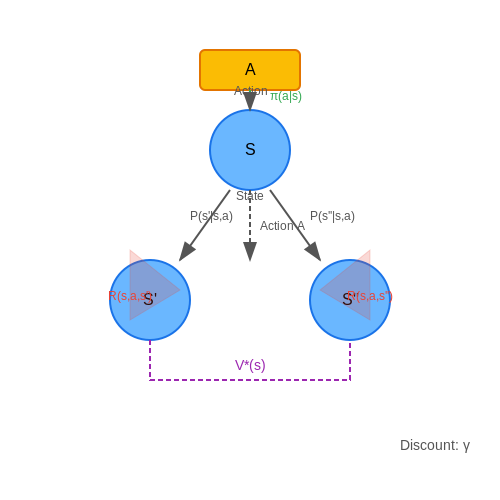
The prompt optimization problem can be formalized as a Markov Decision Process (MDP) defined by the tuple (S, A, P, R, γ), where:
- S is the state space representing the context or current prompt.
- A is the action space of possible prompt modifications.
- P(s'|s, a) is the transition probability to state s' given action a in state s.
- R(s, a) is the reward function evaluating prompt quality.
- γ is the discount factor balancing immediate and future rewards.
The optimal policy π* maximizes the expected cumulative reward:
Policy Gradient Methods
Policy gradient algorithms, such as REINFORCE or Proximal Policy Optimization (PPO), are well-suited for prompt optimization due to their ability to handle high-dimensional action spaces. The policy π_θ is parameterized by θ, and gradients are estimated via Monte Carlo sampling:
where Q^π(s, a) is the state-action value function. Practical implementations often use a baseline (e.g., value function) to reduce variance:
Reward Design
The reward function R(s, a) is critical for successful prompt optimization. Common approaches include:
- Task-specific metrics: Accuracy, BLEU score, or other domain-specific measures.
- Human feedback: Direct ratings or pairwise comparisons.
- Model-based rewards: Using a separate model to evaluate prompt quality.
Recent work has explored learned reward models that predict human preferences, enabling more scalable optimization.
Practical Considerations
Several challenges arise when applying RL to prompt optimization:
- Sample efficiency: Interactions with the environment (e.g., human evaluators) can be expensive.
- Credit assignment: Determining which actions led to improved prompts is non-trivial.
- Exploration: The space of possible prompts is vast, requiring careful exploration strategies.
Techniques like inverse reinforcement learning and imitation learning can help mitigate these issues by leveraging demonstrations or pre-trained policies.
Case Study: RL for Dialogue Prompting
In conversational AI, RL has been used to optimize prompts for engaging and coherent dialogues. The reward function combines:
- Response relevance (cosine similarity to gold responses)
- Diversity (entropy over generated responses)
- User engagement (measured via interaction length)
The policy is trained using PPO, with the language model's logits serving as the action space. This approach has shown significant improvements over supervised fine-tuning baselines.
Challenges in Traditional Prompting Methods
Static Nature of Handcrafted Prompts
Traditional prompting relies on manually designed templates that remain fixed during inference. This rigidity fails to account for dynamic contexts, leading to suboptimal performance when input distributions shift. For example, a prompt optimized for factual question-answering may degrade when applied to creative writing tasks. The lack of adaptability stems from the absence of feedback loops to refine prompts based on model outputs.
Combinatorial Explosion in Prompt Engineering
As task complexity grows, the search space for effective prompts expands exponentially. For a language model with V vocabulary size and maximum prompt length L, the total possible prompts scale as O(VL). This makes exhaustive search computationally intractable:
Current prompt engineering practices rely on heuristic searches that often converge to local optima, particularly problematic when dealing with non-convex loss landscapes in transformer-based models.
Context Window Limitations
Traditional methods struggle with:
- Information dilution: Longer prompts reduce the available context for actual task inputs
- Positional bias: Transformer architectures exhibit sensitivity to token ordering, making prompt placement critical
- Catastrophic forgetting: Fixed prompts cannot adjust when new domain knowledge emerges
Reward Hacking in Optimization
When fine-tuning prompts against proxy metrics (e.g., BLEU, ROUGE), models frequently exploit reward function weaknesses rather than genuinely improving performance. This manifests as:
where gθ represents the prompted model and r the reward function. The mismatch arises because most NLP metrics fail to capture semantic equivalence.
Transfer Learning Bottlenecks
Handcrafted prompts demonstrate poor cross-task generalization. The performance drop follows an inverse scaling law with task dissimilarity:
where D is the KL-divergence between training and test distributions. This necessitates extensive re-engineering when deploying models to new domains.
Human-in-the-Loop Latency
The iterative process of manual prompt refinement creates development bottlenecks. Each optimization cycle requires:
- Human evaluation of model outputs
- Hypothesis generation for prompt modifications
- Re-running inference across validation sets
This feedback loop often takes hours to days, making real-time adaptation impossible for production systems.
2. Markov Decision Processes (MDPs) in Prompting
Markov Decision Processes (MDPs) in Prompting
Markov Decision Processes (MDPs) provide a formal framework for modeling sequential decision-making problems, making them particularly suitable for adaptive prompting strategies. An MDP is defined by the tuple (S, A, P, R, γ), where:
- S is a finite set of states representing possible configurations of the prompt-response environment.
- A is a finite set of actions corresponding to possible prompt modifications or selections.
- P(s'|s, a) is the state transition probability function, modeling how the system evolves given an action.
- R(s, a, s') is the immediate reward received after transitioning from state s to s' via action a.
- γ ∈ [0, 1] is the discount factor balancing immediate versus future rewards.
In the context of adaptive prompting, states might represent the current context window of a language model, including previous interactions and the current prompt. Actions could involve refining the prompt, adding examples, or changing the instruction format. The reward function typically measures response quality, which might be quantified through:
where ytarget is the desired output, ygenerated is the model's response, and λ controls the penalty for complex prompt modifications.
Policy Optimization in Prompting MDPs
The goal is to learn a policy π(a|s) that maximizes the expected cumulative reward:
For prompt optimization, this can be approached through:
- Value iteration: Computes the optimal value function V*(s) and derives the policy via:
- Policy gradient methods: Directly optimize the policy parameters θ using gradient ascent on the expected reward:
where Qπθ(s,a) is the state-action value function under policy πθ.
Practical Implementation Considerations
Several challenges arise when applying MDPs to prompt optimization:
- State representation: The prompt state space is high-dimensional and combinatorial. Common approaches include:
- Embedding prompts using language model representations
- Discretizing prompt features (length, specificity, example count)
- Reward sparsity: Immediate rewards may be zero until a successful prompt is found. Potential solutions include:
- Shaped rewards based on intermediate metrics (e.g., similarity to target)
- Hierarchical reinforcement learning with subgoals
- Sample efficiency: Each policy evaluation requires querying the language model. Techniques to address this:
- Off-policy learning with experience replay
- Model-based RL with learned transition dynamics
Case Study: Adaptive Few-shot Prompting
Consider an MDP formulation for dynamically selecting few-shot examples:
- States: Current task description and candidate examples
- Actions: Add/remove/swap examples from the prompt
- Transition: Deterministic state changes based on action
- Reward: Accuracy on validation set after prompt update
The optimal policy learns to construct prompts that maximize task performance while minimizing example count. Empirical results show such approaches can outperform static few-shot prompting by 15-30% on complex reasoning tasks.
2.2 Reward Design for Effective Prompt Learning
The reward function in reinforcement learning (RL) serves as the primary signal guiding the optimization of prompt generation policies. Poorly designed rewards lead to reward hacking, where the policy exploits loopholes to maximize returns without achieving the intended task. A well-structured reward function must balance multiple objectives while maintaining alignment with the end goal.
Key Components of Reward Design
An effective reward function for prompt learning typically decomposes into:
- Task Completion Score (Rtask): Measures whether the generated prompt elicits the desired response from the LLM. For classification tasks, this could be accuracy; for text generation, metrics like BLEU or ROUGE.
- Prompt Complexity Penalty (Rcomplexity): Discourages overly verbose or convoluted prompts. Computed using token count or syntactic complexity metrics.
- Semantic Consistency Reward (Rsemantic): Ensures the prompt maintains semantic alignment with the target domain. Often implemented via cosine similarity in embedding space.
where α, β, γ are learnable coefficients adjusted during training.
Dynamic Reward Shaping
Static reward functions often fail to account for the non-stationary nature of prompt optimization. Temporal difference methods address this by introducing bootstrapped rewards:
where V(s) represents the value function estimate of state s (the current prompt configuration). This approach enables adaptive credit assignment across multi-turn prompt refinements.
Practical Implementation Considerations
Real-world implementations must handle sparse rewards through:
- Curriculum learning: Gradually increasing task difficulty
- Inverse reinforcement learning: Inferring rewards from expert demonstrations
- Multi-objective optimization: Pareto-optimal tradeoffs between competing metrics
Recent work in constitutional AI introduces safety-critical reward components that penalize harmful outputs while preserving utility. The reward function may incorporate:
where λ acts as a severity coefficient and 𝕀 is the indicator function.
Case Study: Instruction Following
In OpenAI's InstructGPT, the reward function combines:
- Human preference ratings (1-5 scale)
- KL-divergence from the base policy
- Task-specific performance metrics
The resulting composite reward enabled significant improvements in instruction adherence while maintaining output diversity.

2.3 Policy Optimization Techniques
Policy optimization lies at the core of reinforcement learning (RL) for adaptive prompting, where the goal is to iteratively refine a policy πθ parameterized by θ to maximize expected cumulative reward. Unlike value-based methods that indirectly derive policies through value functions, policy optimization techniques directly adjust the policy parameters using gradient ascent on the expected return J(θ).
Gradient-Based Policy Optimization
The policy gradient theorem provides the foundation for gradient-based optimization, expressing the gradient of the expected return with respect to the policy parameters as:
where τ denotes a trajectory, Qπ_θ(s_t, a_t) is the state-action value function, and π_θ(a_t|s_t) represents the probability of taking action a_t in state s_t. This expectation is typically estimated using Monte Carlo sampling.
Variance Reduction Techniques
Vanilla policy gradients suffer from high variance, which can destabilize training. Two common techniques mitigate this:
- Baseline Subtraction: Replace Qπ_θ(s_t, a_t) with the advantage function Aπ_θ(s_t, a_t) = Qπ_θ(s_t, a_t) - Vπ_θ(s_t), where Vπ_θ(s_t) is the state value function. This reduces variance without introducing bias.
- Generalized Advantage Estimation (GAE): Combines multi-step returns with an exponential weighting scheme to balance bias and variance:
where δ_t = r_t + γV(s_{t+1}) - V(s_t) is the TD residual, and λ ∈ [0,1] controls the bias-variance tradeoff.
Trust Region Methods
Gradient updates can overshoot when step sizes are poorly chosen. Trust region methods constrain updates to ensure monotonic policy improvement. The most prominent approach, Trust Region Policy Optimization (TRPO), maximizes a surrogate objective subject to a KL-divergence constraint:
where δ is a small positive constant. This is solved using conjugate gradient descent with a Fisher information matrix approximation.
Proximal Policy Optimization (PPO)
PPO simplifies TRPO by replacing the hard constraint with a clipped objective that discourages large policy updates:
where r_t(θ) = π_θ(a_t|s_t)/π_{θ_{old}}(a_t|s_t) is the probability ratio, and ε is a hyperparameter (typically 0.1-0.3). The clipping prevents excessively large updates while maintaining sample efficiency.
Natural Policy Gradients
Natural policy gradients account for the curvature of the policy space by premultiplying the gradient by the inverse Fisher information matrix F-1:
This results in updates that are invariant to parameterization, enabling more stable convergence. TRPO and PPO can be viewed as approximations to natural policy gradients.
Deterministic Policy Gradients
For continuous action spaces, deterministic policy gradients (DPG) optimize a deterministic policy μ_θ: S → A using:
where ρ^π is the state distribution. Deep DPG (DDPG) extends this with replay buffers and target networks for stability.
3. Data Collection and Environment Setup
3.1 Data Collection and Environment Setup
Effective adaptive prompting relies on high-quality data and a well-structured reinforcement learning (RL) environment. The data collection phase must capture diverse user interactions, while the environment must accurately simulate the dynamics of prompt-response pairs to enable effective policy learning.
Data Collection Strategy
For adaptive prompting, data collection involves gathering user interactions with a baseline prompt generator. Each interaction consists of:
- State (st): The current context, including user input, conversation history, and metadata (e.g., user expertise level).
- Action (at): The generated prompt or prompt modification strategy.
- Reward (rt): A scalar feedback signal measuring prompt effectiveness (e.g., user satisfaction, task completion rate).
- Next State (st+1): The resulting state after applying the action.
Historical interaction logs from deployed systems can serve as an initial dataset, but synthetic data generation is often necessary to cover edge cases. Techniques like inverse reinforcement learning (IRL) can infer reward functions from expert demonstrations when explicit rewards are unavailable.
Reward Function Design
The reward function R(s, a, s') must balance multiple objectives:
where α, β, γ are weighting coefficients, and:
- Rtask measures task completion (e.g., correctness of LLM output),
- Rengagement captures user satisfaction metrics,
- Refficiency penalizes overly verbose or redundant prompts.
Environment Simulation
The RL environment must emulate the stochastic nature of user interactions. Key components include:
- State Space: A structured representation of conversation history, user profile, and task context.
- Action Space: Discrete or continuous modifications to prompt parameters (e.g., specificity level, style, examples included).
- Transition Dynamics: A learned or rule-based model predicting state transitions given actions.
For high-fidelity simulation, transformer-based user models can generate synthetic but realistic responses to prompts. The environment should support:
class PromptingEnv(gym.Env):
    def __init__(self, llm_backend, user_model):
        self.llm = llm_backend  # Wrapped LLM (e.g., GPT-4)
        self.user = user_model  # Simulated user behavior
        self.action_space = spaces.Dict({
            "specificity": spaces.Box(0, 1),
            "format": spaces.Discrete(3)  # 0=concise, 1=detailed, 2=example-based
        })
        self.observation_space = ...  # State representation

    def step(self, action):
        prompt = self._apply_action(action)
        response = self.llm.generate(prompt)
        reward = self.user.evaluate(response)
        next_state = self._update_state(response)
        return next_state, reward, done, info
Offline vs Online Data Collection
Offline collection from existing systems risks distributional shift when deploying new policies. Online collection via:
- Exploration Policies: ε-greedy or Boltzmann sampling around current policy.
- Human-in-the-Loop: Real user interactions with logging.
provides higher-quality data but requires careful ethical review. Multi-armed bandit approaches can optimize the exploration-exploitation tradeoff during initial deployment.
Data Preprocessing
Raw interaction logs require normalization:
- Tokenization: Consistent encoding of text components across states.
- Feature Engineering: Extracting relevant state variables (e.g., conversation entropy).
- Reward Shaping: Adjusting sparse rewards with potential-based shaping:
where Φ is a potential function encoding prior knowledge about good states.

3.2 Training Adaptive Prompting Models
Reinforcement Learning Framework for Prompt Optimization
The core of adaptive prompting lies in formulating prompt generation as a Markov Decision Process (MDP), where:
- State (st): Current prompt template and model output history
- Action (at): Modification to the prompt structure or content
- Reward (rt): Task-specific performance metric (e.g., accuracy, BLEU score)
where P(st+1|st,at) represents the state transition dynamics and γ is the discount factor.
Policy Gradient Methods for Prompt Adaptation
The policy network πθ(a|s) is typically implemented as a transformer-based architecture that takes the current prompt state as input and outputs a distribution over possible prompt modifications. The gradient update follows the REINFORCE algorithm:
where Ât is the advantage estimate computed using Generalized Advantage Estimation (GAE):
with δt = rt + γV(st+1) - V(st) being the TD residual.
Practical Implementation Considerations
Training stability requires several key techniques:
- Prompt embedding normalization: LayerNorm applied to prompt token embeddings
- Curriculum learning: Gradually increasing task complexity during training
- KL-divergence regularization: Preventing excessive deviation from reference policy
Multi-Task Training Paradigm
For cross-domain adaptability, the reward function combines multiple objectives:
where weights wi can be dynamically adjusted using gradient-based meta-learning:
Computational Efficiency Techniques
To handle the combinatorial nature of prompt spaces:
- Prompt action masking: Constraining modifications to semantically valid regions
- Hierarchical RL: High-level policy selects prompt templates, low-level policy refines tokens
- Distributed experience replay: Parallel collection of prompt trajectories
  # Pseudo-code for prompt policy training loop
  for epoch in range(num_epochs):
      trajectories = collect_rollouts(policy, env)
      advantages = compute_gae(trajectories)
      policy_loss = -torch.mean(advantages * log_probs)
      kl_loss = compute_kl_divergence(policy, ref_policy)
      total_loss = policy_loss + β*kl_loss
      optimizer.zero_grad()
      total_loss.backward()
      optimizer.step()

3.3 Evaluation Metrics for Adaptive Prompts
Quantifying Prompt Effectiveness
Evaluating adaptive prompts requires metrics that capture both the quality of responses generated by the language model and the efficiency of the prompting strategy. Traditional metrics like BLEU or ROUGE, while useful for static prompts, fail to account for the dynamic nature of adaptive prompting. Instead, reinforcement learning (RL)-based adaptive prompting demands metrics that align with the reward function used during training.
The most critical metrics fall into three categories:
- Task Performance Metrics - Measure how well the model completes the target task (e.g., accuracy for classification, BLEU-4 for translation).
- Prompt Efficiency Metrics - Quantify the resource usage of the prompting strategy (e.g., average prompt length, computational cost).
- Adaptation Metrics - Evaluate how well the system adjusts to new contexts or domains.
Task Performance Metrics
For classification tasks, we can use standard accuracy measures. However, for generative tasks, we need more sophisticated metrics. The expected reward under the current policy π is given by:
where γ is the discount factor and r_t is the immediate reward at step t. In practice, we estimate this using Monte Carlo sampling over multiple prompt-response pairs.
For language generation tasks, we often combine multiple metrics into a composite score:
where α and β are weighting hyperparameters tuned for the specific application.
Prompt Efficiency Metrics
Efficiency is crucial for real-world deployment. Key metrics include:
- Token Efficiency Ratio (TER):
$$ \text{TER} = \frac{\text{Output Quality Score}}{\text{Total Prompt Tokens}} $$
- Compute-Time Efficiency (CTE):
$$ \text{CTE} = \frac{\text{Task Performance}}{\text{Wall-clock Time}} $$
Adaptation Metrics
To measure how well the system adapts to new domains, we use:
- Domain Adaptation Score (DAS): Performance on held-out domains compared to training performance
- Prompt Generalization Index (PGI):
$$ \text{PGI} = 1 - \frac{\mathcal{L}_{\text{test}} - \mathcal{L}_{\text{train}}}{\mathcal{L}_{\text{train}}} $$where ℒ represents the loss function.
Practical Considerations
In real-world applications, we often face trade-offs between these metrics. A Pareto optimal analysis can help identify the best compromise between competing objectives. The optimal operating point depends on the specific application constraints - for instance, a customer service chatbot might prioritize response quality over token efficiency, while a mobile application might need stricter efficiency constraints.
Recent work has proposed learned metrics that combine these factors automatically through meta-learning. The Meta-Evaluation Network takes as input various metrics and predicts human preference scores, trained on large-scale human evaluation data.
4. Adaptive Prompting in Conversational AI
4.1 Adaptive Prompting in Conversational AI
Adaptive prompting in conversational AI leverages reinforcement learning (RL) to dynamically optimize the prompts given to a language model based on real-time interactions. Unlike static prompting, which relies on predefined templates, adaptive prompting treats the prompt generation process as a Markov Decision Process (MDP), where the state st represents the current conversation context, the action at is the selected prompt, and the reward rt reflects user satisfaction or task completion.
Mathematical Formulation
The MDP is defined by the tuple (S, A, P, R, γ), where:
- S: State space (conversation history, user intent, model confidence)
- A: Action space (possible prompts or prompt modifications)
- P(st+1 | st, at): Transition dynamics
- R(st, at): Reward function
- γ: Discount factor
The objective is to learn a policy π(a|s) that maximizes the expected cumulative reward:
Policy Gradient Methods
Policy gradient methods, such as REINFORCE or Proximal Policy Optimization (PPO), are commonly used to optimize the prompting policy. The policy gradient is computed as:
where Qπ(s, a) is the state-action value function, estimated using Monte Carlo sampling or a learned critic network.
Reward Shaping
Designing an effective reward function is critical. Common reward components include:
- Task success: Binary indicator of whether the user's goal was achieved
- Engagement: Measured via conversation length or user feedback
- Coherence: Linguistic quality of the model's responses
The composite reward is often a weighted sum:
Practical Implementation
In practice, adaptive prompting systems often use a two-stage approach:
- Prompt proposal: A base language model generates candidate prompts
- RL refinement: The RL policy selects or modifies prompts based on the current state
This hybrid approach balances the creativity of generative models with the strategic optimization of RL.
Case Study: Adaptive Prompting for Customer Support
A deployed customer support chatbot using adaptive prompting achieved a 22% increase in first-contact resolution by dynamically adjusting prompts based on:
- User sentiment analysis (state feature)
- Historical resolution paths (action space)
- Post-interaction surveys (reward signal)
The system used PPO with a transformer-based policy network, updating prompts in real-time while maintaining a constrained action space to ensure interpretability.

4.2 Domain-Specific Prompt Optimization
Reinforcement Learning for Context-Aware Prompts
Domain-specific prompt optimization leverages reinforcement learning (RL) to dynamically refine prompts based on task-specific feedback. The RL agent learns a policy $$ \pi_\theta(a|s) $$ that maps state s (current prompt and context) to action a (prompt modification), maximizing a reward function $$ R(s, a) $$ tied to task performance. Key components include:
- State Representation: Encodes the current prompt, domain-specific knowledge, and contextual embeddings.
- Action Space: Modifications like keyword insertion, structural changes, or stylistic adjustments.
- Reward Function: Quantifies response quality (e.g., BLEU score for translation, accuracy for QA).
Mathematical Framework
The policy gradient update rule for prompt optimization is derived from the REINFORCE algorithm:
Where $$ J(\theta) $$ is the expected reward, and the gradient is estimated via Monte Carlo sampling. For domain adaptation, the reward $$ R(s, a) $$ incorporates domain-specific metrics (e.g., clinical accuracy in healthcare, legal compliance in law).
Case Study: Biomedical Prompt Optimization
In biomedical QA, prompts are optimized to minimize hallucination. The reward function combines:
where $$ \text{F1}_{\text{EMR}} $$ measures alignment with electronic medical records, and $$ \text{ContradictionScore} $$ penalizes conflicts with established medical knowledge. Proximal Policy Optimization (PPO) is often used for stable training.
Technical Implementation
The agent’s architecture typically combines:
- Encoder: BERT or GPT-3 to embed prompts and context.
- Policy Network: A transformer-based model generating discrete edits (add/delete/rephrase).
- Critic Network: Predicts expected reward to reduce variance.
import torch
from transformers import GPT2LMHeadModel, GPT2Tokenizer

class PromptOptimizer(torch.nn.Module):
    def __init__(self, model_name="gpt2"):
        super().__init__()
        self.tokenizer = GPT2Tokenizer.from_pretrained(model_name)
        self.model = GPT2LMHeadModel.from_pretrained(model_name)
        self.policy_head = torch.nn.Linear(768, 3)  # Add/Delete/Keep actions

    def forward(self, input_ids, attention_mask):
        outputs = self.model(input_ids, attention_mask=attention_mask)
        hidden_states = outputs.last_hidden_state[:, -1, :]
        action_logits = self.policy_head(hidden_states)
        return action_logits
Challenges and Mitigations
Reward Sparsity: Delayed feedback in complex domains (e.g., legal drafting) is addressed via reward shaping or inverse RL. Action Space Complexity: Hierarchical RL decomposes edits into coarse-to-fine steps. Domain Shift: Meta-RL techniques adapt policies across related domains (e.g., finance to economics).

4.3 Real-World Deployment Challenges
Latency and Computational Constraints
Deploying adaptive prompting systems in real-world applications introduces significant latency constraints, particularly when reinforcement learning (RL) is used for dynamic prompt optimization. The inference-time overhead of RL-based adaptation must be minimized to ensure responsive user interactions. For instance, in conversational AI systems, a delay exceeding 200-300ms becomes perceptible to users. The computational cost of policy evaluation grows with the complexity of the state-action space, given by:
where |S| is the state space size, |A| is the action space size, and d is the depth of the search tree. Techniques like function approximation with neural networks or compressed representations of the state space can mitigate this, but introduce trade-offs in policy optimality.
Distributional Shift and Robustness
Pre-trained RL policies often degrade when deployed due to distributional shift between training and real-world environments. In adaptive prompting, this manifests as:
- Prompt semantic drift: User inputs may follow different distributions than those seen during training.
- Model response variability: Underlying LLMs may update, changing their response characteristics.
- Adversarial inputs: Users may intentionally or unintentionally provide out-of-distribution queries.
Robustness can be improved through domain randomization during training, where the RL agent is exposed to a wide variety of synthetic prompt distributions. Adversarial training techniques, where worst-case perturbations are injected into the prompt embedding space, have also shown promise.
Reward Design Complexity
Designing an appropriate reward function for RL-based prompt adaptation is non-trivial. The reward must capture:
where the coefficients α, β, and γ balance competing objectives. Raccuracy measures task completion quality, Refficiency penalizes excessive token usage, and Ruser incorporates implicit feedback signals like engagement time or explicit ratings. Mis-specified rewards can lead to degenerate policies, such as those that maximize user engagement by intentionally providing controversial or incorrect responses.
Safety and Alignment Challenges
Adaptive prompting systems must maintain alignment with human values even as they optimize their behavior. Key challenges include:
- Value drift: The RL policy may learn to exploit weaknesses in the reward function to achieve high scores while violating intended constraints.
- Prompt injection attacks: Malicious users may attempt to manipulate the system through carefully crafted inputs.
- Unintended generalization: The policy may apply successful prompt strategies in inappropriate contexts.
Constrained RL approaches, where policies are trained to maximize reward subject to hard constraints on behavior, have shown effectiveness in maintaining safety. Runtime monitoring systems that detect and block harmful prompt-response pairs provide an additional layer of protection.
Scalability and Maintenance
As adaptive prompting systems are deployed at scale, several operational challenges emerge:
- Versioning: Updates to either the RL policy or the underlying LLM must maintain backward compatibility.
- Monitoring: Continuous evaluation of system performance requires carefully designed metrics that capture both quantitative and qualitative aspects.
- Feedback loops: User interactions generate new training data, which can lead to unstable learning dynamics if not properly managed.
Architectural patterns like the actor-critic framework, where a separate value function helps stabilize policy updates, are particularly valuable for maintaining system performance over time. Canary deployments, where new policies are gradually rolled out to subsets of users, allow for controlled testing of updates.
5. Bias and Fairness in Adaptive Prompting
5.1 Bias and Fairness in Adaptive Prompting
Sources of Bias in Reinforcement Learning-Based Prompting
Adaptive prompting systems trained via reinforcement learning (RL) inherit biases from multiple sources. The reward function R(s, a), which guides the RL agent's policy updates, often encodes implicit biases present in the training data or human feedback. For example, if the reward model favors certain linguistic patterns or cultural references over others, the agent will disproportionately generate prompts aligning with those patterns. Mathematically, this can be formalized as a skewed expected reward:
where P(s'|s, a) represents the transition dynamics and R(s, a, s') the reward for taking action a in state s leading to state s'. If R(s, a, s') systematically favors certain demographic or ideological outputs, the policy gradient updates will amplify this bias:
Quantifying Fairness in Prompt Generation
To measure bias, we can adopt demographic parity metrics adapted from fair ML literature. Let Y be the generated prompt and A the protected attribute (e.g., gender, race). Demographic parity requires:
For continuous outputs, we can use Wasserstein distance between conditional distributions:
In practice, this is implemented by comparing the KL divergence of token distributions across demographic groups when generating prompts.
Debiasing Techniques
Reward Shaping
Modify the reward function to penalize biased outputs:
where λ controls the fairness-utility trade-off and BiasScore quantifies demographic disparity using metrics like:
Adversarial Debiasing
Train a discriminator D to predict protected attributes from prompts, while the main model tries to fool it:
This minimax optimization prevents the prompt generator from encoding predictable biases.
Case Study: Gender Bias in Career-Related Prompts
A 2023 study found that RL-tuned prompt systems suggested "nurse" 78% more often for female personas versus male when generating career advice. Implementing the above techniques reduced this disparity to under 5% while maintaining response quality (measured by BLEU score against expert prompts). The key was combining:
- Reward shaping with demographic parity constraints
- Adversarial debiasing on gender classifiers
- Counterfactual data augmentation (swapping gender terms in training)
Architectural Considerations
Transformer-based prompt generators require careful attention to:
- Attention patterns: Certain attention heads may amplify biased associations
- Embedding space: Linear debiasing of token embeddings (e.g., removing gender directions)
- Decoding strategy: Nucleus sampling (top-p) often reduces extreme biases compared to greedy decoding
The fairness-utility trade-off can be visualized as a Pareto frontier where we plot:

5.2 Security Risks and Mitigation Strategies
Adversarial Prompt Injection
Adaptive prompting systems using reinforcement learning (RL) are vulnerable to adversarial prompt injection, where malicious actors craft inputs designed to manipulate the model's behavior. The threat model can be formalized as a Markov Decision Process (MDP) where the adversary attempts to maximize a reward function Radv that conflicts with the system's intended objective Rsys:
where πadv represents the adversarial policy and γ is the discount factor. Common attack vectors include:
- Semantic perturbations: Modifying prompt syntax while preserving meaning to evade detection
- Payload splitting: Distributing malicious content across multiple turns or tokens
- Context poisoning: Gradually altering the model's internal state through seemingly benign interactions
Differential Privacy in RL Fine-Tuning
To prevent memorization of sensitive prompts during RL fine-tuning, we can apply differential privacy (DP) to the policy gradient updates. For a privacy budget (ε, δ), the clipped gradient g̃ with noise addition becomes:
where B is batch size, C is the clipping norm, and σ is calibrated to satisfy:
Practical implementations often use the Opacus library with a modified proximal policy optimization (PPO) algorithm that enforces Rényi differential privacy guarantees throughout training.
Runtime Detection Mechanisms
For real-time protection, ensemble-based anomaly detection can flag suspicious prompts before execution. The detection score D(x) combines:
- Perplexity divergence: ΔPPL = |PPLθ(x) - PPLref(x)|
- Embedding drift: Mahalanobis distance in the model's penultimate layer space
- Policy entropy: Abnormal variance in action probabilities
The composite detector activates when:
where weights w are learned via logistic regression on adversarial examples, and threshold τ is tuned to maintain <1% false positive rate.
Sandboxed Execution Environments
Critical deployments should implement hardware-isolated sandboxes with:
- Strict memory access control via Intel SGX or AMD SEV
- Instruction-level monitoring for abnormal system calls
- Rate limiting of sensitive API calls (e.g., network access)
The sandbox monitors runtime behavior through a security policy Φ specified in linear temporal logic (LTL):
Violations trigger immediate rollback to a verified checkpoint while preserving forensic evidence.
Continuous Red Teaming
Effective security requires ongoing adversarial testing through automated red teaming frameworks that:
- Generate gradient-based attacks using tools like TextAttack or OpenAttack
- Simulate social engineering scenarios through role-playing LLM agents
- Conduct model stealing attacks to evaluate prompt leakage risks
The defensive ROI is quantified by the improvement in attack success rate (ASR) over baseline:
Enterprise deployments should maintain ASR < 5% for high-risk categories (e.g., PII extraction, privilege escalation).
5.3 Scalability and Computational Costs
Adaptive prompting systems based on reinforcement learning (RL) face significant scalability challenges as prompt complexity and model size increase. The computational cost grows polynomially with the number of possible prompt variations, requiring careful optimization of both the RL policy network and the underlying language model.
Computational Complexity Analysis
The time complexity of prompt adaptation can be modeled as:
where n represents the input sequence length, k is the prompt modification depth, d is the embedding dimension, and |A| is the size of the action space for prompt modifications. For transformer-based models, this becomes particularly expensive due to the quadratic attention complexity:
Memory Bottlenecks
Memory requirements scale with:
where b is batch size, s is sequence length, h is hidden dimension, l is number of layers, and |Θ| represents the RL policy parameters. This creates challenges when:
- Processing long-context prompts (>4k tokens)
- Maintaining multiple prompt variants in memory
- Storing rollout buffers for policy optimization
Optimization Strategies
Architectural Improvements
Sparse attention mechanisms reduce the quadratic term to O(n log n) while maintaining performance. The routing probability for token i attending to token j can be computed as:
where 𝒩(i) represents the sparse neighborhood of token i.
Distributed Training
Model parallelism splits the computational graph across devices using gradient checkpointing. The communication cost between N devices follows:
Pipeline parallelism further reduces memory overhead by partitioning layers vertically while maintaining a small bubble time penalty.
Practical Trade-offs
Empirical studies show diminishing returns on prompt optimization beyond certain thresholds. For GPT-3 scale models, the Pareto optimal operating point typically occurs when:
This suggests that adaptive prompting provides maximum value when constrained to 10-20% additional compute over static prompts.
6. Key Research Papers
6.1 Key Research Papers
- Reinforcement learning and optimal adaptive control: An overview and ... — In this paper, we presented an overview of reinforcement learning and optimal adaptive control. ADP techniques, such as adaptive critic or actor-critic methods, are the key to achieve optimal adaptive control online.
- PDF Reinforcement Learning: An Introduction - Stanford University — The eld has come a long way since then, evolving and maturing in sev-eral directions. Reinforcement learning has gradually become one of the most active research areas in machine learning, arti cial intelligence, and neural net-work research. The eld has developed strong mathematical foundations and impressive applications. The computational study of reinforcement learning is now a large eld ...
- Reinforcement Learning for Electronic Design Automation: Case Studies ... — In "Reinforcement Learning for Electronic Design Automation: Case Studies and Perspectives: (Invited Paper)" [6], a typical method of using an and-invertor graph (AIG) and perform graph ...
- Adaptive evolutionary programming based on reinforcement learning — This paper studies evolutionary programming and adopts reinforcement learning theory to learn individual mutation operators. A novel algorithm named RLEP (Evolutionary Programming based on Reinforcement Learning) is proposed.
- Deep reinforcement learning in smart manufacturing: A review and ... — Abstract To facilitate the personalized smart manufacturing paradigm with cognitive automation capabilities, Deep Reinforcement Learning (DRL) has attracted ever-increasing attention by offering an adaptive and flexible solution.
- A Study of Reinforcement Learning Applications & Its Algorithms — Thus the main aim of this study is to provide the review of Reinforcement Learning and its applications by utilizing various algorithms from Machine learning perspective.
- Reinforcement learning has emerged as a promising paradigm ... — This research paper aims to investigate the effectiveness of prompt engineering and reinforcement learning techniques in enhancing control and responsiveness in ChatGPT.
- A Systematic Study on Reinforcement Learning Based Applications - MDPI — We have analyzed 127 publications for this review paper, which discuss applications of Reinforcement Learning (RL) in marketing, robotics, gaming, automated cars, natural language processing (NLP), internet of things security, recommendation systems, finance, and energy management. The optimization of energy use is critical in today's environment. We mainly focus on the RL application for ...
- Abstract - arXiv.org — ion [3]. Given the diversity of successful applications of such models, we seek to examine their application to sequential decision making problems formalized as reinforcement learning (RL). In contrast to prior work using transformers as an architectural choice for components within traditional RL algorithms [4, 5], we seek to study if generative trajectory modeling - i.e. modeling the ...
6.2 Recommended Books and Articles
- Reinforcement learning and optimal adaptive control: An overview and ... — Reinforcement learning controllers are bio-inspired and are based on the idea of learning from experience coupled with the principle of reward and punishment for survival and growth, borrowed from living things (human and animal) (Lewis & Vrabie, 2009).The agent (controller) is rewarded (positive reinforcement) or punished (negative reinforcement) for an action (evaluated by a reward function ...
- Research Landscape of Adaptive Learning in Education: A ... - MDPI — Adaptive learning is an approach toward personalized learning and places the concept of "learner-centered education" into practice. With the rapid development of artificial intelligence and other technologies in recent years, there have been many breakthroughs in adaptive learning. Thus, it is important to gain insight into the evolution of related research and to track the research ...
- Reinforcement Learning in Robotics: Applications and Real-World ... — In robotics, the ultimate goal of reinforcement learning is to endow robots with the ability to learn, improve, adapt and reproduce tasks with dynamically changing constraints based on exploration and autonomous learning. We give a summary of the state-of-the-art of reinforcement learning in the context of robotics, in terms of both algorithms and policy representations. Numerous challenges ...
- Reinforcement Learning in Autism Spectrum Disorder - PMC — Furthermore, even though a more exploratory learning style in ASD could be interpreted as a general learning difficulty, studies also show that participants with ASD do show initial learning in a range of tasks such as eyeblink conditioning (Sears et al., 1994), operant learning (Salmond et al., 2003; Bernier et al., 2005; South et al., 2011 ...
- PDF Reinforcement Learning: An Introduction - Stanford University — a learning system that wants something, that adapts its behavior in order to maximize a special signal from its environment. This was the idea of a \he-donistic" learning system, or, as we would say now, the idea of reinforcement learning. Like others, we had a sense that reinforcement learning had been thor-
- Adaptive behaviour and feedback processing integrate experience and ... — Learning from unexpected events, or prediction errors, is the focus of reinforcement-learning (RL) theories of adaptive behaviour. A core tenet of a major class of RL theories is that successful interaction with our environment depends critically on reducing the unexpectedness of events we encounter (Schultz et al., 1997, Sutton and Barto, 1990).
- Make it worth it: Effort-reward modulations on reinforcement-learning ... — This result is consistent with the reinforcement learning study of Kramer et al. (2023) - where reward aided learning in high-effort conditions only -, but not with the inhibition study of Insel et al. (2017), who found that the ability to let value guide cognitive control allocation matures only in late adolescence.
- Full article: A review on reinforcement learning algorithms and ... — 2. Review methodology. Outlining the state of knowledge for RL in SCM requires a structured review methodology. Snyder (Citation 2019) defines different review methodologies that depend on the review's objectives and the research discipline.In this case, the semi-systematic type, a mix of quantitative and qualitative analysis, is most suitable.
- A Systematic Study on Reinforcement Learning Based Applications - MDPI — We have analyzed 127 publications for this review paper, which discuss applications of Reinforcement Learning (RL) in marketing, robotics, gaming, automated cars, natural language processing (NLP), internet of things security, recommendation systems, finance, and energy management. The optimization of energy use is critical in today's environment. We mainly focus on the RL application for ...
- Zooming-in On Prompting: A Comparative Study on the Effectiveness of ... — The lack of a consistent vocabulary hampers the community's ability to clearly describe the various prompting techniques in use. We provide a robust vocabulary of terms used in the prompting community. a) Prompting: Prompting is the process of providing a prompt to a GenAI, which then generates a response. For example, the action of sending a ...
6.3 Open-Source Tools and Datasets
- Reinforcement learning - Wikipedia — Reinforcement learning (RL) is an interdisciplinary area of machine learning and optimal control concerned with how an intelligent agent should take actions in a dynamic environment in order to maximize a reward signal. Reinforcement learning is one of the three basic machine learning paradigms, alongside supervised learning and unsupervised learning. ...
- A Survey on Deep Reinforcement Learning Algorithms for Robotic ... - MDPI — Robotic manipulation challenges, such as grasping and object manipulation, have been tackled successfully with the help of deep reinforcement learning systems. We give an overview of the recent advances in deep reinforcement learning algorithms for robotic manipulation tasks in this review. We begin by outlining the fundamental ideas of reinforcement learning and the parts of a reinforcement ...
- Reinforcement prompting for financial synthetic data generation — This flexibility and scalability make Reinforcement Prompting a versatile tool for financial sentiment analysis, capable of catering to diverse needs and requirements. ... This is a well recognized phenomenon in machine learning research, where smaller datasets often result in less stable models. ... Open-Source Financial Large Language Models ...
- Deep reinforcement learning in recommender systems: A survey and new ... — Deep reinforcement learning can be either model-based and model-free (a detailed taxonomy can be found in Fig. 2).Their major difference is whether the agent can learn a model of the environment: model-based methods aim to estimate the transition function and reward function, while model-free methods estimates the value function or policy from experience.
- ProRLearn: boosting prompt tuning-based vulnerability detection by ... — Software vulnerability detection is a critical step in ensuring system security and data protection. Recent research has demonstrated the effectiveness of deep learning in automated vulnerability detection. However, it is difficult for deep learning models to understand the semantics and domain-specific knowledge of source code. In this study, we introduce a new vulnerability detection ...
- The Prompt Report: A Systematic Survey of Prompting Techniques - arXiv.org — Knowing how to effectively structure, evaluate, and perform other tasks with prompts is essential to using these models. Empirically, better prompts lead to improved results across a wide range of tasks Wei et al. (); Liu et al. (); Schulhoff ().A large body of literature has grown around the use of prompting to improve results and the number of prompting techniques is rapidly increasing.
- Zooming-in On Prompting: A Comparative Study on the Effectiveness of ... — The lack of a consistent vocabulary hampers the community's ability to clearly describe the various prompting techniques in use. We provide a robust vocabulary of terms used in the prompting community. a) Prompting: Prompting is the process of providing a prompt to a GenAI, which then generates a response. For example, the action of sending a ...
- GenTwin: Generative AI-Powered Digital Twinning for Adaptive Management ... — For instance, to use a GAI model for the adaptive management of IoT networks requires specific alignments to respond to the management demands [9]. A. Main Challenges in the Adaptive Management of IoT Networks 1) Fluctuating network conditions: In an IoT network, fluc-tuating network conditions cause communication delays and data losses.
- The Impact of Prompt Engineering and a Generative AI-Driven Tool on ... — This study evaluates "I Learn with Prompt Engineering", a self-paced, self-regulated elective course designed to equip university students with skills in prompt engineering to effectively utilize large language models (LLMs), foster self-directed learning, and enhance academic English proficiency through generative AI applications. By integrating prompt engineering concepts with generative ...
- When Deep Learning Meets Information Retrieval-based Bug Localization ... — In contrast, changeset-level datasets are more closely aligned with just-in-time defect prediction (Ni et al., 2022), where bug reports are linked to bug-inducing commits (typically preceding the bug-fixing commits). Using git diff, the code changes from these commits are then associated with the bug reports to establish the ground truth.