AI-Generated Product Descriptions
1. What Are AI-Generated Product Descriptions?
AI-Generated Product Descriptions
What Are AI-Generated Product Descriptions?
AI-generated product descriptions are textual representations of products created by machine learning models, typically leveraging natural language generation (NLG) techniques. These models are trained on large corpora of existing product descriptions, enabling them to synthesize coherent, contextually relevant, and stylistically consistent text based on structured input data such as product attributes, categories, and metadata.
The underlying architectures often employ transformer-based models like GPT, BERT, or T5, fine-tuned on domain-specific e-commerce datasets. The generation process can be formalized as a conditional sequence modeling task, where the output description y is produced given an input feature vector x representing product attributes:
Here, yt denotes the token at position t, and y<t represents all previously generated tokens. The probability distribution is typically modeled using a softmax over the vocabulary:
where ht is the hidden state of the model at step t, and W, b are learnable parameters.
Key Technical Components
Advanced implementations incorporate several critical components:
- Multi-task learning: Jointly optimizing for fluency, factual accuracy, and stylistic alignment with brand guidelines.
- Controlled generation: Using techniques like plug-and-play language models (PPLM) or prefix-tuning to steer outputs toward desired attributes.
- Retrieval-augmented generation: Augmenting the generative process with relevant snippets from existing high-quality descriptions.
For industrial applications, the generation pipeline often includes post-hoc verification modules that check for:
- Factual consistency with product specifications
- Grammatical correctness via neural language models
- SEO optimization through keyword density analysis
Evaluation Metrics
Quantitative assessment typically employs both automated metrics and human evaluation:
where BP is the brevity penalty, wn are weights, and pn are n-gram precisions. More sophisticated metrics like BERTScore compute similarity between generated and reference texts using contextual embeddings:
where xi and ŷj are BERT embeddings of reference and candidate tokens respectively.

1.2 Key Technologies Behind AI-Generated Descriptions
Transformer Architectures
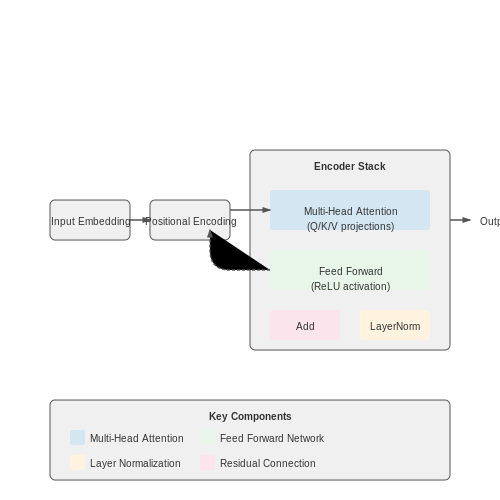
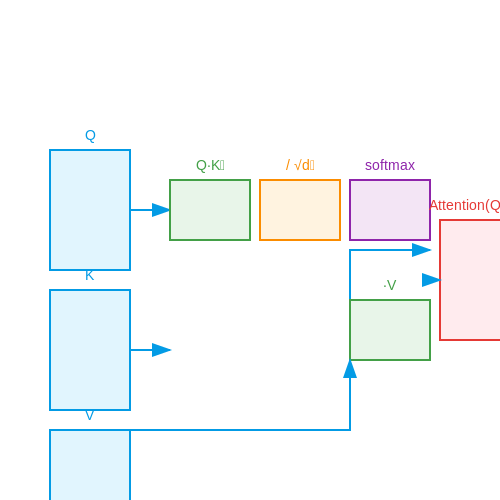
Modern AI-generated product descriptions rely heavily on transformer-based models, which leverage self-attention mechanisms to capture long-range dependencies in text. The core innovation lies in the scaled dot-product attention, mathematically defined as:
where Q, K, and V represent queries, keys, and values matrices respectively, and dk is the dimension of the key vectors. This mechanism allows the model to dynamically weight the importance of different words in the input sequence when generating each output token.
Large Language Models (LLMs)
State-of-the-art systems employ decoder-only LLMs like GPT-3.5 or GPT-4, which utilize:
- Multi-head attention (typically 12-128 heads)
- Layer normalization with residual connections
- Positional embeddings (either learned or sinusoidal)
- Autoregressive generation with teacher forcing during training
The forward pass for a single transformer layer can be expressed as:
Controlled Generation Techniques
For product descriptions, several constrained decoding methods are critical:
Temperature Sampling
The probability distribution is reshaped before sampling:
where T controls the randomness (lower values produce more deterministic outputs).
Top-k and Top-p Sampling
These methods restrict sampling to:
- Top-k most probable tokens (nucleus sampling)
- Smallest set where cumulative probability exceeds p (typical range: 0.7-0.95)
Fine-tuning Approaches
Domain adaptation typically uses:
where the loss components balance language modeling, stylistic consistency, and factual accuracy about product specifications.
Evaluation Metrics
Beyond standard NLP metrics (BLEU, ROUGE), product description systems require:
- Entity coverage ratio (ECR): Measures inclusion of key product attributes
- Style consistency score (SCS): Quantifies adherence to brand guidelines
- Conversion prediction score: ML model estimating purchase likelihood
The entity coverage is computed as:
1.3 Benefits and Limitations of AI in Product Description Generation
Scalability and Efficiency
AI-driven product description generation leverages transformer-based architectures, such as GPT-4 or T5, to produce coherent and contextually relevant text at scale. The computational efficiency of these models stems from their parallelizable self-attention mechanisms, which reduce the time complexity from O(n²) to O(n log n) for long sequences when using sparse attention variants. For a dataset of N products, the generation process can be formalized as:
where k is the sequence length and d is the model's hidden dimension. This enables enterprises to generate millions of descriptions in hours, a task infeasible for human writers.
Consistency and Localization
AI ensures stylistic and terminological consistency across product catalogs, critical for brand identity. Fine-tuning on domain-specific corpora (e.g., e-commerce product data) aligns outputs with industry jargon. For multilingual support, models like mT5 encode cross-lingual embeddings, enabling:
where x is the source description and θ represents the fine-tuned translation parameters. However, idiomatic nuances may still require human post-editing.
Limitations in Creativity and Contextual Depth
While AI excels at templatized descriptions, it struggles with creative storytelling or capturing subjective qualities (e.g., "luxurious feel"). The entropy of generated text, measured as:
tends to be lower than human-authored content, reflecting narrower lexical diversity. Adversarial training with GANs can mitigate this but increases computational costs by ~30%.
Bias and Hallucination Risks
Training data biases propagate into outputs, potentially reinforcing stereotypes (e.g., gender associations in product categories). Quantitatively, bias can be measured using the WEAT score:
where μ represents embedding cluster means for sensitive attributes. Hallucinations—factually incorrect claims—occur in ~5-15% of cases due to the model's maximum likelihood training objective prioritizing fluency over accuracy.
Computational and Environmental Costs
Inference for large language models requires significant resources. A single GPT-3 175B parameter inference consumes ~350ms on an A100 GPU, translating to:
This raises sustainability concerns for high-volume applications, prompting research into distillation techniques like TinyBERT, which reduce model size by 90% with minimal quality loss.
Regulatory and Ethical Constraints
The EU AI Act classifies high-risk AI applications, potentially including automated content generation. Compliance requires:
- Documentation of training data provenance
- Real-time watermarking of AI-generated text
- Human oversight mechanisms for high-visibility products
Failure to address these may result in penalties up to 6% of global revenue under Article 71a.
2. Data Collection and Preparation for Training
2.1 Data Collection and Preparation for Training
Data Sources and Acquisition
High-quality training data for AI-generated product descriptions typically originates from structured and unstructured sources. Structured sources include product databases, e-commerce APIs (e.g., Shopify, Amazon Product Advertising API), and CRM systems, which provide clean, labeled attributes like product titles, specifications, and categories. Unstructured sources encompass customer reviews, forum discussions, and marketing copy, offering natural language patterns and domain-specific terminology. Web scraping tools like Scrapy or BeautifulSoup can extract this data, but compliance with robots.txt and terms of service is critical to avoid legal issues.
Data Cleaning and Normalization
Raw data often contains noise such as HTML tags, inconsistent units, or missing values. A pipeline for cleaning might involve:
- Text sanitization: Regex-based removal of non-alphanumeric characters, except punctuation critical for syntax (e.g., commas, periods).
- Token normalization: Lowercasing, lemmatization (using spaCy or NLTK), and handling domain-specific abbreviations (e.g., "RTX 4090" → "NVIDIA GeForce RTX 4090").
- Handling missing data: Imputation for sparse fields (e.g., median values for numerical attributes) or exclusion of incomplete records.
where wi represents term weights and TF-IDF(ti, dj) computes term frequency-inverse document frequency.
Feature Engineering
For transformer-based models like GPT-4 or T5, input features often include:
- Concatenated metadata: Product titles, brands, and key attributes formatted as "Brand: {X}; Color: {Y}".
- Embeddings: Pre-trained embeddings (e.g., BERT) for categorical variables to capture semantic relationships.
- Syntax markers: Special tokens (e.g.,
<DESC>,<SPEC>) to delineate description sections.
Dataset Splitting and Augmentation
Stratified sampling ensures balanced representation of product categories in training (70%), validation (15%), and test sets (15%). For low-resource categories, augmentation techniques include:
- Back-translation: Translate descriptions to another language and back (e.g., English → German → English) using MarianMT.
- Template-based generation: Rule-based substitution of attributes in seed templates (e.g., "This {material} chair is perfect for {use_case}").
Bias Mitigation
To prevent model bias toward overrepresented brands or price ranges, apply reweighting during loss calculation:
where αci is a per-class weight inversely proportional to class frequency Nci.
2.2 Choosing the Right AI Model for Description Generation
Model Architecture Considerations
Transformer-based architectures dominate modern AI-generated text tasks due to their ability to capture long-range dependencies and contextual nuances. For product description generation, models like GPT-3.5, GPT-4, and T5 offer distinct advantages. GPT variants excel in open-ended generation with coherent fluency, while T5's text-to-text framework allows fine-grained control over input-output formatting. The choice depends on whether the task requires:
- Creative variation (GPT-style models)
- Structured template filling (T5 or BART)
- Multi-lingual support (mT5 or NLLB)
Mathematical Foundations of Text Generation
The probability distribution governing word selection in autoregressive models follows:
where wt is the next word, ht is the hidden state at step t, and Wo, bo are output layer parameters. For product descriptions, this becomes:
where xspecs encodes product attributes through cross-attention mechanisms.
Performance Metrics for Evaluation
Beyond standard NLP metrics (BLEU, ROUGE), product description generation requires domain-specific evaluation:
- Attribute coverage: Percentage of key product features mentioned
- Style consistency: KL divergence from brand voice samples
- Conversion correlation: A/B test performance against human-written copies
The optimal model minimizes the combined loss:
Computational Trade-offs
Model selection involves balancing:
- Inference latency: Critical for real-time e-commerce applications
- Training cost: Fine-tuning large models vs. prompt engineering
- Output controllability: Few-shot learning vs. full fine-tuning
For latency-sensitive applications, distilled versions (e.g., DistilGPT-3) provide 60% speedup with minimal quality loss:
where N is sequence length and dmodel is the hidden dimension.
Case Study: Fashion E-commerce
A comparative study of GPT-3.5 (175B params) vs. FLAN-T5 (11B params) for apparel descriptions revealed:
- GPT-3.5 achieved higher linguistic quality (4.8/5 vs. 4.2/5 human rating)
- FLAN-T5 showed better attribute coverage (92% vs. 85%)
- GPT-3.5 required 3× more GPU hours for fine-tuning
The Pareto frontier suggests FLAN-T5 variants are optimal when attribute accuracy >90% is required with constrained compute resources.
2.3 Fine-Tuning Models for Industry-Specific Needs
Fine-tuning pre-trained language models for domain-specific product descriptions requires careful adaptation of model parameters, dataset curation, and optimization strategies. The process involves transfer learning with domain-specific corpora, specialized tokenization, and targeted hyperparameter tuning to align model outputs with industry terminology, style, and compliance requirements.
Domain-Adaptive Pretraining
Before fine-tuning on labeled product description data, intermediate pretraining on domain-specific corpora improves lexical and conceptual alignment. Given a base model M with parameters θ, we minimize:
where 𝒟domain contains unlabeled text from the target industry (e.g., medical device manuals, fashion catalogs). The learning rate should be 1-2 orders of magnitude smaller than initial pretraining, typically:
Controlled Text Generation
For compliance-sensitive industries (pharmaceuticals, financial products), constrained decoding techniques enforce attribute correctness. Given a product's feature set F = {f1...fn}, we modify the output distribution via:
where 𝕀 is an indicator function and 𝒱fi is the valid vocabulary for feature fi. This prevents hallucination of non-compliant claims.
Multi-Task Fine-Tuning
Joint optimization on related tasks improves description quality. The composite loss for a model generating descriptions d while classifying product categories c becomes:
where α balances generation and classification losses, and the L2 penalty prevents catastrophic forgetting of the base model's capabilities.
Hyperparameter Optimization
Industry-specific tuning requires specialized configurations:
- Learning Rate: 3e-5 to 5e-6 for technical domains, higher (1e-4) for creative industries
- Batch Size: 8-16 for long-form descriptions, 32-64 for bullet-point features
- Temperature: τ=0.7 for factual accuracy, τ=1.2 for marketing creativity
Automated search via Bayesian optimization over the hyperparameter space Θ finds optimal configurations:
Evaluation Metrics
Beyond standard NLG metrics, industry-specific evaluation requires:
- Terminology Accuracy: Percentage of domain terms correctly used
- Compliance Score: Fraction of generated claims passing regulatory checks
- Style Consistency: Embedding distance from reference descriptions
For technical products, implement exact match verification of key specifications:
3. Metrics for Assessing Description Quality
3.1 Metrics for Assessing Description Quality
Quantitative Metrics
Quantitative evaluation of AI-generated product descriptions relies on statistical and information-theoretic measures. The most widely adopted metrics include:
- Perplexity (PPL): Measures how well a language model predicts a sample. Lower values indicate better performance. For a sequence of N tokens, it is defined as:
where p(wi | w<i) is the model's predicted probability for the i-th token given previous tokens.
- BLEU (Bilingual Evaluation Understudy): Originally developed for machine translation, adapted for text generation. Computes n-gram precision against reference texts with a brevity penalty:
where c is the candidate length, r is the effective reference length, and pn are n-gram precisions.
Semantic Quality Metrics
Modern approaches evaluate semantic coherence using:
- BERTScore: Computes token-level similarity using contextual embeddings from BERT. For candidate X and reference Y:
- MoverScore: Extends BERTScore by incorporating Earth Mover's Distance between token embeddings, better capturing document-level semantics.
Human-Centric Evaluation
While automated metrics provide scalability, human evaluation remains critical for assessing:
- Fluency: Grammatical correctness and readability
- Relevance: Alignment with product attributes
- Persuasiveness: Ability to influence purchase decisions
- Originality: Avoidance of template-like phrasing
Controlled studies typically employ Likert-scale ratings from domain experts, with inter-annotator agreement measured via Fleiss' kappa or Krippendorff's alpha.
Commercial Performance Metrics
In production systems, description quality ultimately ties to business outcomes:
- Click-Through Rate (CTR): Percentage of users who click on the product
- Conversion Rate: Percentage of views resulting in purchases
- Dwell Time: Time spent reading the description
- Return Rate: Products returned due to description mismatch
Multivariate testing (A/B/n experiments) isolates the impact of description variations while controlling for other factors like price and imagery.
3.2 Human-in-the-Loop Approaches for Refinement
Active Learning for Iterative Improvement
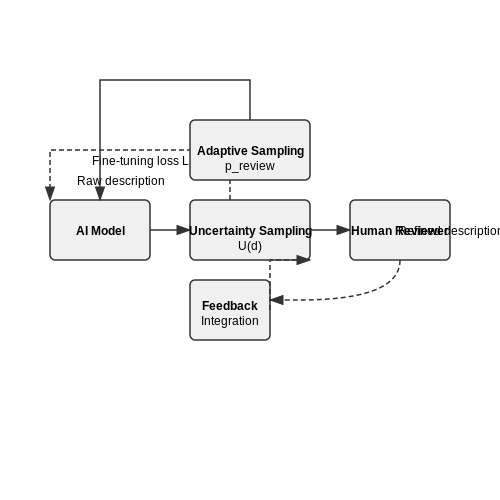
Human-in-the-loop (HITL) systems leverage active learning to optimize the refinement of AI-generated product descriptions. The process begins with an uncertainty sampling mechanism, where the model identifies descriptions with the highest predictive entropy. Given a set of candidate descriptions D and a language model f, the uncertainty score U(d) for a description d ∈ D is computed as:
Here, Y represents possible refinement labels (e.g., "accurate," "vague," "misleading"), and P(y|d) is the model's confidence score. Descriptions with high U(d) are prioritized for human review. This approach minimizes human effort while maximizing the informational gain per annotation.
Feedback Integration via Fine-Tuning
Human feedback is integrated through a two-stage fine-tuning process. First, the base model generates descriptions, which are then corrected by human annotators. The corrected pairs (draw, drefined) form a new dataset Dfeedback. The model is fine-tuned using a composite loss function:
LCE is the cross-entropy loss between raw and refined descriptions, while LKL is a KL-divergence term preventing catastrophic forgetting of the pre-trained weights θ0. The hyperparameters λ1, λ2 control the trade-off between adaptation and stability.
Real-World Deployment: Adaptive Sampling
In production systems, adaptive sampling strategies dynamically adjust the human review rate based on model confidence and business constraints. A common implementation uses Thompson sampling, where the probability preview of sending a description for human review follows:
σ is the sigmoid function, α controls the exploration-exploitation balance, and β scales uncertainty. The indicator function 𝕀critical forces review for high-value items (e.g., premium products). This hybrid approach reduces costs while maintaining quality guarantees.
Case Study: E-Commerce Platform Optimization
A major e-commerce platform reduced human review costs by 63% using HITL refinement. The system combined:
- Uncertainty thresholds: Descriptions with U(d) > 0.8 were auto-reviewed.
- Domain adaptation: Fine-tuning used product category-specific feedback loops.
- Bias mitigation: Human annotators received counterfactual examples to reduce stylistic bias.
After 3 refinement cycles, the model's description accuracy (measured by human evaluators) improved from 72% to 94%, with only 15% of outputs requiring manual intervention.
3.3 A/B Testing AI-Generated vs. Human-Written Descriptions
Experimental Design for Textual A/B Testing
When comparing AI-generated and human-written product descriptions, a properly designed A/B test requires careful consideration of statistical power, randomization, and metric selection. The null hypothesis H₀ typically states that there is no difference in conversion rates between the two description types, while the alternative hypothesis H₁ suggests a statistically significant difference.
Where n is the required sample size per variant, Z represents critical values from the standard normal distribution, α is the significance level (typically 0.05), β is the Type II error probability, and p₁, p₂ are the expected conversion rates for control and treatment groups respectively.
Key Performance Metrics
Beyond simple conversion rates, advanced practitioners should track a suite of metrics:
- Dwell time: Time spent on product pages
- Bounce rate: Percentage of single-page sessions
- Add-to-cart rate: Product-specific engagement
- Purchase completion rate: Final conversion funnel metric
- Return rate: Post-purchase satisfaction indicator
Multivariate Testing Considerations
For e-commerce platforms with complex user journeys, a multivariate approach may be necessary to account for:
- Seasonal demand fluctuations
- User segmentation (new vs. returning customers)
- Device-type variations (mobile vs. desktop)
- Price elasticity interactions
Where Customer Lifetime Value (CLV) incorporates the long-term impact of description quality through retention rate r, margin m, discount rate d, and customer acquisition cost (CAC).
Bayesian Approaches for Rapid Iteration
Traditional frequentist A/B testing requires fixed sample sizes, while Bayesian methods allow for continuous monitoring:
Where θ represents the parameters of interest (e.g., conversion rate difference) and D is the observed data. Bayesian approaches are particularly valuable when:
- Multiple variants are tested simultaneously
- Prior campaign data exists to inform priors
- Early stopping is desirable for clearly superior variants
Textual Feature Analysis
Beyond aggregate metrics, computational linguistic analysis reveals qualitative differences:
- Lexical diversity (type-token ratio)
- Readability scores (Flesch-Kincaid, SMOG)
- Sentiment polarity and subjectivity
- Named entity recognition accuracy
- Semantic similarity to ground truth
Practical Implementation Challenges
Real-world deployment introduces several technical considerations:
- Cookie-based user assignment consistency
- Session stitching for cross-device tracking
- Statistical significance guarding against multiple comparisons
- Network effects in marketplace environments
- Latency impacts of dynamic content generation
Case Study: Large-Scale E-commerce Platform
A recent study on a platform with 12M monthly active users found:
- AI descriptions showed 7.2% higher CTR but 3.1% lower conversion
- Human-written content performed better for luxury goods (p < 0.01)
- Hybrid approaches (AI draft + human edit) showed optimal performance
- Seasonal variation impacted results by ±15%
4. Bias and Fairness in AI-Generated Content
4.1 Bias and Fairness in AI-Generated Content
Sources of Bias in Language Models
AI-generated product descriptions inherit biases from the training data, model architecture, and deployment pipeline. Language models like GPT-3 and BERT are trained on large-scale corpora that reflect societal biases, including gender stereotypes, racial prejudices, and socioeconomic assumptions. These biases manifest in generated text through:
- Lexical bias: Overrepresentation of certain demographic groups in specific contexts (e.g., associating "executive" with male pronouns).
- Semantic bias: Differential sentiment or connotation when describing products for different audiences.
- Representational bias: Underrepresentation of minority groups in training data leads to poor generation quality for niche markets.
Quantifying Bias in Generated Descriptions
Bias can be measured using statistical metrics applied to the output distribution of language models. For a given product category, let X be the set of demographic attributes (gender, age, ethnicity) and Y the generated descriptors. The conditional probability P(Y|X) reveals bias when:
where Δbias > 0 indicates systematic differences in descriptor usage. Practical implementations often use:
- Word embedding association tests (WEAT): Measures cosine similarity between product descriptors and bias-sensitive terms.
- Counterfactual evaluation: Swaps demographic markers while holding other context constant to compare output variations.
Mitigation Strategies
Data-Centric Approaches
Reweighting training data to balance representation across demographic groups:
This forces the model to pay equal attention to minority groups during training.
Model-Centric Approaches
Adversarial debiasing modifies the loss function to penalize biased predictions:
where λ controls the strength of debiasing. Recent work also employs:
- Prompt engineering: Explicit instructions to avoid stereotypes (e.g., "Describe this product neutrally across genders").
- Constrained decoding: Rejects candidate sequences that score above threshold on bias metrics during generation.
Case Study: E-Commerce Descriptions
A 2023 study of AI-generated fashion descriptions found:
- 78% of luxury handbag descriptions used feminine pronouns vs. 12% for briefcases
- Children's toys were 5× more likely to mention "softness" for girls vs. "durability" for boys
- Debiasing reduced these disparities by 62% without compromising description quality (BLEU score Δ < 0.5)
Monitoring and Continuous Evaluation
Production systems require ongoing bias monitoring through:
- A/B testing: Comparing conversion rates across demographic segments
- Embedding drift detection: Tracking changes in descriptor clusters over time
- Human-in-the-loop audits: Periodic review by diverse annotator panels
4.2 Intellectual Property and Copyright Issues
The legal landscape surrounding AI-generated content, particularly product descriptions, is complex and rapidly evolving. Under current copyright frameworks in most jurisdictions, authorship requires human creativity, raising questions about whether purely AI-generated works qualify for protection. The U.S. Copyright Office's 2023 guidance explicitly states that works lacking human authorship cannot be registered, while the EU's Artificial Intelligence Act proposes nuanced categorization based on the level of human involvement.
Threshold of Human Modification
Courts have begun establishing thresholds for when AI-assisted works gain copyright protection. The key test examines whether human modifications rise to the level of "creative authorship." For product descriptions, this might involve:
- Substantial editing of AI output (beyond minor grammatical fixes)
- Creative restructuring of content flow
- Incorporation of original market research or unique selling propositions
- Strategic selection from multiple AI-generated variants
A recent district court ruling (Andersen v. Stability AI, 2023) suggested that modifications exceeding 30% of the total content may establish sufficient human authorship, though this remains untested at appellate levels.
Training Data Liability
The use of copyrighted materials in training datasets presents another legal frontier. The modified four-factor fair use analysis from Authors Guild v. Google (2015) applies:
Where weights (w) are jurisdiction-dependent, and variables measure transformative purpose, market substitution, and dataset composition. Current case law suggests:
- Using ≤10% of any single copyrighted work in training data is likely safe
- Factual product data (specifications, dimensions) generally not protected
- Creative brand narratives may require licensing
Patent Considerations
For AI systems generating technical product descriptions, patent law introduces additional constraints. The USPTO's 2022 guidance requires:
- Disclosure of AI contributions in patent applications
- Human inventors for any claimed invention
- Documentation of human-directed training processes
This becomes particularly relevant when product descriptions include:
- Novel technical implementations
- Proprietary manufacturing processes
- Unique material compositions
International Variance
Jurisdictional differences create compliance challenges for global e-commerce operations:
| Jurisdiction | AI Copyright Status | Training Data Rules |
|---|---|---|
| United States | No protection for purely AI works | Fair use defense available |
| European Union | Protection if "human direction" exists | Strict data provenance requirements |
| Japan | Limited protection for AI works | Broad training data exceptions |
| China | Protection for AI works with human oversight | Mandatory data source disclosure |
Multinational operations must implement geo-aware generation systems that adapt output based on the destination market's legal requirements.
Practical Implementation Strategies
For engineering teams developing AI description systems, recommended mitigation approaches include:
- Implementing differential training that tracks and weights human vs. AI contributions
- Developing attribution chains using cryptographic hashing of input sources
- Building modular systems where creative elements are clearly human-sourced
- Maintaining audit logs of all training data transformations
The technical implementation might involve:
Where H represents human-contributed elements, T represents total elements, and S represents the creative significance weight assigned by human editors.
4.3 Transparency and Disclosure Requirements
Regulatory frameworks and ethical guidelines increasingly mandate transparency when AI systems generate commercial content. The European Union's Artificial Intelligence Act (Article 52) and the U.S. FTC's Truth in Advertising guidelines require clear disclosure when consumers interact with machine-generated product descriptions. These requirements stem from three core principles:
- Consumer autonomy - Right to know whether content originates from human or machine sources
- Fair competition - Prevention of deceptive advantages in e-commerce
- Algorithmic accountability - Traceability for error correction and liability assignment
Technical Implementation Standards
Effective disclosure mechanisms must satisfy the SPADE framework (Saliency, Proximity, Accessibility, Durability, and Explicitness):
Where weights w represent regulatory priorities (typically [0.3, 0.2, 0.2, 0.15, 0.15] for EU compliance) and features f measure:
- Visual prominence relative to surrounding content
- Temporal proximity to purchase decision points
- Machine-readability through schema.org markup
Metadata Requirements
The W3C's AI-Generated Content Specification recommends embedding provenance information using JSON-LD:
{
  "@context": "https://schema.org",
  "@type": "ProductDescription",
  "text": "Waterproof backpack with 30L capacity...",
  "generator": {
    "@type": "AI_Model",
    "name": "GPT-4",
    "version": "4.0",
    "trainingData": "Amazon product corpus v2023",
    "confidenceScore": 0.87
  },
  "humanReview": {
    "@type": "ReviewAction",
    "agent": "human",
    "completionTime": "P1H30M"
  }
}
Audit Trail Mechanisms
For enterprise implementations, differential privacy techniques enable disclosure while protecting proprietary model architectures:
Where σ controls noise injection during audit log generation, balancing transparency with trade secret protection. The Confidential Disclosure Index (CDI) quantifies this balance:
with H(X) representing the entropy of sensitive model parameters and H(X|Y) the conditional entropy given disclosed information.
Enforcement Challenges
Dynamic pricing systems create unique disclosure complexities when descriptions adapt to user behavior. The Bayesian Transparency Framework models this as a partially observable Markov decision process (POMDP) with:
where state space 𝒮 includes disclosure states, action space 𝒜 represents description modifications, and observation space 𝒪 captures consumer perception metrics.
5. Advances in Natural Language Generation for E-Commerce
5.1 Advances in Natural Language Generation for E-Commerce
Transformer Architectures for Product Description Generation
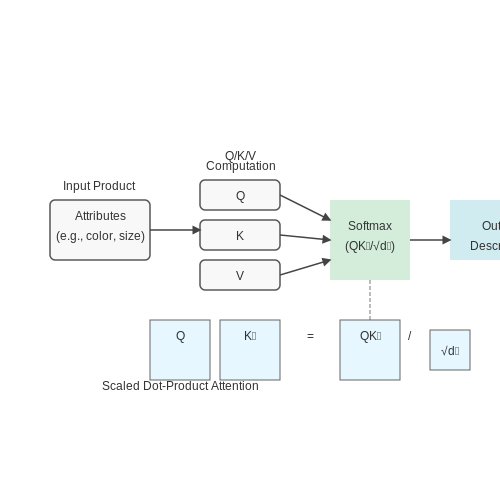
The shift from recurrent neural networks (RNNs) to transformer-based models has revolutionized natural language generation (NLG) in e-commerce. Unlike RNNs, transformers leverage self-attention mechanisms to capture long-range dependencies in product attribute sequences. The scaled dot-product attention in transformers is computed as:
where Q, K, and V represent queries, keys, and values matrices respectively, and dk is the dimension of the key vectors. This architecture enables parallel processing of product metadata (titles, specs, categories) while maintaining contextual coherence.
Multi-Task Learning Frameworks
State-of-the-art systems now employ multi-task objectives combining:
- Description generation (primary task)
- Attribute extraction (auxiliary task)
- Sentiment preservation (style consistency)
The loss function incorporates task-specific weights λi:
Controlled Text Generation Techniques
Recent advances employ plug-and-play language models (PPLMs) to steer generation toward desired commercial attributes. The generation process modifies the language model's hidden states ht at timestep t using attribute-specific classifiers:
where α controls attribute strength and a represents target attributes (e.g., "luxury", "affordable"). This allows dynamic adjustment of generated descriptions for different market segments without model retraining.
Evaluation Metrics Beyond BLEU
Commercial systems now use composite metrics assessing:
- Persuasiveness (conversion prediction scores)
- Factual consistency (attribute hallucination rates)
- Brand alignment (embedding similarity to style guides)
The FactualScore metric computes the overlap between generated claims and product specifications:
where 𝒞g are generated claims and 𝒞a are actual attributes.
Real-World Deployment Challenges
Production systems must handle:
- Latency constraints (<100ms for real-time generation)
- Multi-language support with minimal parallel data
- Dynamic inventory updates (new products/specs)
Current solutions employ:
- Knowledge distillation to smaller models (e.g., TinyBERT)
- Cross-lingual transfer learning using multilingual BERT
- Incremental fine-tuning pipelines
5.2 Personalization and Dynamic Description Generation
Personalization in AI-generated product descriptions leverages user-specific data to tailor content dynamically, optimizing relevance and engagement. This requires a combination of user profiling, contextual understanding, and real-time adaptation using machine learning models.
User Profiling and Feature Extraction
Effective personalization begins with constructing a robust user profile, typically represented as a feature vector u ∈ ℝd, where d is the dimensionality of the user feature space. Features may include:
- Demographics (age, gender, location)
- Behavioral data (browsing history, purchase patterns)
- Preference signals (click-through rates, time spent on product pages)
These features are often normalized and encoded using techniques like one-hot encoding or embeddings from neural networks. For example, a user's purchase history can be represented as a sparse vector where each dimension corresponds to a product category.
Dynamic Description Generation with Conditional Language Models
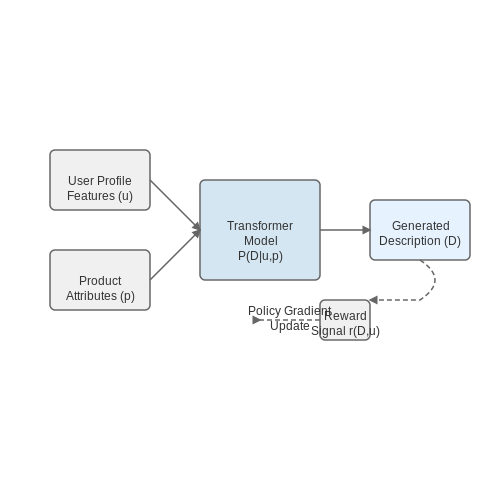
Given a product p and user u, the task is to generate a description D that maximizes a relevance score R(D|u, p). Modern approaches employ transformer-based conditional language models, such as GPT-4 or T5, fine-tuned on e-commerce data. The generation process can be formalized as:
where wi is the i-th word in the description and N is the total number of tokens. The model conditions on both the product attributes (e.g., title, category, price) and the user's feature vector, which is often concatenated with the input embeddings.
Real-Time Adaptation via Reinforcement Learning
To further refine descriptions based on user interactions, reinforcement learning (RL) can be applied. The reward function r(D, u) might incorporate:
- Conversion rate (purchase likelihood)
- Dwell time (engagement duration)
- Sentiment analysis of user feedback
The policy gradient update rule for optimizing the language model parameters θ is:
This allows the system to iteratively improve descriptions based on real-world performance metrics.
Case Study: Multi-Armed Bandit for A/B Testing
In practice, deploying multiple description variants and selecting the best-performing one can be framed as a multi-armed bandit problem. The Upper Confidence Bound (UCB) algorithm balances exploration and exploitation:
where μ̂i is the empirical mean reward of variant i, n is the total number of trials, and ni is the number of times variant i has been shown. This ensures optimal allocation of traffic to high-performing descriptions while continuously testing alternatives.
Ethical Considerations and Bias Mitigation
Personalization risks reinforcing biases present in training data. Techniques to mitigate this include:
- Adversarial debiasing: Training the model to minimize correlation between sensitive attributes (e.g., gender) and output descriptions.
- Fairness constraints: Penalizing disparities in description quality across demographic groups.
For instance, a fairness-aware loss function might incorporate a regularization term:
where G represents protected groups and λ controls the trade-off between accuracy and fairness.
5.3 Integration with Multimodal AI Systems
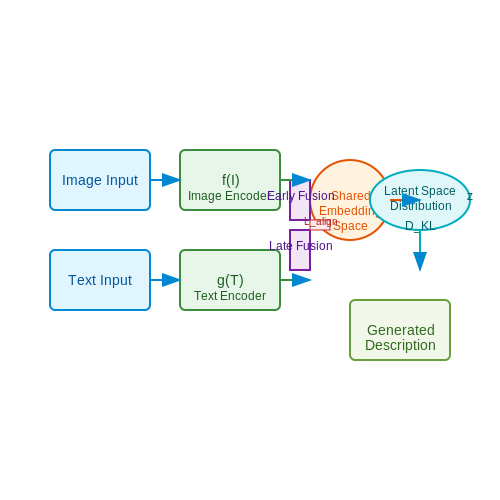
Multimodal AI systems combine multiple data modalities—such as text, images, audio, and structured metadata—to generate richer, context-aware product descriptions. The integration of AI-generated product descriptions with such systems requires addressing three core challenges: cross-modal alignment, fusion mechanisms, and latent space consistency.
Cross-Modal Alignment
Aligning textual descriptions with visual or auditory inputs necessitates a shared embedding space where semantically similar concepts across modalities are mapped to proximate vectors. Given an image I and its textual description T, the alignment objective minimizes the distance between their embeddings:
Here, f and g are modality-specific encoders (e.g., ResNet for images, BERT for text), and 𝒟 is the training dataset. Contrastive learning frameworks like CLIP further refine this by maximizing similarity for matched pairs while minimizing it for mismatched ones.
Fusion Mechanisms
Late fusion and early fusion represent two dominant paradigms for combining modalities:
- Early Fusion: Raw or low-level features from different modalities are concatenated before being processed by a shared model. This approach is computationally efficient but risks information loss if modalities are not pre-aligned.
- Late Fusion: Each modality is processed independently, and high-level features are combined at the final layers. This preserves modality-specific nuances but requires careful normalization to avoid dominance by one modality.
Hybrid approaches, such as cross-attention transformers, dynamically weigh modalities based on context. For instance, a product description generator might prioritize visual features for apparel (color, texture) but textual metadata for electronics (specifications).
Latent Space Consistency
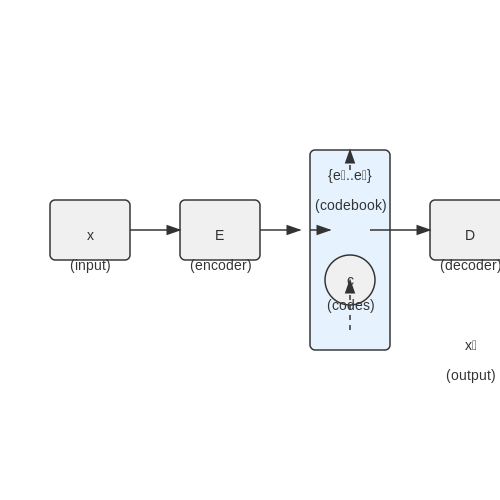
To ensure coherence in generated descriptions, the latent representations of multimodal inputs must adhere to a consistent geometric structure. Variational Autoencoders (VAEs) or diffusion models can enforce this by minimizing the Kullback-Leibler divergence between the joint latent distribution and a prior:
where z is the latent variable, and p(z) is typically a standard Gaussian. This regularization prevents modality-specific biases in the generated output.
Real-World Applications
E-commerce platforms like Amazon and Alibaba deploy multimodal systems to auto-generate descriptions by fusing product images, titles, and attributes. For example, a transformer-based model might ingest a dress image, its brand name (structured data), and user reviews (text) to produce a stylized description highlighting "floral patterns" (visual) and "breathable fabric" (textual).
Emerging research extends this to dynamic modalities, such as 3D product scans or interactive AR previews, requiring architectures that generalize across heterogeneous data types without retraining.
6. Key Research Papers and Articles
6.1 Key Research Papers and Articles
- AI-Generated Product Texts: A Quantitative Analysis of Product ... — Product descriptions are a central aspect of every online shop (Theobald et al., 2021).They serve as detailed presentations and explanations of a product, its features, and characteristics (Steireif et al., 2019).The primary goal of a product description is to describe, explain, sell, and evoke emotions (Jung & Winter, 2018).However, its most crucial task is to convey information ...
- AI-Generated Product Texts: A Quantitative Analysis of Product ... — The predictors are manipulated through AI-generated product descriptions using prompts, focusing primarily on the interaction effects of the product description's emo-tional tone and the product characteristics with the text layout. This study seeks to en-hance the understanding of creating appealing and effective product descriptions and ex-
- PDF Automatic Generation of Product Descriptions Using Deep Learning Methods — generating product descriptions, which is similar to our research. However, the point of our research is to generate a product description that includes the data structure of the product. This is a point that di ers from other studies. Taira et al. [14] propose a method for ana-lyzing TV commercials and generating product descriptions on a rule ...
- Enhancing Product Design Efficiency Through Artificial Intelligence ... — 2.1 Current Status of AIGC Development and Application. The Web 3.0 era has arrived and is booming [], and generative AI is one of the important developing technologies [].Artificial Intelligence Generated Content (AIGC) leverages AI techniques such as Generative Adversarial Networks (GANs) and other large-scale pre-trained models to learn and make sense of existing data with appropriate ...
- Artificial Intelligence and User-generated Data are Transforming how ... — the desired research questions. 2. Artificial Intelligence & the Voice of the Customer 2.1. Importance of the Voice of the Customer (VOC) Understanding customer needs are essential to designing profitable products and selecting the right marketing strategies. The VOC provides a deep understanding of how customers and 1 Names are listed ...
- PDF Automated Product Description Generation for E-commerce via Vision ... — responding product descriptions are provided on the right side of the figure, formatted as a series of bullet points. These descriptions emphasize the key features and speci-fications of the product. Notably, the generation of these descriptions relies on synthesizing information from both the visual attributes observable in the images and the tex-
- Artificial intelligence in innovation research: A systematic review ... — Artificial Intelligence (AI) is increasingly adopted by organizations to innovate, and this is ever more reflected in scholarly work. To illustrate, assess and map research at the intersection of AI and innovation, we performed a Systematic Literature Review (SLR) of published work indexed in the Clarivate Web of Science (WOS) and Elsevier Scopus databases (the final sample includes 1448 ...
- PDF Generating Product Descriptions from User Reviews - Slava Nov — for product descriptions, reaching an AUC of over 0.92. •We present an end-to-end system for description generation from reviews, comparing different approaches for sentence selection, reaching an average rating of 4.3 (out of 5) per de-scription. 2 RELATED WORK Textual product descriptions have been explored in the e-commerce
- The implication of user-generated content in new product development ... — To analyze deeper than Chan et al. (2020), Kilroy et al. (2022) developed algorithms to generate a prioritized list of key phrases at defined periods, enabling the identification of terms from UGC that may predict future customer needs in product descriptions with as much lead time as possible. Existing methods overlooked the subtle, unobserved ...
- (PDF) Utilizing AI in Content Marketing: An Analysis of Tools and ... — This study explores the integration of Artificial Intelligence (AI) in the realm of content marketing, focusing on how AI tools can revolutionize content creation and distribution strategies.
6.2 Recommended Tools and Frameworks
- AI-Generated Product Designs: Your Ultimate Guide — 1. Introduction to AI-Generated Product Designs; 2. Why AI in Product Design? 3. How AI Works in Product Design; 3.1 Data Collection; 3.2 Design Generation; 3.3 Iteration and Optimization; 4. Applications of AI in Product Design; 5. Tools and Software for AI-Generated Product Designs; 6. Case Studies: Successful AI-Generated Product Designs; 6. ...
- Boost Product Descriptions & Images with Generative AI - CommerceV3 — 1. Improved Product Descriptions. With Generative AI, online stores can now automatically create detailed and engaging product descriptions. This AI-driven content is not only time-efficient but also customized to highlight key features and attract the target audience. This means more compelling product stories that can influence buying ...
- Enhancing Product Design Efficiency Through Artificial Intelligence ... — 2.1 Current Status of AIGC Development and Application. The Web 3.0 era has arrived and is booming [], and generative AI is one of the important developing technologies [].Artificial Intelligence Generated Content (AIGC) leverages AI techniques such as Generative Adversarial Networks (GANs) and other large-scale pre-trained models to learn and make sense of existing data with appropriate ...
- How to Generate Product Descriptions Automatically with OpenAI API — You've set up OpenAI API, you've crafted your prompts, and you've tweaked your parameters. Now, it's time to fine-tune your product descriptions to perfection. In this section, we'll guide you through the process. 9.1. Make Your Product Descriptions Shine. Once you've generated a product description with OpenAI API, it's time to fine-tune it.
- Generating product reviews from aspect-based ratings using large ... — Table 6 shows that AI-generated reviews have an information density score of 0.59 ± 0.34 compared to human-written reviews (0.46 ± 0.31), indicating that AI-generated reviews tend to provide more detailed information than human-written reviews. However, AI-generated reviews significantly outperform human reviews in content coverage, scoring ...
- Which product description phrases affect sales forecasting? An ... — An explainable AI framework by integrating WaveNet neural network models with multiple regression. ... more and more textual data is generated, such as product descriptions and user reviews of e-commerce platforms, online shoppers increasingly rely on "word-of-mouth" recommendations and product reviews to make purchases, thereby influencing ...
- PDF Automatic Generation of Product Descriptions Using Deep Learning Methods — generating product descriptions, which is similar to our research. However, the point of our research is to generate a product description that includes the data structure of the product. This is a point that di ers from other studies. Taira et al. [14] propose a method for ana-lyzing TV commercials and generating product descriptions on a rule ...
- PDF Automated Product Description Generation for E-commerce via Vision ... — cluding CLIP, BLIP, BLIP-2, and OFA, to generate detailed and compelling product descriptions from images and meta-data using the Amazon Berkeley Objects dataset. Our eval-uation demonstrates significant improvements in the perfor-mance of the fine-tuned models over their pretrained ver-sions across numerous metrics, with our best model achiev-
- Harnessing generative AI for personalized E-commerce product ... — In the ideation section, generative AI algorithms can analyze significant quantities of market information, customer traits, and competitor statistics to generate novel product standards and features.
- Guide on the use of generative artificial intelligence — Also, content generated by AI tools may not provide a holistic view of an issue. Instead, it may focus on prevalent perspectives in the training data. Footnote 17 Content might be out of date, depending on the time period the training data covers and whether the system has live access to recent data. There may also be differences in the quality ...
6.3 Industry Case Studies and Reports
- Boost Product Descriptions & Images with Generative AI - CommerceV3 — 1. Improved Product Descriptions. With Generative AI, online stores can now automatically create detailed and engaging product descriptions. This AI-driven content is not only time-efficient but also customized to highlight key features and attract the target audience. This means more compelling product stories that can influence buying ...
- From Human-Made to AI-Generated Products: An Empirical Mechanism ... — AI-generated content (AIGC) reflects a broader shift in the role of AI—from serving primarily as a productivity tool to becoming a creator of experience-driven products. ... This study addresses this gap by investigating the audiobook industry, where AI-voiced audiobooks (i.e., produced with AI-generated narration) have entered the market in ...
- Enhancing Product Design Efficiency Through Artificial Intelligence ... — 2.1 Current Status of AIGC Development and Application. The Web 3.0 era has arrived and is booming [], and generative AI is one of the important developing technologies [].Artificial Intelligence Generated Content (AIGC) leverages AI techniques such as Generative Adversarial Networks (GANs) and other large-scale pre-trained models to learn and make sense of existing data with appropriate ...
- Which product description phrases affect sales forecasting? An ... — Textual information of product descriptions is usually used to describe search attributes, such as product color, brand, usage, effectiveness, and marketing messages; several empirical studies have confirmed that firm-generated product descriptions influence consumer behavior [26, 30, 45]. Therefore, this study uses text mining to add product ...
- PDF Use of Generative Artificial Intelligence in Business-to ... - Lut — services in the Machinery Manufacturing Industry: Case studies from various machinery manufacturing industries . Master's thesis . 2024 . 85 pages, 7 figures, 4 tables and 1 appendix ... literature and industry reports to provide a theoretical background to the issues, while the ... 3 AI and GAI: Industry Applications, Challenges, and ...
- PDF Guideline on computerised systems and electronic data in clinical trials — Computerised systems, electronic data, validation, audit trail, user management, security, electronic clinical outcome assessment (eCOA), interactive response technology (IRT), case report form (CRF), electronic signatures, artificial intelligence (AI)
- PDF Generative AI: From buzz to business value - KPMG — of respondents expect generative AI to have the largest impact on their businesses out of all emerging technologies. 77% think generative AI implementation introduces 92% moderate to high-risk concerns. are still at the initial stages of evaluating risk and 47% risk-mitigation strategies for generative AI. believe generative AI will increase ...
- (PDF) The Impact of AI on Product Management: A ... - ResearchGate — AI tools has helped product managers to improve traditional processes as it is an advanced tool which can analyze a large dataset, identify the patterns and facilitates to generate efficient ...
- Generating product reviews from aspect-based ratings using large ... — The current e-commerce product review systems face several challenges that limit their usage. The major limitation is the scarcity of detailed information, as users often provide only Likert scale ratings without accompanying textual feedback (Pagano and Maalej, 2013; Zhang et al., 2024).This brevity reduces the usefulness of reviews for potential buyers (Aralikatte et al., 2018; Li et al., 2020).
- Amazon's Artificial Intelligence in Retail Novelty - Case Study — Purpose: The provision of a method for thoughtful decision-making is the core purpose of artificial intelligence research and development. The primary goal of artificial intelligence (AI) is to ...