


60-100W Hi-Fi Power Amplifier
#Hi-Fi
#power amplifier
#MJL4281A
#MJL4302A
#MJE15034
#MJE15035
#high bandwidth
#high linearity
#high gain

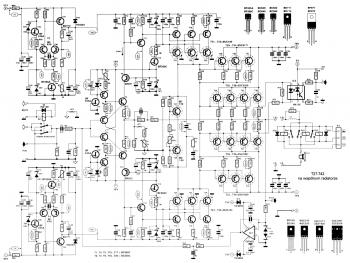
The output devices are MJL4281A (NPN) and MJL4302A (PNP), and feature high bandwidth, excellent SOA (safe operating area), high linearity and high gain. Driver transistors are MJE15034 (NPN) and MJE15035 (PNP). All devices are rated at 350V, with the power transistors having a 230W dissipation and the drivers are 50W.
The MJL4281A and MJL4302A are complementary power transistors designed for high power audio, disk head positioners and other linear applications. These devices can operate in the frequency range with high bandwidth. The high linearity ensures minimal distortion in the output signal, making these transistors ideal for applications requiring clean and clear signal transmission. The high gain of these transistors allows for a larger output signal for a given input signal, enhancing the overall performance of the circuit.
The MJE15034 and MJE15035 are driver transistors that are also complementary to each other. These transistors are typically used to amplify the current or power of a signal before it is sent to the output devices. The high voltage rating of 350V ensures that these transistors can handle high power applications without risk of breakdown or damage.
The power transistors, MJL4281A and MJL4302A, have a power dissipation of 230W. Power dissipation is the process by which an electronic component converts the electric power into heat. This is a critical specification as it determines how much power the transistor can handle before it overheats and potentially fails.
The driver transistors, MJE15034 and MJE15035, have a power dissipation of 50W. This lower power dissipation indicates that these transistors are intended to handle lower power signals compared to the output transistors. However, they still have a significant role in the overall functioning of the circuit, as they condition the signal before it is amplified by the power transistors.
In conclusion, this circuit utilizes a combination of high-power output transistors and lower-power driver transistors to achieve high performance in high power applications. The high voltage rating, power dissipation, and the excellent safe operating area (SOA) of these devices contribute to their robustness and reliability.The output devices are MJL4281A (NPN) and MJL4302A (PNP), and feature high bandwidth, excellent SOA (safe operating area), high linearity and high gain. Driver transistors are MJE15034 (NPN) and MJE15035 (PNP). All devices are rated at 350V, with the power transistors having a 230W dissipation and the drivers are 50W.
The MJL4281A and MJL4302A are complementary power transistors designed for high power audio, disk head positioners and other linear applications. These devices can operate in the frequency range with high bandwidth. The high linearity ensures minimal distortion in the output signal, making these transistors ideal for applications requiring clean and clear signal transmission. The high gain of these transistors allows for a larger output signal for a given input signal, enhancing the overall performance of the circuit.
The MJE15034 and MJE15035 are driver transistors that are also complementary to each other. These transistors are typically used to amplify the current or power of a signal before it is sent to the output devices. The high voltage rating of 350V ensures that these transistors can handle high power applications without risk of breakdown or damage.
The power transistors, MJL4281A and MJL4302A, have a power dissipation of 230W. Power dissipation is the process by which an electronic component converts the electric power into heat. This is a critical specification as it determines how much power the transistor can handle before it overheats and potentially fails.
The driver transistors, MJE15034 and MJE15035, have a power dissipation of 50W. This lower power dissipation indicates that these transistors are intended to handle lower power signals compared to the output transistors. However, they still have a significant role in the overall functioning of the circuit, as they condition the signal before it is amplified by the power transistors.
In conclusion, this circuit utilizes a combination of high-power output transistors and lower-power driver transistors to achieve high performance in high power applications. The high voltage rating, power dissipation, and the excellent safe operating area (SOA) of these devices contribute to their robustness and reliability.The output devices are MJL4281A (NPN) and MJL4302A (PNP), and feature high bandwidth, excellent SOA (safe operating area), high linearity and high gain. Driver transistors are MJE15034 (NPN) and MJE15035 (PNP). All devices are rated at 350V, with the power transistors having a 230W dissipation and the drivers are 50W.

power amplifier class circuit
This design schematic represents a Class A power amplifier. It closely matches the operating parameters of Class B to facilitate comparison, particularly with a negative feedback (NFB) factor of 30dB at 20 kHz. The front end is similar to that...
Power Amplifier 2000 Watt
This is a linear amplifier that requires advanced knowledge in electronics due to the complexity of the schematic diagram for a handmade circuit. It is advisable to redesign the schematic diagram using circuit design software such as DipTrace, Eagle, or...

100W + 100W power amplifier
As illustrated in Figure 3-30, the IC LA4425 power amplifier stage is utilized alongside a pair of power module 1490 configured for push-pull output. This setup functions as an impedance converter, enabling the system to deliver 100 watts of output...
1.5 W linear Power Amplifier
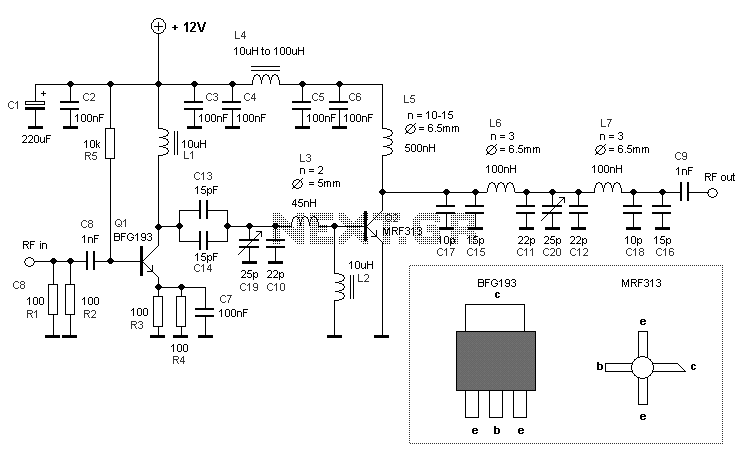
I will also explain how you can build a 1.5W PA transmitter. The project will include PCB, components and instructions how to make coils, assembly and testing. First let's discuss and learn about the RMS value of a sine signal....
Power Amplifier
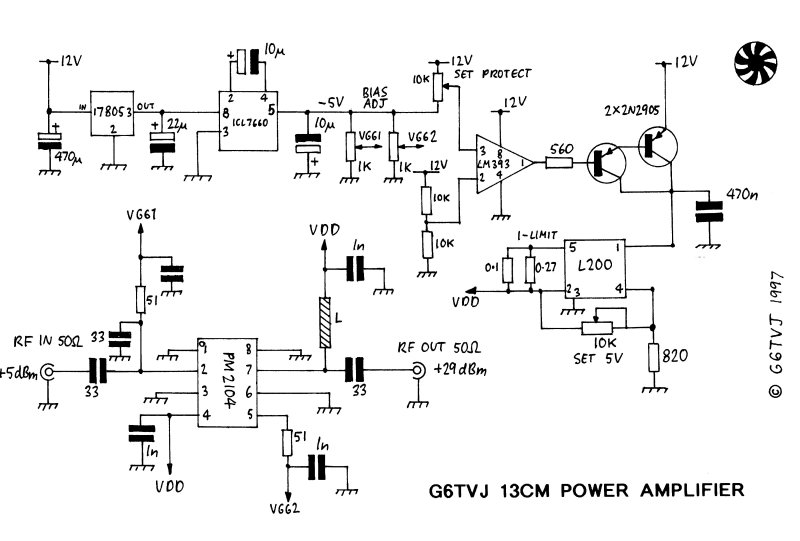
A simple synthesized 13 cm ATV exciter has led to considerations for an appropriate power amplifier. The exciter generates approximately 10 mW, which may be sufficient to drive a MMIC or hybrid amplifier. However, at 2.3 GHz and higher frequencies,...

Pre-dividing power amplifier
An active high-power tube operates in the MHz range, priced around 3 to 4 yuan, with a transition frequency (fT) exceeding one-fifth of 50 MHz for similar power tubes. This circuit is designed for high reliability in low-frequency high-power amplifier...

60W Power Amplifier with 2N3055
Simple and low cost. The optimal supply voltage is around 50V, but this amp works from 30 to 60V. The maximal input voltage is around 0.8 - 1V. As you can see, in this design the components have a big...

power-amplifier 2
A friend is interested in building a hi-fi power amplifier, specifically a Class AB model due to its quality sound, particularly in bass response and distinct clarity. This circuit is designed as a hi-fi OCL (Output Capacitor-Less) power amplifier with...

60 Watt Into 8 Ohms Power Amplifier
Cleaned Input: This amplifier does not claim to be state of the art, and in fact the base design is now over 20 years old. It is a simple amp to build, uses commonly available parts and is stable and...