


Electret Mic AmplifierCircuit Project
#electret microphone
#audio amplifier
#sensitivity adjustment
#condenser microphone
#resistor
#capacitor
#signal amplification
#low voltage
#sound detection
#circuit adjustment
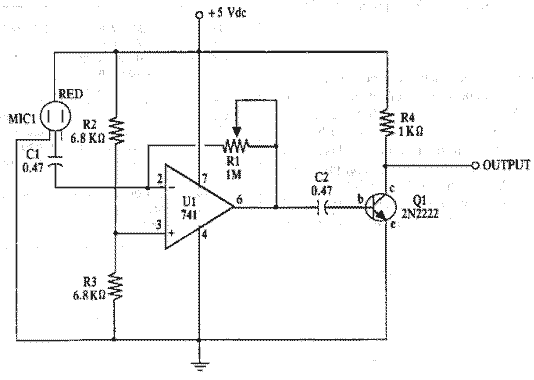
Description: All resistors have a tolerance of 5 or 10 percent and are rated for 1/4 watt. All capacitors have a tolerance of 10 percent and are rated for 35 volts or higher. This circuit effectively amplifies the output of a standard electret condenser microphone. Sensitivity can be adjusted by turning resistor R1.
The circuit described utilizes standard electronic components to amplify the signal from an electret condenser microphone, which is commonly used in various audio applications due to its compact size and good performance. The use of resistors with tolerances of 5 or 10 percent ensures a reliable and stable operation, while the 1/4-watt rating allows these components to handle the power levels typically encountered in audio applications without overheating.
Capacitors in this circuit are specified with a tolerance of 10 percent and a voltage rating of 35 volts or higher, ensuring that they can withstand the necessary voltage levels without risk of failure. This is particularly important in audio circuits, where signal integrity is crucial for optimal performance.
The amplification circuit likely includes an operational amplifier (op-amp) configuration, which is commonly used for this purpose. The microphone's output is fed into the non-inverting input of the op-amp, while feedback is provided through R1, allowing for sensitivity adjustments. By varying R1, the gain of the amplifier can be modified, enabling the user to fine-tune the microphone's output level to suit different applications, whether it be for recording, live sound reinforcement, or other audio processing tasks.
In summary, this circuit provides a straightforward and effective means of amplifying the output from an electret condenser microphone, with adjustable sensitivity to accommodate various audio requirements. The component specifications ensure reliability and performance, making it suitable for a wide range of electronic audio applications.All resistors are 5 or 10 percent tolerance, 1/4-watt all capacitors are 10 percent tolerance, rated 35 volts or higher. This circuit amplifies the output of a regular electret condenser microphone quite nicely. adjust sensitivity by turning R1
The circuit described utilizes standard electronic components to amplify the signal from an electret condenser microphone, which is commonly used in various audio applications due to its compact size and good performance. The use of resistors with tolerances of 5 or 10 percent ensures a reliable and stable operation, while the 1/4-watt rating allows these components to handle the power levels typically encountered in audio applications without overheating.
Capacitors in this circuit are specified with a tolerance of 10 percent and a voltage rating of 35 volts or higher, ensuring that they can withstand the necessary voltage levels without risk of failure. This is particularly important in audio circuits, where signal integrity is crucial for optimal performance.
The amplification circuit likely includes an operational amplifier (op-amp) configuration, which is commonly used for this purpose. The microphone's output is fed into the non-inverting input of the op-amp, while feedback is provided through R1, allowing for sensitivity adjustments. By varying R1, the gain of the amplifier can be modified, enabling the user to fine-tune the microphone's output level to suit different applications, whether it be for recording, live sound reinforcement, or other audio processing tasks.
In summary, this circuit provides a straightforward and effective means of amplifying the output from an electret condenser microphone, with adjustable sensitivity to accommodate various audio requirements. The component specifications ensure reliability and performance, making it suitable for a wide range of electronic audio applications.All resistors are 5 or 10 percent tolerance, 1/4-watt all capacitors are 10 percent tolerance, rated 35 volts or higher. This circuit amplifies the output of a regular electret condenser microphone quite nicely. adjust sensitivity by turning R1

4 x 25 W Car Amplifier TDA7381 Circuit
The TDA7381 is a Class AB audio power amplifier housed in a Flexiwatt25 package, specifically intended for car radio applications. This circuit can also be utilized for various other purposes. The fully complementary PNP/NPN output configuration enables a rail-to-rail output...
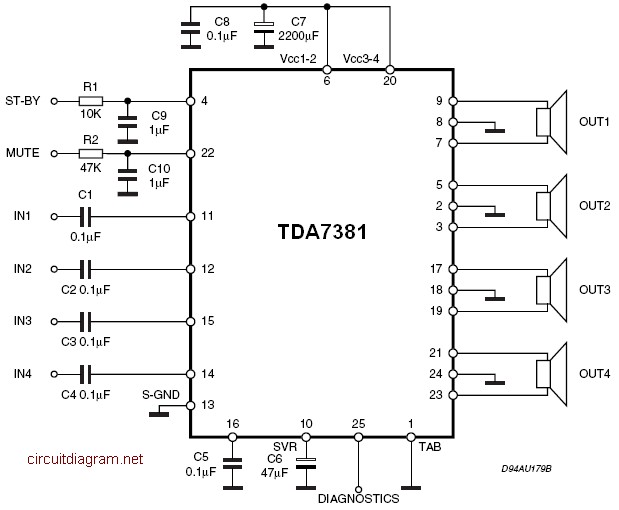
Audio Quad Audio Amplifier Circuit diagram with TDA7831 4G—25W
The amplifier is a quad amplifier circuit (amplifier with four inputs and four outputs) based on the TDA7381. This amplifier is designed for car audio systems, but it can also be utilized for other applications. The circuit has a very...

60 Watt MosFet Audio Amplifier
R1_47K 1/4W Resistor, R2_4K7 1/4W Resistor, R3_22K 1/4W Resistor, R4_1K 1/4W Resistor, R5, R12, R13_330R 1/4W Resistors, R6_1K5 1/4W Resistor, R7_15K 1/4W Resistor, R8_33K 1/4W Resistor, R9_150K 1/4W Resistor, R10_500R 1/2W Trimmer Cermet, R11_39R 1/4W Resistor, R14, R15_R33 2.5W Resistors,...

36 Watt Amplifier circuit with TDA1562Q
This circuit is based on a Philips class-H audio amplifier integrated circuit (IC) and can deliver 36W RMS or 70W music power, all from a 13.8V supply. The Mighty Midget Amplifier is capable of providing approximately 36W RMS continuous power...
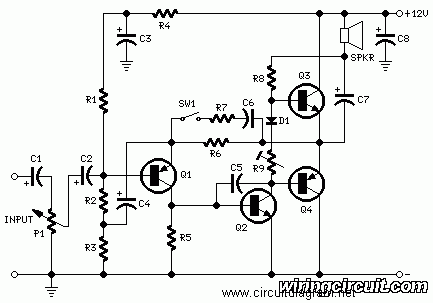
2 Watt Mini Audio Amplifier
This circuit is inexpensive, easy to assemble, and quite straightforward. It is a general audio amplifier that can be used with computers, CD players, or other devices that have a headphone output. The circuit was intentionally designed without the use...

Fundamentals of Electrical Engineering and Class B audio amplifier
It is advisable to obtain TIP41 and TIP42 transistors, which are closely matched NPN and PNP power transistors with dissipation ratings of 65 watts each. If a TIP41 NPN transistor is unavailable, the TIP3055 (available from Radio Shack) serves as...
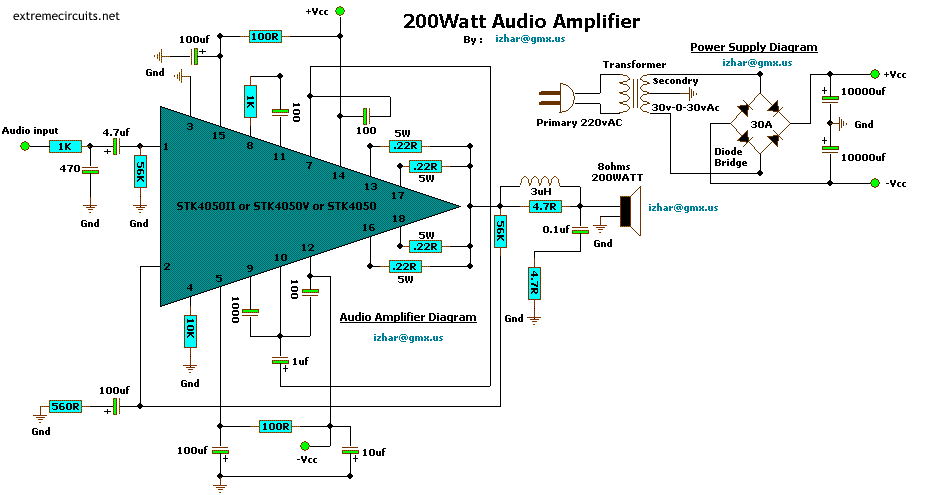
Audio Schematic Audio Amplifier Circuit 200W
This complete aerial quality, low noise address audio amplifier is based on the Hybrid Integrated Circuit STK4050 manufactured by Sanyo. The circuit incorporates all necessary components and has a maximum output power of 200W. It features an onboard power supply,...

100 W audio amplifier based LM12CLK
The 100W audio power amplifier is powered by the integrated circuit LM12CLK, which is an operational power amplifier.
The 100W audio power amplifier utilizing the LM12CLK integrated circuit is designed to deliver high-quality audio output with significant power handling capabilities. The...

Low Voltage Adjustable Reference Supply
A low voltage reference is essential for providing an offset source or biasing, or simply serving as a reference for a comparator. Its adjustable feature should be compatible with this circuit.
A low voltage reference circuit is designed to deliver a...