


Digital Volume Control with DS1669
#digital volume control
#DS1669
#audio
#home audio
#UP/DOWN buttons
#noise reduction
#potentiometer replacement
#sound control
#electronic control

Description: This digital volume control has no pot to wear out and introduces almost no noise in the circuit. Instead, the volume is controlled by pressing UP and DOWN buttons. This simple circuit would be a great touch to any home audio project. More: 1. U1 is available from Dallas Semiconductor. 2. S1 turns the volume up, S2 turns it down. 3. The input signal should not fall below -0.2 volts. 4. Using a dual polarity power supply (+-5V works fine) will cure most clipping problems. You will have to
The described digital volume control circuit utilizes a microcontroller or a digital potentiometer (U1) sourced from Dallas Semiconductor. This component is responsible for adjusting the audio signal level without the mechanical wear associated with traditional potentiometers. The volume adjustment is facilitated through two momentary push-button switches: S1 for increasing volume and S2 for decreasing volume.
The circuit requires careful consideration of the input signal range, with a minimum threshold of -0.2 volts to ensure proper operation. This limitation is critical to prevent distortion or clipping of the audio signal. To mitigate clipping issues, the circuit should be powered by a dual polarity power supply, typically providing +5V and -5V. This configuration enhances the dynamic range of the audio signal and helps maintain signal integrity throughout the volume adjustment process.
In designing the circuit, it is essential to incorporate proper debouncing techniques for the push buttons to prevent erroneous volume changes due to mechanical bouncing. Additionally, the output stage should be designed to handle the expected load impedance of the audio system, ensuring compatibility with various audio devices.
Overall, this digital volume control circuit presents a modern solution for audio applications, combining reliability and low noise operation, making it suitable for integration into home audio projects or other electronic audio systems.This digital volume control has no pot to wear out and introduces almost no noise in the circuit. Instead, the volume is controlled by pressing UP and DOWN buttons. This simple circuit would be a great touch to any home audio project. 1. U1 is available from Dallas Semiconductor. 2. S1 turns the volume up, S2 turns it down. 3. The input signal should not fall below -0.2 volts. 4. Using a dual polariity power supply (+-5V works fine) will cure most clipping problems. You will have to
The described digital volume control circuit utilizes a microcontroller or a digital potentiometer (U1) sourced from Dallas Semiconductor. This component is responsible for adjusting the audio signal level without the mechanical wear associated with traditional potentiometers. The volume adjustment is facilitated through two momentary push-button switches: S1 for increasing volume and S2 for decreasing volume.
The circuit requires careful consideration of the input signal range, with a minimum threshold of -0.2 volts to ensure proper operation. This limitation is critical to prevent distortion or clipping of the audio signal. To mitigate clipping issues, the circuit should be powered by a dual polarity power supply, typically providing +5V and -5V. This configuration enhances the dynamic range of the audio signal and helps maintain signal integrity throughout the volume adjustment process.
In designing the circuit, it is essential to incorporate proper debouncing techniques for the push buttons to prevent erroneous volume changes due to mechanical bouncing. Additionally, the output stage should be designed to handle the expected load impedance of the audio system, ensuring compatibility with various audio devices.
Overall, this digital volume control circuit presents a modern solution for audio applications, combining reliability and low noise operation, making it suitable for integration into home audio projects or other electronic audio systems.This digital volume control has no pot to wear out and introduces almost no noise in the circuit. Instead, the volume is controlled by pressing UP and DOWN buttons. This simple circuit would be a great touch to any home audio project. 1. U1 is available from Dallas Semiconductor. 2. S1 turns the volume up, S2 turns it down. 3. The input signal should not fall below -0.2 volts. 4. Using a dual polariity power supply (+-5V works fine) will cure most clipping problems. You will have to

Simple Hybrid Audio Amplifier
The ongoing debate regarding the superiority of valves versus transistors is not the focus here. However, for those undecided, this simple amplifier serves as an excellent test. It employs a valve as a pre-amplifier and a MOSFET in the output...

Audio Mixer with one transistor
This single transistor audio mixer is utilized in an amplifier circuit design featuring a base-driven transistor, where the emitter is current-controlled. The majority of the driving current flows through the collector.
This audio mixer circuit employs a single transistor to mix...

Stereo amplifier circuit with LM1877
The LM1877 is a stereo amplifier designed to deliver 2W per channel into 8-ohm loads. It is intended to operate with a minimal number of external components, making it a versatile integrated circuit suitable for various audio amplification applications, such...

Build A Simple Twin Tee Phase Shift Audio Oscillator and Audio Amplifier
The schematic diagram presented is of a twin "T" phase shift oscillator, an audio oscillator. This oscillator derives its name from the phase shift network formed by resistors R3, R4, and capacitors C1, C2, and C3. This network shifts the...

Low Power Audio Amplifier
This circuit is designed to drive a low-power speaker using a sound effects module or a noise generator. It can also be utilized to create amplified speakers for computer use. The circuit amplifies the input signal by a factor of...

Sound and light double control switch socket electrical circuit diagram
The circuit illustrated includes a sound transducer sensing switch, an electrical light control switch, an SCR control circuit, a vocal music circuit, and an AC step-down rectifier circuit.
The circuit comprises several interconnected components that serve distinct functions, allowing for a...
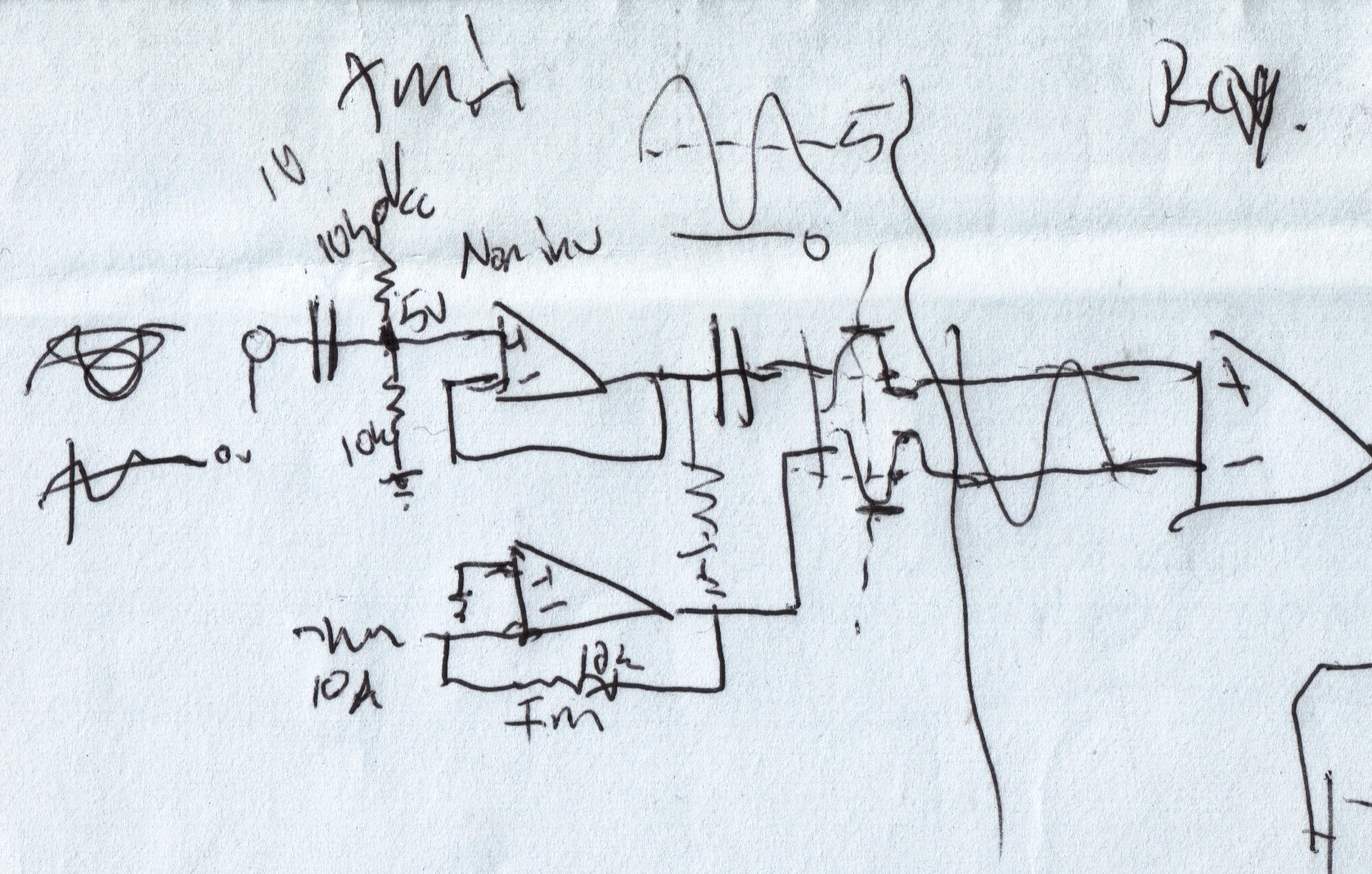
audiohackers jamcat design
During the recent audio hackers meetup at Hacker Dojo, discussions were held with Laura and Kevin regarding the challenges faced in creating a small local network referred to as "JamLan." There was mention of the consideration to develop a straightforward...
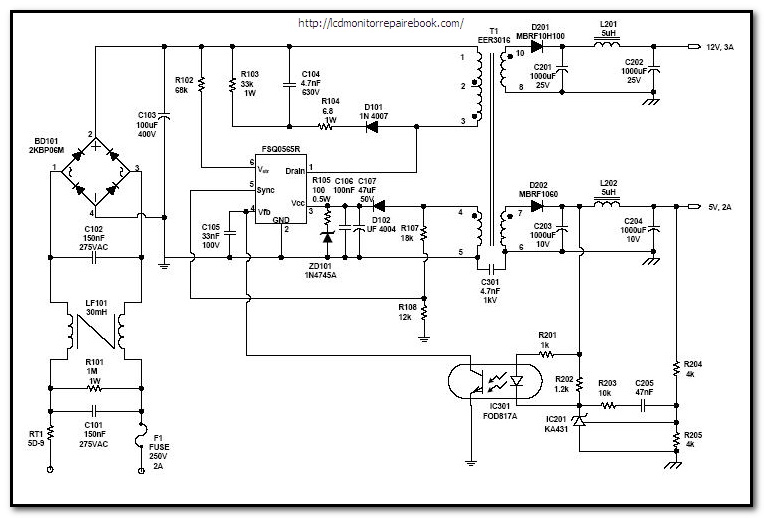
Power Quality for Audio Systems
Power supplies: Linear or SMPS (Switched Mode). A distinction is made between linear and switch mode power supplies. What is the difference? A power supply fundamentally is an...
Power supplies are essential components in electronic circuits, providing the necessary voltage and...

Small High Quality Audio Power Amplifier
This audio power amplifier is highly suitable for portable devices or as a headphone amplifier. The circuit design of this audio power amplifier is straightforward.
This audio power amplifier circuit is designed to enhance audio signals for portable devices and headphones,...