


SMD project
#SMD
#headphone amplifier
#surface mount
#electronics
#DIY audio
#small components
#circuit design
#audio project
#beginner project
#headphone circuit

Description: This is my first project with an SMD circuit. I previously avoided SMD components due to confusion caused by their small size. The circuit for the current SMD project involves headphones.
The project focuses on designing a compact headphone amplifier using Surface Mount Device (SMD) technology. The use of SMD components allows for a reduction in the overall size of the circuit, which is particularly advantageous for portable audio applications.
The circuit typically includes a power supply section, an audio input stage, an amplification stage, and an output stage. The power supply can be derived from a single-cell lithium-ion battery, allowing for a compact and efficient design.
For the audio input, a 3.5mm jack can be used to connect external audio sources. The input signal may be coupled through capacitors to block any DC offset, ensuring that only the AC audio signal is amplified.
The amplification stage can utilize an operational amplifier (op-amp) configured for gain, or a dedicated headphone amplifier IC. The choice of components will depend on the desired output power and quality. SMD op-amps such as the LM358 or dedicated headphone amplifiers like the PAM8403 can be employed, depending on the application requirements.
Finally, the output stage drives the headphones directly. It is crucial to ensure that the output impedance is matched to the headphones for optimal performance. Additionally, decoupling capacitors should be placed close to the power supply pins of the amplifier to minimize noise and improve stability.
The layout of the PCB should be carefully designed to minimize signal interference and ensure proper grounding. Ground planes are recommended to reduce noise, and traces should be kept short and wide to handle the current efficiently.
In summary, this SMD headphone amplifier project combines compact design with effective audio performance, making it suitable for a variety of portable applications.This my fist project with SMD circuit. I ignored SMD because the small sized parts are confused me. The circuit of current SMD project is the headpho..
The project focuses on designing a compact headphone amplifier using Surface Mount Device (SMD) technology. The use of SMD components allows for a reduction in the overall size of the circuit, which is particularly advantageous for portable audio applications.
The circuit typically includes a power supply section, an audio input stage, an amplification stage, and an output stage. The power supply can be derived from a single-cell lithium-ion battery, allowing for a compact and efficient design.
For the audio input, a 3.5mm jack can be used to connect external audio sources. The input signal may be coupled through capacitors to block any DC offset, ensuring that only the AC audio signal is amplified.
The amplification stage can utilize an operational amplifier (op-amp) configured for gain, or a dedicated headphone amplifier IC. The choice of components will depend on the desired output power and quality. SMD op-amps such as the LM358 or dedicated headphone amplifiers like the PAM8403 can be employed, depending on the application requirements.
Finally, the output stage drives the headphones directly. It is crucial to ensure that the output impedance is matched to the headphones for optimal performance. Additionally, decoupling capacitors should be placed close to the power supply pins of the amplifier to minimize noise and improve stability.
The layout of the PCB should be carefully designed to minimize signal interference and ensure proper grounding. Ground planes are recommended to reduce noise, and traces should be kept short and wide to handle the current efficiently.
In summary, this SMD headphone amplifier project combines compact design with effective audio performance, making it suitable for a variety of portable applications.This my fist project with SMD circuit. I ignored SMD because the small sized parts are confused me. The circuit of current SMD project is the headpho..

Mini Headphone Amplifier
SW1 bypasses the crossfeed network. I have reconfigured the original crossfeed schematic so that now the 100k resistor always bridges the bypass switch and thereby reduces any 'crackle' or 'click' or whatever you may call them. Don't omit these 100K...

Distribution Amplifier
The Model HC 6 Headphone Console is a six channel headphone amplifier, consisting of six stereo amplifiers, two master stereo inputs and six individual stereo inputs. The two master stereo inputs feed a separate left and right bus to each...

pure class a headphone amplifier schematic
The shunt-feedback configuration facilitates the straightforward integration of frequency-dependent networks, enabling a functional and discreet switchable tilt control (optional). When SW1 is in the first position, a gentle shelving bass boost and treble attenuation occur. The central position of SW1...

DIY IRF610 MOSFET Class-A Headphone Amplifier Project
Unsatisfied with the performance of a computer soundcard driving 32-ohm Grado SR80 headphones, a decision was made to construct a desktop headphone amplifier for office use. While ample voltage gain was available, the soundcard struggled with high-quality headphones. This amplifier...
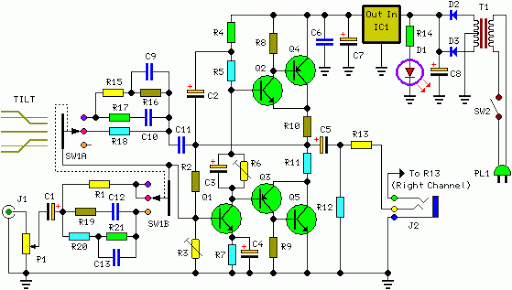
Pure Class-A Headphone Amplifier
400 mW RMS into a 32 Ohm load, single-rail supply, optional tilt control. This design is derived from the portable headphone amplifier featuring an NPN/PNP configuration.
This circuit is designed to deliver a power output of 400 mW RMS into a...

3 Transistor Headphone Amplifier
This is an improved version of a headphone amplifier I built many years ago. I wanted to share it because this simple circuit has done great service to me through all these years. It is very simple and reliable, hard...

Electronic Projects
This program includes circuit design CAD, simulation, and auto-routing PC layout. PSPICE is also utilized at Unisys, which offers more capabilities but costs six times as much and requires annual renewal. With these requirements and others in mind, a variation...
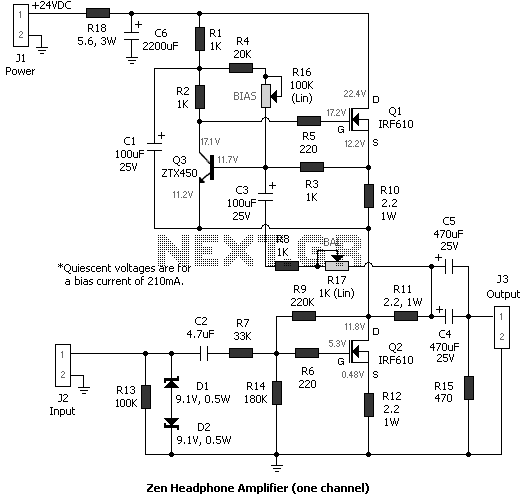
Quality Headphone Amplifier
It is a single stage class A MOSFET design with the right gain and a low output impedance. Here we don't have the limitations of the Zen amps (at least in the single-stage implementations) regarding speaker compatibility. A single stage...

Hybrid Headphone Amplifier
Headphone listening can be technically superior because it eliminates room reflections and allows for an intimate connection between the transducer and the ear, requiring only minimal power. This low power requirement enables transducers to operate at a fraction of their...