


2002 blazer: 02 sensor circuit malfunction solenoid it warms
#O2 sensor
#solenoid
#heater circuit
#engine performance
#diagnostic codes
#Bank 2 Sensor 1
#P0155
#P0756
#power loss
#vehicle diagnostics
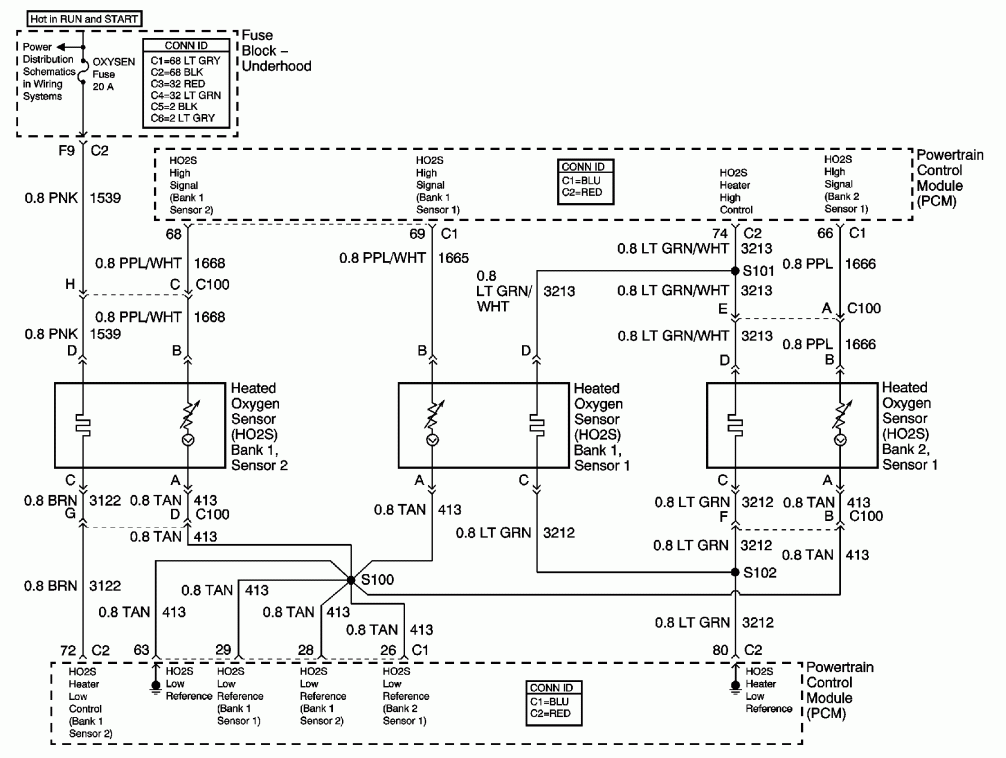
Description: A 2002 Blazer was diagnosed with error codes P0155 and P0756, indicating a malfunction in the O2 sensor heater circuit and a performance issue with the shift solenoid B circuit. The vehicle initially has power, but it loses power when it warms up. The P0155 code points to the Heated Oxygen Sensor circuit for Bank 2, Sensor 1, suggesting that the heater in the sensor may have failed or there could be a wiring issue. Testing is recommended to confirm the problem, or the sensor could be replaced as a precaution, as the heater can degrade over time. To test the heater circuit, the ignition should be turned on to check for power and ground at pins D and C of the connector. With the connector removed, a resistance of about 5 ohms should be measured across the heater. The P0756 code relates to the transmission shift solenoid. Additional PDF resources are available regarding this issue, which can be viewed and printed. It is advisable to seek professional assistance for this problem unless there is sufficient experience and appropriate tools for repair.
The described issues with the 2002 Blazer involve two primary components: the Heated Oxygen Sensor (HO2S) and the transmission shift solenoid. The P0155 code indicates a fault in the heating circuit of the HO2S located in Bank 2, Sensor 1. This sensor plays a crucial role in monitoring the oxygen levels in the exhaust, thereby aiding in the engine's air-fuel mixture regulation. A malfunction in this circuit can lead to poor engine performance, increased emissions, and reduced fuel efficiency.
To diagnose the HO2S issue, a multimeter should be used to measure the voltage and resistance at the sensor's connector. When the ignition is turned on (without starting the engine), voltage should be present at the heater circuit pins (D and C). A resistance check across the heater terminals should yield approximately 5 ohms; significant deviations may indicate a faulty sensor or wiring problems.
The P0756 code pertains to the transmission shift solenoid B circuit, which is responsible for controlling the transmission's shifting behavior. A failure in this circuit can lead to transmission slippage, erratic shifting, or the vehicle remaining in a single gear, resulting in a noticeable loss of power and performance.
The schematic for the sensors and solenoids should include the pin configurations, expected voltage levels, and resistance values for proper troubleshooting. If the problem persists after testing and potential component replacement, it is recommended to consult with a professional technician who can provide a more thorough diagnosis and repair.A 2002 blazer and I ran the codes on it and it came up po 155 and po 756 which a 02 sensor heater circuit malfunction and ashift solenoid b ckt performance of stuck off. What is that and what will it cause. The blazer has power when it first starts then when it warms up it has no power. The P0155 points to the Heated Oxygen Sensor circuit - Bank 2, Sensor 1. It could be that the heater in the sensor has failed, or there is a problem in the wiring to the sensor. It should be tested to find out, or you could just replace the sensor as a guess (they do burn out the heater over time). Here is the schematic for the sensors. To test the circuit for the heater, turn on the ignition and check for power and ground at pins D & C of the connector.
With the connector removed, you should read about 5 ohms across the heater. The P0756 has to do with the transmission shift solenoid. I have a few PDF files for you regarding that issue. You should be able to view these on your computer and print them out. I, personally, would take the vehicle to a shop for this particular problem, unless you have some experience and tools for working on this type of issue.
The described issues with the 2002 Blazer involve two primary components: the Heated Oxygen Sensor (HO2S) and the transmission shift solenoid. The P0155 code indicates a fault in the heating circuit of the HO2S located in Bank 2, Sensor 1. This sensor plays a crucial role in monitoring the oxygen levels in the exhaust, thereby aiding in the engine's air-fuel mixture regulation. A malfunction in this circuit can lead to poor engine performance, increased emissions, and reduced fuel efficiency.
To diagnose the HO2S issue, a multimeter should be used to measure the voltage and resistance at the sensor's connector. When the ignition is turned on (without starting the engine), voltage should be present at the heater circuit pins (D and C). A resistance check across the heater terminals should yield approximately 5 ohms; significant deviations may indicate a faulty sensor or wiring problems.
The P0756 code pertains to the transmission shift solenoid B circuit, which is responsible for controlling the transmission's shifting behavior. A failure in this circuit can lead to transmission slippage, erratic shifting, or the vehicle remaining in a single gear, resulting in a noticeable loss of power and performance.
The schematic for the sensors and solenoids should include the pin configurations, expected voltage levels, and resistance values for proper troubleshooting. If the problem persists after testing and potential component replacement, it is recommended to consult with a professional technician who can provide a more thorough diagnosis and repair.A 2002 blazer and I ran the codes on it and it came up po 155 and po 756 which a 02 sensor heater circuit malfunction and ashift solenoid b ckt performance of stuck off. What is that and what will it cause. The blazer has power when it first starts then when it warms up it has no power. The P0155 points to the Heated Oxygen Sensor circuit - Bank 2, Sensor 1. It could be that the heater in the sensor has failed, or there is a problem in the wiring to the sensor. It should be tested to find out, or you could just replace the sensor as a guess (they do burn out the heater over time). Here is the schematic for the sensors. To test the circuit for the heater, turn on the ignition and check for power and ground at pins D & C of the connector.
With the connector removed, you should read about 5 ohms across the heater. The P0756 has to do with the transmission shift solenoid. I have a few PDF files for you regarding that issue. You should be able to view these on your computer and print them out. I, personally, would take the vehicle to a shop for this particular problem, unless you have some experience and tools for working on this type of issue.
Wide Band O2 and data logger for 84-89 Carrera
Sal, thank you for the response. If the plugs could be acquired and the signals transmitted to the PC using the software you are utilizing...
The circuit design involves the integration of plugs that can be connected to a signal source,...

Pulse Operation of DC Solenoids
The solenoid operates with pulse action, receiving a brief surge of five to six times its rated voltage, followed by a holding voltage that is less than half of its rated voltage. This method significantly reduces application time, and the...

Solenoid control circuit
An AC solenoid-driven control circuit utilizing the SSR principle is illustrated. When switch SW1 is closed, a 220V AC transformer steps down the voltage to 30V AC through transformer T. The circuit includes a rectifier, capacitor C, and a filter...

12V-latch
This circuit controls a solenoid using a single push-button switch. It is capable of supplying loads exceeding 1 A and can operate at a maximum speed of once every 0.6 seconds. Upon initial power application, the solenoid will always begin...

Power loss detector
A positive-going input charges capacitor C through the IN4148 diode and resistor R. The diode ensures that the silicon-controlled switch (SCS) remains off. A negative-going input provides anode-gate current, which triggers the SCS, allowing capacitor C to discharge through resistor...

Solenoid Driving Circuit
The solenoid requires a specific amount of current to generate its magnetic field. If the solenoid were a perfect inductor, the DC current could rise excessively and potentially damage other circuit components. However, solenoids inherently possess a significant amount of...

Baseball
The objective of this project was to create an interactive baseball game inspired by pinball mechanics. The game features a solenoid-powered bat and a pitching mechanism that employs a motor and lever arm arrangement. Both components are controlled by buttons,...

Power-consumption-limiter
A simple solenoid driver utilizes incandescent lamp filaments as on-indicators to limit power consumption. High magnetic reluctance in the coil of an armature-driven device, such as a solenoid or relay, requires a surge of activation current, followed by a lower...

Solenoid Tutorial
Do not drive a solenoid directly from an Arduino. It requires more current than the Arduino can provide and can produce damaging voltages when switched off. A simple solution exists. The solenoid tested is a 12-volt solenoid, approximately the size...