


PIC18F4550 Communication with PC using USB
#PIC18F4550
#USB
#HID
#Visual Basic
#PC communication
#microcontroller
#embedded
#data transfer
#firmware

Description: PIC18F4550 communication with a PC using USB HID class, Visual Basic communication.
The PIC18F4550 microcontroller is designed to facilitate communication between embedded systems and personal computers through the USB Human Interface Device (HID) class. This microcontroller is equipped with a built-in USB interface that allows for seamless data exchange with a PC, enabling applications such as data logging, control systems, and user interface devices.
To implement communication using the USB HID class, the PIC18F4550 is programmed to act as a USB device. The USB HID class is particularly advantageous due to its simplicity and the fact that it does not require complex driver installation on the host PC, as most operating systems natively support HID devices. This allows for straightforward interaction between the microcontroller and PC applications developed in environments such as Visual Basic.
The communication process involves several key components. First, the PIC18F4550 must be configured to initialize the USB stack, which includes setting up the appropriate descriptors that define the device's capabilities and functionalities. The descriptors include information such as vendor ID, product ID, and device class, which are essential for the PC to recognize and interact with the USB device.
Next, the firmware running on the PIC18F4550 must handle USB events, such as connection, disconnection, and data transfer requests. This is typically managed through an interrupt-based approach, allowing the microcontroller to respond promptly to USB events without blocking other operations.
On the PC side, a Visual Basic application can be developed to handle communication with the PIC18F4550. The application utilizes the Windows API or libraries that facilitate USB HID communication, enabling it to send and receive data packets. The data exchange can be structured in various formats, depending on the application's requirements, such as sending control commands, receiving sensor data, or updating device settings.
In summary, the integration of the PIC18F4550 microcontroller with USB HID class communication and Visual Basic provides a robust platform for developing user-friendly applications that require direct interaction with embedded systems. This configuration leverages the advantages of USB technology, ensuring reliable and efficient data transfer between the microcontroller and PC.PIC18F4550 Communication with PC using USB HID Class, Visual Basic Communication xpress_embedo..
The PIC18F4550 microcontroller is designed to facilitate communication between embedded systems and personal computers through the USB Human Interface Device (HID) class. This microcontroller is equipped with a built-in USB interface that allows for seamless data exchange with a PC, enabling applications such as data logging, control systems, and user interface devices.
To implement communication using the USB HID class, the PIC18F4550 is programmed to act as a USB device. The USB HID class is particularly advantageous due to its simplicity and the fact that it does not require complex driver installation on the host PC, as most operating systems natively support HID devices. This allows for straightforward interaction between the microcontroller and PC applications developed in environments such as Visual Basic.
The communication process involves several key components. First, the PIC18F4550 must be configured to initialize the USB stack, which includes setting up the appropriate descriptors that define the device's capabilities and functionalities. The descriptors include information such as vendor ID, product ID, and device class, which are essential for the PC to recognize and interact with the USB device.
Next, the firmware running on the PIC18F4550 must handle USB events, such as connection, disconnection, and data transfer requests. This is typically managed through an interrupt-based approach, allowing the microcontroller to respond promptly to USB events without blocking other operations.
On the PC side, a Visual Basic application can be developed to handle communication with the PIC18F4550. The application utilizes the Windows API or libraries that facilitate USB HID communication, enabling it to send and receive data packets. The data exchange can be structured in various formats, depending on the application's requirements, such as sending control commands, receiving sensor data, or updating device settings.
In summary, the integration of the PIC18F4550 microcontroller with USB HID class communication and Visual Basic provides a robust platform for developing user-friendly applications that require direct interaction with embedded systems. This configuration leverages the advantages of USB technology, ensuring reliable and efficient data transfer between the microcontroller and PC.PIC18F4550 Communication with PC using USB HID Class, Visual Basic Communication xpress_embedo..

DS Protocol (Data transfer via handshake)
The DS protocol was designed to provide firmware-based bidirectional host-to-slave interprocessor communications for situations in which no hardware solution is available and the host and/or the slave is incapable of tending the interface in real time. The only specialized hardware...

Microcontroller Voltmeter / Ammeter with LCD
The rectifier bridge voltage is determined by the U2 element; refer to its datasheet for the maximum voltage specifications. The minimum voltage at this pin should not fall below approximately 9V, or 6.5V if low-dropout type U2 and U3 voltage...

Hum Circuit
The kit employs an off-the-shelf microcontroller based on the AtMega328P-PU Arduino, along with a simplified version designed for ease of replication and modification by collaborators and students. This initiative aims to enable the fabrication of simplified microcontrollers for DIY synthetic...
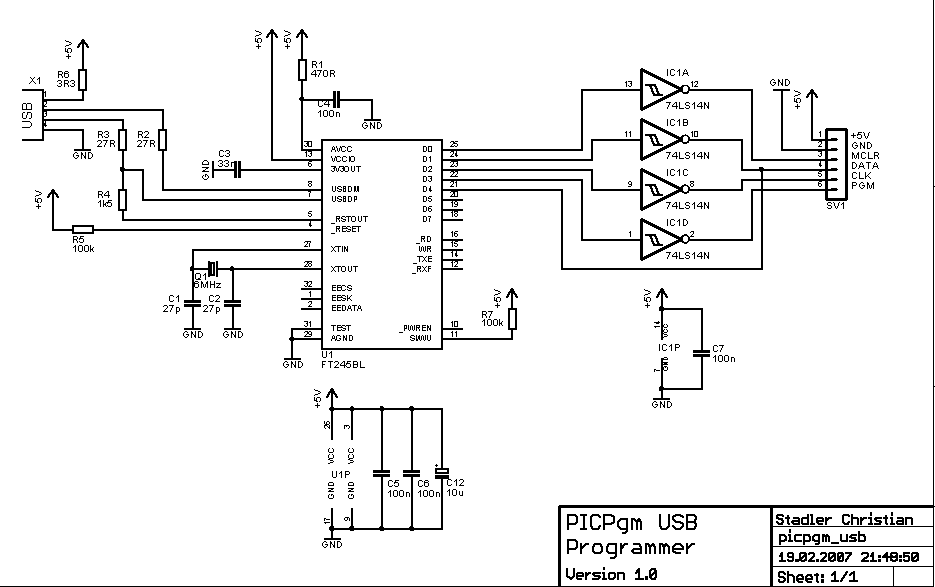
pic pgm usb programmer
A Microchip PIC18F4550 microcontroller has been acquired, but there is uncertainty regarding its potential applications. Further research is needed to explore various possibilities for programming and utilizing the microcontroller, as well as integrating additional electronic devices with it.
The Microchip PIC18F4550...
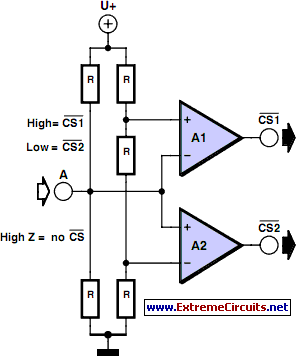
Multitasking Pins circuit
It is entirely logical that low-cost miniature microcontrollers have fewer pins than their larger counterparts, sometimes too few. Consideration has been given to how to economize on pins by making them perform the work of several. It was noted that...

model RC as USB Joystick
Model aircraft pilots utilize PC flight simulator software to practice handling model aircraft without risking damage to real models. It is advantageous to use the actual model aircraft remote control (RC) as the input device for the software, necessitating an...
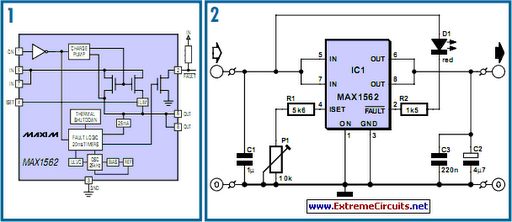
USB Fuse
Life in the 21st century would be nearly unbearable without some of the computer peripherals that PC users now consider essential. For instance, the USB-powered teacup warmer is an invaluable productivity tool for all users; however, it may draw enough...

USB Host and Device
The DE2 board features both USB host and device interfaces utilizing the Philips ISP1362 single-chip USB controller. The host and device controllers adhere to the Universal Serial Bus Specification Revision 2.0, enabling data transfer at full-speed (12 Mbit/s) and low-speed...

usb joystick
With the phasing out of game, serial, and parallel ports from modern computers and the increasing popularity of USB, it is beneficial for hobbyists to learn how to work with USB. However, USB is a complex protocol that can be...