


Automatic Low-Power Emergancy Light circuit
#emergency light
#LED
#battery charger
#LM317
#transistor
#automatic switch
#power supply
#BD140
#white LED
#low-power

Description: This circuit features a white LED-based emergency light that provides several benefits. It is exceptionally bright due to the incorporation of white LEDs. The light activates automatically when the mains supply is interrupted and deactivates when mains power is restored. Additionally, it includes a built-in battery charger that ceases operation automatically once the battery reaches full charge. The power supply section for the charger is designed using the 3-terminal adjustable regulator IC LM317 (IC1), while the LED driver section utilizes the BD140 transistor (Q2).
The emergency light circuit is designed to ensure reliable illumination during power outages. The white LEDs are selected for their high luminous efficacy, providing bright and efficient lighting. The automatic activation feature is achieved through a relay or a similar switching mechanism that detects the absence of mains voltage. When the mains supply fails, the circuit engages the LED driver, allowing the white LEDs to illuminate the area.
The battery charger circuit, based on the LM317, is configured to maintain optimal charging conditions for the battery, which is typically a rechargeable lead-acid or lithium-ion type. The LM317 serves as a voltage regulator, ensuring that the battery receives a consistent voltage level for charging. The automatic shut-off feature is implemented using a voltage sensing mechanism that detects when the battery is fully charged, thereby preventing overcharging and extending the battery's lifespan.
The LED driver, constructed with the BD140 transistor, efficiently manages the current flow to the LEDs. This configuration allows for a stable and controlled output, ensuring that the LEDs operate within their specified parameters. The circuit may also include protective components such as diodes to prevent reverse polarity and capacitors for smoothing voltage fluctuations.
Overall, this emergency light circuit is a practical solution for providing illumination during power failures, combining energy-efficient lighting with an intelligent charging system for enhanced performance and reliability.Here is a white-LED-based emergency light that offers the following advantages. 1-It is highly bright due to the use of white LEDs. 2-The light turns on automatically when mains supply fails, and turns off when mains power resumes. 3-It has its own battery charger. When the battery is fully charged, charging stops automatically. The charger power supply section is built around 3-terminal adjustable regulator IC LM317 (IC1), while the LED driver section is built around transistor BD140 (Q2)..
The emergency light circuit is designed to ensure reliable illumination during power outages. The white LEDs are selected for their high luminous efficacy, providing bright and efficient lighting. The automatic activation feature is achieved through a relay or a similar switching mechanism that detects the absence of mains voltage. When the mains supply fails, the circuit engages the LED driver, allowing the white LEDs to illuminate the area.
The battery charger circuit, based on the LM317, is configured to maintain optimal charging conditions for the battery, which is typically a rechargeable lead-acid or lithium-ion type. The LM317 serves as a voltage regulator, ensuring that the battery receives a consistent voltage level for charging. The automatic shut-off feature is implemented using a voltage sensing mechanism that detects when the battery is fully charged, thereby preventing overcharging and extending the battery's lifespan.
The LED driver, constructed with the BD140 transistor, efficiently manages the current flow to the LEDs. This configuration allows for a stable and controlled output, ensuring that the LEDs operate within their specified parameters. The circuit may also include protective components such as diodes to prevent reverse polarity and capacitors for smoothing voltage fluctuations.
Overall, this emergency light circuit is a practical solution for providing illumination during power failures, combining energy-efficient lighting with an intelligent charging system for enhanced performance and reliability.Here is a white-LED-based emergency light that offers the following advantages. 1-It is highly bright due to the use of white LEDs. 2-The light turns on automatically when mains supply fails, and turns off when mains power resumes. 3-It has its own battery charger. When the battery is fully charged, charging stops automatically. The charger power supply section is built around 3-terminal adjustable regulator IC LM317 (IC1), while the LED driver section is built around transistor BD140 (Q2)..
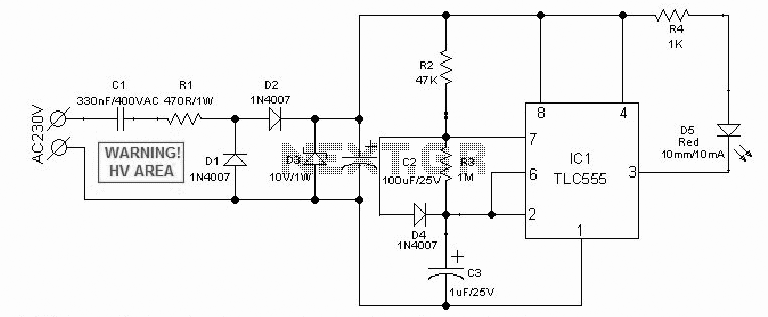
Power 220V LED Flashing
An AC mains operated single LED flasher circuit is designed using the widely used CMOS timer chip TLC555. The entire circuit is powered directly by the grid supply of 230VAC through a capacitive potential divider and associated components.
This LED flasher...

High resolution dithering bar graph display
This circuit is an enhanced version of the display shown in Fig. 3-28, utilizing a triangular-wave oscillator. When the resistor RA is adjusted correctly, each incremental change in the input voltage (VIN) can be detected, allowing the glow from each...
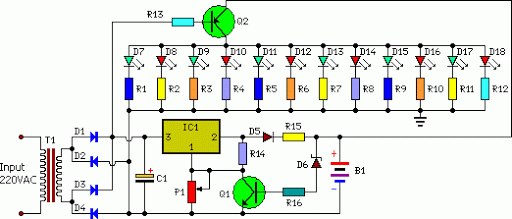
automatic low power emergancy light
An emergency light system utilizing white LEDs, which provides several advantages: 1. It is highly bright due to the use of white LEDs. 2. The light activates automatically during a mains power failure and deactivates when mains power is restored....

STEREO LED VU METER
This circuit offers a cost-effective alternative to the LM3915 series LED displays. It utilizes a square-wave oscillator constructed with two CMOS analog switches, which alternately select the right and left channels for monitoring and display. The chosen signal is amplified...

Dicing With LEDs circuit
Every dedicated DIY enthusiast creates their own electronic dice using LEDs as indicators. This eliminates the need to physically roll dice; simply pressing a button activates the electronic mechanism. The design incorporates safeguards to prevent manipulation for improved outcomes, ensuring...
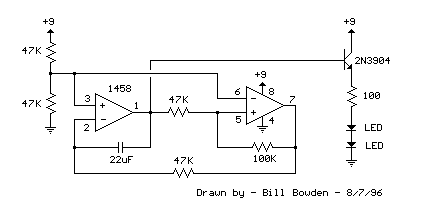
fading red eyes
This circuit is designed to gradually illuminate and fade a pair of red LEDs (light-emitting diodes). The fading LEDs can be used as 'eyes' in a small pumpkin or skull for Halloween decorations, or as part of a Christmas tree...

Reuse Old Mobile Phone Battery for LED lighting
Mobile batteries typically have a lifespan of 2 to 5 years under normal usage, after which they need to be replaced. Currently, inexpensive replacement batteries are available for about $1, but these low-cost options only last 6 to 12 months....

Transistor Based Burglar Alarm - Adding Extra Zones
The Transistor Burglar Alarm System allows for the addition of multiple extra zones. The primary circuit is compatible with standard normally-closed input devices, including magnetic reed contacts, micro switches, foil tape, and passive infrared sensors (PIRs). An auxiliary circuit provides...

IC Controlled Emergency Light with Charger Circuit Schematic Free With Explanation
The circuit presented is an integrated circuit (IC) controlled emergency light. Its key features include automatic activation of the light during mains failure and a battery charger equipped with overcharge protection. In the absence of mains power, relay RL2 remains...