


Flickering Light II
#flickering light
#LED
#campfire effect
#welding light
#house fire effect
#light control
#simulation
#visual effects
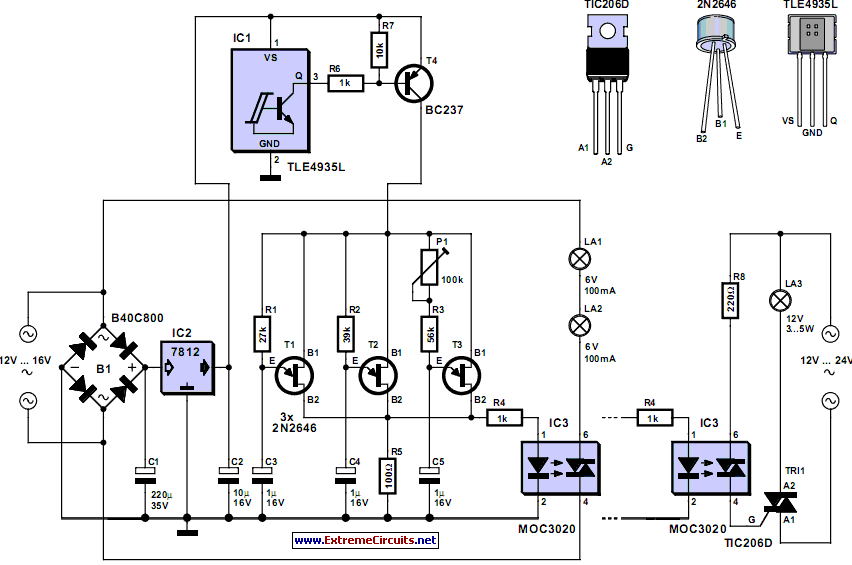
Description: This circuit effectively simulates various types of flames, such as a house fire, a campfire, or welding light.
This circuit utilizes a combination of light-emitting diodes (LEDs) and a microcontroller to create realistic flame effects. The design typically includes multiple LEDs of different colors to represent the varying hues of fire. For instance, red, orange, and yellow LEDs can be arranged in a way that mimics the flickering and glowing nature of flames.
A microcontroller, such as an Arduino or similar, is programmed to control the brightness and the flickering pattern of the LEDs. This is achieved by using pulse-width modulation (PWM) to adjust the intensity of each LED. The microcontroller can be programmed with different algorithms to simulate the behavior of flames. For example, it can vary the brightness in a random manner to create a more natural and dynamic appearance.
Power supply considerations are also critical for this circuit. A suitable power source, such as a battery or an AC-to-DC adapter, must be selected to ensure that the circuit operates efficiently without overheating. Additionally, resistors should be included in the circuit to limit the current flowing through the LEDs, preventing damage and ensuring longevity.
In terms of assembly, the circuit can be laid out on a breadboard for prototyping or soldered onto a printed circuit board (PCB) for a more permanent solution. Proper heat management should be considered, especially if the circuit is intended for extended use.
Overall, this flame simulation circuit is versatile and can be adapted for various applications, including decorative lighting, stage effects, or educational demonstrations about fire behavior.Regardless of whether you want to effectively imitate a house fire, a campfire, or light from welding, the circuit described here fills the bill without u..
This circuit utilizes a combination of light-emitting diodes (LEDs) and a microcontroller to create realistic flame effects. The design typically includes multiple LEDs of different colors to represent the varying hues of fire. For instance, red, orange, and yellow LEDs can be arranged in a way that mimics the flickering and glowing nature of flames.
A microcontroller, such as an Arduino or similar, is programmed to control the brightness and the flickering pattern of the LEDs. This is achieved by using pulse-width modulation (PWM) to adjust the intensity of each LED. The microcontroller can be programmed with different algorithms to simulate the behavior of flames. For example, it can vary the brightness in a random manner to create a more natural and dynamic appearance.
Power supply considerations are also critical for this circuit. A suitable power source, such as a battery or an AC-to-DC adapter, must be selected to ensure that the circuit operates efficiently without overheating. Additionally, resistors should be included in the circuit to limit the current flowing through the LEDs, preventing damage and ensuring longevity.
In terms of assembly, the circuit can be laid out on a breadboard for prototyping or soldered onto a printed circuit board (PCB) for a more permanent solution. Proper heat management should be considered, especially if the circuit is intended for extended use.
Overall, this flame simulation circuit is versatile and can be adapted for various applications, including decorative lighting, stage effects, or educational demonstrations about fire behavior.Regardless of whether you want to effectively imitate a house fire, a campfire, or light from welding, the circuit described here fills the bill without u..

LED linear modulator
After constructing a Pulse Width Modulator for high-power LEDs, another LED modulator was developed for an optical transceiver. This project utilized a different approach, focusing solely on linear techniques for audio modulation. Similar to the PWM circuit, this circuit employs...

White LED Lights Circuit
This white LED floodlight illuminates your porch with cool white light. The circuit features a simple and energy-saving design, with a low current consumption.
The LED floodlight circuit typically consists of a power supply, a control circuit, and the LED array...

Solar Charged LED Utility Light
Tired of always spending money on flashlight batteries only to have them fail just when you need them? Try this simple circuit out. It would make an excellent science fair project. The white LEDs are quite bright, they provide enough...

Electronic projects
The LED moving font consists of individual modules, each containing 64 LEDs arranged in an 8x8 matrix. These modules can be cascaded to achieve the desired font size. Each module is managed by the LED display driver MAX7219 (or MAX7221),...
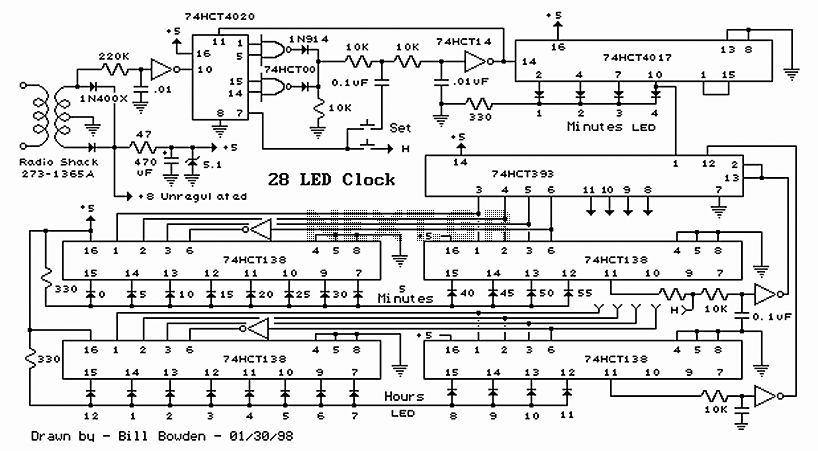
28 LED Clock Timer
28 LED Clock Timer Circuit. This is a programmable clock timer circuit that uses individual LEDs to indicate hours and minutes. Twelve LEDs can be arranged in a circle to represent the 12 hours of a clock face, along with...
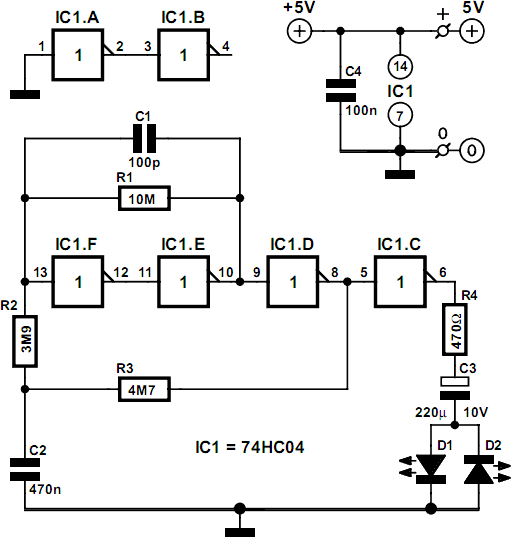
LED Flasher
The concept of this economical flashing LED indicator is straightforward. It employs a low-frequency oscillator to drive two LEDs connected in anti-parallel. In the circuit diagram, it can be observed that the current flows for a brief duration with each...
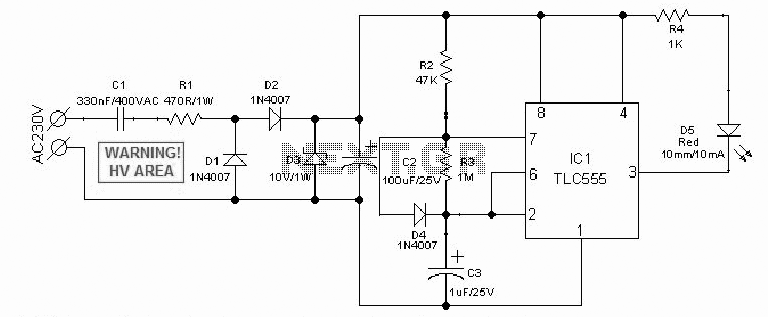
Power 220V LED Flashing
An AC mains operated single LED flasher circuit is designed using the widely used CMOS timer chip TLC555. The entire circuit is powered directly by the grid supply of 230VAC through a capacitive potential divider and associated components.
This LED flasher...

Automatic White-LED Garden Light
This white LED driver circuit is suitable for garden lighting applications. It automatically activates the LED at night and operates from a single 1.2V NiCad cell, which is recharged by a solar cell during the day. The prototype utilized the...
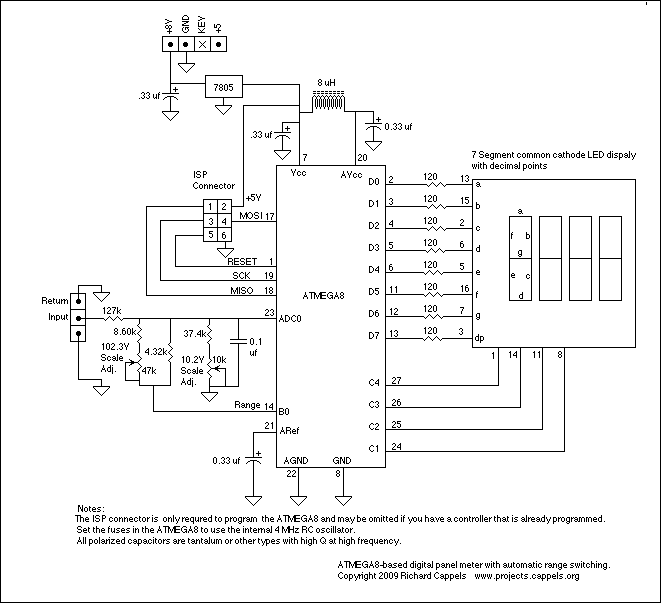
LED Digital Panel Meter
To explain in a little more detail, using the ATMEGA8's internal 2.5 volt band gap reference means that by using a resistive divider ahead of the A-to-D converter, the input could be scaled such that any voltage range from 0...