


DIY/Homemade Radiation Geiger Dosimeter
#radiation
#Geiger Muller tube
#Atmel Atmega8
#dosimeter
#gamma detection
#sensor
#microcontroller
#DIY
#homemade
#radiation measurement

Description: An efficient and stable construction for radiation dosimetry needs. The design centers around the Atmel Atmega8 microcontroller and a Russian Geiger Muller tube, specifically the CTC-1 tube for high gamma doses. The dosimeter is compatible with various tubes including SBM-20, LND-712, and more sensitive options like the SBM-19 or pancake tube SI-14B. Changing the tube necessitates software adjustments to modify the dose conversion calculations. The circuit can accommodate nearly any Geiger tube, as the inverter's output voltage driving the tube is adjustable via software. It generates a variable duty PWM signal using Timer1 to drive the 400V inverter required for the Geiger tube operation; the inverter does not require a multiplier, as the ferrite transformer secondary provides the necessary output. The transformer is constructed on an A22 ferrite core with 16 turns in the primary and 600 in the secondary. Many existing circuits online feature inadequate 400V inverters, often relying on 555 timers and additional components, while this design allows the microcontroller to manage all functions. Common issues include incorrect signal detection/counter circuits and challenges in computing dose in sieverts from counts per minute. This detector addresses these shortcomings, offering a stable design with numerous enhancements. The construction is straightforward and replicable. Additionally, the device features rechargeable batteries, utilizing four AAA NiMH batteries, which are housed in the lower part of the case. The design allows for remote operation via Bluetooth, with a UART Bluetooth module connected to the main microcontroller. The software on the Atmega8 transmits measured dose rate values via UART to the Bluetooth module, enabling mobile phone access to radiation data from a safe distance. An Android application has been developed to connect to the dosimeter and display the dose rate.
The schematic for this radiation dosimeter system integrates several key components, ensuring both functionality and reliability. The Atmel Atmega8 microcontroller serves as the central processing unit, orchestrating operations and managing communications. The microcontroller's Timer1 is utilized to generate a variable duty cycle PWM signal, which effectively drives the 400V inverter. This inverter is critical for powering the Geiger Muller tube, which detects ionizing radiation.
The inverter design employs a ferrite transformer, specifically an A22 core, with a primary winding consisting of 16 turns and a secondary winding of 600 turns. This configuration is optimized to provide the necessary high voltage without the complexity of additional components, such as voltage multipliers, which are often found in less efficient designs. The output voltage from the transformer is directly controlled by the PWM signal, allowing for precise adjustments in the operating voltage of the Geiger tube.
The dosimeter's capability to interface with various Geiger tubes is facilitated by adjustable software parameters that allow for different dose conversion calculations based on the specific tube in use. This flexibility ensures compatibility with a wide range of detection devices, enhancing the utility of the dosimeter across different applications.
For data transmission, a UART Bluetooth module is integrated into the system, allowing for wireless communication with mobile devices. The microcontroller's UART interface sends real-time dose rate information to the Bluetooth module, which can then relay this data to an Android application. This remote monitoring capability is particularly advantageous in hazardous environments, as it allows users to receive radiation measurements without direct exposure.
The overall construction of the dosimeter is designed for ease of replication, featuring a compact layout that houses the batteries and electronic components efficiently. The inclusion of rechargeable batteries provides additional convenience, enabling portable operation without reliance on external power sources. This comprehensive design approach not only enhances measurement accuracy but also improves user accessibility and safety in radiation monitoring applications.An efficient, stable, easy to build construction for all your radiation dosimetry needs. I started from scratch, designing a complete dosimeter unit around the Atmel Atmega8 microcontroller and a Russian Geiger Muller tube. Here you`ll see the CTC-1 tube, for high gamma doses, but the dosimeter can be used with any other tubes such as SBM-20, LND-712 or more sensitive ones such as the SBM-19
or the pancake tube SI-14B. Changing the tube requires changing the software, to adjust the dose conversion calculation. This circuit can be used with almost any geiger tube, as even the inverter`s output voltage driving the tube is adjustable in the software. 1. Generates a variable duty PWM signal using Timer1, to drive the 400V inverter needed to operate the Geiger tube; The inverter doesn`t need a multiplier, as the ferrite`s transformer secondary puts out exactly the amount required.
The transformer is made on a A22 ferrite core, with 16 turns in the primary and 600 in the secondary. Some other circuits on the Internet come with improper 400V inverters (some people seem not to be able to design a proper inverter), they are redundant (using 555`s and additional components, when the microcontroller can take care of EVERYTHING), use the wrong signal detection/counter circuit, or other small defects that result in wrong measurements.
Not to mention the complicated aspect of computing dose in sieverts out of counts per minute. Given all these wrong designs, my detector tries to fill in some of the gaps. So here is exactly what you need: a stable design, with several improvements made over time, all packed in this nice construction that you can easily replicate. Before getting into the construction details, and the theory involved in my geiger counter, here are some pictures of my construction.
I might use them later to point out critical aspects of the construction. Besides using an external power adapter, I added rechargeable batteries to this device so it can operate on independently. 4 AAA NiMH batteries have been packed together using my micro-spot capacitor welder, and inserted in the bottom part of the case.
You might be familiar with the The CD V-717 that was designed for use in fallout monitoring stations. This detector has a removable bottom with a 25 foot extension cable. The detector element (ion-chamber) is mounted inside the removable bottom. This allows for the placement of the detector element outside of the shelter area while the metering section of the metering unit would remain inside of the shelter area connected to the detector with the 25 foot cable.
In a similar fashion remote operation is possible on my dosimeter, by using. Bluetooth. Hooked to the main microcontroller, there is an UART Bluetooth module packed with its 3. 3V regulator. The software running on the atmega8, sends measured dose rate values, via UART (Rx/Tx) to the Bluetooth module. By doing so, a mobile phone can be used to read the radiation data, from a remote location, without being exposed to what the dosimeter actually measures.
Currently I wrote an application for Android phones, that can search nearby bluetooth modules, find the dosimeter, connect to it and display the dose rate, as received via the radio connection. Here is a demo video: Thanks to Andrei Borosovici, I had the chance to discuss this topic on "Vezi ce-ti doresti" TV Show running on TVR Timisoara.
Here is the 14. 01. 2013 recording, in Romanian: This work is free software, licensed under GPL v2; yo
The schematic for this radiation dosimeter system integrates several key components, ensuring both functionality and reliability. The Atmel Atmega8 microcontroller serves as the central processing unit, orchestrating operations and managing communications. The microcontroller's Timer1 is utilized to generate a variable duty cycle PWM signal, which effectively drives the 400V inverter. This inverter is critical for powering the Geiger Muller tube, which detects ionizing radiation.
The inverter design employs a ferrite transformer, specifically an A22 core, with a primary winding consisting of 16 turns and a secondary winding of 600 turns. This configuration is optimized to provide the necessary high voltage without the complexity of additional components, such as voltage multipliers, which are often found in less efficient designs. The output voltage from the transformer is directly controlled by the PWM signal, allowing for precise adjustments in the operating voltage of the Geiger tube.
The dosimeter's capability to interface with various Geiger tubes is facilitated by adjustable software parameters that allow for different dose conversion calculations based on the specific tube in use. This flexibility ensures compatibility with a wide range of detection devices, enhancing the utility of the dosimeter across different applications.
For data transmission, a UART Bluetooth module is integrated into the system, allowing for wireless communication with mobile devices. The microcontroller's UART interface sends real-time dose rate information to the Bluetooth module, which can then relay this data to an Android application. This remote monitoring capability is particularly advantageous in hazardous environments, as it allows users to receive radiation measurements without direct exposure.
The overall construction of the dosimeter is designed for ease of replication, featuring a compact layout that houses the batteries and electronic components efficiently. The inclusion of rechargeable batteries provides additional convenience, enabling portable operation without reliance on external power sources. This comprehensive design approach not only enhances measurement accuracy but also improves user accessibility and safety in radiation monitoring applications.An efficient, stable, easy to build construction for all your radiation dosimetry needs. I started from scratch, designing a complete dosimeter unit around the Atmel Atmega8 microcontroller and a Russian Geiger Muller tube. Here you`ll see the CTC-1 tube, for high gamma doses, but the dosimeter can be used with any other tubes such as SBM-20, LND-712 or more sensitive ones such as the SBM-19
or the pancake tube SI-14B. Changing the tube requires changing the software, to adjust the dose conversion calculation. This circuit can be used with almost any geiger tube, as even the inverter`s output voltage driving the tube is adjustable in the software. 1. Generates a variable duty PWM signal using Timer1, to drive the 400V inverter needed to operate the Geiger tube; The inverter doesn`t need a multiplier, as the ferrite`s transformer secondary puts out exactly the amount required.
The transformer is made on a A22 ferrite core, with 16 turns in the primary and 600 in the secondary. Some other circuits on the Internet come with improper 400V inverters (some people seem not to be able to design a proper inverter), they are redundant (using 555`s and additional components, when the microcontroller can take care of EVERYTHING), use the wrong signal detection/counter circuit, or other small defects that result in wrong measurements.
Not to mention the complicated aspect of computing dose in sieverts out of counts per minute. Given all these wrong designs, my detector tries to fill in some of the gaps. So here is exactly what you need: a stable design, with several improvements made over time, all packed in this nice construction that you can easily replicate. Before getting into the construction details, and the theory involved in my geiger counter, here are some pictures of my construction.
I might use them later to point out critical aspects of the construction. Besides using an external power adapter, I added rechargeable batteries to this device so it can operate on independently. 4 AAA NiMH batteries have been packed together using my micro-spot capacitor welder, and inserted in the bottom part of the case.
You might be familiar with the The CD V-717 that was designed for use in fallout monitoring stations. This detector has a removable bottom with a 25 foot extension cable. The detector element (ion-chamber) is mounted inside the removable bottom. This allows for the placement of the detector element outside of the shelter area while the metering section of the metering unit would remain inside of the shelter area connected to the detector with the 25 foot cable.
In a similar fashion remote operation is possible on my dosimeter, by using. Bluetooth. Hooked to the main microcontroller, there is an UART Bluetooth module packed with its 3. 3V regulator. The software running on the atmega8, sends measured dose rate values, via UART (Rx/Tx) to the Bluetooth module. By doing so, a mobile phone can be used to read the radiation data, from a remote location, without being exposed to what the dosimeter actually measures.
Currently I wrote an application for Android phones, that can search nearby bluetooth modules, find the dosimeter, connect to it and display the dose rate, as received via the radio connection. Here is a demo video: Thanks to Andrei Borosovici, I had the chance to discuss this topic on "Vezi ce-ti doresti" TV Show running on TVR Timisoara.
Here is the 14. 01. 2013 recording, in Romanian: This work is free software, licensed under GPL v2; yo

Training Boxing timer schematic
A timer is being developed for circuit training or boxing training. The timer does not require any external input, except for a reset function. The project can be simplified using a microcontroller, such as the PIC12F635, which is cost-effective at...

Driving circuit schematic
The driving circuit depicted in Figure 18-12 consists of a connection between the driving portion, the microcontroller, and the air conditioning operation components of the bridge. The microcontroller's digital signal levels from ports P4.0 to P4.3 (approximately 12 feet) and...

Experimental I/O board for microcontrollers
For beginners experiencing similar challenges, a general-purpose I/O board is recommended to minimize prototyping time and maximize space on the breadboard for projects. The construction of this board is straightforward. Basic I/O devices can be soldered onto a general-purpose perforated...

the remote intellectual pronunciation anti-theft alarm system design of the one-chip computer
Precautions must be taken against low safety coefficients, as the applicable space for security measures continues to shrink. With advancements in science and technology, innovations such as magnetic door sensors, touch-type systems, radar monitoring, and infrared detection have emerged, leading...
Microcontroller Programming 2
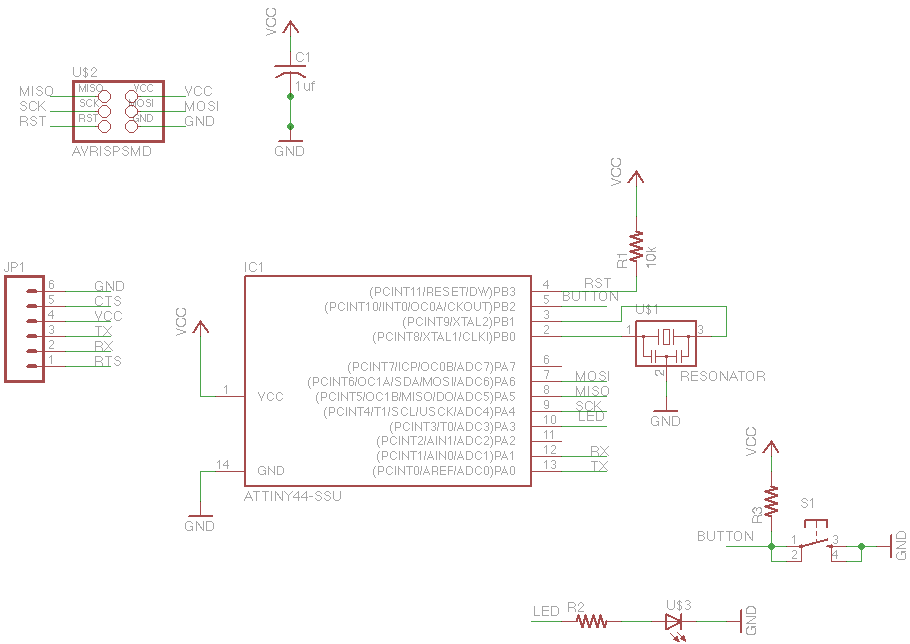
For this week's assignment, a chip design was provided, and the task was to incorporate a button and an LED (light-emitting diode). The objective was to fabricate the chip and program it to interact with the light and button. Given...

Microcontroller interfacing with RS 232
Standard serial interfacing of a microcontroller (TTL) with a PC or any RS232C standard device requires a TTL to RS232 level converter. A MAX232 is used for this purpose. It provides a 2-channel RS232C port and requires external 10µF capacitors.
The...

Microcontroller based College Automation System
This project is a microcontroller-based college automation system aimed at addressing the challenges faced in educational institutions. It replaces the conventional notice board with an automated device that allows users to both hear and read the information being announced through...
Help with a schematic please
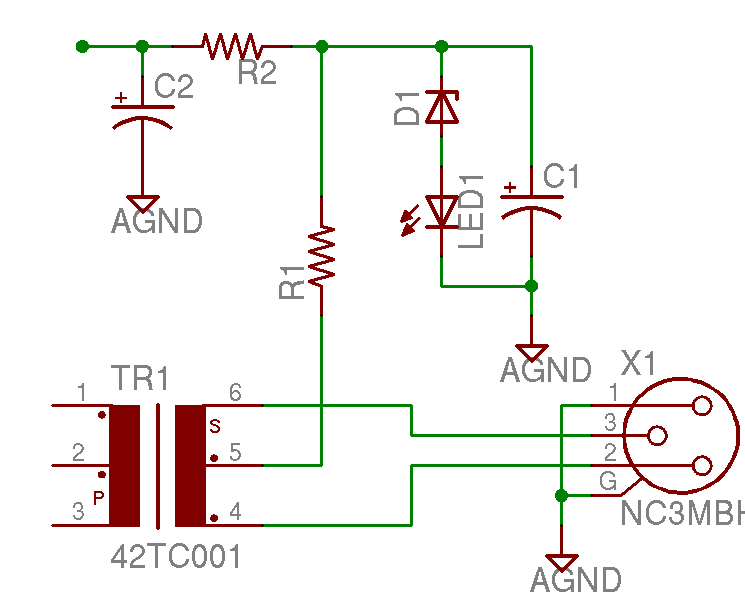
A project is underway to construct the CountryHick DI as illustrated on DIYFactory, incorporating a few minor modifications. The final design aims to be a 1U unit with four inputs.
The CountryHick DI (Direct Injection) box is a crucial tool in...

Water Level controller
The microcontroller-based water level controller and motor protector manages the on and off states of the motor based on the water level in the overhead tank (OHT). It regulates the tank's water level through a microcontroller, thereby providing automatic protection...