


Analog Input Tutorial
#energia
#texas instruments
#launchpad
#analog input
#rapid prototyping
#wiring
#arduino
#processing IDE

Description: Energia is a rapid prototyping platform for the Texas Instruments MCU Launchpad. It is based on Wiring and Arduino and utilizes the Processing IDE.
Energia serves as an accessible development environment designed specifically for Texas Instruments' microcontroller (MCU) Launchpad series. The platform leverages the simplicity of the Wiring framework and the familiarity of the Arduino programming language, making it easier for developers to create and test applications efficiently. The Processing Integrated Development Environment (IDE) enhances user experience by providing a straightforward interface for writing, debugging, and uploading code to the MCU.
The Energia platform supports a wide range of Texas Instruments MCUs, allowing for versatile application development across various projects. It includes a library of pre-built functions and examples, enabling users to quickly implement features such as digital I/O, analog input, and communication protocols (I2C, SPI, UART). This extensive library simplifies the process of interfacing with sensors, actuators, and other peripherals.
Energia also promotes rapid iteration and prototyping through its ability to compile and upload code seamlessly. Developers can modify their code and immediately test changes on the hardware, facilitating a more dynamic development cycle. The platform's compatibility with various hardware configurations and its community-driven support further enhance its utility for both novice and experienced engineers.
In summary, Energia is a robust and user-friendly platform that streamlines the development process for projects utilizing Texas Instruments MCU Launchpads, fostering innovation and creativity in embedded systems design.Energia is a rapid prototyping platform for the Texas Instruments MCU Launchpad. Energia is based on Wiring and Arduino and uses the Processing IDE..
Energia serves as an accessible development environment designed specifically for Texas Instruments' microcontroller (MCU) Launchpad series. The platform leverages the simplicity of the Wiring framework and the familiarity of the Arduino programming language, making it easier for developers to create and test applications efficiently. The Processing Integrated Development Environment (IDE) enhances user experience by providing a straightforward interface for writing, debugging, and uploading code to the MCU.
The Energia platform supports a wide range of Texas Instruments MCUs, allowing for versatile application development across various projects. It includes a library of pre-built functions and examples, enabling users to quickly implement features such as digital I/O, analog input, and communication protocols (I2C, SPI, UART). This extensive library simplifies the process of interfacing with sensors, actuators, and other peripherals.
Energia also promotes rapid iteration and prototyping through its ability to compile and upload code seamlessly. Developers can modify their code and immediately test changes on the hardware, facilitating a more dynamic development cycle. The platform's compatibility with various hardware configurations and its community-driven support further enhance its utility for both novice and experienced engineers.
In summary, Energia is a robust and user-friendly platform that streamlines the development process for projects utilizing Texas Instruments MCU Launchpads, fostering innovation and creativity in embedded systems design.Energia is a rapid prototyping platform for the Texas Instruments MCU Launchpad. Energia is based on Wiring and Arduino and uses the Processing IDE..

Arduino CAN Bus Interface
The implementation of the Controller Area Network (CAN) for aircraft applications is referred to as CAN-FIX, which is part of the MakerPlane Open Source Airplane project. This project aims to create an Arduino shield that facilitates communication over the CAN...

arduino event driven universal av remote
Arduino Event-Driven Universal AV Remote May 1st, 2013. Turn everything on with Airplay.
The project involves the development of an Arduino-based universal remote control designed to manage various audio-visual (AV) components through an event-driven architecture. This remote utilizes Airplay technology...

Arduino Punk Console
A programmable 8 step tone sequencer using an Arduino microcontroller. Features a 2 line x 16 character backlit LCD display
The circuit design for the programmable 8 step tone sequencer based on an Arduino microcontroller incorporates several key components that work...

Controlling a LED using a switch
To create the circuit, connect a switch as an input and an LED as an output to the Arduino. The components required include a switch, an LED, a 10kΩ resistor, a 470Ω resistor, a blue or yellow jumper wire, and...

Arduino based camera trigger circuit
The core of the circuit features an Arduino microprocessor, represented by the header pins on the left side of the circuit schematic. Two analog inputs, labeled 0 and 1, are connected to the emitter sides of TEMT6000 ambient light sensors...

Arduino Button
Connect three wires to the Arduino board. The first two, red and black, connect to the two long vertical rows on the side of the breadboard to provide access to the 5-volt supply and ground. The third wire goes from...

Augmenting Plant Behavior Through Robotics using Arduino
The PhytoBot is a semi-intelligent plant that reacts to external stimuli, specifically light intensity and light location, mimicking the behavior of a phototropic plant. It is designed as an interactive artwork intended for prolonged operation. The motivation behind this design...
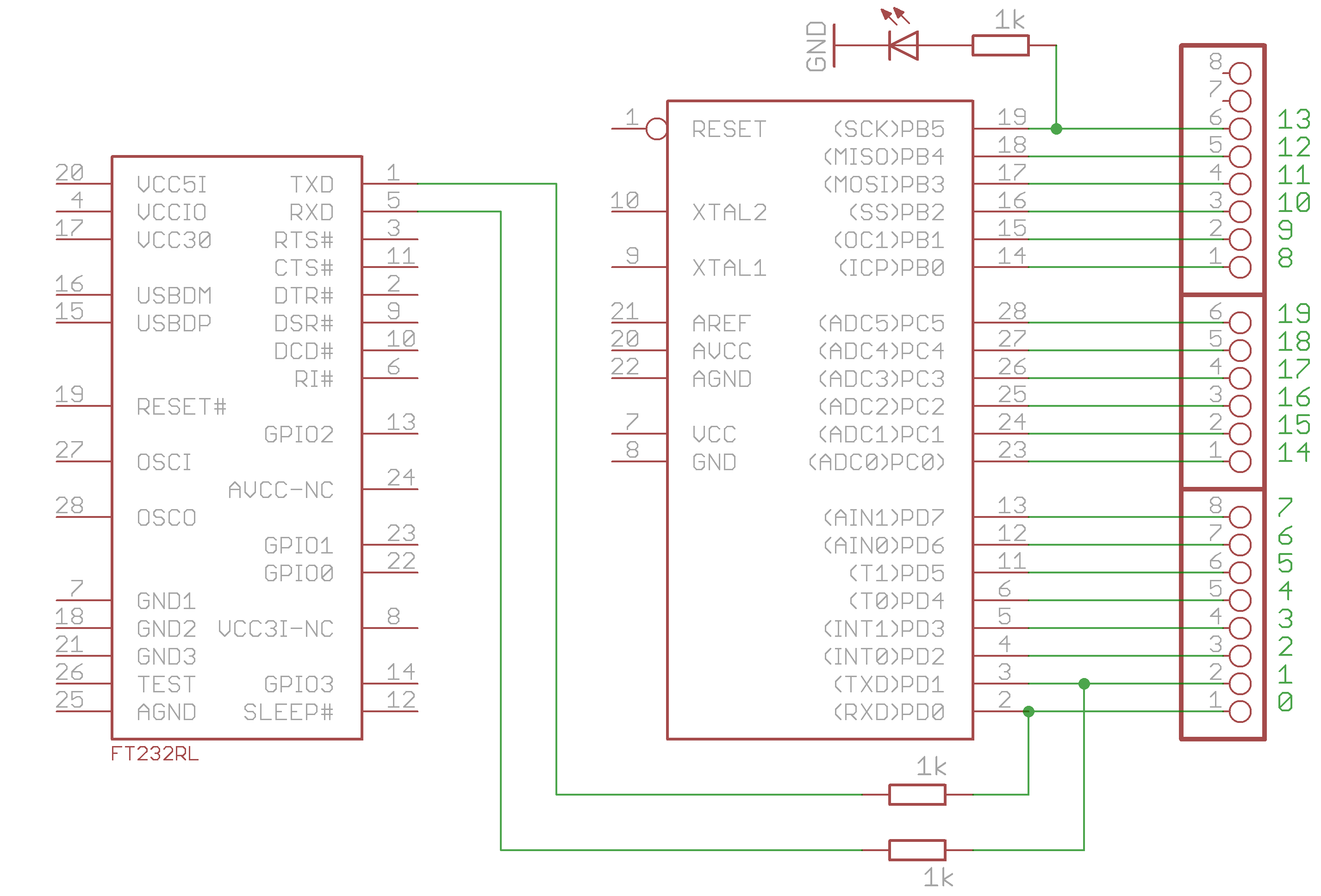
Blinken light
The example programs and Arduino sketches provided are free software.
The provided example programs and Arduino sketches serve as a valuable resource for developers and hobbyists working with Arduino microcontrollers. These software tools are designed to facilitate learning and experimentation with...

Electric strike with Arduino circuitry
A fingerprint door lock system is being considered for implementation. The primary component is a fingerprint reader that, upon recognizing a valid fingerprint, will instruct an Arduino microcontroller to activate a locking mechanism for a predetermined duration. The locking mechanism...