


DIY Dual Fan Controller Project
#ATtiny45
#fan controller
#DIY
#microcontroller
#dual fan
#CUBLOC
#robot parts
#temperature control
#cooling system

Description: Here is a circuit diagram designed for DIY enthusiasts who aim to construct a dual fan controller utilizing an ATtiny45 microcontroller. The circuit activates the first fan when the temperature reaches a user-adjustable dial setting and engages a second fan if the temperature exceeds an additional 5 degrees Fahrenheit. This approach allows for the use of a single fan if the temperature remains manageable, while both fans will operate when necessary.
The dual fan controller circuit employs an ATtiny45 microcontroller as the central processing unit, which is programmed to monitor temperature readings from a thermistor or temperature sensor. The user can adjust the temperature threshold using a potentiometer, which provides an analog input to the microcontroller.
The circuit includes two output channels, each connected to a relay or transistor that controls the power to the fans. When the temperature detected by the sensor exceeds the threshold set by the potentiometer, the ATtiny45 sends a signal to activate the first fan. If the temperature rises above the threshold plus an additional 5 degrees Fahrenheit, the microcontroller triggers the second fan, ensuring effective cooling.
Power supply considerations should be taken into account, with appropriate voltage regulation to ensure stable operation of the ATtiny45 and the fans. A bypass capacitor is recommended near the microcontroller to filter any noise from the power supply. Furthermore, flyback diodes should be included across the relay coils to protect the microcontroller from voltage spikes when the relays are deactivated.
The circuit layout should be designed to minimize interference and ensure proper heat dissipation for the fans. Proper thermal management is crucial, especially in applications where high temperatures may be present. This dual fan controller circuit provides a flexible solution for managing cooling in various electronic projects, making it an excellent choice for DIY electronics enthusiasts.Here`s a nice little circuit diagram for all those hardcore DIYers if you are trying to build a dual fan controller using an ATtiny45 although I`d never use this thing, I`d rather use a CUBLOC. Over the course of a weekend, I cobbled together some leftover robot parts to create a simple dual-fan controller.
The board turns on the first fan when t he temperature reaches a user-adjustable dial setting, and it turns on a second fan if the temperature exceeds an additional 5 degrees Fahrenheit. With this method, only a single fan is used if the temperature can be kept under control with only one fan, but both fans will kick on if necessary.
The dual fan controller circuit employs an ATtiny45 microcontroller as the central processing unit, which is programmed to monitor temperature readings from a thermistor or temperature sensor. The user can adjust the temperature threshold using a potentiometer, which provides an analog input to the microcontroller.
The circuit includes two output channels, each connected to a relay or transistor that controls the power to the fans. When the temperature detected by the sensor exceeds the threshold set by the potentiometer, the ATtiny45 sends a signal to activate the first fan. If the temperature rises above the threshold plus an additional 5 degrees Fahrenheit, the microcontroller triggers the second fan, ensuring effective cooling.
Power supply considerations should be taken into account, with appropriate voltage regulation to ensure stable operation of the ATtiny45 and the fans. A bypass capacitor is recommended near the microcontroller to filter any noise from the power supply. Furthermore, flyback diodes should be included across the relay coils to protect the microcontroller from voltage spikes when the relays are deactivated.
The circuit layout should be designed to minimize interference and ensure proper heat dissipation for the fans. Proper thermal management is crucial, especially in applications where high temperatures may be present. This dual fan controller circuit provides a flexible solution for managing cooling in various electronic projects, making it an excellent choice for DIY electronics enthusiasts.Here`s a nice little circuit diagram for all those hardcore DIYers if you are trying to build a dual fan controller using an ATtiny45 although I`d never use this thing, I`d rather use a CUBLOC. Over the course of a weekend, I cobbled together some leftover robot parts to create a simple dual-fan controller.
The board turns on the first fan when t he temperature reaches a user-adjustable dial setting, and it turns on a second fan if the temperature exceeds an additional 5 degrees Fahrenheit. With this method, only a single fan is used if the temperature can be kept under control with only one fan, but both fans will kick on if necessary.

Low Resource Microcontroller 3 Phase BLDC Motor Speed Controller
This article discusses a minimal resource microcontroller implementation for a three-phase Brushless DC (BLDC) motor, focusing on a closed-loop speed motor controller application based on a Microchip PIC12 device. It demonstrates how minimization techniques can reduce the number of I/O...

Speed Control of DC Motor using Microcontroller by using PWM ECE Project
This report details an electronic project focused on the speed control of a DC motor using a microcontroller and PWM (Pulse Width Modulation). The system integrates a microcontroller with an LCD, keypad, and a DC motor driver. The microcontroller generates...

the remote intellectual pronunciation anti-theft alarm system design of the one-chip computer
Precautions must be taken against low safety coefficients, as the applicable space for security measures continues to shrink. With advancements in science and technology, innovations such as magnetic door sensors, touch-type systems, radar monitoring, and infrared detection have emerged, leading...
IR On/Off Switch Using Microcontroller
The ability to turn electrical devices ON or OFF using a remote control is a well-established concept, with numerous devices effectively performing this function.
To implement a remote control system for switching electrical devices, a typical schematic would include several key...
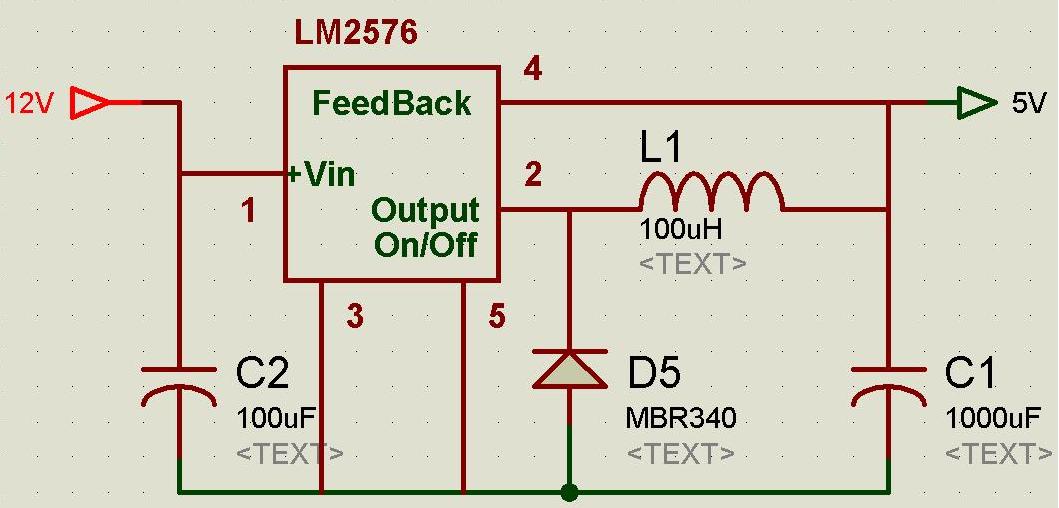
Some Voltage Regulator Ciruits for Microcontroller based Projects
A regulated and noise-free power supply voltage is essential for microcontrollers and other components such as amplifiers, filters, and GPS devices. Voltage surges in the supply voltage can permanently damage embedded systems. A voltage regulator must maintain the output voltage...

Temperature control
A pair of transistors and a thermistor in the charging network of a 555 timer allow this device to sense temperature and generate a corresponding frequency output. The circuit maintains an accuracy of ±1 Hz over a temperature range of...

repair microcontroller circuit
The difference between these two ICs. A microcontroller is a specialized type of microprocessor designed to be self-sufficient and cost-effective, while a microprocessor is typically intended for general-purpose use, such as in personal computers (PCs). The microcontroller integrates several useful...

Temperature Controller for Crystal Oven
The temperature of a quartz crystal oscillator must be maintained at a constant level to ensure stable frequency operation. This oven temperature controller is appropriate for this purpose.
The operation of quartz crystal oscillators relies heavily on temperature stability, as variations...

delay circuit for photography
This article outlines the construction of a simple microcontroller-based delay circuit designed for photographic applications such as drop or high-speed photography. It can control the trigger lag of cameras and flash units, generate periodic trigger pulses, or manage magnetic valves....