


Magnetic Levitation Circuit
#magnetic levitation
#electromagnet
#sensor
#feedback control
#physics demonstration
#educational
#DIY project
#electronics
#control system
#hobby circuit
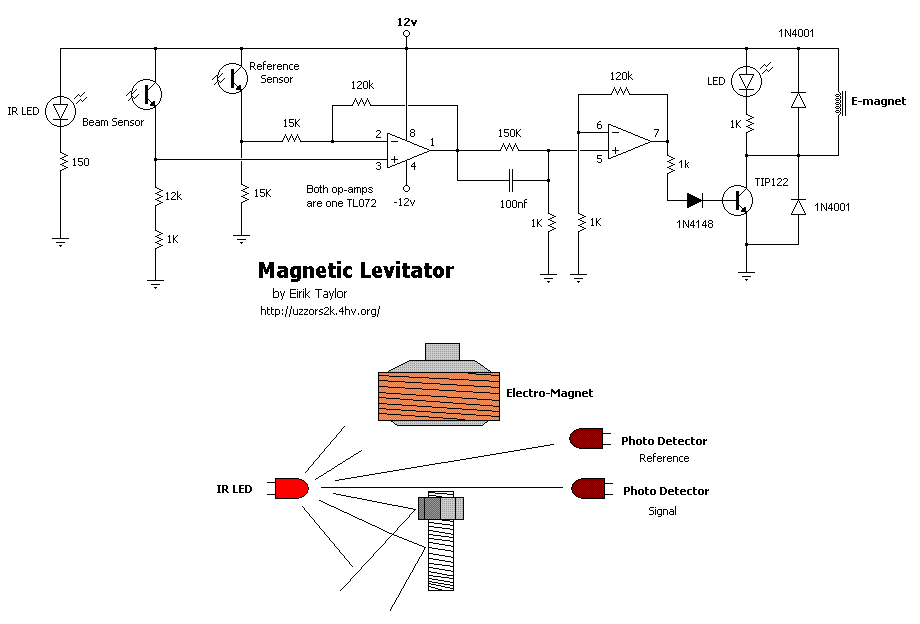
Description: This is a simple magnetic levitation circuit that suspends objects at a specified distance below an electromagnet. The underlying physics involves providing a magnetic force that counteracts gravity.
The magnetic levitation circuit operates by utilizing an electromagnet, which generates a magnetic field when an electric current flows through it. The primary components of the circuit include a power supply, an electromagnet, a control system (often incorporating a microcontroller), and a feedback mechanism to maintain stable levitation.
The power supply provides the necessary voltage and current to the electromagnet. The control system regulates the current flowing to the electromagnet based on the position of the levitated object. This regulation is typically achieved through a feedback loop that uses sensors, such as Hall effect sensors or infrared sensors, to detect the distance of the object from the electromagnet.
When the object is positioned below the electromagnet, the control system measures its distance and adjusts the current to the electromagnet accordingly. If the object moves closer, the current is decreased to reduce the magnetic force, allowing the object to drop slightly. Conversely, if the object moves away, the current is increased to strengthen the magnetic field and pull the object back up. This dynamic adjustment creates a stable levitation effect, allowing the object to hover at the desired height.
The circuit may also include additional components such as capacitors for smoothing voltage fluctuations, resistors for current limiting, and diodes for protection against back EMF generated by the electromagnet when the current is switched off. Overall, this simple magnetic levitation circuit showcases the principles of electromagnetism and control systems in a practical application, demonstrating the ability to manipulate forces to achieve stable levitation.This is a simple magnetic levitation circuit which suspends objects a set distance below an electromagnet. The physics behind it is to simply provide a mag..
The magnetic levitation circuit operates by utilizing an electromagnet, which generates a magnetic field when an electric current flows through it. The primary components of the circuit include a power supply, an electromagnet, a control system (often incorporating a microcontroller), and a feedback mechanism to maintain stable levitation.
The power supply provides the necessary voltage and current to the electromagnet. The control system regulates the current flowing to the electromagnet based on the position of the levitated object. This regulation is typically achieved through a feedback loop that uses sensors, such as Hall effect sensors or infrared sensors, to detect the distance of the object from the electromagnet.
When the object is positioned below the electromagnet, the control system measures its distance and adjusts the current to the electromagnet accordingly. If the object moves closer, the current is decreased to reduce the magnetic force, allowing the object to drop slightly. Conversely, if the object moves away, the current is increased to strengthen the magnetic field and pull the object back up. This dynamic adjustment creates a stable levitation effect, allowing the object to hover at the desired height.
The circuit may also include additional components such as capacitors for smoothing voltage fluctuations, resistors for current limiting, and diodes for protection against back EMF generated by the electromagnet when the current is switched off. Overall, this simple magnetic levitation circuit showcases the principles of electromagnetism and control systems in a practical application, demonstrating the ability to manipulate forces to achieve stable levitation.This is a simple magnetic levitation circuit which suspends objects a set distance below an electromagnet. The physics behind it is to simply provide a mag..

Automatic Room light Control With Bi Directional Visitor Counter
The objective of this project is to create a controller-based model that counts the number of individuals entering a specific room and activates the lighting accordingly. This is achieved through the use of sensors that detect the current number of...

Field disturbance sensor-alarm
The change in ambient light triggers the alarm by changing the resistance of LDR1 and LDR2.
The circuit utilizes two light-dependent resistors (LDR1 and LDR2) to detect variations in ambient light levels. LDRs are passive components that exhibit a change in...

MAGNETIC LEVITATION DEVICE
Here is the schematic of the device depicted in the photo. Each of the ten coil-assemblies has its own copy of the above circuit. The SS41 is a Microswitch Hall Effect magnetic field sensor IC that was found in a...
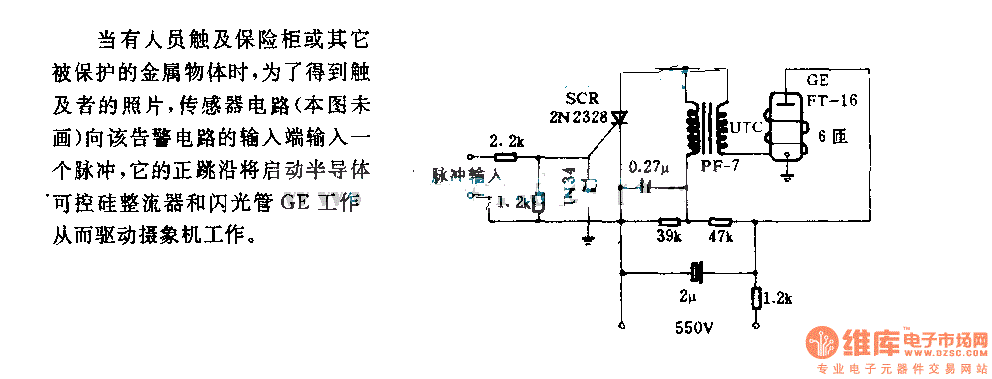
The alarm circuit diagram for safety box and other metal objects
When an individual touches the safety box or other protected metal objects, the sensor circuit generates a pulse to the alarm circuit. The positive edge of this pulse activates the semiconductor and thyristor flash GE, subsequently triggering the camera to...

Wire Break Sensor Alarm Circuit Schematic
The circuit of a loop sensor-based simple security alarm is described here. The sensor loop consists of a short length of thin enamelled copper wire.
The loop sensor security alarm operates on the principle of detecting interruptions in the circuit formed...

Automatic plant waterer
The unit consists of a sensor, timer, and electric water pump. The sensor is embedded in the soil, and when dry, the electronics operate the water pump for a preset time. The circuit is composed of a level-sensitive Schmitt trigger,...

electromagnetic levitator circuit
This circuit creates an impressive display of magnetism by suspending a small metal object in mid-air. Utilizing an electromagnet, a photo sensor, and a closed-loop control system, lightweight metal objects can be levitated just beneath the magnet, enclosed in a...

Electrical_Subsystem
The following data and mapping pertain to the 2-D shift mapping algorithm that the controller will utilize to determine when and if a shift should occur. The solid lines on the graph indicate up-shift boundaries, while the dashed lines represent...

Cold Atom Control System for PC
We have developed a powerful yet inexpensive and easy to construct experiment control system. The construction of the system together with the control software is described here. All circuits and software are free to download and use for nonprofit. The...