


roboat
#autonomous navigation
#GPS
#digital compass
#microcontroller
#motor control
#waypoints
#robot boat
#M68HC908GP20
#sensor integration

Description: A model boat capable of sailing autonomously along a pre-planned course. This is the essence of "Roboat," which is short for "robot boat." The central component is the M68HC908GP20 controller (in a quad flat plastic package) that stores waypoint coordinates and, based on data from the GPS and digital compass, regulates the electric motor for the propeller and the proportional servo for the rudder. A MON08 interface connects to the ICS08GP20 board, allowing direct control of "Roboat" from a PC for testing and for storing new waypoint coordinates. A 12-volt lead battery powers the devices, with the propeller's electric motor receiving 12 volts directly, while other circuits operate on a 5-volt supply through appropriate regulators. The structure of "Roboat" is simple and easily modifiable, primarily constructed from a 4 cm thick sheet of polystyrene foam shaped like a boat, with a thin plastic sheet on top that houses the battery, electronics, electric motor, propeller, servo, and rudder. Due to its small size and limited battery capacity, "Roboat" typically operates over a few kilometers in calm, designated areas such as a lake. This particular artificial lake, previously used for seaplane operations, measures approximately 2.5 km by 100-200 m, oriented north-south. Currently, it is primarily utilized by rowboats and sailboats, making it a quiet and safe testing environment. GPS, or Global Positioning System, is a modern technology that provides precise coordinates of a location on Earth's surface. It relies on a network of satellites that continuously transmit coded signals globally. A GPS device receives these signals, calculates the positions of the satellites, and uses triangulation to determine its own location. The accuracy of this method for basic commercial GPS devices is typically within 100 m for 99% of measurements taken in the same location over a sufficient period. Consequently, a well-planned course for "Roboat" should maintain a distance of at least 100 m from any obstacles, such as islands or shorelines. Two Hall-effect sensors are positioned 90° apart around a small magnet. As the magnet rotates, the outputs of the two sensors produce sine and cosine waveforms that, when powered by 5 volts, yield an average output of 2.5 volts, oscillating between 2.8 and 3.2 volts.
The "Roboat" system integrates several critical components to ensure autonomous navigation and operational efficiency. The M68HC908GP20 microcontroller serves as the brain of the system, executing navigation algorithms that interpret GPS data and adjust the motor and rudder accordingly. The onboard GPS module continuously receives satellite signals, enabling real-time location tracking and waypoint navigation. The digital compass complements the GPS by providing directional data, ensuring that "Roboat" maintains the correct heading toward its next waypoint.
Power management is vital for the performance of "Roboat." The 12-volt lead battery not only powers the propeller motor but also feeds voltage regulators that step down the voltage to 5 volts for the microcontroller and sensors. This separation of power supplies helps protect sensitive electronic components from voltage fluctuations while ensuring the motor receives sufficient power for propulsion.
The design of "Roboat" emphasizes simplicity and adaptability. The polystyrene foam structure is lightweight and buoyant, making it suitable for various modifications, such as adding additional sensors or enhancing the propulsion system. The thin plastic cover provides protection for the internal components while allowing for easy access when adjustments or repairs are needed.
The operational environment of "Roboat" is carefully selected to optimize performance. The artificial lake's dimensions and calm waters minimize interference from waves and currents, allowing for precise navigation. The requirement for a minimum distance of 100 m from obstacles is crucial for avoiding collisions, which could damage the boat or disrupt its course.
In conclusion, "Roboat" exemplifies the integration of modern electronics and engineering principles to create an autonomous sailing vessel capable of navigating predetermined paths. Its design and operational parameters reflect a thoughtful approach to ensuring reliable performance in a controlled aquatic environment.A model boat that can sail autonomously along a course planned in advance. This explains the meaning of "Roboat" that is the short form for "robot boat". The core is the controller M68HC908GP20 (the quad flat plastic pack version) that stores the coordinates of the waypoints to follow and according to the data received from the GPS and from the digital compass, controls the electric motor for the propeller and the proportional servo for the rudder. A MON08 interface provides a connection with the ICS08GP20 board, in order to control "Roboat" directly from a PC for testing purpose and when new waypoints coordinates need to be stored. A 12 Volts lead battery supplies power to the devices. The electric motor of the propeller is driven by 12 Volts directly, while the other circuits receive 5 Volts power supply through suitable regulators.
The structure of "Roboat" is very simple, so that it can be easily modified and adapted, therefore it is basically made of a sheet of polystyrene foam, 4 cm thick, cut in the shape of a boat, and a thin sheet of plastic on top that actually mounts all the devices: battery, electronics, electric motor, propeller, servo and rudder. Due to the small size and to the reduced capacity of the battery, a typical journey of "Roboat" is only a few kilometers long and needs to be done on a quiet and delimited area such as a lake.
It is an artificial lake, once used for landing and take-off of seaplanes. Its dimensions are roughly 2. 5 km by 100-200 m, elongate in direction North-South. Nowadays it is used mainly by oar- and sailing boats, therefore it is very quiet and safe for the purpose of the test. GPS means "Global Positioning System". It refers to a modern technology that allows to immediately obtain the coordinates of a site on the earth surface.
The system is based on a network of satellites that continuously transmit coded signals around the globe. A GPS device receives these signals, computes the position of the satellites and through a triangulation computes its own position over the earth surface.
The accuracy of this method for the basic, commercial GPSs, is said to be within 100 m for the 99% of the measurements collected in the same place during a sufficient interval of time. Therefore a course properly planned for "Roboat" should never approach any obstacle (an island or a shoreline) at a distance closer than 100 m.
The two Hall-effect sensors are mounted around the tiny magnet, 90 ° apart each other. When the magnet rotates the outputs of the two sensors describe a couple of sine and cosine curves that, using a power supply of 5 volts, have an average value of 2. 5 volts and swing between 2. 8 and 3. 2 volts.
The "Roboat" system integrates several critical components to ensure autonomous navigation and operational efficiency. The M68HC908GP20 microcontroller serves as the brain of the system, executing navigation algorithms that interpret GPS data and adjust the motor and rudder accordingly. The onboard GPS module continuously receives satellite signals, enabling real-time location tracking and waypoint navigation. The digital compass complements the GPS by providing directional data, ensuring that "Roboat" maintains the correct heading toward its next waypoint.
Power management is vital for the performance of "Roboat." The 12-volt lead battery not only powers the propeller motor but also feeds voltage regulators that step down the voltage to 5 volts for the microcontroller and sensors. This separation of power supplies helps protect sensitive electronic components from voltage fluctuations while ensuring the motor receives sufficient power for propulsion.
The design of "Roboat" emphasizes simplicity and adaptability. The polystyrene foam structure is lightweight and buoyant, making it suitable for various modifications, such as adding additional sensors or enhancing the propulsion system. The thin plastic cover provides protection for the internal components while allowing for easy access when adjustments or repairs are needed.
The operational environment of "Roboat" is carefully selected to optimize performance. The artificial lake's dimensions and calm waters minimize interference from waves and currents, allowing for precise navigation. The requirement for a minimum distance of 100 m from obstacles is crucial for avoiding collisions, which could damage the boat or disrupt its course.
In conclusion, "Roboat" exemplifies the integration of modern electronics and engineering principles to create an autonomous sailing vessel capable of navigating predetermined paths. Its design and operational parameters reflect a thoughtful approach to ensuring reliable performance in a controlled aquatic environment.A model boat that can sail autonomously along a course planned in advance. This explains the meaning of "Roboat" that is the short form for "robot boat". The core is the controller M68HC908GP20 (the quad flat plastic pack version) that stores the coordinates of the waypoints to follow and according to the data received from the GPS and from the digital compass, controls the electric motor for the propeller and the proportional servo for the rudder. A MON08 interface provides a connection with the ICS08GP20 board, in order to control "Roboat" directly from a PC for testing purpose and when new waypoints coordinates need to be stored. A 12 Volts lead battery supplies power to the devices. The electric motor of the propeller is driven by 12 Volts directly, while the other circuits receive 5 Volts power supply through suitable regulators.
The structure of "Roboat" is very simple, so that it can be easily modified and adapted, therefore it is basically made of a sheet of polystyrene foam, 4 cm thick, cut in the shape of a boat, and a thin sheet of plastic on top that actually mounts all the devices: battery, electronics, electric motor, propeller, servo and rudder. Due to the small size and to the reduced capacity of the battery, a typical journey of "Roboat" is only a few kilometers long and needs to be done on a quiet and delimited area such as a lake.
It is an artificial lake, once used for landing and take-off of seaplanes. Its dimensions are roughly 2. 5 km by 100-200 m, elongate in direction North-South. Nowadays it is used mainly by oar- and sailing boats, therefore it is very quiet and safe for the purpose of the test. GPS means "Global Positioning System". It refers to a modern technology that allows to immediately obtain the coordinates of a site on the earth surface.
The system is based on a network of satellites that continuously transmit coded signals around the globe. A GPS device receives these signals, computes the position of the satellites and through a triangulation computes its own position over the earth surface.
The accuracy of this method for the basic, commercial GPSs, is said to be within 100 m for the 99% of the measurements collected in the same place during a sufficient interval of time. Therefore a course properly planned for "Roboat" should never approach any obstacle (an island or a shoreline) at a distance closer than 100 m.
The two Hall-effect sensors are mounted around the tiny magnet, 90 ° apart each other. When the magnet rotates the outputs of the two sensors describe a couple of sine and cosine curves that, using a power supply of 5 volts, have an average value of 2. 5 volts and swing between 2. 8 and 3. 2 volts.
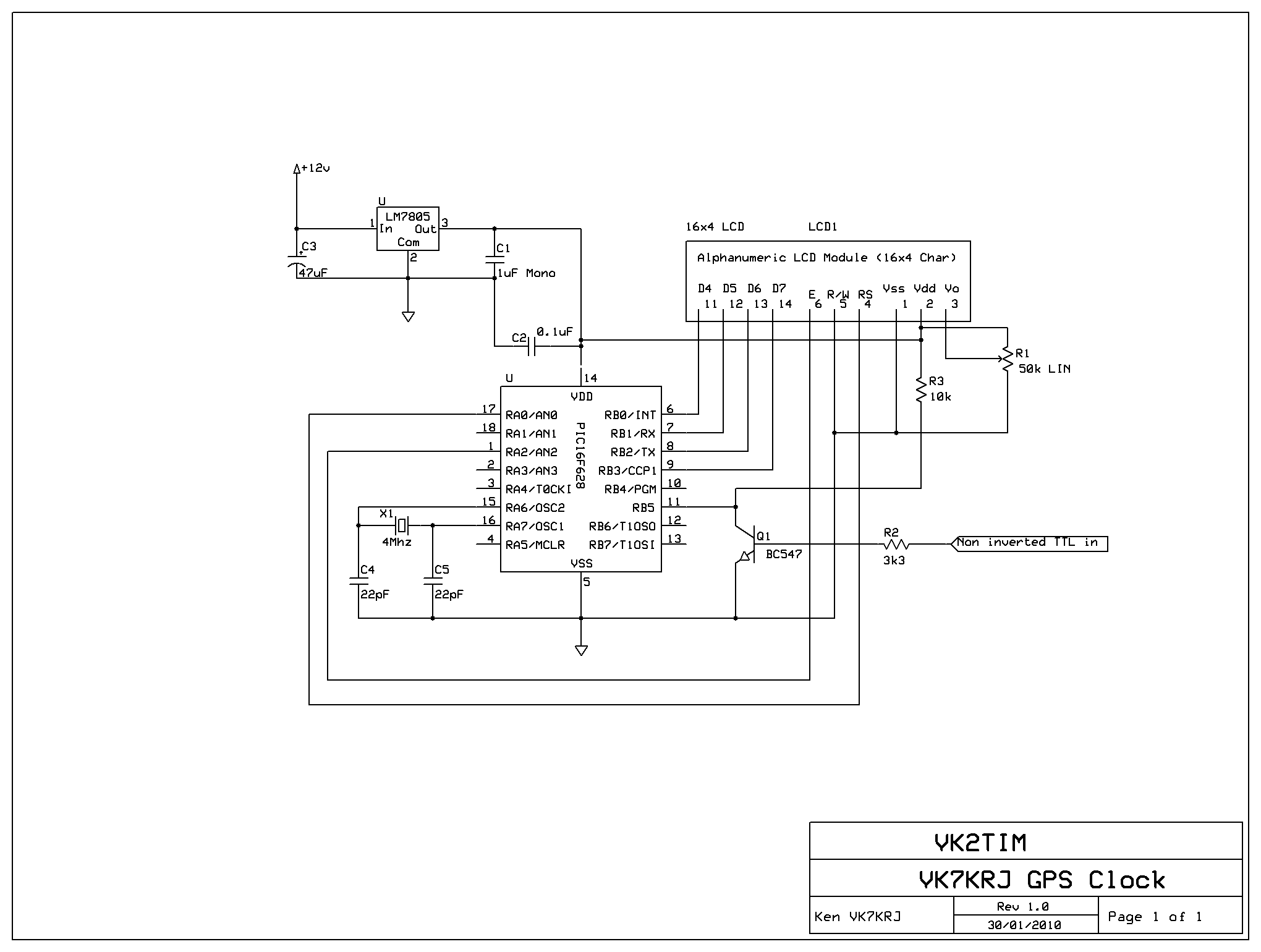
gps driven clock compasss peedo
This project is a GPS-based clock that displays the current date, automatically adjusts for daylight saving time, shows current speed, maximum speed, and present heading in degrees relative to true north. The original firmware and concept were developed by Ken,...

doorbel
This smart doorbell system is designed for use in industrial environments. It is microcontroller-based and controls a horn and a flashlight.
The smart doorbell system utilizes a microcontroller to manage its operations, making it suitable for industrial applications where reliability and...
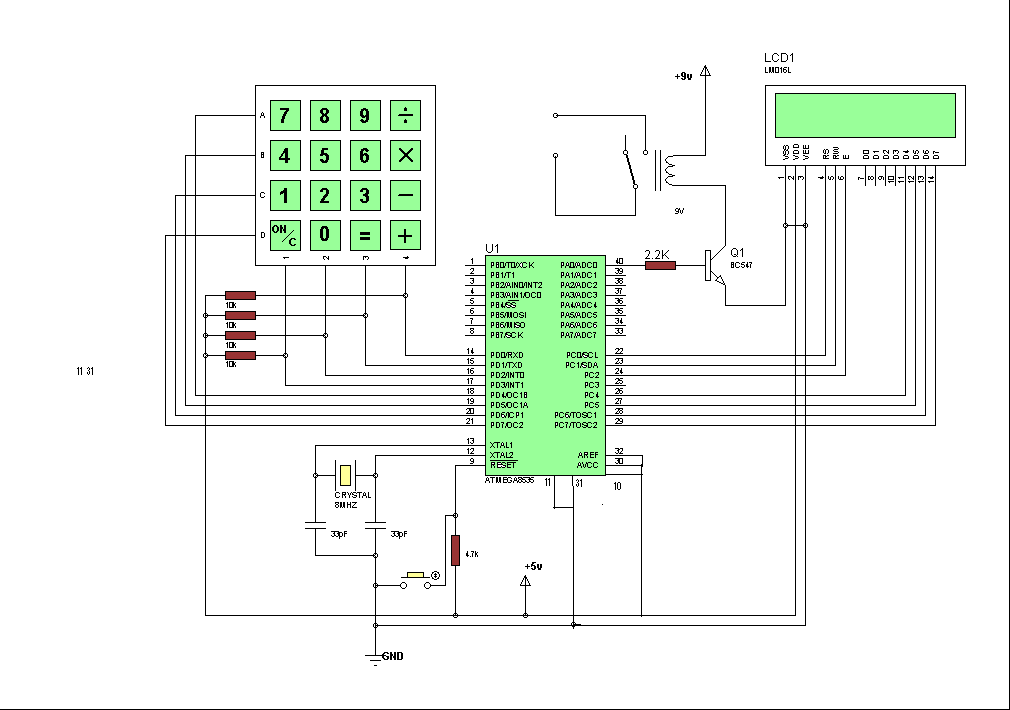
Secured room access system
Security is a primary concern in daily life, and an access control system is a crucial component of a security framework. The microcontroller-based digital lock described here is an access control system that permits only authorized individuals to enter a...

Motorized Video Camera Mount
The camera rotator circuit utilizes a 2716 EPROM to store a logic value table that governs the motor driver (H-bridge) circuit. The schematic illustrates the EPROM data. By employing the EPROM, a significant number of discrete gates are eliminated. The...

MCU controlled Bluetooth automation
The microcontroller used is 0822 zilog encore! 8k series (soic,28pin) as shown on the figure. Is a programmable microcontroller, the functions used are the GPIO and the UART of the chip. GPIO is used on led indicators, and the UART...

Global Positioning System GPS
The Global Positioning System (GPS) relies on more than two dozen satellites orbiting the Earth. Each satellite transmits signals that include precise clock information and satellite position data, enabling a GPS receiver to determine its location, speed, and direction. A...

GPS-Disciplined 10 MHz Frequency Standard / GPS-Based Universal Time Clock
The block diagram illustrates that a 10 MHz signal is generated by an oven-stabilized 10 MHz crystal oscillator, which is locked to a precision 10 kHz signal produced by a GPS receiver module through a phase-locked-loop (PLL) circuit. In addition...

Rockwell Jupiter GPS module
The Rockwell Jupiter TU30-D140 is an OEM (Original Equipment Manufacturer) GPS receiver module designed for integration into larger systems, such as vehicle tracking systems, navigation systems, and time/clock references. It features a 12 parallel-channel all-in-view receiver, measures 4 by 7...
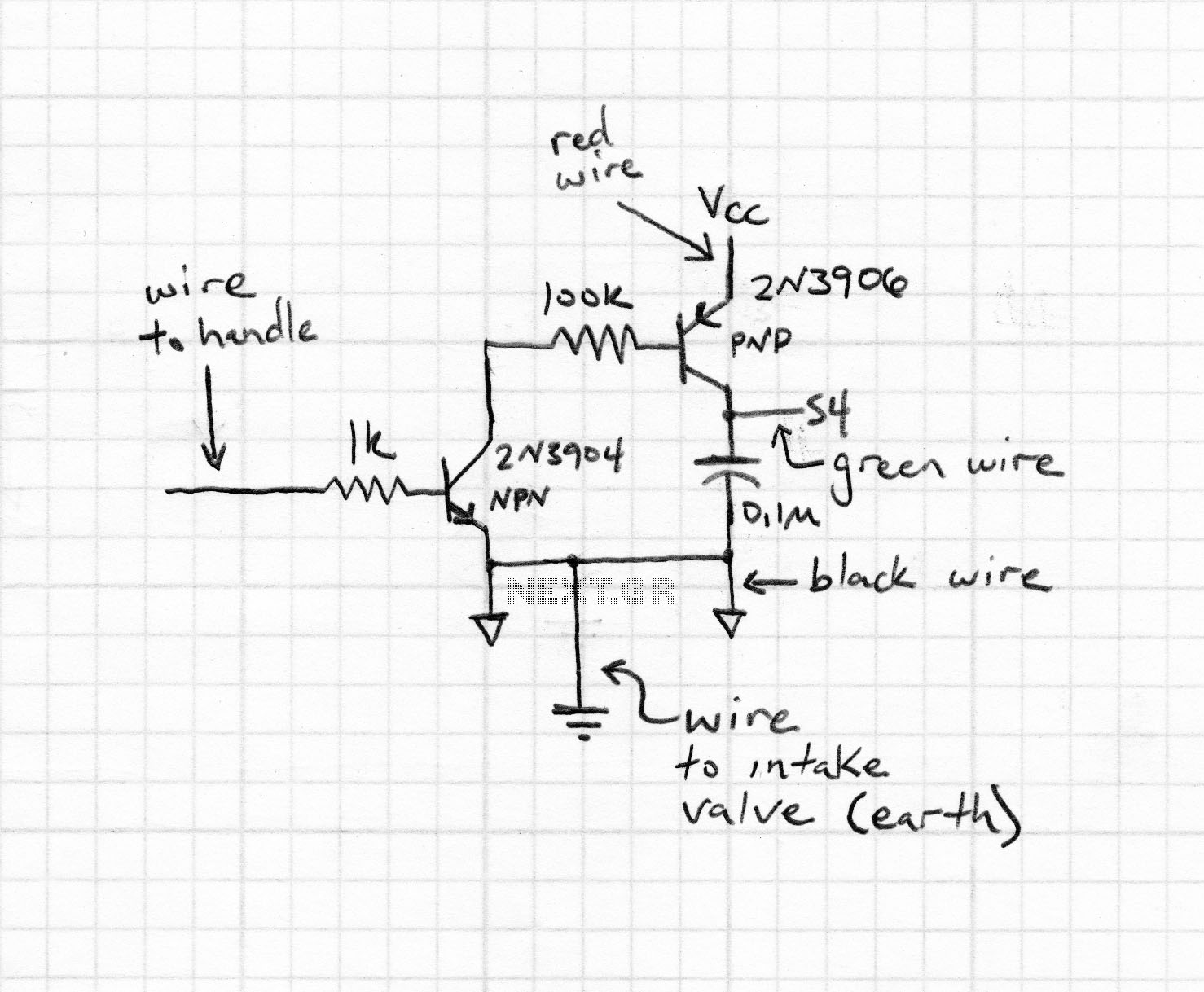
Password(code) Based Digital Locking System Using Microcontroller 89C52/89S52
Upon entering the password, the application, in this case "LED," will illuminate. In this digital locking system project, the interfacing of a keypad and a 16x2 LCD with a microcontroller will be explored, along with the accompanying code. This project...