


How to change the range of voltage
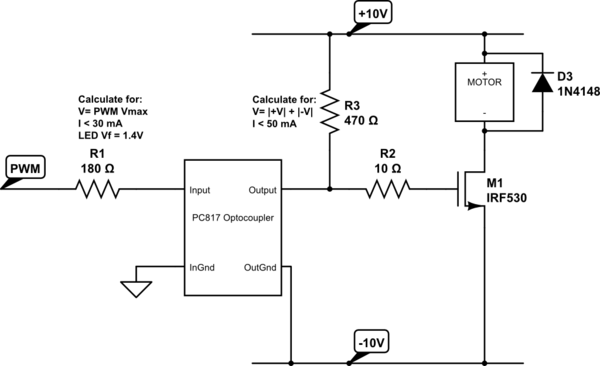
Description: A project is being developed to utilize a dsPIC microcontroller as the controller for generating a PWM signal to control motors. A driver IC, specifically the L293D, has been employed to facilitate motor rotation; however, there is a limitation in controlling the voltage range necessary for achieving a full spectrum of motor speeds.
In this project, the dsPIC microcontroller serves as the core processing unit, generating a Pulse Width Modulation (PWM) signal that regulates the speed of a DC motor. The PWM signal is characterized by its duty cycle, which determines the average voltage supplied to the motor. By adjusting the duty cycle, the effective voltage can be controlled, thereby varying the speed of the motor.
The L293D driver IC is utilized to interface between the dsPIC and the motor. This IC is designed to drive inductive loads such as motors, providing bidirectional control. It features built-in diodes for back EMF protection, which is essential for preventing damage to the microcontroller and the driver circuit when the motor is turned off.
To achieve a broader range of speed control, it may be necessary to implement an additional feedback mechanism. This could involve using an encoder to monitor the motor's actual speed and adjusting the PWM signal accordingly. The encoder provides real-time data, enabling closed-loop control that enhances speed accuracy and responsiveness.
In summary, the combination of a dsPIC microcontroller, PWM signal generation, and the L293D driver IC forms a robust foundation for motor control applications. By incorporating feedback mechanisms, the system can achieve precise control over motor speed across its entire operational range.Doing a project to use dsPIC as controller to output PWM signal to control motors. I can use driver IC (I used L293D actually) to simply let motors to rotate, but I cannot control the voltage range to control the motor to rotate with all range of speed.
In this project, the dsPIC microcontroller serves as the core processing unit, generating a Pulse Width Modulation (PWM) signal that regulates the speed of a DC motor. The PWM signal is characterized by its duty cycle, which determines the average voltage supplied to the motor. By adjusting the duty cycle, the effective voltage can be controlled, thereby varying the speed of the motor.
The L293D driver IC is utilized to interface between the dsPIC and the motor. This IC is designed to drive inductive loads such as motors, providing bidirectional control. It features built-in diodes for back EMF protection, which is essential for preventing damage to the microcontroller and the driver circuit when the motor is turned off.
To achieve a broader range of speed control, it may be necessary to implement an additional feedback mechanism. This could involve using an encoder to monitor the motor's actual speed and adjusting the PWM signal accordingly. The encoder provides real-time data, enabling closed-loop control that enhances speed accuracy and responsiveness.
In summary, the combination of a dsPIC microcontroller, PWM signal generation, and the L293D driver IC forms a robust foundation for motor control applications. By incorporating feedback mechanisms, the system can achieve precise control over motor speed across its entire operational range.Doing a project to use dsPIC as controller to output PWM signal to control motors. I can use driver IC (I used L293D actually) to simply let motors to rotate, but I cannot control the voltage range to control the motor to rotate with all range of speed.

PWM Lamp or Motor Controller
This design is intended as a dimmer for a 12V reading lamp, but it can also function as a motor speed controller for devices like drills. The circuit modulates the voltage supplied to the load, allowing for variable pulse width...

Motor control circuit for forward and reverse phase induction
This is the power diagram for motor forward and reverse operation. To change the motor direction, one polarity must be altered, for example, changing R to S. For detailed information, please refer to the following.
The described power diagram illustrates a...
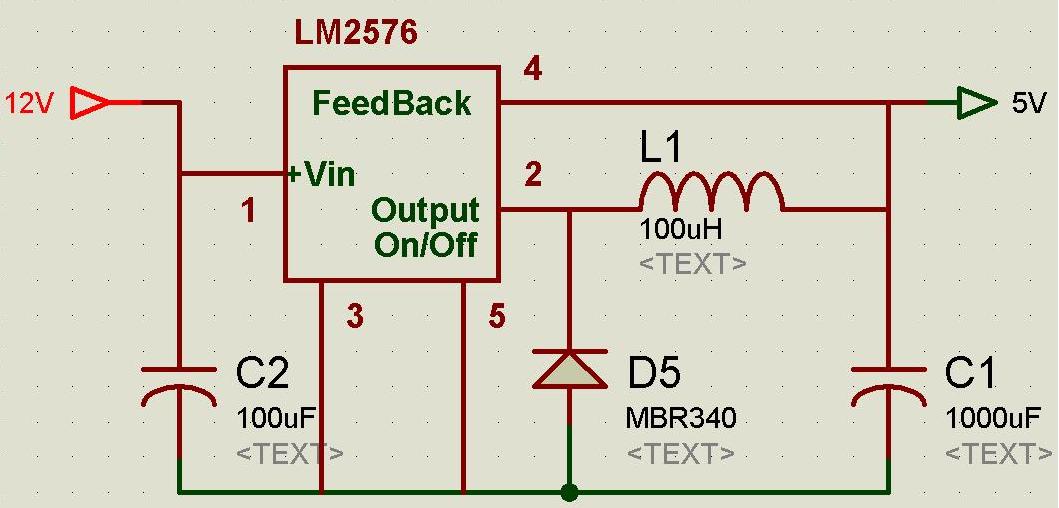
Some Voltage Regulator Ciruits for Microcontroller based Projects
A regulated and noise-free power supply voltage is essential for microcontrollers and other components such as amplifiers, filters, and GPS devices. Voltage surges in the supply voltage can permanently damage embedded systems. A voltage regulator must maintain the output voltage...

the remote intellectual pronunciation anti-theft alarm system design of the one-chip computer
Precautions must be taken against low safety coefficients, as the applicable space for security measures continues to shrink. With advancements in science and technology, innovations such as magnetic door sensors, touch-type systems, radar monitoring, and infrared detection have emerged, leading...

delay
This article outlines the construction of a simple microcontroller-based delay circuit designed for photographic applications, such as drop or high-speed photography. It is capable of controlling the trigger lag for cameras and flash units, generating periodic trigger pulses, or managing...

LV8741V PWM stepping motor driver electronic project circuit design
The circuit diagram illustrates an electronic project that requires a few external electronic components. The PWM current-control stepping motor driver IC can provide a maximum output current of up to 1.5 amperes. The configuration settings for the PWM current-control DC...

PWM tutoria
PWM circuits are versatile. They can be used to dim LEDs, regulate the speed of fans and motors, control the power supplied to thermoelectric coolers, or manage the power to nearly any device. It is essential to ensure that the...

PWM Waveform Capture
The approaches using on-chip A-to-D converters on AVR, PIC, and Cypress controllers reached sample rates of up to about 60 kHz. Not really very useful for the sort of thing I was thinking about using this for: encoded data, radio...

5-motor hexapod circuit
This circuit has a long history, originating from an idea by Rich Piotter and later refined by Wilf Rigter and Bruce Robinson. The final result does not include the necessary motor drivers, which are typically H-bridge based, but presents a...