


simple 12db/octave filter
#LM13700
#filter
#op-amp
#audio
#9V
#battery powered
#cut-off control
#resonance control
#self-oscillating
#Penfold design

Description: This is a 9V DC powered LM13700 dual transconductance operational amplifier-based filter, highly suitable for battery-powered circuits. The design is adapted from an article by R. A. Penfold for Maplin magazine, incorporating manual filter cut-off and resonance control. At high resonance settings (i.e., when the resistance of VR2 is low), the filter self-oscillates and can function as a basic voltage-controlled oscillator (VCO). This filter is noted for its excellent sound quality, with a resonance peak that emphasizes the cut-off frequency and allows oscillation at both low and high frequencies. The schematic has been updated (May 2011) to include input and output connections, as well as R20, C7, and D1 (a Zener diode), which are only required if powering a 3V audio toy from this circuit (e.g., a Buddha Machine or Gristleism), ensuring safe operation from a 9V PP3 battery.
The LM13700 dual transconductance operational amplifier is central to this filter's design, offering high performance in audio applications. The filter circuit utilizes two operational amplifiers from the LM13700, configured to create a low-pass filter with adjustable cut-off frequency and resonance. The manual control of the cut-off frequency is achieved through a variable resistor (VR1), allowing for real-time adjustments based on the user's requirements. The resonance control is facilitated by another variable resistor (VR2), which influences the feedback loop gain and introduces the self-oscillation characteristic at certain settings.
The self-oscillation feature enables the filter to produce audio signals that can be used creatively in various sound synthesis applications. When VR2 is set to a low resistance value, the filter can resonate, producing a sine wave output, which can be utilized as a basic VCO. This versatility makes it ideal for integration into modular synthesizers or other electronic music devices.
The addition of R20, C7, and D1 is crucial for circuits intended to power lower voltage devices, such as 3V audio toys. The Zener diode (D1) serves as a voltage regulator, ensuring that the output voltage remains stable and within safe limits for sensitive components. The overall design emphasizes simplicity and effectiveness, making it an excellent choice for hobbyists and professionals looking for a reliable and high-quality filter solution powered by a standard 9V battery.
In summary, this LM13700-based filter circuit offers a flexible and high-quality audio processing solution, suitable for various applications, particularly in battery-operated devices. Its ability to self-oscillate and produce a range of frequencies enhances its functionality, making it a valuable tool in sound design and synthesis.This is a 9vdc powered LM13700 dual transconductance op-amp based filter very suitable for battery powered circuits. The design is based on an article by R. A. Penfold for maplin magazine but i have adapted the schematic to have manual filter cut-off and Resonance control.
The filter self oscillates at high resonance settings (I. E the resistance of VR2 is low) and so can be used used as a basic Voltage controlled oscillator (VCO). This is probably the best sounding simple 9vdc powered filter there is, the resonance peak gives well emphasised cut-off frequency and can oscillates at low and high frequencies. I Have updated the schematic (may-2011) showing the input and output also R20, C7and D1 (zenner didoe) are only needed if you are powering a 3v audio toy from this circuit I.
E you can power a buddha machine or gristleism etc safly from the 9V pp3 battery.
The LM13700 dual transconductance operational amplifier is central to this filter's design, offering high performance in audio applications. The filter circuit utilizes two operational amplifiers from the LM13700, configured to create a low-pass filter with adjustable cut-off frequency and resonance. The manual control of the cut-off frequency is achieved through a variable resistor (VR1), allowing for real-time adjustments based on the user's requirements. The resonance control is facilitated by another variable resistor (VR2), which influences the feedback loop gain and introduces the self-oscillation characteristic at certain settings.
The self-oscillation feature enables the filter to produce audio signals that can be used creatively in various sound synthesis applications. When VR2 is set to a low resistance value, the filter can resonate, producing a sine wave output, which can be utilized as a basic VCO. This versatility makes it ideal for integration into modular synthesizers or other electronic music devices.
The addition of R20, C7, and D1 is crucial for circuits intended to power lower voltage devices, such as 3V audio toys. The Zener diode (D1) serves as a voltage regulator, ensuring that the output voltage remains stable and within safe limits for sensitive components. The overall design emphasizes simplicity and effectiveness, making it an excellent choice for hobbyists and professionals looking for a reliable and high-quality filter solution powered by a standard 9V battery.
In summary, this LM13700-based filter circuit offers a flexible and high-quality audio processing solution, suitable for various applications, particularly in battery-operated devices. Its ability to self-oscillate and produce a range of frequencies enhances its functionality, making it a valuable tool in sound design and synthesis.This is a 9vdc powered LM13700 dual transconductance op-amp based filter very suitable for battery powered circuits. The design is based on an article by R. A. Penfold for maplin magazine but i have adapted the schematic to have manual filter cut-off and Resonance control.
The filter self oscillates at high resonance settings (I. E the resistance of VR2 is low) and so can be used used as a basic Voltage controlled oscillator (VCO). This is probably the best sounding simple 9vdc powered filter there is, the resonance peak gives well emphasised cut-off frequency and can oscillates at low and high frequencies. I Have updated the schematic (may-2011) showing the input and output also R20, C7and D1 (zenner didoe) are only needed if you are powering a 3v audio toy from this circuit I.
E you can power a buddha machine or gristleism etc safly from the 9V pp3 battery.

Bi-Stable Multivibrator (RS Flip-FLop) with Op-Amp
This bi-stable circuit utilizes an operational amplifier and functions similarly to an RS flip-flop. A bi-stable circuit is characterized by having two stable states: low and high, remaining in the low state until it is set to high.
The bi-stable circuit...
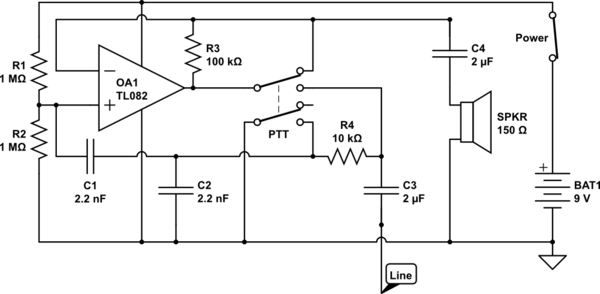
op amp Could someone help me understand this simple circuit
The circuit operates in receive mode, with the Push-To-Talk (PTT) switch enabling transmit mode. The speaker functions as both a microphone and a speaker. Most systems observed utilize a rocking armature transducer for the speaker. There is no base station...

OpAmp based Voltage Translator Ciruit for ADC of Micro-controller
All naturally occurring phenomena such as sound, temperature, and pressure are analog in nature. To enable a microcontroller to read analog signals for the analog-to-digital conversion process using a built-in analog-to-digital converter (ADC), it is essential to condition the analog...

Simple audio amplifier LM307 A741
The simple audio amplifier circuit is illustrated in the figure. Utilizing an integrated op-amp configuration, this audio amplifier is stable and allows for easy negative feedback, facilitating the achievement of equalization characteristics. Additionally, the crosstalk between channels is minimal, making...
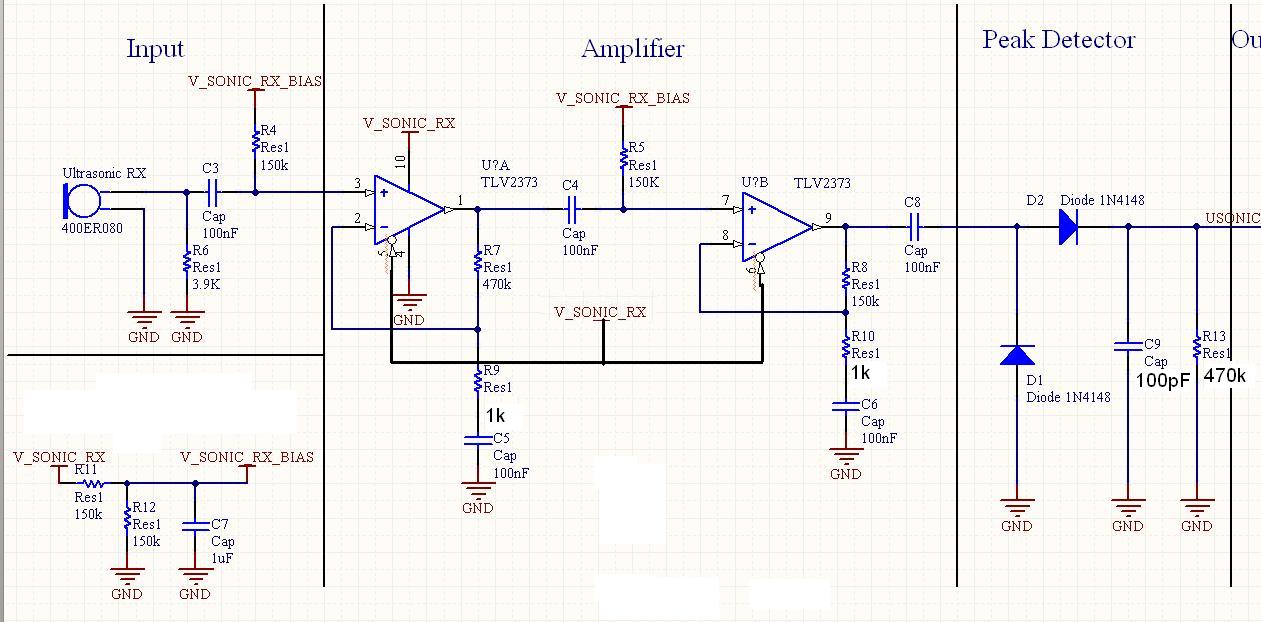
Precision Amplifiers
It has been mentioned that the operational amplifier (op amp) in the second stage may be damaged. Confirmation is requested by testing the op amp in a buffer configuration or any simple configuration. This test is necessary to ascertain whether...

Unity gain Inverter amplifier circuit
The circuit comprises a low drift LT1012 device and a high-speed amplifier LT1022. It functions as a unity gain inverter, with the summing node located at the junction of three 10k ohm resistors. The circuit monitors the summing node of...

Audio MP3 Car Amplifier Schematic Circuits 150W
These accessories are low-cost, high-speed, bifet-input operational amplifiers utilizing internally compensated voltage (BI-FET II technology). They require low supply voltages while offering a wide gain bandwidth product and fast slew rate. Additionally, well-matched high voltage JFET input devices accommodate very...

Linear-ic-siren
A low-frequency op-amp oscillator and a voltage-controlled oscillator (VCO), both configured using a single MC3405 dual op-amp and dual comparator, are the primary components in a siren circuit capable of producing various warbles and wails, or functioning as an audio...
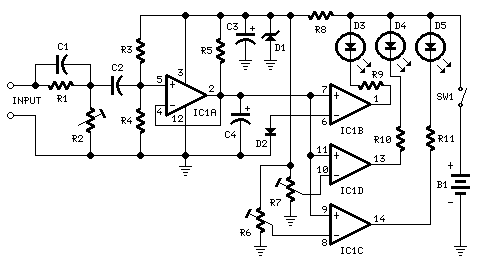
Three-Level Audio Power Indicators
This circuit indicates audio output power using three LEDs. It serves as a useful addition to an amplifier.
The audio output power indicator circuit is designed to visually represent the power level of an audio amplifier through the use of three...