


Using OP37 preamp
#OP37
#preamp
#NE5534
#integrated circuit
#amplifier
#audio
#signal processing
#low noise
#high performance

Description: Figure 3 illustrates a circuit featuring the OP37, which is a multi-preamplifier configuration. The OP37 offers superior performance compared to the NE5534 integrated operational amplifier, as indicated in Table 3-3, which contrasts the parameters of both circuits. The table shows that the OP37 has a higher conversion rate, greater open-loop gain, lower noise voltage, and a higher common-mode rejection ratio. This operational amplifier is part of an electromagnetic phono input equalization circuit that adheres to RIAA standards. The design includes line amplifiers suitable for use with players, tape recorders, microphones, and line inputs, selectable via the input switch SA. The circuit, comprising IC3 and the resistors RP2 to RP4, along with an associated resistor-capacitor network, implements high, medium, and bass tone control. A 15V power supply circuit utilizes a symmetrical positive and negative power supply to enhance circuit performance. High-quality RC components are employed to ensure the technical specifications are met.
The OP37 operational amplifier is recognized for its high-performance characteristics, making it an ideal choice for audio applications that require precision and fidelity. The multi-preamplifier setup enhances the signal integrity, allowing for effective amplification of weak audio signals from various sources such as turntables, microphones, and tape recorders.
The tone control section, which is critical for tailoring the audio output to suit different listening environments and preferences, is achieved through a well-designed resistor-capacitor network. This network allows for independent adjustment of high, medium, and low frequencies, ensuring that the audio output can be finely tuned.
The symmetrical power supply circuit provides stable voltage levels necessary for the proper functioning of the OP37 and other components in the circuit. This configuration not only minimizes noise but also enhances the overall performance of the audio equipment by ensuring that the operational amplifiers operate within their optimal voltage range.
The use of high-quality RC components is essential in maintaining low noise levels and achieving high fidelity in audio applications. These components are selected based on their specifications to ensure that they meet the rigorous demands of audio signal processing, thus contributing to the overall reliability and performance of the circuit.
In summary, the circuit design leveraging the OP37 operational amplifier, along with its associated components and power supply configuration, exemplifies a robust solution for high-quality audio amplification and processing, adhering to established standards and ensuring superior audio performance.FIG. 3 a king in Figure 5, the circuit OP37 composed of multi-preamplifier o OP37 is a ratio of better performance NE5534 integrated operational amplifier circuit, Table 3-3 li sts the parameters of contrast between the two. Contrast can be seen from the table, OP37 has a higher conversion rate, a higher open-loop gain, lower noise voltage and higher common mode rejection ratio, is a pun on operational amplifier of the Emperor O Icl composition electromagnetic phono input equalization circuit, it is consistent with RIAA standards. I composed Pakistan line amplifiers, for player, tape recorder, microphone and line input, etc., selected by the input switch SA.
By the IC3 and RP2 ~ RP4 and resistor-capacitor network has formed a high, medium and bass tone control circuit controls. 15V power supply circuit using the symmetrical positive and negative power supply, in order to enhance performance o circuit element circuit using high-quality RC element, in order to ensure its technical indicators.
The OP37 operational amplifier is recognized for its high-performance characteristics, making it an ideal choice for audio applications that require precision and fidelity. The multi-preamplifier setup enhances the signal integrity, allowing for effective amplification of weak audio signals from various sources such as turntables, microphones, and tape recorders.
The tone control section, which is critical for tailoring the audio output to suit different listening environments and preferences, is achieved through a well-designed resistor-capacitor network. This network allows for independent adjustment of high, medium, and low frequencies, ensuring that the audio output can be finely tuned.
The symmetrical power supply circuit provides stable voltage levels necessary for the proper functioning of the OP37 and other components in the circuit. This configuration not only minimizes noise but also enhances the overall performance of the audio equipment by ensuring that the operational amplifiers operate within their optimal voltage range.
The use of high-quality RC components is essential in maintaining low noise levels and achieving high fidelity in audio applications. These components are selected based on their specifications to ensure that they meet the rigorous demands of audio signal processing, thus contributing to the overall reliability and performance of the circuit.
In summary, the circuit design leveraging the OP37 operational amplifier, along with its associated components and power supply configuration, exemplifies a robust solution for high-quality audio amplification and processing, adhering to established standards and ensuring superior audio performance.FIG. 3 a king in Figure 5, the circuit OP37 composed of multi-preamplifier o OP37 is a ratio of better performance NE5534 integrated operational amplifier circuit, Table 3-3 li sts the parameters of contrast between the two. Contrast can be seen from the table, OP37 has a higher conversion rate, a higher open-loop gain, lower noise voltage and higher common mode rejection ratio, is a pun on operational amplifier of the Emperor O Icl composition electromagnetic phono input equalization circuit, it is consistent with RIAA standards. I composed Pakistan line amplifiers, for player, tape recorder, microphone and line input, etc., selected by the input switch SA.
By the IC3 and RP2 ~ RP4 and resistor-capacitor network has formed a high, medium and bass tone control circuit controls. 15V power supply circuit using the symmetrical positive and negative power supply, in order to enhance performance o circuit element circuit using high-quality RC element, in order to ensure its technical indicators.

Simple Hybrid Audio Amplifier
The ongoing debate regarding the superiority of valves versus transistors is not the focus here. However, for those undecided, this simple amplifier serves as an excellent test. It employs a valve as a pre-amplifier and a MOSFET in the output...
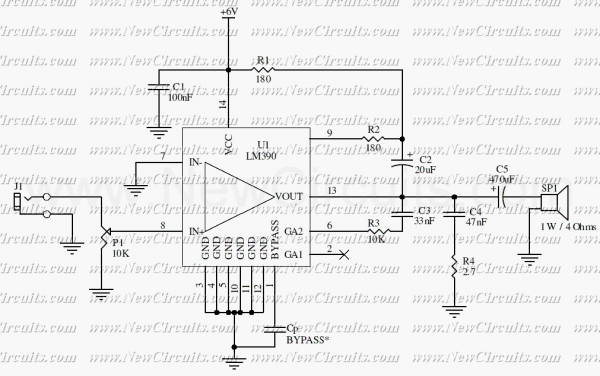
LM390 Bass Amplifier
This circuit is a mono audio amplifier that will boost low frequencies as you see at the frequency response. The circuit is suitable for driving a subwoofer speaker for example. The output power of the circuit is about 1 Watt...
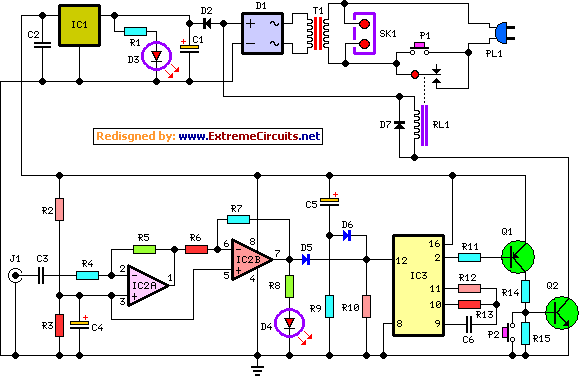
amplifier timer circuit schematic
This circuit deactivates an amplifier or any connected device when a low-level audio signal at its input is absent for at least 15 minutes. By pressing P1, the device is powered on, supplying power to any appliance connected to SK1....

Fast Audio Peak Limiter
The circuit devised by Phil Allison still has some input voltage limitations, since it is based on a FET. Junction FET VCAs also create considerable distortion, with the worst of it appearing when the signal is attenuated by 6dB. The...

Amplifier circuit
An amplifier is a device that accepts a varying input signal and produces an output signal that varies in the same way as the input but has a larger amplitude. The input signal may be a current, voltage, mechanical motion,...

Car stereo amplifier based TDA1535
The provided schematic represents a car stereo amplifier circuit that can be utilized in cars or other vehicles. The circuit is based on the TDA1553, which is a Class-B audio amplifier. This circuit is straightforward, consisting solely of the integrated...

Simple High Quality Preamp For Hi-Fi
Cleaned Input: The preamp featured has optional tone and balance controls which may be omitted if desired. The input switching may be extended if needed to accommodate more signal sources. In this version, no RIAA (phono) input is provided. See...

Automatic Loudness Control circuit
To achieve optimal audio reproduction across various listening levels, it is essential to adjust tone control settings to accommodate the known characteristics of human hearing. Human ear sensitivity changes in a non-linear fashion throughout the audible frequency range, as demonstrated...
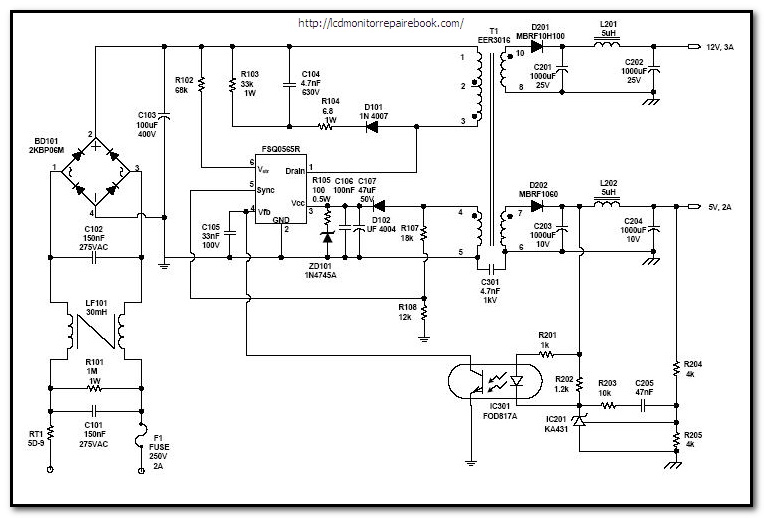
Power Quality for Audio Systems
Power supplies: Linear or SMPS (Switched Mode). A distinction is made between linear and switch mode power supplies. What is the difference? A power supply fundamentally is an...
Power supplies are essential components in electronic circuits, providing the necessary voltage and...