


Efficient-supply-splitter
#voltage splitter
#VL-7660
#charge pump
#bidirectional
#power management
#voltage regulation
#efficiency
#circuit design

Description: In this application, the VL-7660 is configured as a voltage splitter. The normal output pin is connected to ground, while the normal ground pin serves as the output. The switches facilitating charge pumping are bidirectional, allowing for reverse charge transfer. A 1 MΩ resistor is utilized to prevent start-up issues by ensuring the internal regulator remains active. This circuit can be employed to drive low-voltage, ±7.5 V DC circuits from ±15 V DC supplies or to power low-voltage logic from 9 to 12 V batteries.
The VL-7660 is a versatile charge pump voltage converter that can generate negative voltages or split positive voltages effectively. In the described configuration, the device operates by utilizing its internal switching mechanism to alternate between charging and discharging capacitors, which results in voltage inversion or splitting. The connection of the output pin to ground allows the circuit to create a virtual ground at the output, effectively producing a split supply.
The inclusion of a 1 MΩ resistor is critical for stabilizing the circuit during the initial power-up phase. This resistor ensures that the internal regulator of the VL-7660 is activated promptly, thereby allowing the charge pump to function correctly from the moment power is applied.
This voltage splitter configuration is particularly useful in applications where low-voltage components require a dual supply derived from a higher voltage source. For instance, circuits that operate at ±7.5 V can be powered efficiently from a ±15 V DC supply, which is common in many analog and digital applications. Additionally, the circuit can accommodate low-voltage logic operations using battery supplies ranging from 9 to 12 V, making it suitable for portable electronic devices.
Overall, the VL-7660 in this voltage splitter setup provides an efficient solution for voltage conversion, offering flexibility and reliability in powering various electronic circuits.In this application, the Vl-7660 is connected as a voltage splitter. Note that the normal output pin is connected to ground and the normal ground pin is used as the output. The switches that allow the charge pumping are bidirectional; therefore, charge transfer can be performed in reverse.
The 1-MO resistor is used to avoid start-up problems by forcing the internal regulator on. An application for this circuit would be driving low-voltage, ± 7.5 Vdc, circuits from ± 15 Vdc supplies, or low-voltage logic from 9 to 12 V batteries.
The VL-7660 is a versatile charge pump voltage converter that can generate negative voltages or split positive voltages effectively. In the described configuration, the device operates by utilizing its internal switching mechanism to alternate between charging and discharging capacitors, which results in voltage inversion or splitting. The connection of the output pin to ground allows the circuit to create a virtual ground at the output, effectively producing a split supply.
The inclusion of a 1 MΩ resistor is critical for stabilizing the circuit during the initial power-up phase. This resistor ensures that the internal regulator of the VL-7660 is activated promptly, thereby allowing the charge pump to function correctly from the moment power is applied.
This voltage splitter configuration is particularly useful in applications where low-voltage components require a dual supply derived from a higher voltage source. For instance, circuits that operate at ±7.5 V can be powered efficiently from a ±15 V DC supply, which is common in many analog and digital applications. Additionally, the circuit can accommodate low-voltage logic operations using battery supplies ranging from 9 to 12 V, making it suitable for portable electronic devices.
Overall, the VL-7660 in this voltage splitter setup provides an efficient solution for voltage conversion, offering flexibility and reliability in powering various electronic circuits.In this application, the Vl-7660 is connected as a voltage splitter. Note that the normal output pin is connected to ground and the normal ground pin is used as the output. The switches that allow the charge pumping are bidirectional; therefore, charge transfer can be performed in reverse.
The 1-MO resistor is used to avoid start-up problems by forcing the internal regulator on. An application for this circuit would be driving low-voltage, ± 7.5 Vdc, circuits from ± 15 Vdc supplies, or low-voltage logic from 9 to 12 V batteries.

Bidirectional-intercom-system
This system utilizes p.A759 audio IC devices and a shared connection between the preamplifiers as an interconnect. Either microphone can drive either speaker. Duplex operation is achievable with a single cable consisting of two wires.
The system design incorporates the p.A759...
protected
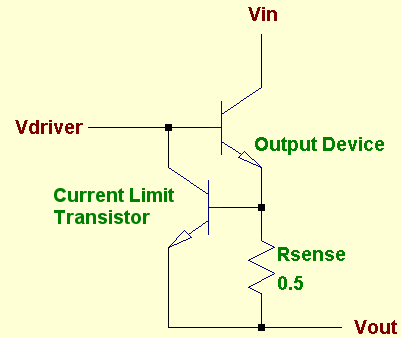
A voltage regulator is designed to provide a fixed voltage to any load. This inherently means it must supply the necessary current through that load to satisfy Ohm's Law, I = V/R. As the resistance (R) approaches zero, such as...

Variable Voltage Regulation
Controlling the output voltage from a regulator can be made variable in three ways:
1. Using a fixed reference zener diode to increase the output by the value of the zener
2. A variable resistor for variable output, note that...

Supply-voltage-splitter
This simple circuit can convert a single supply voltage, such as a battery, into a bipolar supply. Sense resistors R1 and R2 establish relative magnitudes for the resulting positive and negative voltages. Their rail-to-rail value equals V_SUPPLY. Resistors R4 and...
Regulated 12 Volt Supply
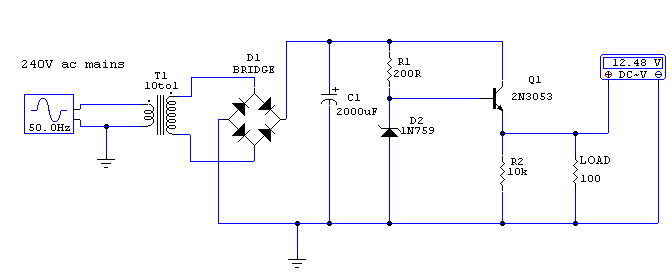
This circuit utilizes a 13-volt zener diode (D2) for voltage regulation. Approximately 0.7 volts are dropped across the base-emitter junction of the transistors, resulting in a higher current output of 12.3 volts. The circuit is capable of supplying loads up...
Power Management
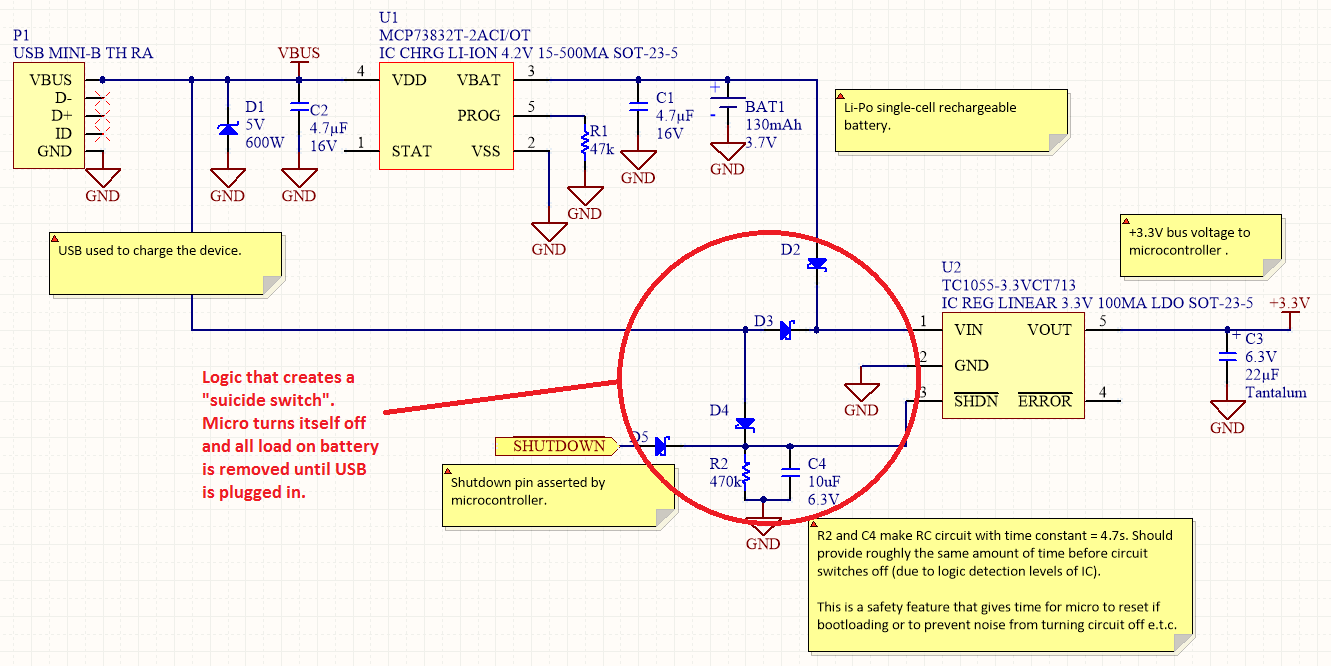
Overview Disabling Sections of a Circuit The "Suicide Switch" Overview Power management is a significant design consideration for battery-powered devices.
Power management is a crucial aspect of circuit design, particularly in battery-powered applications where energy efficiency directly impacts the operational lifespan...

Electronic Projects
This program includes circuit design CAD, simulation, and auto-routing PC layout. PSPICE is also utilized at Unisys, which offers more capabilities but costs six times as much and requires annual renewal. With these requirements and others in mind, a variation...
Simple Pre-Regulator
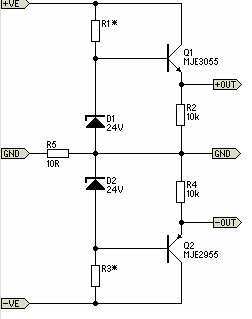
There will be many occasions when it is beneficial to utilize the P05 supply module sourced from a higher voltage supply. For instance, this could be advantageous when integrating balanced inputs.
The P05 supply module is designed to facilitate the conversion...

Variable Voltage and Current Power Supply circuit
An alternative approach to utilizing operational amplifiers (op-amps) for power supply regulation is presented. This method necessitates an additional winding on the power transformer to provide the op-amps with a bipolar voltage of +/- 8 volts. The negative voltage generated...