


Switch For Switch-Free Power Supplies
#mains power
#portable electronics
#switch-free
#CD-players
#cassette recorders
#portable radios
#power management
#battery operation
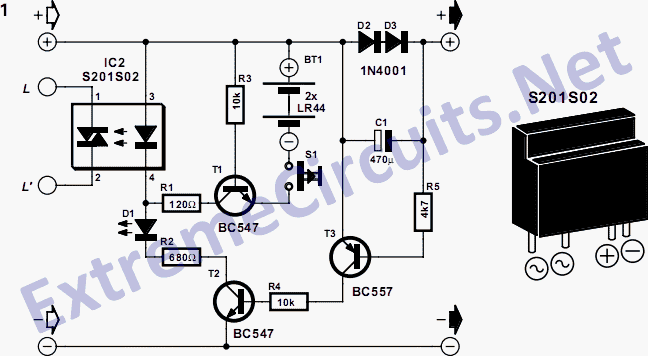
Description: Portable radios, CD players, and cassette recorders that can also be operated from mains power often do not have a mains power switch, but instead are switched on and off using a different mechanism.
Portable audio devices such as radios, CD players, and cassette recorders designed for dual power operation—both battery and mains—often omit a dedicated mains power switch. This design choice is primarily due to the convenience factor, allowing users to seamlessly transition between power sources without the need for manual switching. Instead, these devices typically incorporate a power management system that automatically detects the power source.
In these devices, the power supply circuit includes a rectifier and a voltage regulator that convert the mains AC voltage to the appropriate DC voltage required by the internal circuitry. When the device is connected to mains power, the power management circuitry automatically engages, providing power to the device and charging any internal batteries if applicable. Conversely, when the mains power is disconnected, the device switches to battery operation, ensuring uninterrupted function.
The absence of a traditional mains power switch can lead to a more compact design, reducing the overall size and complexity of the device. However, it is essential to implement adequate safety measures to prevent electrical hazards, such as incorporating fuses and surge protection elements. Additionally, the design must ensure that the transition between power sources is smooth, preventing any audio disruption or damage to the internal components.
Overall, the integration of a power management system in portable audio devices enhances user convenience while maintaining functionality and safety.Portable radios, CD-players and cassette recorders that can also be operated from mains power often do not have a mains power switch, but instead are swit..
Portable audio devices such as radios, CD players, and cassette recorders designed for dual power operation—both battery and mains—often omit a dedicated mains power switch. This design choice is primarily due to the convenience factor, allowing users to seamlessly transition between power sources without the need for manual switching. Instead, these devices typically incorporate a power management system that automatically detects the power source.
In these devices, the power supply circuit includes a rectifier and a voltage regulator that convert the mains AC voltage to the appropriate DC voltage required by the internal circuitry. When the device is connected to mains power, the power management circuitry automatically engages, providing power to the device and charging any internal batteries if applicable. Conversely, when the mains power is disconnected, the device switches to battery operation, ensuring uninterrupted function.
The absence of a traditional mains power switch can lead to a more compact design, reducing the overall size and complexity of the device. However, it is essential to implement adequate safety measures to prevent electrical hazards, such as incorporating fuses and surge protection elements. Additionally, the design must ensure that the transition between power sources is smooth, preventing any audio disruption or damage to the internal components.
Overall, the integration of a power management system in portable audio devices enhances user convenience while maintaining functionality and safety.Portable radios, CD-players and cassette recorders that can also be operated from mains power often do not have a mains power switch, but instead are swit..

smart amp delay
This system is designed as a Windows service that detects various power events, including Suspend, Hibernate, Reboot, and Shutdown. It can send appropriate responses to a control circuit, specifically a Heartbeat or Kill signal. The trigger mechanism is also regulated...

Power Path Management Battery Charger
Powering the system is required by many applications while charging the battery simultaneously. Interaction between the system and charger may result in a...
Power management in electronic systems is critical, particularly in applications that necessitate simultaneous operation and battery charging. This...
Power Path Management Battery Charger
Powering the system is required by many applications while charging the battery simultaneously. Interaction between the system and charger may result in a...
Power management in electronic systems is critical, particularly in applications that necessitate simultaneous operation and battery charging. This...
Power Management
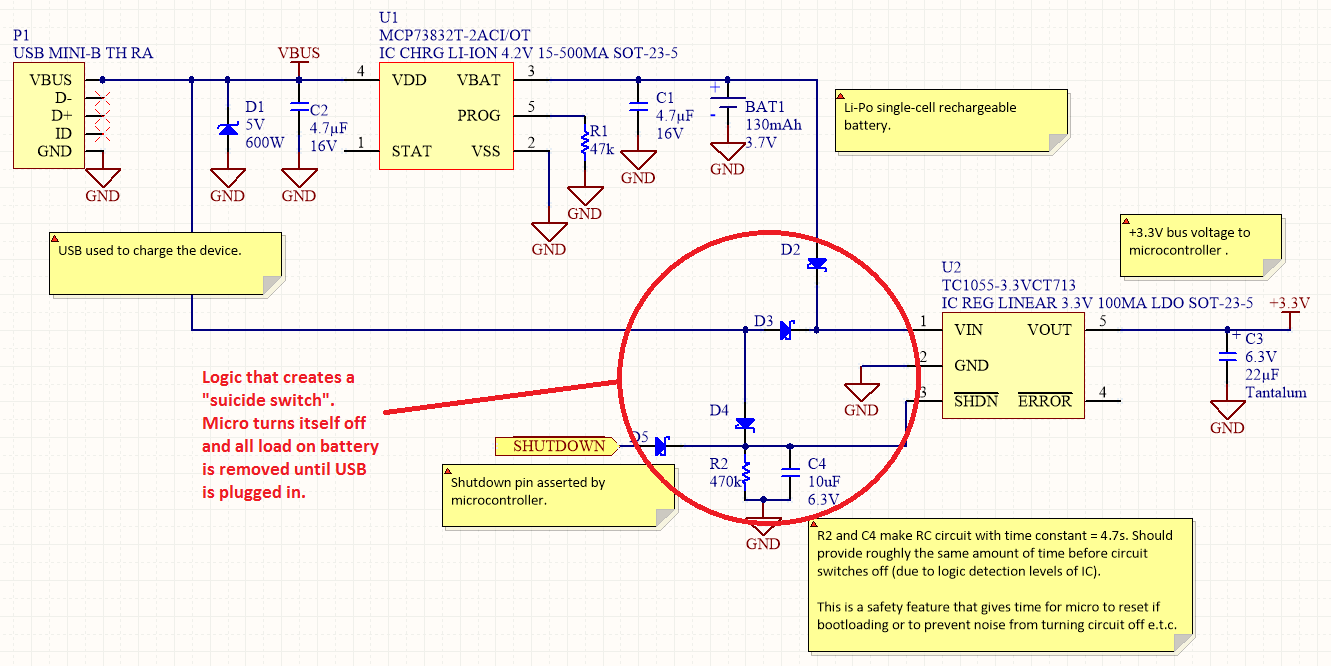
Overview Disabling Sections of a Circuit The "Suicide Switch" Overview Power management is a significant design consideration for battery-powered devices.
Power management is a crucial aspect of circuit design, particularly in battery-powered applications where energy efficiency directly impacts the operational lifespan...

Control a processor`s power supply in real time
In battery-powered applications in which power management is key, a microprocessor may adjust its core voltage corresponding to an increase or a decrease in clock speed, allowing full processing power when necessary but not wasting excess power when idle. The...
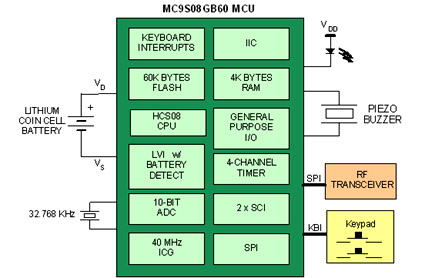
How to extend the battery life of your microcontroller based design
Battery-powered devices, such as electric toothbrushes, shavers, cell phones, PDAs, MP3 players, and remote controls, are integral to daily life. Consequently, power management has become a critical consideration for embedded designers. Microcontrollers (MCUs) provide various methods for managing power requirements...

Computer Off Switch
How often does it happen that a user shuts down Windows and then forgets to turn off the computer? This circuit automates that process. After Windows is shut down, a click occurs a second later, disconnecting the PC from the...

Mains Manager
It is common to forget to turn off peripherals such as monitors, scanners, and printers when shutting down a PC. Typically, these devices are connected to a four-way trailing socket, which is plugged into a wall outlet. If this outlet...

A Power Management Interface Circuit For Telecom Hot Swap With Local Dc/dc Conve
New cellular phones have incorporated high-resolution cameras that require bright illumination of the surrounding area to achieve high-quality pictures. Traditional xenon-filled photo flashes cannot be used due to the limited space available in cellular phone cameras. Instead, design engineers utilize...