


High power Valve Russian Jammers

Description: These photos were made in the years 1956 and 1957. On photo nr. 3, on the right, at the bottom, is the GMD. The work that was done at the objekt was of course top secret. It was strictly forbidden to talk to any acquaintance or relative about the work. Needless to say, photographing the objekt was just as strictly forbidden. Getting caught could have brought with it a 25 year prison sentence. Nevertheless, we took pictures, talked about our work, and sometimes, at night, even brought in friends to show them the jammers. No one got caught. More: When it comes to jamming though, we are quite plainly second division when compared to the world masters, the former Soviet Union.
Our friends in former Soviet Republics have quite kindly emailed the following material, for which we are most grateful!
This article deals with events which occurred in the Soviet Union after World War II. The Iron Curtain had been lowered. The peoples trapped in the Soviet Union were not to get any kind of information from abroad. The Communists were able to prevent people from moving through the Iron Curtain. But radio waves did not succumb to their regulations and penetrated the Curtain. This was a source of serious worry for the authorities what would happen, now that info was coming in!? Something had to be done. And a solution was found. Communists have always been frightened by radio receivers and photo cameras. If the taking of photos was always feared and forbidden, then the situation with listening to the radio was a bit different. In 1940-1941 it was forbidden, and radio receivers were confiscated. Later, radios were permitted. But in 1950-1951, the Soviets began to use special radio transmitters to jam the broadcasts which penetrated the USSR from abroad, in the languages of the nations which were trapped in the Soviet Union. A special network of radio transmitters was constructed all over the Soviet Union for this very purpose. Jamming was done in the whole spectrum of broadcasting wavelengths, from long waves to short waves 13th meter. We know that jammers existed also in the people’s democracies”, but we don’t have any information about them. The jammers not only covered the nation which they were meant for, but their effect could be felt even in Europe, beyond the Iron Curtain (what insolence!). Just recently, a traveller from Germany told me how their short waves used to be full of the clutter from Russian jamming transmitters. But now their airwaves are clean. One means of preventing the listening of foreign broadcasts was to limit the number of short wave bands that radio receivers could pick up. Radio receivers manufactured in the Soviet Union lacked part of the shortwave spectrum. They could not pick up the short waves used for transmitting during the day. If there are 8 shortwave transmission bands
11 13 16 19 25 31 41 49 m 25 21 18 15 12 9 7 6 MHz
and the most commonly used ones are 16-49m, then Soviet radio receivers could pick up only shortwave bands 25-49m. The following article gives a picture of how radio broadcasts were jammed in Estonia during the Soviet era. A similar system functioned throughout the USSR.
The Soviet jamming system employed a network of strategically placed radio transmitters designed to disrupt foreign broadcasts. These transmitters operated across a wide range of frequencies, specifically targeting the wavelengths utilized by Western radio stations. The jamming spectrum extended from longwave frequencies to shortwave bands, effectively covering the 11m to 49m range, with specific emphasis on the 25m to 49m bands. This was a calculated strategy to limit the availability of information to the populace and maintain control over the narrative disseminated within the Soviet Union.
The jammers functioned by emitting signals that overlapped with those of the intended broadcasts, creating a cacophony that rendered the original transmissions unintelligible. This method was particularly effective in densely populated areas where the jamming signals could be amplified by urban structures. The technology involved in these jammers included high-power transmitters capable of broadcasting over long distances, ensuring that the jamming effect could reach not only the intended domestic audience but also extend beyond the borders of the Soviet Union, impacting listeners in nearby countries.
Moreover, the design of Soviet radio receivers was deliberately limited to restrict access to certain frequencies, thereby minimizing the potential for citizens to receive foreign broadcasts. By omitting specific shortwave bands, the government ensured that the majority of the population could only access state-sanctioned information, further entrenching the regime's control over communication channels.
In summary, the jamming operations conducted by the Soviet Union were a sophisticated blend of technology and psychological warfare, aimed at suppressing dissent and controlling the flow of information. The extensive network of jammers and the strategic design of radio receivers exemplified the lengths to which the regime would go to maintain its grip on power and prevent the infiltration of foreign ideas and influences.These photos were made in the years 1956 and 1957. On photo nr. 3, on the right, at the bottom, is the GMD. The work that was done at the objekt was of course top secret. It was strictly forbidden to talk to any acquaintance or relative about the work. Needless to say, photographing the objekt was just as strictly forbidden. Getting caught could have brought with it a 25 year prison sentence. Nevertheless, we took pictures, talked about our work, and sometimes, at night, even brought in friends to show them the jammers. No one got caught. When it comes to jamming though, we are quite plainly second division when compared to the world masters, the former Soviet Union. Our friends in former Soviet Republics have quite kindly emailed the following material, for which we are most grateful!
This article deals with events which occurred in the Soviet Union after World War II. The Iron Curtain had been lowered. The peoples trapped in the Soviet Union were not to get any kind of information from abroad. The Communists were able to prevent people from moving through the Iron Curtain. But radio waves did not succumb to their regulations and penetrated the Curtain. This was a source of serious worry for the authorities what would happen, now that info was coming in!? Something had to be done. And a solution was found. Communists have always been frightened by radio receivers and photo cameras. If the taking of photos was always feared and forbidden, then the situation with listening to the radio was a bit different.
In 1940-1941 it was forbidden, and radio receivers were confiscated. Later, radios were permitted. But in 1950-1951, the Soviets began to use special radio transmitters to jam the broadcasts which penetrated the USSR from abroad, in the languages of the nations which were trapped in the Soviet Union. A special network of radio transmitters was constructed all over the Soviet Union for this very purpose.
Jamming was done in the whole spectrum of broadcasting wavelengths, from long waves to short waves 13th meter. We know that jammers existed also in the people’s democracies”, but we don’t have any information about them.
The jammers not only covered the nation which they were meant for, but their effect could be felt even in Europe, beyond the Iron Curtain (what insolence!). Just recently, a traveller from Germany told me how their short waves used to be full of the clutter from Russian jamming transmitters.
But now their airwaves are clean. One means of preventing the listening of foreign broadcasts was to limit the number of short wave bands that radio receivers could pick up. Radio receivers manufactured in the Soviet Union lacked part of the shortwave spectrum. They could not pick up the short waves used for transmitting during the day. If there are 8 shortwave transmission bands 11 13 16 19 25 31 41 49 m 25 21 18 15 12 9 7 6 MHz and the most commonly used ones are 16-49m, then Soviet radio receivers could pick up only shortwave bands 25-49m.
The following article gives a picture of how radio broadcasts were jammed in Estonia during the Soviet era. A similar system functioned throughout the USSR.
Our friends in former Soviet Republics have quite kindly emailed the following material, for which we are most grateful!
This article deals with events which occurred in the Soviet Union after World War II. The Iron Curtain had been lowered. The peoples trapped in the Soviet Union were not to get any kind of information from abroad. The Communists were able to prevent people from moving through the Iron Curtain. But radio waves did not succumb to their regulations and penetrated the Curtain. This was a source of serious worry for the authorities what would happen, now that info was coming in!? Something had to be done. And a solution was found. Communists have always been frightened by radio receivers and photo cameras. If the taking of photos was always feared and forbidden, then the situation with listening to the radio was a bit different. In 1940-1941 it was forbidden, and radio receivers were confiscated. Later, radios were permitted. But in 1950-1951, the Soviets began to use special radio transmitters to jam the broadcasts which penetrated the USSR from abroad, in the languages of the nations which were trapped in the Soviet Union. A special network of radio transmitters was constructed all over the Soviet Union for this very purpose. Jamming was done in the whole spectrum of broadcasting wavelengths, from long waves to short waves 13th meter. We know that jammers existed also in the people’s democracies”, but we don’t have any information about them. The jammers not only covered the nation which they were meant for, but their effect could be felt even in Europe, beyond the Iron Curtain (what insolence!). Just recently, a traveller from Germany told me how their short waves used to be full of the clutter from Russian jamming transmitters. But now their airwaves are clean. One means of preventing the listening of foreign broadcasts was to limit the number of short wave bands that radio receivers could pick up. Radio receivers manufactured in the Soviet Union lacked part of the shortwave spectrum. They could not pick up the short waves used for transmitting during the day. If there are 8 shortwave transmission bands
11 13 16 19 25 31 41 49 m 25 21 18 15 12 9 7 6 MHz
and the most commonly used ones are 16-49m, then Soviet radio receivers could pick up only shortwave bands 25-49m. The following article gives a picture of how radio broadcasts were jammed in Estonia during the Soviet era. A similar system functioned throughout the USSR.
The Soviet jamming system employed a network of strategically placed radio transmitters designed to disrupt foreign broadcasts. These transmitters operated across a wide range of frequencies, specifically targeting the wavelengths utilized by Western radio stations. The jamming spectrum extended from longwave frequencies to shortwave bands, effectively covering the 11m to 49m range, with specific emphasis on the 25m to 49m bands. This was a calculated strategy to limit the availability of information to the populace and maintain control over the narrative disseminated within the Soviet Union.
The jammers functioned by emitting signals that overlapped with those of the intended broadcasts, creating a cacophony that rendered the original transmissions unintelligible. This method was particularly effective in densely populated areas where the jamming signals could be amplified by urban structures. The technology involved in these jammers included high-power transmitters capable of broadcasting over long distances, ensuring that the jamming effect could reach not only the intended domestic audience but also extend beyond the borders of the Soviet Union, impacting listeners in nearby countries.
Moreover, the design of Soviet radio receivers was deliberately limited to restrict access to certain frequencies, thereby minimizing the potential for citizens to receive foreign broadcasts. By omitting specific shortwave bands, the government ensured that the majority of the population could only access state-sanctioned information, further entrenching the regime's control over communication channels.
In summary, the jamming operations conducted by the Soviet Union were a sophisticated blend of technology and psychological warfare, aimed at suppressing dissent and controlling the flow of information. The extensive network of jammers and the strategic design of radio receivers exemplified the lengths to which the regime would go to maintain its grip on power and prevent the infiltration of foreign ideas and influences.These photos were made in the years 1956 and 1957. On photo nr. 3, on the right, at the bottom, is the GMD. The work that was done at the objekt was of course top secret. It was strictly forbidden to talk to any acquaintance or relative about the work. Needless to say, photographing the objekt was just as strictly forbidden. Getting caught could have brought with it a 25 year prison sentence. Nevertheless, we took pictures, talked about our work, and sometimes, at night, even brought in friends to show them the jammers. No one got caught. When it comes to jamming though, we are quite plainly second division when compared to the world masters, the former Soviet Union. Our friends in former Soviet Republics have quite kindly emailed the following material, for which we are most grateful!
This article deals with events which occurred in the Soviet Union after World War II. The Iron Curtain had been lowered. The peoples trapped in the Soviet Union were not to get any kind of information from abroad. The Communists were able to prevent people from moving through the Iron Curtain. But radio waves did not succumb to their regulations and penetrated the Curtain. This was a source of serious worry for the authorities what would happen, now that info was coming in!? Something had to be done. And a solution was found. Communists have always been frightened by radio receivers and photo cameras. If the taking of photos was always feared and forbidden, then the situation with listening to the radio was a bit different.
In 1940-1941 it was forbidden, and radio receivers were confiscated. Later, radios were permitted. But in 1950-1951, the Soviets began to use special radio transmitters to jam the broadcasts which penetrated the USSR from abroad, in the languages of the nations which were trapped in the Soviet Union. A special network of radio transmitters was constructed all over the Soviet Union for this very purpose.
Jamming was done in the whole spectrum of broadcasting wavelengths, from long waves to short waves 13th meter. We know that jammers existed also in the people’s democracies”, but we don’t have any information about them.
The jammers not only covered the nation which they were meant for, but their effect could be felt even in Europe, beyond the Iron Curtain (what insolence!). Just recently, a traveller from Germany told me how their short waves used to be full of the clutter from Russian jamming transmitters.
But now their airwaves are clean. One means of preventing the listening of foreign broadcasts was to limit the number of short wave bands that radio receivers could pick up. Radio receivers manufactured in the Soviet Union lacked part of the shortwave spectrum. They could not pick up the short waves used for transmitting during the day. If there are 8 shortwave transmission bands 11 13 16 19 25 31 41 49 m 25 21 18 15 12 9 7 6 MHz and the most commonly used ones are 16-49m, then Soviet radio receivers could pick up only shortwave bands 25-49m.
The following article gives a picture of how radio broadcasts were jammed in Estonia during the Soviet era. A similar system functioned throughout the USSR.

TRF1115 RF Down-Converter
The TRF1400 VHF/UHF RZ ASK remote control receiver is specifically designed for RZ ASK (return-to-zero amplitude-shift keyed) communications systems operating in the 200-MHz to 450-MHz band. This device is targeted for use in automotive and home security systems, garage door...
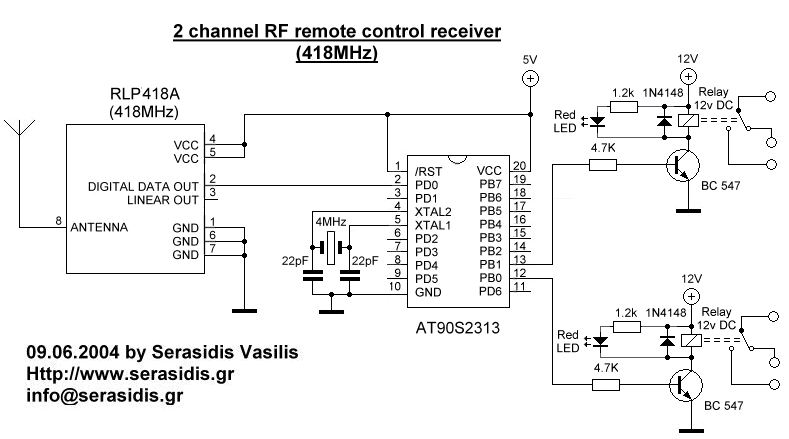
2 channel RF remote control
The basic small-range remote controls are Infrared and RF (Radio Frequency). One of the weaknesses of Infrared is that the signal cannot pass through walls. Therefore, to control a garage door, an RF remote control is necessary. The circuit (transmitter...

Tuned Rf Wavemeter
L1 and L2 form a tuned transformer with an optimum turns ratio of approximately 1:3. L2 and C1 are used to tune to the desired frequency. The frequency range can extend from 10 kHz to over 200 MHz, depending on...

Simple RF Transmitter
This schematic represents a tone transmitter. When using sufficiently small resistor values, it generates a tone. A resistive microphone (such as a carbon microphone) can be placed in parallel with or replace the resistor, allowing modulation of the tone frequency...
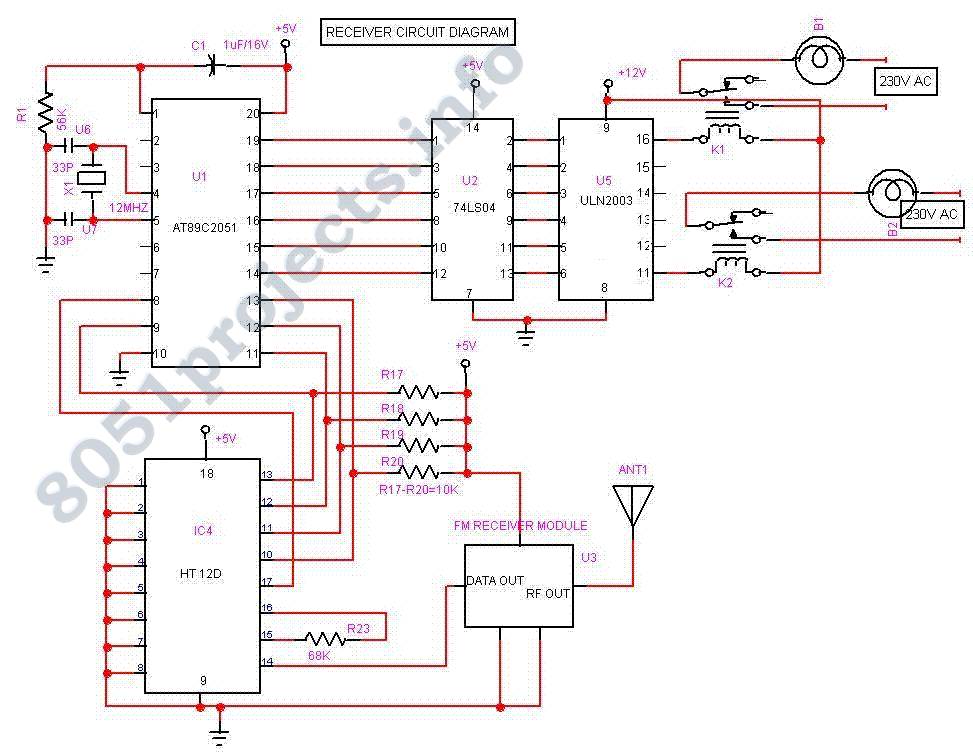
RF Remote control
The Project Long Range Remote Control can be used to remotely control a number of Electrical or Electronic Gadgets connected to it. Unlike Infra Red remote control, this Project employs FM transmission and Reception, and hence it can be used...

Field Strength Meter
This circuit is a wideband signal strength meter designed to respond to small variations in RF energy within the VHF spectrum. It is capable of detecting AM or FM modulation as well as a simple carrier wave. The circuit measures...
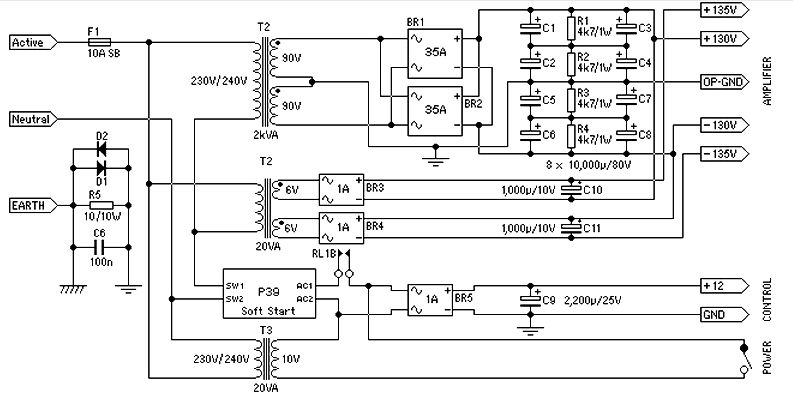
power supply for 1500 watt audio power amplifier
Power supply for a 1500-watt audio power amplifier. This power supply circuit is paired with a high-power audio amplifier rated at 1500 watts. A serious approach is required to design the power supply for the amplifier. First, a step-down transformer...

Grounded Grid Amplifiers
Floating the grid above ground is detrimental for RF performance and arc protection. The connection of the control grid to ground is critical for stability. It is essential to keep the grid connection to ground as wide and short as...

DF data transmission module and the super-regenerative receiver module
The DF data transmission module operates at a frequency of 315 MHz and utilizes a surface acoustic wave (SAW) resonator for frequency stabilization, ensuring high frequency stability. The frequency drift remains minimal, at only 3 x 10^-6, across a temperature...