


Lowpass filter uses only two values
#lowpass filter
#constant-k
#m-derived
#inductors
#capacitors
#highpass filter
#wideband filter
#composite filter
#RF design

Description: The composite lowpass filter uses interior constant-k full sections terminated by m-derived half-sections. The design technique is also applicable to highpass and wideband filters. Figure 1 shows a schematic of the composite lowpass filter. The filter uses four inductors of two different values and five capacitors of two different values. Figure 2 shows the schematic of an equivalent composite lowpass filter. This filter uses judicious combinations of components in series, parallel, and series-parallel. The filter uses eight inductors and 14 capacitors of only one value each.
The composite lowpass filter is a sophisticated electronic circuit designed to allow signals below a certain cutoff frequency to pass while attenuating higher-frequency signals. The architecture of this filter is based on the constant-k design, which employs full sections of the filter that are characterized by a specific transmission line configuration. These sections are then terminated with m-derived half-sections, which enhance the filter's performance by improving its frequency response and minimizing ripple in the passband.
In the design, two distinct values of inductors and capacitors are utilized, which allows for fine-tuning of the filter's characteristics, such as the cutoff frequency and the quality factor (Q). The use of four inductors and five capacitors in the first schematic (Figure 1) indicates a balanced approach to achieving the desired filter response, while the second schematic (Figure 2) demonstrates an alternative design that incorporates eight inductors and 14 capacitors of a single value. This configuration suggests a more complex filter arrangement that could provide sharper roll-off characteristics and improved selectivity.
The combination of series, parallel, and series-parallel connections in the filter design allows for greater flexibility in achieving the desired electrical characteristics. Series connections typically increase the overall impedance, while parallel connections reduce it, allowing for careful manipulation of the filter's input and output characteristics. The judicious selection and arrangement of these components are critical in achieving optimal performance, particularly in applications requiring precise filtering of signal frequencies.
In practical applications, such composite lowpass filters are widely used in communication systems, audio processing, and signal conditioning, where the elimination of unwanted high-frequency noise is essential for maintaining signal integrity. The design techniques employed in these filters can also be adapted for highpass and wideband filters, making them versatile tools in the engineer's arsenal for managing frequency response in various electronic systems.The composite lowpass filter uses interior constant-k full sections terminated by m-derived half-sections.The design technique is also applicable to highpass and wideband filters (references 3 and 4). Figure 1 shows a schematic of the composite lowpass filter. The filter uses four inductors of two different values and five capacitors of two different values. Figure 2 shows the schematic of an equivalent composite lowpass filter. This filter uses judicious combinations of components in series, parallel, and series-parallel. The filter uses eight inductors and 14 capacitors of only one value each.
The composite lowpass filter is a sophisticated electronic circuit designed to allow signals below a certain cutoff frequency to pass while attenuating higher-frequency signals. The architecture of this filter is based on the constant-k design, which employs full sections of the filter that are characterized by a specific transmission line configuration. These sections are then terminated with m-derived half-sections, which enhance the filter's performance by improving its frequency response and minimizing ripple in the passband.
In the design, two distinct values of inductors and capacitors are utilized, which allows for fine-tuning of the filter's characteristics, such as the cutoff frequency and the quality factor (Q). The use of four inductors and five capacitors in the first schematic (Figure 1) indicates a balanced approach to achieving the desired filter response, while the second schematic (Figure 2) demonstrates an alternative design that incorporates eight inductors and 14 capacitors of a single value. This configuration suggests a more complex filter arrangement that could provide sharper roll-off characteristics and improved selectivity.
The combination of series, parallel, and series-parallel connections in the filter design allows for greater flexibility in achieving the desired electrical characteristics. Series connections typically increase the overall impedance, while parallel connections reduce it, allowing for careful manipulation of the filter's input and output characteristics. The judicious selection and arrangement of these components are critical in achieving optimal performance, particularly in applications requiring precise filtering of signal frequencies.
In practical applications, such composite lowpass filters are widely used in communication systems, audio processing, and signal conditioning, where the elimination of unwanted high-frequency noise is essential for maintaining signal integrity. The design techniques employed in these filters can also be adapted for highpass and wideband filters, making them versatile tools in the engineer's arsenal for managing frequency response in various electronic systems.The composite lowpass filter uses interior constant-k full sections terminated by m-derived half-sections.The design technique is also applicable to highpass and wideband filters (references 3 and 4). Figure 1 shows a schematic of the composite lowpass filter. The filter uses four inductors of two different values and five capacitors of two different values. Figure 2 shows the schematic of an equivalent composite lowpass filter. This filter uses judicious combinations of components in series, parallel, and series-parallel. The filter uses eight inductors and 14 capacitors of only one value each.

how to build inexpensive frequency
Capacitors are major electronic components classified as passive components. They are extensively used in electronic circuits, and virtually no circuit can be constructed without these essential parts. The primary function of a capacitor is to block direct current (DC) while...

muRata Manufacturing Measurement-Based SMT Capacitors
The schematic design of the equivalent circuit model for Murata Manufacturing's measurement-based GRH series SMT capacitors is derived from device measurements and modeling conducted by Murata. This model is applicable to capacitors mounted on an FR4 substrate, with constant substrate...

RF Wireless
Complete wireless product development by LS Research, specializing in RF design, WiFi modules, antenna design, Zigbee, Bluetooth, and more.
LS Research offers comprehensive wireless product development services, focusing on various technologies essential for modern communication. The company specializes in radio frequency...

Lowpass filter has improved step response
The circuit in Figure 1 accommodates lower cutoff frequencies without sacrificing the step-response time. A window comparator monitors the delta (difference) between the filter's input and output. When the delta exceeds ±50 mV, the filter increases its slew rate by...

Highpass filters use modified equal-element design
Using a modified equal-element design for a lumped-circuit lowpass filter has several advantages over the well-known equal-element design. The modified design exhibits superior passband performance with only modest degradation of stopband selectivity. Moreover, the modified design is simple and easy...

Brick-wall lowpass audio filter needs no tuning
The filter should provide adjustable gain to maximize SNR at the audio processor's first stage. The filter's frequency response should also include a notch at 19 kHz to achieve maximum attenuation at the FM-subcarrier pilot-tone frequency and thus minimize phasing...

Replacing old capacitors
Original components, when still functional, exhibit stability and are not subject to infant mortality. Individual opinions may vary based on personal experiences. However, responses can differ due to several factors: the quality of the design utilizing appropriate components, the type...
Capacitors
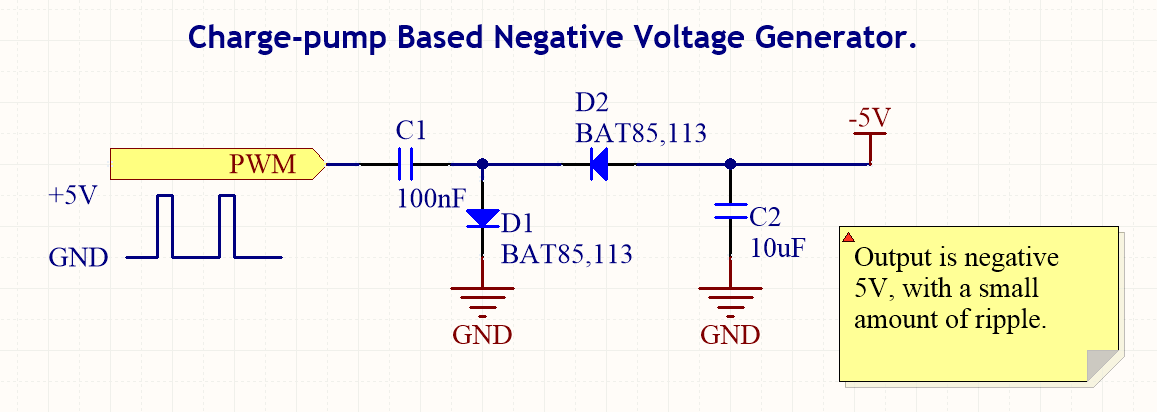
Capacitor types, their uses, formulas for common capacitance calculations, descriptions of charge pumps, information on dielectric soakage, and how to repair.
Capacitors are essential components in electronic circuits, serving various functions depending on their type and application. The primary types of...
Circuit Schematics
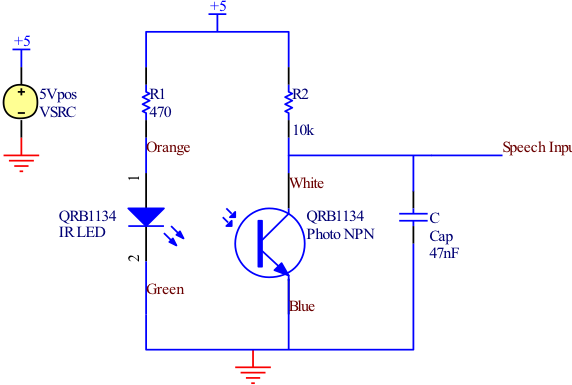
All integrated circuits (ICs) are equipped with a 0.1 µF monolithic ceramic capacitor connected across their terminals. Additionally, each board features two capacitors: a 10 µF tantalum capacitor and a 100 µF electrolytic capacitor. The START BUTTON serves as a...