


Rf-probe
#rf probe
#fiber-optic
#UHF
#envelope-detector
#LF356 op amp
#LED
#optical fiber
#test equipment
#amplification

Description: This RF probe is coupled with a fiber-optic connection to the test equipment. It utilizes inexpensive components to enhance probe performance at UHF frequencies. The receiving antenna in this probe feeds an envelope-detector diode. After amplification by the LF356 operational amplifier, the low-frequency output modulates the LED, which in turn feeds the optical fiber. The design allows for the use of a single battery for the operational amplifier, with voltage splitting achieved through a 1 kΩ potentiometer and miniature 47 µF tantalum capacitors to provide decoupling. The gain control is easily adjustable to optimize the dynamic range for a specific LED.
The RF probe is designed to operate effectively in the UHF frequency range, making it suitable for various applications in telecommunications and testing environments. The coupling with fiber-optic technology ensures minimal signal loss and high fidelity in signal transmission. The receiving antenna is crucial in capturing RF signals, which are then processed by an envelope detector. This diode converts the RF signal into a low-frequency envelope, which is then amplified by the LF356 operational amplifier, known for its low noise and high gain characteristics.
The output from the LF356 op-amp is used to modulate an LED, which acts as the light source for the fiber-optic transmission. The choice of LED is significant as it directly influences the efficiency of light coupling into the fiber. The gain control mechanism, implemented via a 1 kΩ potentiometer, allows for fine-tuning of the amplifier's output, ensuring that the dynamic range is optimized for the specific characteristics of the chosen LED. This adaptability is important for achieving the best performance under varying operational conditions.
Decoupling is achieved using miniature 47 µF tantalum capacitors, which help stabilize the power supply to the op-amp by filtering out noise. The use of a single battery simplifies the power management of the circuit, while the voltage splitting technique ensures that the operational amplifier receives the appropriate voltage levels for optimal performance.
Overall, this RF probe design is a cost-effective solution that leverages simple components to achieve reliable performance in UHF applications, making it an excellent choice for engineers and technicians working in RF testing and measurement.This rf probe is coupled with a fiber-optiCJ:able to the test equipment. It utilizes inexpensive components to improve probe performance at UHF frequencies. The receiving antenna in this probe feeds an envelope-detector diode. After amplification by the LF356 op amp, the low-frequency output modulates the LED, which in tum feeds the optical fiber. The design facilitates the use of a single battery for the op amp, with voltage splitting by means of the 1-K!l potentiometer, and miniature 47-I"F tantalum capacitors to provide decoupling. The gain control is easily adjusted to give the best dynamic range for a specific LED.
The RF probe is designed to operate effectively in the UHF frequency range, making it suitable for various applications in telecommunications and testing environments. The coupling with fiber-optic technology ensures minimal signal loss and high fidelity in signal transmission. The receiving antenna is crucial in capturing RF signals, which are then processed by an envelope detector. This diode converts the RF signal into a low-frequency envelope, which is then amplified by the LF356 operational amplifier, known for its low noise and high gain characteristics.
The output from the LF356 op-amp is used to modulate an LED, which acts as the light source for the fiber-optic transmission. The choice of LED is significant as it directly influences the efficiency of light coupling into the fiber. The gain control mechanism, implemented via a 1 kΩ potentiometer, allows for fine-tuning of the amplifier's output, ensuring that the dynamic range is optimized for the specific characteristics of the chosen LED. This adaptability is important for achieving the best performance under varying operational conditions.
Decoupling is achieved using miniature 47 µF tantalum capacitors, which help stabilize the power supply to the op-amp by filtering out noise. The use of a single battery simplifies the power management of the circuit, while the voltage splitting technique ensures that the operational amplifier receives the appropriate voltage levels for optimal performance.
Overall, this RF probe design is a cost-effective solution that leverages simple components to achieve reliable performance in UHF applications, making it an excellent choice for engineers and technicians working in RF testing and measurement.This rf probe is coupled with a fiber-optiCJ:able to the test equipment. It utilizes inexpensive components to improve probe performance at UHF frequencies. The receiving antenna in this probe feeds an envelope-detector diode. After amplification by the LF356 op amp, the low-frequency output modulates the LED, which in tum feeds the optical fiber. The design facilitates the use of a single battery for the op amp, with voltage splitting by means of the 1-K!l potentiometer, and miniature 47-I"F tantalum capacitors to provide decoupling. The gain control is easily adjusted to give the best dynamic range for a specific LED.
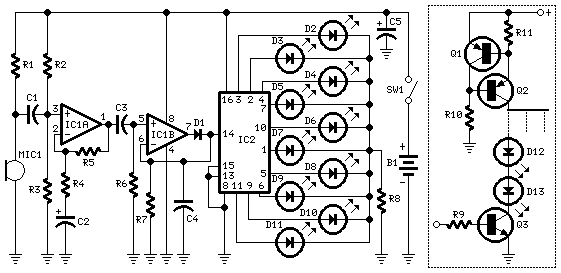
10 Dancing LEDs
The basic circuit illuminates up to ten LEDs in sequence, following the rhythm of music or speech picked up by a small microphone. The expanded version can drive up to ten strips, formed by up to five LEDs each, at...
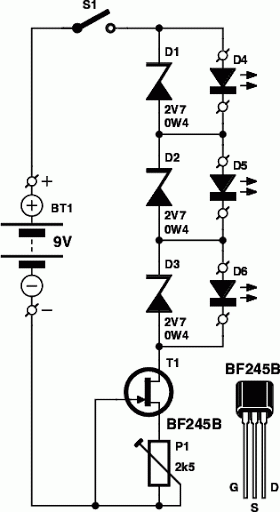
LED TesterCircuit
Before using LEDs, it is advisable to test them. An LED tester allows for testing even in low light conditions. LEDs are available in various shapes and colors, with some featuring clear, colorless packages and others having colored plastic packages....

Multicolor HD LED circuit
Most PC enclosures provide only a single LED to indicate hard disk access, with the LED being connected to the motherboard via a two-pin connector. However, this LED only works with IDE drives, and if a SCSI disk controller is...

LED DRIVER
An input sine wave applied to the left amplifier base results in the collector output fluctuating above or below 6.6 volts. The amplifier amplifies and inverts the signal, maintaining a roughly centered output, thereby minimizing the chances of clipping. The...

AC LED drive circuit
The circuit operates effectively even when the polarity of the voltage or the power supply is reversed. It functions with DC drives similar to AC drives, utilizing a current limiting resistor R. The value of this resistor is determined based...

Scrchaser
Each lamp lights in succession to give the appearance of a growing column.
The described circuit features a sequential lighting system designed to illuminate a series of lamps in a cascading manner, creating the visual effect of a growing column of...

AC-Powered LED
Typically, an LED is powered by a DC supply; however, this circuit enables the LED to be powered by an AC supply. This circuit can serve as a power indicator for a water pump.
The circuit for powering an LED using...

AC Powered 220V Led Circuit
This is a simplified version of a white LED lamp that can be powered directly from the mains. It provides sufficient illumination for reading purposes. Capacitor Cx along...
The circuit for the white LED lamp consists of several key components designed...

Telephone Lamp Circuit
This is a white LED lamp that activates when the telephone rings. The cool white light aids in locating the phone in low-light conditions and assists in managing clutter.
The circuit for the white LED lamp that illuminates upon a telephone...