


IR Remote Control Extender Mark 3
#IR remote
#infrared
#appliance control
#modulated signal
#remote extender
#high frequency
#IR receiver
#IR transmitter
#home automation
#Mark3
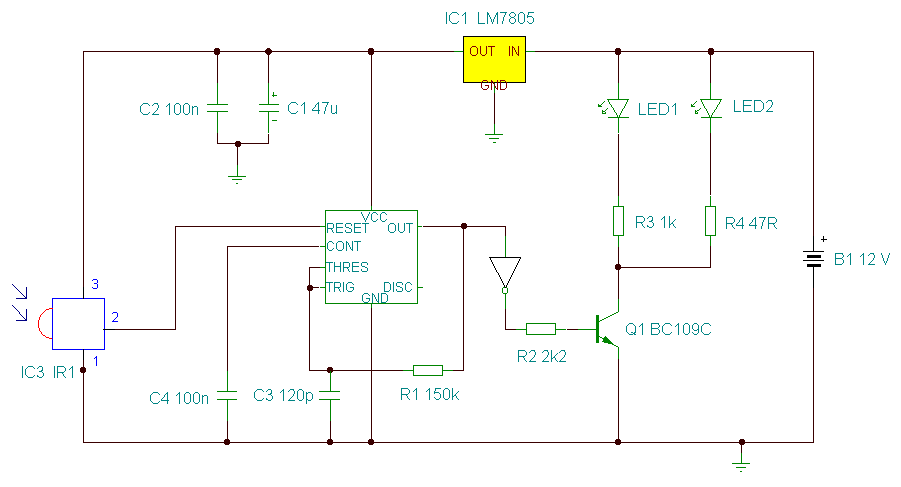
Description: The Mark3 version of the Infrared extender is specifically designed to control appliances that utilize high-frequency modulated infrared remote controls.
The Mark3 Infrared extender serves as a critical component in extending the range and functionality of infrared remote control systems. This device is particularly adept at interfacing with appliances that operate on high-frequency modulated signals, which are commonly found in modern remote controls.
The circuit typically consists of an infrared receiver, which captures the modulated signals emitted from the remote control. This receiver is coupled with a microcontroller or a dedicated signal processing chip that demodulates the received signals, converting them back into a format that the controlled appliance can understand.
The extender may also include a power amplifier to boost the signal strength, allowing for greater transmission distances. Additionally, the design may incorporate features such as adjustable sensitivity settings to accommodate various remote control types and distances, as well as an LED indicator to provide visual feedback when the device is active.
In terms of connectivity, the Mark3 version may offer multiple output options to facilitate connection with different types of appliances, ensuring versatility in its application. The overall design emphasizes reliability and ease of use, making it an essential tool for enhancing the functionality of infrared-controlled devices in both residential and commercial settings.
Proper implementation of this extender can significantly improve the user experience, allowing for seamless control of devices that may otherwise be difficult to operate due to distance or obstacles.This Mark3 version of the Infra Red extender is a special version designed to control appliances that use high frequency modulated IR remote controls..
The Mark3 Infrared extender serves as a critical component in extending the range and functionality of infrared remote control systems. This device is particularly adept at interfacing with appliances that operate on high-frequency modulated signals, which are commonly found in modern remote controls.
The circuit typically consists of an infrared receiver, which captures the modulated signals emitted from the remote control. This receiver is coupled with a microcontroller or a dedicated signal processing chip that demodulates the received signals, converting them back into a format that the controlled appliance can understand.
The extender may also include a power amplifier to boost the signal strength, allowing for greater transmission distances. Additionally, the design may incorporate features such as adjustable sensitivity settings to accommodate various remote control types and distances, as well as an LED indicator to provide visual feedback when the device is active.
In terms of connectivity, the Mark3 version may offer multiple output options to facilitate connection with different types of appliances, ensuring versatility in its application. The overall design emphasizes reliability and ease of use, making it an essential tool for enhancing the functionality of infrared-controlled devices in both residential and commercial settings.
Proper implementation of this extender can significantly improve the user experience, allowing for seamless control of devices that may otherwise be difficult to operate due to distance or obstacles.This Mark3 version of the Infra Red extender is a special version designed to control appliances that use high frequency modulated IR remote controls..

Infrared Remote Control Tester Circuit
Infrared Remote Control Tester Circuit. This is a simple circuit that can be built to test infrared remote controls. The circuit utilizes an...
This infrared remote control tester circuit is designed to verify the functionality of infrared remote controls commonly used...

IR Remote Control Circuits
It is essential to consider migrating to PIC microcontrollers and exploring compilers such as those offered by Proton Smart, which include Sony IR and Philips RC5 codecs. This approach is particularly advisable for security-sensitive applications. Additionally, Bluetooth and Wi-Fi technologies...

Infrared Model Train Detector Circuit
This simple and economical infrared model train detector circuit is designed specifically for hobbyists who want to incorporate a smart sensor to detect trains on their model railway track. The schematic diagram illustrates a straightforward configuration comprising an infrared transmitter...
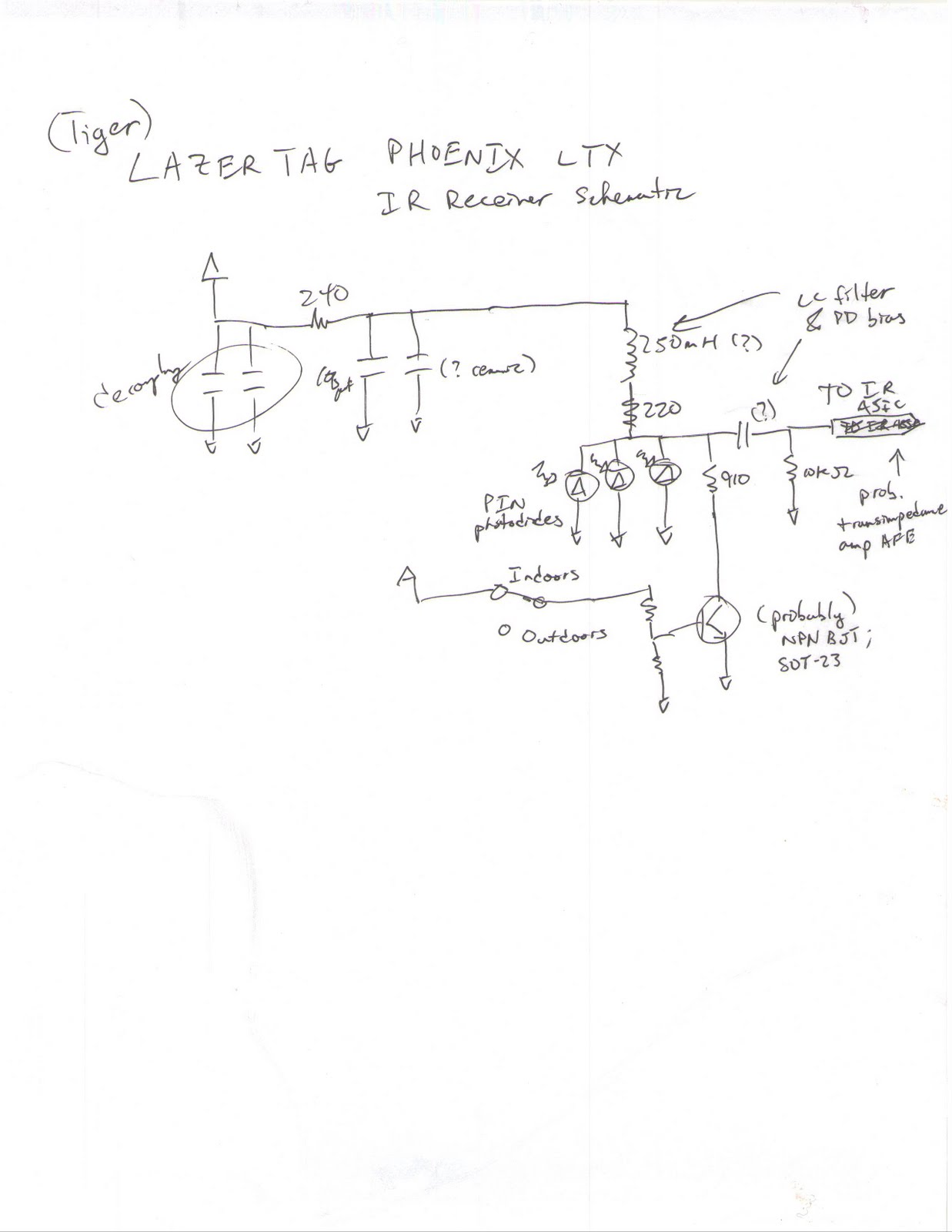
Lazer Tag Infrared Receivers
The individual was not inclined to create and program the timing controller for the PCB laser printer. They recalled having a laser tag gun that had been misaligned during a previous disassembly. The device in question is a Nerf (formerly...
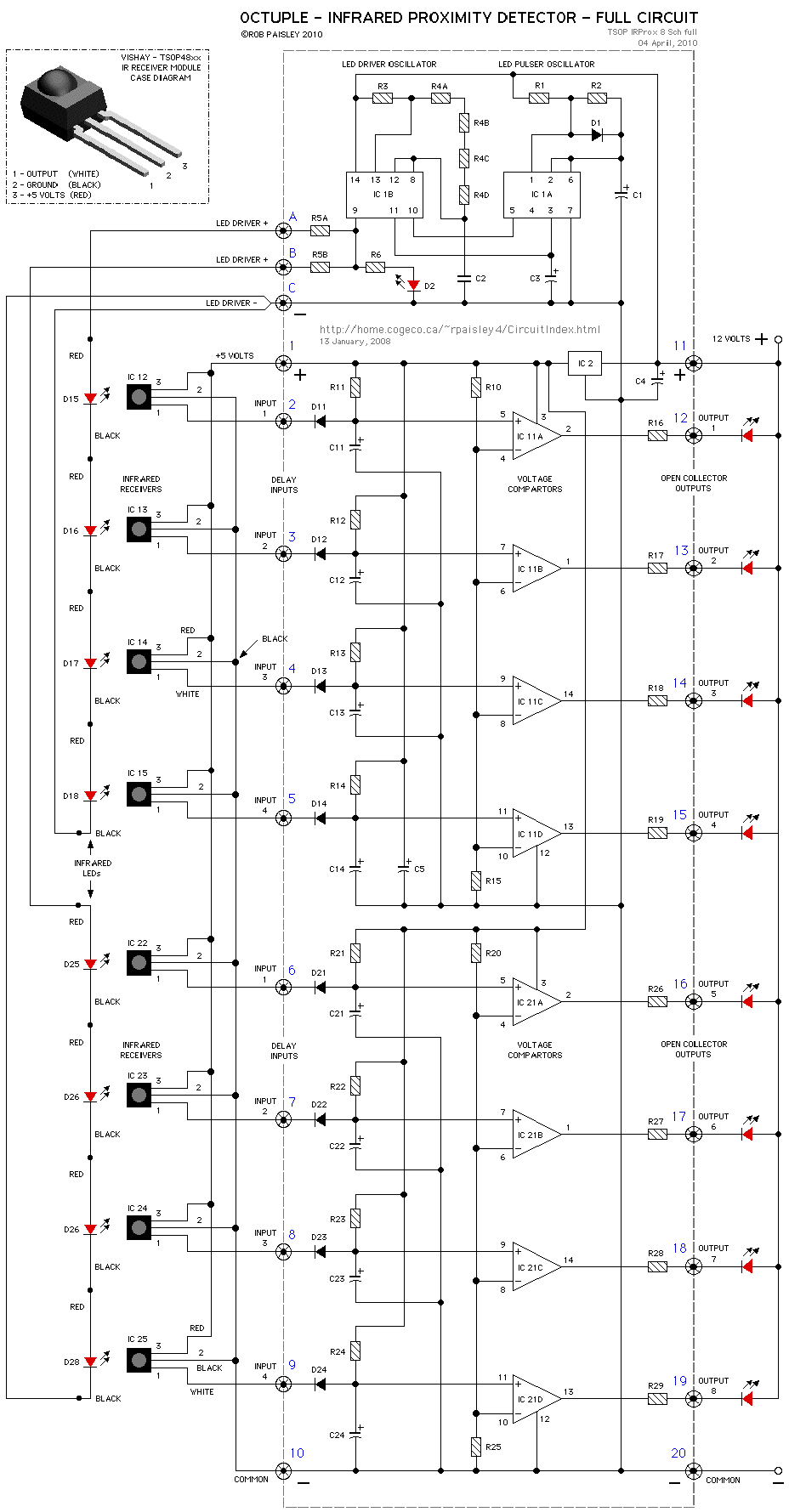
Infrared Proximity Detector circuit
The circuits on this page are for an Infrared Proximity Detector using the Vishay Electronics TSOP4830, which is an IR Receiver Module designed for remote control systems. The TSOP4830 functions as a sensitive infrared detector that operates without requiring shielding...
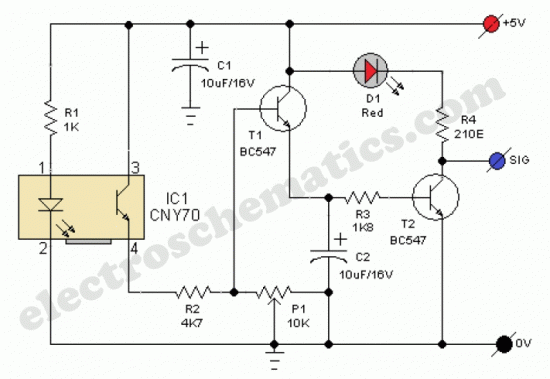
Line Following Robot Sensor
This line-following robot sensor or surface scanner for robots is a compact, stamp-sized infrared proximity detector designed for short-range detection (5-10 mm).
The line-following robot utilizes an infrared proximity sensor that detects the presence of surfaces or lines beneath it. This...
InfraRed Remote Switch
This Project REMOTE CONTROLLED SWITCH BOARD is used to switch on/off the Home Appliances by using a standard Remote control. The system is used to switch on/off up to six electrical devices. All the above processes are controlled by the...

line following robot sensor
The Line Following Robot sensor, also known as a surface scanner for robots, is a compact, stamp-sized infrared proximity detector that operates within a short range of 5-10 mm. It is based on a standard reflective opto-sensor, the CNY70 (IC1)....

Long-Range IR Transmitter
Most IR remotes operate reliably within a range of 5 meters. Designing an IR transmitter for reliable operation over a longer range, such as 10 meters, increases circuit complexity. To double the range from 5 meters to 10 meters, the...