


Dark Activated Switch circuit

Description: This circuit will activate a relay when light falls to a preset level. Light level can be adjusted with VR1 and the relay contacts may be used to operate an external light or buzzer. More: The light sensor used is the ORP12 photocell. In bright light the resistance of the ORP12 can be as low as 80 ohm and at 50lux (darkness) the resistance increases to over 1 Mohm. The 1M control should provide a wide range for light intensities, if not its
The circuit described is a light-activated relay switch utilizing an ORP12 photocell as the light sensor. The primary function of this circuit is to monitor ambient light levels and activate a relay when the light intensity drops below a predetermined threshold. This capability is useful for applications such as automatic lighting control or alarm systems.
The core component, the ORP12 photocell, exhibits a significant change in resistance based on the intensity of light it detects. Under bright conditions, the resistance can drop to approximately 80 ohms, allowing current to flow freely through the circuit. Conversely, in low-light conditions, specifically at around 50 lux, the resistance increases to over 1 megohm, effectively limiting the current flow. This characteristic enables the circuit to differentiate between varying light levels.
The adjustment of the light sensitivity is facilitated by a variable resistor (VR1), which allows for fine-tuning of the light threshold at which the relay is activated. The resistance value of VR1 can be selected to achieve the desired sensitivity, ensuring that the relay will respond appropriately to the ambient light conditions.
Upon reaching the set light level, the circuit activates a relay, which can then control external devices such as lights or buzzers. The relay contacts are rated to handle the load of the connected devices, providing isolation between the low-power sensing circuit and the higher power loads.
In summary, this circuit effectively combines a light sensor and a relay to create an automated response to changes in ambient light, enhancing functionality in various applications where light control is necessary. Proper selection of components and careful calibration of the sensitivity will ensure reliable operation in the intended environment.This circuit will activate a relay when light falls to a preset level. Light level can be adjusted with VR1 and the relay contacts may be used to operate an external light or buzzer. The light sensor used is the ORP12 photocell. In bright light the resistance of the ORP12 can be as low as 80 ohm and at 50lux (darkness) the resistance increases to over 1 Mohm. The 1M control should provide a wide range for light intensities, if not its
The circuit described is a light-activated relay switch utilizing an ORP12 photocell as the light sensor. The primary function of this circuit is to monitor ambient light levels and activate a relay when the light intensity drops below a predetermined threshold. This capability is useful for applications such as automatic lighting control or alarm systems.
The core component, the ORP12 photocell, exhibits a significant change in resistance based on the intensity of light it detects. Under bright conditions, the resistance can drop to approximately 80 ohms, allowing current to flow freely through the circuit. Conversely, in low-light conditions, specifically at around 50 lux, the resistance increases to over 1 megohm, effectively limiting the current flow. This characteristic enables the circuit to differentiate between varying light levels.
The adjustment of the light sensitivity is facilitated by a variable resistor (VR1), which allows for fine-tuning of the light threshold at which the relay is activated. The resistance value of VR1 can be selected to achieve the desired sensitivity, ensuring that the relay will respond appropriately to the ambient light conditions.
Upon reaching the set light level, the circuit activates a relay, which can then control external devices such as lights or buzzers. The relay contacts are rated to handle the load of the connected devices, providing isolation between the low-power sensing circuit and the higher power loads.
In summary, this circuit effectively combines a light sensor and a relay to create an automated response to changes in ambient light, enhancing functionality in various applications where light control is necessary. Proper selection of components and careful calibration of the sensitivity will ensure reliable operation in the intended environment.This circuit will activate a relay when light falls to a preset level. Light level can be adjusted with VR1 and the relay contacts may be used to operate an external light or buzzer. The light sensor used is the ORP12 photocell. In bright light the resistance of the ORP12 can be as low as 80 ohm and at 50lux (darkness) the resistance increases to over 1 Mohm. The 1M control should provide a wide range for light intensities, if not its

sun up alarm schematics
The Up Alarm is designed to provide an audible alert when sunlight is detected or when a light source is activated in a dark environment. It can also be utilized to sense various light sources such as beams or headlights....

Light/Dark Detectors
This compact circuit is capable of distinguishing between light and darkness, making it highly beneficial for controlling the operation of signs, porch lights, or other devices in response to changing light conditions.
The circuit operates using a light-dependent resistor (LDR) as...
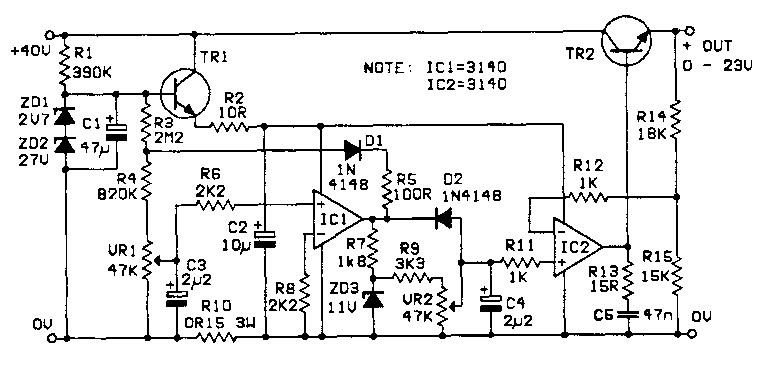
Adjustable Power Supply
A variable power supply is required for repairs on CB and audio equipment, featuring excellent current limiting and protection. The designed circuit delivers a current from zero to approximately 4.25A at a voltage range of zero to about 23V. The...

Common ground for different voltages in relay circuit
The objective is to control a 12 VDC device (on/off) from a microcontroller using a relay card. The relay requires a 12 VDC operating power supply.
To achieve the control of a 12 VDC device using a microcontroller and a relay...

Relay Fuse For Battery Charges Circuit
A charged capacitor C3 and a momentary pushbutton switch S2 are utilized to temporarily activate relay RE2. The battery being charged powers the relay to maintain its closed state. Additionally, S2 can energize the relay even if the battery is...
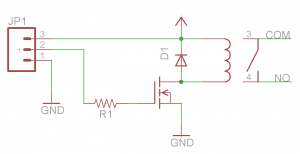
Relay Circuit and Breakout Board
Before proceeding with the toaster oven reflow oven project, it is essential to understand the operation of relays and how to construct a simple relay breakout board. This discussion will focus on the design of a relay breakout board specifically...

Fun and easy to build buzzer circuit
This circuit functions as an oscillator, capable of generating a sound wave or tone. The frequency of the tone, whether high or low, is adjustable via a variable resistor. The volume produced by this circuit is substantial; therefore, it is...
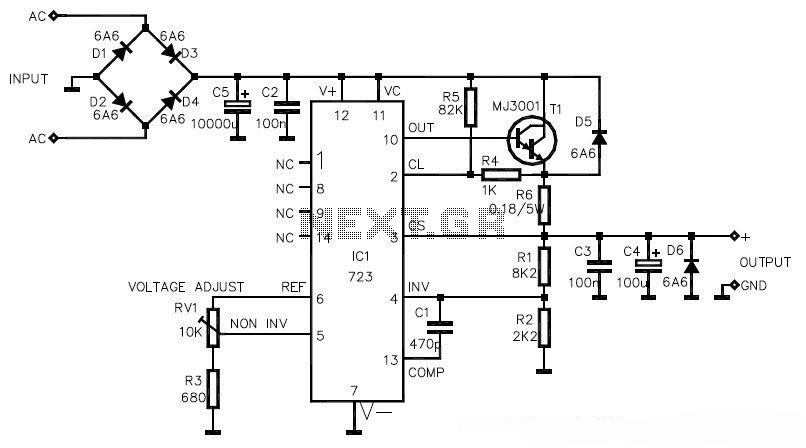
3V-30V/3A Adjustable Regulated Power Supply
This is an adjustable and regulated power supply with an output voltage range of 3V to 30V and a current supply capability of up to 3A. This circuit is equipped with short circuit protection and overload protection.
The adjustable power supply...

R/C On/Off Motor Controller with Brake
A relay-based on/off controller on the other hand can be very efficient. A typical relay has a contact resistance of 3 milliOhm. At 20A, this translates to a voltage drop of 0.06 volts, with a power loss of 1.2W. The...