


Electronic Torricelli Barometer Circuit
#barometer
#atmospheric pressure
#electronic sensor
#measurement
#Torricelli
#weather
#pressure sensor
#analog sensor
#environmental monitoring
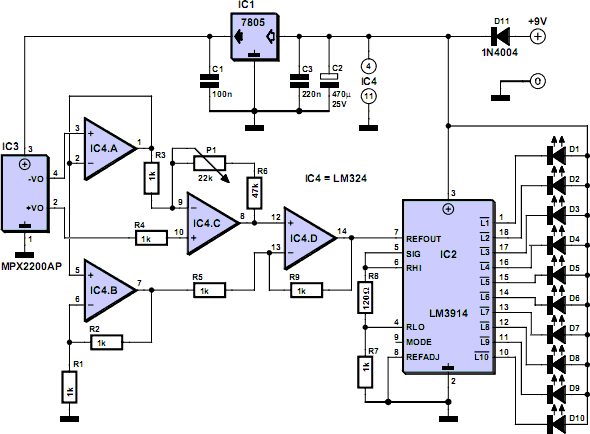
Description: Although it may lack the aesthetic appeal of traditional mercury barometers, which feature long glass tubes mounted on intricately carved and polished wood, the Torricelli barometer being discussed serves as a functional equivalent and electronic replica of the classic Torricelli design. Instead of displaying atmospheric pressure on conventional digital screens, this design aims to replicate the general appearance of its esteemed predecessor. The mercury tube has been substituted with a simple LED scale, which, while not as visually striking, presents a safer alternative for the environment in the event of breakage. As depicted in the schematic, the pressure sensor utilized is the Motorola MPX2200AP. This circuit is designed for measuring absolute pressure and is well-suited for atmospheric pressure applications. Without delving deeply into technical specifics, it is important to note that such sensors provide an output voltage that is proportional not only to the measured pressure but also to the supply voltage. Therefore, a stable power supply is necessary, achieved in this design through the use of IC1. Given that the output from the MPX2200 is differential and at a very low level, four operational amplifiers (IC4.A to IC4.D) from a single LM324 are employed to amplify the signal to a more manageable level. When potentiometer P1 is correctly adjusted, this configuration of operational amplifiers generates a voltage of 1 volt for every 1,000 hPa of atmospheric pressure, which is then sent to the LM3914 for further processing.
The electronic schematic of this Torricelli barometer consists of several key components that work together to measure atmospheric pressure and display it in a user-friendly manner. At the core of the design is the Motorola MPX2200AP pressure sensor, which is capable of measuring absolute pressure with a range that aligns well with typical atmospheric pressure levels. This sensor operates by generating a voltage output that varies with the pressure applied to it, but it is crucial to maintain a constant supply voltage to ensure accurate readings.
To achieve this stability, IC1 functions as a voltage regulator, providing a reliable power source for the pressure sensor. The output from the MPX2200AP is differential, meaning it produces two voltage signals that correspond to the pressure being measured. However, these signals are typically too weak for direct processing. Therefore, the design incorporates an LM324 operational amplifier, which contains four amplifiers that can be configured to boost the sensor's output to a more usable level.
The operational amplifiers are set up to amplify the differential signal from the pressure sensor. The configuration allows for precise adjustments through potentiometer P1, which fine-tunes the gain of the amplifiers to ensure that the output voltage accurately represents the atmospheric pressure. Specifically, the design is calibrated such that the final output voltage is 1 volt for every 1,000 hPa of atmospheric pressure, making it straightforward to interpret the readings.
The amplified voltage is then fed into the LM3914, a bar graph display driver that converts the voltage level into a visual representation. This component drives a series of LEDs arranged in a scale format, allowing users to easily read the atmospheric pressure levels in a manner reminiscent of traditional barometers, albeit in a more modern and environmentally friendly form. Overall, this electronic replica of the Torricelli barometer combines historical design elements with contemporary technology to provide an effective and visually appealing means of measuring atmospheric pressure.Although it does not have the same charm as real mercury barometers with long glass tubes on pieces of carved and polished wood, the Torricelli barometer discussed here is a functional equivalent and electronic replica of the Torricelli barometer. Actually, rather than displaying the atmospheric pressure on the traditional digital displays, we pre
ferred to reproduce the general look of this respected predecessor of electronic barometers. The mercury tube is, of course, replaced by a simple LED scale which, if not as beautiful, is still less toxic for the environment in case of breakage. As indicated on the drawing, the pressure sensor utilized is a Motorola MPX2200AP. This circuit is adapted for measuring absolute pressure and has a range well suited for atmospheric pressure.
Without entering too deep into the technical details, such sensors deliver an output of voltage proportional not only to the measured pressure but, unfortunately, to their supply voltage as well. Hence they must be powered from a stable voltage which is ensured here by the use of IC1. Since the output of the MPX2200 is differential and at a very low level, we had to resort to the use of four operational amplifiers IC4.
A to IC4. D, contained in one LM324, to obtain levels that can be processed easily. As long as potentiometer P1 is adjusted correctly, this group of operational amplifiers delivers a voltage of 1 volt per atmospheric pressure of 1, 000 hPa to the LM3914.
The electronic schematic of this Torricelli barometer consists of several key components that work together to measure atmospheric pressure and display it in a user-friendly manner. At the core of the design is the Motorola MPX2200AP pressure sensor, which is capable of measuring absolute pressure with a range that aligns well with typical atmospheric pressure levels. This sensor operates by generating a voltage output that varies with the pressure applied to it, but it is crucial to maintain a constant supply voltage to ensure accurate readings.
To achieve this stability, IC1 functions as a voltage regulator, providing a reliable power source for the pressure sensor. The output from the MPX2200AP is differential, meaning it produces two voltage signals that correspond to the pressure being measured. However, these signals are typically too weak for direct processing. Therefore, the design incorporates an LM324 operational amplifier, which contains four amplifiers that can be configured to boost the sensor's output to a more usable level.
The operational amplifiers are set up to amplify the differential signal from the pressure sensor. The configuration allows for precise adjustments through potentiometer P1, which fine-tunes the gain of the amplifiers to ensure that the output voltage accurately represents the atmospheric pressure. Specifically, the design is calibrated such that the final output voltage is 1 volt for every 1,000 hPa of atmospheric pressure, making it straightforward to interpret the readings.
The amplified voltage is then fed into the LM3914, a bar graph display driver that converts the voltage level into a visual representation. This component drives a series of LEDs arranged in a scale format, allowing users to easily read the atmospheric pressure levels in a manner reminiscent of traditional barometers, albeit in a more modern and environmentally friendly form. Overall, this electronic replica of the Torricelli barometer combines historical design elements with contemporary technology to provide an effective and visually appealing means of measuring atmospheric pressure.Although it does not have the same charm as real mercury barometers with long glass tubes on pieces of carved and polished wood, the Torricelli barometer discussed here is a functional equivalent and electronic replica of the Torricelli barometer. Actually, rather than displaying the atmospheric pressure on the traditional digital displays, we pre
ferred to reproduce the general look of this respected predecessor of electronic barometers. The mercury tube is, of course, replaced by a simple LED scale which, if not as beautiful, is still less toxic for the environment in case of breakage. As indicated on the drawing, the pressure sensor utilized is a Motorola MPX2200AP. This circuit is adapted for measuring absolute pressure and has a range well suited for atmospheric pressure.
Without entering too deep into the technical details, such sensors deliver an output of voltage proportional not only to the measured pressure but, unfortunately, to their supply voltage as well. Hence they must be powered from a stable voltage which is ensured here by the use of IC1. Since the output of the MPX2200 is differential and at a very low level, we had to resort to the use of four operational amplifiers IC4.
A to IC4. D, contained in one LM324, to obtain levels that can be processed easily. As long as potentiometer P1 is adjusted correctly, this group of operational amplifiers delivers a voltage of 1 volt per atmospheric pressure of 1, 000 hPa to the LM3914.
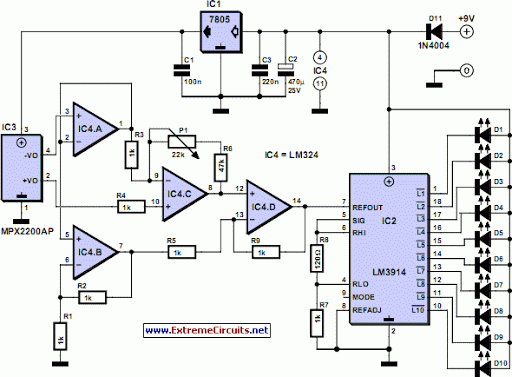
Electronic Torricelli Barometer
Although it does not have the same charm as real mercury barometers with long glass tubes on pieces of carved and polished wood, the Torricelli barometer.
The Torricelli barometer, named after the Italian scientist Evangelista Torricelli, is an instrument used to...

Electronic Torricelli Barometer
While it may lack the aesthetic appeal of traditional mercury barometers featuring elongated glass tubes mounted on intricately carved wood, the Torricelli barometer presented here serves as a functional equivalent and an electronic representation of the original Torricelli barometer. Instead...

Pressure measurement circuit diagram
This is a measurement circuit designed to measure forces ranging from 0 to 1500 grams, producing an output voltage of 0 to 1500 millivolts (mV) with a sensitivity of 1 mV per gram. The circuit is powered by a 12V...

Blanket internal measurement circuit disconnection
The internal disconnection circuit for a blanket operates on the principle of induction. It includes a wire approximately 2 cm in length that senses the proximity of a charged mains power source. When the sensing wire is close to the...

Digital precision pressure tester circuit integrated precision pressure signal conditioner MAX1457
The circuit diagram illustrates a digital precision pressure tester using the MAX1457 integrated circuit with an external ROM selection of the 93C66 type, which is a 4096-bit E2PROM. Upon powering on, the MCS pin is pulled to a high level...

Pressure Measurement from five-channel low-power programmable sensor signal processor AD7714
The AD7714 circuit consists of a pressure measurement system featuring the BP01 pressure sensor from Sensym. The BP01 is integrated into a bridge circuit, which produces a differential output voltage. When the sensor is subjected to its rated full-scale pressure...

Digital Pressure Gauge Circuit
This electronic pressure gauge utilizes a Wheatstone bridge-type pressure sensor to drive a 3 A digit A/D converter and a display. IC1 is a quad op-amp that interfaces the bridge sensor to the A/D converter. R16 allows for zero adjustment,...

Bridge the digital pressure signal conditioner MAX1458 excitation circuit diagram
The excitation circuit for the digital pressure signal conditioner MAX1458 is illustrated. The output DAC3 is utilized to adjust the sensor excitation current (IBR), enabling full-scale fine calibration. The reference current (IISRC) is determined by the resistor RISRC and the...

pressure sensor circuit
A dance pad consists of four pressure sensors (up, down, left, right). A USB controller has already been created for the dance pad, and the next step involves connecting the actual sensors. The intention is to pull the input down...