


Plant Watering guard with 4093
#plant watering
#moisture sensor
#LED indicator
#low power
#3V circuit
#4093 IC
#adjustable sensitivity
#flashing LED
#gardening
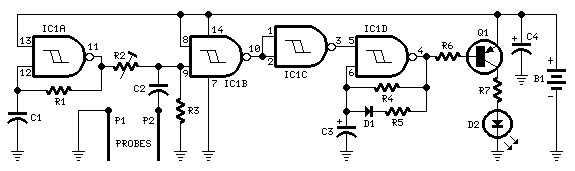
Description: A flashing LED signals the necessity to water a plant. Very low current consumption - 3V powered circuit. This circuit is intended to signal when a plant is needing water. A LED flashes at a low rate when the ground in the flower-pot is too dry, turning off when the moisture level is increasing. Adjusting R2 will allow to adapt the sensitivity of the circuit to different grounds, pots and probe types. More: This little gadget encountered a long lasting success amongst electronics enthusiasts since its first appearance on this website in 1999. Nevertheless, in the correspondence exchanged during all these years with many amateurs, some suggestions and also cr.
The circuit described is a moisture-sensing system designed for use with plants, utilizing a flashing LED as an indicator for the moisture level in the soil. The primary function of this circuit is to alert users when the soil has become too dry, thereby indicating the need for watering.
The circuit operates on a low voltage of 3V, which is suitable for battery-powered applications, ensuring minimal current consumption. This makes it an energy-efficient solution for plant care. The core components of the circuit include a moisture sensor, a resistor (R2), and a light-emitting diode (LED).
The moisture sensor is typically composed of two conductive probes that are inserted into the soil. When the soil is sufficiently moist, it conducts electricity between the probes, which keeps the LED off. As the moisture level decreases, the resistance between the probes increases, leading to a potential difference that triggers the LED to flash. The flashing rate of the LED serves as a visual cue for the user, providing a clear indication of the plant's watering needs.
R2 plays a critical role in this circuit as it allows for the adjustment of sensitivity to varying soil types and conditions. By changing the resistance value of R2, users can calibrate the circuit to respond appropriately to different moisture levels, ensuring accurate readings regardless of the soil composition or pot type.
This circuit has gained popularity among electronics enthusiasts since its inception in 1999, demonstrating its effectiveness and reliability. The design is simple yet functional, making it accessible for hobbyists and those looking to automate their plant care routine. Over the years, feedback from users has contributed to its refinement, leading to enhancements that improve its performance and adaptability.
Overall, this moisture-sensing circuit exemplifies a practical application of basic electronic principles to solve a common problem in plant care, combining functionality with user-friendly design.A flashing LED signals the necessity to water a plant Very low current consumption - 3V powered circuit. This circuit is intended to signal when a plant is needing water. A LED flashes at a low rate when the ground in the flower-pot is too dry, turning off when the moisture level is increasing.
Adjusting R2 will allow to adapt the sensitivity of the circuit to different grounds, pots and probe types. This little gadget encountered a long lasting success amongst electronics enthusiasts since its first appearance on this website in 1999. Nevertheless, in the correspondence exchanged during all these years with many amateurs, some suggestions and also cr
The circuit described is a moisture-sensing system designed for use with plants, utilizing a flashing LED as an indicator for the moisture level in the soil. The primary function of this circuit is to alert users when the soil has become too dry, thereby indicating the need for watering.
The circuit operates on a low voltage of 3V, which is suitable for battery-powered applications, ensuring minimal current consumption. This makes it an energy-efficient solution for plant care. The core components of the circuit include a moisture sensor, a resistor (R2), and a light-emitting diode (LED).
The moisture sensor is typically composed of two conductive probes that are inserted into the soil. When the soil is sufficiently moist, it conducts electricity between the probes, which keeps the LED off. As the moisture level decreases, the resistance between the probes increases, leading to a potential difference that triggers the LED to flash. The flashing rate of the LED serves as a visual cue for the user, providing a clear indication of the plant's watering needs.
R2 plays a critical role in this circuit as it allows for the adjustment of sensitivity to varying soil types and conditions. By changing the resistance value of R2, users can calibrate the circuit to respond appropriately to different moisture levels, ensuring accurate readings regardless of the soil composition or pot type.
This circuit has gained popularity among electronics enthusiasts since its inception in 1999, demonstrating its effectiveness and reliability. The design is simple yet functional, making it accessible for hobbyists and those looking to automate their plant care routine. Over the years, feedback from users has contributed to its refinement, leading to enhancements that improve its performance and adaptability.
Overall, this moisture-sensing circuit exemplifies a practical application of basic electronic principles to solve a common problem in plant care, combining functionality with user-friendly design.A flashing LED signals the necessity to water a plant Very low current consumption - 3V powered circuit. This circuit is intended to signal when a plant is needing water. A LED flashes at a low rate when the ground in the flower-pot is too dry, turning off when the moisture level is increasing.
Adjusting R2 will allow to adapt the sensitivity of the circuit to different grounds, pots and probe types. This little gadget encountered a long lasting success amongst electronics enthusiasts since its first appearance on this website in 1999. Nevertheless, in the correspondence exchanged during all these years with many amateurs, some suggestions and also cr

OWL2c and conductivity
Moisture deposited on a surface bridges across a grid of wires or circuit board traces. A circuit measures the AC ohms resistance through the grid. Warm, wet weather promotes fungus and insect pests in plants. Quick detection of rain can...

Pot plant water tester
This simple device checks if there is water in a pot plant. You stick the two probes (paperclips) into the pot plant and if the LED lights, it means there is water in the pot plant.
The described device operates as...

Low Power Negative Car Power Supply
I have had a lot of queries about getting a low power negative supply in cars, to power Linkwitz transform circuits and the like. There is a switchmode converter, but I must admit that it is overkill for what most...

plant watering watcher circuit schematic
This circuit is designed to indicate when a plant requires watering. An LED flashes at a low frequency when the soil in the flower pot is excessively dry, and it turns off as the moisture level rises. The sensitivity of...

Low Power Regulator Reference
This is a simple circuit of a low-power voltage regulator reference. This circuit can produce a stable voltage reference.
The low-power voltage regulator reference circuit is designed to provide a consistent output voltage, which is crucial for various electronic applications requiring...
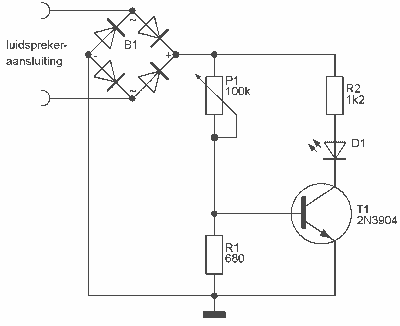
Audio Peak / Beat LED indicator
This indicator can be used, or see if your speakers can be damaged by the noise power. With P1 you can set the limit to which D1 LED lights. The pot is 100k here, you can even experiment with other...
Low Power Regulator Reference
This is a simple circuit of a low-power voltage regulator reference. This circuit can produce a stable voltage reference.
The low-power voltage regulator reference circuit is designed to provide a consistent output voltage, which is crucial for various electronic applications requiring...

Plant Watering Watcher Circuit Schematic
This circuit is designed to indicate when a plant requires watering. An LED blinks at a low frequency when the soil in the flower pot is excessively dry, turning off as the moisture level rises. The sensitivity of the circuit...

moisture sensor alarm
A project involving a moisture sensor alarm circuit designed to detect moisture levels in plant soil, wood, and irrigation areas.
The moisture sensor alarm circuit typically consists of a moisture sensor, a microcontroller or comparator circuit, an alarm system, and a...