


temperature controlled switch
#thermostat
#temperature control
#automation
#PC cooling
#heater control
#thermal switch
#sensor circuit
#home automation

Description: A thermally controlled switch operates based on the surrounding temperature without human intervention, except during the construction of the electronic thermostat. This type of switch has numerous practical applications. For instance, it can activate an additional fan when the internal temperature of a computer rises excessively. Additionally, it can automatically turn on an electric heater if the room temperature falls below a certain threshold. The potential applications for this thermostat are virtually limitless.
A thermally controlled switch typically employs a temperature sensor, such as a thermistor or a thermocouple, to monitor ambient temperature. When the temperature reaches a predefined threshold, the sensor activates a relay or a transistor that completes the circuit, allowing current to flow to an external device, such as a fan or heater.
For example, in a computer cooling application, a negative temperature coefficient (NTC) thermistor can be placed within the case. As the temperature increases, the resistance of the thermistor decreases, triggering a comparator circuit. This comparator can control a relay that powers an additional cooling fan when the internal temperature exceeds a set limit, ensuring optimal operating conditions and preventing overheating.
In heating applications, a similar setup can be utilized. A thermocouple can be placed in a room to continuously monitor the temperature. When the reading drops below a specified level, the thermocouple sends a signal to a microcontroller or a relay module, activating an electric heater to maintain a comfortable environment.
The design can be further enhanced with the addition of hysteresis to prevent rapid on-off cycling, which can lead to wear on mechanical components. This can be achieved by implementing a simple feedback loop in the control circuit, ensuring that the device only activates or deactivates after the temperature has crossed a certain range.
The versatility of thermally controlled switches makes them ideal for various applications, including temperature regulation in HVAC systems, refrigeration units, and even in automotive environments for controlling fan operation based on engine temperature. Overall, the integration of such a switch can lead to improved energy efficiency and enhanced user comfort in numerous settings.It sounds rather mysterious: a switch that is controlled by its ambient temperature. All without the touch of a human hand, except for when you re building this sort of electronic thermostat. There are a lot of handy uses for a thermally controlled switch. If the temperature inside your PC gets too high sometimes, the circuit can switch on an extra fan. You can also use to switch on an electric heater automatically if the room temperature is too low. There are innumerable potential applications for the thermostat described here..
A thermally controlled switch typically employs a temperature sensor, such as a thermistor or a thermocouple, to monitor ambient temperature. When the temperature reaches a predefined threshold, the sensor activates a relay or a transistor that completes the circuit, allowing current to flow to an external device, such as a fan or heater.
For example, in a computer cooling application, a negative temperature coefficient (NTC) thermistor can be placed within the case. As the temperature increases, the resistance of the thermistor decreases, triggering a comparator circuit. This comparator can control a relay that powers an additional cooling fan when the internal temperature exceeds a set limit, ensuring optimal operating conditions and preventing overheating.
In heating applications, a similar setup can be utilized. A thermocouple can be placed in a room to continuously monitor the temperature. When the reading drops below a specified level, the thermocouple sends a signal to a microcontroller or a relay module, activating an electric heater to maintain a comfortable environment.
The design can be further enhanced with the addition of hysteresis to prevent rapid on-off cycling, which can lead to wear on mechanical components. This can be achieved by implementing a simple feedback loop in the control circuit, ensuring that the device only activates or deactivates after the temperature has crossed a certain range.
The versatility of thermally controlled switches makes them ideal for various applications, including temperature regulation in HVAC systems, refrigeration units, and even in automotive environments for controlling fan operation based on engine temperature. Overall, the integration of such a switch can lead to improved energy efficiency and enhanced user comfort in numerous settings.It sounds rather mysterious: a switch that is controlled by its ambient temperature. All without the touch of a human hand, except for when you re building this sort of electronic thermostat. There are a lot of handy uses for a thermally controlled switch. If the temperature inside your PC gets too high sometimes, the circuit can switch on an extra fan. You can also use to switch on an electric heater automatically if the room temperature is too low. There are innumerable potential applications for the thermostat described here..

Thermostat for Medical (the 3rd)
The circuit comprises a power circuit, an infrared control circuit, a temperature monitoring circuit, and a temperature anomaly warning circuit. When the temperature falls below a preset threshold, the semiconductor refrigerator activates to generate heat. Once the preset temperature is...
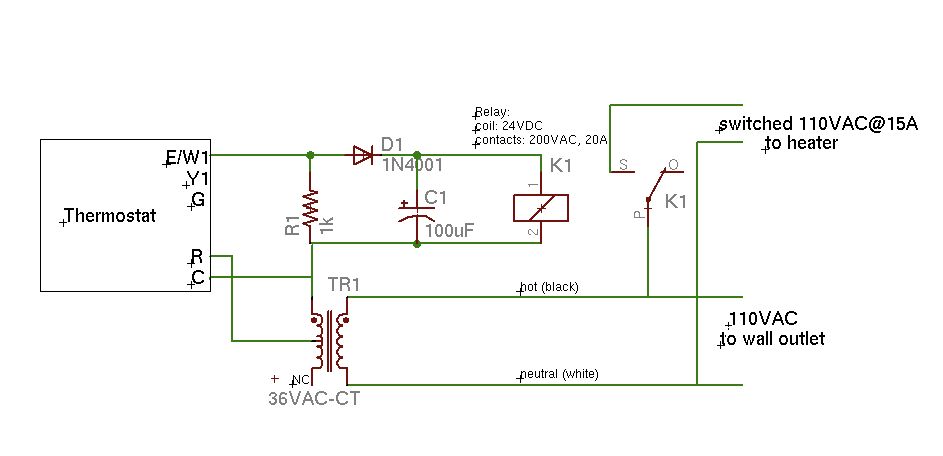
Space heater controlled by digital thermostat Schematic
A basic schematic of the circuit is presented, marking the initial experience with Eagle software. It is important to note that only the W1 output of the thermostat is utilized, while C serves as the common connection.
The schematic outlines a...

temp control fan hardware
Create a temperature-controlled fan circuit using a 15V AC power supply instead of a 230V AC supply. Clarification is needed on whether it is necessary to change the triac and resistor in the provided diagram. Additionally, it is important to...

Host computer automatic temperature control circuit
When running large-scale software or games, a computer's internal temperature can increase significantly, especially during hot summer months. Although the machine is equipped with a CPU and graphics card fan, poor hot air circulation prevents immediate removal of heat from...

Boiler control circuit
A boiler control circuit is designed to regulate the temperature of water in a hot water heating system. This circuit typically utilizes a comparator's comparison function to manage the heating equipment. The circuit includes a thermistor that forms a voltage...

Eggs hatching incubator circuit diagram 4
The egg hatching incubator circuit comprises a power supply circuit, a constant temperature control circuit, and a sound and light alarm circuit, as illustrated in Figure 4-7. The power supply circuit includes a power switch (S1), a fuse (FU2), a...

Temperature-Controlled Soldering Iron
One reason why commercial soldering stations are expensive is that they typically require soldering irons with built-in temperature sensors.
Commercial soldering stations are designed to provide precise temperature control and consistency during soldering operations, which is essential for achieving reliable and...
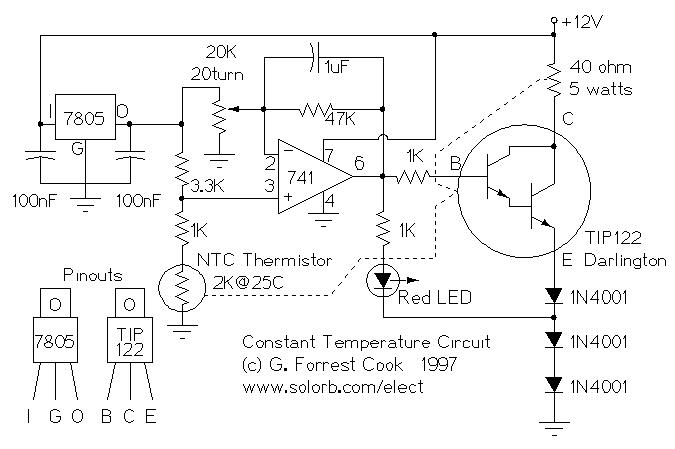
Constant Temperature Circuit
Constant Temperature Circuit. G. Forrest Cook 1997. Introduction: This circuit is a generic low-power temperature controller that can be used for stabilizing temperature.
The constant temperature circuit described is designed to maintain a stable temperature in various applications, utilizing low power...

Temperature Controller With Defrost Cycle
This temperature controller has a range of -50 to +150 °C and permits defrosting. R7, VR3, and R8 set the controller's trip point. SI initiates defrosting, and S2 cancels defrosting. VR1 and VR2 set the defrost temperature trip point. The...