


Water-Level Measurement Circuit

Description: Using a capacitor sensor to detect water levels is a straightforward sensing method. This circuit employs C5, which consists of 10 to 20 inches of #22 enameled wire as one of the electrodes. The oscillator, an NE556 timer, experiences a frequency shift that is dependent on the change in capacitance, which varies with the water level. A meter connected to pin 9 of the 556 serves as an indicator. The size of C5 can be adjusted to fit the specific application requirements.
The water level detection circuit operates on the principle of capacitance variation with changing water levels. The NE556 timer is configured in an astable mode, generating a square wave output whose frequency is influenced by the capacitance of the sensor, represented by C5. As the water level rises or falls, the dielectric constant around the wire electrode changes, thus altering the capacitance.
To implement this circuit, the 10 to 20 inches of #22 enameled wire is coiled or arranged in such a way that it can effectively sense the water level. This wire acts as one plate of a capacitor, with the water serving as the dielectric medium and the surrounding environment as the other plate.
The output frequency from the NE556 timer is monitored at pin 9, which can be connected to a frequency counter or a simple analog meter. The meter provides a visual indication of the water level based on the frequency shift. The frequency output can be calibrated to correspond to specific water levels, allowing for precise monitoring.
Adjusting the length or configuration of C5 can optimize the sensitivity and response time of the sensor, making it adaptable for various applications, such as in tanks, wells, or other water storage systems. Proper calibration and testing are essential to ensure accurate readings and reliable performance in the desired environment. Using a capacitor sensor to detect a water level is a simple method of sensing. This circuit uses C5, which is 10" to 20" of #22 enamelled wire as one electrode. This shifts the oscillator, an NE556 timer, in frequency. The frequency shift depends on the capacitance change, which in turn varies with water level. A meter connected to pin 9 of the 556 is used as an indicator. C5 can be made larger or smaller to suit the intended application.
The water level detection circuit operates on the principle of capacitance variation with changing water levels. The NE556 timer is configured in an astable mode, generating a square wave output whose frequency is influenced by the capacitance of the sensor, represented by C5. As the water level rises or falls, the dielectric constant around the wire electrode changes, thus altering the capacitance.
To implement this circuit, the 10 to 20 inches of #22 enameled wire is coiled or arranged in such a way that it can effectively sense the water level. This wire acts as one plate of a capacitor, with the water serving as the dielectric medium and the surrounding environment as the other plate.
The output frequency from the NE556 timer is monitored at pin 9, which can be connected to a frequency counter or a simple analog meter. The meter provides a visual indication of the water level based on the frequency shift. The frequency output can be calibrated to correspond to specific water levels, allowing for precise monitoring.
Adjusting the length or configuration of C5 can optimize the sensitivity and response time of the sensor, making it adaptable for various applications, such as in tanks, wells, or other water storage systems. Proper calibration and testing are essential to ensure accurate readings and reliable performance in the desired environment. Using a capacitor sensor to detect a water level is a simple method of sensing. This circuit uses C5, which is 10" to 20" of #22 enamelled wire as one electrode. This shifts the oscillator, an NE556 timer, in frequency. The frequency shift depends on the capacitance change, which in turn varies with water level. A meter connected to pin 9 of the 556 is used as an indicator. C5 can be made larger or smaller to suit the intended application.

Water-level sensing and control
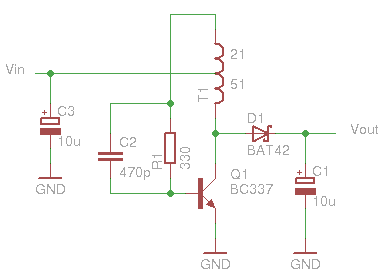
The operation of the circuit is based on the difference in the primary impedance of a transformer when its secondary is loaded compared to when it is open-circuit. The impedance of the primary of T1 and resistor R1 are in...

Digital-ProfiLab 4.0
Digital-ProfiLab was designed for measurement and control applications, combining features like circuit and logic simulation, front panel design, and hardware control to one powerful tool. Incoming signals from external devices may be processed and displayed. A circuit editor is used...
Glue stck torch
This project, developed around 2005, involves constructing a torch using a glue stick, which conveniently accommodates an AA battery within its plastic casing. To create a functional battery holder, contacts for both the positive and negative connections are necessary. The...

Advances in Measurement & Sensor Tech
This issue features articles on various measurement and sensor-related embedded design projects. Readers are encouraged to attempt similar projects and share their results. Starting on page 14, Petre Tzvetanov Petrov describes a multilevel audible logical probe design. Petrov notes that...
dyi setup and debugging guide
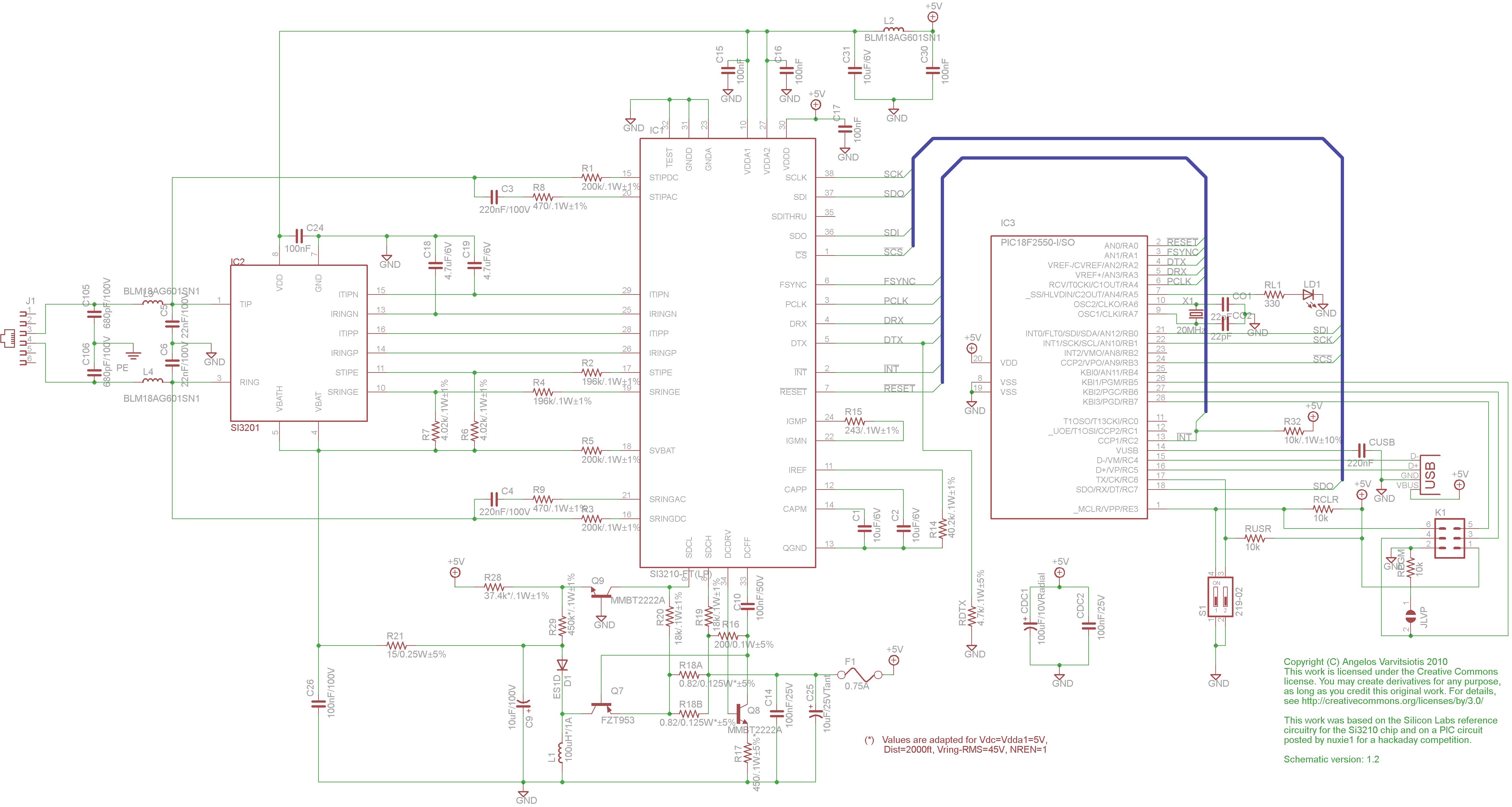
This page discusses the differences between assembled Open USB FXS dongle boards and DIY boards. While the assembled boards are fully tested and quality control approved, DIY boards may encounter various issues during assembly. Fortunately, most of these issues can...

electronic liquid detector circuit
This electronic liquid detector circuit diagram utilizes the ULN2429A monolithic bipolar integrated circuit, which is designed to detect the presence or absence of various types of liquids. The detection mechanism involves comparing the resistance of a probe immersed in the...

Water-level sensing control circuit
The circuit supplies power to the load until water conducts through the probe, allowing gate current to bypass from the low current SCR. This configuration provides an isolated low voltage probe to meet safety requirements.
The described circuit operates as a...
Digital-ProfiLab 4.0
Digital-ProfiLab was designed for measurement and control applications, combining features like circuit and logic simulation, front panel design, and hardware control to one powerful tool. Incoming signals from external devices may be processed and displayed. A circuit editor is used...

Electronics Projects Circuits
Over 1400 top electronics projects and electronic circuits with photos, datasheets, and easy-to-read schematics, along with explanations of how they work and how to build them.
The collection comprises a vast array of electronics projects suitable for enthusiasts and professionals alike....