


TDA9813T TDA9813T VIF-PLL With QSS-IF And Dual FM-PLL Demodulator
#VIF-PLL
#QSS-IF
#FM-PLL
#demodulator
#TDA9813T
#telephone
#communication
#electronic
#high-performance
#speech/transmission

Description: The TEA1069 and TEA1069A integrate all necessary functions to create a fully electronic telephone set with advanced features and high performance. This device includes components for speech transmission, dialing, and ringing. The TEA1069 and TEA1069A can be easily customized to meet various requirements. The TEA1069A includes different timing and diode options compared to the TEA1069. Unless stated otherwise, pin numbers refer to the TEA1069N model. The speech transmission component handles all necessary speech and line interface functions for electronic telephones, operating at line voltages as low as 1.6 V DC, which allows for multiple telephones to be connected in parallel. The dialing component features a 32-digit Last Number Redial (LNR) and 13 memory slots. It supports hands-free control, enabling the TEA1069 and TEA1069A to function in basic telephones as well as feature phones that provide hands-free dialing through the TEA1083 call-progress monitor IC and/or full hands-free operation via the TEA1093 hands-free IC. The hold function allows users to pause a conversation and resume it on the same phone or a parallel phone. Additionally, the music-on-hold feature transmits a melody while the call is on hold. Key tones provide audible feedback through a buzzer for valid key presses.
The TEA1069 and TEA1069A are designed as versatile solutions for modern telecommunication needs, facilitating the development of both standard and advanced telephone systems. The speech/transmission section is critical for ensuring clear communication, handling both incoming and outgoing signals effectively. Its capability to operate at low line voltages enhances flexibility in system design, allowing multiple devices to share the same line without compromising performance.
The dialing section's Last Number Redial feature is particularly useful in enhancing user convenience, while the memory slots allow quick access to frequently dialed numbers, thereby streamlining the calling process. The inclusion of hands-free functionality broadens the applicability of these devices, making them suitable for environments where users may require the ability to multitask during calls.
The hold feature, coupled with the music-on-hold functionality, adds a layer of sophistication to the user experience, making it more enjoyable and professional. The audible feedback provided by key tones serves as an essential user interface element, confirming user inputs and enhancing the overall usability of the device.
The TEA1069 and TEA1069A are therefore well-equipped to meet the demands of contemporary communication systems, providing a robust platform for the development of feature-rich, user-friendly telephone solutions.The TEA1069 and TEA1069A contain all the functions needed to build a highly featured, high-performance fully electronic telephone set. The device incorporates a speech/transmission part, a dialler part and a ringer part. By offering a wide range of possible adaptations for each part, the TEA1069 and TEA1069A application CAN be easily adapted to me
et different requirements. The TEA1069A offers some different Timings and Diode options compared to the TEA1069. Where pin numbers are mentioned in this data sheet we refer to the TEA1069N, unless otherwise indicated. Speech partThe speech/transmission part performs all speech and line Interface functions required in electronic sets.
It operates at line voltages down to 1. 6 V DC to facilitate the use of more telephones connected in parallel. Dialler part The dialler part offers a 32-digit Last Number Redial (LNR) and 13 Memories Hands-free control is included allowing the TEA1069 and TEA1069A to be used not only in basic telephones, but also in feature phones offering hands-free dialling via the TEA1083 call-progress monitor IC and/or full hands-free operation via the TEA1093 hands-free IC. The hold function allows the user to suspend the conversation and resume the call either on the same phone or on a parallel phone.
Additionally through the music-on-hold function a melody is transmitted while the set is put on hold. The keytones provide in a buzzer an audible feedback of a valid key pressed.
The TEA1069 and TEA1069A are designed as versatile solutions for modern telecommunication needs, facilitating the development of both standard and advanced telephone systems. The speech/transmission section is critical for ensuring clear communication, handling both incoming and outgoing signals effectively. Its capability to operate at low line voltages enhances flexibility in system design, allowing multiple devices to share the same line without compromising performance.
The dialing section's Last Number Redial feature is particularly useful in enhancing user convenience, while the memory slots allow quick access to frequently dialed numbers, thereby streamlining the calling process. The inclusion of hands-free functionality broadens the applicability of these devices, making them suitable for environments where users may require the ability to multitask during calls.
The hold feature, coupled with the music-on-hold functionality, adds a layer of sophistication to the user experience, making it more enjoyable and professional. The audible feedback provided by key tones serves as an essential user interface element, confirming user inputs and enhancing the overall usability of the device.
The TEA1069 and TEA1069A are therefore well-equipped to meet the demands of contemporary communication systems, providing a robust platform for the development of feature-rich, user-friendly telephone solutions.The TEA1069 and TEA1069A contain all the functions needed to build a highly featured, high-performance fully electronic telephone set. The device incorporates a speech/transmission part, a dialler part and a ringer part. By offering a wide range of possible adaptations for each part, the TEA1069 and TEA1069A application CAN be easily adapted to me
et different requirements. The TEA1069A offers some different Timings and Diode options compared to the TEA1069. Where pin numbers are mentioned in this data sheet we refer to the TEA1069N, unless otherwise indicated. Speech partThe speech/transmission part performs all speech and line Interface functions required in electronic sets.
It operates at line voltages down to 1. 6 V DC to facilitate the use of more telephones connected in parallel. Dialler part The dialler part offers a 32-digit Last Number Redial (LNR) and 13 Memories Hands-free control is included allowing the TEA1069 and TEA1069A to be used not only in basic telephones, but also in feature phones offering hands-free dialling via the TEA1083 call-progress monitor IC and/or full hands-free operation via the TEA1093 hands-free IC. The hold function allows the user to suspend the conversation and resume the call either on the same phone or on a parallel phone.
Additionally through the music-on-hold function a melody is transmitted while the set is put on hold. The keytones provide in a buzzer an audible feedback of a valid key pressed.

Simple Telephone Transmiter
This circuit diagram represents a simple yet effective transmitter circuit, capable of transmitting telephone conversations. When the telephone receiver is on the hook, the line voltage is approximately 48 volts. The R7 preset resistor is adjusted to achieve a voltage...

565Sca-demodulator
This application involves the demodulation of a frequency-modulated subcarrier from the main channel. A popular example utilizes a Phase-Locked Loop (PLL) to recover the Subsidiary Carrier Authorization (SCA) signal, which is used for storecast music, from the combined signal of...

Telephone Line Simulator Schematic
The following text describes construction, testing and use of an electronic telephone line simulator of my own design. This self-build project can simulate a telephone call / connection between any two local telephone devices. This for a fraction of the...

Fitting Extension BT Sockets
Extending BT telephone sockets can lead to hum on the line or crosstalk between two telephone lines if they are run through the same cable. This issue arises from improper use of twisted pairs. The following section illustrates the correct...

Electronic Telephone Ringer
This circuit generates a ringing sound akin to that produced by modern telephones. It comprises three nearly identical oscillators arranged in a sequence, each responsible for generating a square wave signal. The frequency of each oscillator is determined by the...

Telephone Message Taker
This circuit operates on the ringing voltage of the telephone to trigger a tape recorder to record messages. It can be made to latch using extra contacts if the tape recorder requires a constant-contact closure.
The circuit utilizes the ringing voltage,...
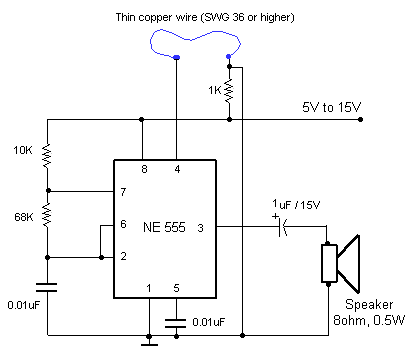
Telephone line based audio muting and light on circuit
The circuit automatically lights a bulb upon the arrival of a telephone ring and simultaneously mutes the audio from the music system or TV while the telephone handset is off-hook. The lighting of the bulb not only indicates an incoming...

Automatic telephone recording circuit
The device is a DC switch that remains normally on due to the forward biasing of Q1 through resistor R3. Q1 clamps Q2 into a forward state by biasing its complementary transistor well into saturation via resistor R4. The DC...
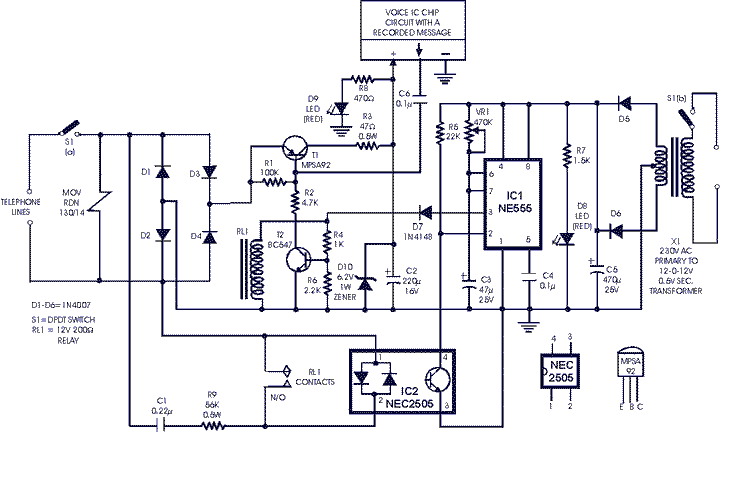
auto answering circuit
This circuit is not highly critical and can utilize various devices (such as a tape player with a message recorded on an endless tape) that do not overload the circuit or the telephone line. The incoming line is safeguarded by...