


power supply design 5v 7805 voltage regulator
#7805
#5V
#power supply
#transformer
#voltage regulation
#regulated power supply
#electronics
#circuit design
#DC power

Description: Designing a power supply requires careful consideration of each component. This discussion will focus on the design of a regulated 5V power supply. Note: Any transformer that provides a secondary peak voltage of up to 35V can be used; however, as the voltage increases, the size of the transformer and the power dissipation across the regulator will also increase.
The regulated 5V power supply typically consists of several key components: a transformer, a rectifier, a filter capacitor, a voltage regulator, and output capacitors.
1. **Transformer**: The transformer steps down the AC voltage from the mains to a lower AC voltage suitable for the power supply. A transformer with a secondary peak voltage of up to 35V is recommended to ensure adequate voltage for rectification and regulation. The choice of transformer affects both the physical size and heat dissipation of the overall circuit.
2. **Rectifier**: The rectifier converts the AC voltage output from the transformer into a pulsating DC voltage. A full-wave bridge rectifier is commonly used for this purpose, as it provides better efficiency and smoother output compared to a half-wave rectifier. The rectifier should be selected based on the peak inverse voltage (PIV) rating to handle the maximum voltage that can occur across its terminals.
3. **Filter Capacitor**: After rectification, the output voltage will still have ripples. A filter capacitor is employed to smooth out these ripples, providing a more stable DC voltage. The capacitance value must be chosen based on the load current and acceptable ripple voltage. A larger capacitance will yield a lower ripple but will also increase the physical size and cost of the capacitor.
4. **Voltage Regulator**: The voltage regulator is crucial for maintaining a steady output voltage of 5V despite variations in input voltage or load current. Linear voltage regulators, such as the LM7805, are commonly used for low-current applications. For higher efficiency, especially in battery-operated devices, a switching regulator may be preferred as it minimizes power loss and heat generation.
5. **Output Capacitors**: Additional output capacitors may be added to further stabilize the output voltage and improve transient response. These capacitors can help filter any high-frequency noise that may be present in the output.
In summary, the design of a regulated 5V power supply involves selecting appropriate components that work together to convert AC voltage to a stable DC output. Consideration must be given to the transformer specifications, rectification method, filtering requirements, and voltage regulation technique to ensure efficient and reliable performance.For making a power supply designing‚ of each and every component is essential. ‚Here I`m going to discuss the designing of ‚regulated 5V Power Supply. NOTE : Any transformer which supplies secondary peak voltage‚ up to35V can be used but as the voltage increases size of the transformer and power dissipation across regulator increases.
The regulated 5V power supply typically consists of several key components: a transformer, a rectifier, a filter capacitor, a voltage regulator, and output capacitors.
1. **Transformer**: The transformer steps down the AC voltage from the mains to a lower AC voltage suitable for the power supply. A transformer with a secondary peak voltage of up to 35V is recommended to ensure adequate voltage for rectification and regulation. The choice of transformer affects both the physical size and heat dissipation of the overall circuit.
2. **Rectifier**: The rectifier converts the AC voltage output from the transformer into a pulsating DC voltage. A full-wave bridge rectifier is commonly used for this purpose, as it provides better efficiency and smoother output compared to a half-wave rectifier. The rectifier should be selected based on the peak inverse voltage (PIV) rating to handle the maximum voltage that can occur across its terminals.
3. **Filter Capacitor**: After rectification, the output voltage will still have ripples. A filter capacitor is employed to smooth out these ripples, providing a more stable DC voltage. The capacitance value must be chosen based on the load current and acceptable ripple voltage. A larger capacitance will yield a lower ripple but will also increase the physical size and cost of the capacitor.
4. **Voltage Regulator**: The voltage regulator is crucial for maintaining a steady output voltage of 5V despite variations in input voltage or load current. Linear voltage regulators, such as the LM7805, are commonly used for low-current applications. For higher efficiency, especially in battery-operated devices, a switching regulator may be preferred as it minimizes power loss and heat generation.
5. **Output Capacitors**: Additional output capacitors may be added to further stabilize the output voltage and improve transient response. These capacitors can help filter any high-frequency noise that may be present in the output.
In summary, the design of a regulated 5V power supply involves selecting appropriate components that work together to convert AC voltage to a stable DC output. Consideration must be given to the transformer specifications, rectification method, filtering requirements, and voltage regulation technique to ensure efficient and reliable performance.For making a power supply designing‚ of each and every component is essential. ‚Here I`m going to discuss the designing of ‚regulated 5V Power Supply. NOTE : Any transformer which supplies secondary peak voltage‚ up to35V can be used but as the voltage increases size of the transformer and power dissipation across regulator increases.

Energy losses in modem
A toroidal transformer (2x12V 15VA) is utilized due to its significantly lower energy losses compared to an E-I core transformer, which was employed in the original mains adapter.
The toroidal transformer is a type of transformer that features a doughnut-shaped core...
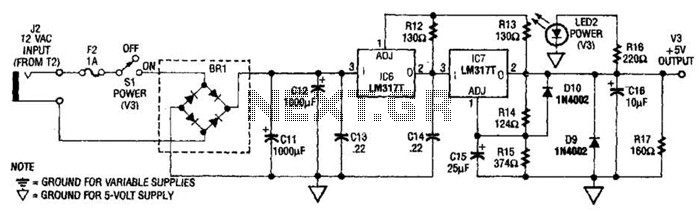
+5V Supply Circuit
The power supply presented is intended to function with a wall transformer. This circuit can be utilized alongside a variable supply for testing circuits in a laboratory setting. T2 serves as a 12-V wall transformer.
The power supply circuit is designed...
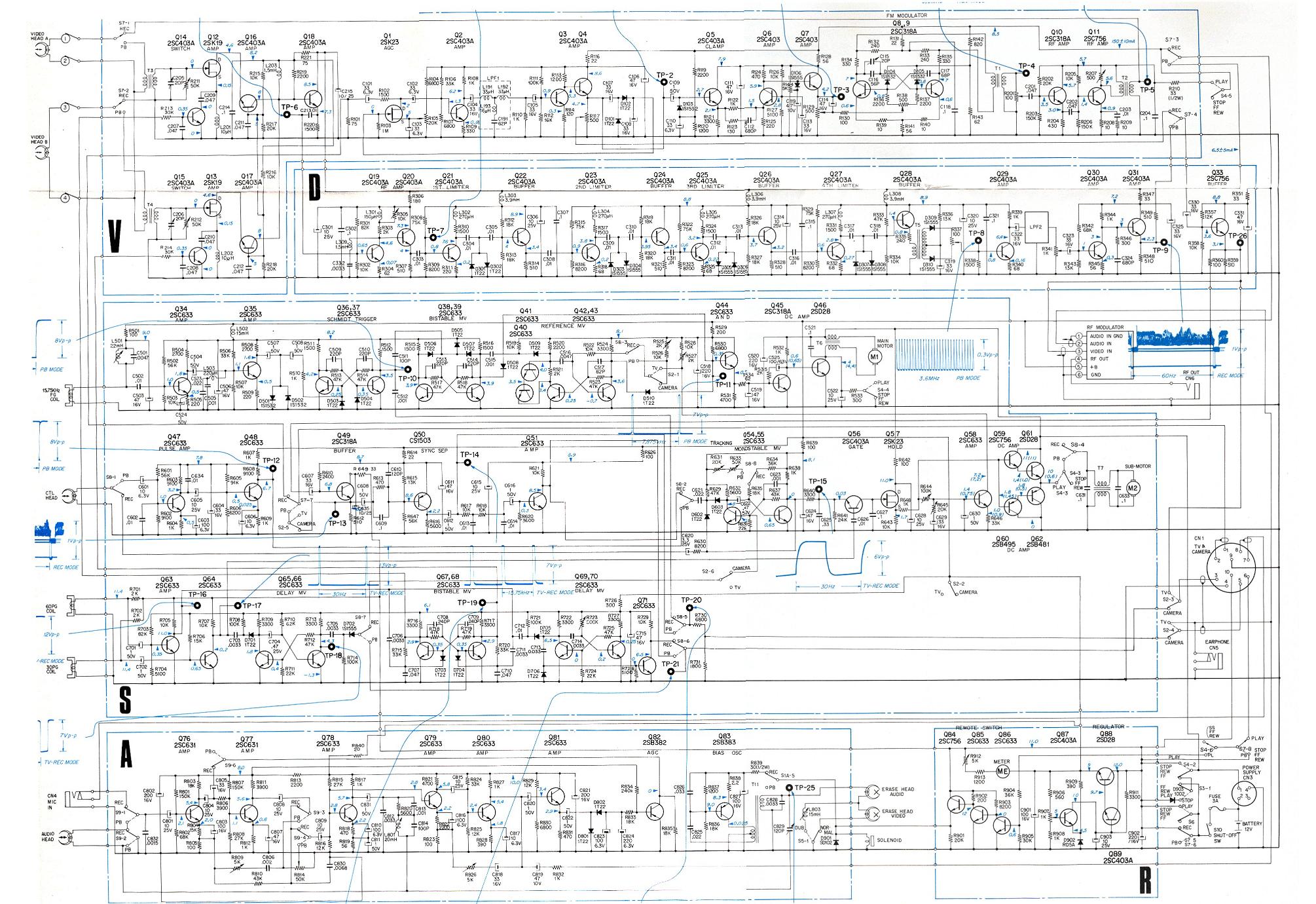
Eng Sony AV 3400
The original power supply AC-3400 features a charger function. In addition to the power button and the indicator light for power status, the front panel includes a charge level indicator for the accumulator, a start button, and a socket for...

5V - Digital Camera Charger
There is no need to be disappointed the next time your digital camera displays a low battery indication during a picnic trip. Simply connect this digital camera adapter to the cigarette lighter outlet of your car and link the camera...

PF Test Equipment
A transformer ratio-arm bridge circuit is utilized as depicted in the simplified diagram of Figure 1. The circuit comprises a standard reference capacitor (CS) and the insulation under test (CX). A distinctive feature of the circuit is a specialized multi-winding...

power Voltage supply clipping to <=3.3V
Supply it with a Li-Ion cell, which has a voltage range of 2.7 to 4.2V. The complexity of a buck/boost converter is not desired. While it is possible to regulate the voltage down to anything below 2.5V, it would be...

Eggs warming control circuit
The circuit is illustrated. It includes a DC power circuit with a power switch (S3) that converts 220V AC voltage through a buck converter (T), a rectifier (UR), and filter capacitors (C3 and C4) to generate a +9V output. This...
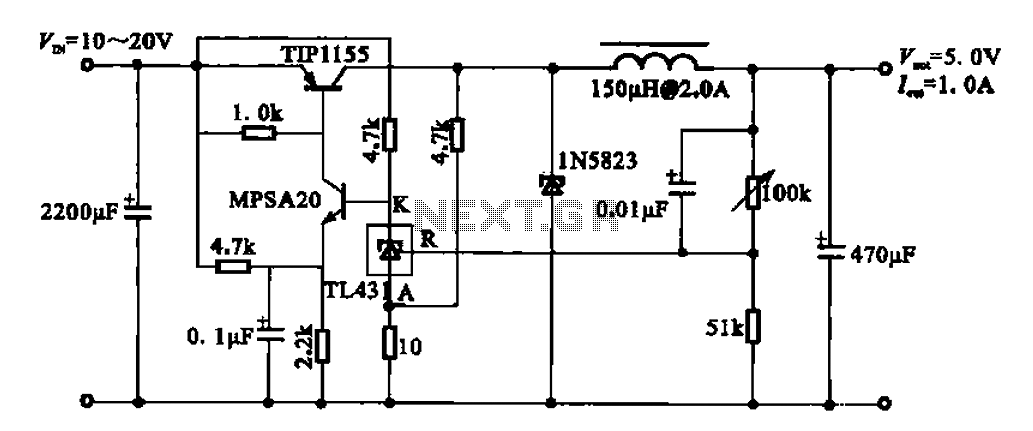
5V regulator circuit
The 5V regulator circuit is designed to convert a DC input voltage ranging from 10V to 20V into a stable 5V output. This circuit features low power consumption and high efficiency.
The 5V regulator circuit typically employs a linear voltage regulator...

5V Regulated Power SupplyCircuit
This circuit is a compact +5V power supply that is beneficial for digital electronics experimentation. Inexpensive wall transformers with variable output voltage can be found at electronics shops and supermarkets. While these transformers are readily available, their voltage regulation is...