


Single Chip 2.4 GHz Transceiver - NRF24L01
#NRF24L01
#2.4 GHz
#transceiver
#ISM band
#wireless communication
#radio frequency
#RF module
#embedded systems

Description: The NRF24L01 is a single-chip radio transceiver designed for operation within the 2.4 to 2.5 GHz ISM band.
The NRF24L01 transceiver is a highly integrated solution that facilitates wireless communication in the 2.4 GHz ISM band, making it suitable for a wide array of applications including remote controls, sensor networks, and IoT devices. The device features a low power consumption profile, which is crucial for battery-operated applications.
The transceiver operates using a frequency-hopping spread spectrum (FHSS) technique, which enhances its resilience to interference and improves the reliability of data transmission. The NRF24L01 supports multiple data rates, typically 250 kbps, 1 Mbps, and 2 Mbps, allowing for flexibility depending on the application's requirements.
In terms of connectivity, the NRF24L01 can be interfaced with microcontrollers via the SPI (Serial Peripheral Interface) protocol, enabling easy integration into existing systems. The device includes a built-in power amplifier, which increases the transmission range significantly, and it can operate over a range of several hundred meters in open space.
The chip also incorporates various features such as automatic acknowledgment of received packets, dynamic payload length, and a robust error detection mechanism, ensuring reliable communication. With its compact size and low cost, the NRF24L01 is an ideal choice for developers looking to implement wireless communication in their projects.
Overall, the NRF24L01 transceiver offers a versatile and efficient solution for wireless applications, combining ease of use with advanced features that cater to the needs of modern electronic designs.Single chip 2.4 GHz Transceiver NRF24L01 is a single chip Radio transceiver for the world wide 2.4 - 2.5 GHz ISM band
The NRF24L01 transceiver is a highly integrated solution that facilitates wireless communication in the 2.4 GHz ISM band, making it suitable for a wide array of applications including remote controls, sensor networks, and IoT devices. The device features a low power consumption profile, which is crucial for battery-operated applications.
The transceiver operates using a frequency-hopping spread spectrum (FHSS) technique, which enhances its resilience to interference and improves the reliability of data transmission. The NRF24L01 supports multiple data rates, typically 250 kbps, 1 Mbps, and 2 Mbps, allowing for flexibility depending on the application's requirements.
In terms of connectivity, the NRF24L01 can be interfaced with microcontrollers via the SPI (Serial Peripheral Interface) protocol, enabling easy integration into existing systems. The device includes a built-in power amplifier, which increases the transmission range significantly, and it can operate over a range of several hundred meters in open space.
The chip also incorporates various features such as automatic acknowledgment of received packets, dynamic payload length, and a robust error detection mechanism, ensuring reliable communication. With its compact size and low cost, the NRF24L01 is an ideal choice for developers looking to implement wireless communication in their projects.
Overall, the NRF24L01 transceiver offers a versatile and efficient solution for wireless applications, combining ease of use with advanced features that cater to the needs of modern electronic designs.Single chip 2.4 GHz Transceiver NRF24L01 is a single chip Radio transceiver for the world wide 2.4 - 2.5 GHz ISM band

40 meters CW Transceiver
This project describes a little QRP transceiver full legal power (5 W at 12 V) for the 40 meters band. The RIG may be built in a gradual manner; in fact, it is divided into two main modules, or you...

Oscillator circuit schematic
This webpage outlines the radio transmitter unit that was part of the Cirrus One rocket mission in April 2001. The transmitter was included as a payload due to concerns about recovery challenges if the rocket drifted far downrange after reaching...
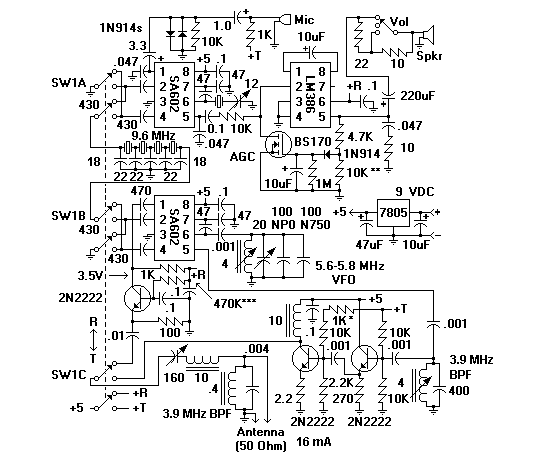
75 meter qrp ssb transceiver
The transceiver switches the four-element 1500-ohm crystal band-pass filter (BPF) connections between the inputs and outputs of two SA602 integrated circuits to reverse the signal flow for receive/transmit (R/T) operation. Since no intermediate frequency (IF) amplifier is utilized in this...

40M-cw-transceiver
The unit consists of a direct conversion receiver and a 1-W transmitter. The direct conversion receiver's voltage-controlled oscillator (VFO) is tuned slightly off frequency from the incoming signal. This frequency difference generates a clean, strong, and solid audio tone signal....
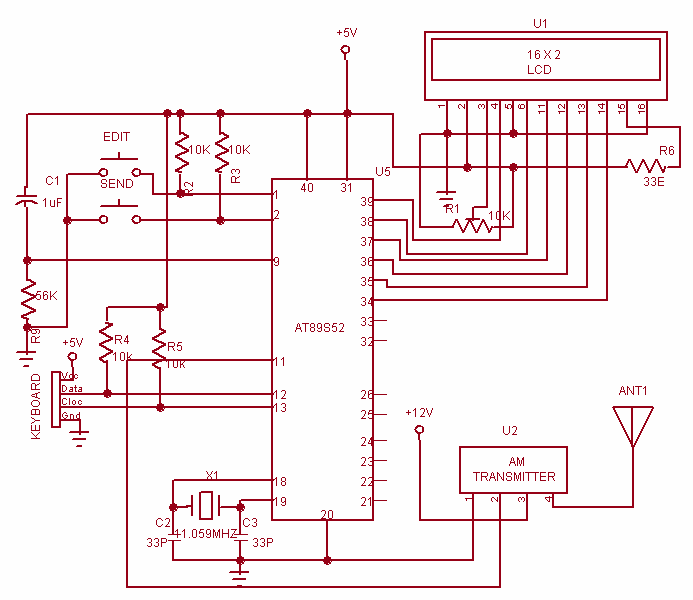
Wireless Data Communication system
This project is used to communicate or transmit a text message from one place to another place through wireless. The text message is encrypted by using the Microcontroller and the encrypted message was transmitted through wireless. At the receiver end...
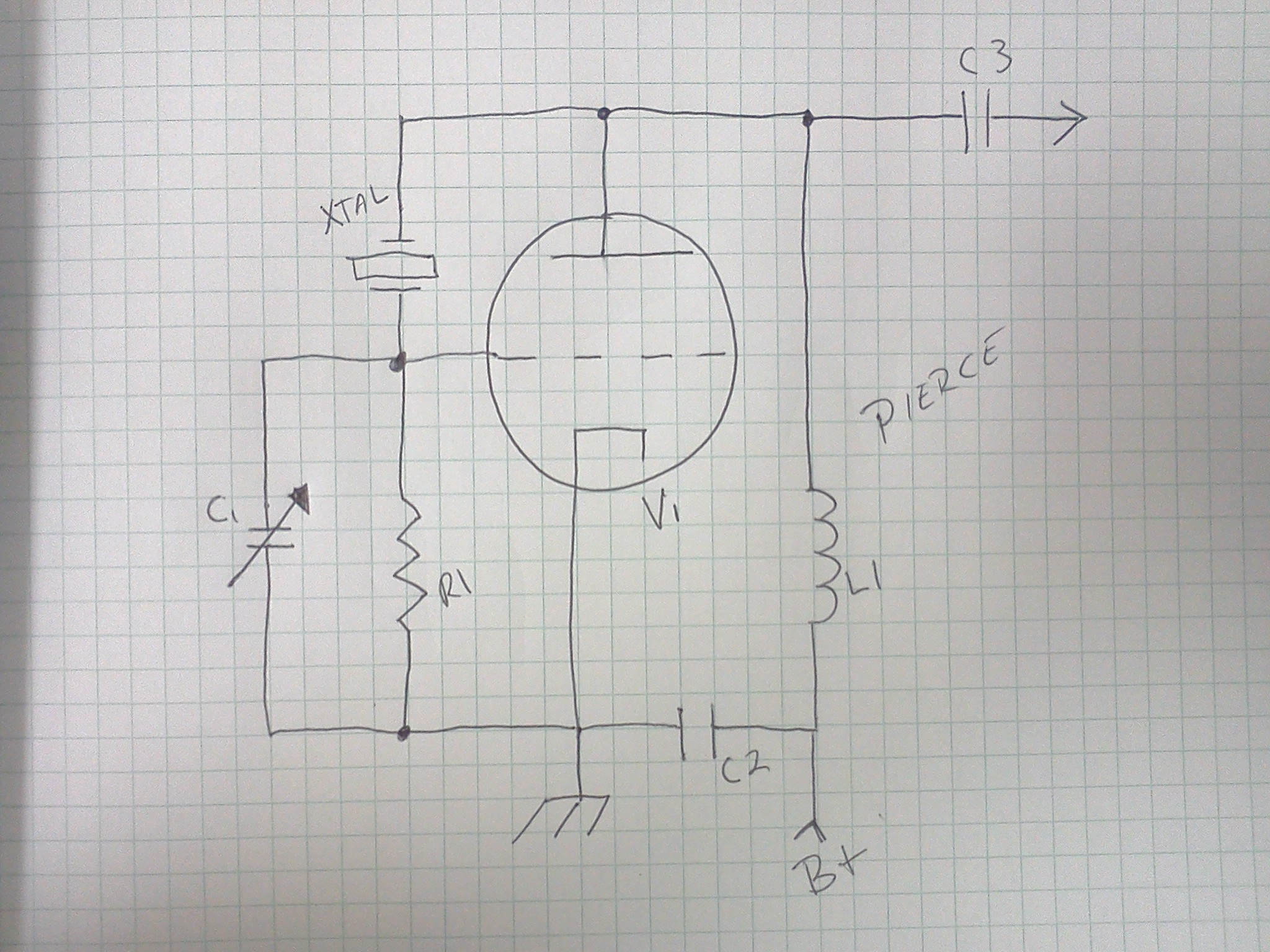
More About Oscillators
Online Electronics Course covering the Science of Radio Frequency Engineering, including topics such as Electronics, Microwave Technology, Waveguides, Antennas, Tubes, Historical Context, Klystrons, Magnetrons, Traveling Wave Tubes (TWT), Internet of Things (IoT), Klystrodes, Broadcast Equipment, and Repair Techniques.
The online electronics...

Beginning Embedded Electronics - 2
Acquire all the components required for this lecture here. It is highly recommended to obtain a multimeter with a continuity setting. A quality multimeter with this feature typically costs around $60, while premium models can reach $300. The $60 option...

Yves OESCH HB9DTX Transceivers modifications
The original firmware is functional on amateur radio bands; however, it lacks user-friendliness. Wulf-Gerd, DL1FAC, has developed a new firmware that is significantly more suitable for amateur radio users. This firmware is open source, allowing for flexible frequency adjustments, power...
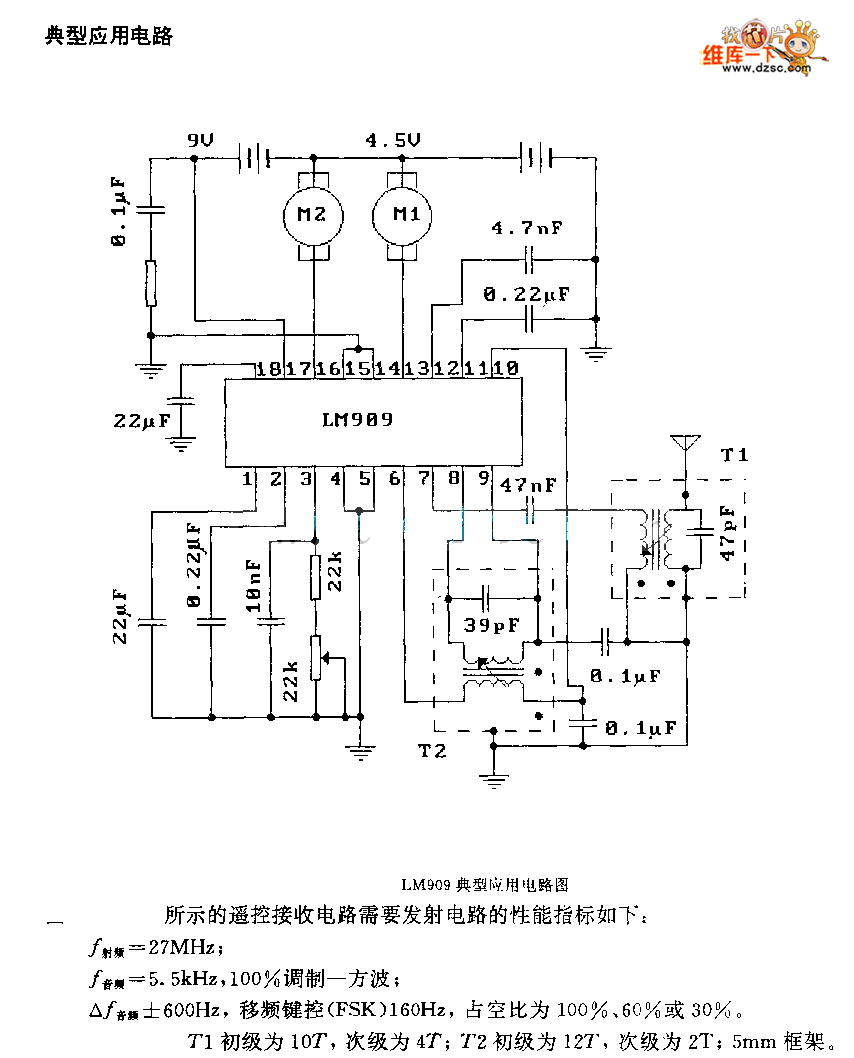
LM909 radio telecontrol receiving decoding circuit diagram
The performance indices of the telecontrol receiving decoding circuit are as follows: radio frequency (f) = 27 MHz, audio frequency (f) = 5.5 kHz, 100% modulation in square-wave form; radio frequency deviation is ±600 Hz, and the frequency shift keying...