79L05
79L05 Negative Voltage Regulator
Overview
The 79L05 is part of the LM320L/LM79LXXAC/LM13121 dual-marked series of 3-terminal negative voltage regulators. This component provides a fixed output voltage of -5V with an output current capability exceeding 100mA. Designed using advanced computer-aided techniques, the 79L05 optimizes thermal and electrical performance in a compact package. It is well-suited for applications requiring stable negative voltage regulation with minimal external components.
The 79L05 is part of a broader family that includes variants with -12V and -15V outputs, making it versatile for various power supply designs. Its excellent transient response and high line regulation accuracy (0.07% VO/V) ensure reliable performance even with minimal output compensation (as low as 0.1µF).
Features
- Fixed Output Voltage: Provides a stable -5V output.
- High Current Capability: Supports output currents exceeding 100mA.
- Excellent Line Regulation: Maximum line regulation of 0.07% VO/V ensures consistent performance under varying input conditions.
- Low Dropout Voltage: Optimized for efficient operation with minimal voltage headroom.
- Thermal and Short-Circuit Protection: Built-in safeguards prevent damage from overheating or output shorts.
- Wide Operating Temperature Range: Suitable for industrial and commercial environments.
- Minimal External Components Required: Only a 0.1µF output capacitor is needed for stability.
Applications
The 79L05 is widely used in electronic systems requiring regulated negative voltage supplies. Key applications include:
- Power Supplies: Used in dual-voltage power supplies where both positive and negative rails are needed.
- Audio Equipment: Provides negative bias voltages for operational amplifiers and audio signal processing circuits.
- Industrial Control Systems: Ensures stable voltage for analog and digital control circuits.
- Test and Measurement Equipment: Delivers precise voltage references for sensitive instrumentation.
- Consumer Electronics: Found in devices such as set-top boxes, gaming consoles, and portable electronics.
Electrical Characteristics
Absolute Maximum Ratings
- Input Voltage (VIN): -35V
- Output Current (IO): 100mA (continuous)
- Operating Junction Temperature (TJ): 0°C to +125°C
- Storage Temperature Range (TSTG): -65°C to +150°C
Typical Performance Characteristics
- Output Voltage (VO): -5V ±4%
- Line Regulation: 0.07% VO/V (max)
- Load Regulation: 0.5% VO/mA (max)
- Dropout Voltage: 1.7V (typical at full load)
- Quiescent Current (IQ): 5mA (typical)
- Ripple Rejection: 50dB (typical at 120Hz)
Package Information
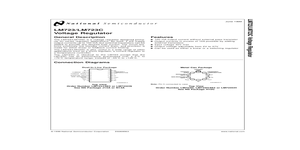
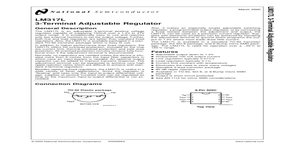
The 79L05 is available in multiple package options to accommodate different design requirements. The most common packages include:
- TO-92: A compact, through-hole package suitable for low-power applications and prototyping.
- SOT-89: A surface-mount package with improved thermal performance for space-constrained designs.
- TO-252 (DPAK): A surface-mount package with a thermal pad for enhanced heat dissipation in higher-current applications.
Package Dimensions (TO-92 Example)
- Body Length: 4.95mm (max)
- Body Width: 4.0mm (max)
- Lead Pitch: 2.54mm
- Lead Length: 12.7mm (min)
Design Considerations
Input and Output Capacitors
For optimal performance, a 0.1µF ceramic capacitor should be placed as close as possible to the input and output terminals. This minimizes noise and improves transient response. Larger capacitors (e.g., 1µF to 10µF) may be required for applications with high load variations or long input traces.
Thermal Management
While the 79L05 includes thermal protection, proper heat sinking or PCB copper area should be allocated for high-current applications. For TO-92 packages, ensure adequate airflow or consider using a heatsink if operating near maximum current limits.
Stability
The regulator is stable with low-ESR capacitors, but tantalum or aluminum electrolytic capacitors should be avoided unless specified in the datasheet. Always verify stability under load transients for critical applications.
Conclusion
The 79L05 is a reliable, cost-effective solution for generating regulated -5V power in a wide range of electronic systems. Its combination of high accuracy, robust protection features, and ease of use makes it a popular choice for designers. By adhering to the recommended design guidelines, engineers can ensure stable and efficient operation in their applications.