Delta-Sigma Modulation
1. Overview of Delta-Sigma Modulation
1.1 Overview of Delta-Sigma Modulation
Delta-Sigma modulation (DSM) is a highly effective technique employed in converting analog signals into digital formats. This method stands out due to its efficiency in oversampling and enabling high-resolution conversion. At its core, the process combines the principles of pulse-density modulation with feedback loops, yielding remarkable noise shaping characteristics that enhance the precision of digital representation.
Fundamentally, DSM operates by sampling the input signal at a frequency much higher than the Nyquist rate. This oversampling allows for the reduction of quantization noise, which is then pushed towards higher frequencies through a combination of feedback and averaging mechanisms. The result is a more accurate representation of the signal in the digital domain, making DSM particularly advantageous in applications that require high fidelity, such as audio processing, radar signal processing, and high-precision instrumentation.
Theoretical Framework
To grasp the significance of delta-sigma modulation, one must first understand the impact of oversampling on quantization noise. When an analog signal is sampled, it is subjected to quantization error, represented as noise. Oversampling dilutes this noise over a broader spectrum. When this noise is pushed outside the band of interest through a low-pass filter, it results in an increased signal-to-noise ratio (SNR) within that band.
The following relationship summarizes the improvement in quantization noise due to oversampling:
In this equation, OSR is the oversampling ratio, and N is the number of bits in the quantization process. As a result, higher OSR values permit greater SNR improvements.
Operational Mechanism
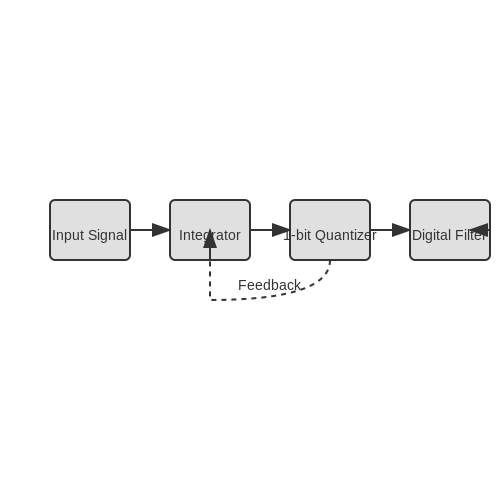
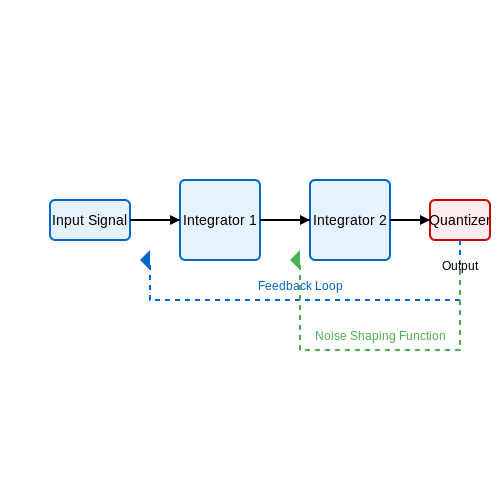
Let’s delve deeper into the functioning of delta-sigma modulators. The main components of a DSM include:
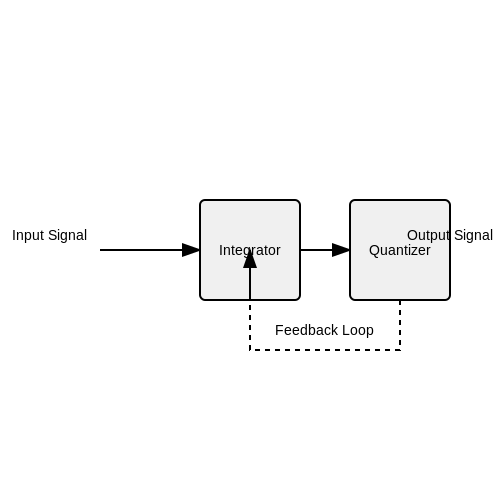
- Integrator: This component integrates the input signal, converting it into a continuous waveform.
- Quantizer: The quantizer converts the continuous signal into discrete values. This is typically a 1-bit quantizer in DSM systems.
- Feedback Loop: The quantizer output is fed back into the integrator, creating an internal loop that helps minimize the error between the input and the quantized signal.
- Digital Filter: After modulation, a digital filter is used to reconstruct the signal, often employing techniques to further suppress the out-of-band noise.
This topology illustrates a critical aspect of DSM: feedback can substantially enhance the effective dynamic range of the converter. With the right design, a delta-sigma modulator can approach theoretical noise limits, making it an ideal choice for high-performance applications.
Applications and Practical Relevance
The practical implications of delta-sigma modulation are vast. In the realm of consumer electronics, DSM is prevalent in analog-to-digital converters (ADCs) used in high-fidelity audio devices. These converters are essential for transforming sound into digital signals, ensuring music playback is as accurate as possible. Additionally, delta-sigma modulation is applied in digital signal processors (DSPs) for various applications, from telecommunications to biomedical signal processing.
Moreover, it is worth noting that the rise of delta-sigma modulation has led to innovations in system on chip (SoC) designs, allowing for integrated ADCs and DACs that occupy a smaller footprint while delivering exceptional performance. As industries increasingly demand high-quality signal processing combined with compact designs, the relevance of delta-sigma modulation continues to grow.
In summary, delta-sigma modulation is a powerful tool in modern electronics, enabling high-resolution digital signal processing by leveraging the principles of oversampling and noise shaping. The ongoing advancements in this field promise to enhance its applications further, making it a cornerstone technology in the evolution of digital systems.
1.2 Key Concepts: Quantization and Noise Shaping
Delta-Sigma modulation (DSM) is a powerful technique widely used in analog-to-digital converters (ADCs) and digital-to-analog converters (DACs). Central to understanding DSM are two key concepts: quantization and noise shaping. These principles not only underpin the efficacy of DSM in reducing quantization noise but also enhance the resolution of the signals processed. This section explores these concepts in detail, accompanied by their mathematical foundations and practical implications.
Quantization: A Necessary Imperfection
At its core, quantization involves converting a continuous signal into a digital format by mapping it to a finite set of values. In the context of DSM, quantization represents a crucial step where infinite potential amplitudes must be confined to discrete levels. This could seem counterproductive, as the very essence of quantization introduces what is termed quantization noise—the difference between the actual amplitude and its closest quantized value.
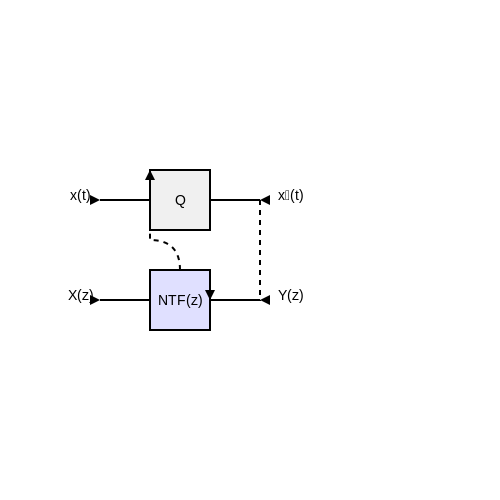
To understand this concept mathematically, let's denote the continuous signal \( x(t) \). The quantization process can be represented as:
Here, \( \hat{x}(t) \) is the quantized output, and \( Q \) is the quantization function. As the number of bits in the quantizer increases, the quantization noise can be reduced. For an \( n \)-bit quantizer, the quantization step size \( \Delta \) is defined as:
where \( V_{\text{max}} \) and \( V_{\text{min}} \) are the maximum and minimum values of the input signal. With higher values of \( n \), the quantization levels become more tightly packed, reducing the quantization noise, which is critical for achieving higher resolution in digital signals.
Noise Shaping: A Closer Look
The second pivotal concept in DSM is noise shaping, which utilizes feedback mechanisms to alter the spectral density of quantization noise. By cleverly designing the modulator, it's possible to push the quantization noise to higher frequencies where it is less perceptible or, in many cases, beyond the frequency spectrum of interest for the application at hand.
In DSM, noise shaping can be visualized as manipulating the noise transfer function (NTF):
where \( Y(z) \) is the output signal and \( X(z) \) is the input signal in the z-domain. By shaping the noise using high-pass filtering characteristics, the quantization noise can be effectively reduced in the bandwidth of the signal being processed, significantly enhancing performance. Essentially, this enables the modulator to trade bandwidth for increased signal-to-noise ratio (SNR), providing a clear advantage in systems where fidelity is paramount.
Practical Implications of Quantization and Noise Shaping
In practical applications, the interplay between quantization and noise shaping allows for the creation of high-resolution audio converters, effective measurement systems in industrial applications, and precise control systems in advanced robotics. Common applications include:
- Audio Processing: Delta-Sigma ADCs are crucial in high-fidelity audio systems, which demand high dynamic range and low distortion.
- Instrumentation: In measurement devices, low-noise performance is critical, and DSM techniques can significantly enhance accuracy.
- Telecommunications: High data rate systems benefit from improved bit-resolution through the implementation of delta-sigma modulators, particularly in cellular and broadband applications.
In conclusion, understanding quantization and noise shaping in delta-sigma modulation reveals the sophisticated balance between precision and performance in modern electronics. By mastering these concepts, engineers and researchers can leverage DSM in their designs, optimizing fidelity and efficiency in a myriad of applications.
1.3 Advantages of Delta-Sigma Modulation
Delta-sigma modulation (DSM) has gained significant traction in the field of signal processing and analog-to-digital conversion due to its distinctive advantages, which make it a preferred choice for various applications in engineering, audio, and telecommunications. As we delve into the advantages, we will observe how these properties align with practical scenarios, offering stronger performance metrics compared to other modulation techniques.High Resolution and Noise Shaping
One of the foremost advantages of delta-sigma modulation is high resolution, often exceeding that of traditional Nyquist-rate converters. This is primarily achievable due to the principle of noise shaping. In DSM, the quantization noise is pushed out of the band of interest through the feedback loop that employs oversampling techniques. This process effectively lowers the noise level within the desired frequency range by creating a high-frequency noise floor that can be filtered out later in the signal processing chain. Mathematically, the noise shaping characteristic can be represented as:Robustness to Component Mismatches
Another compelling advantage of delta-sigma modulations is their robustness against component mismatches, which is critical in integrated circuit designs. In contrast to traditional ADC architectures that may require stringent component matching, delta-sigma modulators exhibit less sensitivity due to their feedback nature. This is particularly useful in CMOS processes where variations can significantly impact performance. In practical terms, this means that delta-sigma modulators can be produced at a lower cost as they require less stringent fabrication tolerances, making them attractive for mass production and consumer applications, such as in audio devices and mobile phones.Flexibility in Filter Design
The flexibility afforded in filter design is a crucial advantage of using delta-sigma modulation. The design of the external analog filter can be tailored to meet specific requirements based on the application. This ability to selectively filter frequencies greatly enhances the fidelity of the output signal while maintaining efficiency. For example, the design can be optimized for different types of audio signals—be it voice, music, or high-frequency signals—allowing engineers to adapt to changing requirements without having to redesign the entire circuit. Moreover, digital filters can be implemented post-conversion, allowing further customization with techniques like digital signal processing to refine the signal after conversion. This opens doors for innovative algorithms that enhance audio quality or optimize bandwidth usage in communication systems.Low Power Consumption
In the realm of applications such as mobile devices and IoT sensors, low power consumption is an essential aspect. Delta-sigma modulators typically operate at lower power compared to their Nyquist counterparts due to the reduced sampling rates afforded by oversampling and noise shaping. This leads to devices that can efficiently conserve energy, thereby extending battery life without significant compromises in performance. As an example, many contemporary wireless microphones utilize delta-sigma ADCs because they facilitate high-quality audio capture while maintaining extremely low power operations, ensuring usability over extended periods without charging.Conclusion
In conclusion, delta-sigma modulation represents a pivotal advancement in signal processing, offering high resolution, robustness to component variations, filter design flexibility, and low power consumption. Each of these advantages can be harnessed to address specific engineering challenges, propelling the technology into a myriad of applications where performance and efficiency are paramount. As DSM continues to evolve, its integration into new fields promises innovative solutions across an expanding horizon of technologies.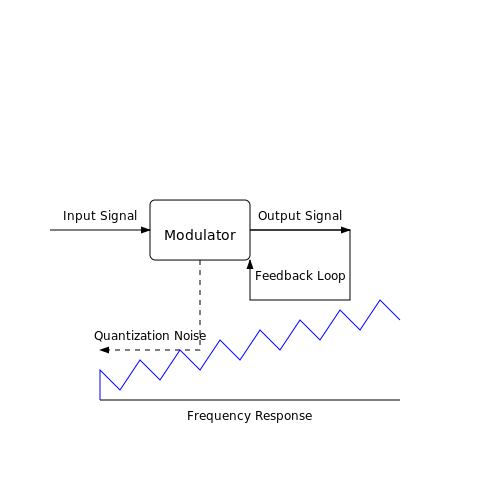
2. First-Order Delta-Sigma Modulator
2.1 First-Order Delta-Sigma Modulator
The first-order delta-sigma modulator serves as a fundamental building block in digital signal processing, particularly in the context of analog-to-digital conversion. Its operation is founded on the principles of oversampling and noise shaping, which combine to establish a platform for high-resolution data representation. Understanding this basic modulator provides valuable insights into the workings of more complex delta-sigma modulators, which are prevalent in various applications including audio processing, telecommunications, and instrumentation.Principles and Operation
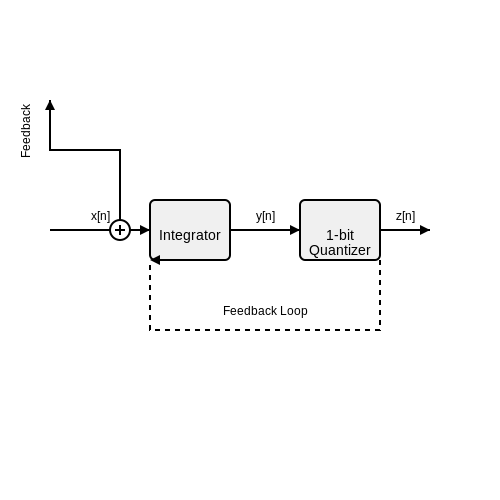
At the core of a first-order delta-sigma modulator lies a simple yet effective structure that utilizes feedback to manage the quantization noise generated during the conversion process. The design typically consists of an integrator followed by a 1-bit quantizer. When an analog signal is fed into the modulator, the integrator accumulates the difference between the input signal and the output of the quantizer. This integrator provides the essential memory aspect, allowing the modulator to 'remember' past values, which contributes to noise shaping. The quantizer, ideally a simple comparator, converts the output of the integrator into a binary signal—'1' or '0'. Mathematically, we can describe the operation as follows: 1. Input Signal: Let the analog input signal be denoted by \( x[n] \). 2. Integrator Output: The output of the integrator can be expressed recursively: $$ y[n] = y[n-1] + x[n] - Q(y[n-1]) $$ where \( Q \) is the quantizer function. 3. Quantized Output: The quantized output can thus be defined as: $$ z[n] = Q(y[n]) $$ Given that \( Q(y[n]) \) outputs discrete values, typically in a +/-1 format for a 1-bit quantizer, the modulator effectively reduces the quantization error through oversampling, pushing the noise energy out of the frequency range of interest.Noise Shaping
The key advantage of delta-sigma modulation is its ability to shift quantization noise to higher frequencies. This property is critical for applications requiring high fidelity and low distortion. The noise shaping occurs due to the feedback loop formed with the quantizer and the integrator. Specifically, at frequencies close to the sampling frequency, the noise is greatly increased, while at lower frequencies (where most useful signal power lies), the noise is significantly attenuated. This characteristic allows for automatic gain control in the modulator, leading to significant advantages in achieving high dynamic range in applications such as audio sampling and RF transmission designs.Real-World Applications
First-order delta-sigma modulators find their utility in a variety of fields, including:- Audio Processing: Employed in high-resolution audio converters to ensure minimal distortion.
- Telecommunications: Used in software-defined radios (SDRs) to convert analog signals into digital formats.
- Instrumentation: Utilized in sensor applications, particularly for measurements that demand high precision.
- Data Acquisition Systems: Integrated into systems where high-speed sampling and conversion of real-world signals are necessary.
2.2 Higher-Order Delta-Sigma Modulators
Delta-Sigma Modulation (DSM) continues to gain traction in various high-resolution conversion applications, including but not limited to audio conversion, instrumentation, and sensor interfacing. While first-order delta-sigma modulators were effective for many standard applications, growing demands for higher performance have led engineers to explore higher-order delta-sigma modulators. This section delves into the intricate structure and operation of these advanced modulators, highlighting their benefits and practical implementations.
Understanding Higher-Order Modulation
Higher-order delta-sigma modulators utilize multiple feedback loops and enhanced noise shaping capabilities. By doing so, they increase the oversampling ratio and improve the Signal-to-Noise Ratio (SNR) provided by the modulator. The basic architecture consists of an integrator followed by a quantization process, yet higher-order modulators incorporate additional integration stages to achieve a greater degree of noise shaping.
As a result, the relationship between the oversampling ratio (OSR) and the noise shaping order plays a pivotal role in determining performance:
- OSR: It refers to the number of samples taken per Nyquist interval. A greater OSR can help push quantization noise out of the band of interest.
- Order of the Modulator: Refers to the number of integrators in the loop. An increased order generates a steeper roll-off of quantization noise.
Mathematical Formulation
The noise shaping function can be modeled mathematically. For a higher-order delta-sigma modulator, the noise transfer function (NTF) can be represented as:
Here, \(N\) indicates the order of the modulator. This function illustrates how the quantization noise is shaped as a function of frequency. The quantization noise is pushed away from the frequencies of interest, allowing for improved representation of the input signal.
Design Considerations and Trade-offs
When designing higher-order delta-sigma modulators, a series of factors must be meticulously considered. Key considerations include:
- Stability: Higher-order systems can incur stability issues due to increased complexity in feedback. Proper root locus and pole-zero placement strategies must be employed to ensure stability.
- Nonlinearity: Increased order can significantly amplify nonlinearities. Techniques such as dithering can be incorporated to mitigate distortion effects.
- Power Consumption: Higher-order modulators often demand more power. These concerns are crucial when specific power budgets are assigned to practical applications.
Real-World Applications
Higher-order delta-sigma modulators find use in sophisticated applications requiring high performance and accuracy, such as:
- Audio Processing: They enhance the audio conversion process by achieving high dynamic range and low distortion, vital in hi-fi audio equipment.
- Biomedical Devices: Precision in signal fidelity is crucial when capturing small biosignals, such as EEG or ECG data.
- Instrumentation: Measurements in scientific experiments often necessitate high-resolution analog-to-digital (A/D) conversion, which higher-order modulators can provide.
Understanding the mechanics and implications of higher-order delta-sigma modulators opens up new avenues for innovation in circuit design and application. Recognizing the balance between complexity, performance, and trade-offs is equally essential in advancing the field.
2.3 Multi-Bit Delta-Sigma Modulation
Delta-sigma modulation, widely used in modern data conversion systems, typically implements one-bit quantization in its simplest form. However, the variant of multi-bit delta-sigma modulation (MDB) extends this concept by utilizing multiple bits per sample. This enhancement significantly enhances performance, offering finer quantization and improved noise shaping.
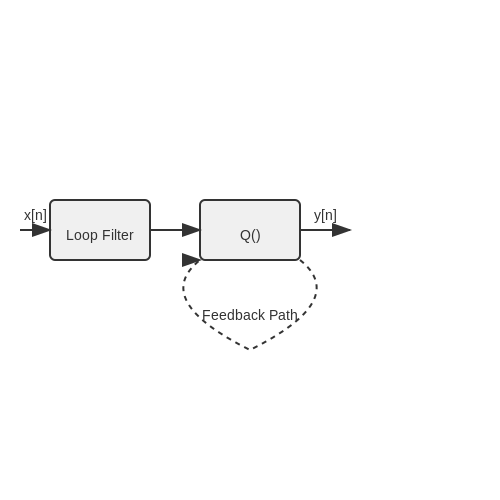
The state-of-the-art delta-sigma modulator employs feedback paths and an internal loop filter, shaping the quantization noise to higher frequencies. In multi-bit implementations, the quantization function converts the output of the loop filter into an N-bit output signal rather than a single bit. Consequently, this extends the linearity of the conversion process, allowing better signal resolution and potentially reducing the required oversampling rate.
Fundamentals of Multi-Bit Delta-Sigma Modulation
The essence of MDB lies in its ability to process several bits at once. A multi-bit quantizer transforms the output of a loop filter into a digital signal that encompasses multiple discrete levels, represented as bits. Technically, if we consider an N-bit representation, each conversion can represent 2N levels of output, which brings additional flexibility in handling dynamic range and distortion.
To derive an expression that demonstrates the effect of multi-bit processing, consider a simple first-order delta-sigma modulator, which can be represented in the form of difference equations. The output samples of the multi-bit modulator can be expressed mathematically as:
where:
- y[n] is the n-th output sample of the modulator,
- Q() is the quantization function which encodes multiple bits,
- x[n] is the input signal, and
- hat{y}[n-1] is the predicted output based on preceding outputs.
In a multi-bit system, rather than passing through a simple one-bit quantization, this quantization function can be constructed as:
As seen, this quantization function can expand with a greater number of thresholds, effectively allowing the modulator to produce higher fidelity representations of both low and high-level signals.
Practical Relevance and Applications
A multi-bit delta-sigma modulator's various applications extend across a range of fields where high-fidelity signal processing is pivotal. Typical implementations can be found in:
- Audio processing — Through converting analog audio signals to high-resolution digital formats without introducing significant distortion.
- Instrumentation systems — Where precise measurements and fidelity playback form critical operational requirements for sensors and measurement devices.
- Telecommunications — Allowing for rich modulation schemes in transmitting data over various mediums, enhancing the robustness against noise.
Given the advantages of reduced noise and better signal dynamics, multi-bit delta-sigma modulation systems cater to the growing demands for enhanced performance in both consumer electronics and professional applications.
In summary, while conventional delta-sigma modulation has its merits, multi-bit configurations pave the way for advanced solutions that meet the needs of the modern digital age.
3. Audio Signal Processing
3.1 Audio Signal Processing
Delta-sigma modulation (DSM) is a powerful technique widely used in audio signal processing, particularly for analog-to-digital (ADC) and digital-to-analog (DAC) conversions. This modulation scheme effectively captures high-fidelity audio signals while minimizing noise and distortion—imperatives in modern audio applications, from consumer electronics to professional audio equipment.
Understanding Delta-Sigma Modulation
At its core, delta-sigma modulation works by oversampling the analog signal—sampling it at a much higher rate than the Nyquist rate. This oversampling approach aids in distributing quantization noise over a broader frequency range, allowing for improved signal-to-noise ratio (SNR) and better audio fidelity.
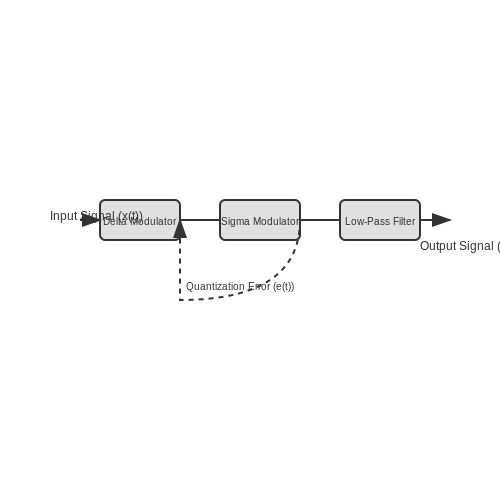
The process begins with a feedback loop characterized by a delta modulator integrated into a sigma modulator. The delta modulator employs a simple difference operation to encode changes in the signal rather than its absolute value, thereby enabling the capture of very low-level audio signals with high precision.
Mathematical Foundation of Delta-Sigma Modulation
To better understand how delta-sigma modulation achieves its robust audio processing capabilities, let’s derive the signal quantization error equation:
Let the input signal be represented as \( x(t) \) and the output of the delta-sigma modulator as \( y(t) \). The difference in the continuous domain can be expressed as:
This quantization error \( e(t) \) will vary based on the sampling process and the feedback loop employed. The key property of the delta-sigma modulator is that it utilizes a low-pass filter in its feedback path, which shapes the quantization noise and allows it to be pushed beyond the audio band.
The output of the delta-sigma modulator can be described in discrete form where we consider an oversampling factor \( M \) such that:
Where \( L[n] \) represents the low-pass filtering operation over the sampled signal. By carefully setting this filter, designers can effectively suppress the quantization noise in the audio band while keeping the output signal close to the input signal \( x(t) \).
Real-World Applications in Audio Processing
Due to its advantages, delta-sigma modulation is the backbone of several key audio processing technologies:
- Digital Audio Converters (DACs): DSM is prevalent in high-quality DACs used in professional studio equipment, enabling accurate reproduction of sound from digital formats.
- Digital Signal Processing (DSP): Audio DSP systems utilize delta-sigma techniques to perform tasks such as filtering and dynamic range compression, thus enhancing audio signal quality.
- Recording Systems: Many modern recording systems implement delta-sigma ADCs to ensure that lower frequency components are captured with precision, vital for professional audio recordings.
Ultimately, the combination of oversampling, noise shaping, and the inherent capabilities of delta-sigma modulation allows for high-fidelity audio signal processing, making it an essential technology for engineers and researchers involved in audio electronics.
Conclusion
Delta-sigma modulation stands out not merely for its technical sophistication but for its practical relevance in delivering quality audio signals across a variety of applications. As audio technology continues to evolve, delta-sigma modulation will remain pivotal in meeting the demands for improved sound quality and performance.
3.2 Digital-to-Analog Conversion
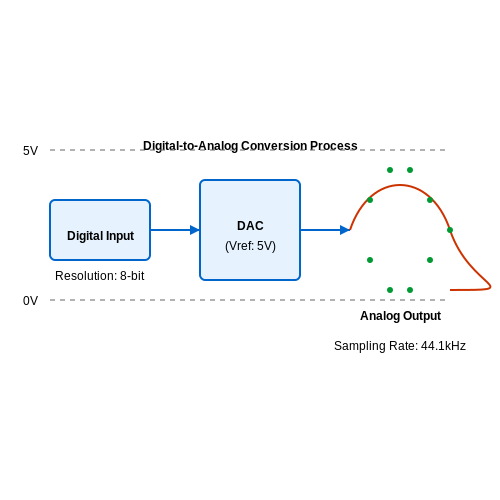
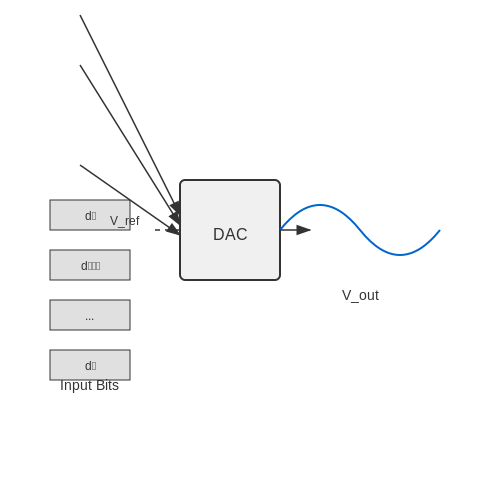
In the realm of signal processing and electronics, Digital-to-Analog Conversion (DAC) is crucial for transforming discrete digital signals into continuous analog signals. This conversion is particularly relevant in audio processing, telecommunications, and various other applications where analog signals are required for output devices such as speakers, televisions, and control systems.
Understanding Delta-Sigma Modulation in DAC
At the heart of modern DAC techniques, especially within high-performance applications, is Delta-Sigma Modulation (ΔΣM). This modulation technique offers high precision and effective noise shaping, making it ideal for audio and other high-fidelity systems. In Delta-Sigma DACs, the main principle revolves around oversampling the input digital signal and employing a noise shaping filter to minimize quantization noise within the band of interest.
Oversampling and Noise Shaping
Oversampling refers to the process of sampling a signal at a frequency significantly higher than the Nyquist rate (twice the highest frequency of the signal). For audio applications, this typically means sampling at rates in the megahertz range. By doing so, the Delta-Sigma modulator can distribute quantization noise over a broader frequency spectrum, effectively pushing the noise outside the band of interest where it can be filtered out.
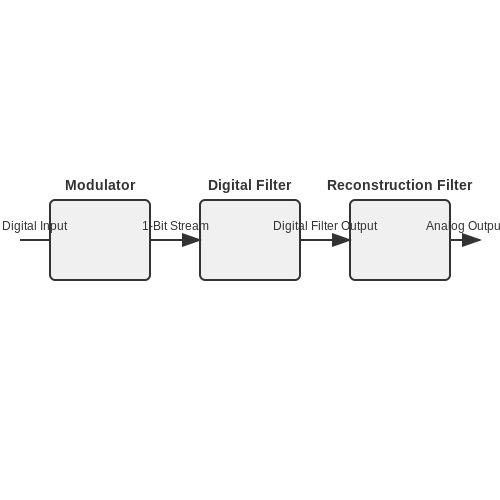
In essence, the Delta-Sigma modulator produces a 1-bit stream representing the digital input signal. This 1-bit output is then passed through a low-pass filter, which averages the output signal to recreate the continuous analog waveform.
In the equation above, \( S_{out}(t) \) is the output analog signal formed by integrating the pulse density modulated 1-bit output \( S_{1bit}(t) \). The integration effectively shapes the output noise and reconstructs the original signal.
Practical Implementation of Delta-Sigma DAC
The implementation of Delta-Sigma DACs in real-world applications can be categorized into a few stages: the modulator, the digital filter, and the reconstruction filter. Each of these components is designed to optimize performance, mitigate noise, and maintain signal integrity.
- Modulator: The core component that performs the conversion of digital data into a 1-bit stream using noise shaping techniques.
- Digital Filter: This DSP (Digital Signal Processing) block processes the digital input signal before feeding into the modulator, allowing further refinement of the input signal characteristics.
- Reconstruction Filter: An analog low-pass filter that smoothens the 1-bit output stream back to a continuous signal, reducing high-frequency components introduced during modulation.
Applications of Delta-Sigma DACs are vast; they are a predominant choice in high-fidelity audio systems, precision instrumentation, and communication devices where signal integrity is paramount. High-performance audio converters, such as those used in DAC chips in smartphones or digital audio workstations, illustrate real-world applications of this technology.
Key Advantages and Considerations
One of the main advantages of Delta-Sigma modulation is its ability to achieve very high resolution with a relatively simple circuit design. Moreover, because it effectively pushes quantization noise outside the audio band, it results in a cleaner, more accurate output signal.
However, there are challenges associated with Delta-Sigma DACs as well, including a potentially increased latency due to oversampling and processing requirements. Therefore, understanding the trade-offs between speed and resolution is critical when selecting a DAC for specific applications.
In summary, Delta-Sigma modulation is an advanced technique in digital-to-analog conversion that transforms digital representations into high-fidelity analog signals. By leveraging oversampling and tailored filtering strategies, it delivers remarkable accuracy and quality suitable for a myriad of applications in modern electronics.
3.3 Sensor Signal Conditioning
Understanding Sensor Signal Conditioning
In modern electronic systems, the integrity and fidelity of sensor outputs are paramount to ensuring accurate data acquisition and processing. Signal conditioning involves a series of operations on sensor outputs to make them suitable for further processing, especially in contexts where delta-sigma modulation is employed for analog-to-digital conversion. The need for signal conditioning arises due to various factors, such as sensor characteristics, the environment, and the requirements of downstream processing units.Sensor outputs are often weak and noisy, especially in practical applications. Therefore, the primary objectives of signal conditioning are:
- Amplification: Increasing the sensor output to levels compatible with the analog-to-digital converter (ADC).
- Filtering: Removing undesired noise and disturbances that can affect the signal quality.
- Linearization: Ensuring that the output signal is linearly correlated with the physical phenomenon being measured.
- Level shifters: Adjusting signal levels to meet the input requirements of ADCs and other circuits.
Signal Conditioning Techniques
To achieve the above objectives effectively, engineers use a variety of techniques and components in the design of signal conditioning circuits. The following techniques are particularly relevant in contexts involving delta-sigma modulation:1. Amplification
The application of operational amplifiers (op-amps) is pivotal in achieving signal amplification. By implementing a non-inverting amplifier configuration, the voltage gain can be controlled. The ability to adjust this gain is essential, as it ensures the sensor output maximally utilizes the ADC’s input range, leading to improved resolution.2. Filtering
Before the quantization process implemented in delta-sigma modulation, it is crucial to apply filtering to the signal. Typically, low-pass filters (LPFs) are used to eliminate high-frequency noise. It is noteworthy that the design of these filters must take into account the noise bandwidth and the sampling frequency of the ADC. The cut-off frequency \( f_c \) of a first-order RC low-pass filter can be determined using:3. Linearization
Certain sensors, such as thermistors and photodetectors, output a nonlinear response to variations in the measured phenomenon. Linearization techniques, including polynomial fitting and look-up tables, can transform these nonlinear outputs into a linear format for more straightforward interpretation by the delta-sigma modulator.4. Level Shifting
In many applications, sensor signals must be matched with the logic levels of microcontrollers or ADCs. Level shifters can be implemented to adjust the voltage levels accordingly, ensuring compatibility between the sensor output and the required input of subsequent devices.Real-World Applications
Signal conditioning is vital in several real-world applications. For instance, in medical instrumentation like electrocardiograms (ECGs), signal conditioning ensures that the weak electrical signals produced by the heart are amplified, filtered, and processed to provide accurate readings. Similarly, in industrial automation systems, robust sensors detect process variables, where signal conditioning maximizes data fidelity for control systems. In conclusion, mastering signal conditioning techniques enhances the efficacy of delta-sigma modulation systems, providing a solid foundation for high-quality analog-to-digital conversion. By understanding the underlying principles and applying these techniques appropriately, engineers can greatly improve the performance of their measurement and control systems.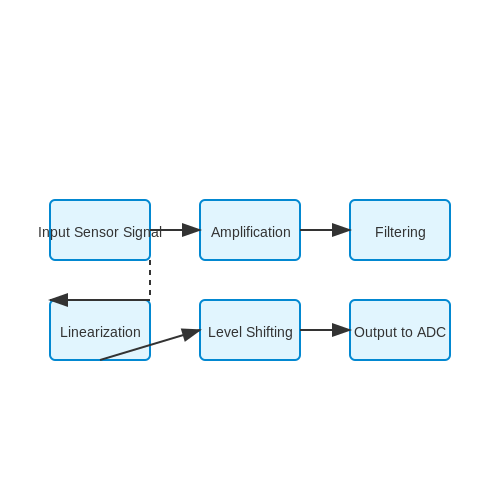
4. Signal-to-Noise Ratio (SNR) in Delta-Sigma Modulators
4.1 Signal-to-Noise Ratio (SNR) in Delta-Sigma Modulators
The signal-to-noise ratio (SNR) is a critical performance metric for delta-sigma modulators, directly influencing the fidelity of signal reproduction. Understanding SNR in the context of delta-sigma modulation requires a solid grasp of both signal processing concepts and the underlying architectures of delta-sigma modulators. This subsection will explore how SNR is affected during the modulation process and the implications for practical applications such as audio processing and data acquisition systems. To begin, let us define SNR more formally. It is typically expressed as the ratio of the power of the desired signal to the power of background noise. Mathematically, this is represented as: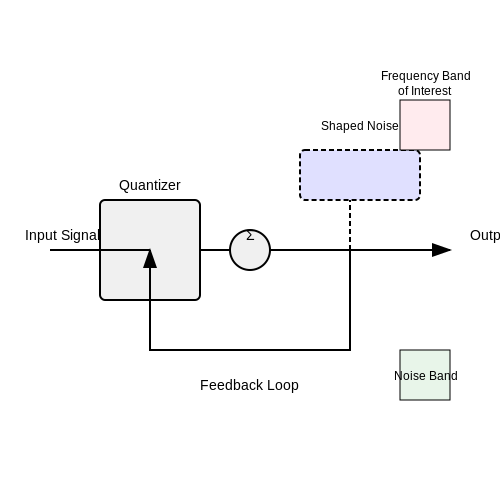
4.2 Bandwidth and Resolution Trade-offs
Delta-sigma modulation (DSM) is a sophisticated technique that finds widespread use in analog-to-digital conversion and digital signal processing due to its unique ability to trade-off between bandwidth and resolution. To grasp the implications of these trade-offs fully, we need to dissect the underlying principles of DSM and how they dictate system performance in practical applications.
Understanding Bandwidth in DSM
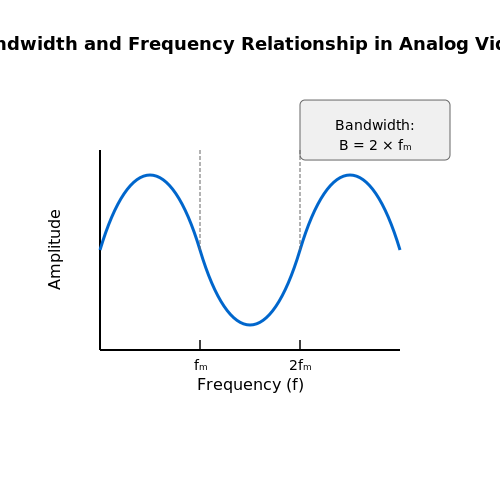
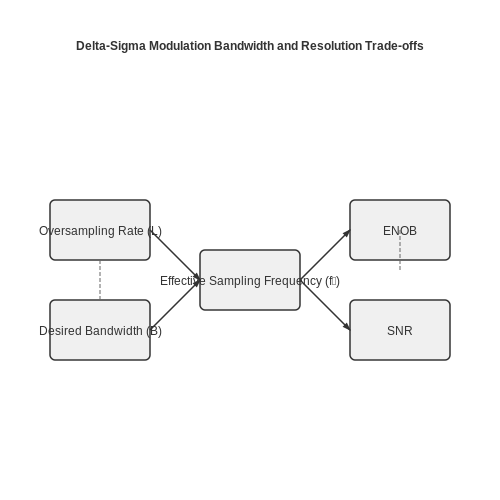
In the context of delta-sigma modulation, bandwidth refers to the range of frequencies over which the modulated signal can effectively convey information. The sampling rate, crucial to DSM, is typically significantly higher than the Nyquist rate for the signal being processed. This oversampling is a defining feature of DSM and serves to spread quantization noise over a broader frequency range. As a result, more of the signal's spectrum is available for capturing the essential characteristics of the input signal.
Let's denote the oversampling rate by a factor of \( L \). For a desired signal bandwidth \( B \), the effective sampling frequency \( f_s \) can be expressed as:
This relationship illustrates that increasing the oversampling rate lowers the quantization noise density, thereby improving resolution. However, practical limits on bandwidth come into play due to hardware constraints and the need for effective noise filtering.
Examining Resolution in DSM
Resolution in the context of delta-sigma converters pertains predominantly to the effective number of bits (ENOB) the system can provide. It is primarily influenced by two factors: the order of the modulator and the oversampling ratio. As one increases the order of the delta-sigma modulator, the resolution improves due to better noise shaping. This effect can be mathematically interpreted as follows:
Here, \( SNR \) represents the signal-to-noise ratio, which is enhanced by increased oversampling and higher-order modulators. However, as higher order in DSM typically results in an increase in the complexity of the design, it mandates a trade-off against system stability and bandwidth, especially in the presence of feedback loops.
Practical Relevance: Real-World Applications
The delicate balance between bandwidth and resolution fundamentally determines the performance of delta-sigma modulators in practical applications. A pertinent example is found in audio encoding, where high-resolution audio formats utilize high oversampling rates to achieve finer sound quality while maintaining the integrity of the audio signal. In medical imaging, DSM is used in devices like ultrasound machines, where the need for high resolution is paramount, yet the bandwidth must be maintained to ensure clear imaging without artifacts.
Another notable application of this trade-off is in communications systems, such as software-defined radios, where adaptability to various bandwidth requirements is essential for efficient data transmission. By carefully selecting the oversampling ratio and modulator order, engineers can tailor delta-sigma modulators to meet specific bandwidth and resolution requirements, thus optimizing the performance of modern electronic systems.
Conclusion
In summary, the interactions between bandwidth and resolution in delta-sigma modulation are critical for designing effective converters. By leveraging the advantages of oversampling and appropriate modulator order, one can achieve significant enhancements in signal fidelity while carefully navigating potential limitations. Understanding these trade-offs empowers engineers and researchers alike to innovate and optimize systems across a broad array of fields.
4.3 Stability Analysis of Delta-Sigma Modulators
Delta-sigma modulation (DSM) is a powerful technique widely utilized in the digital conversion of analog signals, particularly in applications requiring high precision and resolution, such as in audio and communication systems. However, the stability of delta-sigma modulators is a crucial consideration that impacts performance, as it directly influences noise shaping, distortion, and the overall signal integrity. In this section, we will delve into the fundamental principles of stability analysis in delta-sigma modulators, beginning with a review of the underlying feedback mechanisms.
Understanding Feedback in Delta-Sigma Modulators
Delta-sigma modulators employ a loop structure that traditionally consists of a modulator that encapsulates an integrator, a quantizer, and a feedback loop. The stability of this feedback system can be analyzed by employing concepts from control theory, where the feedback loop introduces a phase shift between the input and output signals.
A key aspect of the feedback mechanism is the positive feedback afforded by the delta-sigma architecture, which enhances signal fidelity through noise shaping. However, excessive feedback can lead to oscillations and instability, necessitating a careful adjustment of the loop gain and the design of the components involved.
Types of Instabilities
Instabilities in delta-sigma modulators can manifest in several forms, including:
- Oscillatory Instability: Occurs when the feedback loop gain is too high, causing sustained oscillations in the output signal.
- Non-oscillatory Instability: Resulting from inadequate phase margin in the feedback system, leading to erratic and unpredictable behavior without visible oscillations.
- Limit Cycle Behavior: This is characterized by periodic fluctuations in the quantizer's output due to finite resolution, manifesting as a form of distortion.
Mathematical Representation of Stability
The stability of a given delta-sigma modulator can be evaluated using techniques similar to those employed in linear control systems. The so-called Nyquist criterion provides valuable insights into whether a feedback loop is stable. For a generic feedback system, this criterion states: a feedback loop is stable if the encircled origin in the Nyquist plot of the open-loop transfer function does not include the critical point of (-1, 0).
The loop transfer function for third-order delta-sigma modulators often takes the form:
where K represents the loop gain and \(a_1\) and \(a_2\) are coefficients determined by the design of the modulator's loop. To evaluate stability, we need to analyze the roots of the characteristic polynomial in the denominator:
The roots of this polynomial yield crucial insights into whether the output response will stabilize or exhibit oscillatory behavior.
Practical Techniques for Ensuring Stability
To ensure that delta-sigma modulators remain stable across a range of operating conditions, several practical techniques may be employed:
- Using Phase Margin Techniques: By adjusting the loop gain and ensuring sufficient phase margin, designers can improve system stability.
- Hysteresis in Quantization: Implementing hysteresis during the quantization process helps mitigate limit cycle behavior by adding a buffer that prevents rapid changes in the output signal.
- Dynamic Modulator Design: Employing adaptive techniques that alter the characteristics of the modulator dynamically can cater to varying input signals while maintaining stability under all conditions.
These practical measures not only enhance stability but also preserve the performance characteristics of delta-sigma modulators in real-world applications.
Conclusion
The stability analysis of delta-sigma modulators is essential to ensure high-performance operation in various digital signal processing applications. Through the careful consideration of feedback mechanisms, mathematical modeling, and practical design techniques, engineers can successfully navigate the trade-offs inherent in this versatile modulation process. With ongoing advancements in electronic design automation tools, the task of analyzing and ensuring the stability of these systems continues to evolve, providing new opportunities for innovation in the field.
5. Anti-Aliasing and Digital Filtering
5.1 Anti-Aliasing and Digital Filtering
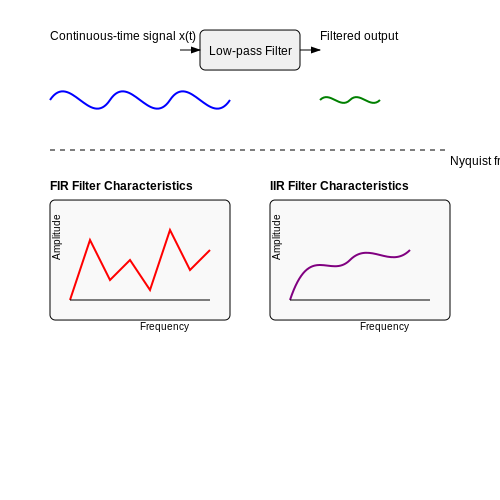
In the domain of Delta-Sigma Modulation, the role of anti-aliasing and digital filtering is critical for ensuring accurate signal representation and minimizing errors related to aliasing effects. Aliasing occurs when high-frequency signals are sampled at a rate insufficient to capture their variations, leading to distortions in the resulting digital representation. Employing anti-aliasing filters before the sampling process enhances the integrity of the digitized signal, particularly in application areas such as audio processing and sensor data acquisition.
Understanding Anti-Aliasing
Anti-aliasing can be conceptualized as a preprocessing step that involves the implementation of low-pass filters to eliminate frequency components above half the sampling frequency (known as the Nyquist frequency). By ensuring that the signal does not contain frequencies beyond this threshold, we can safeguard against misinterpretation of genuine signal components as lower frequency artifacts.
To represent this concept mathematically, consider a continuous-time signal \( x(t) \) with a maximum frequency \( f_{\max} \). The sampling frequency \( f_s \) must satisfy the Nyquist criterion, which states:
In practice, signals often require pre-filtering to meet this criterion effectively. The implementation of analog low-pass filters, such as Butterworth or Chebyshev filters, can help to dampen higher-frequency signals adequately before sampling. The filter’s cutoff frequency must be selected properly to balance between preserving signal fidelity and preventing aliasing.
Digital Filtering Techniques
After the analog-to-digital conversion, digital filtering plays a critical role in further processing the digitized signal. Digital filters can eliminate unwanted noise and enhance desired signal characteristics, making them indispensable in the post-sampling phase.
- Finite Impulse Response (FIR) Filters: FIR filters are widely used due to their inherent stability and linear phase response. They can be designed to meet specific frequency specifications and are characterized by a finite number of coefficients.
- Infinite Impulse Response (IIR) Filters: Unlike FIR filters, IIR filters can have feedback, which allows them to achieve a sharper cutoff with fewer coefficients. However, they require careful design to maintain stability.
The design of these digital filters often employs techniques such as the windowing method for FIR filters or the bilinear transformation for IIR filters. Each filtering approach requires careful consideration of the filter characteristics to maximize the performance of the delta-sigma modulator.
Practical Applications
In real-world applications, such as audio ADCs, the combination of analog anti-aliasing filtering and subsequent digital filtering is essential for achieving high fidelity in digital audio representations. Similarly, in sensor networks, where signals can vary widely in frequency content, implementing effective filtering strategies ensures that the resultant sampled data accurately reflects the underlying phenomena being measured.
Overall, understanding and implementing anti-aliasing and digital filtering mechanisms significantly contribute to the successful application of Delta-Sigma Modulation technologies across various fields.
5.2 Circuit Design Considerations
When delving into the intricate domain of Delta-Sigma Modulation (DSM), rigorous attention to circuit design considerations is paramount for achieving efficiency and fidelity in signal processing. The architecture of a DSM circuit typically comprises components that implement oversampling, noise shaping, and quantization—all of which contribute significantly to performance characteristics such as dynamic range, power consumption, and distorted linearity.Essential Circuit Components
At the heart of a Delta-Sigma Modulator lies a feedback loop architecture that consists of several key components:- Integrator: The integrator accumulates input samples over time, facilitating the conversion of an analog signal into a digital form. Its design parameters, such as bandwidth and gain, are crucial as they determine the frequency response and stability of the modulation process.
- Quantizer: This involves converting the continuous output of the integrator into discrete levels (typically one-bit). The characteristics of the quantizer directly affect the noise shaping capability of the modulator and its overall performance.
- Feedback Path: The feedback loop introduces noise shaping which redistributes quantization error to less critical frequencies. A well-designed feedback path ensures that the additional noise introduced by the quantizer is mitigated at the output signal's frequency band of interest.
Noise Shaping and Oversampling
One of the pivotal aspects of DSM is its ability to perform noise shaping through oversampling. The relationship between these two processes is mathematically characterized by the Nyquist theorem, which states that to avoid aliasing, the sampling rate must be at least twice that of the maximum signal frequency. In DSM, oversampling rates often exceed this threshold by factors of 64 to even 256, dramatically reducing the noise in the desired bandwidth. The noise shaping can be described mathematically by the transfer function of the modulator given by:Power and Area Considerations
In the pursuit of miniature yet efficient DSM circuits, engineers must contend with power consumption and area constraints. The choice of technology, such as CMOS, can significantly impact these parameters. For instance, architecture optimization for low power has led to the exploration of techniques like dynamic voltage scaling and sub-threshold operation. Furthermore, simulations incorporating mixed signals can aid in assessing the trade-offs between area and performance before prototypes are fabricated. Careful design can mitigate power consumption in two main areas:- Analog Circuit Design: Reducing the signal swing in the integrator, as well as leveraging transistors that operate in a sub-threshold region, can lower power without degrading performance.
- Digital Circuit Design: Using asynchronous circuits can yield significant power savings relative to conventional clocked designs, especially at very high sampling rates.
Real-World Applications and Case Studies
Delta-Sigma Modulators find extensive applications across a wide range of fields, especially in high-fidelity audio systems, instrumentation, and communication systems. A notable example is their implementation in ADCs (Analog-to-Digital Converters) used for audio signal processing, where maintaining high dynamic range and low distortion is critical for sound quality. Additionally, recent advancements have seen DSM integrated into RF communication systems, where its ability to process signals with extremely high precision is particularly advantageous. Modern research is exploring novel architectures such as multi-bit quantization and higher-order modulators to further enhance performance and efficiency. As you design your delta-sigma modulator, keep these considerations in mind. The interplay between architectural choices and circuit design will ultimately influence the performance and capabilities of your application.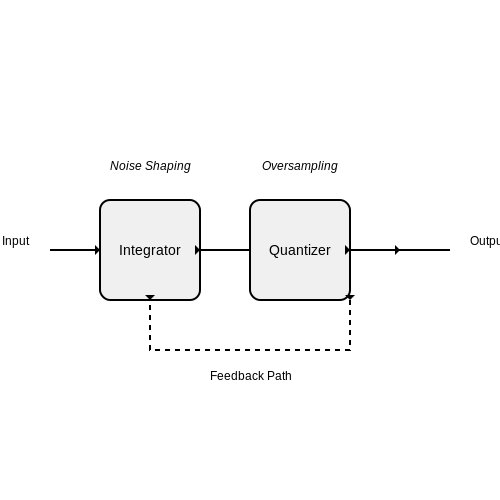
5.3 Effect of Non-ideal Components
In the domain of delta-sigma modulation, the performance of the converter is dramatically influenced by the characteristics of its components. Non-ideal components, which deviate from ideal behavior, can introduce distortions and significantly affect the audio quality and overall system performance. Understanding these effects is crucial for engineers and researchers designing effective delta-sigma ADCs and DACs. The principal non-ideal components in delta-sigma modulators include operational amplifiers (OP-amps), resistors, capacitors, and signal processing elements. Each of these components contributes to a range of issues, such as noise, distortion, and bandwidth limitations.Non-linearities and Distortions
One of the critical issues is the non-linearity of the components, primarily arising from OP-amps. In an ideal scenario, an OP-amp would perfectly amplify the input signal without distortion. However, real-world OP-amps have finite gain and bandwidth, which can lead to harmonic distortion. This distortion can be characterized using a transfer function model that includes parameters representing the gain and phase shifts of the OP-amp. To derive the impact of non-linearities mathematically, consider the output voltage \(V_{out}\) of a non-ideal OP-amp, which can be modeled as: $$ V_{out} = A \cdot V_{in} + D(V_{in}) $$ where \(A\) is the finite gain and \(D(V_{in})\) represents the distortion function depending on the input voltage. A common assumption is that the distortion \(D\) can be modeled as a polynomial function of the input signal, demonstrating higher-order non-linear distortions. In a delta-sigma modulator, these distortions introduce noise in the quantized output signal, significantly affecting the Signal-to-Noise Ratio (SNR) and Total Harmonic Distortion (THD). Analytically, it is crucial to evaluate the impact of these distortions in spectral domain transformations, which can be accomplished through Fourier Transform methods.Noisy Components and Their Impact
Another dimension to consider is the effect of noise introduced by non-ideal components. Noise can come from thermal sources, shot noise, and intrinsic noise within the circuits, leading to variations in the modulated output. Noise contributes to jitter in the timing of the conversion process, which can severely distort the resultant signal. The noise performance of a delta-sigma modulator is quantified predominantly by the noise shaping properties of the loop filter. In ideal conditions, the shaped noise is pushed out of the signal band, but with non-ideal components, this shaping can be less effective. The equation governing the noise response can be represented by: $$ N(j\omega) = H(j\omega) \cdot N_0 $$ where \(N_0\) is the inherent noise produced by the non-ideal components, and \(H(j\omega)\) is the transfer function of the modulator, demonstrating how noise propagates through the system due to component imperfections.Real-World Applications and Mitigations
In practical applications, such as audio processing, high-resolution imaging, or precise measurement systems, the effects of non-ideal components necessitate engineering solutions that either compensate for these imperfections or design circuits that minimize their influence. Techniques such as feedback compensation, circuit optimization, and choosing high-performance components are routinely employed. Case studies involving integrated circuit designs show success in mitigating the effects of non-ideal components through techniques like dynamic element matching (DEM), which serves to alleviate some systematic errors arising from resistor mismatch. Overall, the understanding and analysis of non-ideal components not only enhance the design principles of delta-sigma modulators but also allow for improved performance in applications where precision is paramount. By focusing on these non-ideal effects, engineers can develop robust systems tailored for high accuracy and reliability, paving the way for advancements in electronic signal processing.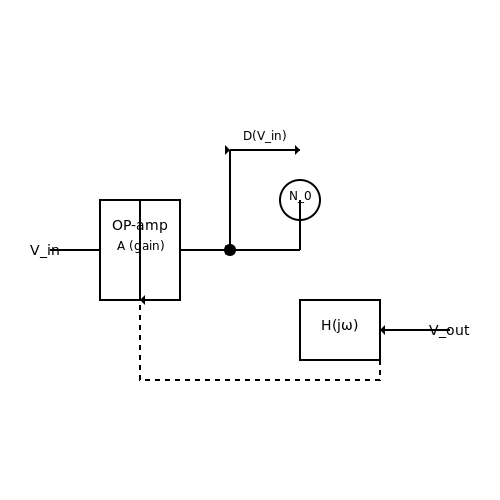
6. Advances in Integrated Circuit Technology
6.1 Advances in Integrated Circuit Technology
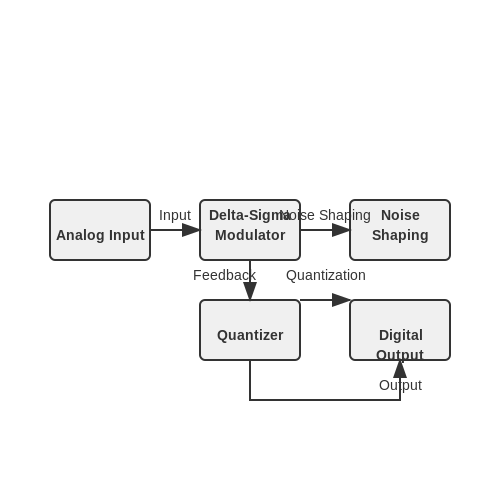
Delta-Sigma Modulation (ΔΣM) has significantly evolved alongside advancements in integrated circuit (IC) technology. This synergy has facilitated increased precision in analog-to-digital (A/D) conversion processes, promoting applications across a multitude of sectors including telecommunication, audio technology, and biomedical engineering. At the heart of ΔΣ modulation lies the ability to filter noise and enhance signal integrity, with advancements in IC technology playing a pivotal role in optimizing these characteristics.
Enhanced Resolution and Performance
The transition from traditional A/D converters to Delta-Sigma converters has primarily been driven by the scaling of semiconductor technologies. The advancements in IC fabrication techniques, especially with the miniaturization of transistors, have led to significantly improved resolution and dynamic range. Modern ΔΣ converters can now achieve resolutions greater than 24 bits, surpassing many of their predecessors. For example, utilizing FinFET technology, which allows for better electrostatic control of transistors, has minimized leakage currents and augmented speed, making it conducive for high-fidelity applications.
Low-Power Consumption
In applications where power efficiency is paramount, such as in portable medical devices, advancements in IC technology have allowed the design of low-power ΔΣ modulators. By utilizing techniques such as dynamic supply voltage scaling and adaptive circuit design, engineers can minimize power consumption without sacrificing performance. For instance, the development of sub-threshold operation techniques enables ΔΣ modulators to function effectively at low voltages, extending battery life significantly in mobile applications.
Integration with Digital Processing
Another trend in IC technology relevant to ΔΣ modulation is the increasing integration of analog components with digital signal processing (DSP) capabilities. This integration enables a more compact and efficient design while enhancing the overall system performance. The use of system-on-chip (SoC) architectures allows for robust noise shaping and oversampling strategies to be implemented directly on-chip. By applying sophisticated digital filtering techniques post-modulation, designers can achieve better noise suppression and achieve a finer resolution of the output signal.
Case Study: ADCs in Audio Systems
The integration of ΔΣ modulation in audio systems exemplifies these advances. Companies like Texas Instruments and Analog Devices have developed highly integrated ΔΣ ADCs that offer high fidelity, low distortion, and low power consumptions, such as their series of A/D converters tailored for high-end audio applications. These devices leverage the benefits of IC technology, where noise shaping algorithms implemented in the digital domain significantly enhance the listening experience through improved sound quality.
Future Trends and Research Directions
As IC technologies continue to advance, research is increasingly focused on maximizing the performance of ΔΣ modulators. Areas such as machine learning algorithms are being explored to optimize the modulation process and adaptively nullify interference in real-time. Furthermore, the incorporation of 3D integration technologies holds promise for the future, potentially allowing for unprecedented levels of performance enhancement by stacking multiple layers of circuitry that can process signals in parallel.
These trends suggest a bright future for ΔΣ modulation within integrated circuit technology, ensuring that as applications demand higher performance and efficiency, the mechanisms of signal processing will continue to evolve accordingly.
6.2 Emerging Applications in IoT and AI
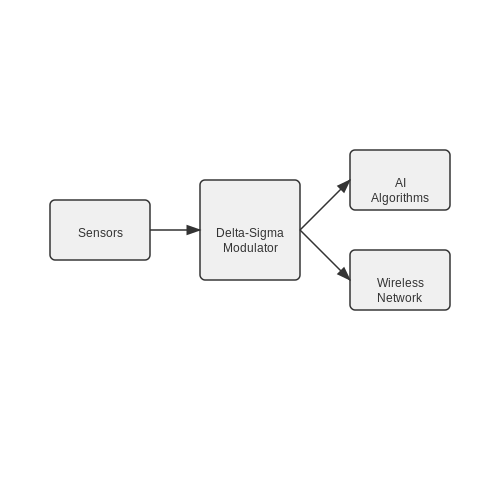
As we move further into the age of automation and intelligent systems, delta-sigma modulation (DSM) is finding compelling applications within the realms of Internet of Things (IoT) and artificial intelligence (AI). The ability of DSM to provide high-resolution digital representations of analog signals at low power and with reduced noise makes it particularly attractive for systems that require efficient data acquisition and processing.
Integration with IoT Devices
In IoT ecosystems, DSM is leveraged for its excellent noise shaping capabilities when converting signals from sensors. For instance, temperature and humidity sensors utilize delta-sigma converters to ensure that minute fluctuations in the environment are accurately captured and transmitted without significant loss of fidelity. This information is pivotal, providing critical data for smart home systems, wearable health technology, and industrial monitoring solutions.
One notable application is in the design of energy-efficient smart meters. These devices employ DSM to digitize the small variations in current flow within electrical systems while maintaining minimal power consumption, leading to longer battery life and less frequent recharging cycles.
Facilitating AI Algorithms
The increasing demand for AI solutions necessitates efficient data processing methods, and delta-sigma modulation fits seamlessly into this landscape. By converting analog signals into high-quality digital formats, DSM reduces the quantization noise that can otherwise impede machine learning algorithms. This is particularly vital in applications such as computer vision and autonomous driving, where sensor data is processed in real-time and precision is paramount.
Moreover, when integrated into AI methodologies, delta-sigma modulators collectively help reduce the amount of data to be processed, enhancing the speed of training and inference phases. For instance, autoencoders and similar neural network structures can benefit from the clearer signal representation ensured by DSM, leading to more efficient and accurate learning outcomes.
Addressing Latency and Bandwidth Challenges
In IoT applications, the constraints on bandwidth and latency are critical. DSM allows for oversampling and noise shaping, which helps compress the representation of signals. For example, in wireless sensor networks, it helps compress data streams without sacrificing quality. This capability is essential when considering the limited bandwidth available in many IoT environments.
Additionally, the low-latency characteristics of delta-sigma modulation make it suitable for applications requiring real-time feedback, such as robotic control systems. Here, data from multiple sensors can be efficiently processed and relayed to control systems, enabling quick decision-making.
Conclusion
The combination of delta-sigma modulation with IoT and AI technologies represents a promising future for applications that demand efficient, high-fidelity data processing. As these technologies continue to evolve, it is likely that the versatility of DSM will lead to even more innovative applications beyond current capabilities.
6.3 Research Directions
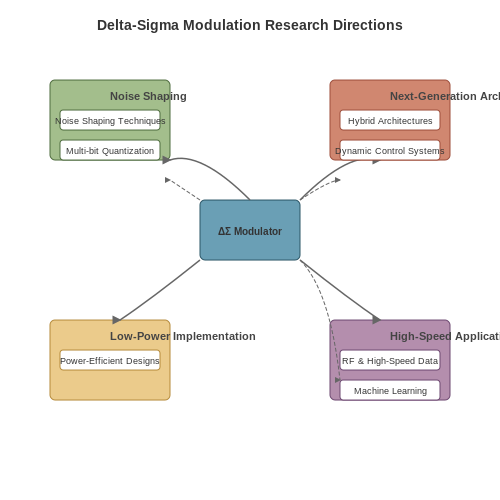
As delta-sigma modulation continues to evolve, it opens up numerous avenues for research and innovative applications. The underlying principles make it particularly well-suited for addressing challenges in modern electronics, particularly in the fields of signal processing and data conversion. This subsection explores several burgeoning research directions that can be pursued to enhance the technology further.
Enhanced Noise Shaping Techniques
Noise shaping is a key advantage of delta-sigma modulation, as it allows significant reduction of quantization noise within the band of interest. Current research focuses on improving noise-shaping topologies, utilizing advanced mathematical techniques such as:
- Multi-bit Quantization: Investigating the use of multi-bit quantizers can reduce the impact of noise shaping, leading to better fidelity in the output signal.
- Dynamic Control Systems: Developing adaptive noise-shaping algorithms that adjust based on input characteristics can allow for more efficient operation across different scenarios.
Next-Generation Architectures
Incorporating innovations within the architectures of delta-sigma modulators poses a significant opportunity. Several research trajectories here include:
- Integration with Machine Learning: Employing machine learning algorithms to optimize parameters dynamically can vastly improve the modulation performance, paving the way for smart signal processing devices.
- Hybrid Architectures: Exploring the combination of delta-sigma modulators with other modulation techniques, such as pulse-density modulation, can yield systems that overcome some inherent limitations of traditional structures.
High-Speed Applications
As demand for higher performance in data converters rises, delta-sigma modulation techniques must evolve to meet these needs:
- High-Speed Data Conversion: Research initiatives are focusing on increasing the speed of modulator designs while maintaining quantization noise performance, which is crucial for high-speed communication systems.
- Applications in RF Systems: Investigating the usage of delta-sigma modulation in radio frequency applications, including software-defined radios, can unlock new capabilities in signal acquisition and processing.
Low-Power Implementation
The rapid adoption of portable and battery-operated devices necessitates low-power consumption techniques:
- Power-Efficient Designs: Researchers are looking into circuit topologies and digital processing algorithms that minimize power consumption while maintaining performance, critical for wearable technology.
- Energy Harvesting Integration: Combining delta-sigma modulators with energy harvesting technologies could lead to self-sustaining sensors and systems.
In conclusion, delta-sigma modulation is at the forefront of numerous innovative research directions that can greatly influence future technologies in signal processing and electronics. With advancements in processing power, machine learning, and integration techniques, the potential applications of delta-sigma modulators are only limited by the imagination of engineers and researchers. As these fields develop, collaboration among disciplines will be essential to realize the full potential of delta-sigma modulation methodologies.
7. Key Textbooks on Delta-Sigma Modulation
7.1 Key Textbooks on Delta-Sigma Modulation
- Delta-Sigma Data Converters: Theory, Design, and Simulation — This book provides comprehensive coverage on the theory and practical design of delta-sigma data converters. It includes simulation insights and detailed analysis useful for engineers and researchers.
- Understanding Delta-Sigma Data Converters — A well-rounded textbook that introduces engineers and students to the fundamentals of delta-sigma modulation, with practical examples and historical context.
- Delta-Sigma Modulators: Modeling, Design and Applications — Explore the modeling and design of delta-sigma modulators with this text, which covers analytical techniques and real-world applications.
- Delta-Sigma Data Converters: Understanding Design Issues — This IEEE resource addresses design challenges faced when implementing delta-sigma data converters, providing solutions and strategies to enhance robustness.
- The ΔΣ Toolbox for Fractional-N Synthesizer Design — A practical guide and toolbox for implementing delta-sigma principles in synthesizer design, this book is ideal for advanced circuit designers working in telecommunications.
- Delta-Sigma Modulators: Proceedings of the 2nd International Workshop — This compilation of proceedings provides research insights from international experts, focusing on recent advancements and future directions in delta-sigma modulation technology.
- Digital Sigma-Delta Modulators: From the Basics to Advanced Topologies — Offering both introductory material and advanced topics, this textbook serves as a complete resource for studying digital sigma-delta modulation techniques and topologies.
- Analogue and Digital Sigma-Delta Modulation — Dive into both analog and digital domain applications of sigma-delta modulation, useful for anyone interested in mixed-signal system design.
7.2 Research Papers and Journals
- Design and Practical Considerations for a Delta-Sigma Modulator for Audio Applications — This IEEE paper offers detailed insights into the design of delta-sigma modulators tailored for audio applications, covering comprehensive design specifications and real-world implementation guidance.
- A Review of Delta-Sigma Modulation Techniques in Control Engineering — This article from the Journal of Control Engineering Practice reviews various delta-sigma modulation techniques used in control engineering, discussing their applications and effectiveness.
- Delta-Sigma Modulation for Quantum Computing Signal Processing — This research paper explores the application of delta-sigma modulation in quantum computing, emphasizing its role in signal processing for quantum states and its potential benefits.
- Low-power Delta-Sigma Modulators: A Comprehensive Survey for Deep Submicron CMOS Technology — This survey presents a broad review of low-power delta-sigma modulators, highlighting techniques and technologies that support efficient design, especially in deep submicron CMOS technology.
- Innovative Approaches to Delta-Sigma Modulation in RF Applications — This Springer's Analog Integrated Circuits and Signal Processing journal paper discusses novel approaches to applying delta-sigma modulation in RF applications, providing case studies and performance analysis.
- Analysis and Optimization of Multi-bit Delta-Sigma Modulators for High-Fidelity ADCs — This paper examines the optimization of multi-bit delta-sigma modulators for high-performance ADCs, focusing on error management and other critical design parameters.
- Future Directions in Delta-Sigma ADC Technologies — This open-access paper delves into the current advancements and future prospects of delta-sigma ADC technologies, offering forecasts based on technological trends and market needs.
- Delta-Sigma Modulator Design for Image Sensor Applications — Published by SPIE, this paper investigates the application of delta-sigma modulation in the context of image sensor technology, providing guidelines for integrating such modulators into imaging circuits.
7.3 Online Resources and Tutorials
- Analog Devices Education Library — This resource offers a wealth of articles, design notes, and application information, including a focus on Delta-Sigma modulation and its implementation in modern electronics.
- Electronics Tutorials: Delta-Sigma Modulators — A comprehensive tutorial on the theory and working principle of Delta-Sigma Modulators, complete with diagrams and simulation examples.
- Maxim Integrated: Delta-Sigma ADC Basics — An in-depth guide discussing the operation of Delta-Sigma Analog-to-Digital Converters, including typical application scenarios and performance nuances.
- edX Course on Delta-Sigma Modulation Principles — An advanced course providing a deep dive into the concepts of Delta-Sigma modulation, offering lectures and professional insights applicable to real-world engineering problems.
- Texas Instruments: Understanding Delta-Sigma ADCs — A detailed technical manual with a focus on the implementation and advantages of Delta-Sigma ADCs in complex circuit designs.
- IEEE Xplore: Delta-Sigma Modulators Overview — A journal article providing scholarly insights and research developments on Delta-Sigma modulation technology, suitable for engineers and researchers looking for cutting-edge information.
- Springer: Delta-Sigma Modulation Techniques — This chapter, part of a larger work on data converters, discusses advanced Delta-Sigma modulation techniques and their applications across various industries.
- Circuit Digest: Delta-Sigma Modulators Working and Types — Offers a detailed guide on the various types and functionalities of Delta-Sigma Modulators, including illustrative diagrams and application contexts.