Electronics for Robotics
1. Introduction to Electronics in Robotics
Introduction to Electronics in Robotics
Electronics plays a fundamental role in the field of robotics, enabling machines to perceive, interact, and move autonomously within their environments. Understanding the principles of electronics is crucial for designing and controlling robotic systems effectively. ####Key Concepts:
- Sensors and Actuators: Robots rely on sensors to gather data about their surroundings and actuators to execute physical actions based on that information. - Microcontrollers: These embedded systems serve as the brain of the robot, processing sensor data and sending commands to actuators. - Power Management: Efficient power supply and management are essential for ensuring continuous operation and optimal performance of robotic systems. ####Historical Perspective:
The integration of electronics into robotics has evolved significantly over the years, with advancements in microcontroller technology, sensor capabilities, and power efficiency driving innovation in the field. Early robots were limited in functionality due to constraints in sensor accuracy and computational power. ####Real-World Applications:
- Autonomous Vehicles: Self-driving cars leverage advanced electronics to navigate roads, detect obstacles, and make driving decisions in real time. - Industrial Automation: Robotics in manufacturing facilities use sophisticated electronics to streamline production processes and enhance efficiency. - Medical Robotics: Surgical robots incorporate precise sensors and actuators controlled by complex electronics to assist surgeons in performing delicate procedures.Future Trends:
The future of robotics is heavily influenced by developments in electronics, with trends such as miniaturization, AI integration, and energy efficiency shaping the next generation of robotic applications. Ensure a seamless integration of electronics knowledge with robotic principles to create innovative and effective robotic solutions that meet the demands of modern technology.1.2 Ohm's Law and Basic Circuit Theory
Welcome to the realm where physics meets electronics—the foundation of robotics. In this section, we delve into the fundamental principles that govern circuits and electricity. Let's start our journey by understanding Ohm's Law and basic circuit theory, crucial for designing and analyzing circuits in robotics applications.
Ohm's Law
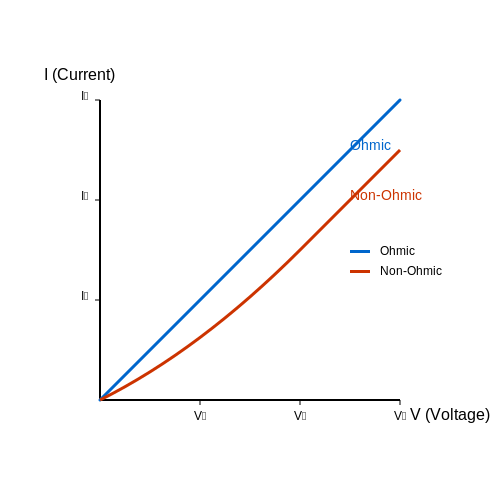
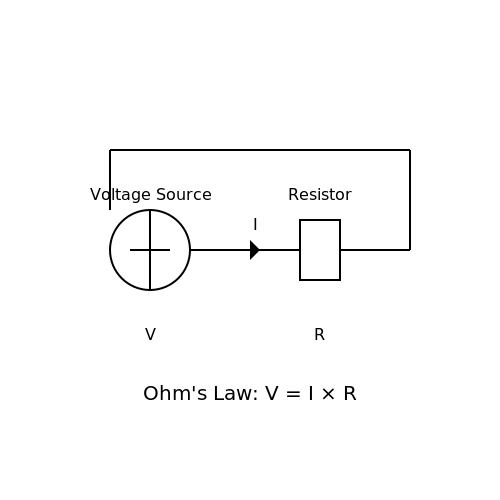
Ohm's Law, proposed by German physicist Georg Simon Ohm, is a fundamental principle in electronics that relates voltage, current, and resistance in a circuit. This law states that the current (I) flowing through a conductor is directly proportional to the voltage (V) across it and inversely proportional to the resistance (R) of the conductor.
This equation encapsulates the essence of Ohm's Law, where voltage (V) is the potential difference across a conductor, current (I) is the flow of charge, and resistance (R) is the opposition to this flow.
Basic Circuit Theory
Circuit theory forms the backbone of electronics and robotics design. A circuit is a closed loop through which an electric current can flow. Understanding basic circuit components and their interactions is crucial for designing complex robotic systems.
Elements of a Circuit
- Voltage Source: Provides the electrical energy needed to drive current in a circuit.
- Resistors: Components that impede current flow, dissipating energy in the form of heat.
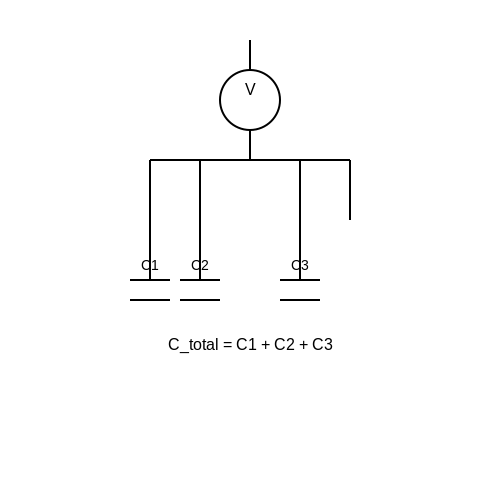
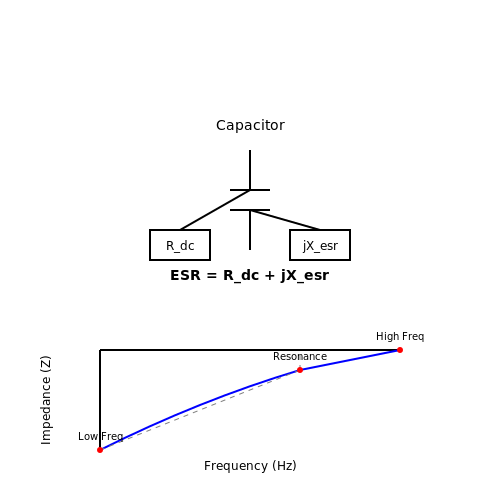
- Capacitors: Store and release electrical energy, influencing the flow of alternating currents.
- Inductors: Store energy in a magnetic field, affecting the flow of current in AC circuits.
Integrating these components effectively allows for the creation of sophisticated robotic circuits capable of performing intricate tasks with precision.
Practical Relevance
Understanding Ohm's Law and basic circuit theory is pivotal in the realm of robotics. From designing efficient power distribution systems to implementing sensor interfaces, mastery of these concepts is essential for engineers working on cutting-edge robotic technologies.
By grasping the principles expounded in this section, you equip yourself with the foundational knowledge necessary to navigate the intricate world of electronics within the realm of robotics.
Common Components: Resistors, Capacitors, and Inductors
In robotics, understanding the fundamental components of circuits is crucial for designing and building complex systems. Resistors, capacitors, and inductors are three common components that play significant roles in electronic circuits. ###Resistors
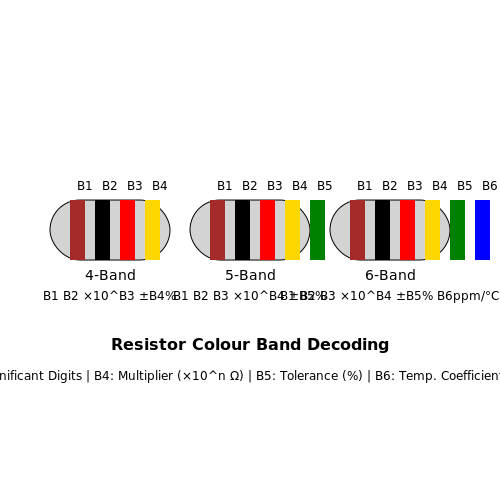
Resistors are passive electrical components that impede the flow of current in a circuit. They are characterized by their resistance value, typically measured in ohms (Ω). Ohm's Law, given by $$ V = IR $$, where V is voltage, I is current, and R is resistance, governs the behavior of resistors. ###Capacitors
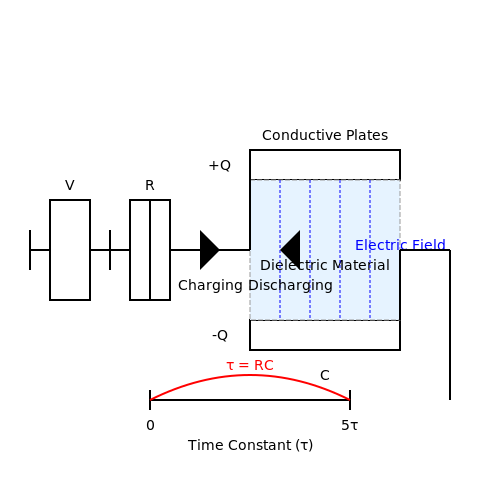
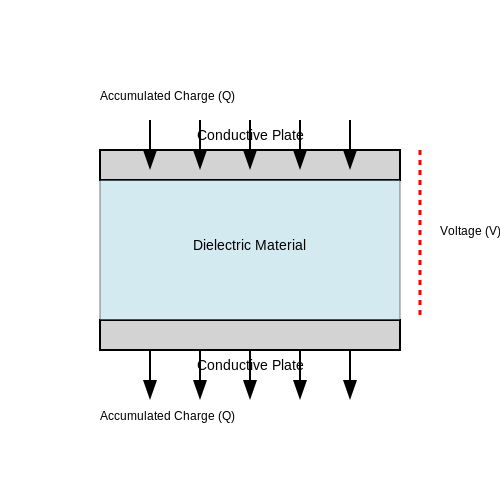
Capacitors store and release electrical energy in the form of an electric field. They are essential in filtering signals, smoothing voltage fluctuations, and timing circuits. The charge (Q) on a capacitor is given by $$ Q = CV $$, where C is the capacitance in farads (F) and V is the voltage across the capacitor. ###Inductors
Inductors store energy in the form of a magnetic field when current flows through them. They are vital in energy storage, signal processing, and impedance matching. The voltage (V) across an inductor can be expressed as $$ V = L \frac{di}{dt} $$, where L is the inductance in henries (H) and di/dt represents the rate of change of current. Understanding the behavior of these components is essential for designing efficient and reliable robotic systems. Real-world applications include motor control, sensor interfacing, power regulation, and communication systems. By incorporating resistors, capacitors, and inductors effectively, engineers can optimize the performance and functionality of robotic devices. By mastering the principles underlying these components, engineers can develop sophisticated robotic systems that push the boundaries of technological innovation and automation.
2. Types of Power Sources for Robots
2.1 Types of Power Sources for Robots
Electric power sources for robots play a critical role in their performance and functionality. In this section, we will delve into various types of power sources commonly used in robotics applications, considering their advantages, limitations, and practical implications.Batteries
One of the most prevalent power sources for robots is batteries. These electrochemical cells store energy that can be released as electric current to power the robot's electrical components and actuators. Batteries come in various chemistries, each with distinct characteristics:- Lithium-ion (Li-ion) Batteries: Known for their high energy density, light weight, and rechargeability, Li-ion batteries are popular choices for mobile robots and drones due to their long-lasting power output.
- Nickel Metal Hydride (NiMH) Batteries: NiMH batteries are commonly used in robotics applications that require a balance between energy capacity, lifespan, and cost-effectiveness.
Fuel Cells
Fuel cells offer an alternative power source for robots by converting chemical energy directly into electrical energy. The most common types of fuel cells used in robotics include:- Hydrogen Fuel Cells: Hydrogen fuel cells produce electricity through the reaction of hydrogen and oxygen, emitting only water vapor as a byproduct. These fuel cells are environmentally friendly and have the potential for long-duration operations.
- Methanol Fuel Cells: Methanol fuel cells leverage the oxidation of methanol to generate electrical power. These fuel cells are particularly useful in applications requiring a higher energy density without the need for hydrogen storage.
Solar Panels
For robots operating in outdoor environments or remote locations with access to sunlight, solar panels serve as a sustainable power source. Photovoltaic cells within solar panels convert sunlight into electricity, providing a continuous source of power during daylight hours. While solar power is clean and renewable, its efficacy may be limited by varying sunlight availability and weather conditions. Each power source for robots comes with unique characteristics and considerations that impact the robot's performance, mobility, and operational duration. Engineers and roboticists must carefully evaluate the specific requirements of their robotic systems to select the most suitable power source for optimal efficiency and functionality.2.2 Voltage Regulation and Power Distribution
In the realm of robotics, managing power effectively is crucial for the reliable operation of electronic systems. Voltage regulation and power distribution play essential roles in ensuring stable and efficient power delivery to various components in a robot.
Voltage Regulation
Voltage regulation is the process of maintaining a constant voltage level despite fluctuations in input voltage or load variations. This is achieved using devices called voltage regulators. These devices ensure that the output voltage remains stable within a specified range, offering protection to sensitive components.
One commonly used voltage regulator is the linear voltage regulator, which works by dissipating excess power as heat to maintain a steady output voltage. This method is simple and effective for low to moderate power applications but can be inefficient for high current loads due to power dissipation.
For more power-efficient regulation in high-current applications, switching regulators are preferred. These regulators convert the input voltage into higher frequencies, enabling the use of smaller components and reducing heat dissipation.
Power Distribution
Power distribution in robotic systems involves routing electrical power from a primary source to individual components and subsystems while maintaining voltage and current levels within operational limits.
Efficient power distribution requires adequate planning to optimize the flow of power throughout the system. This includes considerations such as wire gauge selection to minimize voltage drop, proper grounding techniques to reduce noise, and the use of power management strategies to maximize efficiency.
Additionally, power distribution modules, such as power distribution boards or modules, can streamline the process by providing multiple output channels with built-in protection features like overcurrent and overvoltage protection.

2.3 Batteries: Selection and Management
Taking into consideration the critical role that batteries play in powering robotic systems, it's imperative to understand the aspects surrounding their selection and management. Let's delve into the intricacies of batteries specifically tailored for robotics applications. Focusing on the unique power requirements of robotic systems, the selection of suitable batteries is essential to ensure optimum performance and longevity. Factors such as capacity, voltage, discharge rate, and size are pivotal in determining the ideal battery type for a given robotic application. ### Battery Selection Criteria When choosing a battery for a robotics project, capacity stands out as a crucial parameter. It dictates the amount of energy a battery can store and subsequently deliver over time. For robotics applications that demand prolonged operation or higher power output, selecting a battery with an adequate capacity becomes paramount. Another significant consideration is the voltage requirement of the robotic system. Ensuring that the battery voltage aligns with the operational needs of the motors and electronic components is vital for seamless integration. Moreover, the discharge rate of the battery plays a pivotal role in supporting the high current demands often associated with robotic movements and functions. Selecting a battery with a discharge rate that matches the peak power requirements of the system is essential to prevent performance bottlenecks. ### Battery Management and Protection Efficient battery management is critical in optimizing the performance and lifespan of the power source in a robotic system. Implementing Battery Management Systems (BMS) that monitor parameters like voltage, temperature, and current can enhance battery safety and reliability. Overcharging or over-discharging a battery can lead to irreversible damage, emphasizing the necessity of incorporating protective circuits in robotics battery packs. These circuits safeguard against potential hazards, ensuring the longevity of the battery and the safety of the overall system. ### Real-World Applications In robotics applications such as autonomous vehicles, drones, and industrial automation systems, the careful selection and management of batteries are fundamental to achieving operational efficiency and reliability. By implementing tailored battery solutions and robust management strategies, engineers can ensure the seamless integration of power sources in complex robotic platforms.- Robotics Online — A comprehensive online resource for the latest trends and technologies in the field of robotics.
- ResearchGate - Robotics — Explore cutting-edge research articles and publications in the field of robotics.
- ScienceDirect - Robotics — Access a wide range of scientific articles and resources related to robotics.

3. Introduction to Sensors: Types and Functions
3.1 Introduction to Sensors: Types and Functions
In the realm of robotics, sensors play a pivotal role in providing critical data input for decision-making processes. Sensors are fundamental components that enable robots to interact with their environment and perform tasks efficiently. Understanding the types of sensors available and their functions is key to designing advanced robotic systems.
Sensor Classification
Sensors can be classified based on various criteria, including the physical quantity they measure, their working principle, or the technology used in their construction. Common classifications include:
- Classification by Measured Quantity: Sensors are categorized based on the physical properties they detect, such as temperature, pressure, proximity, light, or motion.
- Classification by Working Principle: Sensors operate on principles like resistive, capacitive, inductive, optical, or magnetic sensing.
- Classification by Technology: Sensors can be categorized as contact or non-contact sensors, analog or digital sensors, and so on.
Functions of Sensors
Sensors in robotics serve multifaceted functions depending on the requirements of the robotic system. Some common functions include:
- Environmental Sensing: Sensors detect and measure environmental parameters such as temperature, humidity, and atmospheric pressure, enabling robots to adapt to changing conditions.
- Obstacle Detection: Sensors provide real-time data about obstacles in the robot's path, allowing for obstacle avoidance and safe navigation.
- Position and Orientation Sensing: Sensors determine the robot's position and orientation in space, crucial for precise movement and manipulation tasks.
- Force and Tactile Sensing: Sensors measure forces exerted on the robot or provide tactile feedback for tasks requiring delicate touch.
- Vision and Imaging: Sensors capture visual data to help robots recognize objects, navigate complex environments, and perform intricate tasks requiring visual input.
The Role of Sensors in Robotics
Sensors act as the sensory organs of robotic systems, translating physical phenomena into electrical signals that can be processed by the robot's control system. These signals form the basis for decision-making algorithms that drive the robot's actions. By selecting the right sensors and interpreting their data effectively, engineers can enhance a robot's capabilities and enable it to perform complex tasks autonomously.
Understanding the diverse types of sensors available and their specific functions is crucial for designing intelligent robotic systems capable of interacting with their surroundings and executing tasks with precision and efficiency.

Common Sensors in Robotics: Ultrasonic, IR, and Vision
Advanced-level readers often encounter various types of sensors in robotics that play crucial roles in navigation, object detection, and interaction. In this section, we delve into the common sensors used in robotics, specifically focusing on ultrasonic sensors, infrared (IR) sensors, and vision sensors.Ultrasonic Sensors in Robotics
Ultrasonic sensors utilize sound waves with frequencies higher than the human audible range to determine the distance to objects. The sensor emits ultrasonic pulses and measures the time taken for the signal to bounce back, enabling accurate distance calculations. One fundamental application of ultrasonic sensors in robotics is obstacle avoidance. By continuously emitting and receiving ultrasonic waves, robots can navigate through environments while avoiding collisions with obstacles in their path.Infrared (IR) Sensors in Robotics
Infrared sensors detect the presence of objects through the reflection or emission of infrared light. These sensors are widely used in robotics for proximity sensing, line following, and object detection. One key characteristic of IR sensors is their capability to operate in various lighting conditions, making them versatile for indoor and outdoor robotic applications. By measuring the reflected IR light intensity, robots can make informed decisions based on their surroundings.Vision Sensors in Robotics
Vision sensors, including cameras and depth sensors, provide robots with visual perception capabilities akin to human vision. These sensors capture images or depth information, enabling robots to identify objects, navigate complex environments, and perform tasks with precision. With advancements in computer vision and machine learning, vision sensors empower robots to recognize objects, track motion, and analyze scenes in real time. This technology is instrumental in autonomous vehicles, robotic manipulators, and surveillance systems. By integrating ultrasonic, IR, and vision sensors, robotic systems can achieve enhanced perception and decision-making capabilities, leading to more sophisticated and efficient autonomous operations. ---
Actuators: Motors and Servos
Actuators are essential components in robotics systems, providing the mechanical movement needed for various tasks. Motors and servos are common types of actuators used in robotics applications, each with unique characteristics and functionalities. ### Motors Motors convert electrical energy into mechanical motion. In robotics, motors play a crucial role in driving wheels, arms, and other moving parts. The selection of motors depends on factors like torque requirements, speed, and power efficiency. #### DC Motors - DC motors are simple and widely used in robotics due to their ease of control and reliability. - A brushed DC motor consists of a rotor, stator, and brushes to ensure electrical contact. - In contrast, a brushless DC motor (BLDC) replaces the brushes with electronic commutation for improved efficiency and longevity. #### Stepper Motors - Stepper motors move in precise increments, making them suitable for applications requiring accurate positioning. - They operate by energizing coils in a specific sequence to generate rotation. ### Servos Servos are motors with built-in positional feedback mechanisms, allowing for precise control over angular position. In robotics, servos are often used for tasks requiring accurate and repeatable motion. #### Working Principle - A servo motor comprises a regular DC motor, gearbox, control circuit, and potentiometer for feedback. - The control circuit receives a signal indicating the desired position, adjusts the motor's rotation, and compares the actual and desired positions using the feedback mechanism. ### Practical Applications - DC motors are utilized in wheeled robot systems for propulsion and can be combined with encoders for odometry. - Stepper motors find applications in robotic arms, 3D printers, and CNC machines where precise positioning is crucial. - Servos are commonly used in robotic actuators, cameras, and grippers that require accurate control over angular position. By understanding the nuances of motors and servos, robotics engineers can design efficient and precise robotic systems tailored to specific application requirements.
4. Overview of Microcontrollers in Robotics
4.1 Overview of Microcontrollers in Robotics
Microcontrollers serve as the brains of robotic systems, providing the necessary computational power to control various functions. These compact integrated circuits house a processor, memory, and various I/O peripherals tailored for specific tasks. In the realm of robotics, microcontrollers play a crucial role in executing commands, receiving sensor data, and orchestrating complex motions.The Role of Microcontrollers in Robotics
Microcontrollers are indispensable in robotics for several reasons: - Real-Time Control: Microcontrollers excel at real-time operations, enabling precise control of motors and actuators with minimal delay. - Sensor Integration: They facilitate integration with sensors to gather data about the robot's environment, enabling intelligent decision-making. - Power Efficiency: Microcontrollers are designed for low power consumption, crucial for battery-operated robots. - Programmability: They allow programmers to implement intricate algorithms for navigation, interaction, and automation in robotics applications. - Compact Design: Microcontrollers pack considerable computing power in a compact form factor, ideal for space-constrained robotic platforms.Key Components of Microcontrollers
Microcontrollers typically comprise the following components: - Central Processing Unit (CPU): Executes instructions and processes data. - Memory: Stores program code, variables, and temporary data. - Input/Output (I/O) Ports: Connect to sensors, actuators, and communication interfaces. - Analog-to-Digital Converters (ADC): Convert analog sensor readings into digital values. - Pulse-Width Modulation (PWM) Outputs: Generate precise control signals for motors and actuators. - Communication Interfaces: Enable data exchange with other devices or systems.Real-World Applications
The versatile nature of microcontrollers has led to their widespread use in robotics applications, including: - Industrial Automation: Robots in factories rely on microcontrollers to perform tasks efficiently and autonomously. - Home Automation: Microcontroller-based robots enhance convenience and security at home. - Medical Robotics: Precision-controlled robotic systems in healthcare benefit from the computational power of microcontrollers. - Agricultural Robotics: Robots equipped with microcontrollers aid in tasks such as harvesting and monitoring crops.
4.2 Programming Basics for Robotics
In the realm of robotics, programming forms the foundation that brings mechanical structures to life. This section delves into the fundamental concepts of programming for robotics, catering to advanced-level readers deeply entwined in the fields of engineering and physics.
The Role of Programming in Robotics
Programming serves as the bridge between the mechanical components of a robot and its intended functions. It provides instructions, algorithms, and logic that direct the movements, decision-making, and interactions of the robotic system. Understanding programming is crucial to designing efficient and effective robotic systems.
Key Concepts in Robotics Programming
1. Algorithm Design: Algorithms dictate how a robot performs tasks, makes decisions, and responds to stimuli. Efficient algorithm design is essential for optimizing robotic performance in various scenarios.
2. Sensor Integration: Sensors enable robots to perceive and interact with their environment. Programming sensor data processing and integration is vital for enabling precise and adaptive robotic behavior.
3. Motion Control: Programming motion control algorithms regulates the movement of robotic limbs or wheels, ensuring accurate positioning, speed, and coordination in diverse tasks.
Programming Languages in Robotics
Various programming languages are used in robotics, each offering unique benefits for different aspects of robot control and behavior:
- C/C++: Known for its performance and versatility, C/C++ is often used for real-time control and embedded systems programming in robotics.
- Python: Python's simplicity and readability make it ideal for rapid prototyping, higher-level logic, and AI applications in robotics.
- ROS (Robot Operating System): ROS provides a middleware framework for robotics development, offering tools and libraries for building complex robot systems.
Real-World Applications
Programming skills are essential for a wide range of robotic applications:
- Industrial Robotics: Programming industrial robots for manufacturing processes to increase efficiency and precision.
- Autonomous Vehicles: Writing algorithms for self-driving cars to navigate roads safely and efficiently.
- Medical Robotics: Developing software for robotic surgical systems to assist surgeons in delicate operations.
4.3 Interfacing Sensors and Actuators with Microcontrollers
In the realm of robotics, the seamless integration of sensors and actuators with microcontrollers is essential for crafting intelligent and responsive robotic systems. Sensors provide the necessary input data for decision-making, while actuators execute the desired actions based on this data. This subsection explores the intricate process of bridging the physical world with the digital domain in robotics through the interfacing of sensors and actuators with microcontrollers. ###Understanding Sensor Interfaces
Sensors serve as the sensory organs of a robot, capturing data from the environment and converting it into electrical signals for processing. These signals need to be interfaced with microcontrollers for further analysis and decision-making. Various types of sensors, such as proximity sensors, temperature sensors, and accelerometers, require specific interfacing techniques to ensure accurate data acquisition. ###Microcontroller Communication Protocols
Microcontrollers communicate with sensors and actuators through different protocols like I2C, SPI, UART, and CAN bus. Each protocol has its strengths and limitations in terms of data transfer speed, distance, and number of devices that can be connected. Understanding these protocols is crucial for establishing reliable and efficient communication between the microcontroller and external components. ###Actuator Control and Feedback
Actuators are the limbs of a robot, responsible for executing physical movements based on the commands received from the microcontroller. Implementing feedback mechanisms allows the microcontroller to monitor the actuator's status and adjust its operation in real-time. This closed-loop control enhances the precision and stability of the robotic system. ###Integration Challenges and Solutions
The integration of sensors and actuators with microcontrollers presents various challenges, including signal noise, limited input/output ports, and compatibility issues. Engineers need to devise innovative solutions such as signal conditioning circuits, multiplexers, and software algorithms to overcome these challenges and ensure seamless interfacing for robust robotic systems. ###Real-World Applications and Case Studies
The principles of interfacing sensors and actuators with microcontrollers find extensive applications in diverse fields such as industrial automation, medical robotics, autonomous vehicles, and IoT devices. Case studies showcasing successful implementation of sensor-actuator-microcontroller interfaces shed light on the practical relevance and impact of this integration in revolutionizing modern technology. --- ###
5. Wired Communication: SPI, I2C, and UART
5.1 Wired Communication: SPI, I2C, and UART
In robotics, wired communication plays a crucial role in establishing reliable data exchange between different components of a robotic system. Technologies like SPI (Serial Peripheral Interface), I2C (Inter-Integrated Circuit), and UART (Universal Asynchronous Receiver-Transmitter) are commonly used for this purpose.SPI (Serial Peripheral Interface)
SPI is a synchronous serial communication interface widely used in embedded systems for communication between microcontrollers and peripheral devices. It allows for full-duplex communication, where data can be simultaneously transmitted and received. The key components of SPI communication are: - Master-Slave Configuration: In SPI communication, one device acts as the master that initiates data transmission, while the other devices act as slaves that respond to the master's commands. - Serial Data Transfer: Data is sent serially, one bit at a time, over multiple lines: MOSI (Master Out Slave In) for data transmission and MISO (Master In Slave Out) for data reception. - Clock Signal: SPI communication relies on a shared clock signal that synchronizes data transfer between the master and slave devices. Understanding the SPI protocol is essential for designing efficient communication interfaces in robotic systems. Its high-speed data transfer capability and straightforward implementation make it a preferred choice for applications requiring fast and reliable communication.I2C (Inter-Integrated Circuit)
I2C, developed by Philips Semiconductor (now NXP Semiconductors), is a multi-master, multi-slave serial communication protocol commonly used in robotics for connecting sensors, memory devices, and other peripherals. Key features of I2C include: - Two-Wire Communication: I2C uses two communication lines: Serial Data Line (SDA) for data transfer and Serial Clock Line (SCL) for synchronization. - Addressing Scheme: Devices on the I2C bus are identified using unique 7-bit or 10-bit addresses, allowing multiple devices to communicate on the same bus. - Master-Slave Communication: Any device on the I2C bus can act as a master or slave, enabling flexible communication configurations. The simplicity and versatility of the I2C protocol make it suitable for connecting various components in a robotic system while minimizing the number of physical connections required.UART (Universal Asynchronous Receiver-Transmitter)
UART is a popular asynchronous serial communication protocol used for point-to-point communication between devices, such as microcontrollers, sensors, and actuators in robotics. Key characteristics of UART communication include: - Asynchronous Communication: UART does not require a shared clock signal for data synchronization, relying instead on predefined baud rates for timing. - Serial Data Exchange: Data transmission occurs sequentially, with one start bit, a configurable number of data bits (typically 8), optional parity bit for error detection, and one or more stop bits. - Simple Implementation: UART communication is straightforward to implement and supports long-distance communication with appropriate signal conditioning. Understanding UART's configuration parameters, such as baud rate, data bits, and stop bits, is crucial for establishing stable and error-free communication channels in robotic applications. --- When designing robotic systems, selecting the appropriate wired communication protocols like SPI, I2C, and UART is essential to ensure seamless data exchange between components. By understanding the operational principles and characteristics of these protocols, engineers and researchers can optimize communication interfaces for enhanced performance and reliability.
Wireless Communication: Bluetooth, Wi-Fi, and RF
Wireless communication plays a crucial role in modern robotics, enabling robots to interact with their environment, exchange data, and communicate with other systems wirelessly. In this section, we will delve into the principles behind three fundamental wireless communication technologies: Bluetooth, Wi-Fi, and RF.Bluetooth Technology
Bluetooth is a widely used wireless communication standard for short-range connections. It operates in the 2.4 GHz frequency band and allows devices to communicate over distances of up to 100 meters. Bluetooth technology facilitates seamless data exchange between robots and other devices, making it ideal for applications requiring low power consumption and short-range connectivity. Key points:- Bluetooth operates in the 2.4 GHz frequency band.
- It enables short-range wireless communication up to 100 meters.
- Low power consumption makes Bluetooth suitable for many robotic applications.
Wi-Fi Technology
Wi-Fi, or Wireless Fidelity, is a wireless networking technology that allows devices to connect to the internet and local area networks wirelessly. Robots equipped with Wi-Fi capabilities can leverage high-speed data transmission and long-range connectivity within a specified network. This technology is widely used in robotics for tasks that require continuous data exchange and internet access. Key points:- Wi-Fi provides high-speed data transmission for robots.
- It enables long-range connectivity within networks.
- Robots can access the internet and exchange data using Wi-Fi technology.
Radio Frequency (RF) Communication
RF communication involves the transmission of data wirelessly using radio waves. RF technology is versatile and supports a wide range of applications in robotics, from remote control systems to telemetry and sensing. RF communication systems can operate over varying distances and frequencies, making them adaptable for different robotic scenarios. Key points:- RF communication relies on radio waves for wireless data exchange.
- It offers flexibility in terms of distance and frequency ranges.
- RF technology is used in various robotic applications, including remote control and telemetry.

Implementing Communication in Robot Systems
In robotics, communication plays a crucial role in enabling robots to interact with their environment, share data, and collaborate with other systems. Implementing robust communication protocols is essential for seamless integration of various components within a robotic system. Let's explore the key aspects of communication implementation in robot systems.
Wireless Communication Technologies
Wireless communication technologies, such as Wi-Fi, Bluetooth, Zigbee, and LoRa, are commonly used in robotic systems to establish connectivity without physical cables. These technologies offer various advantages like flexibility, mobility, and scalability. Understanding the characteristics and limitations of each wireless protocol is essential for selecting the most suitable option for a specific robotic application.
Serial Communication Interfaces
Serial communication interfaces like UART, SPI, and I2C are fundamental for establishing communication between different electronic components within a robot. These interfaces facilitate data exchange through serial transmission, enabling seamless communication between sensors, actuators, and the robot's control unit.
Network Topologies
The choice of network topology significantly influences the communication architecture of a robot system. Common topologies include star, mesh, and bus configurations. Each topology offers unique advantages in terms of efficiency, fault tolerance, and scalability. Selecting the appropriate network topology is crucial for optimizing communication performance and reliability.
Data Transmission Protocols
Data transmission protocols define the rules and procedures governing how data is transmitted and received in a communication system. Protocols like TCP/IP, UDP, MQTT, and CAN bus play a vital role in ensuring reliable and efficient data exchange in robotic applications. Understanding the characteristics and implementation details of these protocols is essential for seamless communication integration.
Real-Time Communication
Real-time communication is critical for robotics applications that require low-latency data transmission and high responsiveness. Implementing real-time communication strategies, such as prioritized message queues, deterministic scheduling, and time-sensitive networking protocols, is essential for ensuring the timely and accurate exchange of data in dynamic robotic environments.
By effectively implementing communication protocols and technologies in robot systems, engineers can enhance the functionality, performance, and autonomy of robotic platforms, enabling them to operate efficiently in diverse scenarios and applications.

6. Introduction to Control Theory
6.1 Introduction to Control Theory
Control theory is a fundamental aspect of electronics for robotics that focuses on manipulating system variables to achieve desired outcomes. At its core, control theory enables us to design systems that can automatically adjust their behavior to meet specific goals. This section will delve into the key principles of control theory and its applications in robotics engineering. Control systems are ubiquitous in robotics, ranging from simple feedback loops to complex adaptive algorithms. Understanding the underlying principles of control theory is crucial for developing efficient and reliable robotic systems. ### Key Concepts in Control Theory #### Feedback Control Feedback control is a central concept in control theory, where the output of a system is continuously measured and compared to a reference value. Any disparity between the desired output and the actual output is used to adjust system parameters, ensuring that the system behaves as intended. #### Control Modes Control systems can operate in different modes, including open-loop and closed-loop control. In open-loop control, the output does not affect the input; whereas, in closed-loop control (feedback control), the output influences the input, allowing for more precise regulation of system behavior. ### Mathematical Foundations Control theory heavily relies on mathematical models to analyze and design control systems. Key mathematical tools include differential equations, Laplace transforms, transfer functions, and state-space representation. These mathematical frameworks enable engineers to predict system behavior, stability, and performance. #### Transfer Functions Transfer functions are essential in modeling the relationship between the input and output of a control system. They provide a concise representation of system dynamics, facilitating analysis and design processes. ### Applications in Robotics Control theory finds extensive applications in robotics, enabling precise manipulation, navigation, and interaction with the environment. From autonomous vehicles to industrial manipulators, control systems play a crucial role in ensuring the efficiency and safety of robotic platforms. #### PID Controllers Proportional-Integral-Derivative (PID) controllers are widely used in robotics for their simplicity and effectiveness in regulating system performance. By adjusting proportional, integral, and derivative gains, PID controllers can stabilize robotic systems and improve tracking accuracy. ### Real-World Implications Understanding control theory is essential for advancing robotics technology and overcoming challenges in various applications, including automation, healthcare, and exploration. By leveraging control principles, engineers can enhance the capabilities and intelligence of robotic systems, paving the way for innovation in diverse industries. Through a comprehensive grasp of control theory, engineers can artfully design control systems that orchestrate the intricate dance of sensors, actuators, and processing units within robotic platforms.
PID Control: Concepts and Applications
In the realm of robotics, PID control stands as a cornerstone methodology for achieving precise and stable control over dynamic systems. PID, short for Proportional-Integral-Derivative, is a control loop feedback mechanism widely used in various engineering disciplines, including robotics, industrial control systems, and aircraft autopilots, among others.
The essence of PID control lies in its ability to calculate an error value as the difference between a desired setpoint (target) and the measured process variable. This error value is then used to adjust the system control inputs, aiming to minimize the error and maintain system stability.
Proportional Control
Proportional control is the simplest component of a PID controller. It works by adjusting the control input proportionally to the current error. Mathematically, the control signal is given by:
Here, \( u(t) \) represents the control signal, \( K_p \) is the proportional gain, and \( e(t) \) is the error at time \( t \).
Increasing the proportional gain can lead to a faster response to changes in error but may introduce oscillations if set too high.
Integral Control
Integral control is activated based on the accumulation of past errors over time. It is instrumental in eliminating steady-state errors that may persist even with proportional control alone. The control signal for integral action is given by:
Here, \( K_i \) is the integral gain, and the integration of the error over time helps correct for long-term errors.
Derivative Control
Derivative control is sensitive to the rate of change of the error signal. It anticipates future error trends based on the current rate of change, aiming to dampen rapid changes and improve system stability. The derivative control term is given by:
In the derivative term, \( K_d \) is the derivative gain, and \( \frac{de(t)}{dt} \) represents the rate of change of the error with respect to time.
The combination of proportional, integral, and derivative actions in a PID controller allows for a well-balanced approach to control systems. By intelligently tuning the gains \( K_p \), \( K_i \), and \( K_d \), engineers can achieve optimal performance in various robotic applications, such as path tracking, position control, and velocity regulation.

6.3 Advanced Control Strategies
In the realm of robotics, advanced control strategies play a pivotal role in enhancing the performance, efficiency, and adaptability of robotic systems. These strategies encompass sophisticated algorithms and techniques that enable robots to navigate complex environments, manipulate objects with precision, and interact seamlessly with their surroundings. Let's delve into some of the cutting-edge control strategies that are shaping the future of robotics.1. Model Predictive Control (MPC)
Model Predictive Control is a state-of-the-art control strategy that utilizes a dynamic model of the system to predict future behavior and optimize control inputs. By considering constraints and objectives over a finite time horizon, MPC can address complex control problems with high precision and robustness. Its applicability ranges from trajectory tracking in mobile robots to force control in manipulators.2. Reinforcement Learning (RL)
Reinforcement Learning has gained significant traction in robotics for its ability to enable robots to learn control policies through interaction with the environment. By rewarding desired behaviors and penalizing undesired ones, RL algorithms can autonomously discover optimal control strategies. This approach is particularly valuable in scenarios where explicit models of the system dynamics are unavailable.3. Adaptive Control
Adaptive Control techniques facilitate the adjustment of control parameters in real-time to accommodate uncertainties and variations in the system dynamics. By continuously updating the control laws based on feedback signals, adaptive control systems can maintain performance under changing conditions and improve robustness against disturbances. Applications include precision motion control and autonomous navigation. --- Throughout this exploration of advanced control strategies in robotics, we have touched upon the principles and applications of Model Predictive Control, Reinforcement Learning, and Adaptive Control. These cutting-edge techniques not only enhance the capabilities of robotic systems but also pave the way for intelligent, autonomous machines that can operate effectively in diverse and dynamic environments.
7. Electrical Safety in Robotics
Electrical Safety in Robotics
When working in the field of robotics, ensuring electrical safety is paramount given the intricate interactions between circuits and mechanical components. This section delves into essential considerations for maintaining a safe electrical environment in robotics applications.
Understanding Electrical Safety
Electrical safety in robotics encompasses a range of principles aimed at preventing electrical hazards that could endanger human operators or damage equipment. Key aspects of electrical safety in robotics include:
- Insulation: Ensuring proper insulation of conductors and components to prevent electric shocks or short circuits.
- Grounding: Establishing effective grounding systems to dissipate excess electrical charges and minimize the risk of shocks.
- Overcurrent Protection: Implementing fuses, circuit breakers, or current-limiting devices to safeguard against excessive current flow.
- Personal Protective Equipment (PPE): Utilizing appropriate PPE, such as gloves and goggles, to protect individuals from electrical hazards.
Practical Applications in Robotics
In robotics, applying electrical safety measures is crucial for the reliable operation of robotic systems. For instance, in industrial automation settings, adherence to safety protocols minimizes downtime due to electrical failures and enhances overall productivity. Moreover, in research laboratories, where intricate robotic experiments are conducted, strict electrical safety guidelines ensure the well-being of researchers and the longevity of sensitive equipment.
Where:
- V is the voltage across a component,
- I is the current flowing through the component,
- R is the resistance of the component.
Historical Context
The evolution of electrical safety standards in the field of robotics has been shaped by historical incidents that highlighted the need for stringent safety regulations. Early advancements in industrial robotics underscored the importance of integrating safety mechanisms to prevent accidents in manufacturing environments.
Conclusion
By prioritizing electrical safety in robotics, engineers and researchers can ensure the smooth operation of robotic systems while safeguarding against potential risks. Implementing robust safety measures not only protects individuals working with robots but also sustains the integrity and efficiency of automated processes.
7.2 Best Practices in Circuit Design
In the realm of electronics for robotics, circuit design plays a pivotal role in ensuring the functionality and performance of robotic systems. Advanced-level practitioners must adhere to best practices to guarantee optimal circuit efficiency, reliability, and integration within robotic platforms.
Optimal Component Selection
When designing circuits for robotics, selecting the right components is paramount. Components must meet stringent criteria such as operating voltages, current ratings, temperature ranges, and response times to ensure compatibility and longevity in robotic applications.
Efficient Power Delivery
Efficient power delivery is crucial in circuit design for robotics to minimize energy losses and ensure optimal performance. Utilizing switching regulators, efficient power management ICs, and adequate decoupling capacitors can enhance power delivery efficiency and stability.
Noise Mitigation
In robotic systems, noise can degrade signal integrity and disrupt communication between components. Implementing proper grounding techniques, utilizing low-noise components, and incorporating electromagnetic interference (EMI) shielding are essential strategies to mitigate noise and ensure robust circuit performance.
Thermal Management
Due to the often intense operational requirements of robotic systems, thermal management is critical in circuit design. Proper heat sinking, thermal vias, and component placement strategies are essential to dissipate heat effectively and prevent thermal runaway in high-powered circuits.
Signal Integrity
Maintaining signal integrity is vital in robotics applications to ensure accurate sensor readings, precise actuator control, and reliable data transmission. Employing impedance matching techniques, minimizing signal reflections, and utilizing high-quality connectors are methods to preserve signal integrity in complex robotic circuits.
Here, V represents voltage, I denotes current, and R is resistance. Ohm's Law is fundamental in understanding the relationship between these key electrical parameters in circuits.
By integrating these best practices into circuit design, advanced practitioners can create robust, efficient, and reliable electronic systems that form the backbone of cutting-edge robotic technologies.

7.3 Troubleshooting Common Issues
In the realm of electronics for robotics, encountering and effectively resolving common issues is a fundamental aspect of ensuring smooth operation and functionality. In this subsection, we will delve into some prevalent challenges that may arise during the setup and operation of robotic systems, offering insights into diagnosing and rectifying these issues.1. Voltage Fluctuations and Power Supply Problems
One of the most frequent issues in robotics is voltage fluctuations that can lead to erratic behavior or complete failure of the system. It is vital to first verify the integrity of the power supply unit and check for any voltage spikes or drops. Testing the power supply under load conditions can help identify inadequate power delivery that might be affecting the robot's performance. Implementing voltage regulation circuits or incorporating capacitors for smoothing can address many power-related issues.2. Sensor Interference and Calibration Challenges
Sensors play a crucial role in the functionality of robotic systems, but they can also be a common source of troubleshooting. Sensor interference, whether due to electromagnetic noise or physical obstructions, can result in inaccurate readings and hinder the robot's operation. Calibration procedures should be meticulously followed to ensure sensors are correctly tuned to the environment. Implementing shielding techniques for electromagnetic interference and conducting regular sensor maintenance can alleviate such issues.3. Communication Protocol Errors and Signal Loss
Efficient communication protocols are essential for transmitting data between different components of a robotic system. Signal loss or errors in communication can impede the robot's responsiveness and performance. Troubleshooting such issues involves verifying the integrity of the communication lines, checking for signal degradation, and ensuring compatibility between various communication protocols. Implementing error-checking mechanisms, using robust communication protocols, and conducting periodic signal integrity tests can mitigate these challenges.4. Mechanical Wear and Tear on Moving Parts
Mechanical components, such as motors, gears, and joints, are susceptible to wear and tear over time, affecting the overall performance of the robot. Regular inspection of moving parts for signs of friction, misalignment, or damage is crucial for identifying potential issues early on. Lubrication, proper alignment adjustments, and timely replacement of worn-out components can prevent mechanical failures and ensure the longevity of the robotic system.5. Software Bugs and Algorithm Optimization
Software plays a significant role in the operation and control of robotic systems, but bugs and inefficiencies in algorithms can lead to unexpected behavior and performance degradation. Debugging software codes, optimizing algorithms for efficiency, and conducting thorough testing procedures are essential for resolving software-related issues. Utilizing debugging tools, employing robust coding practices, and continuously refining algorithms can enhance the overall performance and reliability of the robot's software components. In troubleshooting common issues in robotics, a systematic approach that combines electrical, mechanical, software, and algorithmic considerations is key to effectively diagnosing and resolving challenges. By addressing these common issues proactively and implementing preventive maintenance measures, engineers and researchers can optimize the performance and reliability of robotic systems for various applications.
8. Emerging Technologies in Robotics
Emerging Technologies in Robotics
In the realm of robotics, the integration of cutting-edge electronics is pivotal. Emerging technologies continually shape the landscape of robotics, pushing the boundaries of what is achievable in this field. Let's delve into some of the most promising advancements that are propelling the evolution of robotics.
1. AI and Machine Learning in Robotics
The fusion of Artificial Intelligence (AI) and Machine Learning has revolutionized robotics by enabling the development of autonomous and adaptive systems. AI algorithms empower robots to perceive their environment, make decisions, and learn from their experiences. This technology finds applications in various sectors, from self-driving cars to industrial automation.
2. Advanced Sensor Technologies
Robots heavily rely on sensors to interact with their surroundings. Emerging sensor technologies, such as LiDAR (Light Detection and Ranging), tactile sensors, and hyperspectral imaging, enhance robots' perception capabilities. These sensors provide high-resolution data, enabling robots to navigate complex environments with precision.
3. Soft Robotics
Soft robotics represents a paradigm shift in robot design, moving away from traditional rigid structures to soft and flexible materials. This technology mimics the dexterity and adaptability of biological organisms, allowing robots to interact safely with humans and navigate unstructured environments effectively.
4. Swarm Robotics
Swarm robotics explores the coordination of multiple robots to achieve complex tasks collectively. Inspired by the collective behavior of natural swarms like ants and bees, swarm robotics leverages decentralized control algorithms to accomplish tasks efficiently and robustly. This technology is ideal for applications that require scalability and redundancy.
5. Neuromorphic Engineering
Neuromorphic engineering emulates the structure and functionality of the human brain in artificial systems. By integrating neuromorphic chips and neural networks, robots can exhibit cognitive capabilities like learning, adaptation, and pattern recognition. This approach enables robots to perceive and interact with the world in a more human-like manner.
6. Energy-Efficient Actuators
Traditional actuators consume significant power and limit the operational efficiency of robots. Emerging technologies, such as piezoelectric and electroactive polymers, offer energy-efficient alternatives that enhance the agility and endurance of robotic systems. These actuators enable robots to perform tasks for extended periods while conserving energy.
7. Quantum Computing for Robotics
Quantum computing holds the potential to revolutionize robotics by solving highly complex problems at unparalleled speeds. Quantum algorithms can optimize resource allocation, path planning, and decision-making processes in robotics applications. Integrating quantum computing into robotic systems promises enhanced performance and efficiency.
8. Biohybrid Robotics
Biohybrid robots combine biological components, such as living cells or tissues, with synthetic materials to create bio-inspired machines. These robots exhibit unique functionalities derived from biological systems, such as self-healing, self-repair, and adaptability. Biohybrid robotics offers groundbreaking opportunities for applications in healthcare, environmental monitoring, and bioengineering.
Embracing these emerging technologies propels the development of innovative robotic systems with enhanced capabilities and functionalities. By integrating these advancements, engineers and researchers can usher in a new era of intelligent and versatile robots that redefine the boundaries of human-machine interaction.

8.2 The Role of AI in Robotics Electronics
In the realm of robotics, the integration of Artificial Intelligence (AI) has revolutionized the capabilities and efficiency of robotic systems. AI in robotics electronics refers to the application of intelligent algorithms and machine learning techniques to enable robots to perceive, reason, and act autonomously in dynamic environments. This subsection explores the profound impact of AI on robotics electronics, delving into key concepts and practical applications at an advanced level. AI plays a pivotal role in enhancing the sensory capabilities of robots by enabling them to process vast amounts of data in real-time and make informed decisions based on the insights derived. One of the fundamental applications of AI in robotics electronics is in the field of autonomous navigation. Through the utilization of sensor fusion techniques and deep learning algorithms, robots can navigate complex environments, avoiding obstacles and optimizing their paths efficiently. Furthermore, AI algorithms such as reinforcement learning have been instrumental in enabling robots to learn from their interactions with the environment and improve their performance over time. This iterative learning process allows robots to adapt to changing conditions and optimize their behavior to achieve specific objectives, making them more versatile and adaptable in diverse scenarios. In the context of robotics electronics, AI also plays a crucial role in enabling robots to interact with humans in a more intuitive manner. Natural Language Processing (NLP) algorithms allow robots to understand and respond to human commands, facilitating seamless communication and collaboration between humans and robots in shared workspaces. The integration of AI in robotics electronics has also led to significant advancements in cognitive robotics, where robots exhibit higher levels of reasoning and decision-making capabilities. By leveraging AI techniques such as neural networks and deep learning, robots can analyze complex patterns in data, extract meaningful information, and make intelligent decisions based on the processed data. Overall, the fusion of AI and robotics electronics has paved the way for the development of smart, autonomous systems that can perform a wide range of tasks with precision and efficiency. The integration of AI algorithms in robotics electronics not only enhances the capabilities of robots but also opens up new possibilities for the future of automation and intelligent robotic systems.
9. Recommended Books
9.1 Recommended Books
- Introduction to Robotics: Mechanics and Control — This comprehensive guide by John J. Craig covers the fundamentals of robotics, including kinematics, dynamics, and control. It is ideal for understanding the mechanics underpinning robotic systems.
- Robotics, Vision and Control — By Peter Corke, this book blends the fields of robotics and computer vision. It is recommended for those interested in integrating sensory information processing with robotic system control.
- Robot Programming: A Practical Guide to Behavior-Based Robotics — Joseph L. Jones provides insight into the practical aspects of programming robots, focusing on behavior-based approaches. This book is useful for engineers looking to build adaptable robotic systems.
- Introduction to Autonomous Mobile Robots — Written by Roland Siegwart, this book is an excellent resource for understanding the hardware and software design of mobile robots, emphasizing autonomy and navigation.
- Learn Electronics with Arduino: An Illustrated Beginner's Guide — This illustrated guide by Jody Culkin and Eric Hagan is perfect for those delving into electronics through interactive Arduino projects, bridging the gap between electronics and robotics.
- Modern Robotics: Mechanics, Planning, and Control — Kevin M. Lynch and Frank C. Park offer an advanced approach to robotics, focusing on mechanics, planning, and control with detailed mathematical treatment, ideal for researchers and graduate-level students.
- Artificial Intelligence for Robotics — This book by Robin Murphy provides insights on incorporating artificial intelligence into robotics, touching upon algorithms and computational techniques essential for machine learning applications in robotics.
- Electronics For Dummies — Though a general electronics guide, it's valuable for those building or customizing electronic circuits for robotics projects, making complex electronic concepts accessible without sacrificing technical depth.
9.2 Online Resources and Tutorials
As advanced readers diving into the intricacies of electronics for robotics, it is crucial to harness the vast array of online resources available. These tools provide up-to-date tutorials, libraries, and community expertise that can enhance both your theoretical knowledge and practical skills. Below is a curated list of high-quality resources that can aid in your exploration of electronic applications within robotics.
- Arduino Education — A comprehensive platform offering resources, kits, and courses to facilitate electronic learning through Arduino technology, an essential tool in modern robotics projects.
- Raspberry Pi Foundation — Provides a wide range of tutorials and guides on using Raspberry Pi for electronics and robotics projects, emphasizing hands-on learning and real-world application.
- SparkFun Electronics Tutorials — Offers a range of tutorials and resources tailored for electronics enthusiasts, including guides on sensors, microcontrollers, and building robotic systems.
- Adafruit Learning System — Features detailed guides and tutorials on electronics and programming for robotics applications, often using innovative Adafruit hardware.
- Instructables Robotics Section — A community-driven platform with a dedicated section for robotics where users can access user-created tutorials, manuals, and project ideas.
- EEWeb Robotics — Provides informative articles and technical insights into the field of robotics, covering both beginner and advanced-level content.
- Hackaday Robotics Projects — Offers a community-based platform for sharing and discovering robotics projects, with detailed documentation and DIY guides.
- TED Talks on Robotics — Features inspirational talks and insights from industry leaders and academics discussing advancements and challenges in the field of robotics.
- Coursera Robotics Courses — Provides access to university-level courses on robotics, covering electronics, control systems, and AI applications in robotics from reputable institutions.
- edX Robotics Programs — Offers comprehensive learning paths on robotics including electronics principles, programming, and robotic system design hosted by top universities.
The above resources cover a wide spectrum of electronic topics tailored to robotics, from beginner guides to advanced system integration. Leveraging these platforms can significantly boost your expertise and keep you updated with the current trends and technological advancements in robotics electronics.
9.3 Research Papers and Journals
- An Overview of Robotics for Electronics Manufacturing — This paper provides an exhaustive overview of robotics applications within the electronics manufacturing industry, including a study of robotic assembly and component placement techniques.
- Robotic Systems in Electronics Production — Explore the advancements in robotic systems tailored for electronics production, with a focus on automation technologies and their impact on precision and efficiency.
- Robot Control in Electronics Manufacturing — Discover methods and models for the control of robotic systems used in electronics manufacturing, delving into feedback mechanisms and control algorithms.
- Advanced Engineering Informatics — A reputable journal offering insights into computational approaches, including robotics and intelligent systems, tailored for the development and manufacturing of electronic devices.
- ASME Journal of Dynamic Systems, Measurement, and Control — This journal publishes research on dynamic system and control theory applications in electronics and robotics, emphasizing new methodologies and case studies.
- International Journal of Circuit Theory and Applications — While primarily focused on circuitry, this journal also covers interfacing microcontrollers and actuators in robotics, addressing practical and theoretical circuit issues.
- Robotica Journal — A dedicated journal presenting scholarly articles on the integration of electronics in robotics, intelligent sensors, and control systems, offering state-of-the-art research findings.