Fault Detection and Diagnosis in Electronics
1. Importance of Fault Detection
1.1 Importance of Fault Detection
Fault detection and diagnosis play a pivotal role in the field of electronics, significantly influencing the reliability and functionality of electronic systems. The importance of detecting faults at an early stage cannot be understated; it serves to minimize downtime, enhances safety, and optimizes maintenance strategies. Understanding the mechanisms behind fault detection is essential for engineers and researchers aiming to bolster system performance and reliability.
Enhancing System Reliability
Reliability in electronic systems is paramount, particularly in critical applications such as medical devices, aerospace systems, and industrial automation. The failure of electronic components can lead to catastrophic outcomes or substantial financial losses. Therefore, integrating robust fault detection mechanisms allows for immediate isolation and rectification of defects, thus maintaining operational integrity.
Cost Efficiency
One of the most compelling arguments for fault detection is its potential for cost savings. Regular and predictive maintenance practices, which rely heavily on fault detection, can extend the lifespan of equipment and avert costly repairs. Consider an industrial automation line; the downtime resulting from unforeseen faults can lead to substantial production losses. By employing real-time fault detection systems, companies can identify issues before they escalate into significant failures, thus avoiding extensive downtime and repair costs.
Safety Concerns
In many electronic applications, particularly in power distribution and control systems, faults can pose severe safety risks. Faults such as short circuits or component malfunctions can not only damage equipment but also endanger human lives. Implementing fault detection systems is crucial for alerting operators of potential hazards, allowing for timely intervention. For instance, in nuclear power plants, fault detection algorithms are crucial in monitoring safety systems to prevent catastrophic events.
Practical Applications
There are numerous practical applications across various industries where fault detection is invaluable:
- Automotive Systems: In modern vehicles, onboard diagnostics continuously monitor electronic systems for faults, thereby enhancing safety and performance.
- Telecommunications: Fault detection mechanisms can identify and isolate faults in networks, thereby maintaining service continuity and quality.
- Aerospace: Diagnosis systems on aircraft are critical for ensuring the functionality of navigation and control systems, which must operate reliably under extreme conditions.
- Consumer Electronics: Smart appliances utilize built-in diagnostics to detect and report faults, allowing users to address issues proactively.
In conclusion, the importance of fault detection in electronics extends beyond mere functionality; it encompasses cost management, safety improvement, and operational reliability. Understanding and employing effective fault detection methods can lead to significant advancements in the performance and safety of electronic systems, a necessity in today’s fast-paced technological landscape.
1.2 Types of Faults in Electronic Systems
In the realm of electronics, the performance and reliability of systems are paramount. Faults can lead to failures, degrade performance, or even render a system inoperable. Understanding the various types of faults that can occur in electronic systems is crucial for the development of effective detection and diagnosis methods.Types of Faults
Faults in electronic systems can be categorized broadly into several types, including permanent faults, intermittent faults, and transient faults. Each category has unique characteristics and implications for fault detection and diagnosis.Permanen Faults
Permanent faults are defects that occur in a component and do not self-repair or recover. Such faults are typically caused by physical damage, such as crack in a circuit by thermal stress or permanent changes in resistance due to overheating. These faults are often easy to detect because they manifest consistently until the component is repaired or replaced. Some common types of permanent faults include:- Open Circuit Faults: These occur when the current path is interrupted, preventing current from flowing. An example would be a broken wire in a circuit.
- Short Circuit Faults: These happen when two nodes in a circuit that are meant to be insulated from one another become connected, leading to excessive current flow and potential damage.
Intermittent Faults
Intermittent faults are a more complex category of faults where a failure may occur sporadically. These types of faults can be challenging to diagnose because they do not present consistently, making them difficult to replicate in testing. They often arise from poor connections, mechanical stresses, or thermal cycling. Examples include:- Loose Connections: Connections that can become unmade due to vibration or changes in temperature, causing intermittent contact.
- Thermal Fatigue: Components that fail due to thermal cycling induced changes in the bonding or materials, may work at certain temperatures but fail at others.
Transient Faults
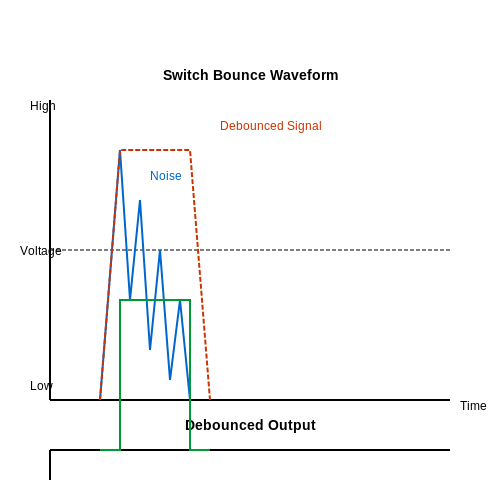
Transient faults are temporary anomalies in electrical signals that last for a short duration. They are usually caused by external factors, such as electromagnetic interference (EMI), power surges, or particle strikes in sensitive electronics. These faults may not be indicative of a problem with the device itself, meaning they can often be ignored once they have been addressed. Some characteristics of transient faults include:- Electromagnetic Interference (EMI): Induced faults from nearby devices or signals that can briefly disrupt operations.
- Power Supply Fluctuations: Sudden voltage spikes can cause temporary disturbances in circuit behavior.
Conclusion and Implications for Design
Recognizing the different types of faults is essential for engineers and researchers to innovate fault detection and diagnosis systems effectively. The significance of each fault type must be considered during the design process to ensure reliability and longevity of electronic components. For instance, awareness of intermittent faults may encourage the use of robust connection techniques and enhanced error-checking algorithms, while understanding permanent faults might lead to the implementation of suitable protective measures. Overall, the proactive identification and management of faults not only improve the performance of electronic systems but also enhance user satisfaction and safety in real-world applications.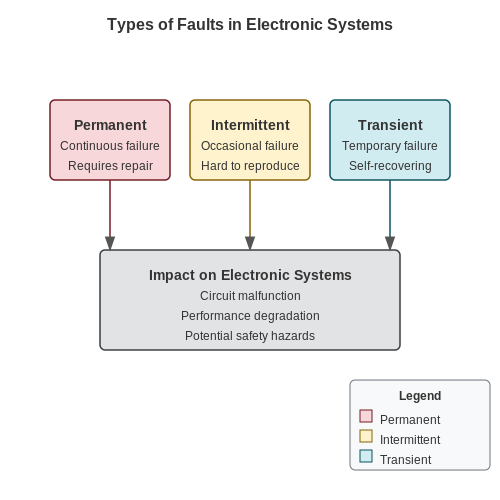
1.3 Overview of Fault Diagnosis Strategies
In the complex realm of electronics, systems are prone to faults that can arise from various sources, including manufacturing defects, environmental conditions, and operational stresses. To ensure reliability and performance, it is crucial to implement effective fault diagnosis strategies. This section delves into several methods that have been developed to identify, isolate, and ultimately mitigate faults in electronic systems.
Principles of Fault Diagnosis
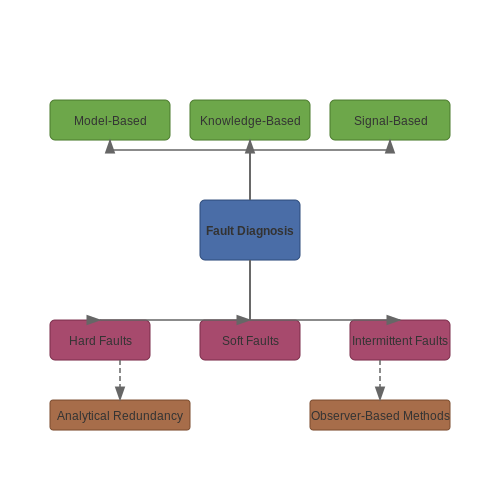
Fault diagnosis is based on systematically monitoring system behavior to detect aberrations indicative of faults. The main objectives are to improve system reliability, minimize downtime, and reduce maintenance costs. Faults can be classified into different categories, such as:
- Hard Faults: Permanent failures that harden components or circuits, such as a burnt resistor.
- Soft Faults: Temporary lapses, often due to noise or transient conditions, such as voltage spikes.
- Intermittent Faults: Occurrences that may arise under specific conditions, making them challenging to diagnose.
Understanding these distinctions is critical when selecting an appropriate diagnostic strategy.
Fault Diagnosis Strategies
Several strategies exist for diagnosing faults in electronic systems. These can be broadly classified into model-based, knowledge-based, and signal-based approaches. Each method encapsulates different techniques, each with its unique advantages and applications.
Model-Based Diagnosis
This strategy relies on mathematical models that represent the expected behavior of the system. Model-based techniques can be subdivided further into:
- Analytical Redundancy: Involves comparing actual performance with model predictions. If a deviation exceeds a predefined threshold, a fault is inferred.
- Observer-Based Methods: Utilize observers that estimate system states; discrepancies between estimated and actual states can indicate faults.
Model-based approaches are particularly powerful in scenarios where an accurate mathematical representation of the system exists.
Knowledge-Based Diagnosis
Knowledge-based systems leverage expert knowledge about the system and its potential faults. This method often uses rule-based systems or artificial intelligence to derive conclusions from historical data and heuristics. A common application is in fault trees and decision tables, where a series of logical deductions lead to the identification of potential faults.
Signal-Based Diagnosis
Signal-based approaches focus on analyzing the input and output signals of a system to detect anomalies. Techniques like:
- Time-Domain Analysis: Monitoring signal characteristics over time to identify sudden changes.
- Frequency-Domain Analysis: Using tools like the Fourier Transform to observe frequency behavior changes that signal faults.
These methods are particularly applicable in communications and control systems where signal integrity is paramount.
Practical Applications
Fault diagnosis strategies have profound implications across various industries, including automotive electronics, telecommunications, and aerospace systems. In automotive systems, for instance, effective fault diagnosis can improve vehicle safety and performance. Similarly, in telecommunications, maintaining signal integrity can directly influence service quality and customer satisfaction.
Conclusion
As electronic systems evolve, the complexity of potential faults increases, necessitating advanced diagnostic strategies. By understanding the strengths and weaknesses of each diagnosis method, engineers and researchers can tailor approaches that maximize system reliability and efficiency.
2. Model-Based Techniques
2.1 Model-Based Techniques
Fault detection and diagnosis in electronic systems is a critical field, particularly as systems become more complex and integrated. Among the various techniques employed, model-based approaches offer a robust method for identifying and diagnosing faults by leveraging mathematical models of system behavior. This subsection delves into the essentials of model-based techniques, focusing on their formulation, application, and effectiveness in real-world scenarios.
Understanding Model-Based Techniques
At its core, a model-based technique relies on a mathematical representation of the system under consideration. These models can be physical, representing the laws of physics governing the system, or empirical, derived from observed data. The advantage of utilizing models lies in their ability to predict system behavior under normal and fault conditions, thereby facilitating fault detection through comparisons between actual output and predicted output.
One of the fundamental approaches in model-based techniques is state estimation, which aims to determine the internal states of a system based on incomplete and noisy measurements. The Kalman filter is a widely used algorithm for state estimation, particularly in linear dynamic systems. The Kalman filter operates by recursively estimating the system states and reducing uncertainty, which is crucial for accurate fault diagnosis.
Mathematical Formulation of the Kalman Filter
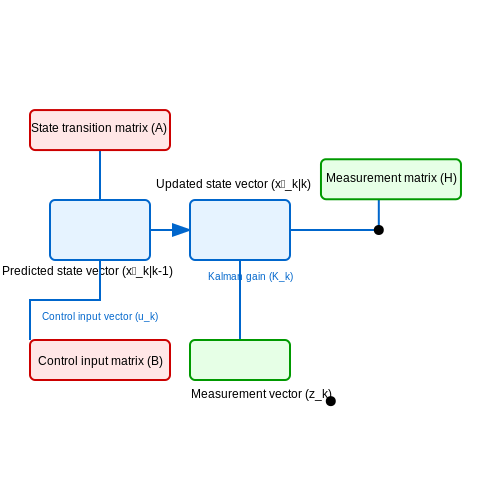
The Kalman filter encompasses two main processes: the predict and update phases. The predict phase estimates the state at the next time step, while the update phase corrects this estimate based on new observations. Mathematically, these phases are represented as follows:
In the predict phase:
where:
- $$\hat{x}_{k|k-1}$$: Predicted state vector at time k
- A: State transition matrix
- B: Control input matrix
- u_k: Control input vector
Then, in the update phase:
where:
- $$\hat{x}_{k|k}$$: Updated state vector
- K_k: Kalman gain
- z_k: Measurement vector at time k
- H: Measurement matrix
The Kalman gain, K, plays a critical role as it determines the weight given to the prediction versus the new measurement and is calculated as follows:
where:
- P_{k|k-1}: Predicted estimate covariance
- R: Measurement noise covariance
Practical Applications
Model-based techniques are particularly beneficial in various domains, including aerospace, automotive, and telecommunications. For instance, in aerospace engineering, aircraft systems utilize model-based fault detection to ensure safety and reliability. Real-time monitoring of systems such as engines or navigation sensors enables early fault diagnosis, thus preventing catastrophic failures.
In the automotive industry, these techniques are vital for the development of advanced driver-assistance systems (ADAS). By continuously assessing the functional state of various sensors and controls, model-based diagnostics contribute to enhanced safety features such as automatic braking and lane-keeping assistance.
Conclusion
Overall, model-based fault detection and diagnosis provide a systematic approach to assure system reliability and performance. As technology advances, these methods continue to evolve and integrate with innovative sensing technologies, paving the way for smarter and more resilient electronic systems.
2.2 Signal Processing Methods
Fault detection and diagnosis in electronics heavily rely on advanced signal processing techniques. These methods play a crucial role in interpreting the intricate signals generated by electronic systems, allowing engineers to identify and address faults effectively. The process can be broken down into several core techniques, each suited for different types of signals and fault scenarios.
Understanding Signal Processing
Signal processing involves the manipulation of signals to extract relevant information. Noise, distortions, and other interferences can obscure the underlying data, making effective signal processing essential for fault detection. Basic steps in signal processing typically include signal acquisition, transformation, and analysis.
Common Signal Processing Techniques
Several state-of-the-art techniques are widely employed in electronics for effective fault detection:
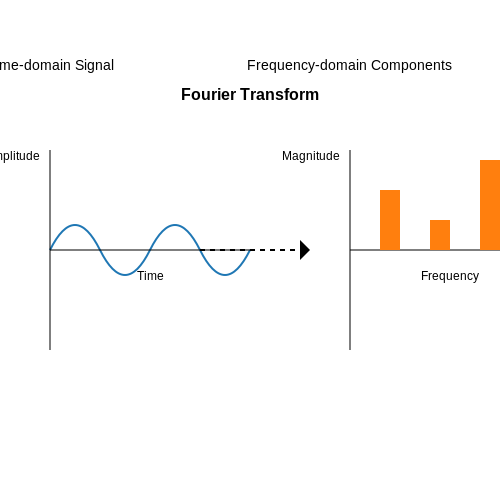
- Fourier Transform: This mathematical operation decomposes a signal into its constituent frequencies, allowing engineers to identify anomalies by analyzing frequency components. The Fourier Transform's efficiency in frequency domain representation makes it particularly useful for periodic signals.
- Wavelet Transform: Unlike the Fourier Transform, the Wavelet Transform offers a time-frequency representation, enabling the analysis of non-stationary signals. This adaptability makes it particularly potent in applications where fault characteristics evolve over time.
- Kalman Filtering: A technique that uses recursive data processing to estimate the state of a dynamic system. Kalman filters are widely applied in control systems and navigation but can also effectively filter noise from signals to enhance fault detection accuracy.
- Machine Learning Methods: Algorithms based on supervised and unsupervised learning can learn from historical failure data, identifying hidden patterns or correlations that traditional methods may overlook. Techniques such as Artificial Neural Networks (ANNs) and Support Vector Machines (SVMs) have shown promise in diagnosing faults in complex systems.
Mathematical Foundation
To further appreciate these signal processing techniques, it’s vital to explore their mathematical foundations. For example, consider the Fourier Transform, defined as:
Here, \( F(\omega) \) represents the frequency domain representation of the signal \( f(t) \). The Fourier Transform reveals the frequency components of the signal and is particularly adept at revealing repetitive faults.
Applications in Fault Detection and Diagnosis
The real-world implications of signal processing methods in electronic systems extend across various industries. For instance:
- In automotive engineering, fault detection systems utilize these techniques to monitor the health of vehicle components, improving reliability and safety.
- In the aviation sector, advanced signal processing ensures that critical systems, such as engine monitoring and navigation, detect faults early, preventing catastrophic failures.
- Manufacturing employs these methods in predictive maintenance strategies, where machines are monitored for abnormal signals that predict failures before they occur, thus saving costs and minimizing downtimes.
In summary, signal processing methods are essential tools in the arsenal of fault detection and diagnosis in electronics. By transforming raw signals into actionable insights, engineers can harness data to troubleshoot and ensure the functionality of critical systems efficiently.
Fault Detection and Diagnosis in Electronics
2.3 Statistical and Probabilistic Approaches
In the realm of electronics, fault detection and diagnosis have evolved considerably, especially with the introduction of statistical and probabilistic methodologies. These approaches are pivotal in enhancing the reliability and performance of electronic systems by systematically identifying and diagnosing faults. By incorporating statistical principles, we can assess fault conditions quantitatively, moving beyond the binary fault/no-fault dichotomy.
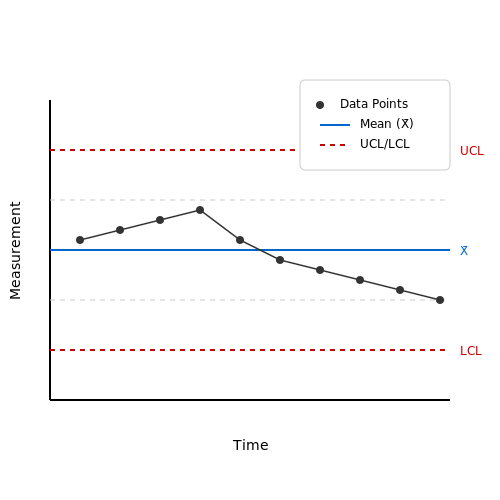
Statistical fault detection involves collecting and analyzing data related to system performances, such as voltage, current, and temperature readings, to identify anomalies that may indicate potential faults. The underlying principle is to model the normal operating behavior of a system statistically so that deviations from this model can be recognized as faults. For instance, control charts are utilized to monitor the variations in parameters over time. These charts can signal when a system is operating out of its expected range of behavior, prompting further investigation.
Probabilistic approaches further enhance fault diagnosis by considering the inherent uncertainties in measurements and system behaviors. Using methods such as Bayesian inference, practitioners can update the probabilities of different fault conditions based on newly acquired data. This allows for a more dynamic understanding of the system's state and helps prioritize actions based on the likelihood of various faults occurring.
Statistical Process Control (SPC)
One key application of statistical approaches in fault detection is Statistical Process Control (SPC). SPC employs control charts to monitor processes and detect trends that indicate potential failures. When using control charts, we plot relevant performance metrics over time and use control limits to determine whether the process is in control or if variations fall outside acceptable ranges.
The mathematical foundation of control charts involves calculating the mean and standard deviation of the measured process parameters. The control limits are typically set at ±3 standard deviations from the process mean. When a data point falls outside this range, it suggests the possibility of a significant change in the underlying process—potentially indicating a fault. For instance, in the context of a manufacturing line producing electronic components, SPC can help detect outliers in quality metrics that may signal equipment malfunction.
where \( \bar{X} \) is the process mean, and \( \sigma \) is the standard deviation.
Bayesian Fault Diagnosis
Bayesian Fault Diagnosis utilizes a probabilistic framework to represent uncertainty and incorporate prior knowledge about the likelihood of faults. In an electronic system, each potential fault can be associated with a prior probability based on historical data or expert input. As new sensor readings become available, we can update these probabilities using Bayes' theorem:
where:
- P(H|E) is the posterior probability of fault hypothesis H given evidence E.
- P(E|H) is the likelihood of observing evidence E given hypothesis H.
- P(H) is the prior probability of hypothesis H.
- P(E) is the total probability of evidence E.
Through iterative updates, Bayesian methods enable real-time diagnosis as they continuously refine fault likelihoods as more data is collected. This dynamic capability is vital in real-world applications, such as predictive maintenance, where timely interventions can be performed before system failures lead to costly downtimes.
In conclusion, statistical and probabilistic approaches represent a powerful means of fault detection and diagnosis in electronics. By leveraging data to assess deviations from normal behaviors and applying probabilistic reasoning, engineers and researchers can develop robust systems that enhance operational reliability and minimize failures.
3. Rule-Based Diagnosis
3.1 Rule-Based Diagnosis
Rule-based diagnosis represents a systematic approach to fault detection and diagnosis in electronic systems, relying on predefined logical rules to evaluate system behavior against expected norms. This methodology is particularly applicable in scenarios where the nature of potential faults is well understood, enabling engineers and researchers to create effective diagnostic strategies.
At its core, rule-based diagnosis involves the formulation of a set of "if-then" statements that govern operational behavior. For instance, a common rule might state: If voltage is below a certain threshold, then a fault is likely present in component A. These rules draw from both empirical evidence and theoretical foundations, reflecting both expected system behavior and observed anomalies.
Historical Context
The origins of rule-based systems can be traced back to early artificial intelligence research in the 1970s and 1980s, where knowledge-based systems were developed to automate complex decision-making processes in various domains, including electronics. Early implementations demonstrated promising outcomes, paving the way for modern rule-based diagnostic systems.
Components of Rule-Based Diagnosis
Effective rule-based diagnosis integrates several essential components:
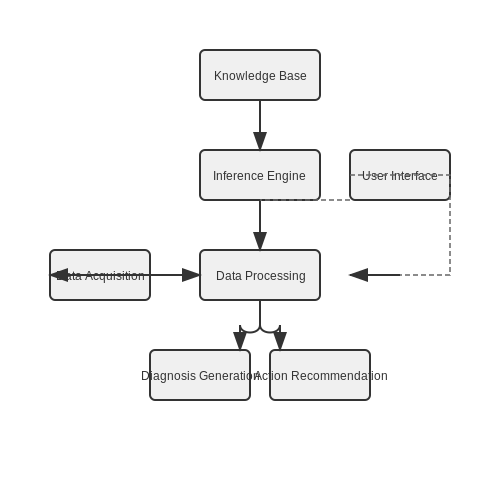
- Knowledge Base: This includes the collection of rules, expert information, and operational parameters. It functions as the system's reference for determining appropriate actions based on real-time data.
- Inference Engine: The engine interprets the rules and applies them to the system's current state. It evaluates if any of the conditions leading to a fault (as per the rule sets) are met.
- User Interface: A transparent user interface is crucial for communicating findings, providing feedback, and guiding users through the diagnostic process.
Rule-Based Diagnosis Process
The overall process can be understood in a series of steps:
- Data Acquisition: The first step involves gathering real-time data from the electronic system. This can be achieved through voltage levels, current flow, temperature readings, etc.
- Data Processing and Analysis: The acquired data is then processed, where the inference engine analyzes input against the rules established in the knowledge base.
- Diagnosis Generation: Based on the analysis, the system generates possible fault diagnoses, which are then compared against the known faults in the rule base.
- Action Recommendation: Lastly, appropriate actions are recommended based on the diagnosis, which can range from simple corrective actions (like resetting a circuit) to more complex solutions (like component replacement).
Real-World Applications
Many applications harness the power of rule-based diagnosis across various sectors:
- Automotive Diagnostics: Rule-based systems are prevalent in automotive electronics, quickly identifying issues in critical vehicle systems such as engine management and safety controls.
- Industrial Equipment Monitoring: These systems contribute significantly to industrial applications, managing the health of machinery by diagnosing operational faults early to prevent costly downtimes.
- Consumer Electronics: Rule-based diagnostic tools are used in troubleshooting issues in household appliances, enhancing customer experience by guiding users through resolution processes.
In summary, rule-based diagnosis represents a powerful framework for fault detection and diagnosis in electronics. Its structured approach allows for the incorporation of expert knowledge into practical applications, significantly improving the reliability and maintainability of electronic systems. As technology advances, the integration of machine learning techniques with rule-based systems promises to further enhance diagnostic precision and adaptability.
3.2 Neural Network Applications
As technology has advanced, the implementation of neural networks in fault detection and diagnosis systems has become increasingly prevalent in both industrial and consumer electronics. Neural networks, inspired by the human brain's structure and function, offer a robust mechanism for identifying patterns and anomalies in complex datasets, thereby improving reliability and efficiency.
Understanding Neural Networks in Fault Detection
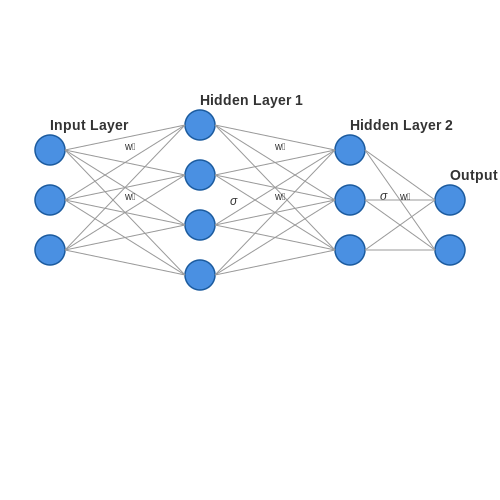
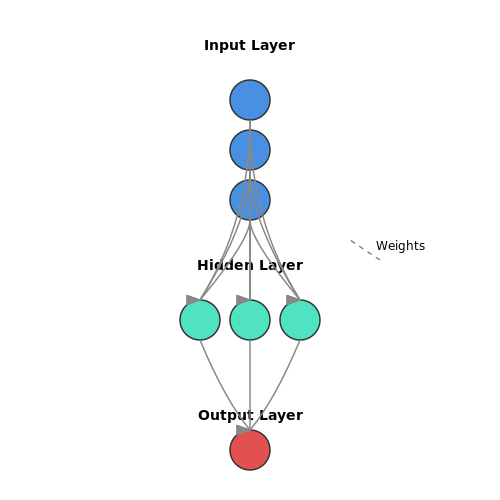
At its core, a neural network consists of interconnected nodes (analogous to neurons) organized in layers: an input layer, one or more hidden layers, and an output layer. When training a neural network, data representing both fault conditions and normal operating states is fed into this structure. Each connection between nodes has an associated weight that is adjusted during training to minimize error in the network’s predictions.
The training process uses a method called backpropagation, which computes the gradient of the loss function (a measure of the error in predictions) with respect to the weights. This is achieved through:
- Forward propagation: Inputs are passed forward through the network to produce an output.
- Loss calculation: The output is compared with the true label to calculate the error.
- Backward propagation: The error is propagated back through the network to update weights.
Here, \( \eta \) represents the learning rate and \( \nabla L \) is the gradient of the loss function with respect to the weights.
Applications in Industry
The practical implications of neural network applications in fault detection are diverse. In manufacturing, for example, neural networks can analyze sensor data from machinery to identify unusual patterns that suggest equipment wear or failure. This predictive maintenance model reduces downtime significantly by allowing timely interventions. Similarly, in the consumer electronics sector, neural networks can enable smart devices to detect malfunctioning components or defects during the production process, ensuring higher product quality.
Case Study: Power Electronics Systems
A notable application of neural networks is in power electronics systems, ensuring optimal performance and fault tolerance. For instance, researchers have employed deep learning algorithms to analyze waveforms from inverters in photovoltaic systems. The model detects both transient and permanent faults, allowing for immediate corrective actions, thus improving system reliability and efficiency.
Future Trends
Looking toward the future, the integration of neural networks with other emerging technologies such as edge computing and the Internet of Things (IoT) will further enhance their effectiveness in fault detection. By enabling real-time analysis at the data source, these systems can react promptly to anomalies, minimizing risks and maximizing operational uptime.
In summary, the role of neural networks in fault detection and diagnosis within electronics is transformative. Their capacity to learn from complex datasets and provide actionable insights represents a significant leap forward in maintaining the integrity and performance of electronic systems.
3.3 Machine Learning Techniques in Diagnosis
The integration of machine learning (ML) techniques in electronics fault diagnosis has reshaped the detection methodology, providing robust solutions for increasingly complex systems. The adaptability and self-learning capabilities of ML models enable them to identify faults in various electronic components, enhancing diagnostic accuracy and reducing downtime in critical applications.
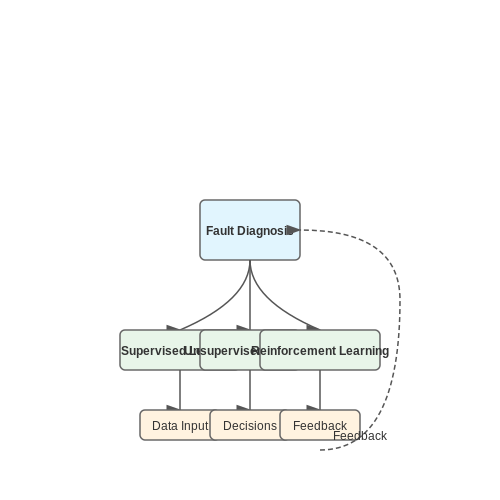
This subsection explores several prominent ML techniques employed in electronics diagnosis, including supervised learning, unsupervised learning, and reinforcement learning. Each of these approaches serves a unique role in the fault diagnosis process, leveraging historical data, real-time analytics, and advanced algorithms.
Supervised Learning Techniques
Supervised learning involves training models on labeled datasets, where the relationship between input features and desired outcomes (fault conditions) is well-defined. Popular algorithms in this category include Support Vector Machines (SVM), decision trees, and neural networks.
For instance, a decision tree can be utilized to classify faults in a circuit based on predetermined parameters such as voltage and temperature readings. This method involves creating a model that splits the data into different branches based on feature values. Such a model can be mathematically represented as follows:
Where *C* is the number of classes and *p_j* is the proportion of class *j* in the dataset. The objective is to choose splits that minimize the Gini impurity, leading to effective and accurate classifications of fault states.
Unsupervised Learning Techniques
In contrast, unsupervised learning does not rely on labeled datasets. Instead, it identifies patterns and anomalies in data through clustering and dimensionality reduction techniques. Algorithms such as K-means clustering and hierarchical clustering allow engineers to detect unexpected behavior in electronic systems, such as deviations from normal operational patterns.
For example, K-means can be employed to categorize operational states of a device based on usage parameters, successfully highlighting outlier states that may indicate a potential fault.
Reinforcement Learning Techniques
Reinforcement learning (RL) presents a paradigm where models learn how to make sequences of decisions by receiving feedback from their environment. In the context of fault diagnosis, RL can optimize maintenance schedules and operational strategies by evaluating the long-term reward of various actions. An RL agent interacts with the environment by choosing actions based on its current state and receives rewards or penalties accordingly. This feedback loop creates a learning path:
Here, *R* represents the total expected reward, *r_t* is the immediate reward at time step *t*, and *γ* (gamma) is the discount factor that weighs immediate versus future rewards. The practicality of RL in fault detection systems lies in its capacity to dynamically adapt to changes in operational conditions and fault types over time.
Practical Applications
The application of ML techniques is extensive and largely beneficial across various electronic systems. These include:
- Predictive Maintenance: Utilizing ML to forecast failures before they occur, thus preventing downtime and prolonging equipment life.
- Quality Control: Analyzing production processes and product performance to detect anomalies that could lead to defects.
- Smart Grid Management: Implementing ML algorithms to enhance the resilience and efficiency of electrical grids by assessing power flow patterns and identifying faults.
The impactful nature of these machine learning techniques in diagnostics showcases the convergence of data science and electronics, offering engineers new avenues for enhancing system reliability and operational efficiency.
4. Diagnostic Software Tools
4.1 Diagnostic Software Tools
In the realm of electronics, where intricate components and complex systems converge, ensuring reliability and functionality is paramount. Fault detection and diagnosis serve as critical processes to identify errors before they escalate into serious failures. To facilitate this, various diagnostic software tools have been developed that leverage advanced algorithms, data analysis techniques, and comprehensive modeling. These tools encompass a wide array of functionalities, including real-time monitoring, predictive maintenance, and data-driven insights that significantly aid engineers and technicians in their quest for optimal performance. This subsection will delve into the most pertinent diagnostic software tools, emphasizing their methodologies, applications, and integration into modern electronic systems.Understanding Diagnostic Software Tools
At the core of any diagnostic software is its ability to process inputs from various electronic components and systems, executing a set of predefined algorithms to discern normal behavior from faults. Typically, these tools utilize a fusion of approaches, which may include:- Data Acquisition: Collecting extensive data from sensors and system logs to derive actionable insights.
- Signal Processing: Employing techniques like Fourier transforms and wavelet analysis to filter noise and detect anomalies in signals.
- Machine Learning: Implementing models that learn from historical data, allowing for improved fault prediction and diagnostics over time.
- Simulation and Modeling: Building virtual models of electronic systems for testing and validation purposes without the risks associated with hardware-level changes.
Popular Diagnostic Software Tools
Several diagnostic software tools have been recognized for their effectiveness in fault detection and diagnosis across various applications. Below are some of the most widely used tools and frameworks:1. MATLAB and Simulink
MATLAB, coupled with Simulink, provides a robust environment for engineering simulations and data analysis. Engineers use these tools to model complex electronic systems, implement algorithms for fault detection, and analyze results comprehensively. Simulink’s block diagrams facilitate easy visualization of signal flow and system interactions, which are invaluable for diagnosis and verification.2. LabVIEW
LabVIEW (Laboratory Virtual Instrument Engineering Workbench) excels in automating testing and measurement applications. The software supports extensive hardware integration and provides tools for data visualization, allowing engineers to monitor and diagnose systems in real-time. Its graphical programming language simplifies creating and managing diagnostic protocols.3. NI Multisim
National Instruments' Multisim is widely used for circuit simulation and testing. It enables users to visualize circuit behavior through simulations under fault conditions, helping diagnose potential issues before actual physical implementation. The tool's integration with LabVIEW enhances its diagnostic capabilities further.4. Python with SciPy and NumPy
Python has emerged as a popular choice in diagnostics owing to its extensive libraries such as SciPy and NumPy. These libraries provide powerful numerical methods and data analysis capabilities that allow researchers and engineers to implement custom diagnostic algorithms efficiently. The language’s versatility also enables cross-domain application in electronics.5. R for Data Science and Analytics
R programming language is extensively utilized for statistical analysis and data mining. Its advanced statistical packages make it suitable for predictive maintenance and fault diagnosis applications, which rely heavily on analyzing historical performance data.Real-World Applications
The capabilities of diagnostic software tools extend into various industries beyond consumer electronics, from automotive systems to aerospace engineering, each requiring rigorous fault detection methods. For instance, in automotive diagnostics, onboard systems leverage fault detection algorithms to alert drivers of potential engine problems, minimising risks and ensuring safety. In the aerospace sector, predictive maintenance tools based on machine learning and data analytics enable the early detection of malfunctions, potentially saving millions in repair costs and preventing accidents. In conclusion, diagnostic software tools play a vital role in contemporary electronics engineering, utilizing advanced methodologies to ensure system reliability. As technology continues to advance, the integration of artificial intelligence and machine learning will further enhance the capability of these tools, allowing engineers to push the boundaries of fault detection and diagnostics.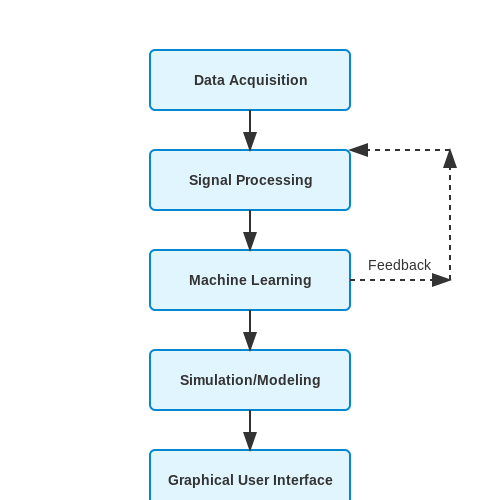
4.2 Hardware Tools for Fault Detection
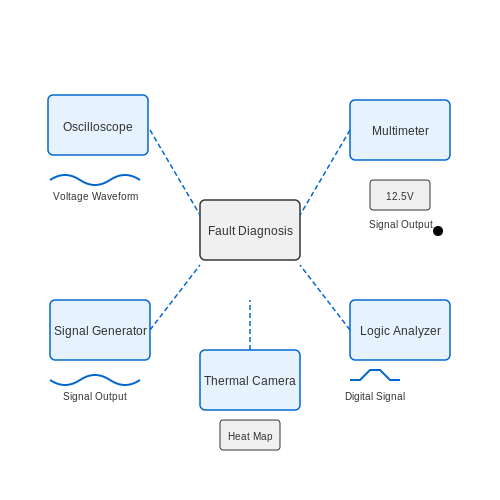
In the dynamic landscape of electronics, fault detection is paramount in ensuring system reliability, operational efficiency, and safety. The complexities of modern electronic systems, which integrate both analog and digital components, necessitate sophisticated hardware tools to diagnose failures effectively. This section outlines various essential hardware tools employed in the fault detection process, highlighting their mechanisms, applications, and technological advancements.
Oscilloscopes
Oscilloscopes are *indispensable* tools in electronics that visualize voltage signals over time. By displaying waveforms, they help engineers observe the behavior of circuits under specific conditions. A typical use case in fault detection involves comparing a circuit's expected waveform to the observed waveform. Discrepancies can indicate issues such as short circuits, component failures, or incorrect configurations.
Innovations in digital oscilloscopes have made them more user-friendly and accurate. Advanced features such as fast sampling rates and deep memory allow for capturing transient events that might indicate faults in switching power supplies or data transmission lines. Furthermore, the implementation of automated measurement features provides quicker diagnostics and reduces the time spent in troubleshooting.
Multimeters
Multimeters, commonly known as DMMs (Digital Multimeters), are versatile instruments used for measuring voltage, current, and resistance. When diagnosing faults, multimeters can confirm whether a circuit operates within specified tolerances. For instance, measuring the resistance across a component can reveal if it has opened or closed circuits. Additionally, multimeters equipped with diode testing capabilities are essential when checking semiconductor devices.
Recent advancements have led to the integration of Bluetooth or Wi-Fi connectivity in multimeters, allowing remote monitoring and record-keeping of measurements, which significantly aids in fault analysis during complex diagnostics.
Logic Analyzers
Logic analyzers are specialized tools designed to capture and analyze digital signals over multiple channels. By recording the digital state of a circuit, they enable engineers to examine timing relationships and protocol compliance, crucial for diagnosing issues in digital communication systems.
Logic analyzers can decode various protocols such as I2C, SPI, and UART, providing insight into malfunctioning communication links. Historically, these devices were bulky and complex; however, modern handheld versions, combined with software analysis tools, have streamlined their use, making them accessible in a variety of scenarios, including embedded systems troubleshooting.
Signal Generators
Signal generators play a crucial role in testing the response of circuits under various conditions. By producing specific waveforms or signals, they allow engineers to simulate input conditions the circuit would encounter in operation. This capability is critical when isolating faulty components by observing how the circuit reacts to known stimuli.
Complex generators can produce multiple signal types, including sinusoidal, square, and triangular waves, which can be used to mimic real-world scenarios. Advanced signal generators boast features like arbitrary waveform generation, enabling precise testing across a spectrum of frequencies and amplitudes. This technology validates circuit performance, especially in RF and communication applications where signal integrity is essential.
Thermal Cameras
Thermal cameras are increasingly being used in fault detection to visualize temperature variations across components. This feature allows engineers to identify overheating components that may indicate latent failures, such as shorted connections or insufficient cooling mechanisms.
Equipped with specialized software, these cameras can analyze heat distribution in circuits and appliances, providing quantitative thermal images and thresholds that help in identifying issues. This non-invasive diagnostic technique offers significant advantages in troubleshooting and preventive maintenance, particularly in industrial applications.
In conclusion, a robust toolkit for fault detection is essential for any electronics professional. As technology advances, the integration of smart features and enhanced capabilities into traditional tools continues to facilitate improved diagnostics, leading to faster resolutions and reduced downtime in electronic systems. The selection of appropriate tools depends on the specific application and the nature of the faults being investigated, underscoring the necessity for engineers to remain adept in utilizing these hardware tools effectively.
4.3 Emerging Technologies in Fault Detection
In today's world of rapidly advancing technology, the domain of fault detection in electronics harnesses innovations that significantly enhance diagnostic capabilities and streamline predictive maintenance. Traditional methods, while foundational, often lack the adaptability and precision necessary to handle complex modern systems. Consequently, emerging technologies such as machine learning, advanced signal processing, and Internet of Things (IoT) integration are reshaping the landscape of fault detection and diagnosis.Machine Learning and Artificial Intelligence
One of the foremost advances in fault detection is the incorporation of machine learning (ML) and artificial intelligence (AI). These technologies enable systems to learn from historical data, thereby improving their ability to identify anomalies indicative of potential failures. By analyzing vast datasets from operational logs and sensor readings, ML algorithms can uncover patterns and correlations that may not be apparent to human operators. For instance, supervised learning techniques can be employed to train models on labeled datasets, guiding predictions of fault occurrences based on specific input conditions. In contrast, unsupervised learning allows for detecting outliers in data distributions, which can signify emerging issues.Real-Time Monitoring and Predictive Maintenance
The practical applications of ML extend to real-time monitoring systems. By continuously analyzing data streams, AI can track system health metrics and provide alerts when deviations occur from expected behaviors. This not only enhances efficiency but facilitates predictive maintenance strategies; rather than adhering to rigid maintenance schedules, systems can flag when components require attention based on emerging data trends. Advances in neural networks, particularly convolutional neural networks (CNNs), have shown promise in image-based fault detection in hardware systems, allowing for the analysis of visual data from cameras monitoring equipment for visible damage or anomalies.Internet of Things (IoT) Integration
The convergence of IoT with fault detection strategies illustrates yet another frontier in this field. IoT devices equipped with sensors can gather real-time data from various conditions within a system, thus painting a detailed picture of operational health. This data is often transmitted to centralized platforms where advanced analytics and fault detection algorithms are employed. When integrating IoT with ML, systems can often react to developing faults before they escalate. The ability to collect and analyze data from distributed sources enables a more comprehensive understanding of system performance, facilitating a shift from reactive to proactive maintenance approaches.Cyclic Redundancy Check (CRC) and Advanced Diagnostics
Emerging algorithms also include complex methods like cyclic redundancy check (CRC), which remain useful for ensuring data integrity in transmission systems and detecting faults in communication channels. Coupled with advanced diagnostics facilitated by AI, these technologies provide robust mechanisms for fault detection. Recent projects have even begun leveraging blockchain for maintaining data integrity throughout fault reporting and diagnostics, ensuring an immutable record of events that can be vital for tracing failures back to their origin.Conclusion: The Path Ahead
The integration of machine learning, IoT, and advanced diagnostic methods will undoubtedly redefine fault detection paradigms in electronics. As systems become increasingly complex, the methodologies we adopt must evolve to ensure reliability and efficiency, ushering in an era where intelligent fault detection enhances both operational performance and sustainability. In summary, as we explore these emerging technologies, it is clear that the future of fault detection lies in the synergy between advanced analytics, real-time data, and intelligent algorithms—creating systems that not only identify faults faster but also adapt and learn over time.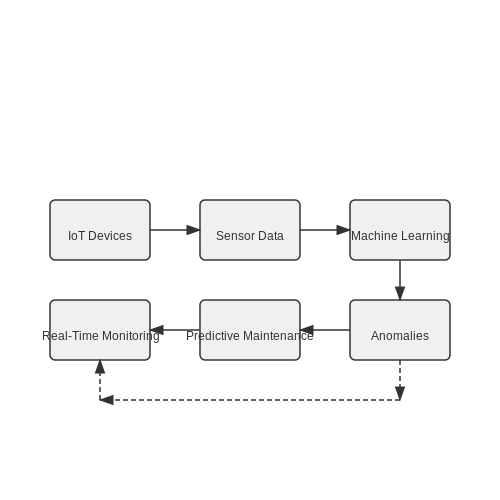
5. Industrial Automation Fault Detection
5.1 Industrial Automation Fault Detection
Fault detection in industrial automation systems is crucial for ensuring operational efficiency, safety, and reliability. As industries increasingly adopt automation technologies, the ability to rapidly identify and diagnose faults within these complex systems has become paramount. This subsection explores the methodologies, technologies, and practical considerations associated with fault detection in industrial automation.
Understanding Faults in Automation Systems
A fault can be defined as any abnormal condition that disrupts the normal function of a system. In automation, these faults can occur due to hardware failures, software bugs, environmental influences, or operator errors. The detection and diagnosis of these faults are vital as they can lead to significant downtime and economic loss. Moreover, understanding the nature of faults helps in designing resilient systems capable of self-diagnosis and adaptation.
Fault Detection Techniques
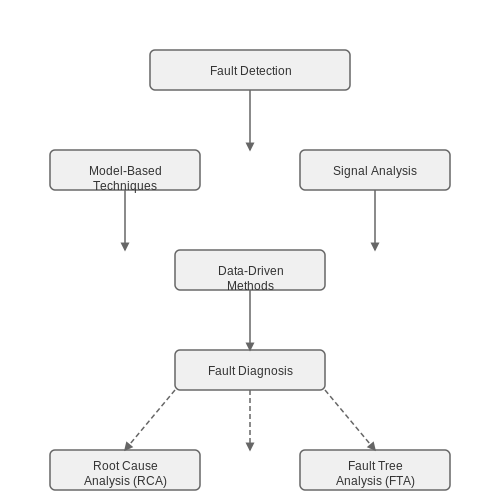
Several strategies are utilized in industrial automation for fault detection:
- Model-Based Techniques: These methods rely on creating a mathematical model of the system. By comparing the expected behavior, derived from the model, with actual measurements, discrepancies can indicate potential faults. The Observer-Based approach is a common example, where observers estimate the states of the system based on available inputs and outputs.
- Signal Analysis: Analyzing sensor signals for patterns can help in identifying faults. Techniques such as frequency analysis and time-domain analysis are useful. For instance, sudden spikes in temperature readings from a motor could indicate a malfunction.
- Data-Driven Methods: These techniques leverage machine learning and big data analytics to identify anomalies within vast datasets. Algorithms can learn from historical data and predict potential failures. This approach is particularly effective in environments where model-based techniques falter due to system complexity.
Diagnostic Methods
Once a fault has been detected, diagnostic methods are employed to ascertain the nature and root cause of the fault. Techniques include:
- Root Cause Analysis (RCA): This structured method identifies the fundamental cause of faults, enabling targeted corrective actions.
- Fault Tree Analysis (FTA): This graphical method helps in the systematic breakdown of faults to understand contributing factors.
Real-World Applications
Fault detection and diagnosis are not merely theoretical concepts; they have practical implications in various industries:
- Manufacturing: In modern manufacturing environments, predictive maintenance based on fault detection can significantly reduce downtime, optimize operational costs, and extend equipment lifecycle.
- Energy: In the energy sector, fault detection in grid systems prevents failures that could lead to widespread outages, ensuring stability and reliability in power delivery.
- Automotive Industry: Advanced driver-assistance systems (ADAS) rely extensively on fault detection mechanisms to ensure vehicle safety and functionality.
Future Trends
As technology evolves, so too will fault detection methodologies in industrial automation. The integration of Internet of Things (IoT) devices and Artificial Intelligence (AI) will enhance the capabilities of fault detection systems, allowing for more sophisticated predictive maintenance strategies. The convergence of these technologies promises increasingly autonomous and self-healing systems, which are vital in the context of Industry 4.0.
5.2 Consumer Electronics Diagnostics
In the realm of consumer electronics, fault detection and diagnosis assume critical importance due to the increasing dependence on complex electronic systems. The function and reliability of devices such as smartphones, televisions, and home appliances hinge on robust diagnostic practices. This section delves into the methodologies employed to efficiently diagnose faults in consumer electronics, thereby underscoring the relationship between theory and practical application.
Understanding Fault Detection in Consumer Devices
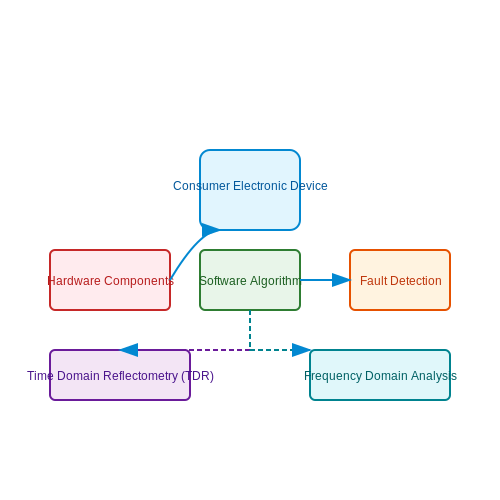
Fault detection refers to the process of identifying anomalies or malfunctions within electronic devices. In consumer electronics, it typically involves a layered diagnostic approach that encompasses both hardware and software components. These devices often utilize a range of embedded systems designed to monitor performance and identify potential issues.
Most notably, fault detection can be categorized into two main techniques: passive and active. Passive methods continuously scrutinize system metrics to establish a baseline of normal functioning, while active methods execute explicit tests or challenges to provoke responses that indicate faults.
The Role of Self-Diagnostics
Many modern consumer electronics integrate automatic self-diagnostic features that operate through built-in software. These functions rely significantly on predefined algorithms designed to analyze performance metrics and log faults. Advanced algorithms, including machine learning models, can enhance these capabilities by identifying fault patterns that traditional methods may overlook.
For example, smart TVs can perform color calibration tests, leaving them capable of notifying users about calibration issues or hardware failures. This proactive approach not only improves user experience but also reduces maintenance costs for manufacturers.
Signal Integrity and Diagnostic Techniques
Issues such as signal integrity are crucial in diagnosing faults within high-speed consumer electronics. Signal integrity refers to the quality of electrical signals as they travel through circuits, particularly in communication ports and processors. Diagnostic techniques employed here include:
- Time Domain Reflectometry (TDR): Used to identify impedance mismatches by sending electrical pulses down transmission lines and measuring reflections.
- Frequency Domain Analysis: Observes how the circuit responds at different frequencies, which can pinpoint issues such as crosstalk and bandwidth limitations.
These techniques not only help in diagnosing faults but also assist in optimizing designs to prevent future issues. Understanding how signals behave within devices is foundational for engineers aiming to enhance product reliability.
Case Study: Smartphones
Smartphones serve as prime examples of intricate consumer electronics requiring meticulous fault detection mechanisms. Consider the example of a smartphone that fails to charge. A systematic diagnostic approach entails:
- Checking the charging cable and adapter for faults using multimeters.
- Evaluating the device's internal battery health through software tools that measure charge cycles.
- Running thermal analysis to ensure that the charging components are not overheating.
Through the iteration of these techniques, engineers can accurately diagnose the issue, whether it lies within the external components or the internal battery management system.
Conclusion: The Future of Consumer Electronics Diagnostics
As technology continues to evolve, so too will the methods of fault detection and diagnosis within consumer electronics. The integration of artificial intelligence and machine learning is paving the way for predictive maintenance, where systems can anticipate faults before they manifest. This not only enhances user experiences but also extends the lifecycle of electronic products, reflecting a significant advancement in diagnostic practices.
Ultimately, a thorough understanding of these diagnostic techniques and their applications in real-world scenarios is vital for engineers and researchers aiming to contribute to the future of consumer electronics.
5.3 Automotive Fault Detection
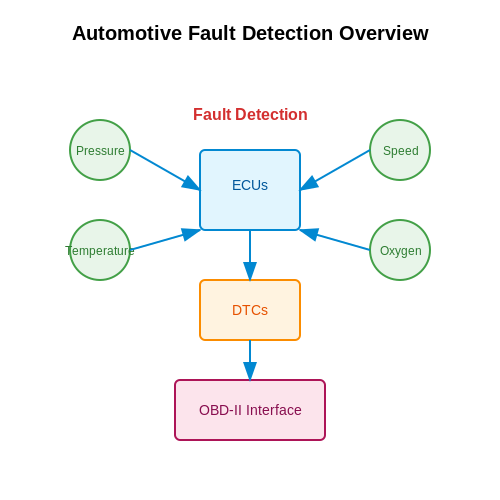
Automotive fault detection has evolved significantly from the rudimentary systems of early automobiles to the complex diagnostics intrinsic to modern vehicles. The integration of electronic control units (ECUs) into automotive designs has allowed for sophisticated monitoring of various subsystems, enabling precise fault detection and diagnosis. The emphasis on reliability, safety, and performance in automotive engineering means that effective fault detection mechanisms are not only advantageous but essential. At the heart of automotive fault detection are diagnostic trouble codes (DTCs), which serve as standardized identifiers for various issues related to vehicle systems. When a fault occurs, the system generates a DTC, allowing technicians to diagnose problems efficiently. Understanding how these codes are generated and interpreted is critical for effective automotive diagnostics. When a sensor detects an anomaly, such as abnormal resistance, voltage, or other parameters, a DTC is logged in the vehicle’s onboard diagnostic (OBD) system. To elaborate further, a fault might result from a variety of issues, including:- Sensor Failures: Malfunctions in sensors that monitor pressure, temperature, and other environmental variables can lead to erroneous information being fed into the ECU.
- Electrical Issues: Wiring harness faults, shorts, or breaks can result in failure of critical signals.
- Software Bugs: The software that controls various vehicle functionalities can have bugs or logic errors leading to several operational failures.
References and Further Reading
- How Automotive Diagnostics Work — This article gives an overview of automotive diagnostics, focusing on how various automotive systems interact through OBD-II and what causes common issues.
- Machine Learning Applications in Fault Diagnosis — This paper explores the use of machine learning algorithms for diagnostics and provides curated case studies across different automotive applications.
- Towards Intelligent Vehicle Diagnostic Systems — A journal entry discussing recent advancements in smart diagnostic systems with potential impacts on future automotive safety and efficiency.
- Model-Based Diagnostics for Automotive Systems — This article delves into model-based fault diagnosis methods, providing a structured methodology for applying this technology in automotive engineering.
- Automotive Data Alliance — A resource focusing on industry standards and practices pertaining to automotive data management and diagnostics.
- Automotive Fault Diagnostics Software — An overview of software tools designed to assist engineers in identifying and diagnosing faults in automotive systems efficiently.
- Fault Diagnosis in Automobiles — A thorough review article that discusses various techniques employed in the fault diagnosis of automobiles through a historical lens.
6. Limitations of Current Techniques
6.1 Limitations of Current Techniques
As we delve into the intricacies of fault detection and diagnosis in electronics, it is paramount to recognize that current techniques exhibit significant limitations which hinder their performance and applicability. These constraints affect the reliability and efficiency of electronic systems, posing substantial challenges for engineers and researchers alike.
Many fault detection methodologies, whether they be model-based, data-driven, or hybrid approaches, face limitations primarily stemming from their dependency on underlying assumptions and the nature of their implementation. Understanding these limitations not only allows for better selection of appropriate techniques but also encourages the development of novel solutions that can enhance fault management within electronic systems.
1. Model-Based Techniques: Limitations
Model-based techniques, which rely heavily on predefined models of system behavior, can encounter significant obstacles:
- Simplified Models: Many existing models oversimplify complex real-world behaviors, thereby failing to accurately depict system dynamics under fault conditions. This can lead to incorrect fault diagnosis, resulting in costly downtime or ineffective maintenance strategies.
- Parameter Sensitivity: These techniques often require precise knowledge of system parameters. Variations in these parameters can lead to substantial errors in fault detection, particularly in non-linear systems where small deviations can yield significant impacts.
- Computational Complexity: Developing and solving detailed models can be computationally expensive and time-consuming. This is especially critical in real-time applications where quick decisions are vital.
2. Data-Driven Techniques: Constraints
On the other hand, data-driven techniques harness historical data to identify fault signatures. They also have their own set of limitations:
- Data Quality and Quantity: The performance of data-driven methods is fundamentally reliant on the quality and quantity of data available. Inaccurate, incomplete, or insufficient data can lead to poor model training, resulting in high false-positive rates.
- Overfitting Risks: Machine learning models can become overly tailored to the training data, leading to overfitting. This reduces their generalizability and effectiveness on unseen data.
- Black Box Nature: Many sophisticated machine learning methods operate as "black boxes," limiting the interpretability of their diagnostics. This can pose risks in critical systems where understanding the rationale behind fault detection is crucial.
3. Hybrid Approaches: Integration Challenges
While hybrid techniques that combine model-based and data-driven approaches are promising, they also grapple with unique challenges:
- Complex Integration: The fusion of various methodologies can lead to complexities in integration, making it challenging to develop cohesive systems that capitalize on the strengths of both approaches.
- Resource Intensive: The implementation of hybrid systems often requires extensive computational resources and advanced expertise in multiple domains, which may not be feasible for all organizations.
4. Real-World Application Challenges
Lastly, it is essential to consider how these limitations manifest in practical scenarios. Fault detection systems need adaptability to changing conditions and contexts. For instance, in the automotive industry, components are subject to varying operational environments, from fluctuating temperatures to electrical noise. If the fault detection system cannot accommodate these changes, it may result in undetected faults and consequential failures.
Moreover, in high-stakes environments, such as aerospace or medical devices, the consequences of fault misdiagnosis can be dire. Hence, these limitations underscore the necessity for ongoing research and development to enhance fault detection techniques. Novel approaches, including the integration of artificial intelligence and Internet of Things (IoT) capabilities, show potential in addressing some of the current shortcomings.
By thoroughly understanding and addressing these limitations, engineers and researchers can pave the way for more effective fault detection methodologies that ensure greater reliability and performance in electronic systems.
6.2 The Role of Artificial Intelligence
Artificial Intelligence (AI) has emerged as a transformative force in various fields, including electronics, by enhancing the capability to detect and diagnose faults in complex systems. Traditional methods often rely on manual inspection and predetermined criteria for fault detection, which can be time-consuming and prone to human error. In contrast, AI offers advanced techniques for analyzing data, learning from patterns, and predicting failures, significantly improving the reliability and efficiency of electronic systems.The Basics of AI in Fault Detection
AI consists of various subfields, including machine learning (ML), deep learning, and expert systems, which play a crucial role in automating fault detection. At the core of these technologies lies the ability of algorithms to process vast amounts of data and derive actionable insights. For instance, ML algorithms can be trained on historical fault data from electronic components to identify underlying patterns that correlate with certain failures.Machine Learning Techniques
In the context of fault detection, supervised learning approaches are particularly beneficial. By using labeled datasets that contain both normal operation and failure instances, these algorithms learn to classify new observations accurately. Common techniques include:- Support Vector Machines (SVM): SVMs find the optimal hyperplane that separates different classes of faults.
- Decision Trees: This method establishes a tree-like model for decision-making, making it easy to interpret.
- Neural Networks: These structures mimic brain networks, capable of capturing complex relationships in data through multiple layers of processing.
Deep Learning for Complex Systems
Deep learning, a subset of ML, utilizes deep neural networks to learn from unstructured data such as images and time-series signals. This capability is especially useful in electronics, where complex signals may not exhibit clear patterns. For example, convolutional neural networks (CNNs) can analyze images of circuit boards to identify physical defects, while recurrent neural networks (RNNs) are adept at processing sequential time-series data to detect anomalies in sensor readings. Both methods significantly enhance the ability to diagnose faults in intricate electronic systems.Integration of AI with Traditional Methods
AI does not inherently replace traditional fault detection methodologies; instead, it complements them. By integrating AI with existing diagnostic tools, engineers can move towards a hybrid approach that leverages the strengths of both domains. For example, engineers can employ rule-based systems for immediate fault detection while using AI models to provide deeper insights into the nature of the faults, thus enhancing diagnostic accuracy and reducing downtime.Practical Applications
The application of AI in fault detection extends across various industries:- Manufacturing: In high-volume production environments, AI-driven systems can monitor machinery in real-time, quickly identifying failures to minimize production losses.
- Telecommunications: Network operators utilize AI to analyze traffic patterns and detect anomalies that might indicate upcoming outages or service degradations.
- Aerospace: AI technologies assist in predictive maintenance of aircraft systems, where timely fault detection is critical for safety.
The Future of AI in Fault Detection
The evolution of AI technologies continues to enhance the landscape of fault detection in electronics. As AI algorithms become more refined and integrated with IoT devices, the ability to predict and diagnose faults in real-time will improve substantially. Future systems are expected to utilize advanced data analytics, leading to even greater efficiencies and reliability in electronic systems. In conclusion, the integration of AI into fault detection processes represents a significant leap forward in the field of electronics. The capability of AI to learn from data, predict faults proactively, and enhance diagnostic processes demonstrates its substantial potential. As engineers and researchers continue to explore AI's capabilities, it will undoubtedly redefine equipment reliability and maintenance practices in the electronics industry.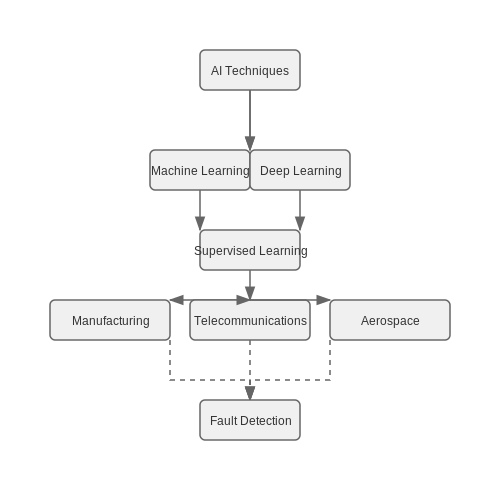
6.3 Future Trends in Fault Detection and Diagnosis
The field of fault detection and diagnosis in electronics is evolving rapidly, driven by advancements in technology and the increasing complexity of electronic systems. As devices become more interconnected and intelligent, the methods used for fault detection must also adapt. This section explores several key trends that are shaping the future of fault detection and diagnosis.
The Integration of Machine Learning and Artificial Intelligence
One of the most significant trends is the integration of machine learning (ML) and artificial intelligence (AI)
For example, in industrial settings, AI-enabled systems can monitor the health of machinery and predict failures before they occur, significantly reducing downtime and maintenance costs. The application of neural networks, particularly deep learning, has shown promise in complex systems, making it possible to detect nonlinear relationships and subtle anomalies that traditional approaches might miss. Another trend is the advancement in sensor technology, which is crucial for accurate fault detection. The development of smart sensors capable of collecting and transmitting data in real-time facilitates continuous monitoring. These sensors are increasingly integrated with IoT devices to provide better insights into the performance of systems. Additionally, innovations such as mems sensors (Micro-Electro-Mechanical Systems) enhance diagnostic capabilities, allowing systems to detect changes in physical conditions, such as temperature, pressure, and vibration. A system equipped with multiple sensing modalities can improve fault detection accuracy and reduce false positives. As fault detection relies heavily on accurate data, blockchain technology is emerging as a solution for ensuring data integrity and traceability. By storing data in a decentralized and tamper-proof ledger, blockchain can enhance the reliability of fault diagnosis systems, particularly in critical infrastructure sectors where data manipulation could lead to catastrophic failures. This approach not only supports the integrity of the data used in fault diagnosis but also provides a transparent audit trail for compliance and operational purposes. Consequently, organizations can trust the data being analyzed for fault detection, leading to improved decision-making processes. The future will likely see the development of more sophisticated diagnostic frameworks that combine multiple detection strategies into a cohesive system. Such frameworks will integrate adaptive algorithms, rule-based logic, and probabilistic reasoning to provide a comprehensive overview of system health. By enhancing the collaboration between various detection methodologies, these frameworks can more effectively handle uncertainties and variability in system performance, ultimately leading to more reliable operations. The shift from reactive to predictive maintenance is a pivotal trend in fault detection. With real-time monitoring and analytics, systems can proactively identify potential failures and initiate maintenance before issues escalate. This trend is especially prevalent in industries such as manufacturing, energy, and transportation, where minimizing downtime is crucial for profitability and efficiency. Predictive maintenance utilizes historical data and predictive analytics to forecast when maintenance should occur, helping to optimize maintenance schedules and resource allocation. This approach aligns with the overall push towards smart manufacturing and Industry 4.0, where connectivity and intelligence drive operational efficiencies. In conclusion, the future of fault detection and diagnosis holds great promise with continuous advancements in machine learning, sensor technologies, and data integrity measures. These developments will lead to smarter, more efficient, and reliable systems that cater to the increasing demands of modern electronics.Advancements in Sensor Technology
Blockchain Technology for Data Integrity
Enhanced Diagnostic Frameworks
Real-Time and Predictive Maintenance
7. Key Textbooks and Articles
7.1 Key Textbooks and Articles
- Diagnosis and Fault Tolerance of Electrical Machines and Power Electronics — This book provides a comprehensive overview of techniques and methods for fault detection and diagnosis in electrical machines, with practical examples relevant to power electronics.
- Machine Fault Diagnosis and Prognosis: Machine Learning Methods vs. Physics-Based Approaches — This IEEE article discusses the strengths and weaknesses of machine learning methods in comparison to traditional physics-based approaches for fault diagnosis.
- Fault Diagnosis in Dynamic Systems — A detailed exploration of fault diagnosis techniques for dynamic systems, highlighting methodologies that are particularly effective in electronic systems.
- Online Fault Detection and Diagnosis System for Industrial Processes — Offers insights into real-time fault detection systems, addressing key challenges in making these systems robust for complex industrial processes.
- Fault Diagnosis and Sustainable System Detection — The text focuses on sustainable fault detection methodologies which are crucial for promoting the longevity of electronic systems.
- Model-Based Fault Diagnosis Techniques — Highlights model-based techniques for fault diagnosis, offering an algorithmic perspective, which is a cornerstone in advanced electronic diagnostics.
- Fault Detection and Isolation: Models, Methods and Applications — Discusses various models and methods for fault detection and isolation, with applications pertinent to electronics engineering.
7.2 Online Resources and Tutorials
In the realm of fault detection and diagnosis in electronics, a variety of online resources and tutorials are available to assist advanced-level readers, such as engineers, physicists, researchers, and graduate students, in deepening their understanding of this complex topic. Below is a curated list of high-quality online resources that provide extensive information on methodologies, tools, and applications related to fault detection and diagnosis in electronic systems.
- Diagnosis and Fault-Tolerant Control — This book offers a comprehensive exploration of diagnosis, prognosis, and fault-tolerant control systems, providing both theoretical foundations and practical tools for engineering applications.
- Power Electronics Specialization on Coursera — A series of courses on Coursera that covers advanced fault detection techniques and diagnostic methods in power electronics, featuring video lectures and hands-on projects.
- Fault Diagnosis and Sustainable Control of Wind Turbines — This book focuses specifically on the fault diagnosis in renewable energy technology, particularly wind turbines, using advanced methods like machine learning.
- Sensors Journal — An open-access journal that regularly publishes articles on fault detection and diagnosis in various electronics systems, providing cutting-edge research findings.
- IEEE Journals & Magazines — A wide range of journals and magazines from IEEE covering the latest advancements in electronic system design, including topics on fault detection and diagnosis.
- MIT OpenCourseWare: Electrical Engineering and Computer Science — Offers free access to course materials on electrical engineering, featuring specific materials on fault tolerance and detection in electronic systems.
- Control Systems Design on edX — A course focusing on the principles of control systems and their design, spanning fault detection techniques and their applications in controlling electronic circuits.
- Control Engineering Practice — This journal publishes practical and theoretical aspects of control engineering, including fault detection and diagnosis methodologies.
7.3 Conferences and Workshops
Fault detection and diagnosis in electronics are crucial for ensuring system reliability and enhancing operational efficiency. Engaging with conferences and workshops offers invaluable opportunities for professionals to explore cutting-edge research, share methodologies, and collaborate on solving complex industry challenges. This section provides insights into some notable conferences and workshops that focus on this specialization.
Benefits of Attending Conferences
Conferences provide a platform where engineers, researchers, and academicians can converge to discuss recent developments and technological advancements in fault detection and diagnosis. Key benefits include:
- Networking Opportunities: Meet experts and peers to exchange ideas and foster collaborations.
- Hands-on Workshops: Engage in practical sessions that deepen understanding and application of theoretical concepts.
- Research Presentations: Gain insights from research findings that can inform your work and spark new ideas.
- Access to Cutting-edge Tools: Experience demonstrations of the latest tools and technologies.
Highlight on Key Conferences
Within the realm of electronics fault detection and diagnosis, several high-profile conferences are noted for their focused content and expert speakers:
- International Test Conference (ITC): This conference is a cornerstone event for professionals in test and fault tolerance, where attendees gather to explore the latest in testing methodologies and technologies.
- European Test Symposium (ETS): With a strong emphasis on academia-industry collaboration, ETS offers a comprehensive platform for discussing innovations in test and reliability.
- Design Automation Conference (DAC): Although broader in scope, DAC dedicates significant attention to testing, verification, and fault tolerance topics.
Workshops: A Deep Dive into Practical Application
Workshops associated with these conferences allow for a deeper dive into specialized areas of fault detection and diagnosis. Participants can expect to:
- Engage in interactive sessions that simulate real-world scenarios.
- Explore case studies that highlight successful implementations of diagnosis techniques.
- Collaboratively solve problems, leveraging diverse expertise to innovate new solutions.
Attending these workshops not only hones technical skills but also enhances strategic thinking by exposing participants to varied problem-solving approaches.
Practical Relevance and Industry Applications
The knowledge gained from these conferences and workshops can be directly applied in various sectors. Industries such as automotive, aerospace, and telecommunications significantly benefit from advancements in fault detection and diagnosis. For instance:
- Automotive: Enhances the reliability of vehicular electronics by preemptively identifying faults before they result in critical failures.
- Aerospace: Improves safety and reliability by implementing rigorous diagnostics that predict system malfunctions.
- Telecommunications: Optimizes network performance by quickly pinpointing and rectifying faults in communication systems.
By understanding the methodologies and tools presented at these conferences, professionals can improve the dependability and performance of their systems, leading to advancements in safety and efficiency.